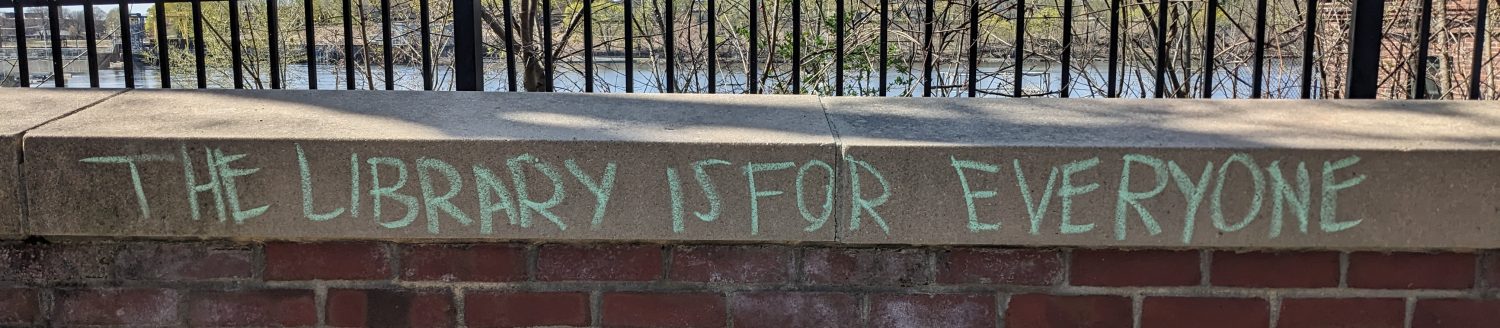
Doing “Step Into Storytime” (my library’s name for its weekly storytime for two- and three-year-olds) has been a hugely fun experience. Over the past eight months, I’ve developed a long list of picture book titles that seem to work well for this group: longer lead-off books and shorter books for when the attention span starts to get wiggly. Funny books and serious books. Stories with repetition or rhyme and those with more complex plots. Animal books, counting books, color and shape books, peekaboo and surprise books, #WeNeedDiverseBooks.
I read a lot of picture books at home with my daughter as well, and others by myself in the library. Some of these are a little longer; they work beautifully one-on-one with a kid in the right mood, but they probably won’t hold the attention of twenty toddlers at once. (Other books rely on their illustrations for much of the story, which is fabulous if you are looking at the pages up close and can take your time, but works less well in a large group.)
My friend/mentor Miss Lauren currently does a storytime for three- to five-year olds. We have some overlap in the books we read (I definitely got Just Add Glitter and Harold Loves His Woolly Hat from her, and we both love Bark, George! and Oh No, George!), but she’s able to read longer books with her group. She was kind enough to answer a few questions about storytime books and audiences. Thank you, Miss Lauren!


What do you look for / what do you think is most important in a read-aloud book for younger kids (2- and 3-year olds)? What about for preschool-aged kids (3-5)?
This is such an interesting question. I am amazed how many times I’ve asked other librarians their go-to story time books and how everyone’s are unique. Now that I have been on both ends of story time (the reader! the listener!), I’ve really come to appreciate the power of the reader. The best advice I got from one of my mentors in grad school was to read books that you love and to know them inside and out. The excitement and familiarity translates into very positive energy for the audience.
With that said, when evaluating books as the reader, I always find myself looking for an opportunity for participation. Engaging the audience to join in the story in some way is both fun and energizing. It may be an ongoing, intended part of the story (such as whispering “Shhh” and shouting all the loud sounds throughout Valeri Gorbachev’s) or something small I add on my end (for example, if a story involves eating something, I invite the listeners to take a big pretend bite of that food too). It is nice to give kids an outlet for a wiggle or noise release when they are sitting and listening. Plus, it’s fun to growl / stick out your tongue / pretend to sleep / blow out the birthday candles / vote to go or not go into the big dark cave / etc.
What makes a “good” storytime book? How do you gauge whether a book is a storytime success, or maybe better for one-on-one?
The biggest element of a story that has tripped me up is length. The illustrations are beautiful! The story is wonderful! I want to jump into the pages! But my audience is losing it! These days, I can tell pretty quickly if there is too much text for the listeners in front of me. (Please note I’ve never had a problem with a book being “too short”). This changes with an audience of kindergarteners or older; but, for pre-K, I am extra sensitive to length. Like many librarians, I lead with the longest book and look for a wiggle or noise release to add in.
Other elements I find myself evaluating: does the text have a good rhythm / flow or does it feel clunky to read aloud? Do the illustrations reach the back of the room? Does it check the boxes of good rhythm, illustrations that work with and for the story, opportunity to participate AND leave me with a warm and happy feeling? Home run book. A few of my home run books from recent story times for ages 3-5 are Jabari Jumps by Gaia Cornwall, The Incredible Book Eating Boy by Oliver Jeffers, Little Gorilla by Ruth Bornstein, and Blackout by John Rocco.
What are some of your favorite go-to storytime books (for either age group or both)?
A few of my favorites for the 3-5 year olds:
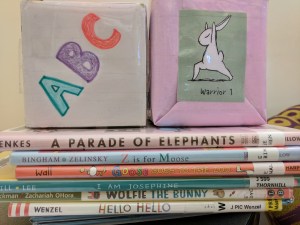
The Snowy Day by Jack Ezra Keats
A House in the Woods by Inga Moore
A Boy and His Bunny by Sean Bryan
Tiny Little Fly by Michael Rosen
Lizard from the Park by Mark Pett
How To Be Friends With a Dragon by Valeri Gorbachev
Where’s Teddy by Jez Alborough
Pete’s a Pizza by William Steig
Can You Make a Scary Face by Jan Thomas
Otto the Book Bear by Katie Cleminson
Finally, what’s your favorite source for storytime research?
Observing other story times in action is extraordinarily helpful. Easier to do now that I have my undercover partner… [Ed. note: even if you don’t have a kid you can bring with you, plenty of librarians would be happy to let you “audit” or observe their storytimes; just ask first!]
Thank you, Lauren! Happy storytiming, everyone!




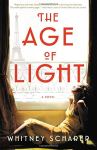 Whitney Scharer was up first, showing slides and then reading from her debut novel about Lee Miller, known as a model for Vogue and surrealist Man Ray’s muse, though she was a photographer in her own right, and co-inventor of the technique of solarization. (Aside: Every student should have a project like the one mentioned in Meg Wolitzer and Holly Goldberg Sloan’s new middle grade novel, To Night Owl From Dogfish, “Give the right person the credit.”) Scharer discovered Miller at an exhibit featuring Man Ray at the Peabody Essex Museum in 2011, and was interested in the two of them “being in love and making art together.” (Miller went on to be a war reporter; she reminded me of Robert Capa’s partner, Gerda Taro, who was killed while documenting the Spanish Civil War.) Scharer read a scene from her novel in which Miller describes what she calls “wild mind”: her ability to set any expression on her face while modeling, yet thinking of anything she wants, setting her mind free. The scene (possibly the whole novel?) was in present tense.
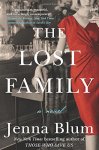 Next, Jenna Blum (The Stormchasers, Those Who Save Us) talked about and read from her new novel, The Lost Family, set in New York and centered around a Holocaust survivor, Peter, who lost his wife and daughters. He now owns and runs a restaurant called Masha’s, after his late wife, and has sworn not to get involved with anyone again – but, of course, he does. The novel is about Peter and his second wife and their daughter, “a whole family trying to put its arms around a loved one’s PTSD.” Blum didn’t have slides, but she did share a cocktail of her own invention, and cream puffs called “Masha’s Little Clouds”; she said that she invented and kitchen-tested all the menu items in the book.
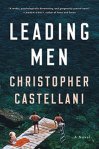 Finally, Christopher Castellani (A Kiss From Maddalena, The Saint of Lost Things, All This Talk of Love) talked about his newest novel, Leading Men, which imagines a party thrown by Truman Capote in Portofino in 1975, the guests, and the aftermath. Castellani said that people always want to know “how much is true and how much is not true,” so he explained that the party did happen, and that Tennessee Williams and his lover Frank Merlot really were invited, but that Williams’ journal does not mention the party in the days or weeks following it. Using both “real and invented people,” Castellani imagined and invented “between the cracks of what was known about these people.” Merlot is his main character; Williams isn’t a “point of view character” largely because he is too well-known, has written and been written about too much; Merlot, though not obscure, is less of a known quantity. Castellani admitted that it was daunting to write dialogue for characters like Capote and Williams; he would often use an “anchor quote” from their writings in order to get the tone of the dialogue and scene, and would sometimes remove the “scaffolding” once the scene was finished.
 Rita Meade: “Keep Calm and Transform the World”
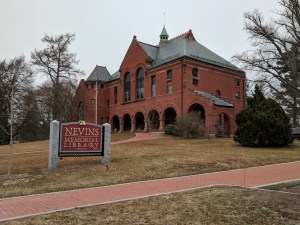
 Now, she works at the
 Jenny Arch