Many years ago at the Fox Branch Library in Arlington, MA, I noticed a bulletin board in the lobby. On the bulletin board were questions and comments that people had dropped into a suggestion box – and the library staff’s answers to those questions and comments. [Insert brain-exploding emoji here] What a brilliant, transparent way to communicate with patrons! Also, if one person has a question, others likely have the same question, so answering publicly helps more than just one person.
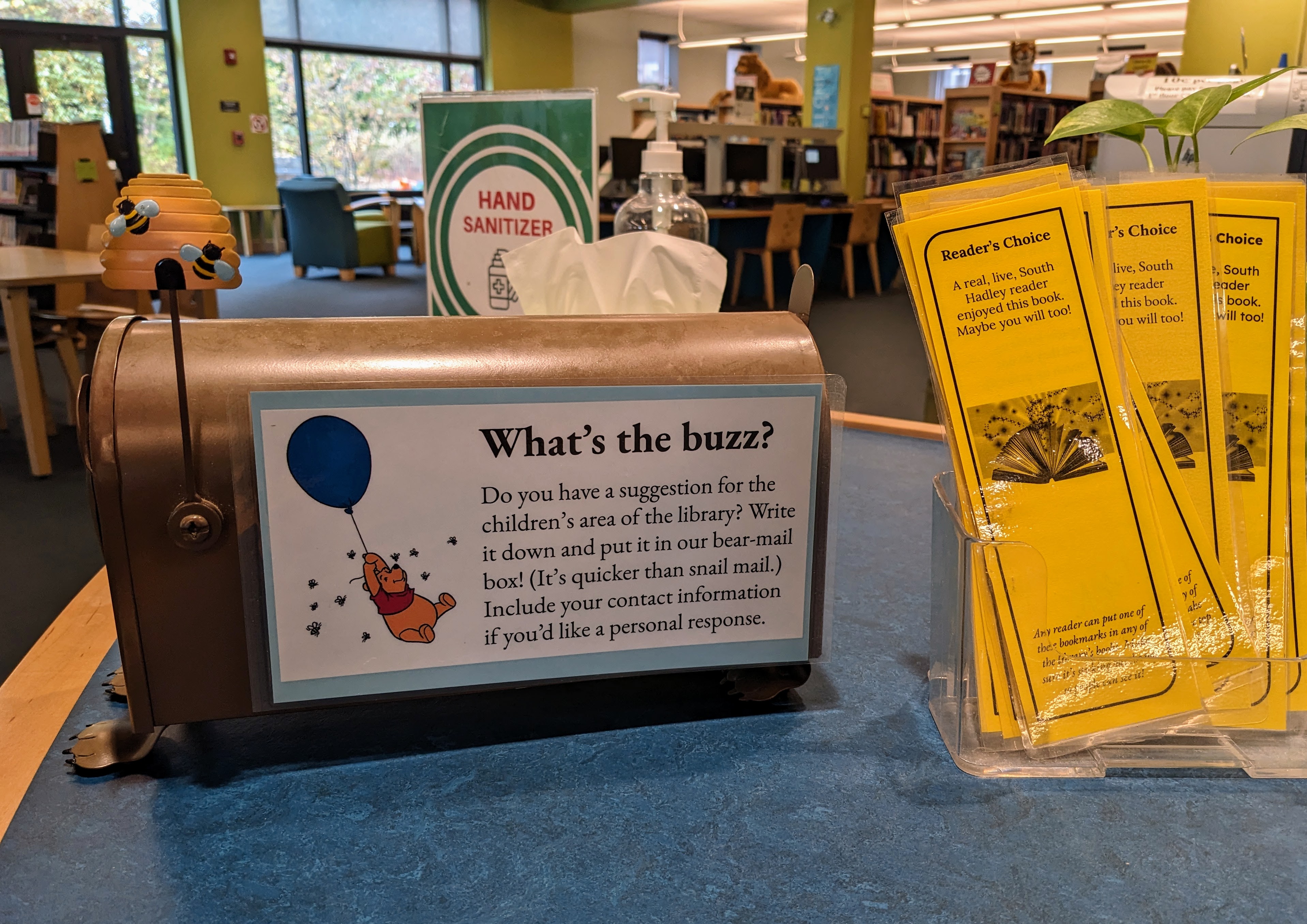
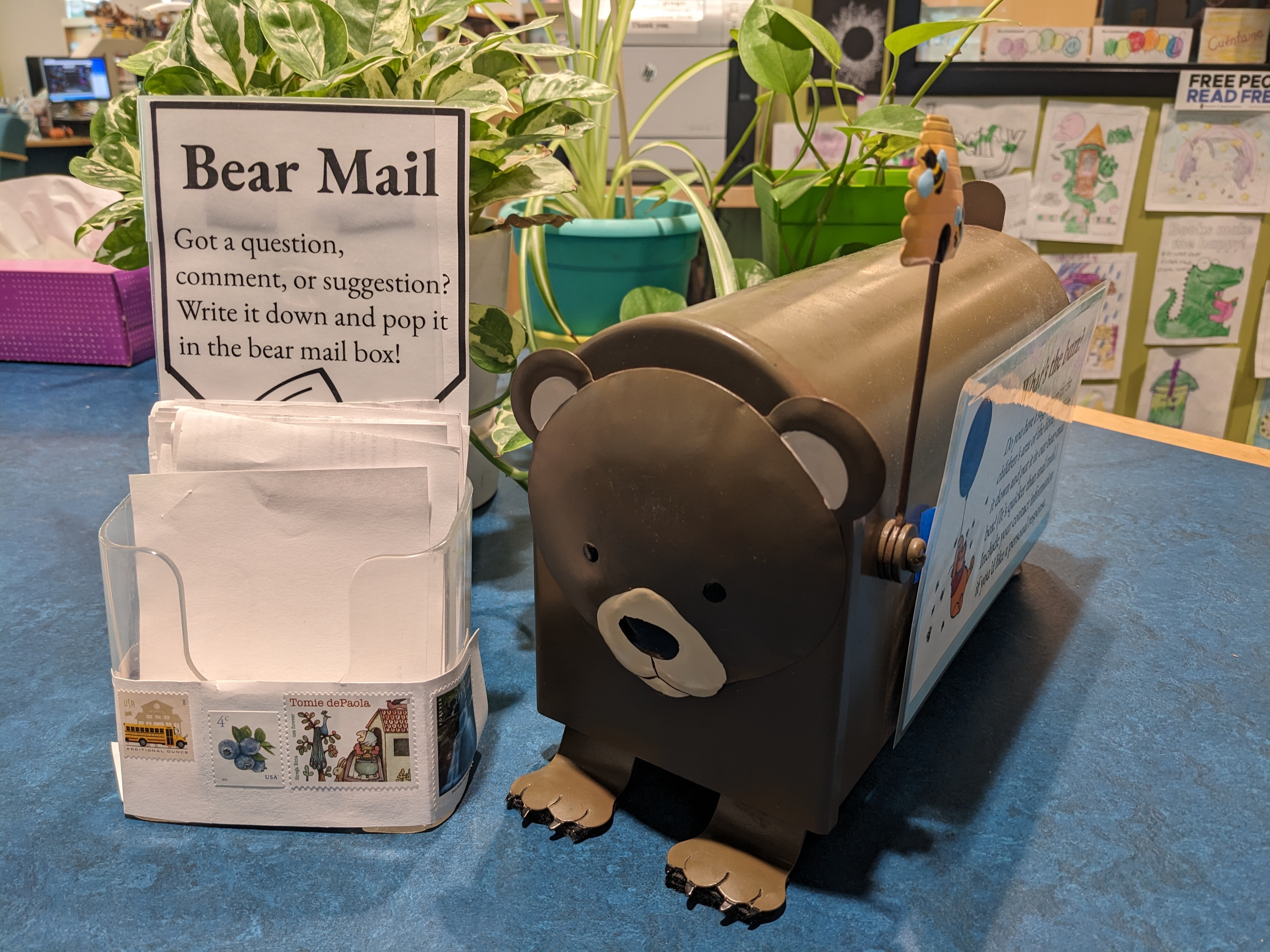 When I started my current job as the children’s librarian at a public library, I found an unused mailbox shaped like a bear, complete with little beehive flag. I set it up on my service desk, inviting people to leave notes – questions, comments, suggestions, anything! On a nearby column, I tape up the notes with my responses.
Over the last year, I’ve gotten dozens of notes. Sometimes people leave a note while I’m sitting right here, other times when I’m away from my desk. Sometimes it’s kid scribbles (great early literacy and fine motor practice!), occasionally a complaint or praise, most often a suggestion or question about the books in our collection or the programs that we offer.
 A few sample notes and responses (lightly edited for spelling, etc.):
- “Do you have any recommendations for Matilda-length chapter books about fantasy? With no pictures?” –> “Sure! Here are some to try: Greenwild by Pari Thomson, The Guardian Test by Christina Soontornvat, Earwig and the Witch by Diana Wynne Jones, Tuesdays at the Castle by Jessica Day George, Falling In by Frances O’Roark Dowell”
- “Recommendation for PJ Storytime: The Nuts: Bedtime at the Nuthouse. It’s one of our faves!” –> “Thanks for the suggestion! I requested it from another library.” [I read it at a subsequent Pajama Storytime program.]
- “Get more scary books!” –> “OK! Have you already tried Goosebumps, Eerie Elementary, and Scary Stories to Tell in the Dark?”
- “I think you guys should have bunnies and hamsters here.” –> “I would love to have a library pet! Maybe someday….In the meantime, have you seen Miss Bethany’s fish Moose?”
- “You should start a face drawing club.” –> “Comics Club meets every Tuesday afternoon! We also have lots of How to Draw books you can borrow and take home.”
- “The library should do book bingo again!” –> “We are! [Dates of summer book bingo program]”
- “Saturday morning activities would be great!” –> “We try to do at least one a month! Anything in particular you’d like to see?”
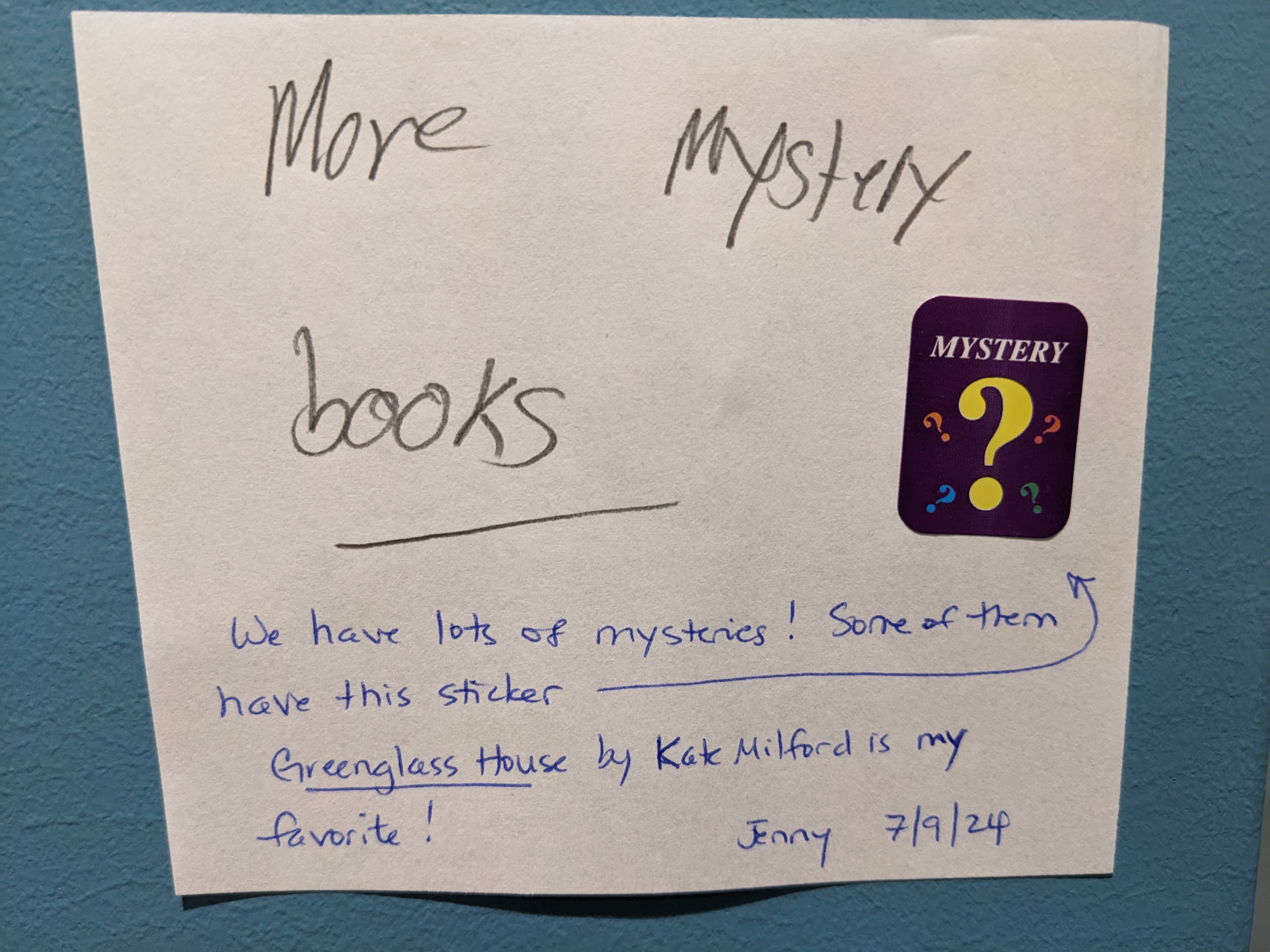
- “More mystery books” –> “We have lots of mysteries! Some of them have this sticker. One of my favorites is Greenglass House by Kate Milford.”
- “Can you get the book Out of My Dreams [by Sharon Draper] when it comes out?” –> “Absolutely! We have to have the sequel to Out of My Mind and Out of My Heart. It will be published September 3, 2024.”
- “Make more Roald Dahl books like The Twits” –> “Roald Dahl died in 1990 and can’t write any more books…Have you tried George’s Marvelous Medicine?”
One person asked, “Why aren’t the librarians here a lot of the time I’m here?” This one is kind of heartbreaking, but there is only one children’s librarian here (me). I work 40 hours a week (which is plenty! I miss my 35-hour week), but the library is open 52 hours, so the children’s desk is unstaffed at that time. People can get help at the main circulation desk, but it’s not the same level of service as having a children’s librarian present in the room to greet everyone and ask if they need help. I’m also not at my desk if I’m running a program, like Rhyme Time, Story Time, or one of the book clubs. What’s the answer to this one, then? An apology, and a request: Ask the Town to fund more staff for the library!
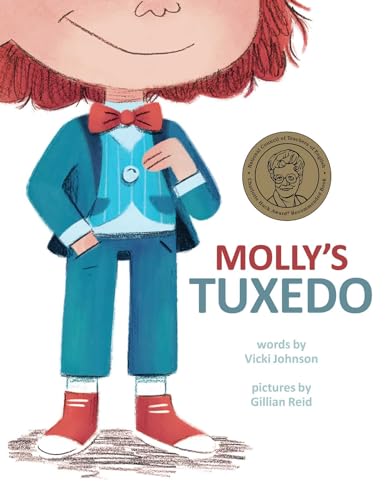 To end on a happy note (no pun intended): My favorite note so far was about how the book Molly’s Tuxedo by Vicki Johnson, illustrated by Gillian Reid, was affirming for a child deciding what to wear ahead of a family holiday, and helped foster a conversation with a grandparent too. The note-writer concluded, “Thank you for your commitment to diversity + inclusion!” It’s gratifying to see that books really do make a difference. I was able to share this note with the book’s author on social media, and I hope she was half as pleased as I was.
There are lots of reasons to encourage open communication and solicit feedback on a regular basis. You’ll hear about what you can do better, get ideas for positive changes, and you may be pleasantly surprised or get a laugh now and then! How do you communicate with patrons in your library?
 But then – I forget where, and I’m sorry because I’d love to give credit for this – I heard about a “My First Book Club” program at another library, and I decided to give it a try. We had our first meeting in July; I was thinking that people might have a bit more free time in the summer, and it could also help rising kindergarteners meet each other and get used to a semi-formal aducational environment if they hadn’t already been in a preschool program.
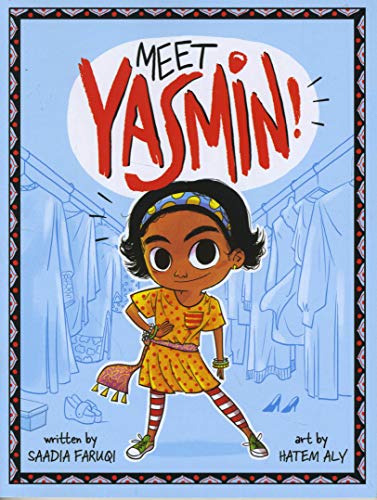
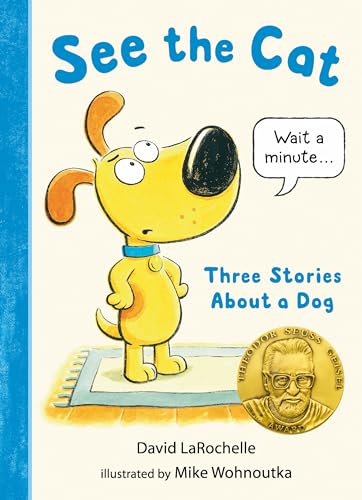 For “My First Book Club,” there is no need to read the book(s) ahead of time; I request enough copies for everyone to follow along as we read together. In July we read Meet Yasmin by Saadia Faruqi, illustrated by Hatem Ali, and the Geisel award-winning See the Cat: Three Stories About A Dog by David LaRochelle, illustrated by Mike Wohnoutka. I asked the kids to make some predictions, observations, and ask and answer questions about the story; then we decorated bookmarks with a flower pattern like Yasmin.
 Here’s the “I Heart Back Matter” part of this post: Back matter is the stuff you find at the end of the book, after the story. It’s more common in nonfiction (think glossary, sources, index), but a lot of picture books, early readers, and especially graphic novels also throw in a little bonus content: a recipe, an art project, step-by-step instructions for how to draw the main character. This is where I got the model for Yasmin’s flower-patterned bookmark. (More on back matter later.)
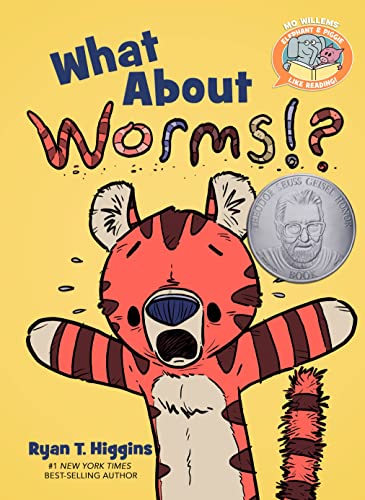
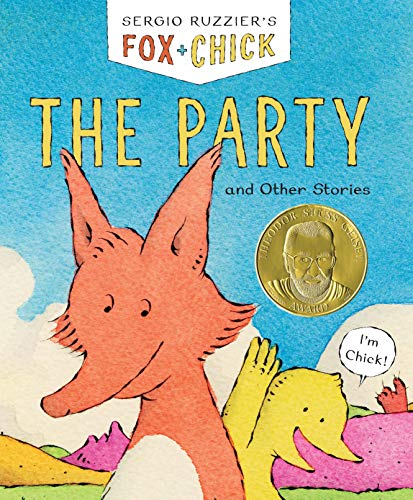 In August we read Fox and Chick: The Party and Other Stories by Sergio Ruzzier and What About Worms?! by Ryan T. Higgins, and colored some What About Worms?!
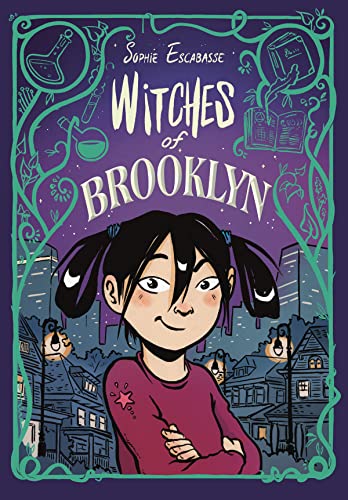 Finally, a perk of coming to the first meeting: the kids got to vote on what they wanted to read next. I pulled three books from our collection: Bedhead Ted, Things in the Basement, and Witches of Brooklyn. Witches of Brooklyn won the vote, so that will be October’s book!
 Jenny Arch