 Passive programming, or self-directed programming, is a type of program that library patrons can participate in independently or with only minimal interaction with library staff. This recent SLJ article mentioned several ideas, including collaborative art projects, community collections (show-and-tell), livecams and interactive displays, photo booths, play dates, polls, readers’ advisory activities, scavenger hunts, sensory gyms, and stuffed animal sleepovers.
Here are some self-directed programs I’ve offered over the past year+ in the children’s area of the library: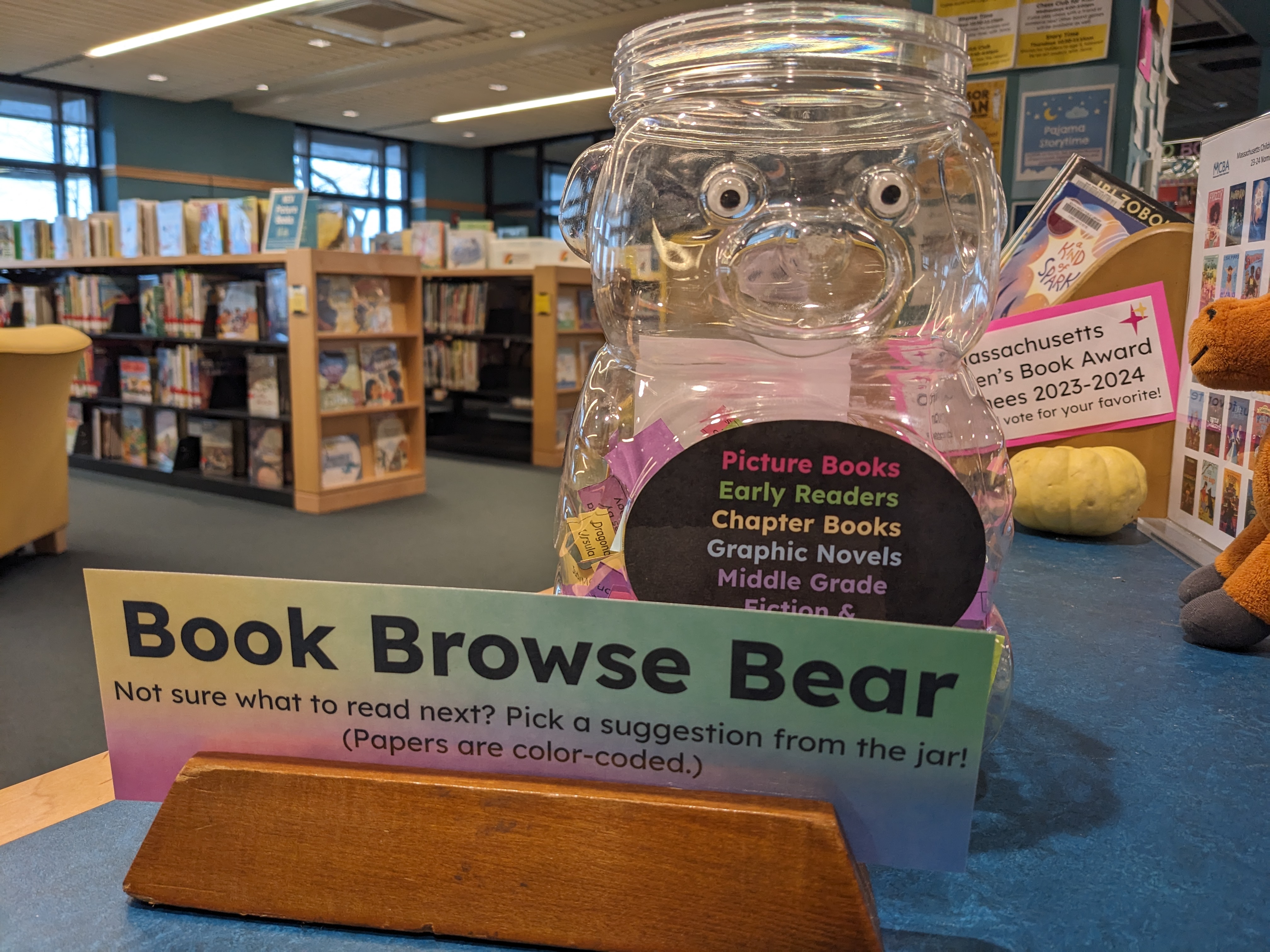
- Coloring table with crayons and seasonal coloring pages
- Seek-and-find with Shelly the Turtle: When kids find Shelly (a hand-puppet turtle), they get a hand stamp and the chance to hide her for the next seeker to find. (We used to have Inchy the Bookworm, but Inchy went permanently missing after a few months.)
- Desk mailbox (“bear mail”) and answer wall
- Play area with wooden boat and wave seats, MagnaTiles, chunky wooden puzzles, MegaBlox, a flannel board/magnetic board, activity cubes, and tic-tac-toe cushions; secondary play area with a train table and dollhouse. This will look different in every library depending what you have the space/budget for, but it shows that the library is a welcoming place to play, as well as a place to get books.
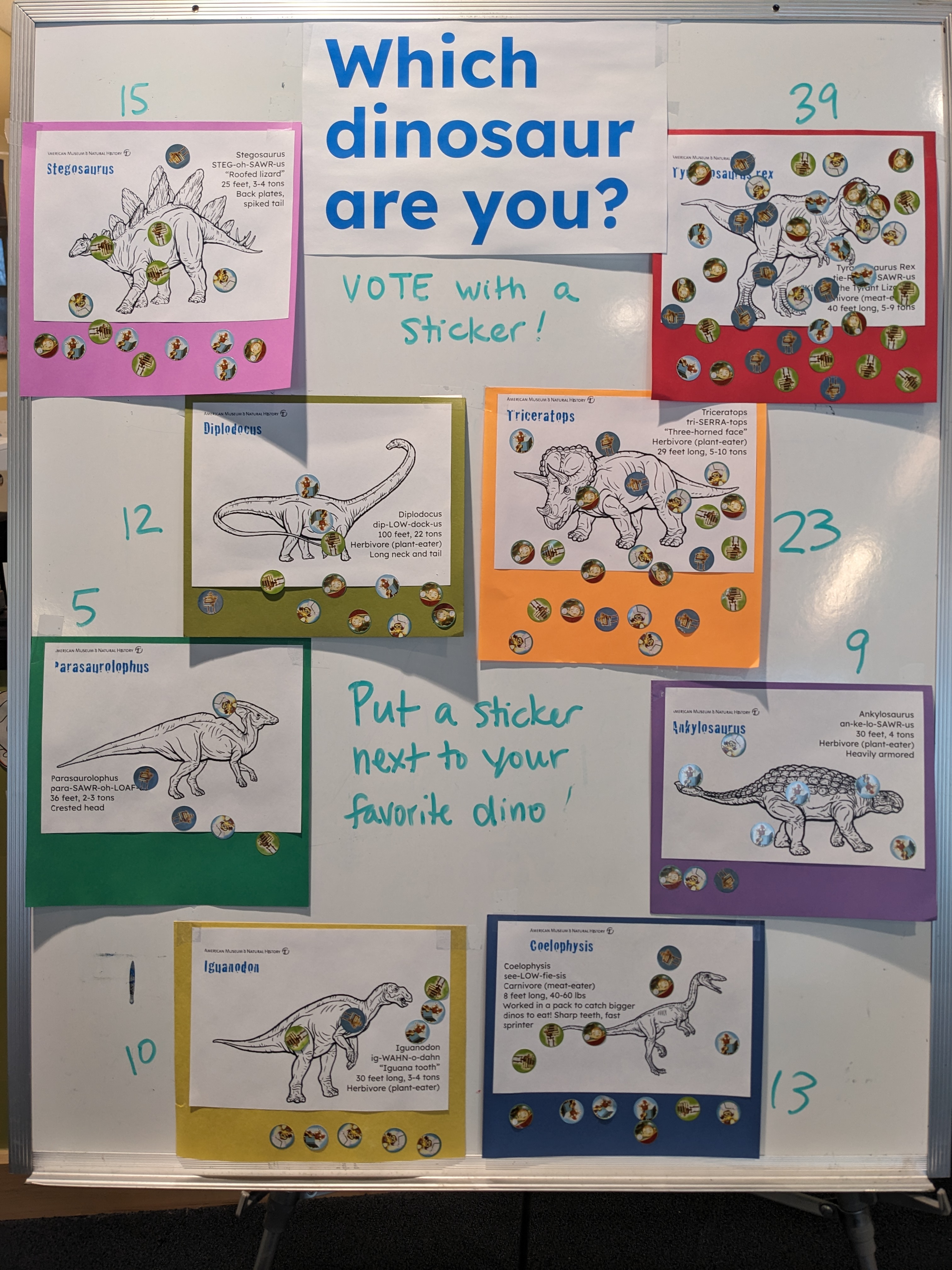
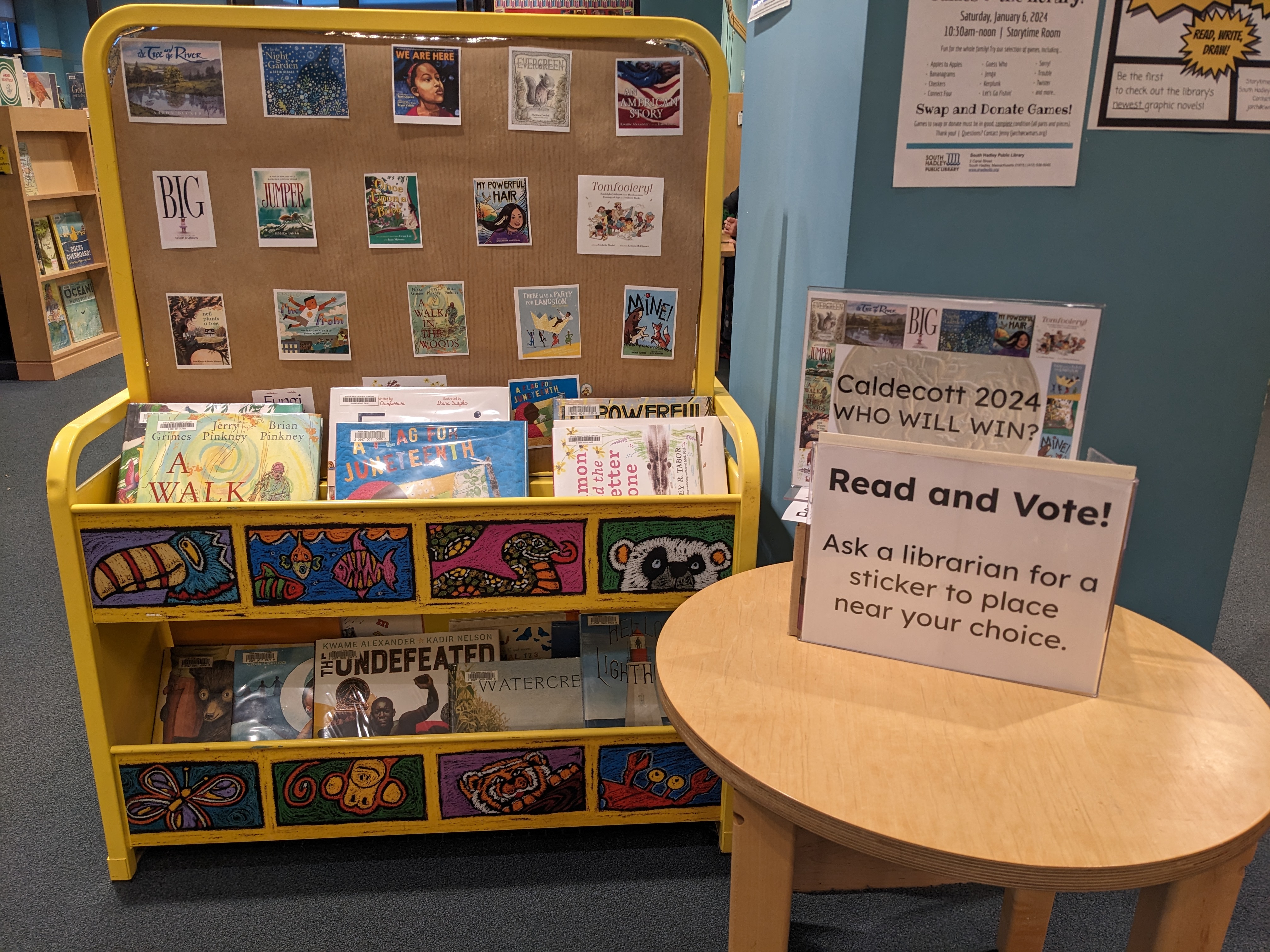
- Sticker votes: These are great for all kinds of fun topics. We’ve done traditional fairytales vs creative retellings, Caldecott picks, and which dinosaur are you?
- Summer reading scavenger hunt for familiar literary characters (Pete the Cat, The Princess in Black, Lunch Lady, Fancy Nancy, etc.). Kids who complete the hunt get a sticker or temporary tattoo for a prize. Working in teams is encouraged!
- Winter vacation scavenger hunt for the animals from Brown Bear, Brown Bear, What Do You See?
- Book buttons (reader choice and librarian choice): These are little laminated circles that can be taped to a book’s spine to show browsers that another reader recommends the book.
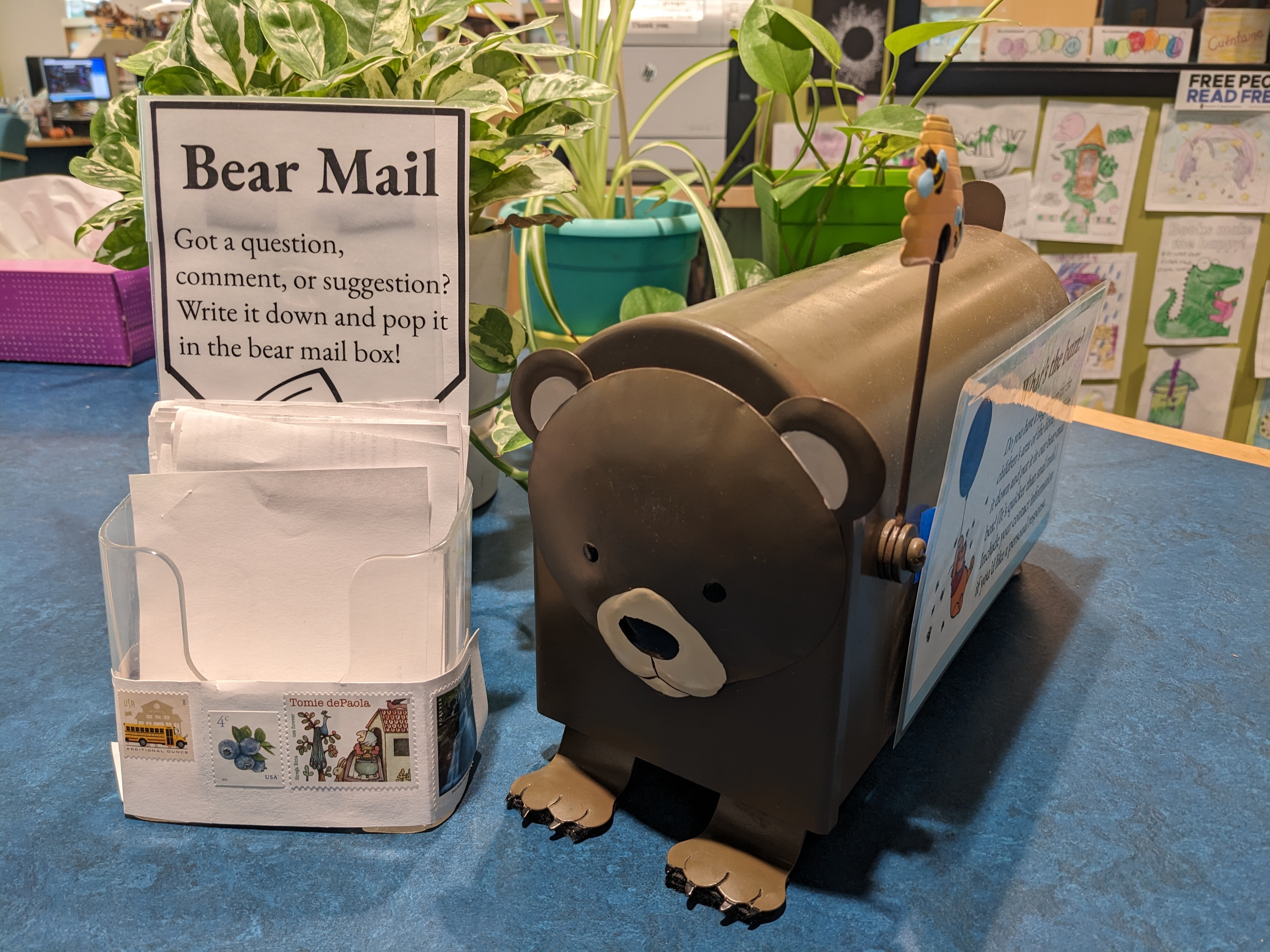
- “Book Browse Bear”: A bear-shaped jar filled with book suggestions, color-coded by type of book (picture books, early readers, graphic novels, etc.).
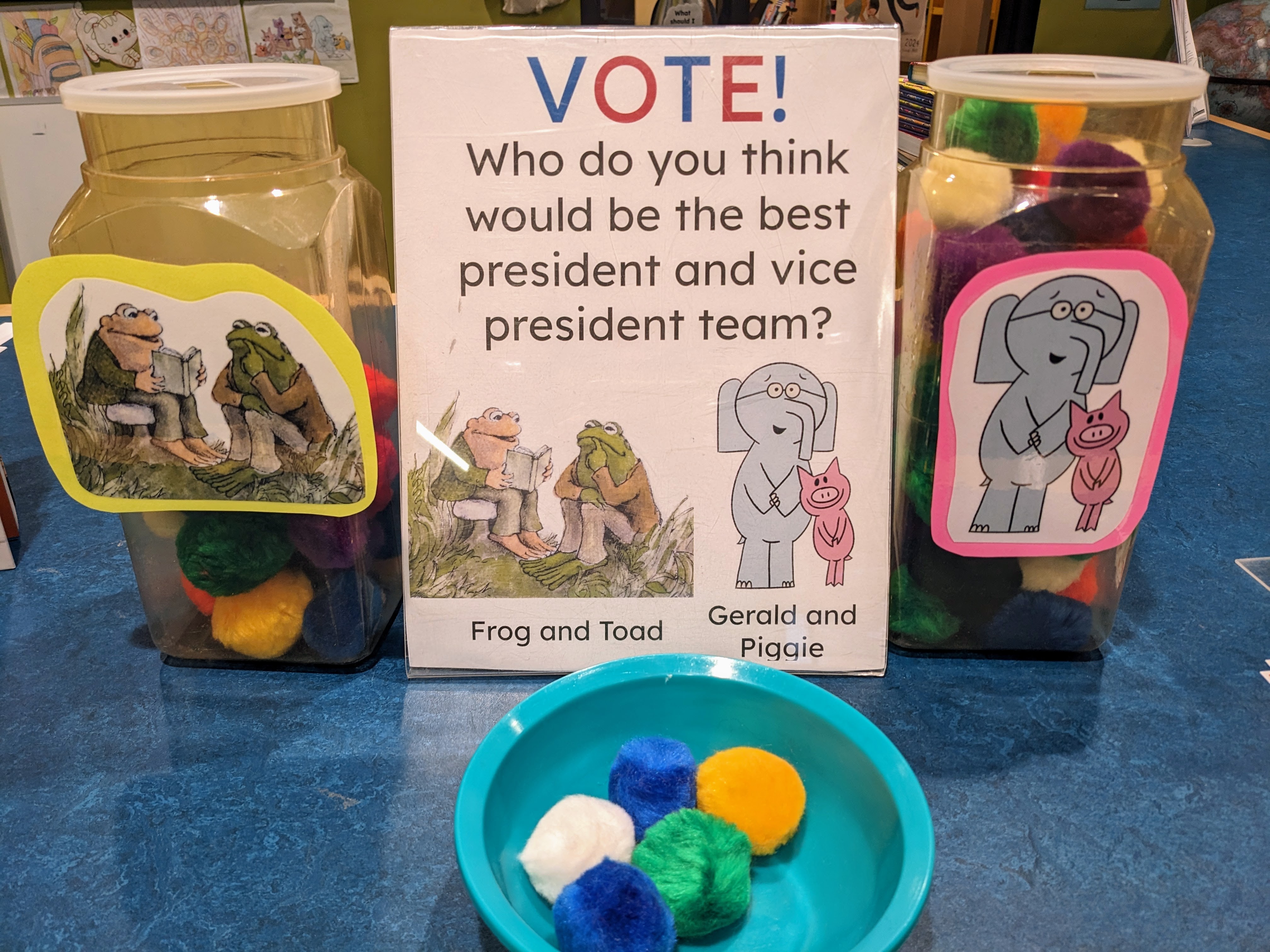
- Pom-pom polls: In the weeks before the U.S. presidential election, kids could vote for Gerald & Piggie or Frog & Toad for president/VP. (One grown-up, enviously: “Nice for the kiddos to have two good choices.”)
- Caregiver cafe: Sort of like playgroup, but less structured; gives the adults a chance to socialize while the kids play in a safe area with age-appropriate toys and board books.
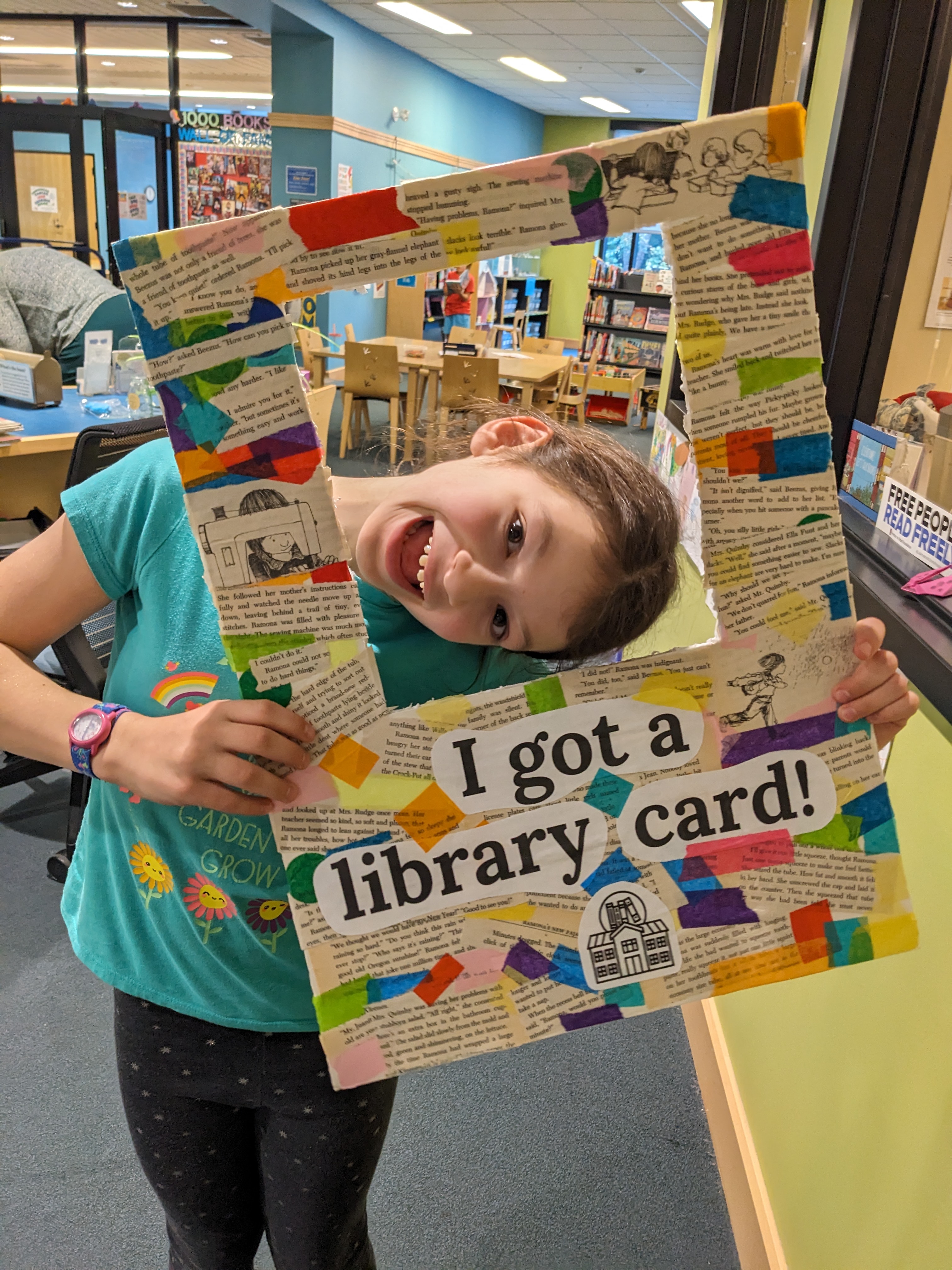
- “I got a library card!” photo frame: I made this with a deaccessioned copy of Ramona and Her Mother, tissue paper, mod-podge, and posterboard, and I keep it at the children’s desk. When kids sign up for their first library card, I ask if they want a photo. Some say yes, some say no – either way is fine! I like to think that at least a few photos will be shared with family and friends to celebrate young readers, and if they give permission, we put it on the library’s social media too.
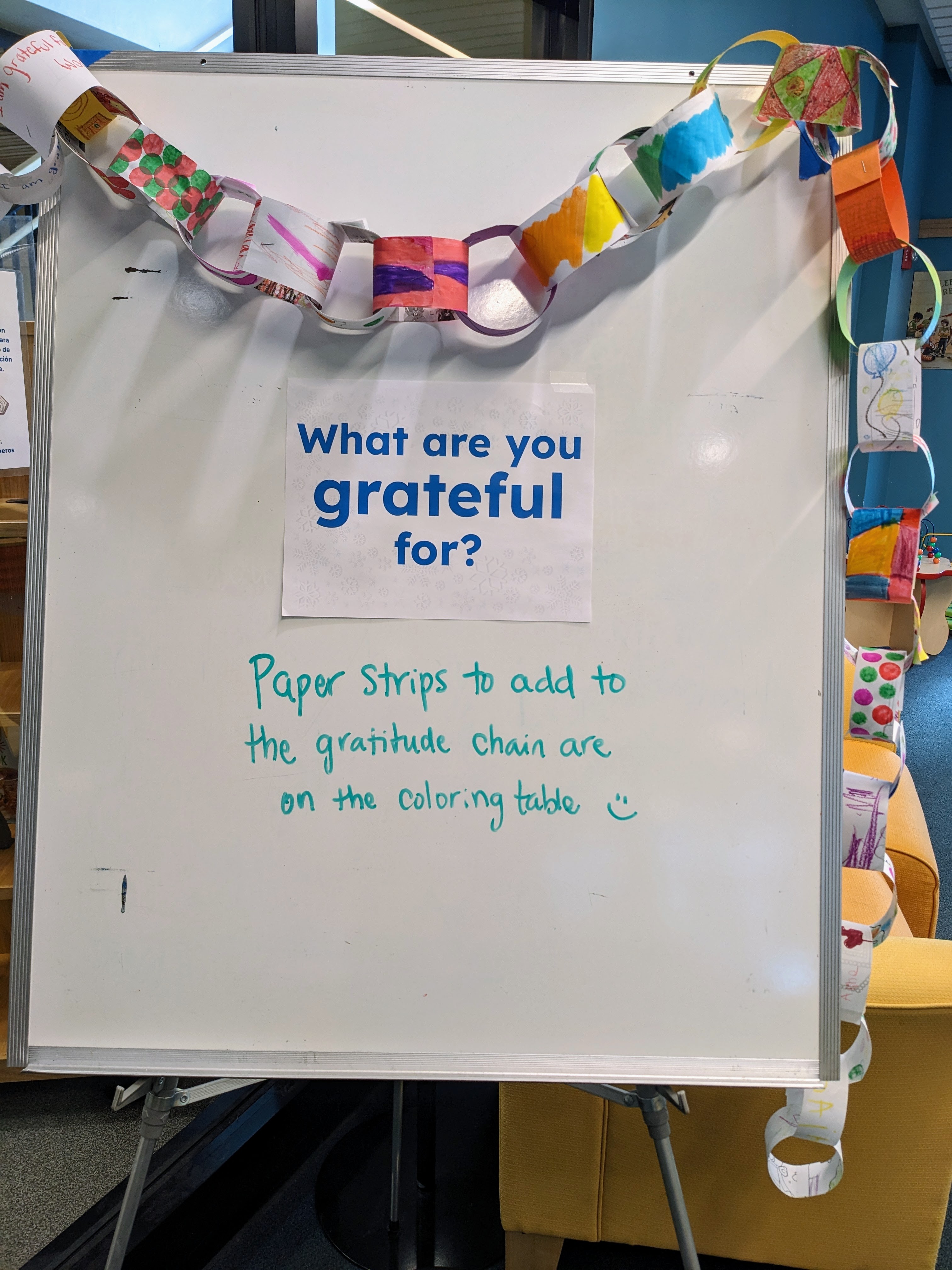
- Gratitude paper chain: For December, I’ve replaced the usual coloring pages on the coloring table with paper strips (made from a year’s worth of coloring table scrap paper). People draw or write what they’re grateful for on the paper strips and add it to our paper chain throughout the month.
Many/most of these ideas I’ve borrowed and adapted from other libraries that I’ve visited or read about (as in the SLJ article above). What self-directed programs do you like?
 Jenny Arch