 The New England Society of Children’s Book Writers & Illustrators (NESCBWI) spring conference was last weekend in Stamford, and it felt much like a library conference…possibly because every other attendee I met was either a teacher, librarian, or a teacher-librarian. I took a mere 14 pages of notes, which I’ll try to condense to key takeaways here. But first, I’m grateful to the organizers (almost all volunteers), presenters, panelists, and other attendees for creating an opportunity to come together to share a love of children’s literature and art, offering encouragement as well as actionable advice, and reaffirming our mission to tell and share all stories, for all kids.
From Rajani LaRocca’s morning keynote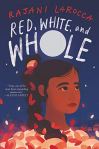
In which there was extensive, and justified, quoting of Madeleine L’Engle:
- Everyone deserves to see themselves in books, and everyone deserves to read about people who are not exactly like them – and learn how much we have in common. “Stories make us more alive, more human, more loving.” –Madeleine L’Engle
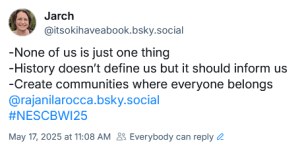
- Rajani’s hopes for her stories: None of us is just one thing. History doesn’t define us but it should inform us. Create communities where everyone belongs.
- Children are not pre-human, they are pre-adult. “The great thing about getting older is that you don’t lose all the other ages you’ve been.” -Madeleine L’Engle.
- We write, even fiction, to tell the truth. Write the stories that matter to you, because if they matter to you, they matter to us all.
“Heartbeat and Pacing of Picture Books” with Deborah Freedman
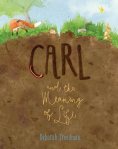 Deborah Freedman is an author/illustrator with a background in art and architecture; she also gave the closing keynote. She has written and illustrated many books, including Carl and the Meaning of Life.
- Deborah showed storyboards of her own picture books, with thumbnail sketches. “It’s easy to trick ourselves into thinking something’s more finished than it is – don’t get too tight too early.”
- She showed many examples, including: Where the Wild Things Are* by Maurice Sendak (for its brilliant pacing and “meaty middle”), Wave by Suzy Lee (for its brilliant use of the gutter), Giant Squid by Candace Fleming and Eric Rohmann (for structure that reflects the story), Again! by Emily Gravett (for its pacing and humor), Uptown by Bryan Collier (for its call-and-response).
- She talked about page turns as they relate to pacing (“Each page is like an open question or incomplete thought…you have to turn the page to find out the answer”). “The gutter acts as a comma, page turn acts like a giant comma.”
- “Detail can slow a story down – use it intentionally.”
*In their newsletter “Looking at Picture Books,” Jon Klassen and Mac Barnett dissected Where the Wild Things Are. Even if you know this book very, very well, you will likely notice something new.
“Words That Float: Writing the Novel in Verse” with Rajani LaRocca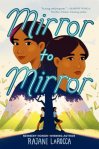
- Verse novels, like picture books, can tackle difficult subjects in a way that is accessible rather than overwhelming. There is more space on the page, more space in the mind and heart of the reader to process what’s going on.
- Verse novels are best suited to stories that are character-driven, with interiority, emotion, told in close first person, present tense, not plot-heavy; the focus is on the interior journey rather than a complicated plot (but you DO have to have a plot). Character is the heart of a verse novel; the most important transformation is emotional.
- Find the kind of poetry that fits your character and what they’re trying to say. If you have multiple characters, each might use a different type of poetry. Voice is inherently tied to character.
- Repeat things at the beginning, middle, and end of the book. The meaning changes because your character has changed. You want the ending to reflect the beginning. A “keystone poem,” often written early on, encompasses the theme, important symbol, or central conflict of the story; it’s the “hub” or center of the wheel from which all the “spokes” emerge.
- Tell the truth: “We read fiction because we want to know the truth about people.”
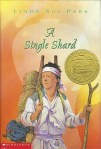
- Linda Sue Park’s advice on repetition: If something isn’t mentioned in the first half of the book, don’t use it in the second half.
- Examples of excellent verse novels: Blood Water Paint by Joy McCullough, The Poet X by Elizabeth Acevedo, The Last Fifth Grade of Emerson Elementary by Laura Shovan, Unsettled by Reem Faruqi, Garvey’s Choice by Nikki Grimes
- Recommended podcast: Day Brain vs. Night Brain
- There was so much more packed into this presentation! These are merely a few mushrooms from the mycorrhizal network (see how I didn’t say “tip of the iceberg”? Use original metaphors! Although “mycorrhizal” is maybe not the most poetic.)
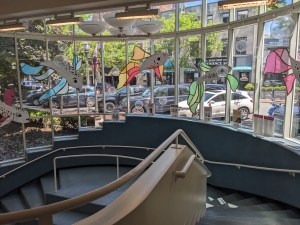
 After lunch, I walked over to Stamford’s Public Library. It is amazing!
Editor panel, moderated by Pam Vaughan
Editors Jessica Anderson (Christy Ottaviano/LBYR), Julie Blivens (Charlesbridge), Alexandra (Alex) Hinrichs (Islandport), Sasha Illingworth (LBYR), and Matt Phipps (GP Putnam’s Sons/PYR) answered a series of questions about the publishing industry today.
- Challenges in the industry? One person is often doing the work of multiple people, which slows things down (and publishing is already kind of a slow business).
- R&R? If an editor asks for a Revise & Resubmit, do it!! But take your time with it – they don’t need it back right away. They want to see that you’ve listened and put the work in.
- Acquiring? Editors have different communication styles – as do authors. Phone calls, video calls, email, texting, or some of each.
- What’s in a rejection? “Not right for our list” means it doesn’t fit the profile of what they know they’re good at selling. “It just didn’t come together for me” means it’s not there yet – go back to your critique group. “I don’t have a vision for this” may mean they can see problems but not solutions, or that they’re not the right “campaign manager” for this author/book. You want someone who can be a strong advocate for you and your work.
- Current MSWL? Editors talked about their current Manuscript Wish Lists. “Finding the right editor for the right illustrator is like matchmaking.”
- Common mistakes in submissions? Not researching the publishing house. Not including an attachment. Not specifying a category/age range (e.g. middle grade fantasy, 8-12). Not embedding art (for illustrators).
- Hopeful signs in children’s publishing? Everyone feels passionately about children’s literacy. Children’s literature is inherently hopeful. More independent bookstores are opening up, more small presses. “We are each other’s community.”
Story Studio with Christy Yaros
- This lightning-fast workshop could have easily taken a whole day, if not a week! (Christy did offer another workshop earlier in the day.) In this one, the focus was on the theme: What is your book trying to say, and how do you weave it in so it doesn’t feel forced? At each step, we did a quick writing exercise answering the guiding questions.
- Step 1: What emotional or philosophical truth sits at the heart of your story? What does your protagonist learn by the end? What belief does your story affirm, challenge, or complicate? What question about life does your story explore?
- Step 2: Theme lives in the tension between what your character wants and what they need. Fill in the blanks: At the beginning, my character believes __ (linked to what they want). By the end, they understand __ (linked to what they need). This shows that __ (they have gone on this emotional journey, your theme in action).
- Step 3: Relationships that reinforce or resist: Which characters help your theme shine? Which ones challenge or contradict it? Presenting alternate interpretations of the theme gives the reader choices, rather than telling them what to believe. We’re giving kids a framework for how to look at stuff.
- Step 4: Emotional moments that bring theme to life: Look for moments where your character’s belief is tested – and something hurts but teaches.
- Think of theme as what your character needs; plot is what they want; and the arc is where want and need come up against each other.
- Christy recommended the book Craft in the Real World (2021) by Matthew Salesses
“Bookends: Beginnings & Endings in Picture Books” with Pam Vaughan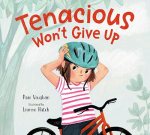
- There were many practical takeaways from this workshop, and lots of examples. Pam contacted other authors and asked them for early drafts of the first and last sentences of their published books, so we could compare and see how they’d changed from the early versions to the final ones.
- Five Cs (character, curiosity, conflict, connection, care) and the W effect – the attitude of your book (wonder why / wow! / wait, what? weird / word choice / witty / whisk you away).
- Sometimes your beginning hints, winks, links, nods, and/or leads to your ending.
- In a picture book, conflict can be a subtle thing, it doesn’t have to be a fight.
- Story structure may be circular, cumulative, conceptual, classic, list, pattern, dialogue, quest, mirror, interactive.
- Your beginning: Cut for clarity? Add for context? Hint at your ending? Hone your voice? Toy with your word choice?
- Endings are powerful. How do you want to leave your reader feeling? “Oohs” and “Ahhs” (Aha! Haha! Hmm…, Ahh…, Aww)
- Tips for beginnings and endings: Try writing 10-20 first/last sentences. Read them out loud. Cut as many words as you can (but use as many words as you need). How many five Cs can you include? Can you amp up the W effect? Connect your beginning to your ending (and your ending to your beginning).
- Recommended text: The Heroine’s Journey (2020) by Gail Carriger
Agent Panel: Marissa Brown, Chrisy Ewers, Amy Thrall Flynn, Stephen Fraser, Carter Hasegawa, Rachel Orr, Sera Rivers
- What does an agent do? Agents wear many hats! Matchmaker (between author and editor), unlicensed therapist, unlicensed financial advisor (chasing down royalty payments), looking for new talent (those R&Rs are unpaid – agents don’t get paid until they sell a book), negotiator (between author and publishing house), strategize and advocate for an author’s career.
- Advice for after an author signs with an agent? There is a lot of waiting – be writing while you’re waiting! Publishing is a small world; be someone people want to work with (courteous, punctual, nothing hideous on social media, etc.). Reputations matter.
- When you offer representation, what questions do you want authors to ask you? Remember it is a mutual interview. What kind of working relationship do you want? What kind of feedback do you want, and how much? What’s your communication style? “Any agent is not the right agent.” Show that you’ve done your research.
- Pet peeve or “pet fave”? Didactic stories (peeve). Getting to call an agent with an offer (fave). Thoughtful revisions that show the author listened to your advice (fave). “Always look for: why would a child want to read this? How does it connect with your audience? Your mission as a creator of books for children, you have to be thinking about who the book is for. We need to respect children and understand their world.” -Amy
- One hopeful thing about the industry? Books are inherently hopeful. It’s an evergreen industry – children are born every day and they need stories and books. “We’re gonna win. Hope always wins.” -Sera
After the panel, authors and illustrators were encouraged to join a critique group (find NESCBWI critique groups here). Everyone went home Saturday with lots to think about!
On Sunday, we met the NESCBWI regional team. (With apologies to these incredibly dedicated and hardworking volunteers, every time someone said “assistant regional advisor,” I thought “assistant TO the regional advisor.) Next, the Crystal Kite Awards were presented to Liz Goulet Dubois, Winsome Bingham, Abi Cushman, and Federico Erebia.
Winsome Bingham said (among other things):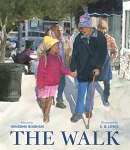
- “If stories weren’t powerful, they wouldn’t be banning books.”
- “There are so many different ways to tell a story.”
- “We all like what we like…write what your heart tells you to write.”
- All it takes is one person. “If you send your stuff out and no one gets it…keep writing.”
- “Rejection is a good thing…if you don’t send your stuff out, they don’t know what you can do.”
- “You have to believe there’s a reason you’re doing this. It’s not gonna pay off overnight, it’s a slow game.”
Federico Erebia said: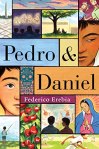
- “It’s okay to be different, it’s okay to write different. There are many ways to tell stories.”
- You realize at some point that you’re not just speaking up for yourself, you’re speaking up for a community – you may not even realize it’s your community.
- I have been an activist for 45 years…”I have never been this afraid of America, in America, for America.”
- “We have the power of the pen. We have our voices. Together we can effect change.”
- “It may one day be too late to be on the right side of history.”
Abi Cushman said: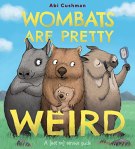
- People don’t always get what you’re trying to do…[but also] sometimes your best just isn’t where it needs to be…and you just don’t know.”
- Yes, this industry is tough, and yes, you’re going to get a lot of rejections. Keep writing the stories you’re passionate about in the way that you want to write them.
Deborah Freedman closing keynote
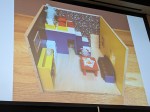 Remember a thousand words ago when I said Deborah Freedman was going to come up again? Here she is! She gave a beautiful closing keynote with visuals of her beautiful art (and architectural models, including a little mouse house). Here are a few takeaways from her talk:
- A well-written text trusts illustrators; a good book trusts readers.
- What is the emotional heart of the book? What is the real conflict and resolution? It’s funny how long it can take and how hard it can be to figure out “what’s it about?”
- The stories are made up, but the feelings are true.
- How are we going to get through this world we’re in right now without connecting with each other?
- A picture book might be a child’s first exposure to art and poetry.
- We have to expand our own understanding of the world if we want to expand children’s understanding. When we explore what it means to be human we become better creators and maybe even better humans.
And that’s a wrap on NESCBWI25. I’m glad I went. I met lots of other writers and writer/illustrators and we exchanged contact information so we can critique and cheerlead and maybe see each other next year.
I’m grateful to my friend who hosted me during the weekend, and as a thanks for those who read this all the way to the end, here are some photos of her puppy:


If you’re still here and you want more SCBWI content, my blog posts from the Winter 2021 conference are here and here. Happy writing, and happy reading!
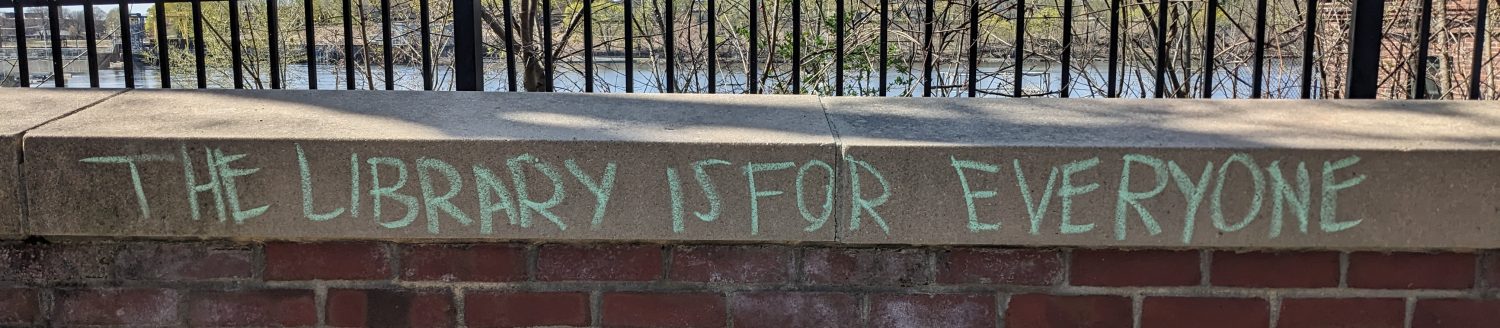
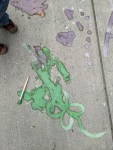 I cannot bear waste, so I’m always seeking ways to use up the last little bits of things – for example, little nubs of sidewalk chalk too small to draw with. Over school vacation week, my handy 9yo assistant happily picked all the small bits of chalk out of the bin and bashed them up (carefully) with a hammer. (She separated the chalk by color into different bags and crushed them on a piece of cardboard outside.) I funneled the colored chalk into separate containers, and waited for good weather…which arrived today! After story time, I mixed the powdered chalk with water in bowls, and we went outside to the library patio for some chalk painting. It was great fun! There’s still plenty of chalk left, so we may do this at STEAM as well later this summer.
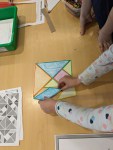
 Now that I’ve reduced STEAM time for kids ages 5-11 to a manageable frequency (twice a month instead of every week), it’s been going great. Here are some of the activities we’ve done since the program began in January:
 Jenny Arch