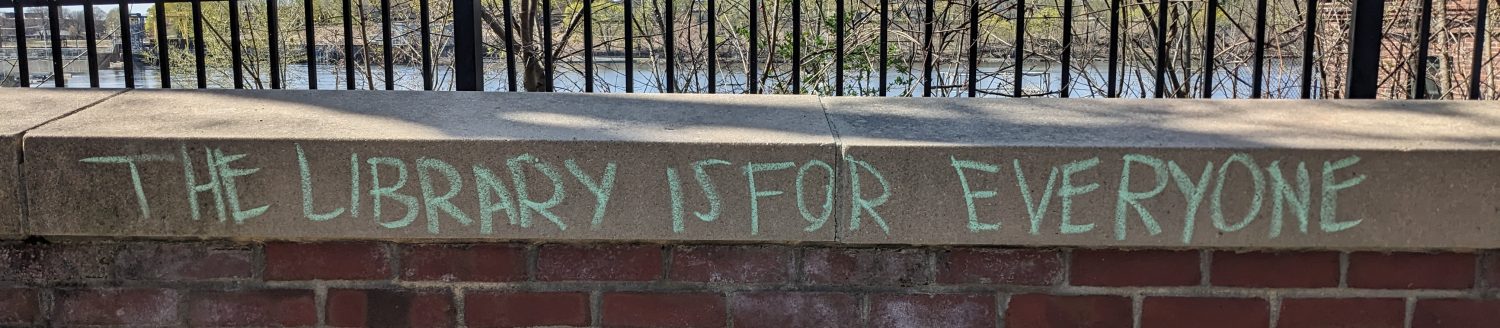
It’s been…oh dear…about three years since I posted in the “quotes from books” series, though this one (and the one following) has been sitting in my drafts folder for about that long. After a weekend of intense focus on writing, I’m looking back at these and noticing how the quotes I choose fall into three categories: something funny or clever, poetic language, or something to do with theme.
- “The more questions she asked, the more questions she thought up.” (A Closed and Common Orbit, Becky Chambers)
- “If this were a novel, he might simply be a poorly written character. But there are no poorly written people. Only ones you don’t yet understand.” (The Verifiers, Jane Pek)
- “Grief is a language they don’t have to speak. It communicates just fine on its own.” (A Year to the Day, Robin Benway)
- “And it didn’t stop being magic just because you found out how it was done.” (The Wee Free Men, Terry Pratchett)
- “Who is the world designed for?” (What Can A Body Do?, Sara Hendren)
- “The secret to getting people to like you / is to like yourself.” (In the Beautiful Country, Jane Kuo)
- “She understood what she was supposed to think and believe, but that wasn’t the same thing as thinking and believing those things.” (A Song Called Home, Sara Zarr)
- “A mother’s heroic journey is not about how she leaves, but about how she stays.” (I’ll Show Myself Out, Jessi Klein)
- “True learning comes from being open to wrong answers.” (The End of the Wild, Nicole Helget)
- “…her memories were all pictures without sound.” (This Time Tomorrow, Emma Straub)
I’ve been listening to old (but new-to-me) episodes of the podcast Harry Potter and the Sacred Text lately, on a friend’s recommendation. Of all the “sacred practices” I’ve heard Vanessa and Casper use so far – lectio divina, sacred imagination, havruta, florilegia, and pardes – I’m partial to lectio divina and havruta, but when they introduced florilegia – “essentially a quote journal” – well, that’s something I’ve been doing most of my life.
 Jenny Arch