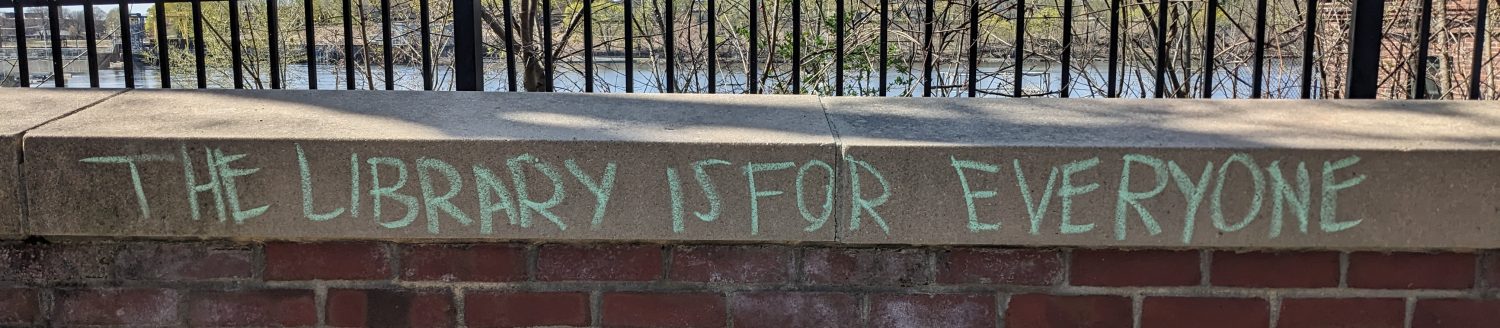
NELA 2025: Soaring Together

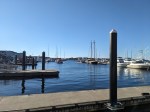
Blue sky and blue water in Newport, RIThe official theme of this year’s New England Library Association (NELA) conference in Newport, Rhode Island, was “Soaring together: Empowering librarians to lead.” I attended only one day of the conference, but as usual, it was a good day with informative panels, friendly vendors (hi, Islandport Press!) and a chance to connect with librarians across the region, including grad school classmates and former co-workers (hi, Katie!), and make new connections (hi, Martha’s Vineyard librarians!).

Let’s jump right in, and I’ll be as concise as I can!

Elizabeth (Liz) Bull from the University of Southern Maine presented “Feeding the Community: Libraries as Centers of Food Security.” Being an academic librarian, she made a LibGuide with definitions and resources. Here are a few takeaways from her talk, as well as contributions from the audience:

  • Forty-seven million people, including 14 million children, experience food insecurity annually in the U.S.
  • A food pantry or “community care corner” in a library meets people where they are – and brings new people into the library. Some people feel more comfortable visiting the library than a food pantry, or can’t get to a food pantry during its open hours.
  • Donations should not be placed directly in the food pantry area, but should be funneled through staff. This keeps the area neat and well-stocked, and helps staff keep track of the volume of food and other items going out; those numbers are useful to demonstrate the program’s worth.
  • Hygiene items are also needed; a librarian from Hyannis, MA, suggested the resource Aunt Flow for menstrual products.
  • One library has a “tree” with paper “leaves” in its teen room; teens can take a leaf from the tree, bring it to the library desk, and collect the item written on the back of the leaf (a snack, a tampon or pad, etc.)
  • For those who work with children: do not use consumable food (e.g. uncooked rice, pasta) in sensory bins or art projects. Be sensitive to those experiencing food insecurity.
  • Partner with other community organizations, and explore grant opportunities!
  • Get buy-in from staff so “everyone is pulling in the same direction” and the program doesn’t collapse if the one person running it leaves; on the other hand, Food Pantry Manager can be its own position.
  • Too Good to Go is an organization/app that aims to reduce food waste; see if it’s active in your area (in New England, it looks like it’s in Boston, Providence, and Portland so far).
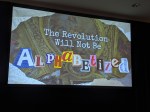
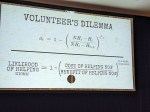
Intro slide for The Revolution Will Not Be AlphabetizedClayton Cheever from Norwood, MA and Allyson Malik from Oak Bluffs, MA, presented The Revolution Will Not Be Alphabetized: The History & Future of Good Trouble in Libraries.” Although libraries and librarians have not always been on the right side of history, many of us are following the late Representative John R. Lewis’s famous encouragement to get in “good trouble” now. Libraries are that “third space” where all are welcome to come and find resources – whether that means books, connecting with a social worker, or attending a joyful storytime or other event. The presenters introduced “the Volunteer’s Dilemma” (surprising an audience not used to seeing mathematical formulas) that explains how a group can benefit from an individual (or individuals) making a costly sacrifice (think of the old Oregon Trail computer game). Slide of the Volunteer's Dilemma formulaAfter running through a toolkit (Communication, Services, Collection, Programs, Policies, Technology), the audience received scenarios to consider in small groups and report back. See also: The Library Freedom Project.
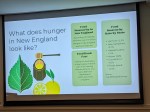
“Keeping the People Fed: Food Bank and Library Partnerships Across New England” brought together librarians and food bank employees from Massachusetts, Connecticut, and Rhode Island to discuss different partnerships and initiatives. Because the federal government is no longer collecting and sharing data on food insecurity, Feeding America is the current best resource for this type of information. And due to the ongoing government shutdown, November SNAP benefits are threatened, putting an overwhelming strain on food banks; “SNAP is the first line of defense, food banks are second” (and lots of people rely on both).Slide, "What does hunger in New England look like?"
Caitlin Kelley, Montague (MA) library director, talked about how she and her staff grew one shelf into a larger food pantry, including a refrigerator and chest freezer, in their small branch library. “This expansion was only possible with collaboration” with the Western Mass Food Bank, local organization Heartwings, a Community Development block grant, a United Way grant, and a grant from ARSL. “By working together we’re able to enhance our offerings” – and see benefits like a 26% increase in visits to the branch, increased partnerships, a changed perception about what libraries do/are, and more full bellies in the community.
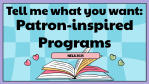
Intro slide of Patron-Inspired ProgramsFinally, Pioneer Valley Performing Arts (PVPA) librarian Austin Clark and I presented on “Patron-Inspired Programs,” including different ways of communicating with patrons/students and trying out the programs they seem interested in. Sherborn librarian Quincy Knapp contributed slides as well (thanks, Quincy!) when our third panelist had to drop out a few weeks before the conference. Our slides are here.
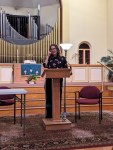
Catherine Newman at Odyssey Bookshop

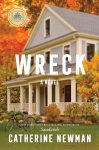
Catherine Newman standing at a podium in a churchWhen I discover an author I love, I will follow them across genres, formats, intended audiences…anywhere they go. Back in January 2024, I read We All Want Impossible Things with my book group, and loved it, so I went poking around to see what else this author had written. I found her middle grade novel One Mixed-Up Night, in which two kids, inspired by From the Mixed-Up Files of Mrs. Basil E. Frankweiler, hatch a plan to spend the night in an IKEA, and I loved that too. Then in July 2024, Sandwich made me laugh-cry and read so many parts aloud that my partner said to stop, he’d read the whole book himself (he did). And then I discovered Newman had also co-written a how-to book called Stitch Camp, which my kid and I both read, and two more how-to books for kids, How to Be A Person and What Do I Say? There are two more adult memoirs, Waiting for Birdy and Catastrophic Happiness, that I should probably pick up as well, and I’m eagerly awaiting my library copy of Wreck, the book Newman read from last night at Odyssey Bookshop (the event was organized by Odyssey, but as you can see from the photo, it was held in a nearby church to accommodate the size of the audience).

That’s how life is. You don’t yet know who you’ll become. -Catherine Newman, Wreck

Newman is a wonderful speaker, and if you’ve read her books (and her newsletter, Crone Sandwich), it’s hard not to feel as though you know her (in that admittedly parasocial way). Cover image of Wreck by Catherine NewmanShe relayed a funny anecdote from that morning’s experience on Good Morning America (“Is that your hair? ….Great, great”) and read two sections from Wreck, followed by a Q&A. Audience members asked about her writing and outlining process, the semi-autobiographical quality of her writing, what she liked to read (Cammie McGovern, Lily King, and Samantha Irby), whether she read a lot as a kid (“Of course I read a lot as a kid. I mean didn’t we all? The nerdiest nerds”), and whether she might ever write more middle grade fiction (maybe, but One Mixed-Up Night didn’t sell as well as she hoped, and now she doesn’t spend as much time with middle grade kids, since hers are older, so…maybe not. But we can hope! I’ve got a ten-year-old she can borrow for research purposes…).

Fall (and Summer) Standouts

Back in early April I wrote about my “spring standouts,” books published in 2025 that I’d read and thought were stellar. I think I’d intended to write another in the summer and another in fall, so when it was time for my annual wrap-up, I’d have these to look back on…but here we are in mid-October. Whoops! All titles below were published in 2025 unless otherwise indicated (there are a few I couldn’t resist including). 

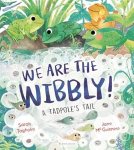
Picture BooksCover image of We Are the Wibbly

  • Anything by Rebecca Stead and Gracey Zhang: A book about a child who didn’t want to move, and a dad who makes their new apartment home.
  • We Are the Wibbly by Sarah Tagholm and Jane McGuinness: Hands-down the funniest picture book of the year. Also, it contains enough information about the frog life cycle that SLJ reviewed it as “nonfiction,” although it has an awful lot of talking tadpoles to meet that bar.
  • Worm Makes A Sandwich by Brianne Farley: Oh, earnest worm! Adjust your definition of “make” and also the time you think it takes to make a sandwich, but what delicious results.
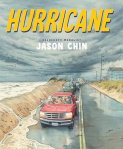
  • Ten Beautiful Things by Molly Beth Griffin and Maribel Lechuga: On a drive to a new home, adult and child find ten beautiful things along the way – a balance to the implied grief of losing a loved one.Cover image of Hurricane
  • Hurricane by Jason Chin: Chin’s watercolor illustrations are always outstanding, and here they’re in service to what it’s like for a community to prepare for, experience, and recover from a hurricane. Powerful, and packed with information and touching details.
  • Where Are You, Bronte? by Tomie de Paola and Barbara McClintock: Tomie left the manuscript; Barbara’s illustrations honor Tomie (and Bronte) perfectly.
  • Some of Us by Rajani LaRocca and Huy Voun Lee: “Some of us are born here. Some of us choose.” A radiant book on what it means to be a citizen.
  • Bear Is A Bear by Jonathan Stutzman and Dan Santat (2021): Somehow I missed this when it first came out; loyal library visitors recommended it to me and I’m so glad they did. Some special objects travel from generation to generation.
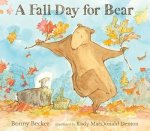
  • The Music Inside Us by James Howe and Jack Wong: A biography of cellist Yo-Yo Ma that is appealing and approachable for kids; after we read it, we watched a few of the videos mentioned (his first visit to the White House, his appearances on Sesame Street and Mister Rogers).Cover image of A Fall Day for Bear
  • A Fall Day for Bear by Bonny Becker and Kady MacDonald Denton: Bear and Mouse (small and gray and…not so bright eyed?!) return, but their roles are reversed, keeping this beloved series fresh.
  • The Pink Pajamas by Charlene Chua: A story about family, grief, and passing skills along.
  • Five Little Friends by Sean Taylor: Essential for storytimes, especially baby storytimes! Excellent, participatory rhymes.
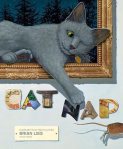
  • If You Make A Call on A Banana Phone by Gideon Sterer and Emily Hughes: One thing leads to another in this imaginative work; fans of Charlie & Mouse will recognize the art.Cover image of Cat Nap
  • Cat Nap by Brian Lies: A cat-and-mouse chase like you’ve never seen before. A note from the artist explains his respect for traditional, physical media, and how he learned each different medium to make the book, from stained glass to woodworking, sculpture to oil paint.  
  • The 13th Day of Christmas by Adam Rex: Didn’t you ever wonder who that song was about? Now we know.

Middle GradeCover image of The Undead Fox of Deadwood Forest

  • How to Talk to Your Succulent by Zoe Persico: Sure, lots of people talk to plants…but sometimes, the plants talk back.
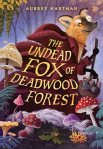
  • The Undead Fox of Deadwood Forest by Aubrey Hartman: A lonely undead fox guides other spirits through to their next stages, but is reluctant to pass through himself. Spooky, philosophical, and somehow cozy too; I would not be surprised or upset if this got some Newbery attention.
  • Batcat: Cooking Contest by Meggie Ramm: I love Batcat and Al so much. This time, they participate in a cooking contest at a fall festival.
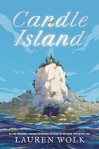
  • Candle Island by Lauren Wolk: A mother and daughter move to an island – a terrible place to keep secrets.Cover image of Candle Island
  • Oddball Histories: Spices & Spuds by Andy Warner: This informative graphic novel finally explains why salt and pepper were so darn important that countries were willing to invade and colonize for them.
  • So Over Sharing by Elissa Brent Weissman: This book couldn’t really have existed before the age of “influencers,” but its story of two daughters of “momfluencers” joining forces to make themselves heard is timely – and shows that sometimes, kids are savvier about privacy than adults are.
  • The Trouble With Heroes by Kate Messner: This novel in verse tackles all 46 Adirondack peaks, 9/11, and it has cookie recipes. And the dog is okay.
  • Into the Bewilderness by Gus Gordon: This charming, offbeat graphic novel is a classic grumpy/sunshine buddy comedy.
  • The Midwatch Institute for Wayward Girls by Judith Rossell: An orphan gloomy about her fate lands in a surprisingly magical place, where girls learn all kinds of useful skills and solve mysteries and crimes in their city. An absolute delight.Cover image of How to Say Goodbye in Cuban
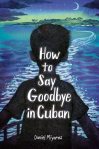
  • How to Say Goodbye in Cuban by Daniel Miyares: Daniel’s main character here is his own father during Carlos’ childhood in Cuba, as Fidel Castro takes over and many people decide to flee. A sentence or two of historical context precedes each chapter, giving readers just enough to understand the story.
  • The Teacher of Nomad Land by Daniel Nayeri: An unusual WWII-era story set in Iran in 1941, with a fiercely devoted pair of siblings and a Jewish refugee at its center, and a theme of communication between people.
  • Dory Fantasmagory: Center of the Universe by Abby Hanlon: Dory joins a soccer team, and it goes exactly how you’d expect. Dory hasn’t lost any steam in her seventh book, and I laughed out loud more than once. Everyone in my family fought to be the first to read this one.Cover image of A World Without Summer
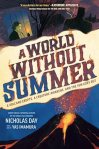
  • A World Without Summer by Nicholas Day: I loved last year’s The Mona Lisa Vanishes, and this one is even better because of the way it connects the climate shock caused by the eruption of Mount Tambora in 1815 to the climate change of today. The author’s style is quick and direct, and the tangents/B-plots are fascinating, from Mary Shelley’s Frankenstein to the velocipede to the naming of clouds and the study of weather.
  • Pocket Bear by Katherine Applegate: In WWI, some soldiers carried “pocket bears,” tiny companions to keep them company. In the home of modern-day Ukrainian refugees, Pocket Bear and other toys find a new lease on life and new homes. Poignant without being saccharine.
  • The Poisoned King by Katherine Rundell: This sequel (of a planned five-book arc) to Impossible Creatures is satisfyingly Shakespearean; Christopher Forrester returns from the first book to assist Princess Anya, and the dragons.
  • Rialto by Kate Milford (2026): Anxiety, amusement parks, a treasure hunt, a mystery; this is a brilliant stand-alone, but devoted fans will notice many little nods to earlier Milford books (especially The Raconteur’s Commonplace Book).

Young AdultCover image of Dan in Green Gables

  • The Judgment of Yoyo Gold by Isaac Blum (2024): Orthodox Jewish communities plus forbidden social media makes for a deeply relatable story.
  • Sunrise on the Reaping by Suzanne Collins: At last, Haymitch’s (bleak) story is revealed.
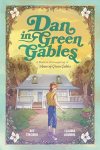
  • Dan in Green Gables by Rey Terciero: An irrepressible gay teen is dropped by his mother with grandparents he’s never met, and makes the best of a new situation, inspiring change in others and learning to be a bit more flexible as he does so. Joyful.
  • Vincent and Theo by Deborah Heiligman (2019): An incredibly well-researched deep dive into the brothers’ friendship and struggles, and the importance of Vincent’s sister-in-law in preserving his paintings and legacy.Cover image of Scarlet Morning
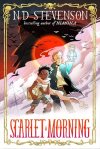
  • Scarlet Morning by ND Stevenson: Viola and Wilmur brave the peculiar dangers of their salt-encrusted world, adventuring with pirates and learning that the stories they grew up on are, in fact, still ongoing. Richly imagined; I want part two immediately.

Adult

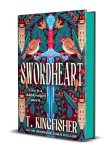
  • Swordheart by T. Kingfisher: This ensemble adventure quest is a perfect and deeply satisfying example of a heroine’s journey (see below). Cover image of Swordheart
  • Run for the Hills by Kevin Wilson: What if half-siblings started showing up out of the woodwork, and teamed up to hunt down a missing parent?
  • The Heroine’s Journey by Gail Carriger: Many readers and writers are familiar with the hero’s journey – but there’s another way of storytelling with completely different values and beats.
  • Time Loops and Meet Cutes by Jackie Lau: I do love a time loop romance. This one is cleverly done.
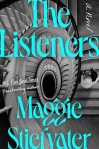
  • The Listeners by Maggie Stiefvater: Stiefvater’s first adult book (she’s been writing YA for years) knocks it out of the park, with a WWII-era story set in Appalachia, where a resort hotel is converted to hold Axis diplomats until they can be swapped to bring their Allied counterparts home. Cover image of The Listeners
  • The Nine Lives of Rose Napolitano by Donna Freitas: With this speculative premise, Rose’s life fractures into nine different timelines when she argues with her husband over (not) taking prenatal vitamins.
  • Memorial Days by Geraldine Brooks: Without the rituals of religion, the process of grieving is often shunted aside by the paperwork of death and the logistics of funeral planning. Years after her husband’s death, Brooks takes herself far away to grieve properly.
  • The Very Secret Society of Irregular Witches by Sangu Mandanna: Another heroine’s journey with a cozy magical ensemble cast (see also: The Teller of Small Fortunes, The House on the Cerulean Sea)
  • Dinner With King Tut by Sam Kean: Experimental archaeology seeks to learn about the past through hands-on experience: making and using tools to better understand the peoples of other times and places. Fascinating.Cover image of The Art of Ramona Quimby
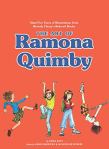
  • The Art of Ramona Quimby by Anna Katz (2020): This is technically an adult book…about children’s books. It’s the most riveting “coffee table book” I’ve ever read: a nostalgic trip through each book about Ramona Quimby and her family, presenting and comparing how each illustrator chose to represent the characters and scenes. 

The Heavy Medal and Calling Caldecott blogs are ramping up in preparation for youth book award season in January; I’m sure there will be more noteworthy books between now and the end of December. What have you read so far this year that you think more people should know about?