Toward the end of the picture book panel at the SBCWI winter conference, Sarah Baker said, “We all have special books in our lives that we keep coming back to over and over again.” She asked the panelists (Joanna Cárdenas, Elizabeth Bicknell, and Andrea Welch) to talk about “a classic book for you – what is it about that book that has that magic for you, what makes it exciting and important and lasting?”
They mentioned enduring classics (The Snowy Day by Ezra Jack Keats, The House in the Night by Susan Marie Swanson and Beth Krommes) and more obscure titles (Sara & Hoppity by Roberta Leigh), as well as contemporary books (the upcoming Watercress by Andrea Wang and Jason Chin). Of course, it got me thinking: what childhood books did I bring with me into adulthood and parenthood? What new books have become “important and lasting” to me in the past five years?
Usually when I am putting together a book list, I have a hard time keeping it short, but this time, it wasn’t that hard to narrow it down.
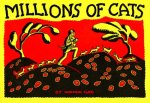
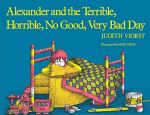
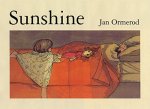
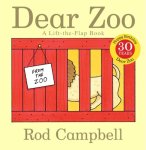
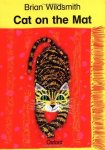
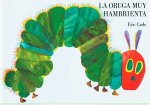
From childhood, the picture books I remember best are Where the Wild Things Are by Maurice Sendak, The Very Hungry Caterpillar by Eric Carle, Dear Zoo by Rod Campbell, Sunshine by Jan Ormerod, The Cat On the Mat by Brian Wildsmith, Alexander and the Terrible, Horrible, No Good, Very Bad Day by Judith Viorst, Millions of Cats by Wanda Gag, and Alligator Cookies by James Young (I have yet to meet someone else who has even heard of that last one, but all the others are pretty well-known).
What makes these books memorable? For some, it’s the ubiquity: just try working as a children’s librarian and not encountering Dear Zoo, The Very Hungry Caterpillar, or Wild Things. As a librarian, I’ve gained a new appreciation for these three. Caterpillar is endlessly appealing: it’s a counting book, a days of the week book, an animal and food book, a book about transformation. Dear Zoo has the lift-the-flap element, animals, and a happy ending. And Where the Wild Things Are – people have probably written entire theses on Wild Things, but what I think of now – thanks to Megan Dowd Lambert – is the air frames around the illustrations on the initial pages, and how the illustrations become full-bleed as the story progresses. The pictures quite literally expand as Max’s imagination takes over the story, before he returns to his “very own room.”
Millions of Cats is perhaps not as universally well-known as those three, but it has that lovely repeated refrain (“hundreds of cats, thousands of cats, millions and billions and trillions of cats”), it has a landscape format perfectly suited to the old man’s journey, and it has unique black and white art. The slightly smaller-than-average trim size makes it feel intimate, as well. Likewise, Sunshine by Jan Ormerod, a wordless picture book, is suffused with warmth; it’s an intimate look at a family’s morning routine, which felt familiar (all families have routines) and different at once.
Cat on the Mat rhymes and has a great moment of drama, resulting in an ending that mirrors the beginning – a lovely symmetry that even very young children can appreciate. Alligator Cookies also rhymes, has a fun hide-and-seek element, and – for my money – is a far better rainy-day book than The Cat in the Hat. Plus, there’s a recipe! I remember making “alligator cookies” as a kid (peanut butter, corn flakes, and green food coloring: “you don’t have to bake them, you just have to eat them!”).
Alexander and the Terrible, Horrible, No Good, Very Bad Day by Judith Viorst and Ray Cruz is a classic for a reason. There’s the distinctive art, with its detailed cross-hatching and Alexander’s grumpy expression, but even more, there’s the universal experience of having the kind of bad day where so many little things pile up on you that you think about moving to Australia. The final revelation (“Some days are like that. Even in Australia”) underscores the universality of bad days – and the hope that tomorrow will be different.
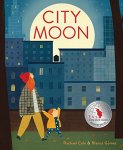
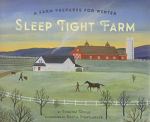
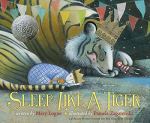
What picture books have burrowed into my heart since these? Naturally, a few of them are bedtime books: City Moon by Rachael Cole and Blanca Gomez, Sleep Tight Farm by Eugenie Doyle and Becca Stadtlander, Sleep Like A Tiger by Mary Logue and Pamela Zagarenski. Each of these takes a different angle on easing into rest: in City Moon, a mother and young son take a walk through a city, looking for the moon before bedtime. In Sleep Tight Farm, a whole family works together to “put the farm to bed” before winter. In Sleep Like A Tiger, a girl insists she’s not sleepy, and her parents say she doesn’t need to go to sleep, but she does need to put on her pajamas, brush her teeth, and get under the covers. Once there, the girl asks if all animals sleep, and comes up with her own example. (Zagarenski’s magical illustrations are what tip this book into “favorite” status for me; she wrote and illustrated Henry and Leo as well, another close-to-my-heart book.)
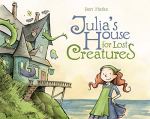
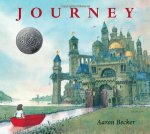
Nearly all of the other books have an element of fantasy, starting with Ben Hatke’s Julia’s House for Lost Creatures and Aaron Becker’s Journey trilogy (Journey, Quest, and Return). The art styles are completely different: Hatke also creates graphic novels, and that style carries over to his picture books, which mix comics frames and full-bleed art. Julia as a character is so expressive and independent; she’s welcoming and nurturing, but she has boundaries as well and isn’t afraid to enforce them. Her world is full of the fantastic, but she brings order to it (and tea and toast). Becker’s art…I would like to live inside Becker’s art. As in the best wordless picture books, I notice something new every time I read them, every journey the nameless protagonist takes (first alone, then with a friend, and finally with her father). The girl is lonely, loyal, brave, creative, and quick; she enters easily into a magical world through a door she draws herself (a la Harold and the Purple Crayon).
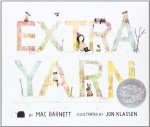
Extra Yarn by Mac Barnett and Jon Klassen fits under the fantasy umbrella as well: Annabelle finds a box full of yarn of every color, and no matter how much she knits, there is always extra yarn. “Things began to change in that little town,” but Annabelle’s yarn is stolen by a greedy archduke – who finds the box empty when he opens it. He throws it out the window, and it floats on an ice floe back to Annabelle. Extra Yarn has moral justice, humor, and Annabelle’s creativity and generosity, as well as a poetic, repeated turn of phrase: “But it turned out, [she/it/there] was.”
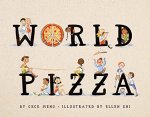
World Pizza by Cece Meng and Ellen Shi involves a wish come true, in a roundabout way: on a hilltop with her family, a mother makes a wish for world peace, but she sneezes in the middle of her wish, and gets world pizza instead. Pizza rains down all over the world, with all kinds of unique toppings; everyone eats until “their bellies were full and everyone was happy.” In a coda at the end, one of the children says he’s sorry Mama didn’t get her wish. “Next time,” she replies with a smile.
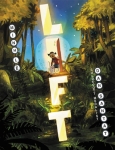
Lift by Minh Lê and Dan Santat nods to portal magic like Journey: older sister Iris takes an old elevator button out of the trash and sticks it on the wall next to her closet door. Ding! The button lights up, and Iris opens the door to a new somewhere else each time: jungle, international space station, snowy mountain summit. At first, Iris wants to escape her little brother, but it’s his cries that bring her back, and ultimately, she realizes that she wants him with her on her next adventure. Lift has a timeless feel, but, published in the summer of 2020, its core message (“After all, everyone can use a lift sometimes”) felt so needed. (There’s also the subtle wordplay of “lift” as both noun and verb, though we usually say “elevator” in the U.S.)
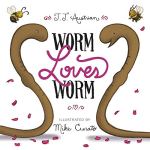
Worm Loves Worm by J.J. Austrian and Mike Curato uses animal characters to illuminate the absurdity of fixed gender roles, and to show that we don’t need to do things a certain way just because “That’s how it’s always been done.” Curato’s absolutely charming Worms (not to mention Cricket, Beetle, the Bees, and Spider) are all the argument anyone needs that love is more important than traditions; love shines in this kind, gentle book, with touches of humor throughout.
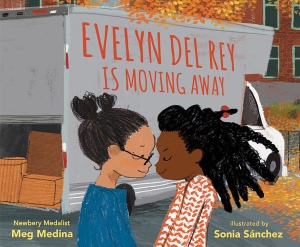 Lastly, Evelyn Del Rey Is Moving Away by Meg Medina and Sonia Sanchez centers around the heartbreaking and very real experience of having a best friend move away. On the very first spread, narrator Daniela tells the reader that her “mejor amiga, my número uno best friend” has invited her over to play, “Just like today is any other day.” From that sentence, the reader knows it’s not like any other day – today is different. The girls play while the last boxes are packed and loaded, even “Evelyn’s mirror with the stickers around the edge” (that detail!). At last, all that’s left is to say goodbye: “Evelyn Del Rey is moving away. So she won’t be right here anymore.” (Just try to read this book without tearing up. I cannot do it.) However, the story ends on a note of hope: the final page shows a grown-up Daniela, reading a letter from Evelyn, because these “número uno amigas” stayed in touch.
There are, of course, many more picture books that I love, that make me laugh, that teach a lesson gently, that amaze me with their art and creativity, that I love to share aloud with kids, but these ones are especially special. As Liz Bicknell of Candlewick said about her own list, this group might seem eclectic, but I’ve tried to pinpoint exactly what it is I love about each one. What are your favorite picture books?
 Those of us who do storytimes for little kids know that we shouldn’t expect them to sit quietly, hands folded in laps, listening ears on – not at all! The best storytimes I’ve attended or led incorporate movement, singing, and plenty of wiggling. (Directed movement is better than chaotic movement: one of the best tips I got when I was new to leading storytimes was that if things got rowdy, to sing “Twinkle Twinkle, Little Star” – with motions – because it’s soothing and works as a good reset. You can also sing any short rhyme three times: first regular, then loud, and finally very softly.)
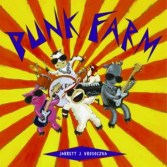
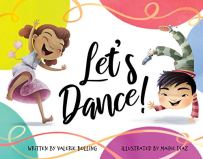
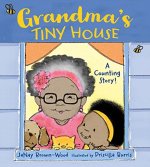
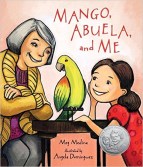
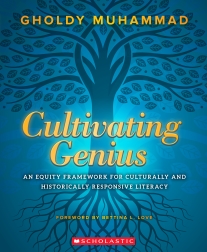 Dr. Muhammad is the author of Cultivating Genius, and an amazing speaker with an inspiring message, a deep understanding of history, and the expert delivery of a slam poet (the live chat was full of librarians planning to buy her book or see if she was available to speak to their schools or other organizations). “STORIES MATTER,” she said (it sounded like it was in all caps), and she referenced the danger of a single story (see:
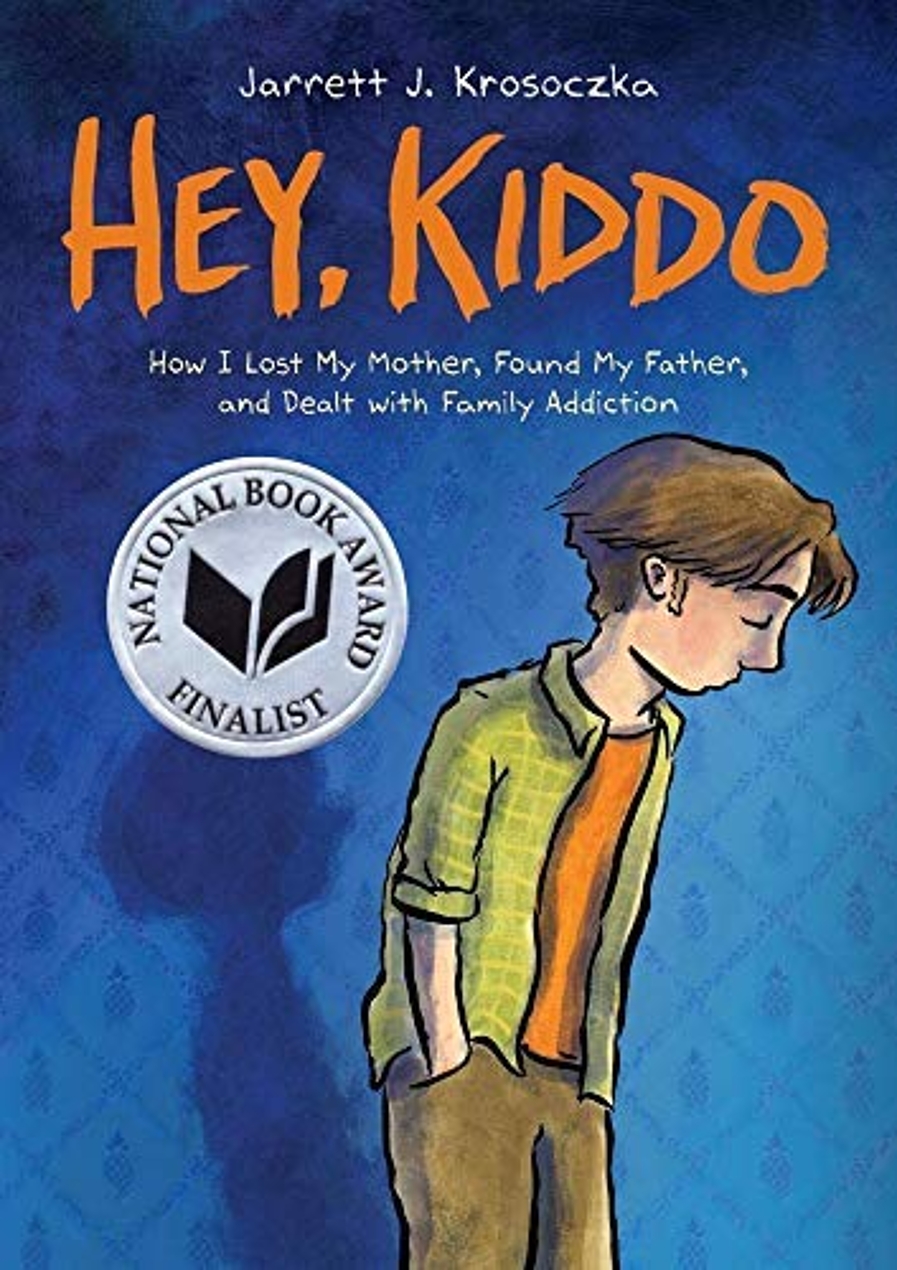 Krosoczka is the Massachusetts-based author of the popular Lunch Lady series of early graphic novels, as well as the award-winning graphic memoir Hey, Kiddo. He talked about his long history of virtual author visits and book launches, and how his model has changed over the years as technology has changed. He asked himself, “I don’t want to be just a talking head, how can I make this more interesting?” When the pandemic arrived in March 2020, he began “Draw Every Day with JKK,” a popular series of drawing sessions. His home setup has improved with time; he noted that phone cameras are usually better quality than computer cameras, and if you mount one on a tripod, it doesn’t hurt to put googly eyes on it so you know where to look. Krosoczka closed with, “Students just want to be heard. They just want an adult to listen.”
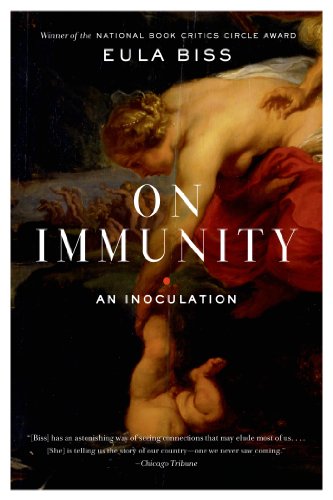 I’ve been following Eula Biss’s writing since I got a galley of On Immunity: An Inoculation back in 2014 (she said during this interview that she “would love for that book to become obsolete,” but if you know anyone asking themselves “to vaccinate or not to vaccinate?” please buy them a copy). Eula joined writing instructor and Emerita Senior Faculty Associate Deb Gorlin to discuss her writing career and her newest book, Having and Being Had.


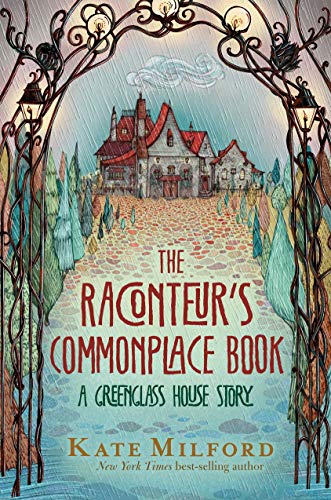 If we’ve met in real life, probably I have talked your ear off about Kate Milford’s Greenglass House books. Her kind of world-building is one of my favorite kinds: our world, but different. And the ways that it’s different are so inventive and compelling to me, from Nagspeake’s shifting iron and the Skidwrack river to the existence of roamers, a culture of smuggling, and an evil catalog company. Plus, the structure of her books is excellent, and nearly always features an ensemble cast of interesting characters, many of whom cross between books – basically, David Mitchell for middle grade, but completely her own. And her newest book, The Raconteur’s Commonplace Book, is actually the book that Milo (main character of Greenglass House) reads – so Kate invented a book-within-a-book, then wrote that book. And like Greenglass House, it’s an Agatha Christie-style strangers-stuck-in-a-house-together setup.
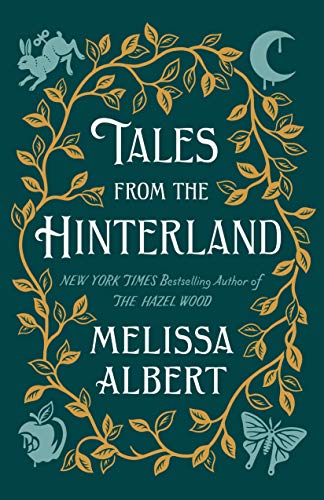 Melissa Albert pulled off a similar trick with Tales of the Hinterland, which she first dreamed up within the context of The Hazel Wood. Tales is a book of dark fairytales that is out of print and hard to access, adding to its mystery and allure. As a reader and a writer, I am in awe: it’s hard enough to invent a creative work that exists for your characters within the world of the book, like Nick Hornby does in Juliet, Naked and David Mitchell does in Utopia Avenue. This piece of art exists for the characters, and grows in the reader’s imagination until it has nearly mythological status. So then, to write that book – and have it meet or exceed expectations – takes immense bravery and talent. Brava!

 Jenny Arch