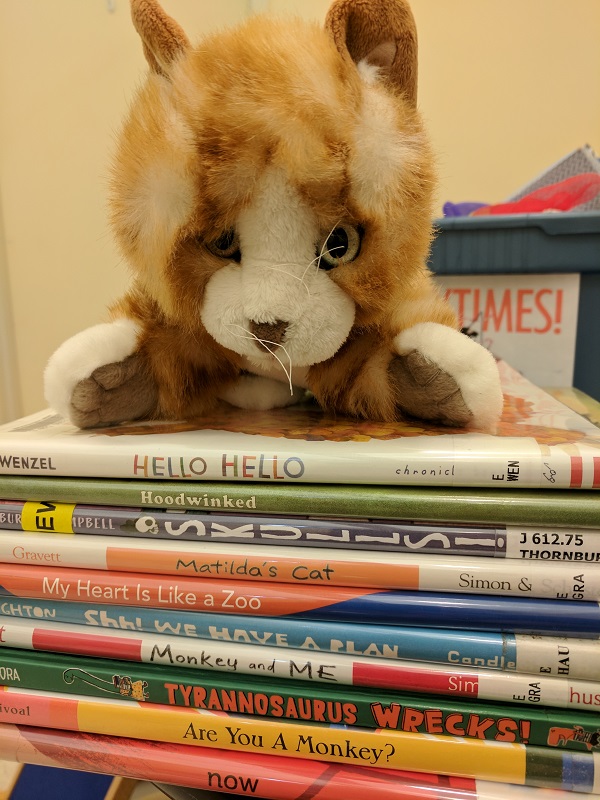
Today we started with 13 kids and ended up with at least 18, as a few more trickled in during our hello song and first book. I don’t read holiday-specific books, but we had a spooky/zoo theme today, in honor of it being October.
- Welcome and announcements (the library is closed next Monday)
- “Hello Friends” with ASL (Jbrary)
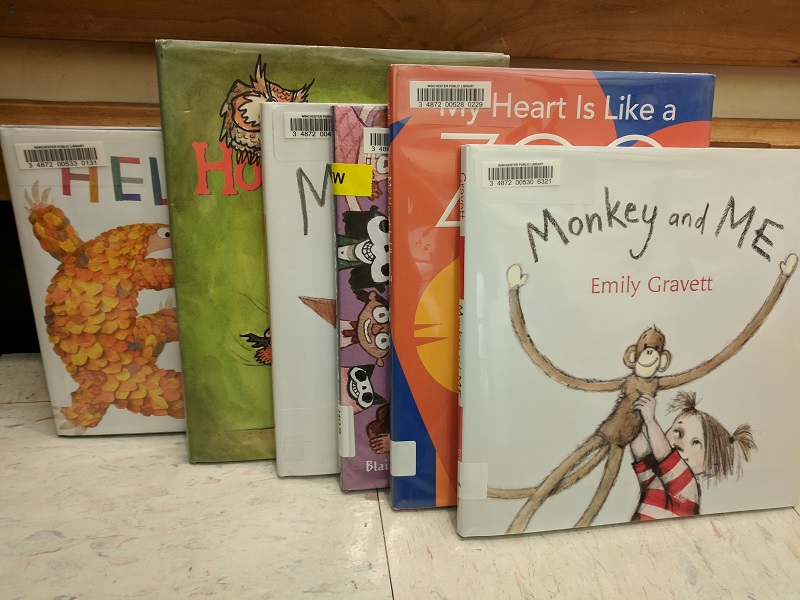
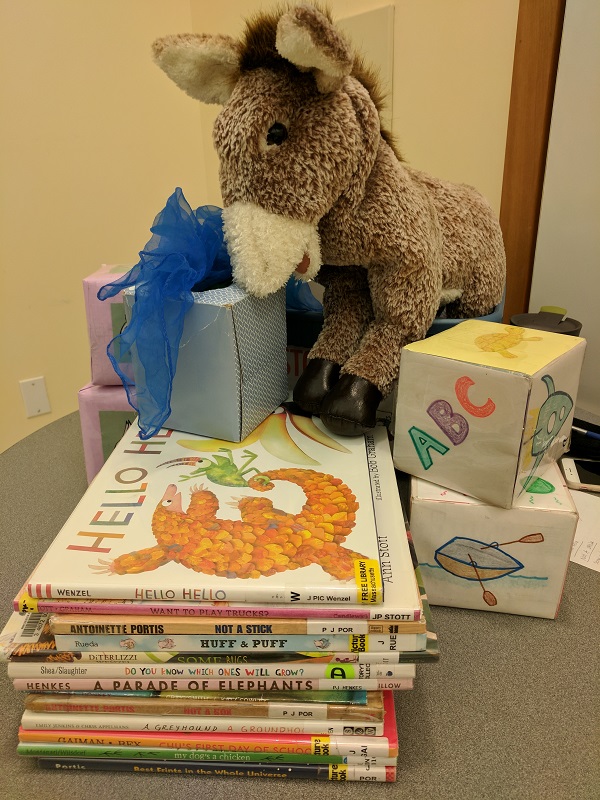
- Hello Hello by Brendan Wenzel: This is one of my favorite books to start a storytime with, because of the many opportunities for movement, observation, and saying hello to our friends and neighbors.
- Hoodwinked by Arthur Howard: I started by asking who had a pet, and what kind, then introduced Mitzi, who wants a pet too. This is on the longer side for the younger kids, but they made it through! I found an orange cat puppet in the closet, just like Hoodwink.
- Yoga and songs: “I Had A Little Turtle,” “If You’re Happy And You Know It.” One kid started to cry, so we segued from mountain pose and toe-touching into star pose and sang “Twinkle Twinkle” as we swayed back and forth.
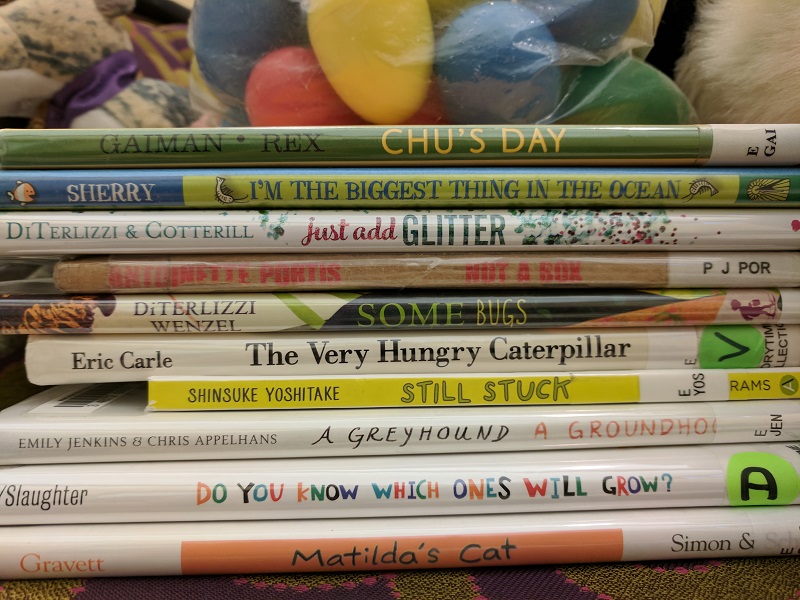
- Matilda’s Cat by Emily Gravett: Fortunately, Matilda’s cat looks a lot like Mitzi’s cat Hoodwink, so I could use the same puppet.
- Skulls! by Blair Thornburgh: This might be the first time I’ve read a nonfiction picture book at storytime, and it worked out great! Halloween decorations are starting to appear, so kids had seen skeletons, and the book has a positive, reassuring message about skulls (“they’re like a car seat for your brain!”).
- “Head, Shoulders, Knees, and Toes” (we’d identified eyes, ears, mouth, and nose in Skulls!) and some more songs.
- My Heart Is Like A Zoo by Michael Hall with flannel board (I made a frog, crab, clam, owl, and penguin, which the kids identified before I started reading the book)
- Monkey and Me by Emily Gravett: I stood up to read this one so we could all do animal impressions throughout.
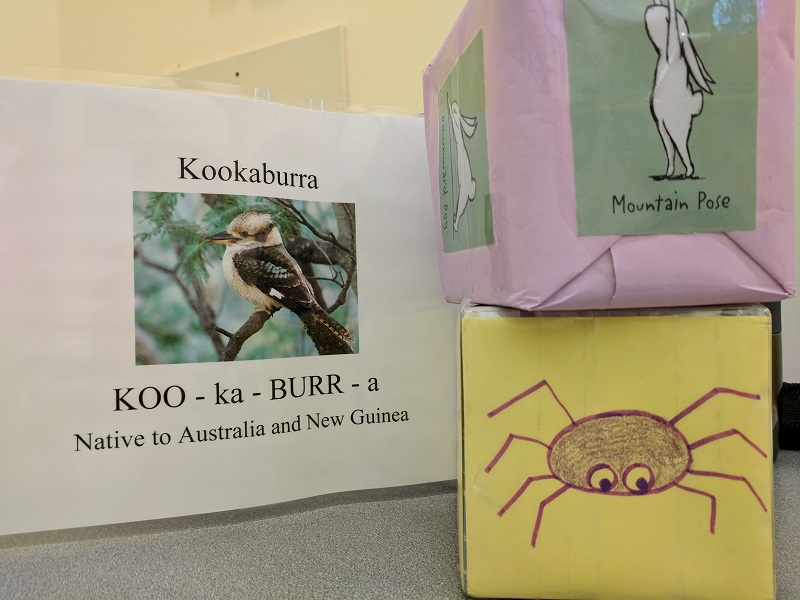
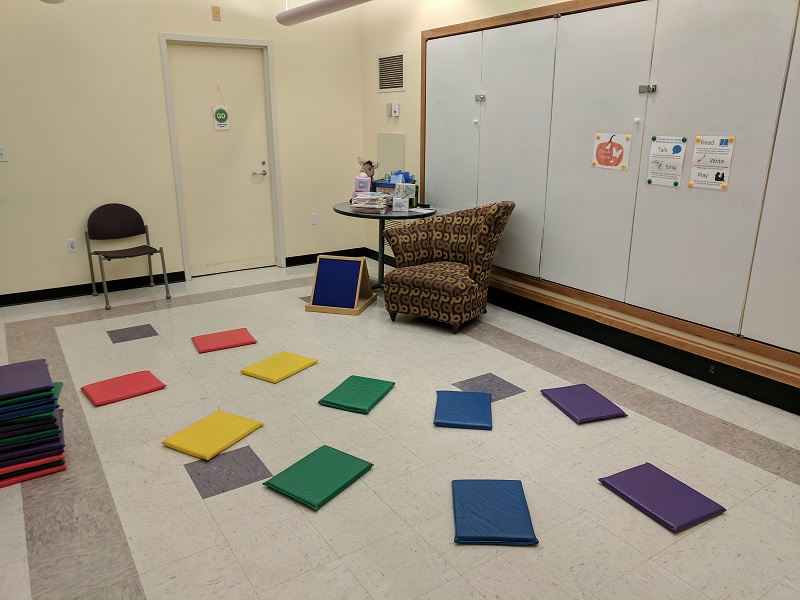
- The rest of the songs on the song cube, “Goodbye Friends” with ASL, clean up mats
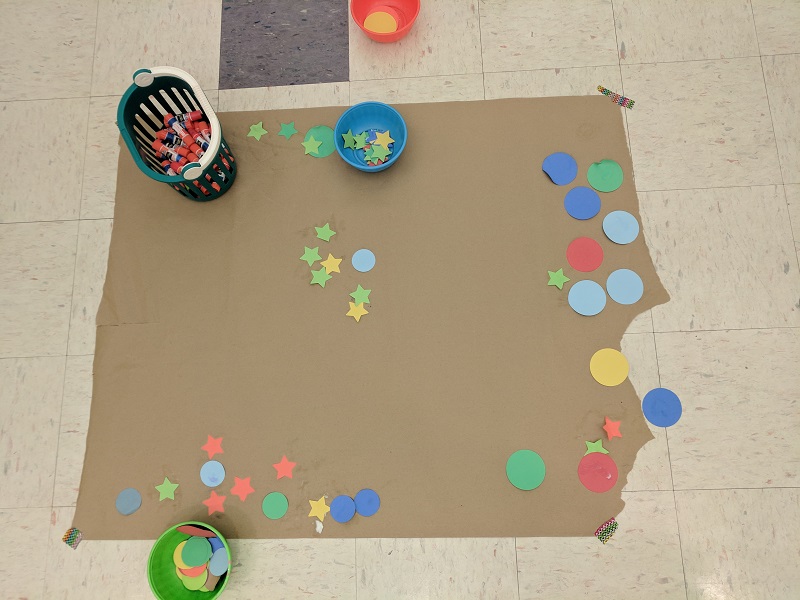
- Coloring on butcher paper taped to floor; Caspar Babypants music
It seems really obvious, but encouraging grown-ups both at the beginning and end of storytime to come to me with any book- or library-related questions totally works! I’ve had one or two people approach me after each storytime so far this fall. Today’s question was about the Kevin Henkes Penny books (Penny and Her Song, Penny and Her Doll, Penny and Her Marble). I showed them where they should be on the shelf, showed them where Kevin Henkes picture books are, and recommended Frog & Toad and Charlie & Mouse as well.
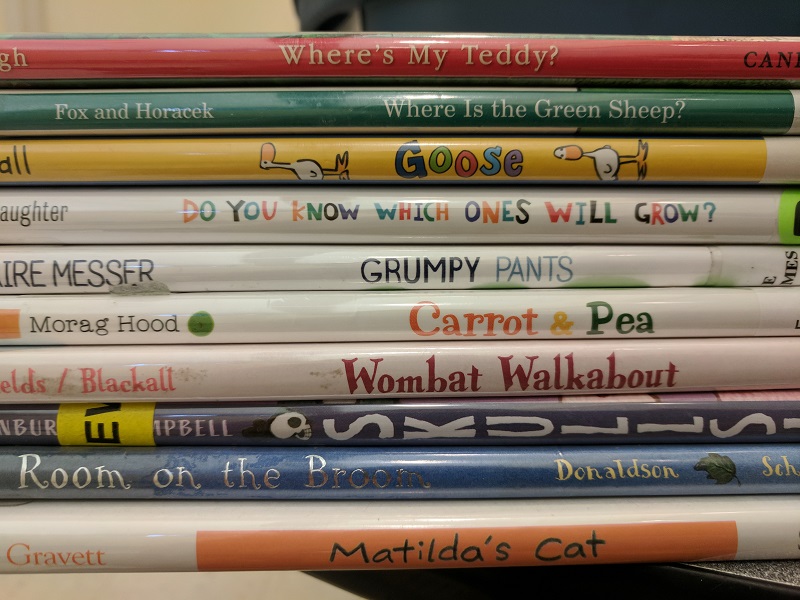
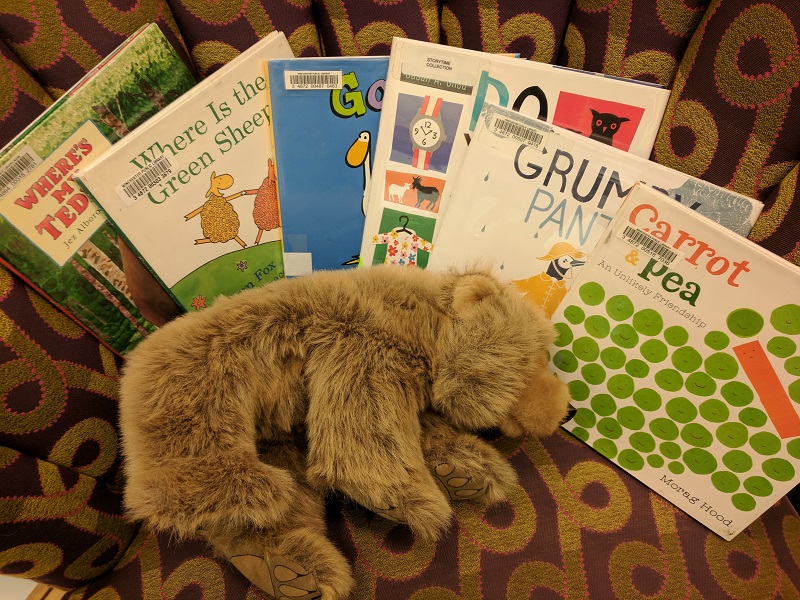




 There were some really clever team names (Granger Danger was my favorite), and I was so happy to hear that at least one team at the event had been waitlisted for trivia in January, and were able to come to this one. There was also a team that left after round four because the kid on the team hadn’t read books five through seven yet, but said they’d had a wonderful time.