Pajama Storytime: One year anniversary

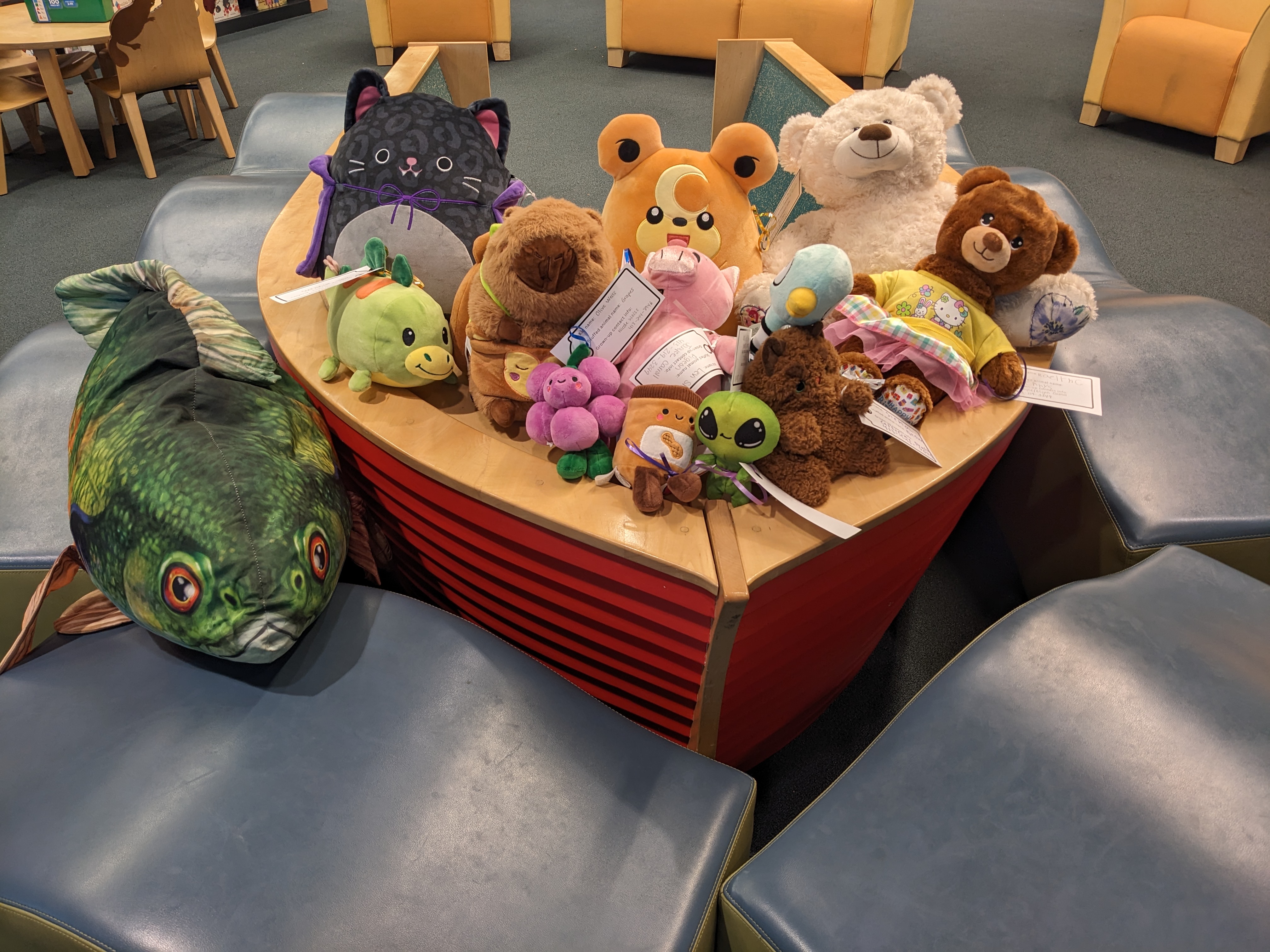
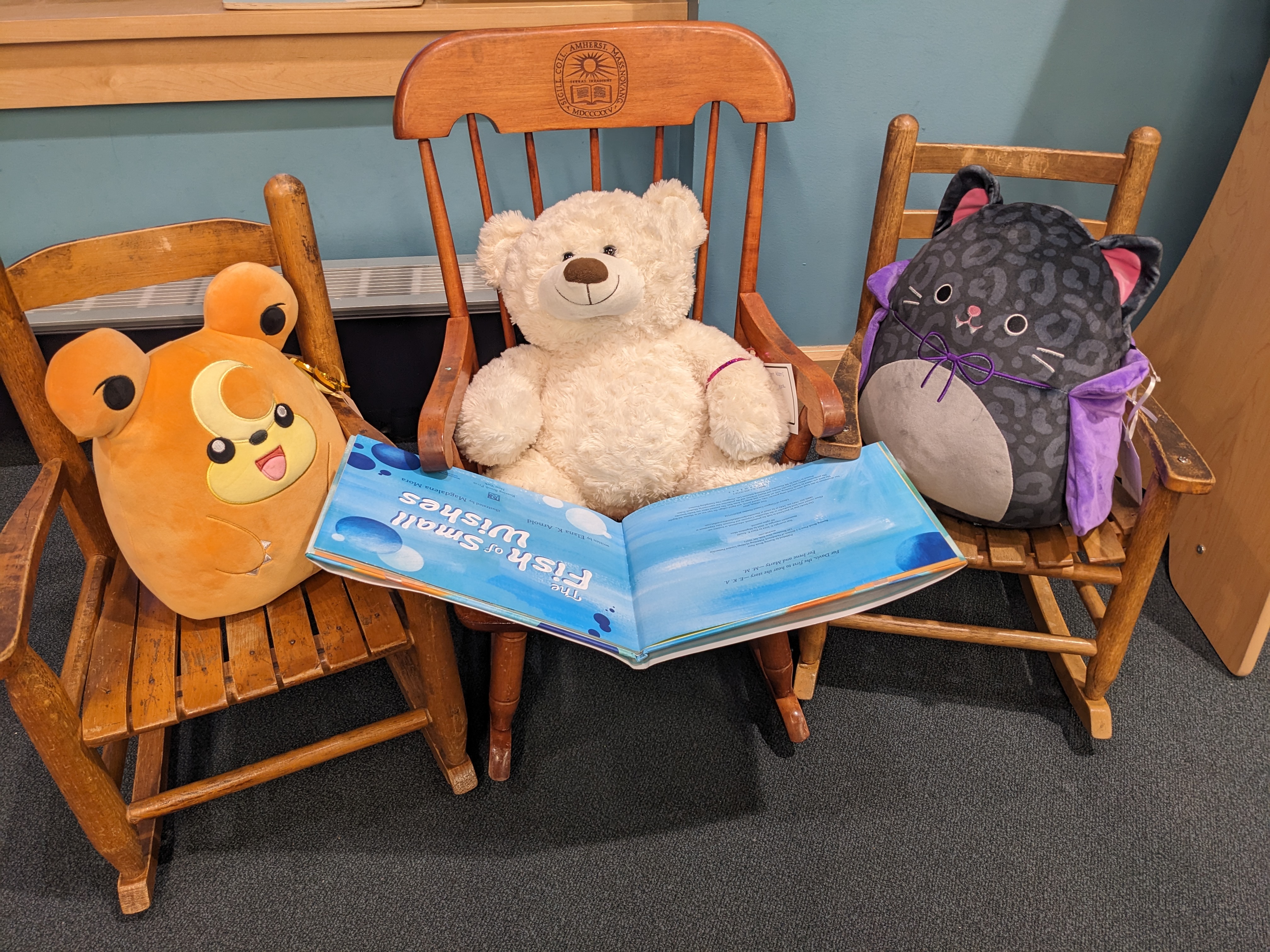
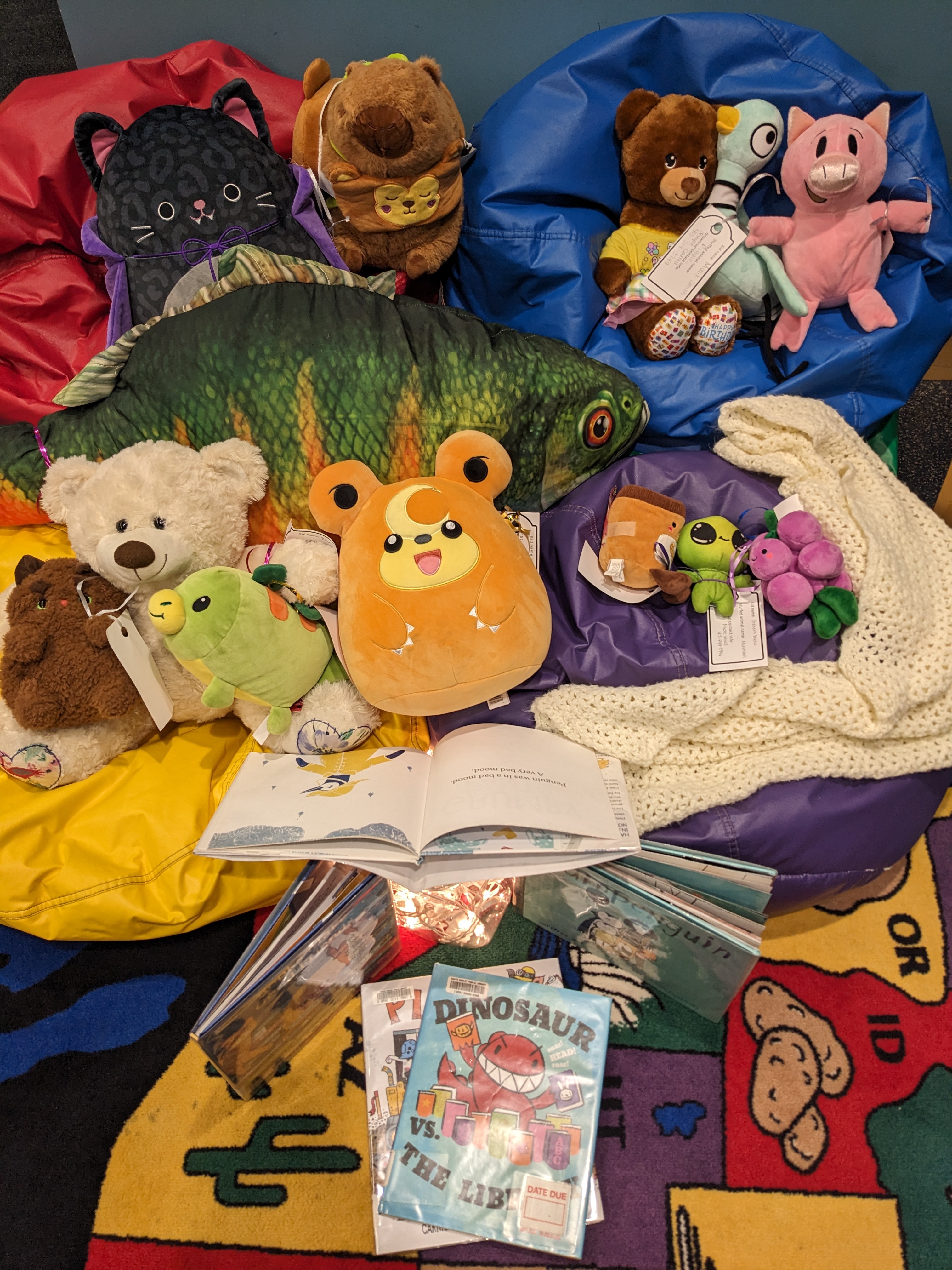
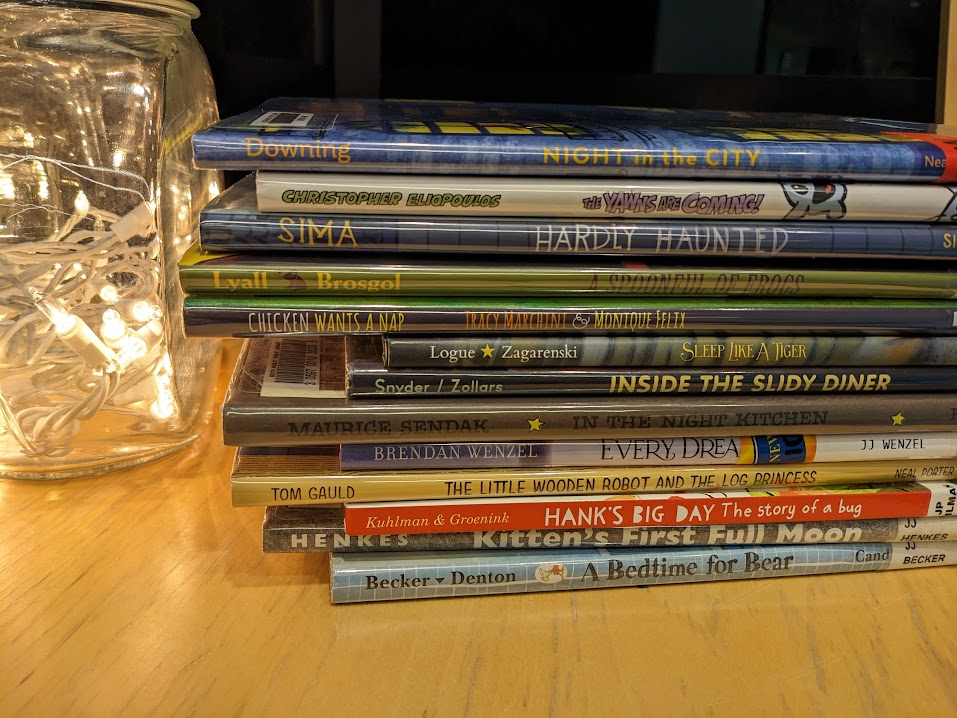
twinkle lights in a jar, a stack of booksThis Monday was the one-year anniversary of the Pajama Storytime program I started last fall. Some excited loyal regulars came in their jammies and slippers with their stuffed animals, and a brand-new family came too (they heard about it from a grandparent who visits the library weekly). We had cocoa and cookies and read some new books and some old favorites:
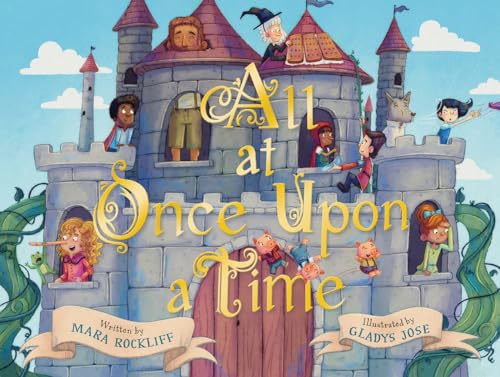
  • All At Once Upon A Time by Mara Rockliff, illustrated by Gladys Jose
  • Sleep: How Nature Gets Its Rest by Kate Prendergast
  • Cub’s Big World by Sarah Thomson, illustrated by Joe Cepeda
  • Where the Wild Things Are by Maurice Sendak (yes, everyone’s read it before; no, we hadn’t read it at Pajama Storytime yet. And I just read this cool article about it by picture book makers Jon Klassen and Mac Barnett. Pay attention to the moon!)
  • Hoodwinked by Arthur Howard
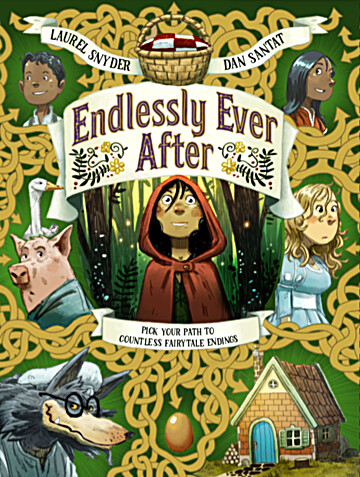
  • Endlessly Ever After: Pick Your Path to Countless Fairy Tale Endings! by Laurel Snyder and Dan Santat

Cover of Endlessly Ever AfterEndlessly Ever After has become a mandatory staple since last December; it’s the book we always end with, but it’s different every time because of its pick-your-path nature. (Our storytime group is beyond excited that there is going to be another one in, I think, 2026? Laurel and Dan, if you need beta readers, we are at your service.)
Here are a few other books we’ve read more than once at Pajama Storytime:

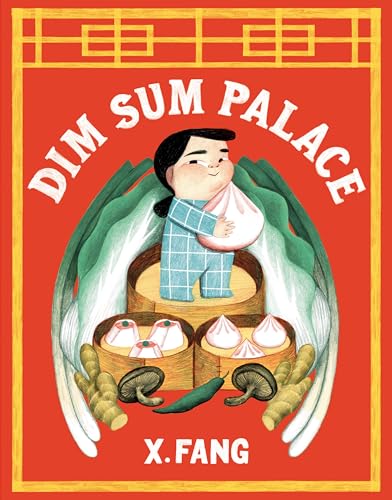
  • Dim Sum Palace by X. Fang (this has Night Kitchen vibes)
  • The Yawns Are Coming by Christopher EliopoulosCover image of Dim Sum Palace
  • Goodnight Veggies by Diana Murray and Zachariah Ohora
  • Night in the City by Julie Downing
  • Tell Me What to Dream About by Giselle Potter
  • Telling Stories Wrong by Gianni Rodari and Beatrice Alemagna
  • Are You Awake? by Sophie Blackall
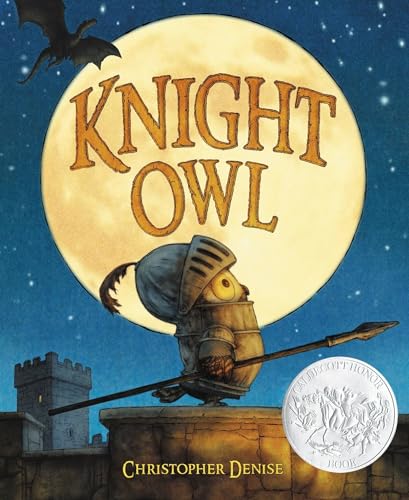
  • Knight Owl by Christopher Denise
  • Just Because by Mac Barnett and Isabelle Arsenault
  • Cover image of Knight Owl

  • The Little Wooden Robot and the Log Princess by Tom Gauld
  • If You Come to Earth by Sophie Blackall
  • Inside the Slidy Diner by Laurel Snyder and Jaime Zollars
  • Mama in the Moon by Doreen and Brian Cronin
  • There’s a ___ in Your Book by Tom Fletcher

Cover image of All At Once Upon A TimeAs you can see, we lean toward bedtime books and fairy tales, including fractured fairy tales. I can already tell All at Once Upon A Time is going to be a repeat read; it goes so well with Endlessly, and the kids – and grown-ups! – who come to Pajama Storytime are old enough to understand and enjoy the humor. That’s something I love about Pajama Storytime: I get to read some wonderful books that are simply too long or complex for my morning storytime, which is mostly toddlers. There are great picture books for that age, too, and I love them, but Pajama Storytime lets me share more books with a different audience.
Allons-y! But not next week, the library will be closed on Monday for Indigenous Peoples’ Day.

“Bearmail”: Answering questions via desk mailbox

Many years ago at the Fox Branch Library in Arlington, MA, I noticed a bulletin board in the lobby. On the bulletin board were questions and comments that people had dropped into a suggestion box – and the library staff’s answers to those questions and comments. [Insert brain-exploding emoji here] What a brilliant, transparent way to communicate with patrons! Also, if one person has a question, others likely have the same question, so answering publicly helps more than just one person.

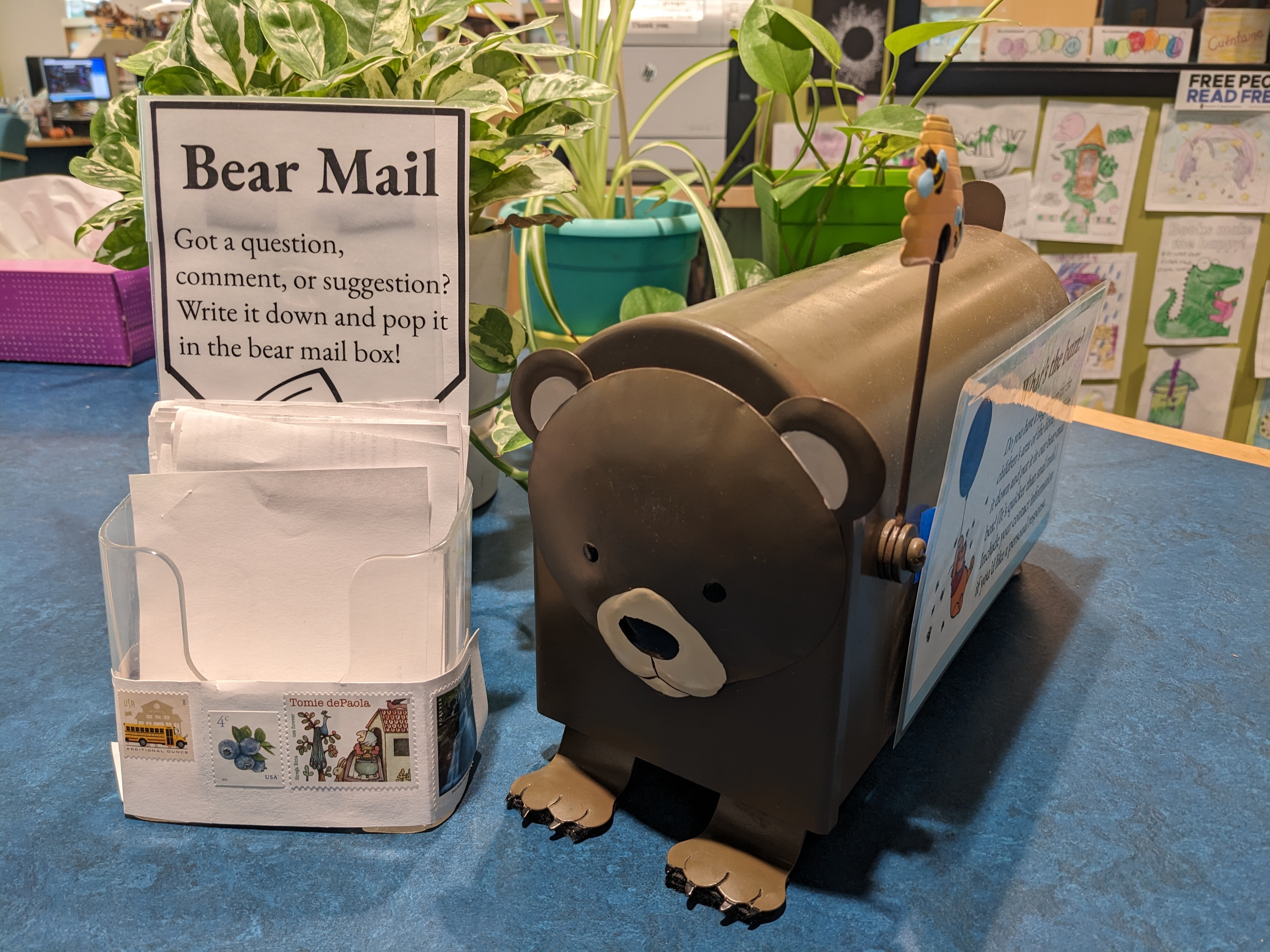
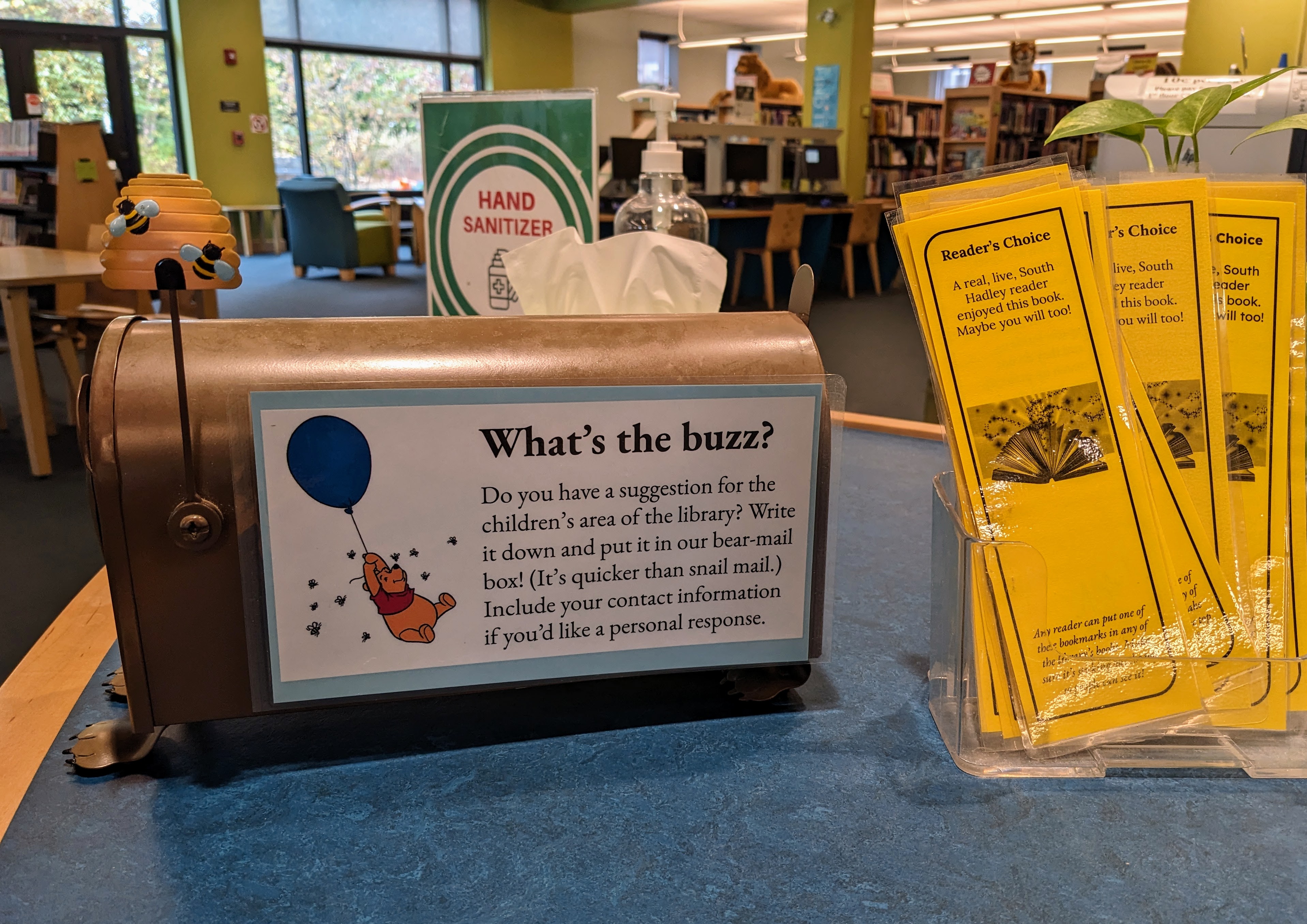
Bear-shaped desk mailbox with beehive flag and scrap paper for writing notesWhen I started my current job as the children’s librarian at a public library, I found an unused mailbox shaped like a bear, complete with little beehive flag. I set it up on my service desk, inviting people to leave notes – questions, comments, suggestions, anything! On a nearby column, I tape up the notes with my responses.

Over the last year, I’ve gotten dozens of notes. Sometimes people leave a note while I’m sitting right here, other times when I’m away from my desk. Sometimes it’s kid scribbles (great early literacy and fine motor practice!), occasionally a complaint or praise, most often a suggestion or question about the books in our collection or the programs that we offer.

Side view of bear mailbox, with "what's the buzz?" instructionsA few sample notes and responses (lightly edited for spelling, etc.):
  • “Do you have any recommendations for Matilda-length chapter books about fantasy? With no pictures?” –> “Sure! Here are some to try: Greenwild by Pari Thomson, The Guardian Test by Christina Soontornvat, Earwig and the Witch by Diana Wynne Jones, Tuesdays at the Castle by Jessica Day George, Falling In by Frances O’Roark Dowell”
  • “Recommendation for PJ Storytime: The Nuts: Bedtime at the Nuthouse. It’s one of our faves!” –> “Thanks for the suggestion! I requested it from another library.” [I read it at a subsequent Pajama Storytime program.]
  • “Get more scary books!” –> “OK! Have you already tried Goosebumps, Eerie Elementary, and Scary Stories to Tell in the Dark?”
  • “I think you guys should have bunnies and hamsters here.” –> “I would love to have a library pet! Maybe someday….In the meantime, have you seen Miss Bethany’s fish Moose?”
  • “You should start a face drawing club.” –> “Comics Club meets every Tuesday afternoon! We also have lots of How to Draw books you can borrow and take home.”
  • “The library should do book bingo again!” –> “We are! [Dates of summer book bingo program]”
  • “Saturday morning activities would be great!” –> “We try to do at least one a month! Anything in particular you’d like to see?”More mystery books
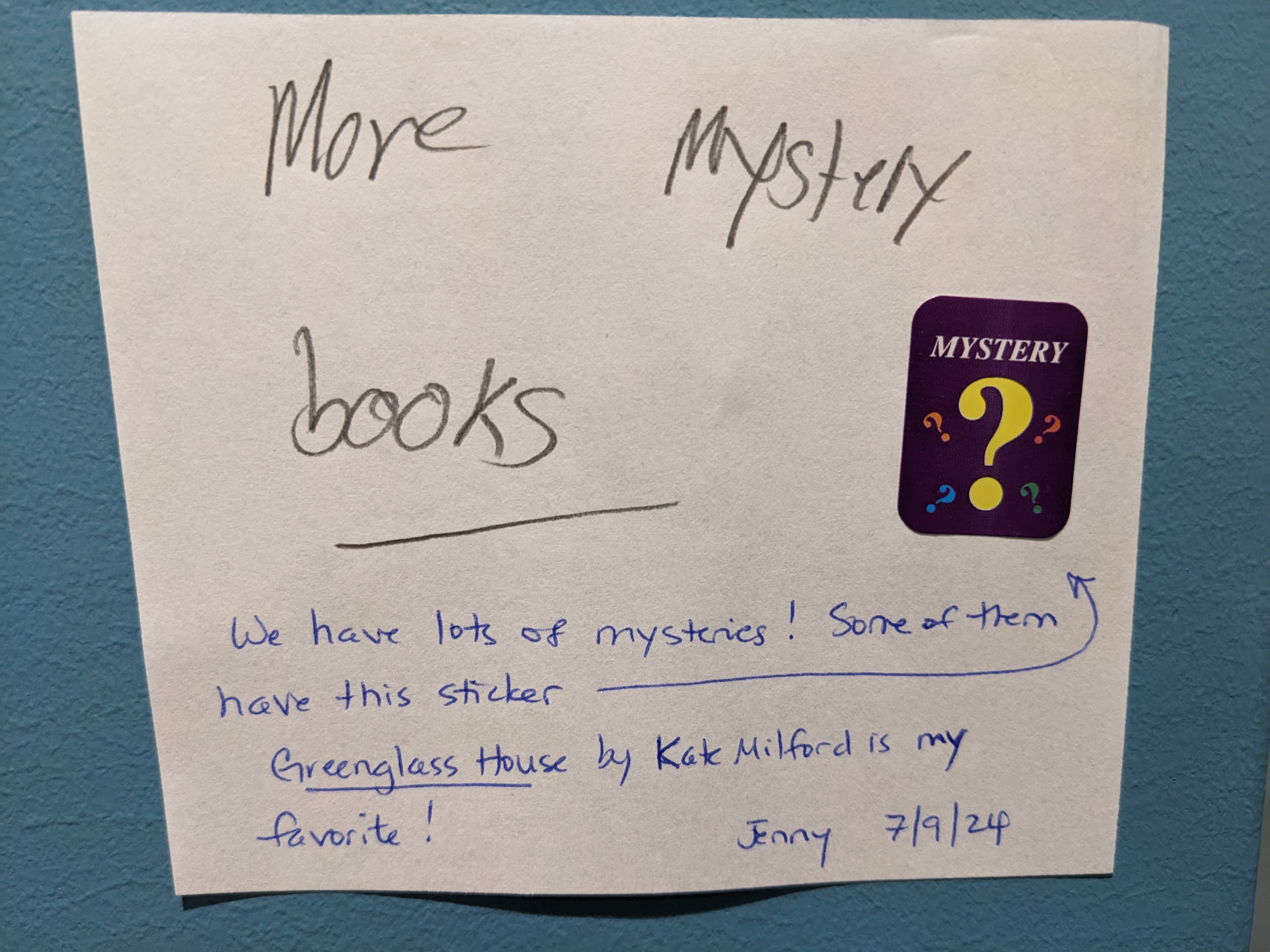
  • “More mystery books” –> “We have lots of mysteries! Some of them have this sticker. One of my favorites is Greenglass House by Kate Milford.”
  • “Can you get the book Out of My Dreams [by Sharon Draper] when it comes out?” –> “Absolutely! We have to have the sequel to Out of My Mind and Out of My Heart. It will be published September 3, 2024.”
  • “Make more Roald Dahl books like The Twits” –> “Roald Dahl died in 1990 and can’t write any more books…Have you tried George’s Marvelous Medicine?”

One person asked, “Why aren’t the librarians here a lot of the time I’m here?” This one is kind of heartbreaking, but there is only one children’s librarian here (me). I work 40 hours a week (which is plenty! I miss my 35-hour week), but the library is open 52 hours, so the children’s desk is unstaffed at that time. People can get help at the main circulation desk, but it’s not the same level of service as having a children’s librarian present in the room to greet everyone and ask if they need help. I’m also not at my desk if I’m running a program, like Rhyme Time, Story Time, or one of the book clubs. What’s the answer to this one, then? An apology, and a request: Ask the Town to fund more staff for the library!

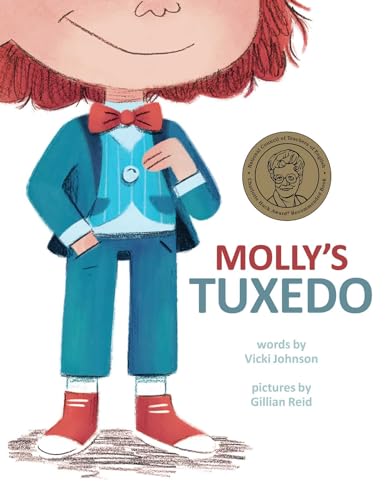
cover image of Molly's TuxedoTo end on a happy note (no pun intended): My favorite note so far was about how the book Molly’s Tuxedo by Vicki Johnson, illustrated by Gillian Reid, was affirming for a child deciding what to wear ahead of a family holiday, and helped foster a conversation with a grandparent too. The note-writer concluded, “Thank you for your commitment to diversity + inclusion!” It’s gratifying to see that books really do make a difference. I was able to share this note with the book’s author on social media, and I hope she was half as pleased as I was.
There are lots of reasons to encourage open communication and solicit feedback on a regular basis. You’ll hear about what you can do better, get ideas for positive changes, and you may be pleasantly surprised or get a laugh now and then! How do you communicate with patrons in your library?

Library Book Clubs for Kids, or, I Heart Back Matter

When I first started as the children’s librarian at the public library where I now work, I wasn’t sure if book clubs for kids would be popular, so they weren’t the first programs I added; that honor went to Lego – a slam dunk if there ever was one – and Comics Club, which is still going as Comics & Crafts.

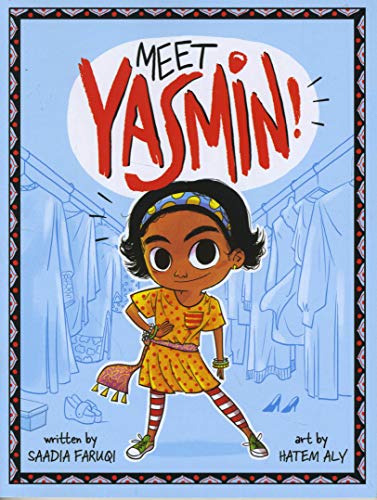
Cover image of Meet YasminBut then – I forget where, and I’m sorry because I’d love to give credit for this – I heard about a “My First Book Club” program at another library, and I decided to give it a try. We had our first meeting in July; I was thinking that people might have a bit more free time in the summer, and it could also help rising kindergarteners meet each other and get used to a semi-formal aducational environment if they hadn’t already been in a preschool program.
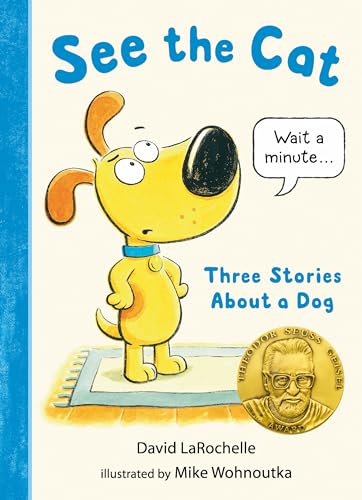
Cover image of See the CatFor “My First Book Club,” there is no need to read the book(s) ahead of time; I request enough copies for everyone to follow along as we read together. In July we read Meet Yasmin by Saadia Faruqi, illustrated by Hatem Ali, and the Geisel award-winning See the Cat: Three Stories About A Dog by David LaRochelle, illustrated by Mike Wohnoutka. I asked the kids to make some predictions, observations, and ask and answer questions about the story; then we decorated bookmarks with a flower pattern like Yasmin.
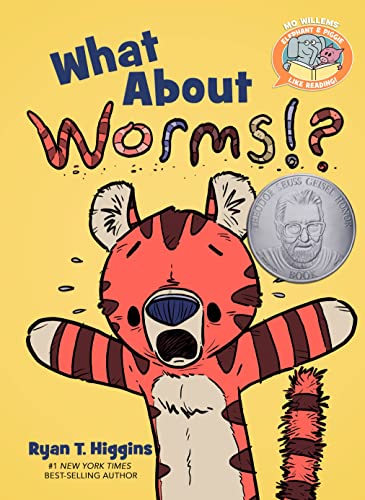
Cover image of What About WormsHere’s the “I Heart Back Matter” part of this post: Back matter is the stuff you find at the end of the book, after the story. It’s more common in nonfiction (think glossary, sources, index), but a lot of picture books, early readers, and especially graphic novels also throw in a little bonus content: a recipe, an art project, step-by-step instructions for how to draw the main character. This is where I got the model for Yasmin’s flower-patterned bookmark. (More on back matter later.)
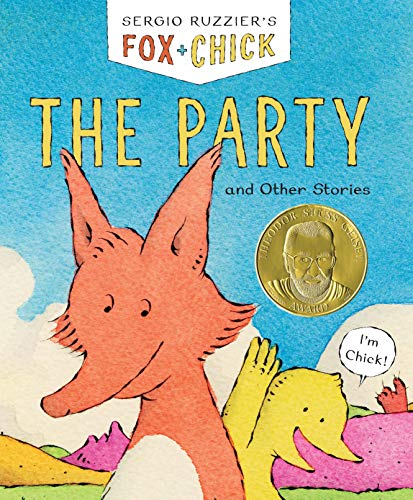
Cover image of Fox and Chick The PartyIn August we read Fox and Chick: The Party and Other Stories by Sergio Ruzzier and What About Worms?! by Ryan T. Higgins, and colored some What About Worms?! coloring sheets provided by the publisher.
In September we read Flubby Is Not A Good Pet by J.E. Morris and Fox the Tiger by Corey R. Tabor, and made paper plate masks with crayons, markers, dot paints, feathers, and glue, to disguise ourselves like Fox. The craft drew in extra kids who hadn’t attended the book part of the program – the more, the merrier!

Now that a book club for younger kids was up and running, I figured I ought to have something for the eight- to eleven-year-old age group as well, and a Graphic Novel Book Club seemed like the best choice because graphic novels are so popular and accessible. (Graphic novels are a format, not a genre, so we can still have plenty of variety – realistic, historical, fantasy, sci-fi, mystery, nonfiction, memoir, etc.).

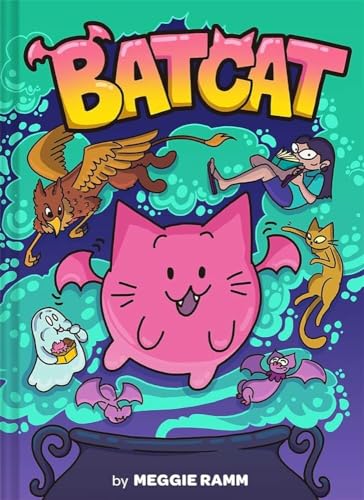
Batcat

I decided to start us off with Batcat by Meggie Ramm, a short, funny book with a strong theme of being yourself (and that you can be more than one thing). I requested about ten copies of the book (plus a few copies of the sequel, Batcat: Sink or Swim) and kept them in a stack on my desk for people to borrow in the weeks leading up to our first book club meeting.

For the first meeting, we started off with introductions (name, pronouns, grade/school, and favorite ice cream flavor), then a discussion of the book with questions I prepared. I had also prepared some comics vocabulary on a whiteboard, but all these kids were already fluent readers of the format and knew what panels, speech balloons, thought bubbles, and emanata were, so we moved on to some drawing activities. Here again, I found helpful back matter – how to draw Batcat and Al the Ghost – and we looked at the endpapers as well, which showed a map of Spooky Isle. Kids could choose to try drawing the characters, create a map of a real or imagined place, or make an 8-page minicomic.

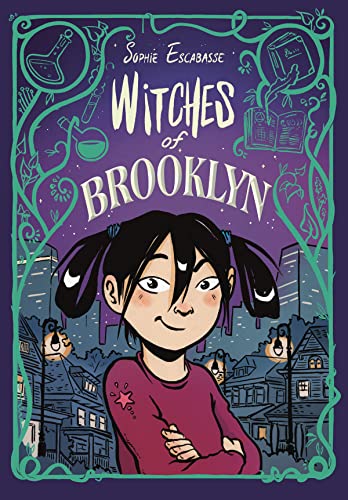
Cover image of Witches of BrooklynFinally, a perk of coming to the first meeting: the kids got to vote on what they wanted to read next. I pulled three books from our collection: Bedhead Ted, Things in the Basement, and Witches of Brooklyn. Witches of Brooklyn won the vote, so that will be October’s book!

Do you have a book club at your school or library? What are your favorite tips and tricks? What about favorite early readers or middle grade graphic novels?

Library card sign-up month and more

It’s been a very busy summer at the library, which is good! This is the first children’s summer reading program I planned pretty much solo. Fortunately, there is a children’s librarian at the branch library, and a teen services librarian here who were both able to tell me what had been done in the past, what worked, and what could change, so I leaned on them as I tried to simplify and streamline as much as possible – and plan fun programs people would want to come to, as well as continuing all our regular offerings.

Our summer reading program officially ended on Friday, August 9, with all-ages indoor mini-golf. Over 125 people attended over three hours, and it was pretty rowdy and fun. Since then, things have quieted down just a bit, the back-to-school books have been flying off the display (I felt kind of bad putting up a back-to-school display on August 1, but it was obviously the right call – those books are in demand!), and thoughts turn to fall…
ALA Library Card Sign-Up Month Transforers graphic

September is Library Card Sign-Up Month. Hispanic Heritage Month begins halfway through the month, on September 15, and Banned Books Week – when we celebrate the freedom to read (#fREADom) even more than we usually do – is September 22-28. (People will also certainly begin asking for Halloween and spooky books before October 1.)

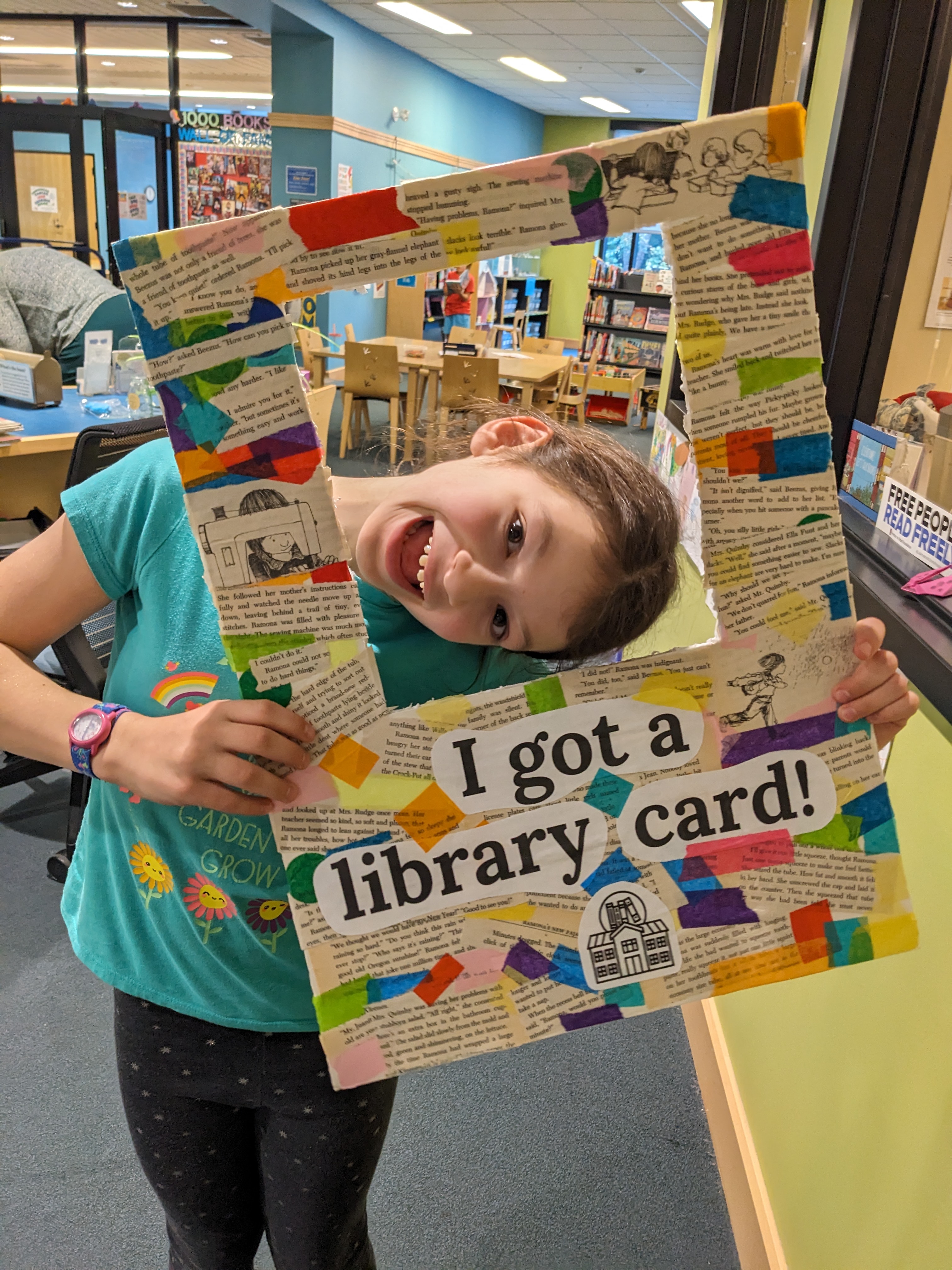
To prepare for Library Card Sign-Up month, I cut a square out of some foam core to make a frame, then used the pages from a copy of Ramona and Her Mother I’d had to weed (based on condition – I replaced it!) and some colored tissue paper and modpodge to create a photo frame. You know, like they have at farm stands and Renaissance Faires:

I Got A Library Card! frame

close-up of mod-podged collage with text from Ramona

Librarian smiling inside I Got A Library Card! frame

This is something we can use year-round, and adults and teens can use it too (if they want). It took about an hour, and actually turned out pretty much the way I had envisioned – not always the case with arts and crafts projects.

Setting kids up with their first library card is a great part of the job. (At our library, kids have to be five years old – some come in on their birthdays! – but other libraries have different rules.) It’s also a good time to emphasize that our library is fine-free (no late fees or overdue fines) and that if anything happens to a book in their care – torn pages, water damage, etc. – they should let us know when they return it, because a lot of times it’s something we can repair! A big reason lots of libraries have started going fine-free is to reduce the barrier to library use. Don’t let one damaged (or even lost) book keep you away from the library forever.

This fall, you can be a library ambassador. Look up your local library’s policies, and tell your friends if your library is fine free!

Day in the life of a children’s librarian

Cover of This Is Exciting!I hope that, by now, we have largely dispensed with the myth that librarians spend all day reading in buildings that are temples of quiet. There’s not much quiet, there’s not much sitting, and there’s barely any reading, unless you count reading aloud at storytimes, or reading professional review journals to decide what books to add to the collection. So what DOES a children’s librarian do all day? Here’s a sample of one day this week, during which I…

  • Updated the whiteboard in the lobby with the day’s programs
  • E-mailed the statewide listserv of youth librarians with a readers’ advisory question for a patron
  • Read the Library Link of the Day and Betsy Bird’s blog, Fuse8
  • Withdrew some old books from the science section
  • Posted to the library Facebook and Instagram accounts
  • Created a new flannel board to go with Bear in A Square by Stella BlackstoneBear in a Square book and flannel board
  • Vacuumed the storytime rug
  • Storytime (four books, several songs, one game of “Little Mouse” on the flannel board) and craft project (decorating paper popsicle shapes with crayons, markers, and stickers, and gluing them to popsicle sticks)
  • Took down the first half of summer scavenger hunt and put up the second half of summer scavenger hunt (these are laminated literary characters, e.g. Pete the Cat, Fancy Nancy, Dog Man, that I tape up around the children’s area)Summer Scavenger Hunt 1
  • Helped a kid find picture book versions of “City Mouse, Country Mouse”
  • Added a kid’s photo to the 1000 Books Before Kindergarten wall of fame
  • Stamped kids’ hands when they found Shelly the Turtle
  • Handed out temporary tattoos to kids who completed the scavenger hunt
  • Got a hug from a shy regularShelly the Turtle sign and photo
  • Finished reading Grief Is for People by Sloane Crosley while eating lunch
  • Helped a local bookseller’s kid request some books from another library, and chatted with the bookseller about upcoming titles
  • Added books to a list to purchase from our vendor
  • Put Lego and board games in the story/craft room
  • Withdrew old fiction books
  • Received replies from librarian listserv and compiled book recommendations for the patron who asked
  • Performed surgery on Zoe the Snake (i.e. sewing up a busted seam on a beloved stuffed animal)
  • Made an example yarn animal (a tiny turtle) for a craft program (idea from the ALSC blog)
  • Cleaned up Lego and board games
    Yarn Turtle
  • Helped a kid find a book about Neil Armstrong and the moon landing
  • Went home! (At home we are reading The Lightning Thief (Percy Jackson and the Olympians) by Rick Riordan.)

Mid-year Reading Round-up

It’s time for the mid-year reading round-up! (Here’s 2023’s mid-year reading round-up.) Looking back on the first half of 2024, what books stand out? To clarify, these are books that I’ve read in that time frame (January-June 2024); some of them were published earlier, while many are new this year. I’ve sorted by intended audience age; graphic novels are indicated with (GN) and nonfiction with (NF). I’ve chosen these not necessarily based on the ratings or reviews I gave just after finishing them; sometimes a book wows me but doesn’t linger in my mind, while others that seem merely very good when I finish them lodge firmly in my memory. So, with that scientific explanation out of the way, let’s go!

Picture Books

Tender and sweet, funny and silly, creative, informative, sobering, and perfect for storytimes: there’s a little bit of everything.

  • Love Grows by Ruth Spiro, illus. Lucy Ruth Cummins
  • Connor Kissed Me by Zehava, illus. Sarah K. Turner
  • Stranded! A Mostly True Story from Iceland by Ævar Þór Benediktsson (NF)
  • A House by Kevin HenkesCover image of Dim Sum Palace
  • At Home with the Prairie Dog: The Story of a Keystone Species by Dorothy Hinshaw Patent (NF)
  • Wintergarden by Janet Fox, illus. Jasu Hu
  • Ready, Set, Run! The Amazing New York City Marathon by Leslie Kimmelman (NF)
  • Beautiful Noise: The Music of John Cage by Lisa Rogers (NF; see quote below)
  • Dim Sum Palace by X. Fang (this has real echoes of The Night Kitchen by Maurice Sendak, and is a brilliant read-aloud for storytimes)
  • The Last Stand by Antwon Eady, illus. J&J Pumphrey
  • Lucky Duck by Greg Pizzoli
  • Invisible Things by Andy J. Pizza
  • Rosie and the Pre-Loved Dress by Leanne Hatch
  • One of These Is Not Like the Others by Barney SaltzbergCover image of Eclipse by Andy Rash
  • Great Carrier Reef by Jessica Stremer (NF)
  • The Rainbow Snail by Karin Åkesson
  • Eclipse by Andy Rash
  • Ahoy! by Sophie Blackall
  • Nothing: John Cage and 4’33” by Nicholas Day (NF; see also Beautiful Noise)
  • Mama in the Moon by Doreen Cronin
  • Where Is My Nose? by Lucas Zanotto
  • A Kite for Moon by Jane Yolen
  • Exactly As Planned by Tao Nyeu*
  • Gina Kaminski Saves the Wolf by Craig Barr-GreenCover image of Touch the Sky
  • I Won’t Eat That by Christopher Silas Neal
  • Just Like Millie by Lauren Castillo
  • The Big Princess by Taro Miura
  • The Spider in the Well by Jess Hannigan
  • Finding Things by Kevin Henkes
  • All From A Walnut by Ammi-Joan Paquette
  • Touch the Sky by Stephanie V.W. Lucianovic
  • Joyful Song by Leslea Newman
  • Home in a Lunchbox by Mo Cherry

John Cage quote: I can't understand why people are frightened of new ideas. I'm frightened of the old ones.

Above: quote from Beautiful Noise: The Music of John Cage

Middle Grade

Novels in every genre, with different styles and tones. I’ve been reading 2024 releases with an eye toward what books might be Newbery contenders and getting suggestions from the Heavy Medal blog.

  • Emmy and the Incredible Shrinking Rat by Lynne Jonell (fantasy/animal fiction)Cover image of Not Quite A Ghost
  • Mascot by Charles Waters and Traci Sorell (novel in verse)
  • Not Quite A Ghost by Anne Ursu (ghost story with a little horror)
  • One Mixed-Up Night by Catherine Newman (I love how the kids in this book are inspired by From the Mixed-Up Files of Mrs. Basil E. Frankeweiler)
  • Good Different by Meg Eden Kuyatt (novel in verse)
  • The Guardian Test by Christina Soontornvat (fantasy)
  • Make Way for Dyamonde Daniel by Nikki Grimes (realistic fiction)
  • Watership Down by Richard Adams and James Sturm (GN)
  • The Extincts by Scott Magoon (GN)
  • All-of-a-Kind Family by Sydney Taylor (classic)Cover image of Nuts to You
  • No One Leaves the Castle by Christopher Healy (fantasy)
  • Rewind by Lisa Graff (time travel!)
  • Ferris by Kate DiCamillo (realistic, mostly; there’s a ghost)
  • The First State of Being by Erin Entrada Kelly (more time travel!)
  • The Color of Sound by Emily Barth Isler (even more time travel! but mostly music and synesthesia and family relationships and history)
  • Summer at Squee by Andrea Wang (summer camp!)
  • Oddball Histories: Pests and Pets by Andy Warner (NF, GN)Cover image of The Night War
  • Dust & Grim by Chuck Wendig (fantasy)
  • Nuts to You by Lynne Rae Perkins (animal fiction)
  • The Night War by Kimberly Brubaker Bradley (historical/ghost fiction)
  • Spy School by Stuart Gibbs (GN)
  • Deep Water by Jamie Sumner (novel in verse)
  • Sink or Swim! Batcat #2 by Meggie Ramm (GN)
  • Another Kind by Trevor Bream and Cait May (GN, sci-fi)
  • Tree. Table. Book by Lois Lowry (realistic)TelephoneTree
  • A Little Bit Super (various authors)
  • Witchlings by Claribel Ortega (fantasy)
  • And Then, Boom! by Lisa Fipps (novel in verse)
  • Telephone of the Tree by Alison McGhee (realistic)
  • Camp Sylvania by Julie Murphy (paranormal)
  • Keep It Like A Secret by John David Anderson (realistic)
  • Max in the House of Spies by Adam Gidwitz (historical)
  • Thornwood by Leah Cypess (fantasy)
  • The Wrong Way Home by Kate O’Shaughnessy (realistic)

Young Adult

Unflinching, harrowing historical fiction; relationships and first loves; lion dancing and basketball; mental health; and two different forays into Shakespeare.

  • Lunar New Year Love Story by Gene Luen Yang and LeUyen Pham (GN)Cover image of Gather
  • Gather by Kenneth Cadow
  • Rez Ball by Byron Graves
  • Gwen & Art Are Not in Love by Lex Croucher
  • As Long as the Lemon Trees Grow by Zoulfa Katouh
  • The Blood Years by Elana K. Arnold
  • Hamlet Is Not OK by R.A. Spratt
  • America Redux by Ariel Aberg-Riger (NF)
  • Here I Am, I Am Me by Cara Bean (NF, GN)
  • Twelfth Knight by Alexene Farol Follmuth (romance)

Adult

Some surprisingly reassuring climate books, a fantastic cookbook by my college friend Sarah, and novels of all genres.

  • Ultra-Processed People by Chris Van Tulleken (NF)Cover image of Not the End of the World
  • We All Want Impossible Things by Catherine Newman (realistic)
  • Mislaid in Parts Half-Known by Seanan McGuire (Wayward Children series)
  • The Road from Belhaven by Margot Livesey
  • You’ll Do: A History of Reasons for Marrying Other Than Love by Marcia Zug (NF)
  • Airplane Mode: An Irreverent History of Travel by Shahnaz Habib (NF)
  • The Hunter by Tana French (mystery)
  • Not the End of the World: How We Can Be the First Generation to Build a Sustainable Planet by Hannah Ritchie (NF)
  • H Is for Hope: Climate Change from A to Z by Elizabeth Kolbert (NF)
  • Good Food, Good Mood by Tamara Green and Sarah Grossman (NF, cookbook)Cover image of Good Food Good Mood
  • Table for Two by Amor Towles (realistic/historical)
  • The Thursday Murder Club by Richard Osman (mystery)
  • Hotel of Secrets by Diana Biller (romance)
  • To & Fro by Leah Hager Cohen*
  • The Ministry of Time by Kaliane Bradley (speculative)
  • I’m Afraid You’ve Got Dragons by Peter S. Beagle (fantasy)
  • Anything’s Pastable by Dan Pashman (NF, cookbook)
  • The Hazelbourne Ladies Motorcycle and Flying Club by Helen Simonson (historical)
  • The Grammarians by Cathleen Schine (realistic)
  • Train Go Sorry: Inside a Deaf World by Leah Hager Cohen (NF)

*There are TWO books on this list that can be read starting from either cover: Exactly As Planned and To & Fro. It’s an unusual format that could be gimmicky but in both cases works perfectly.

Building a Board Book Library

This post brought to you by the fact that my brother and SIL are expecting a baby this summer! So I’ve got board books and early literacy on the brain (even more than usual). 

Reading aloud to and with kids is something you can do from Day 1. Start early and make it part of your day, every day, as part of the five practices that build early literacy skills: talking, singing, reading, writing, and playing. Board books are an excellent way to start: they’re small, sturdy, and designed to appeal to babies and their caregivers. Some are wordless (like Tana Hoban’s Black & White books), some rhyme, some have tactile elements that invite touch (like the “That’s Not My…” series). Whether you’re looking to build a board book library of your own, looking for board books to gift, or wondering which board books to borrow from the library, here’s a place to start.

Right off the bat, let’s assume everyone is familiar with a handful of classics:Cover image of Chicka Chicka Boom Boom

  • Goodnight Moon by Margaret Wise Brown and Clement Hurd
  • The Very Hungry Caterpillar by Eric Carle
  • Chicka Chicka Boom Boom by Bill Martin Jr. and Lois Ehlert

And then there is the Queen of the Board Books, Sandra Boynton. Her rounded characters are gentle and funny and her rhymes are easy to memorize. Here are my favorites of hers:

  • Happy Hippo, Angry Duck: A Book of MoodsCover image of Happy Hippo Angry Duck
  • But Not the Hippopotamus
  • Hippos Go Berserk
  • Belly Button Book

Developmentally, babies’ vision isn’t perfect when they’re born, so high-contrast art is good. They are also interested in faces, and especially if babies are being raised in a homogenous society, becoming familiar with diverse faces from an early age is important. With that in mind:

  • Tana Hoban’s Black & White booksGlobalBabies
  • I Kissed the Baby by Mary Murphy
  • Why the Face by Jean Jullien
  • Global Babies
  • First 100 Words by Roger Priddy

As babies begin to learn that their arms and hands are part of their bodies, they start to reach for stuff and explore the world that way (i.e. by putting it in their mouths). Will some flaps get ripped, will some corners get chewed? Absolutely. These board books are interactive and hands-on:

  • Where is Baby’s Belly Button? by Karen KatzCover image of That's Not My Pony
  • Peek-A-Who by Nina Laden
  • Press Here / Mix It Up / Finger Worms by Herve Tullet
  • TouchThinkLearn by Xavier Deneux (Shapes, Numbers, Colors, Farm)
  • Cook in a Book by Lotta Niemenen (Pizza, Tacos, Cookies, etc.)
  • That’s Not My… (Dinosaur, Dragon, Pony, Puppy, etc.)
  • Flora and the Ostrich by Molly Idle

One language is good, two (or more) languages are better! Teaching babies a few signs can be incredibly useful for communication, and helpful in reducing frustration, even if you aren’t fluent in ASL.

  • My First Baby SignsAlma, Head to Toe by Juana Martinez-Neal (bilingual, Spanish/English)
  • My First Baby Signs by Lee Ann Steyns and Julia Seal
  • The ABCs of Baby’s Needs by Loris Lora

A few more to know, just because! Several of these authors and author/illustrators publish full-size picture books as well, so even when babies outgrow board books, they can move right up to picture books with familiar styles.

  • What Do You Wear? by Taro Gomi
  • Oh No, George by Chris Haughton
  • Jump! by Tatsuhide Matsuoka
  • Not A Box by Antoinette Portis
  • Some Bugs by Brendan Wenzel and Angela DiTerlizziSomeBugs
  • Hello, Hello by Brendan Wenzel

Resources:

Board books for babies and toddlers (June 2017)

Early Development, Language, and Literacy (Read to Grow)

The Positive Effects of Reading on Child Development (Reach Out and Read)

Help Your Child Learn to Read (Colorín Colorado)

The Five Practices: Talk, Sing, Read, Write, Play (Every Child Ready to Read)

Wayfinding and Signage: Principles and Planning

Icon of libraryOn May 14 I attended the Massachusetts Library System (MLS) workshop on Wayfinding & Signage, taught by Anna Popp. I’ve had an interest in this topic as long as I’ve been working in libraries (and maybe, as the kind of person who actually reads signs, for most of my life); I read Useful, Usable, Desirable almost ten(!) years ago, and have kept it in mind since.

MLS has an excellent LibGuide about Wayfinding and Signage with lots of resources; Anna covered a lot of the material here in her workshop, starting with the difference between the two: Volume icon from the Noun ProjectWayfinding helps people orient themselves in a space, figure out where they need to go, and how to get there; essentially, wayfinding is navigation. Signage is meant to influence a person’s behavior (e.g. borrow this book, attend this program, keep your voice down). Signage may be promotional (programs and services), operational (hours, policies), or instructional (how to use the printer), and therefore has an expiration date. 

Icon of stairsSo, wayfinding aids users navigating the space; signage influences users’ behavior. But before putting up any signs, ask: Who needs to know this? Where are they? What information do they need to make a decision? (In fact, Anna suggested inventory: taking down all signs, and only replacing the ones that are essential.) Try to avoid visual clutter by identifying the minimum amount of information necessary and including only that. 

Anna also suggested taking some time to observe patrons in the library building. Pay close attention to “transition zones” (spaces that are between other places, like hallways, stairwells, entryways) and identify friction points. Where do people pause and look around? There are three levels of wayfinding:Icon of elevator orientation, route decision, and destination. Where on their journey are people pausing and looking for help? “Folks need reassurance that they’re headed in the right direction.” If you can, get a patron to talk you through their experience – a walk-and-talk usability test. As library staff who work in the building every day, we may be too close to see problems that patrons encounter. (Also, we may not use the same bathrooms or even the same entrance to the building!)

We looked at lots of examples of wayfinding and signage in libraries – good, bad, and in-between – and talked about principles of design (choosing brand fonts, colors, and imagery; using white space; making sure it is ADA accessible). Icon for toiletAnna didn’t specifically mention it, but another consideration is users who don’t speak English. I do like visual signs and color coding, partly for this reason (although color coding will only work for about 85% of users).

Consider the user experience: Who is the centered audience? Who is the decision maker? Where will they be? How do they think about the library? For example, you might be advertising a toddler singalong; the toddlers are the audience, but the decision maker is the caregiver. Use natural, patron-centered language, not library jargon (e.g. research instead of reference). 

So, now what? Anna suggested that we (1) inventory our signage, (2) name our fonts, colors, and icon family, and (3) identify our patrons’ destinations. Fortunately for me, the children’s room in my library isn’t hard to find: it’s directly ahead from the entrance (the circulation desk is on the right as people enter) and has CHILDREN’S in big frosted-glass letters above our door. But there are still things I can do within the children’s area to make it more navigable for folks; for example, in the sections that are shelved alphabetically, I could put in shelf markers where each letter begins. (Why are these ones from Demco so expensive?! I could use these instead and put the letters on myself…)

photo of "first, you read this"

Above: the fun concluding slide to Anna’s presentation. I read the first three in order but switched the 4th and 5th. What about you?

All other images in this blog post come from The Noun Project.

That ol’ TBR pile and vacation reading

Last fall I took a photo of my TBR (To Be Read) pile. Looping back to that, how’d I do? Well, I’ve read three of the ten so far: the classic Eight Cousins by Louisa May Alcott, teen graphic novel Incredible Doom by Matthew Bogart, and As Brave As You by Jason Reynolds. (And I would have re-read The Great Believers in April, but had lent it to my mom and didn’t have time to get it back before we traveled. Instead, I re-read The Vanishing Act of Esme Lennox by Maggie O’Farrell, and Dust & Grim by Chuck Wendig, which I had been meaning to read since last fall but wasn’t in the photo.) I keep trying to get my book club to pick The Grammarians, but so far there’s only lukewarm interest.

Pile of books

Above: Vacation reading (six books for a five-day trip seems reasonable, if not restrained. And I read the top four: Dust & Grim, The Vanishing Act of Esme Lennox, A Room with a View, and Emerald Circus). I always like to bring one or two re-reads on a trip, so I know that I have something I’ll like in case I turn out to be not in the mood for the others.

Pile of books with library spine markings

Above: Also, we went to the library while we were on vacation. From this pile, I read Clementine Fox and Duel, and we listened to the audiobook of Nuts to You (which was excellent). The 8yo re-read El Deafo and also enjoyed Clementine Fox and Nuts to You, as well as the stack of books she’d brought along from home. Airport delays, you’re no match for this family! (OK, not to tempt fate. But we’re unlikely to run out of reading material, at least.)

My TBR pile tends to linger and languish because, unlike library books, those books don’t have due dates. All of this is to say, the mid-year reading round-up is practically around the corner…

MLA 2024: The Heart of the Community

The Massachusetts Library Association (MLA) annual conference was yesterday and today in Framingham. I got to attend yesterday, and it was a full day of speakers, presentations, vendors, and catching up with library colleagues from around the state. The last MLA conference I attended was in 2019; I presented with two other librarians about DIY usability testing on library websites. (It seems like much, much longer than five years ago.)

First up, at 8:15am: “Expanding Literary Horizons: Hosting a Reading Challenge to Foster Diverse Reading Habits,” with Karolina Zapal (Massachusetts Center for the Book), Veronica Koven-Matasy (Boston Public Library), and Hannah Bernhard (UMass)

  • The UMass summer reading challenge began in 2020 as a way to build community and connection while students were at home. Hannah, with the office of Student Success, built cross-campus collaborations with the UMass libraries and the English department; this increased the program’s reach (contacting students by email) and visibility (social media). Participation has increased each year, and they have moved away from prize incentives toward a pizza party (again, bringing people together).
  • Veronica from the Boston Public Library talked about a number of reading challenges for adults: summer, winter, and year-long. The year-long challenge wasn’t as much of a success for BPL, but engagement with the winter (Jan-Feb) and summer (Jun-Aug) has been good. Bingo-style sheets include things other than “read a book” (e.g. learn something new about your neighborhood, listen to a new song, etc.). Reading challenges for adults bring new patrons into (or back to) the library, connect patrons with resources, encourage love of reading and support of the library, help patrons diversify their reading, offer opportunities to cross-promote other programming, engage staff, and are fun! They don’t use themes, but they do craft bingo items around book lists they make in advance, and they find newsletters a better way to communicate than social media.2024 Reading Challenge
  • The Center for the Book uses a “12 months, 12 books” model for their challenge, and relies on public libraries and independent bookstores as partners to spread the word and promote the challenge. People can sign up online and track their reading; there is a monthly newsletter and monthly prize drawings, and two year-end celebrations (in Northampton and Boston).

Exhibit Hall Break! I chatted with vendors from Transparent Language (I’ve been doing their ASL for Librarians course, and it’s fantastic), MLS, NELA, and others. I checked with both Baker & Taylor and Ingram to see if they had new award posters, but they didn’t; I found some downloadable ones from Follett, though.

10am: “Banned in the USA: A History of Censorship, Book Bans, and First Amendment Freedoms,” Jocelyn Kennedy, Executive Director of the Farmington (CT) Libraries

  • Jocelyn ran us through the history of censorship in the U.S., though she said that censorship has existed as long as the printed word, and even before: “We don’t like when other people say things that we don’t like.” A few keywords and cases to search if you’d like to learn more: First Amendment, Sedition Act, Tariff Act, obscenity laws, Anthony Comstock (grr. See: The Future of Another Timeline by Annalee Newitz), Title 18 of the Federal Criminal Code, Joseph McCarthy and HUAC, the Hayes Code, the Comics Code Authority, Miller v. California (1973), Island Trees Union Free School District v Pico (1982), ALA Office of Intellectual Freedom (OIF).Approved by the Comics Code Authority
  • Government censorship is only part of the picture; some industries and organizations self-censor, sometimes in order to prevent government censorship. (Think of those “parental advisory” stickers on music CDs, movie ratings, etc.)
  • Book challenges from individuals and organized groups are on the rise in the past few years, but the Pico v. Island Trees case set the precedent that school boards can’t remove books from school library shelves just because they don’t like them. Jocelyn said, “It’s important to remember that it’s a very small group of people who are pressing for censorship and book bans [but] they’re very well organized.” The best thing you can do is make sure you have a strong collection development policy and a strong consideration policy, backed by procedure. (If your library doesn’t have these policies, or needs to update them, the MLS helpfully collects examples.) And, administrators need to support frontline workers.

11:10am: Leading with Love: Celebrating Pride at Your Library,” Jenny Santomauro (Peabody Institute Library of Danvers), Taylor Silva (Fall River Public Library), Miz Diamond Wigfall (a.k.a. AJ)

  • FRPL hosted its first Drag Storytime in 2019, and hundreds turned out: so many that they had to offer the program several times that day. They hosted drag storytime several more times, again with high attendance and support and minimal protests, but in December 2022 the program was interrupted by hate group NSC-131, which tried to prevent people from entering; police presence helped ensure that the event ran uninterrupted. After another successful drag storytime in January 2023, leadership made the decision to move the venue from the library to the town recreation department, citing staff safety concerns. However, drag storytimes and Pride events continue in Fall River with plenty of support. Taylor leveraged existing relationships with individuals in the community and community groups to gain support for LGBTQIA+ friendly events and to offer more, like day trips, movie nights, craft programs, and a D&D group.
  • Jenny spoke about a drag makeup class for teens, offered in May before Pride one year. The class filled up just minutes after being posted online, but then attracted hateful comments and threats. They were “scared but determined….We didn’t want to kowtow to these hate groups…We wanted to show that the library was a strong ally.” Police took the threats seriously, and allies showed up to create a “wall of love.” At future LGBTQIA+ events, the library advertised to local groups and schools, only posting to social media immediately before the event. There is a “clear need and desire for queer programs” in Danvers, and more supporters show up in person than protestors do. 
  • Miz Diamond Wigfall echoed this sentiment, saying that “keyboard warriors” are active online but few show up in person. It’s also important to have all-ages queer programs and spaces, as so many queer spaces are 18+. Parents are grateful for their kids to have safe spaces.

Rainbow heart

12pm: Landscape Ideas for Education, Engagement, and Climate Resilience,” Elena Zachary, Regenerative Design Group, Greenfield, MA

  • Elena talked about climate change, and the effects it’s already having in New England, and different types and sizes of garden projects that can help mitigate extreme heat, drought, and extreme rainfall, flooding, and storms. It’s possible to reduce heat island effects through landscaping by planting shade trees, for example, or “pocket forests.”Cover image of Nature's Best Hope by Doug Tallamy
  • RDG works on other projects, such as creating rain gardens, accessible gardens, outdoor classrooms, educational gardens, pollinator gardens, bird-friendly gardens (better than bird feeders: you don’t have to worry about bears, or refilling the feeders), and historical and cultural heritage gardens.
  • What can libraries do? (1) Add native perennial plants to existing landscapes; (2) Plant and manage chemical-free (no chemical fertilizers or plants treated with neonics); (3) Mow less, and less often, and participate in No Mow May; (4) Leave the leaves – rake them off lawns and into beds to insulate shrubs and perennials, especially as there is less snowfall; (5) Use rain gardens, swales, and vegetation to infiltrate water onsite and avoid runoff.
  • What else? Engage the local community, find out what they want – benches for reading, a living seed library, plant exchanges, edible gardens? Use public land to set an example (good signage helps!) and educate people that they can transform their own spaces as well – every little bit helps.
  • Available grants: ARSL Sustainable & Resilient New England Libraries, LSTA/MBLC Dig In.

2pm: Martha’s Vineyard Land Transfers: Being an Ally to Indigenous Peoples and Beyond,” Kara Roselle Smith (Chappaquiddick Wampanoag)

  • Cover image of This Land Is Their LandKara spoke about her historical family connection to Martha’s Vineyard – which was inhabited by the Wampanoag people before First Contact, but is now inhabited by descendants of colonizers – and Indigenous efforts to regain land that was wrongfully taken from them: “The stealing of native land wasn’t just a one-time event…[it] continues to this day.”
  • She showed a long clip from a TEDx Talk by Lyla June (Diné), “3000-Year-Old Solutions to Modern Problems,” in which June describes land management techniques that decenter humans and design for future generations. June explained that European colonizers misunderstood Indigenous land management practices – “living heirlooms” – and that Indigenous people are a “keystone species.”
  • Cover image of We Talk You ListenKara recommended two books for further reading: This Land Is Their Land by David J. Silverman and We Talk, You Listen by Vine Deloria Jr. (I would add that another good book on this topic is Occupying Massachusetts by Sandra Matthews, David Brule, and Suzanne Gardinier.)

2:40pm: “Touchpoints in Libraries,” Lyndsay Forbes (MBLC) and Christi Farrar (MLS)

  • The Touchpoints training program was developed by T. Berry Brazelton in 1995, originally designed for health care settings but adapted for libraries. Why Touchpoints in libraries? “It’s about family engagement.” Touchpoints is a systems approach, and libraries are part of a child’s system.
  • Touchpoints is a way of addressing different perspectives and assumptions, recognizes our own biases, and moving from a deficit-based view to a strengths-based one. Library staff can change our interactions with patrons by understanding where we’re coming from and being good listeners.
  • Starting in 2020, the MBLC and MLS began the process of going through the “train the trainer” program and offered the first trainings with two cohorts in 2023; another training will be offered this fall. Cohort learning creates a professional learning network, encourages reflective practice, and models relationship building.

3:30pm: “Our Grandest Challenge with The Sustainable Libraries Initiative,” Rebekkah Smith Aldrich, MLS, LEED AP

  • “Even if we do everything right [climate-wise from here on], we have a minimum of another 30 years of increasingly severe and scary weather….It’s already here, it’s already impacting us.” The medical community is calling climate change the biggest threat to global public health: “The climate crisis will profoundly affect the health of every child alive today.” –The Lancet
  • Triple Bottom Line graphicThe ALA added Sustainability to its Core Values in 2019. That means it should be part of our framework for libraries’ decision-making. Look at the “triple bottom line” definition: environmentally sound, socially equitable, economically feasible (see graphic at right).
  • Librarians can align for collective impact, like the Blue Marble Librarians are doing. Project Drawdown is a good resource: “embrace the idea that every job is a climate job.” Libraries can do a lot to mitigate climate change – even small changes like using LED lights add up, and putting up solar panels is even better. Put EV charging stations in the library parking lot, and build net-zero goals into strategic plans, like Concord.
  • Libraries are also important when it comes to disaster preparedness and community resilience. Communities with tighter social fabric will do better (see: Heat Wave by Eric Klinenberg). A few more resources and ideas:Cover of Heat Wave by Eric Klinenberg

Finally, Governor Maura Healey’s keynote speech was moved from the morning to the afternoon, to close out the day’s presentations. She quoted one of my all-time favorite library quotes, from Caitlin Moran’s essay “Alma Mater”:

A library in the middle of a community is a cross between an emergency exit, a life raft and a festival. They are cathedrals of the mind; hospitals of the soul; theme parks of the imagination….They are the only sheltered public spaces where you are not a consumer, but a citizen instead. -Caitlin Moran

Healey spoke generally of her childhood memories of libraries, and her support for intellectual freedom in Massachusetts. She mentioned the nationwide book banning trend and cited the challenge statistics from the ALA OIF, saying, “What a damaging and alarming trend. They want to remove books and programming that tell the truth….We are never ever gonna let that happen in Massachusetts. We cherish our libraries.” Healey acknowledged the link between libraries and democracy, and pledged support for library resources, including the economic development bill, which includes $150m for library construction grants. 

People asked excellent questions during the Q&A: about Healey’s support for libraries in public schools (“If you could give this same talk to school superintendents…”), about how municipal employees aren’t covered by FMLA (she gave a weird answer about housing costs instead), about legislation to protect library collections (“I’m in favor of any legislation that would ban the banning of books”), and, of course, what she’s reading right now (Margaret Atwood essays, The Climate Book by Greta Thunberg, and Russell Banks’ last book).

And that was a wrap (for me, anyway) on MLA 2024! I’m going forward with new ideas about how to make the library more sustainable and resilient, host queer-friendly programs, and run reading challenges (the good kind, not the banning kind). Thanks so much to all the presenters and panelists, vendors, and conference committee!