Hand over your password? Er…no.

Every week I get an e-mail from LinkedIn with the top five articles of the week. Usually these are along the lines of “what makes a remarkable boss,” “how to be a great employee,” “what interview mistake are you making?” etc. But this week there was a link to an article called “Job seekers getting asked for Facebook passwords,” and yes, this is exactly what it sounds like.

If you, like any smart person, have your Facebook or other social media site settings set to “private” so that only the people you want to see your profile and other information can see it, it turns out you may be asked in an interview to hand over your login and password. To me, this is an outrageous violation of privacy and an unreasonable request – it is simply over the line. (More reasonable requests that potential employers might make include asking you to “friend” someone in Human Resources. Or, if you have your profile set to “public,” you can safely assume they’ve looked at it before they called you in for the interview.)

What legal recourse do you have to say no? Is this like the Fourth Amendment where they have to establish probable cause? On the other hand, if you refuse, that job opportunity might be lost to you, and in this economy, who can afford that? Well, giving anyone else your login information is a violation of the Facebook terms of service, but right now that’s the only obstacle in these invasive employers’ way. The ACLU has protested the practice, and some states – Maryland and Illinois – are working on legislation to forbid public agencies from asking for access to social networks, but private companies could continue it.

This touches on a larger issue. I was horrified to read about this practice, and even in an interview situation where I really wanted or needed the job, I think I would say no if asked for my password to Facebook (let alone e-mail!). It’s not that I have anything to hide, but rather the principle of personal privacy that’s at stake.

The whole idea of privacy may be eroding; it seems to be less important to “Millennials”  (just Google “Millennials + privacy” – some articles about how savvy they are at protecting it, others about how their views on it are simply different from traditional views of personal privacy). From personal observation, it seems that teenagers and those in their early 20s are less protective of their personal information – and with so much of it available online, it might seem like a hopeless effort to keep any information private.

However, for a potential employer to ask you for personal information that you have deemed private seems beyond the pale. (It may also allow them to find answers to questions they are not legally allowed to ask in interviews, such as your age, marital status, or religion.) They already have your resume, your cover letter, your application, as well as whatever they have gleaned from what is publicly available online; they can contact your references and ask you questions in an interview; they can even give you a drug test (with your consent). Is it really necessary to hand over your passwords as well? I think not.
Do not pass Go, do not collect two hundred dollars: Apple and the publishers vs. Amazon?

Do you buy e-books? Did you feel surprised, taken aback, betrayed, indignant, outraged when the average e-book price suddenly jumped from $9.99 to $12-15? Now: have you thought about why those prices changed?

First, it’s important to understand that $9.99 is not the actual cost of an e-book: Amazon set that price point, and they were taking a loss on every e-book sale, in the hopes of luring more and more customers to buy their Kindle e-reader. Amazon was able to set e-book prices because they bought the books from publishers on the “wholesale” model: Amazon paid the publishers about half the cover price of the book, then set its own price for its customers.

A quick note about the real cost of a book: just because it’s a digital version – an e-book – rather than a book printed on paper doesn’t mean it was free to produce. Authors, editors, publicists and marketing people still had to be paid, offices still had to have lights on and computers running. The cost of paper and printing is somewhere in the neighborhood of $3 for a hardcover, less for a paperback.

So with the wholesale model, publishers could not set their own prices for books. With the “agency” model, however, they could: when Apple entered the e-book market, it allowed publishers to set their own prices and take 70% (Apple taking the remaining 30%). Apple also “reportedly stipulated” that publishers who used the agency model couldn’t sell their books for less to anyone else; thus, no more selling to Amazon on the wholesale model. The price change across the board is what drew the attention of both consumers and of the Justice Department, which is threatening Apple and five of the “big six” publishers with “allegedly colluding to raise prices.” (Never mind when airlines change their prices and policies one suspiciously close to the other. And do not get me started on cable companies. Or Amtrak.)

However, Washington Post columnist Steven Pearlstein advises the long view in this situation. True, when Apple broke up Amazon’s de facto monopoly, prices for consumers went up, not down; but, he points out, “What looked to consumers like a great bargain at $9.99 a book looked to others in the industry suspiciously like predatory pricing, or selling below cost today in order to gain a monopoly and raise prices in the future.” Which is better, he asks, “a market in which Amazon uses low prices to maintain its e-book monopoly and drive brick-and-mortar bookstores out of business, or one in which the major book publishers, in tacit collusion with Apple, break Amazon’s monopoly and raise prices?”

When you think about it that way, maybe paying an extra few dollars for your e-books is worth it.

Internet Archive

After having written about the Digital Public Library of America (DPLA) recently, it’s only fair that I should write about the Internet Archive as well. (Brewster Kahle, founder of Digital Librarian of the Internet Archive, is actually on the DPLA Steering Committee, so the two organizations are linked.) The Internet Archive is, quite simply, an Internet library. It is a nonprofit and was founded in 1996, so it’s been around for some time now.

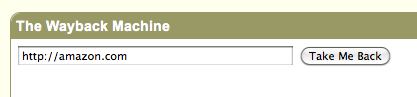
One of its cool features is the “Wayback Machine,” which allows you to plug in a URL and pick a date to see what a given website looked like, say, ten years ago (if it was around then).

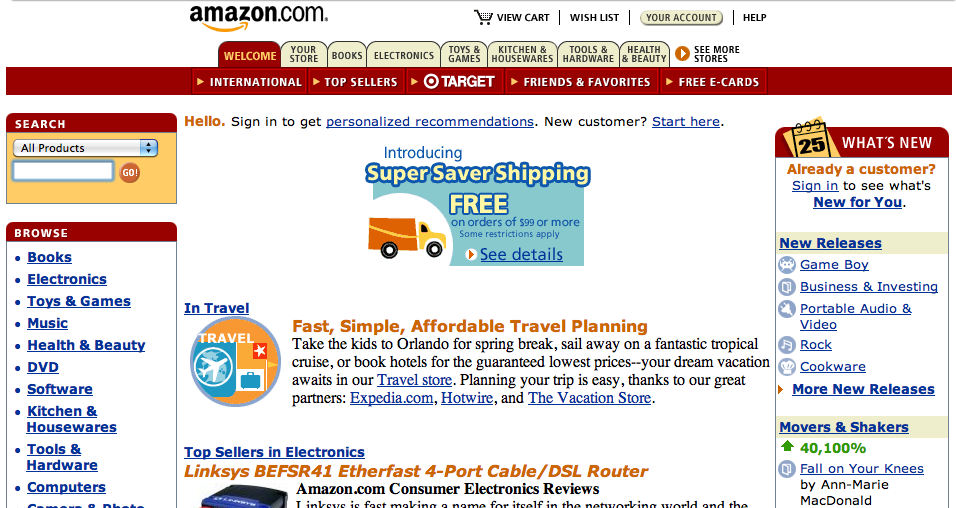
Amazon.com was around in 2002; let’s see what it looked like, shall we?

A little different than it looks today.

So the Wayback Machine is fun to play with (also, useful). And the Internet Archive’s digital library is a great project; but just in case digital copies aren’t enough, Kahle is also building a physical library (or, as The New York Times poetically puts it, an ark). “In case of digital disaster,” the article states, Kahle’s goal is to collect one copy of every book. Kahle said, “We must keep the past even as we’re inventing a new future. If the Library of Alexandria had made a copy of every book and sent it to India or China, we’d have the other works of Aristotle, the other plays of Euripides. One copy in one institution is not good enough.”

Considering how many various file formats and digital storage options we have already gone through in the past few decades, keeping one hard copy of every book isn’t a bad idea. Think about it: if you have some files on a floppy drive from 1998, can you still access them? And if you can’t access them, do they really exist, practically speaking? Whereas a book printed at the birth of the printing press hundreds of years ago can still be read by pretty much anyone (well, anyone patient enough to make their way through a whole variety of spellings).

A Day in the Life

Toward the end of this TechCrunch article about how Random House just tripled the price of ebooks for libraries, there was a link to this well-written, insightful blog post on MetaFilter about why libraries are not anachronistic – about why, in fact, they are more essential than ever.

In the post, the author urges the reader to “imagine this: you’re 53 years old, you’ve been in prison from 20 to 26, you didn’t finish high school, and you have a grandson who you’re now supporting because your daughter is in jail. You’re lucky, you have a job at the local Wendy’s. You have to fill out a renewal form for government assistance which has just been moved online as a cost saving measure (this isn’t hypothetical, more and more municipalities are doing this now). You have a very limited idea of how to use a computer, you don’t have Internet access, and your survival (and the survival of your grandson) is contingent upon this form being filled out correctly.”

Then the author goes through every step of the scenario, and concludes, rightly, “If you have any concept of a free and equal society, then libraries are still an integral part of that.”

Building the Digital Public Library of America

On Friday a friend and former classmate and I went to the “Building the Digital Public Library of America” program at Harvard, where Robert Darnton and John Palfrey both spoke and answered questions. Darnton is the Director of the University Library and also a professor at Harvard, as well as a co-founder of the DPLA, and the author of The Case for Books, among many others; Palfrey is also a Harvard professor and the chair of the DPLA steering committee, as well as the author of Born Digital and other books.

The DPLA is envisioned as “an open, distributed network of comprehensive online resources that would draw on the nation’s living heritage from libraries, universities, archives, and museums in order to educate, inform and empower everyone in the current and future generations.” Naturally this goal is viewed by some as utopian or simply impossible, but as Darnton said Friday, “We don’t have answers, [but we do have] the determination, expertise, funds, and public support…We will make it happen.” Calling the DPLA a big task is an understatement, but, Palfrey said, “This is exactly the moment to think this big…[if we don’t] we are falling short.”

There are design challenges and technical challenges, but “these challenges can be met and will be met,” said Palfrey. As for what exactly the DPLA will contain or look like, he said, “What is the DPLA? We’re not sure yet. And we’re not sure on purpose.” People have dedicated themselves to workstreams for the five elements of the DPLA: code, metadata, content, tolls & services, and community.

The biggest challenge is that of copyright; it’s why Google Books ultimately failed. In order to succeed, there must be some agreement between the creators (authors), the publishers, and the service/platform/distributors. Unlike Google Books, the DPLA aims to provide free access, not commercial access, to a broad public. Behind the DPLA is the belief that access to information is (a) the right of citizens, and (b) fundamental to democracy.

Models of this type already exist; one is Europeana, “a single access point to millions of books, paintings, films, museum objects and archival records that have been digitised throughout Europe. It is an authoritative source of information coming from European cultural and scientific institutions.”

The digital divide is one concern; despite the growth of e-readers and e-books, and the widespread (but not complete) availability of Internet access, for many people, print content is still more accessible than digital content, especially when digital content comes encumbered with DRM and other limitations.

Another concern, raised during the Q&A on Friday, is how the DPLA will affect public libraries. The people working on the DPLA are pro-library; many are librarians. Darnton emphasized that they are designing the DPLA “not to undercut public libraries…[but rather] to reinforce public libraries.” The DPLA, he argued, would make public libraries more important: not only could they serve as an access point, but librarians could create and curate local collections. Overall, the DPLA “is a very complex ecosystem and we need guides through it.” Librarians, Darnton says, can be those guides.

This is one of my answers when people ask if librarians are necessary anymore, because “everything is on the Internet.” Perhaps it is (though not everything is Google-able) – but can you find it? The proliferation of information, both in print and online, is overwhelming – “information overload,” anyone? – and most people could use some help sifting through the hundreds, thousands, or millions of search results to find something reliable and relevant. That’s one reason why librarians are necessary – and this librarian is excited to search within the DPLA as soon as it is up and running, just over a year from now.

Bookstores and Libraries

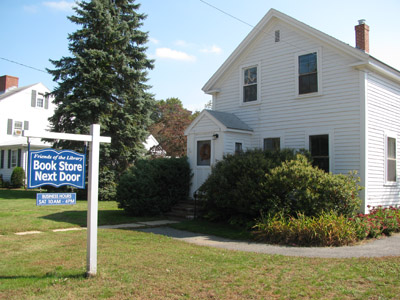
The Boston Globe ran an article yesterday about bookstores connected with libraries. The Book Store Next Door, run by the Friends of the Wilmington Memorial Library, is cited as an example. TBSND brings in funds for the library, and it’s a great place for community members to pick up cheap used books as well. Plus it’s in a charming little house – definitely worth a visit if you’re in the area!

Photo courtesy of the Wilmington Memorial Library.

A longer post about the process of weeding in libraries – i.e. getting rid of books – is in the pipeline.

Best of 2011, Part the Third: Fiction (I)

Here is the first batch of novels I’d recommend from my reading last year. Enjoy, discuss, ask questions! I’ll be posting more soon.

The first three Thursday Next books by Jasper Fforde – The Eyre AffairLost in a Good Book, and The Well of Lost Plots – are highly recommended for English majors or otherwise literary types with senses of humor. Set in a surreal version of England in the 1980s, literature is all-important, and Special Ops literary detective Thursday Next encounters such characters as Jane Eyre, Miss Havisham, and the Cheshire Cat throughout her cases. These books are extremely quirky with a lot of made-up jargon, and they’re fast-paced, but if you’re enough of a word-nerd, you’ll keep up. That said, I felt the quality of the series dropped off after the third book, which is why I only recommend the first three books here.

I’ve already raved about State of Wonder by Ann Patchett on my other blog and on the website of the library where I work, so I’ll just say here that Ann Patchett is absolutely one of my all-time favorite authors for a few reasons, all of which are on display in State of Wonder. First, there’s her complete mastery of setting; in State of Wonder, that includes both the Amazon and Minnesota. Wherever she writes about, it seems like she has lived there her whole life, the description is so rich and real. Second, her characters are real people; she understands them all so well, and there’s a real sense of empathy. Thirdly, the plot generally hinges on a situational conflict, rather than a protagonist-antagonist confrontation; this makes the story more interesting and complicated. Finally, the writing itself is just beautiful.

Geraldine Brooks is another author whose new books I always look forward to (Caleb’s Crossing is on my to-read list). She wrote March and Year of Wonders, both of which I’d recommend, as well as People of the Book, which is about a Hanna Heath, Australian rare book expert who is called in to restore the famous and long-lost Sarajevo Haggadah. Each time Hannah turns up a clue to the book’s past, the story jumps to that point in the book’s history: from Spain to Italy to Austria to Bosnia, each in a different time period, tracing the book’s journey to Hanna’s care in the present day. People of the Book is a great choice for those who enjoy stories-within-stories, those who are interested in history or rare book conservation, or those who just like good storytelling.

The Lover’s Dictionary by David Levithan was another of my “staff picks” for the library. It is Levithan’s first foray into literature for adults (he has written extensively for teens, including Boy Meets Boy and Love Is The Higher Law, and has collaborated with other YA authors – Rachel Cohn on Nick and Norah’s Infinite Playlist, John Green on Will Grayson, Will Grayson). The Lover’s Dictionary is funny and poetic by turns, showing a genuine understanding of two people in a relationship. “Definitions” – from “aberrant” to “zenith” – tell the whole story of one couple, from meeting and moving in together to fighting and making up. Through these brief snapshots – anywhere from one line to a few pages – a complete story is communicated.

Free Library of Philadelphia

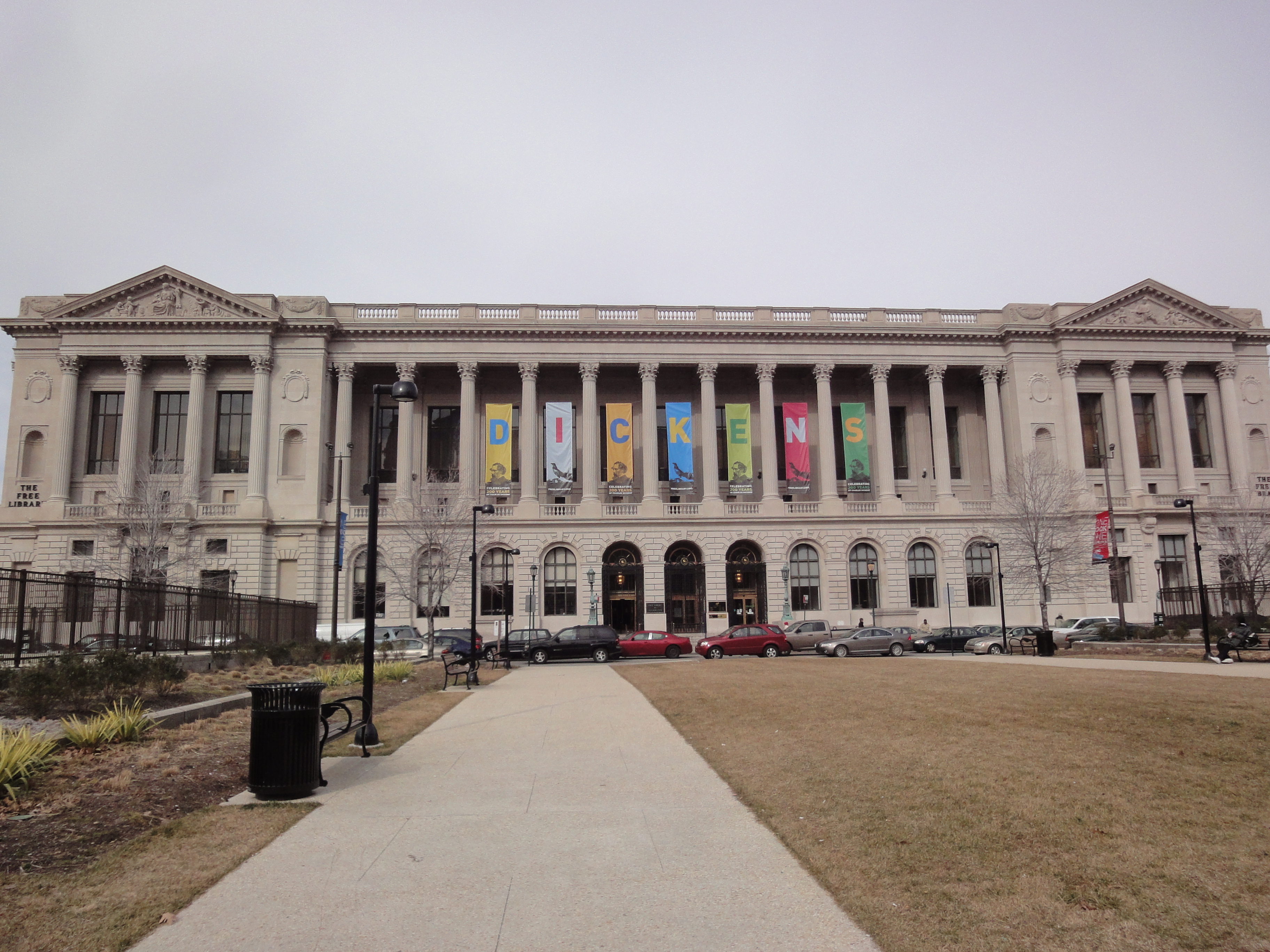
On a recent visit to Philadelphia, I went into the Free Library of Philadelphia (open on Sundays!). Part of it was closed for renovations, but the building itself is beautiful and there was a neat exhibit on Dickens.

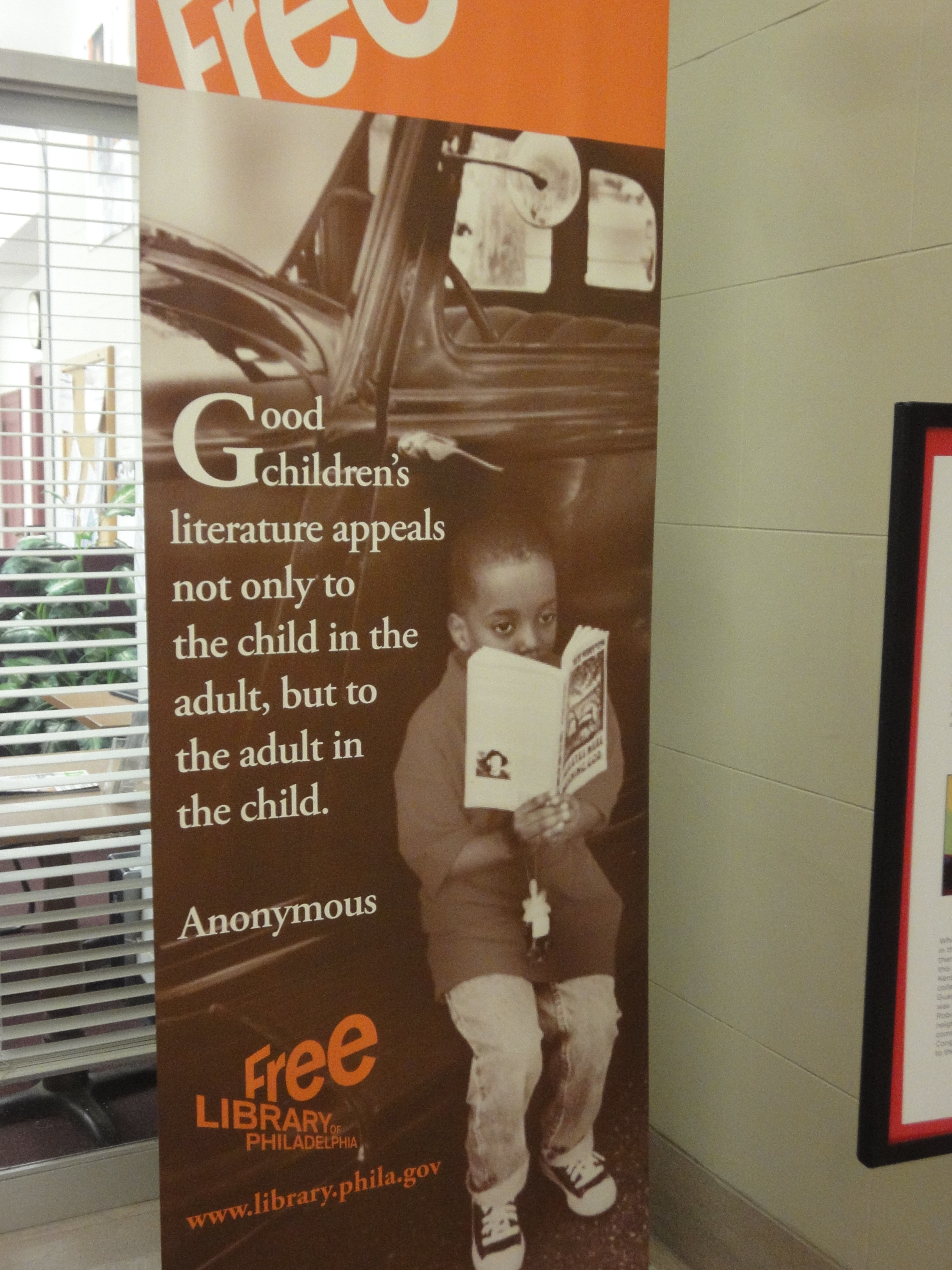
On the way out, I saw this quote on a sign:

“Good children’s literature appeals not only to the child in the adult, but to the adult in the child.” -Anonymous

Something to think about.

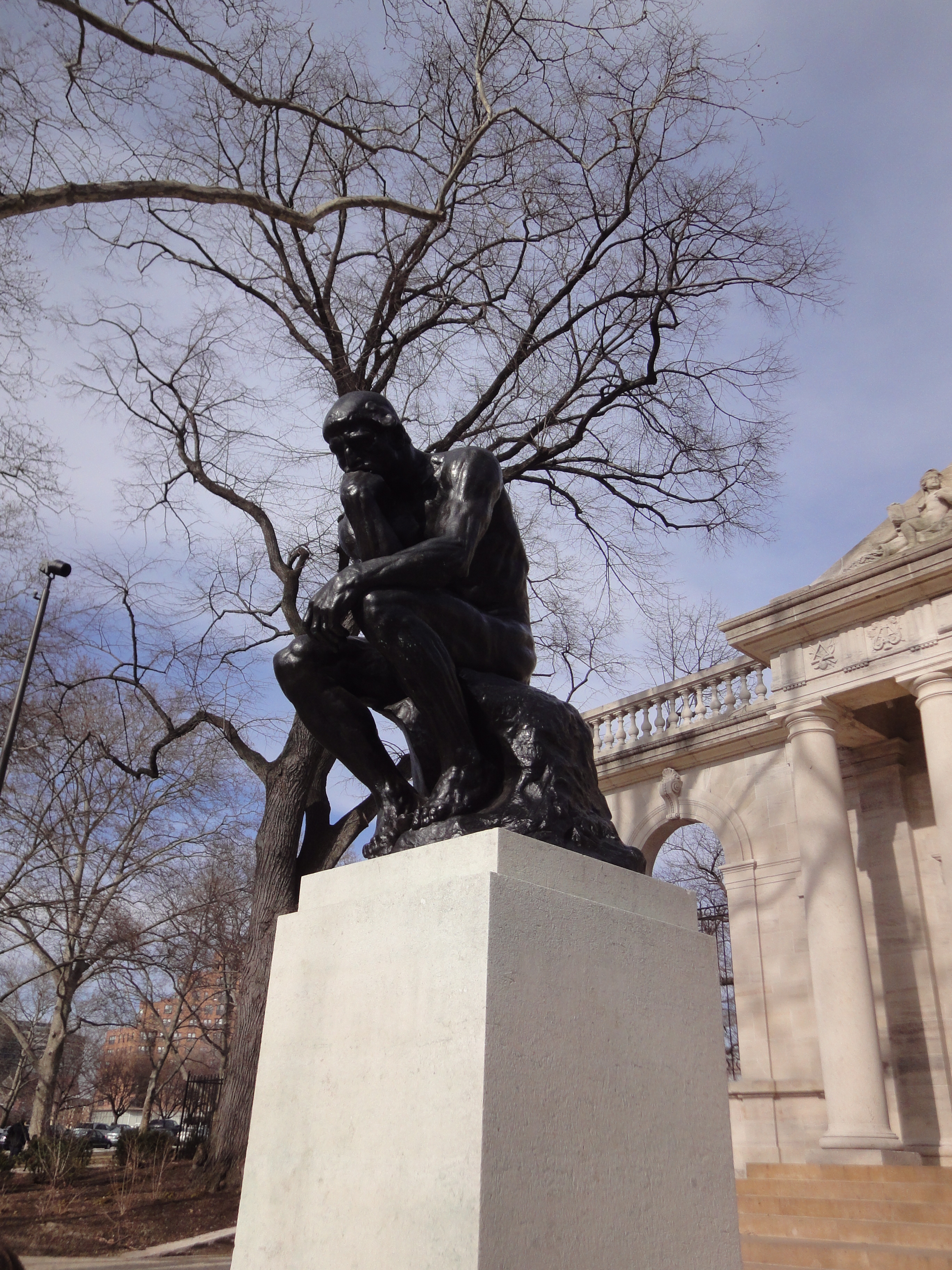
(The Rodin Museum is just a quick walk from the library. The Thinker (above) is there, as well as The Gates of Hell and The Burghers of Calais. Worth wandering by if you’re in the area!)

Jonathan Franzen quote

Jonathan Franzen, author of novels The Corrections and Freedom and essay collections How to Be Alone and The Discomfort Zone, on e-books and the pace of technological change:

“One of the consolations of dying is that [you think], ‘Well, that won’t have to be my problem.’ Seriously, the world is changing so quickly that if you had any more than 80 years of change I don’t see how you could stand it psychologically.” (Quoted from an article in The Guardian (UK), “Jonathan Franzen warns ebooks are corroding values,” 1/30/12.)

Best of 2011, Part the Second: Humor and Baking

To break the general nonfiction category down to a manageable size , here are my picks for humor and baking:

Humor:

Sh*t My Dad Says, by Justin Halpern
This was funnier and had more depth than I expected it to be, considering it was spawned from a Twitter account. The quotes of the dad in question are organized thematically into categories and separated by short essays. This book really is laugh-out-loud funny (e.g., On Accidentally Eating Dog Treats: “Snausages? I’ve been eating dog treats? Why the f**k would you put them on the counter where the rest of the food is? F**ck it, they’re delicious. I will not be shamed by this.”)

Bossypants, by Tina Fey, and Is Everyone Hanging Out Without Me? (And Other Concerns), by Mindy Kaling
I wrote about these together on the library’s “staff picks” book review section. They are both in short essay format, easy to read a little at a time or straight through; but more importantly, they are smart and funny. If you like 30 Rock (Fey) or The Office (Kaling), chances are you will like these books. (Also, I found out that Mindy wrote my all-time favorite episode of The Office, “The Injury,” wherein Michael grills his foot on a George Foreman, Dwight gets a concussion, and Jim sprays him in the face with a squirt bottle. But that is neither here nor there.)

Cookbook:

Good to the Grain, by Kim Boyce
This was one of my staff picks, too. Boyce is a pastry chef and a mother, so her goal is to make healthy recipes without sacrificing any of the deliciousness – and by and large, she succeeds. Every recipe (especially the whole wheat chocolate chip cookies) I’ve made from this book has been a success. The sections are organized around the type of flour the recipes require, so you can try out one type at a time.