Everywhere Babies: Baby Lapsit Storytime

Our library’s weekly children’s programs – Rhyme Time, Story Time, and Playgroup – are all open to kids from birth to age five, but until this year we didn’t have anything specifically for babies. In late February, I introduced Baby Lapsit Storytime, for babies from birth to 12 months or walking, and people started coming right away!

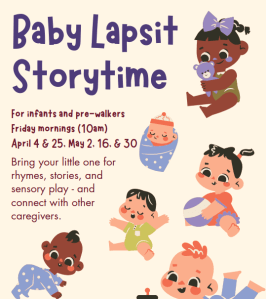
Flier for baby lapsit program

Flier made in Canva

As always, Jbrary served as an excellent resource, as did Mel’s Desk, the Show Me Librarian, KCLS, the book Baby Storytime Magic by Kathy McMillan and Christine Kirker, and of course, the Massachusetts youth librarian listserv (a.k.a. massyac).

From these sources, as well as my own favorite board books and memories of the baby storytime I attended at the Belmont Public Library several years ago, I put together a 20-30 minute program of songs, rhymes, books, and early literacy tips (the PLA Early Literacy Calendar has lots of these; I hand out a copy of each month’s calendar and suggestions to those who want one). I collected baby-friendly toys (no choking hazards, easy to wipe down or wash) from our current collection of stuff, plus leftovers from the Toy Swap; I also use the play scarves from Rhyme Time (and bring them home with me to wash).

Room setup: Vacuum the rug and set the bean bags up in a circle. Pull some chairs over too for those who are more comfortable sitting. There’s room for “stroller parking” in the back. The box of baby toys stays on the table until after the more structured part of the program happens. Extra copies of board books go on the little side table next to my chair, and I set up extra books along the window ledge (other board books, picture books for babies, poetry, etc.); if they’re in easy reach, people will check them out!

  • Welcome and introductions: We start whenever at least one, but ideally two, baby/caregiver pair(s) has/have arrived. Because of what I call “baby time,” this isn’t always precisely at 10am.
  • Song: “Well Hello Everybody, Can You Touch Your Nose?
  • Rhyme/fingerplay: “Open Shut Them”
  • Early literacy tip (e.g. rhymes and songs are important for babies because they slow down words and help babies hear the different sounds – an important preliteracy skill)
  • Song cube* song (ABCs, Itsy-Bitsy Spider, I’m A Little Teapot, Where Is Thumbkin?, etc.)
  • Rhyme/bounce: “The Grand Old Duke of York” (usually twice)
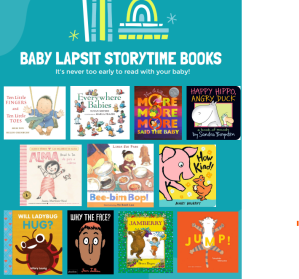
  • Book (see image and list below)**
  • Rhyme/play: Peekaboo to the tune of Frere Jacques
  • Song: “Head and Shoulders” by Ella Jenkins: we do head and shoulders, knees and toes, back and belly.
  • Early literacy tip (e.g. fingerplays help babies build the small muscles in their hands, preparing them to grip crayons so they can draw and write)
  • Scarf/rhyme: “Popcorn Kernels in the Pot” and/or “Jack in the Box”
  • Rhyme/bounce: “Trot, Trot to Boston” (I learned this one as an adult, it’s pretty New England specific)
  • Song: “Twinkle, Twinkle, Little Star”
  • Goodbye and closing: announce dates of next baby storytimes, and anything else interesting coming up – for example, we have a babywearing expert visiting next month, and a babies and kids clothing swap later this summer.
  • Play, socialize, and help! Put the toys on the rug and offer copies of the early literacy calendar. It’s so important for caregivers to have time to talk with each other, to exchange tips, to commiserate, to share information with each other. During this time I often play with babies, read them an extra book, offer info about library resources, or go and get specific books from our shelves.

*I got the song cube idea from another librarian friend. I make mine out of empty tissue boxes, paper, marker, crayons, and clear packing tape. Each side has a picture that corresponds to a simple, well-known song, e.g. a teapot for “I’m A Little Teapot,” a spider for “Itsy-Bitsy Spider,” a rowboat for “Row, Row, Row Your Boat,” a rocket ship for “Zoom zoom zoom, We’re going to the moon.” You can see a couple of examples from this Step Into Storytime post.

baby lapsit storytime books flier with book coversVisual book list made in LibraryAware

**A week or so ahead of time, I request a board book or full-size picture book for myself, and extra copies of the board book for caregivers to read along if they want. Here are the books we’ve read so far:

  • Ten Little Fingers and Ten Little Toes by Mem Fox and Helen Oxenbury
  • Everywhere Babies by Susan Meyers and Marla Frazee
  • More, More, More Said the Baby by Vera B. Williams
  • Happy Hippo, Angry Duck by Sandra Boynton
  • Alma, Head to Toe by Juana Martinez-Neal (this one is bilingual, English/Spanish; there is also Alma and Her Family, Alma at Home, and Where Is Pajarito?
  • Jamberry by Bruce Degen
  • How Kind! by Mary Murphy

Baby storytime has been an absolute delight, and I’m excited to keep it going. I’m grateful for the advice of other librarians and early literacy specialists, and to the caregivers for bringing their babies to the library. It’s never too early to begin reading with babies (or to sign up for 1000 Books Before Kindergarten!).

Unreasonable Hospitality in the Library

Last fall, the Massachusetts Library System (MLS) Youth Services Section (YSS) hosted a virtual “Lunch and Learn” with the folks from the Westwood Public Library‘s PR/marketing team. They spoke about being proactive and intentional instead of reactive, about brand consistency, quality control, and increased engagement with the community, and about sustainability and succession (so all the institutional knowledge doesn’t walk out the door when one person leaves).

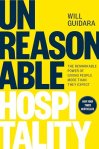
Cover image of Unreasonable HospitalityToward the end, they recommended three books: The Non-Designers Design Book by Robin Williams, This Is Marketing by Seth Godin, and Unreasonable Hospitality by Will Guidara. I just read Unreasonable Hospitality, and was thinking about ways we can offer excellent service and hospitality in libraries. (Guidara writes mainly about his area of expertise, restaurants, but the core principles are applicable to any service industry.) How do we make people who visit the library feel welcome, at home, seen, listened to, and cared for? What needs can we anticipate and fulfill?

One thing public libraries in Massachusetts do that often strikes people as magical when they first learn about it is our inter-library loan system. If a local library doesn’t have the book you want on its shelf when you want it – either because they don’t own it or it’s checked out – you can request a copy, and another library in the consortium will send it over. You can return the book to your home library or any other library in the network, and that library will make sure the book gets back to its owning library. It’s the magic of sharing! (And an algorithm, and van drivers, and sorters at the central facility, etc.) This saves people time and money, and it’s a pretty cool service.

ILL is a core service of libraries as far as I’m concerned, and so are programs: author talks and book signings, storytimes, Lego and games, book clubs, ELL and language learning groups, knitting and sewing groups, history and science lectures. The library is that “third place” where people can gather for entertainment, education, and community, without having to purchase anything. Being responsive to what the community wants – making sure people know that staff are open to ideas and willing to try new things – is part of building community and trust. It’s why I encourage patrons to talk to me in person, contact me by e-mail, or put a note in my desk mailbox. A lot of the new programs I’ve developed over the past year and a half have come out of these interactions, including Pokemon Club and the toy swap.

Hospitality means going beyond your organization’s core functions, however; beyond the “black and white” and into color, as Guidara puts it. What are the special, small, meaningful things you do to make people feel comfortable? In a children’s room, that might mean making sure all the outlets are covered, there’s a place to hang coats and park strollers, and there’s a changing table in every restroom. It could mean that books face cover-out as much as possible, there are toys to encourage play, and signage is friendly and informative. It could mean you have a first-aid kit ready to hand, bookmarks to give away, and stickers or hand stamps to ease the transition of leaving the library. It means greeting people who walk in the door, learning the names of the regulars…even remembering their tastes and preferences and making personalized recommendations.

What touches of hospitality have you put in place in your library (or bookstore, or other service workplace)? Where have you experienced remarkable, unexpected, “unreasonable hospitality” yourself?

A big part of what made “unreasonable hospitality” work in Guidara’s restaurants was that the staff was empowered to enact ideas, make exceptions, etc. without getting approval from a manager. This approach made me think of the organization and management of public libraries course I took in grad school; the teacher, an adjunct who had worked in many libraries, told us that the manager’s job is to make it possible for everyone else to do their jobs, and then get out of the way. In other words, don’t micromanage; instead, train and trust your staff, empower them to handle their responsibilities, make sure they have what they need to succeed, and be there to back them up. Unreasonable Hospitality is a beautiful example of that principle in action.

Spring Standouts

Ah, spring, the season of tulips and cherry blossoms! Or is it the season of endless cold rain, protests, war, economic collapse, and constitutional crisis? Either way, there are good books, and thank goodness.

I’ve read about 260 books since January and thought I’d feature some of the real standouts so far. These have all been published this year (2025, for those keeping track at home). Hat tip, as usual, to Betsy Bird at Fuse 8 (especially for My Presentation Today is About the Anaconda, which I would have missed if not for her), and Heavy Medal for Newbery-eligible titles.

Picture booksCover image of Let's Be Bees

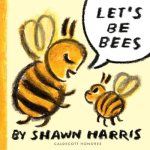
  • Let’s Be Bees by Shawn Harris: Hands-down one of the best toddler storytime books of the year, and maybe ever. The crayon drawings use kids’ own most common medium, and there are lots of sound effects. It’s hard to make a book this simple, and simply appealing.
  • The Interpreter by Olivia Abtahi, illus. Monica Arnaldo: A glorious book honoring the many kids who work as interpreters for their grown-ups; the hero of this book finds a way to balance her job as an interpreter with her job of being a kid. Filled with warmth and humor and really effective use of color in speech bubbles.Cover image of A Pocket Full of Rocks
  • The House on the Canal by Thomas Harding, illus. Britta Teckentrup: There are biographies, and there are histories, and then there are books that tell a story from a slantwise angle: the history of the house that became known as the Anne Frank House, from before it was built, through many different residents (human and animal) and disasters (fire, war) up to its present status as a museum.
  • Our Wild Garden by Daniel Seton, illus. Pieter Fannes: Two children convince their parents to re-wild their garden. This features specifically English flora and fauna, but is inspiring for any audience (although unfortunately, no matter how many little hedgehog doors we build here, we will not attract wild hedgehogs to our yards). The endpapers are flat-out gorgeous – they’d be amazing as fabric, wallpaper, or wrapping paper.
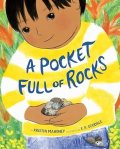
  • A Pocket Full of Rocks by Kristin Mahoney, illus. E.B. Goodale: Another marvelous read-aloud, for any time of year. A child collects rocks in winter, flower petals in spring, seashells in summer, and acorns in autumn, and uses them all in a fairy garden, then empties the jar, makes presents for their family, and starts over. The way this kid follows their interests without being deterred reminds me a bit of Mabel (see below). And I always love Goodale’s illustrations. Cover image of Every Monday Mabel
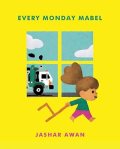
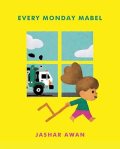
  • Every Monday Mabel by Jashar Awan: Jashar Awan has had my attention since What A Lucky Day! (2020), and Mabel is an absolute storytime grand slam. Readers’ curiosity is piqued right away, wondering why Mabel thinks Mondays are the best, despite her family’s disinterest in her passion – which turns out to be the garbage truck, complete with arm that picks up the trash can and dumps it (and sound effects!). Mabel is satisfied – though sad her family missed out on the experience – but other kids throughout the neighborhood celebrate the truck’s arrival as well.
  • Wind Watchers by Micha Archer: More beautiful collage art from Archer, and another calm and thoughtful story, as three kids observe and experience the wind through different weather and seasons. I particularly love one of the autumn spreads, with one kid perpetually suspended leaping into a pile of leaves.
  • Sweet Babe! A Jewish Grandma Kvells by Robin Rosenthal: Bold, stylish art for a bold, stylish grandma who just wants to kvell over her marvelous baby! The two play peek-a-boo, and just LOOK. AT. THIS. BABY! Who could say no? A Yiddish glossary is included, but I suspect that this book’s cultural specificity isn’t a barrier to its universality. Grandparents are gonna kvell!Cover image of Stalactite & Stalagmite
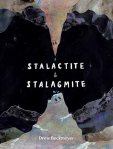
  • Stalactite & Stalagmite by Drew Beckmeyer: Brilliant premise, hilarious execution, exceptional art. I’ve never seen a picture book that covers millions of years, from trilobites to the present. Most of the story is in dialogue between Stalactite and Stalagmite and other visitors to their cave (a triceratops, a giant sloth, a human miner) and there’s an inconspicuous timeline along the bottom of each page.

Middle grade

  • A World Worth Saving by Kyle Lukoff: This high-stakes fantasy adventure with Jewish mythology and a trans main character trying to save a friend and assert his identity to his parents requires the reader’s full concentration. It’s unlike any other middle grade fiction out there today.Cover image of Away
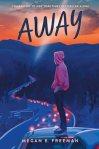
  • Away by Megan E. Freeman: I loved Alone, and so did the kids of Massachusetts – it was an MCBA winner. This companion stands alone, or you could read them in either order. Away has the perspectives of four kids instead of one, and different types of narration, and it comes together really well. (Also, there is a dog, and nothing bad happens to the dog.) Away really raises questions about social trust, community, government, and good trouble.
  • Max in the Land of Lies by Adam Gidwitz: Last year’s Max in the House of Spies was the first in a duology; the second book has a much more compressed timeframe, in weeks rather than years, and it’s high stakes: Max has returned to Berlin with the dual missions of spying for the British and finding his parents. The pacing and tone are different from the first book, but Gidwitz carries it all off successfully.
  • Crumble by Meredith McLaren: In this graphic novel, the main character and her mother and aunt all have the power to bake their feelings into food (think Like Water for Chocolate). But they aren’t supposed to bake bad feelings, so what is Emily supposed to do when tragedy strikes and the only thing she wants to do is bake? Crumble handles grief delicately and honestly. And there are recipes.
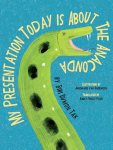
  • Cover image of My Presentation Today is About the AnacondaMy Presentation Today is About the Anaconda by Bibi Dumon Tak: Animals gather to give presentations about other animals, with frequent interruptions from the audience. Some presentations are self-centered, others well-researched, others a bit peculiar. The animals’ reasons for choosing their subjects vary, and overall it’s an entertaining batch of oral reports filled with fascinating facts and scientific vocabulary.
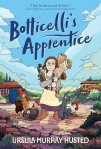
  • Botticelli’s Apprentice by Ursula Murray Husted: This graphic novel set Florence features a determined “chicken girl” who dreams of being an artist, and an artist’s apprentice who’s stuck with an assignment he can’t accomplish; the two make a deal to help each other, and after a prickly start, they each learn from one another. Well-researched and full of information about early Renaissance Florence, the processes of preparing canvases and creating paints, and why there weren’t more female artists, this is historical fiction at its best. And there’s a mischievous dog. (Again, nothing happens to the dog. Although dogs really shouldn’t eat lapis.)Cover image of Botticelli's apprentice
  • Right Back At You by Carolyn Mackler: I have a feeling this one isn’t going to stick in my memory, but I loved it while I was reading it. It’s got just the kind of speculative premise I like – a kind of time wormhole through which the characters send letters from New York in 2023 to Pennsylvania in 1987 – and it reminded me of Erin Entrada Kelly’s You Go First in the way the two characters help each other work through their challenges.

Young Adult

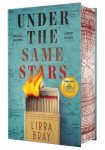
  • Cover image of Under the Same StarsUnder the Same Stars by Libba Bray: Characters in three timelines – 1930s Nazi Germany, the divided Berlin of the 1980s, and 2020 COVID-19-era New York – are connected through a history of war, oppression, and resistance. Reading is subjective, of course, but I felt that each section had a similar emotional weight; often in books with past and present settings, one has more pull than another.

Adult

  • Show Don’t Tell by Curtis Sittenfeld: As a longtime Sittenfeld fan, I was pleased by all these stories, including a coda to Prep. Cover image of Everything Is Tuberculosis
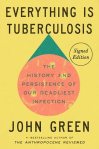
  • Everything Is Tuberculosis by John Green: In engaging prose, Green demonstrates how modern TB has much more to do with injustice than with bacteria. The world has had the cure for TB since last century, and the disease has largely been eradicated in developed countries, yet millions still die of TB every year “where the cure is not.” A clear and urgent call for healthcare justice. (And the book design is just as clever as the contents: make sure to examine the endpapers!)
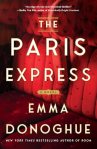
  • The Paris Express by Emma Donoghue: “A railway carriage is as intimate as a dinner party, but one with no host and guests assembled at random.” I got to see Emma Donoghue speak at a bookshop last month, and she was wonderful. My library hold on The Paris Express came in not long after, and I enjoyed the multiple perspectives of the people on the train, and the tension of wondering about the nature and scope of the impending disaster. Researched in depth and told with clarity and drama.
  • Do I Know You? A Faceblind Reporter’s Journey into the Science of Sight, Memory, and Imagination by Sadie Dingfelder: “What is it like to be someone else?” Dingfelder has prosopagnosia (faceblindness) and stereoblindness, but didn’t realize until adulthood that she wasn’t neurotypical. Her writing about the way she experiences the world is fascinating and funny.

So those are my top titles of 2025 so far. What are yours?

Emma Donoghue at Odyssey Bookshop

Cover image of The Paris ExpressOn St. Patrick’s Day, author Emma Donoghue was interviewed at the Odyssey Bookshop in South Hadley, and I was able to squeeze in a visit in the middle of my library shift (and be back in time for Pajama Storytime). I’ve been reading Emma Donoghue’s books my whole adult life: since 2007, I’ve read fourteen of her books, and I’m looking forward to reading her newest, The Paris Express, as soon as my library copy comes in. It was a treat to hear her speak about her new book, research, adapting novels into other forms, being Irish and Canadian, and more. Here are a few snippets from the interview:

  • On being an Irish writer, even though she’s lived in Canada since 1998: “The first twenty years are the years that mark you and shape you.”
  • On the topic of the train crash: “I’ve always wanted to write about a disaster of some kind.” They bring a cross-section of people together. The train journey gives shape to the novel.
  • On anarchists and explosions: “They were never that clear how blowing things up would help.”
  • On pacing: “Speed is the heart of the novel.” (One entitled rider demanded an unscheduled stop, adding ten minutes to the trip, which the transit employees tried to make up later in the journey: “So basically one rich arsehole ruined it for everyone.”)
  • On characters being cut from the novel: All of the characters were interesting people, but they “had to be having an interesting day,” even if the conflict they faced was mostly internal. “What I love about novels is that you can jump into the head of each character in turn.”
  • On writing a novel with a large cast: “It was like planning an amazing dinner party,” bringing people together and seeing how they interacted.
  • On novels being made into films: “I don’t think about film when I’m writing a novel…each form has its own strengths…I love doing adaptations” [of her own work and others’, such as the upcoming H Is for Hawk]. Writing the story as a novel first, then adapting to film, is the right sequence; a novel allows for “rich imagining.”
  • On adapting someone else’s work: “I felt like a tiny figure climbing inside a machine made by someone else.”
  • On the writing process: “It never feels as if you’re alone…” I feel as though I’ve been with people all morning on a moving train.
  • On writing about disaster: “My interest was in the tension. I didn’t want it to be a bloodbath.” But each character wonders, “Am I going to die?” And all of them have been “derailed” from the “predictable path” of their day.
  • On living in a diverse, multicultural society: “The train is a more interesting train if it has a wide variety of people on it.” (The train itself is a POV character in The Paris Express.)
  • On adapting one form to another: It’s “spinning the same yarn again.” She likes all forms, from novel to film to play to musical: “Whatever gets my story into your head.”
  • On her new project: A musical with traditional Irish music about people who emigrated from Antrim to Canada during the Famine.
  • On thinking about whether a book will sell: “I write books, then sell them….If you write a lot of things, one of them will pay the rent.”

Thank you, Emma, for your many books, and for visiting us in Western Massachusetts!

Quotations are from my notes, accurate to the best of my ability.

Speculative books ask “What if…?”

Most kids learn at least a little about genre in school; they can probably name a few, like mystery, historical, fantasy, and science fiction. I, too, was familiar with the traditional genre labels, until I took a workshop with Joyce Saricks, author of The Readers’ Advisory Guide to Genre Fiction, while I was working at the Robbins Library in Arlington. In her book, and in the workshop, she examined books through the lens of appeal factors, and divided them into the adrenaline genre, the intellect genres, the landscape genres, and the emotion genres.

I no longer have my original notes on the workshop, but I believe it was Joyce Saricks who used the term “speculative” as well, for books that ask “What if…?” Although she classifies fantasy as a landscape genre and science fiction as an intellect genre, both imagine worlds different from ours in some way. This, for me, is a reading sweet spot: not space opera or high fantasy (though I read those too), but a world that’s like ours, but with a twist: there’s time travel, or a coup changes the political landscape, or there’s been a climate catastrophe, or a lethal pandemic, or women are more powerful than men. Or humans have disappeared altogether! They are alternate histories, dystopias, or futuristic stories. These books challenge and stretch readers’ imaginations, encouraging us to place ourselves in that situation and imagine: What if?

Speculation has value as rehearsal; reading is a way to experience something and think through your responses and reactions without having to experience the situation in real life. Here are some of the speculative books I’ve enjoyed over the years. Some are lighthearted, some scary, some a little too close to reality for comfort.

NonfictionCover image of The World Without Us

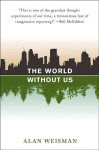
  • The World Without Us
  • What If We Get It Right?

Fiction

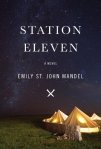
  • Station Eleven by Emily St. John Mandel
  • The Time Traveler’s Wife by Audrey Niffenegger
  • This Time Tomorrow by Emma Straub
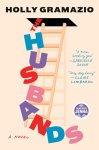
  • The Husbands by Holly GramazioCover image of The Husbands
  • Famous Men Who Never Lived by K. Chess
  • Parable of the Sower by Octavia Butler
  • The Future by Naomi Alderman
  • Stories of Your Life and Others by Ted Chiang
  • An Unkindness of Ghosts by Rivers Solomon
  • The Bone Clocks by David Mitchell
  • Beautyland by Marie-Helene BertinoCover image of Station Eleven
  • The Ministry of Time by Kaliane Bradley
  • Moonbound by Robin Sloan
  • The Night Bookmobile by Audrey Niffenegger

Fiction (in which things are very different for women, specifically)

  • The Handmaid’s Tale by Margaret Atwood
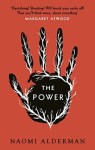
  • The Power by Naomi AldermanUS cover of The Power by Naomi Alderman
  • When She Woke by Hillary Jordan
  • Red Clocks by Leni Zumas
  • When Women Were Dragons by Kelly Barnhill

Young Adult

  • The Loneliest Girl in the Universe by Lauren James
  • Unwind by Neal Shusterman

Children’s

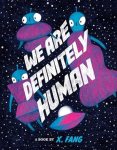
  • We Are Definitely Human by X. FangCover image of We Are Definitely Human
  • Journey by Aaron Becker
  • When You Reach Me by Rebecca Stead
  • We’re Not From Here by Geoff Rodkey
  • Finn and Ezra’s Time Loop Bar Mitzvah by Joshua Levy
  • The Color of Sound by Emily Barth Isler
  • The First State of Being by Erin Entrada Kelly
  • The Last Cuentista by Donna Barba Higuera

What are your speculative favorites? What do you like or dislike about the genre?

The art of the pivot

Last summer, I piloted “My First Book Club,” a program for rising kindergarten and first grade students and their grown-ups. It was successful at first, but attendance dropped off after the fall – partly, I think, because I had to alternate between the more popular Saturday morning time and Friday afternoons, which didn’t work as well for everyone. (If we had another Children’s Librarian who could also offer weekend programs…)

I decided our February book club would be the last one until summer, when I would run it again for a new group of rising K/1st graders. No one showed up for the program…but, there were plenty of kids and adults in the children’s room, so I invited them all in for a storytime instead. We read the same two books – Arihhonni David’s The Good Game and Who Will Win? – and used the coloring sheets I’d printed (a flying squirrel and a bat, characters in The Good Game), I just sprinkled in a few songs and rhymes as well: “Open Shut Them,” “The Itsy-Bitsy Spider,” and the Ella Jenkins version of “Head and Shoulders.”

So, instead of having a book club with zero attendance, I had a storytime with eleven kids and grown-ups, all of whom were pleased and grateful. With experience, it’s fairly easy to pivot from one program to a very similar one, even for a different age group – going from a music program to STEAM would be a different story – but in this case, it worked out for everyone!

What can you draw in six seconds?

Cover image of Lucky ScrambleThe kids’ graphic novel book club I started last fall is still going strong, with about 4-7 kids attending each month. This month we read Lucky Scramble by Peter Raymundo, about a kid named Tyler who goes to a Rubik’s cube competition. Our icebreaker question was “What’s your favorite kind of puzzle?” and a lot of the kids said “Rubik’s cube,” even though none of us could solve one. (I said word puzzles, like wordle, and it turns out all of the kids also do the NYT puzzles!)

We discussed the different characters and storylines, what we expected and what surprised us, parental pressure, and attitudes toward competition and winning. We each had a copy of the book for reference, and the kids are so good about citing page numbers so we can all be on the same page, literally.

I asked them what they thought they could do in six seconds – the length of time champion speed-cubers can solve a 3×3 – and that turned into “What can you draw in six seconds?” So we moved over to the tables, got paper and pencils, and tried it! Turns out, not much – but after having only six seconds to draw something, a minute feels like a long time! So we did a one-minute drawing, a two-minute drawing, and finally a five-minute drawing (during which one of the kids turned out a staggeringly impressive dragon drawing).

Cover image of Puzzled by Pan CookeLast, the kids voted on which book to read next. The choices were Curveball by Pablo Cartaya, Pebble & Wren by Chris Hallbeck, and Puzzled by Pan Cooke. The first two got one vote each and Puzzled got two votes, so that will be our February book – but all three books got checked out. It was a good afternoon!

2024 Reading Wrap-Up: That’s a lot of books

Looking back at my mid-year reading round-up, especially the picture book and middle grade categories, so many of these are still top of mind: books I recommend, put on displays, and use in storytimes. Looking back to last year’s wrap-up, the same holds true of most of the picture books as well, and plenty of middle grade (most especially Beth Lincoln’s The Swifts, Erin Bow’s Simon Sort of Says, and Sophie Escabasse’s Witches of Brooklyn series).

When I went to count up my total number of books read this year I did think at first I had made a math mistake, but no, the number is correct. And in fact, it doesn’t include all the re-reading (for example, the approximately 45 times I read Endlessly Ever After at Pajama Storytime, or vacation re-reading). Here is the usual breakdown and favorite titles in each category; again, these are books I read in 2024; some of them were published earlier. The titles I mention below are mostly those I read in the second half of the year, since others were already mentioned in the mid-year post. Anyway, on with the show! 

Total number of books read: 880. (Yeah, this is pretty unbelievable, and no, I’m not really sure how either.)

Reviewed for Kirkus: 23 (most of those not included in the total above)

Partially read/started-didn’t-finish: 20

Picture Books: 515howlittlelori

  • How Little Lori Visited Times Square by Amos Vogel: you think you know all the books Maurice Sendak ever illustrated, and then you discover this hilarious gem in a bookstore in Brooklyn. What a trip.
  • The Yellow Bus by Loren Long
  • The Pass by Sara Laux Akin
  • Sometimes We Fall by Randall de Seve
  • We Are Definitely Human by X. Fangsorryyougotmad
  • Remembering Rosalind Franklin by Tanya Lee Stone (NF)
  • All at Once Upon A Time by Mara Rockliff
  • No More Senora Mimi by Meg Medina
  • Noodles on a Bicycle by Kyo Maclear
  • The Island Before No by Christina Uss
  • I’m Sorry You Got Mad by Kyle Lukoff
  • Just What to Say by Kyle Lukoff
  • What Can A Mess Make? by Bee JohnsonCover image of What Can A Mess Make
  • Is A Book A Box for Words? by Harriet Ziefert
  • Hello, I’m A… (Meet the Wild Things) by John and Hayley Rocco
  • Just Us by Molly Beth Griffin
  • Small Things Mended by Casey W. Robinson

Early Readers and Chapter Books: 9gumluck2

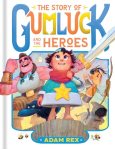
  • The Story of Gumluck and the Dragon’s Eggs by Adam Rex
  • Pizza for Pia by Betsy Groban and Allison Steinfeld

Middle Grade: 147

  • The Extremely Inconvenient Adventures of Bronte Mettlestone by Jaclyn Moriartyenigmagirls
  • Medusa (The Myth of Monsters) by Katherine Marsh
  • The Wild Robot by Peter Brown
  • The Girls of Skylark Lane by Robin Benway
  • AfterMath by Emily Barth Isler
  • The Enigma Girls by Candace Fleming (NF)
  • Not Nothing by Gayle Forman
  • Magnolia Wu Unfolds It All by Chanel Miller
  • Savvy by Ingrid Law
  • The Tenth Mistake of Hank Hooperman by Gennifer Choldenko
  • The Swifts: Gallery of Rogues by Beth Lincoln

Young Adult: 13whentheworldtipsover

  • Lies My Teacher Told Me: A Graphic Adaptation by James Loewen and Nate Powell (GN, NF)
  • It’s Okay If You Don’t Love Me by Norma Klein
  • When the World Tips Over by Jandy Nelson
  • Here I Am, I Am Me: An Illustrated Guide to Mental Health by Cara Bean (GN, NF)

Graphic Novels (overlap with other categories): 62

  • Hilda and Twig Hide from the Rain by Luke Pearsonhildatwig
  • Batcat: Sink or Swim by Meggie Ramm
  • Pets and Pests by Andy Warner (NF)
  • Woe: A Housecat’s Story of Despair by Lucy Knisley
  • Lies My Teacher Told Me: A Graphic Adaptation by James Loewen and Nate Powell (YA, NF)
  • Here I Am, I Am Me: An Illustrated Guide to Mental Health by Cara Bean (YA, NF)

Adult Fiction: 58

  • Remarkably Bright Creatures by Shelby Van Peltsandwich-newman
  • The Lost Boy of Santa Chionia by Juliet Grames
  • The Bright Sword by Lev Grossman
  • Sandwich by Catherine Newman
  • Ready or Not by Cara Bastone

Adult Nonfiction: 31

  • Sellout by Dan Ozzirebelgirl
  • Nice Try by Josh Gondelman (I’ve also enjoyed his wonderful weekly newsletter, That’s Marvelous)
  • A Heart That Works by Rob Delaney
  • The Genius of Judy by Rachelle Bergstein
  • Rebel Girl by Kathleen Hanna
  • Grief Is for People by Sloan Crosley
  • What If We Get It Right? by Ayana Elizabeth Johnson

Short stories/essays: 12

  • What If We Get It Right? by Ayana Elizabeth JohnsonCover image of What If We Get It Right
  • H Is for Hope: Climate Change from A to Z by Elizabeth Kolbert
  • Table for Two: Fictions by Amor Towles

“People who believe in a brighter future are more likely to put in the effort required to achieve it.” -Elizabeth Kolbert, H Is for Hope

Audiobooks (overlap with other categories): 16

  • Witchlings by Claribel Ortegabrontemettlestone
  • Nuts to You by Lynne Rae Perkins
  • Rewind by Lisa Graff
  • No One Leaves the Castle by Christopher Healey
  • The Extremely Inconvenient Adventures of Bronte Mettlestone by Jaclyn Moriarty

Five-star ratings: 26

  • Gather by Kenneth Cadow (YA – won a Printz Honor)wearedefinitelyhuman
  • We Are Definitely Human by X. Fang (made me laugh)
  • Telephone of the Tree by Alison McGhee (made me cry)
  • Buffalo Brenda by Jill Pinkwater (just as good as I remember)

Re-reads: I really don’t have a good way to keep track of these. I re-read The Night Circus and The Great Believers on vacation, and I know we listened to The Swifts (both books) many times over, as well as all three Bronte Mettlestone books. And, as previously mentioned, Endlessly Ever After and dozens of other books I read aloud at storytimes.

homeinalunchboxWeNeedDiverseBooks: 189. Less than last year both in terms of numbers and percentage of the total, though I do suspect myself of undercounting/tagging.

Now we’re already well into 2025, with the ALA Youth Media Awards on the horizon (Monday, January 27 at 10am Eastern – later than usual because it’s happening in Phoenix, which is on Mountain Time). I’m sure I’ll dig back into some 2024 books I missed after the awards, and we’ve already got plenty of 2025 books to look forward to – from Curtis Sittenfeld, Libba Bray, Emma Donoghue, Kevin Wilson, Adam Rex, Kate Messner, Kyle Lukoff, and more. Which books are you looking forward to this year?

Choosing twelve (or twenty) “best” books

One of the professional journals I write book reviews for recently asked their reviewers to suggest the “best” books of the century so far (2000-2024). We each get to submit twelve (12) titles. If you are a book person you understand how impossible this is! I could easily pick twelve favorites in each youth format (picture book, chapter book, young adult, graphic novel, etc.) from this year alone, and it wouldn’t be easy – look at what Betsy Bird is doing over at Fuse8 with her incredible #31Days31Lists. And yet, here’s what I submitted (some officially, through the form, and others by email the next morning when I realized I had to include them, so yes, it’s a few more than twelve):

Picture Booksjourney
Journey by Aaron Becker
Lift by Minh Le and Dan Santat
Extra Yarn by Mac Barnett and Jon Klassen
If You Come to Earth by Sophie Blackall
School’s First Day of School by Adam Rex and Christian Robinson / On Account of the Gum by Adam Rex
Endlessly Ever After by Laurel Snyder and Dan Santat
Middle grade
Clementine by Sara Pennypacker
Dory Fantasmagory by Abby Hanlon
Greenglass House by Kate MilfordCover image of Clementine
Castle Hangnail by Ursula Vernon
The Girl Who Drank the Moon by Kelly Barnhill
Simon Sort of Says by Erin Bow
The Swifts by Beth Lincoln
Witches of Brooklyn by Sophie Escabasse
YA
Looking for Alaska by John Green
Graceling by Kristin Cashore

And what does “best” mean, anyway? Are we using award criteria (Newbery, Caldecott, etc.) or are we talking about the books that are our real favorites, that we read and re-read and recommend and foist on people as gifts?

Meanwhile, over on BlueSky, there’s a #BookChallenge to list twenty books that have been meaningful to you, one per day for twenty days. I’ve started off with children’s classics (The Golden Compass, A Wrinkle in Time, The Giver, The View From Saturday, Bridge to Terabithia), two poetry collections (To A Fault by Nick Laird and The Essential Rumi), speculative nonfiction The World Without Us by Alan Weisman, and picture book Alexander and the Terrible, Horrible, No Good, Very Bad Day, because some days are like that – even in Australia.

What are your best/favorite/desert-island books?

Maria Popova and Sophie Blackall at the Morgan Library

The Morgan Library in New York recently hosted a conversation between Maria Popova and Sophie Blackall, “Children’s Books as Philosophy for Living,” and the recording is available on their website. (The Morgan Library, incidentally, is where I learned that E.B. White, author of The Trumpet of the Swan and Charlotte’s Web, is the same E.B. White as The Elements of Style by Strunk & White. I cannot now find a listing for that exhibit on the Morgan website, but I am 99% sure that’s where I saw his manuscripts, journals, and letters and made the connection. Anyway…)

Sophie and Maria with Little Prince scarves

Popova and Blackall discussed, among other things, A.A. Milne’s Winnie-the-Pooh, Antoine de Saint-Exupery’s The Little Prince, and Beatrix Potter’s Peter Rabbit, as well as her scientific drawings. In the photo above, they’re wearing scarves, like the little prince’s iconic scarf, which resembles Piglet’s ears. (Sophie: “It was Piglet’s ears that made me want to be an illustrator….how to convey emotion in a couple of lines…” Maria: “Isn’t it amazing how these influences and ideas permeate the psyche, often without our awareness, and kind of lodge themselves in there and become these quiet building blocks of what we create, often without us knowing that we’re creating out of these borrowed pieces?”)

Here are a few more quotes from the talk, but if you are interested in children and children’s literature, it’s worth an hour of your time to watch the whole thing. Sophie brought a list (see photo below) to keep their conversation on track.

Sophie and Maria with a paper list on the table between them

“I don’t believe in moralizing children, but I do believe that morality is a branch of the imagination, just like creativity and curiosity, and if the imagination is rooted in kindness, then morality stands a pretty good chance.” -Maria Popova

“Children’s books to me, the ones that endure, can be read both when you’re a child and when you’re a grownup. And as a reader of any book you bring so much of yourself to it.” -Maria Popova

“Fantasy mystifies in order to reveal some deeper truth, and fundamentalism mystifies in order to conceal.” -Maria Popova

“And that’s what story gives children, that agency to imagine themselves as characters in a different story, of telling different stories, of unbelieving the main story, the mainstream story.” -Maria Popova

“I want to foster a curiosity in children, so that they will feel confident that they can read any book that they might want to pick up….If a child is encouraged to be curious, I believe that they will continue to read and they will become a more empathetic human being and I think we need that more than ever.” -Sophie Blackall

“We are trying to arm [children] with everything we know to be true, and that is what we are trying to put into the books that we give to children.” -Sophie Blackall

Toward the end of the conversation, they mention author Katherine Rundell’s work, Why You Should Read Children’s Books, Even Though You Are So Old and Wise. You can read an excerpt here: Why Adults Should Read Children’s Books. Rundell quotes Marina Warner: “Fairy tales…evoke every kind of violence, injustice and mischance, but in order to declare it need not continue.” [emphasis added] Rundell continues, “Fairy tales conjure fear in order to tell us that we need not be so afraid. Angela Carter saw the godmother as shorthand for what she calls “heroic optimism”. Hope, in fairy tales, is sharper than teeth.” Children’s books satisfy the desire for justice and foster a sense of wonder and awe. And don’t we all, no matter how old, want justice and wonder?