And Little Louis: author-illustrator collaboration

Like most other picture book readers, I’m a big fan of Jon Klassen (I Want My Hat Back, This Is Not My Hat, etc.) and Mac Barnett (Sam and Dave Dig a Hole, Leo: A Ghost Story, etc.), so naturally when they collaborate I am excited. Their book Extra Yarn is a favorite, but I have been wondering about something.

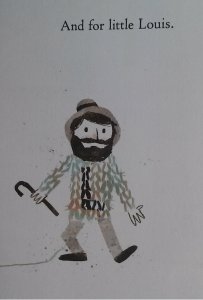
I have been wondering about Little Louis.

littlelouis

Particularly, I am wondering if Mac Barnett handed (or more likely e-mailed) the manuscript to Jon Klassen and let him take it from there, or if they discussed how the illustrations and text would fit together. If it was the former, I wonder what Barnett had in mind for Little Louis, and how far that was from what Klassen came up with. Did it make him laugh? Or were they in on it together?

I used to work in publishing, but I don’t know much about picture book publishing, other than that some authors and illustrators work together more closely, others less closely. I asked Barnett and Klassen on Twitter but they haven’t replied. The question stands…

Screen Shot 2016-01-07 at 10.56.41 AM


Do you debut? Focus on first books

I only realized how few new debuts* I read when I was offered the chance to contribute to another Reader’s Shelf column in Library Journal,New Year, Nearly New Books: Favorite 2015 Debuts.” Looking back through nearly a year’s worth of reading, there weren’t very many for me to choose from, but I did really enjoy The Magician’s Lie by Greer Macallister. If you like magic and illusion, turn-of-the-century America, and (possibly) unreliable narrators, it would be a great book to curl up with this winter.

*”New debuts” isn’t redundant, I don’t think: an author’s first book is a debut whether it was published ten years ago or ten days ago. And if it was ten years ago, then hopefully there have been a few since, and you’ve got some catching up to do!

Do you seek out debuts? I don’t make a point of it, though I certainly don’t have anything against them – if it’s recommended to me or gets glowing reviews or has a great hook, I’m just as interested in a first novel as a tenth, and discovering a new writer is a pleasure. Really, the only downside to reading a new debut is that you’ll be waiting for the next one instead of diving into an author’s backlist.

Do you like to read everything an author has written, or do you read more selectively, even if you really like the author? Do you like to read an author’s work chronologically, reverse-chronologically, or does the order not matter to you?

Books on the radio

I was invited to be on Wisconsin Public Radio at the end of December to talk about audiobooks: why people might try them, how to find a book (or narrator) they like, when they might even be preferable to print books. Being on the radio was fun! It’s archived on WPR’s Central Time website (though I haven’t listened; I don’t want to hear how many times I said “um”). If you want to download or listen online, it’s from 5:30-6pm (unless you need to catch up on your local Wisconsin news and chit-chat, in which case, go ahead and listen to the whole thing).

I’ve written about audiobooks on this blog in the past; if you missed those posts, don’t worry, you can access them here, because the internet is forever: “I’d listen to her read a grocery list: on audiobooks” (3/12/14) and “Audiobook recommendations for a friend” (10/3/14). Or if you don’t want to click through, here’s the bullet point version:

  • How to get started if you’re new to audiobooks: Try listening to a book you’ve already read; choose a shorter book; listen to the first few minutes of a few different ones to see which narrator’s voice you like best.
  • Remember, taste is subjective: You might prefer a male or female narrator, a full cast production, American voices or other accents, slow or fast talkers.
  • How to get audiobooks: You can buy them, of course, but that gets expensive! Your local library probably offers audiobooks on CD and/or Playaways (a small device that contains one whole book), and may offer downloadable audiobooks as well through Overdrive, hoopla, or another platform. If you’re hearing impaired, you can get access to audiobooks for free in every state.
  • Value-added aspects: Some authors read their own books, which can be especially fun if they are familiar voices already, like Tina Fey, Amy Poehler, Sarah Vowell, Neil Patrick Harris, or Aziz Ansari. Neil Gaiman and Jenny Lawson also read their own books, which I highly recommend.
  • A social experience: Before school vacations and holidays, lots of people come to the library looking for audiobooks the whole family can enjoy on long car trips. Finding a book everyone will enjoy can be a fun challenge depending on ages and tastes!
  • Seamless switching between formats: I haven’t done this myself, but one of the callers said she switched back and forth between the Kindle e-book and Audible audiobook; Amazon owns Audible so accounts can be synced for seamless transitions between audio and print.

Do you listen to audiobooks? Do you have a favorite genre to listen to, or a favorite narrator?


Best Books I’ve Read in the Second Half of 2015

See Top Ten Books I’ve Read So Far in 2015 from July 1. I will still talk your ear off about Greenglass House and Graceling. And Trigger Warning and NPH’s Choose Your Own Autobiography are superb audiobooks. Here are ten of the books I’ve enjoyed in the second half of the year:

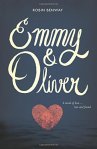
Emmy & Oliver by Robin Benway: Cover image of Emmy & OliverEmmy’s best friend (and boy-next-door), Oliver, was kidnapped by his father when he was seven; he returns at age 17, and reconnects with Emmy and her friends. Good realistic/romantic fiction for those who liked The Face on the Milk Carton by Caroline B. Cooney and Sweethearts by Sara Zarr.
Slade House by David Mitchell: This haunted house story is a companion to The Bone Clocks, so of course I loved it; there’s no need to read The Bone Clocks to enjoy Slade House, though, so if this is your first foray into Mitchell’s universe, you can start with this more concise novel. The titular Slade House appears every nine years so its inhabitants can harvest a soul to prolong their lives, but the last victim it lures in is on to them. Deliciously creepy. (I got an early copy and wrote the blurb for LibraryReads.)

We Never Asked for Wings by Vanessa Diffenbaugh: Just as good as The Language of Flowers, but with illegal immigration instead of the foster care system and homelessness as the central issue. Not to say that it’s an “issue book”; the Mexican-American characters at the center of the story are real and complex, their dilemmas hard and heartbreaking.

Useful, Usable, Desirable by Aaron Schmidt and Amanda Etches: I’ve already written about this one here. If you work in a library, or design any kind of product or service or platform for library users, read this book!

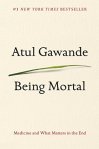
Being Mortal by Atul Gawande: Cover image of Being MortalI’m consistently impressed with Gawande’s writing ability, and the clarity with which he communicates his message. In this case, he addresses the issues presented by an aging population, on both the societal and the individual level. An important book that is also easy to read.
The Dive from Clausen’s Pier by Ann Packer: If you’ve been having second thoughts about settling down with the guy you’ve been dating for years and are now engaged to, and he becomes paralyzed in an accident, do you stay with him? Or do you go? This is Carrie Bell’s decision, and The Dive From Clauden’s Pier is a character study of a young woman making a difficult decision about what she should do, and what that might mean about the kind of person she is.

Modern Romance by Aziz Ansari and Eric Klinenberg: Though I’m no longer in the dating pool, I enjoyed listening to how romance has changed and how it has stayed the same in recent history. The audiobook was great; it’s stand-up comedy backed up with smart social science.
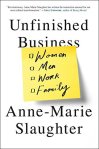
Cover image of Unfinished BusinessUnfinished Business by Anne-Marie Slaughter: The author of The Atlantic article “Why Women Still Can’t Have It All” has written a book about the unequal value American society places on competition (ambition, putting oneself first, breadwinning) and care (providing care for children, aging parents, other family members or friends); the former is traditionally male, the latter traditionally female. In order to address gender inequality, we must also adjust the value we place on competition and care.

George by Alex Gino: George is a fourth grader who was born a boy but knows she’s really a girl. But how does she tell her family and friends? And how will they react when she does? This is most likely – hopefully – just the beginning of transgender lit for children and teens, and it’s a sweet, realistic story that avoids extremes: there’s no horrific bullying, but not everyone is instantly accepting either. George’s friend Kelly is a great character also.

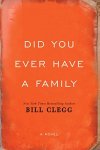
Did You Ever Have a Family by Bill Clegg: Cover image of Did You Ever Have a FamilyA story of grief and guilt, told by multiple narrators – the survivors of a tragedy and those related to them. For those who liked The Illusion of Separateness by Simon Van Booy, How to Start a Fire by Lisa Lutz, The Children’s Crusade by Ann Packer, Fellow Mortals by Dennis Mahoney, The Grief of Others by Leah Hager Cohen.
That’s it for me for 2015. If I read any outstanding books in the next week, I’ll tell you about them in January. Meanwhile, what were your favorite books of the year?
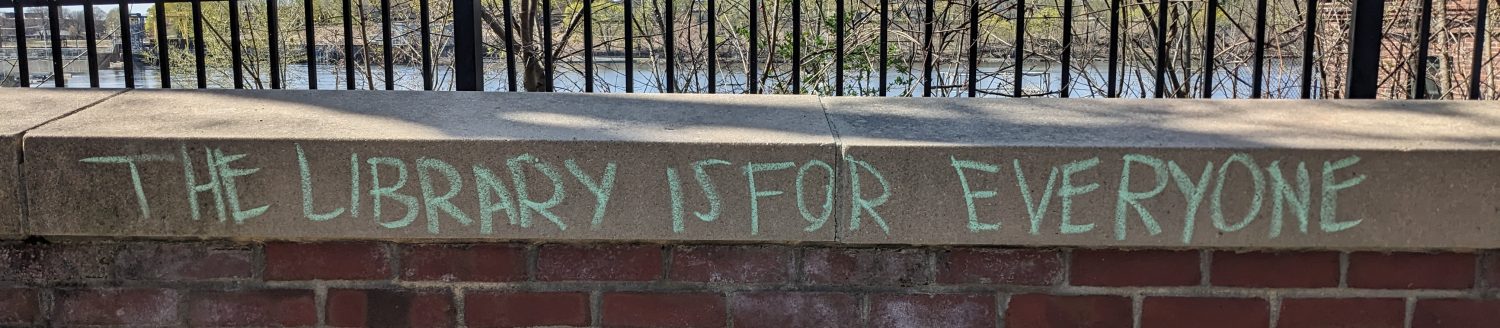
Quotes from books, III

I’m continuing to run with this Top Ten Tuesday idea from The Broke and the Bookish; here’s a third installment of quotes from books I’ve read (semi-)recently. (See Part one | Part two.) This set spans my reading from June 2015 back to January 2015 (I’m going in reverse chronological order). Most of these are from adult literary fiction, but there are two from children’s books (actually three, there’s a bonus one from Harriet the Spy), one from a memoir, one from a classic, and one from a nonfiction book about the Finnish educational system.

  1. He wanted to travel but lacked any desire to arrive.The Waterproof Bible, Andrew Kaufman
  2. “The hardest part of making a sacrifice isn’t the moment when you do it. That’s the easiest. You’re too busy being proud of yourself for being so noble. What’s hard is the day after that and the following one and all of those days to come. It’s needing to make that sacrifice over and over again, the rest of your life, while in your mind, you can still taste that which you lost. Or what you think you lost.” Mambo in Chinatown, Jean Kwok
  3. I remembered my memory of the moment, because after so long that’s what memory is: the replaying of a filmstrip that’s slightly warped from having gone through the projector so many times. I’ll never know what actually happened and what distortions I added.The Children’s Crusade, Ann Packer
  4. What we read as adults should be read, I think, with no warnings or alerts beyond, perhaps: enter at your own risk. -“Little Triggers,” Trigger Warning, Neil Gaiman
  5. She never minded admitting she didn’t know something. So what, she thought; I could always learn. 5.5 Is everybody a different person when they are with somebody else?Harriet the Spy, Louise Fitzhugh
  6. People who called her a pest did not understand that a littler person sometimes had to be a little bit noisier and a little bit more stubborn in order to be noticed at all.Ramona the Pest, Beverly Cleary
  7. I can’t imagine a better example of Things to Be Wary Of in the food department than bargain sushi.Kitchen Confidential, Anthony Bourdain
  8. Disappointed a hundred times, she still hoped. Howards End, E.M. Forster
  9. I did not think I had rooms enough in me for this kind of love.Vanessa and Her Sister, Priya Parmar
  10. It is better to have a dream of your own than to rent one from others.Finnish Lessons, Pasi Sahlberg

Do these quotes stand alone, or do they need context? Which one(s) do you like best?

A book about wizards

Book recommendations work in funny ways, or perhaps I should say that people’s responses to recommendations are variable. I tend to react with either enthusiasm or skepticism, depending on (a) who is doing the recommending, (b) what they’re recommending, and (c) how they describe it. If two or three trusted fellow readers all tell me I have to read a certain book, I’m quite likely to add it to my list or bump it to the head of the queue. But if a book is riding a wave of popularity, and the buzz is inescapable, I’m likely to go the other way and avoid it, figuring that no book could live up to the hype. (I’ve been wrong about this in a number of cases – Life of Pi comes to mind – but often books really don’t deserve the hype surrounding them and I don’t regret missing them.)

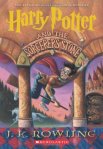
cover image of Harry Potter and the Sorcerer's StoneHere’s a case where my initial skepticism gave way to devoted enthusiasm: Sometime in 1997 or 1998, my mom brought home a hardcover copy of Harry Potter and the Sorcerer’s Stone. “Aw, Mom, I don’t want to read a book about wizards,” I said.

Let the record show that she was right and I was wrong.

Quotes from Books, II

Here’s another installment of Quotes from Books I’ve Read Recently (see the first set of quotes here). When I started this series (if two posts thus far can be called a series), I figured most if not all of the quotes I’d select would be from adult literary fiction, but in fact there are several from nonfiction and plenty from YA and children’s as well.

  1. If you see hooded figures in the Dog Park, no you didn’t. Welcome to Night Vale, Joseph Fink and Jeffrey Cranor
  2. …but they wanted someone to blame more than they wanted someone to explain.Uprooted, Naomi Novik
  3. If you think of doing something in New York City, you can be certain that at least two thousand other people have that same thought. And of the two thousand who do, about one thousand will be standing in line waiting to do it. From the Mixed-Up Files of Mrs. Basil E. Frankweiler, E.L. Konigsburg
  4. …the experience of reading is…our best vehicle to a transformed mind, and, literally and figuratively, to a changed brain….Reading changes our lives, and our lives change our reading. –Proust and the Squid, Maryanne Wolf
  5. What no one sees is the personal and cultural influences that have brought them to their opinions.Our Babies, Ourselves, Meredith F. Small
  6. I believed in her like some people believe in Heaven.Seraphina, Rachel Hartman
  7. [My dad] taught [us] some Beatles songs and told us that whenever we saw [reporters] with cameras, we should just sing those songs. At the time, I thought it was just fun to sing really loud, but then I realized what an evil genius my dad is. To broadcast Beatles lyrics, you have to have the rights to the songs… –Emmy & Oliver, Robin Benway
  8. After enough time it fades and you’re grateful. In the Unlikely Event, Judy Blume
  9. “You have to believe it to see it.”Circus Mirandus, Cassie Beasley
  10. “There are no limits to the ways people you think you know can astonish you.”Bitterblue, Kristin Cashore

She Said, She Said: Quotes from Books

Here’s a Top Ten Tuesday feature from The Broke and the Bookish that I’m going to run with for weeks, months, quite possibly years: Quotes from Books I’ve Read Recently. As usual I read Linda’s Top Ten at Three Good Rats and got inspired. I write down quotes from nearly every book I read and keep them in my LibraryThing account, but I don’t often go back and look through them; here’s a great opportunity to do just that, at a time when saving time by recycling content is the perfect way to avoid complete radio silence on this blog (see: new baby in the house).

Here are ten quotes from books I’ve read recently. I chose these because they struck me as wise or poetic or true or funny, or all of the above.

  1. Every generation assumes that the way it does things is the way things are.Unfinished Business, Anne-Marie Slaughter
  2. What she doesn’t know yet is that ending a relationship cannot be done in one conversation over one evening, that such extrication takes days and months and sometimes years.My Lover’s Lover, Maggie O’Farrell
  3. “Your relatives are famous betrayers,” Penny argues. “There was a time in the 1700s when they weren’t even allowed to sign contracts.”Carry On, Rainbow Rowell
  4. The minute hand of the clock was a terribly slow lever, pushing the hour hand imperceptibly forward.  George, Alex Gino
  5. Memory is strange – part movie, part dream. You can never know if what you remember is the essential thing or something else entirely, a grace note. The Dive From Clausen’s Pier, Ann Packer
  6. There were musicians who never looked up from their hands or their instruments, but she’d seen quartets of straight men gaze at each other like they were making love. -“Cross,” Music For Wartime, Rebecca Makkai
  7. The choices don’t stop….Life is choices, and they are relentless. No sooner have you made one choice than another is upon you. –Being Mortal, Atul Gawande
  8. You could think of promises as a series of nets: some hold for a lifetime; others give way, surprisingly flimsy, in no time at all. –And the Dark Sacred Night, Julia Glass
  9. It is fairly amazing that we don’t get poisoned more often.At Home, Bill Bryson
  10. “There are four things that lead to wisdom….four sentences…[:]I don’t know. I need help. I’m sorry. I was wrong.”-Still Life, Louise Penny

More to come, in reverse chronological order from when I read them. What’s your favorite quote from a book?


Carry On by Rainbow Rowell

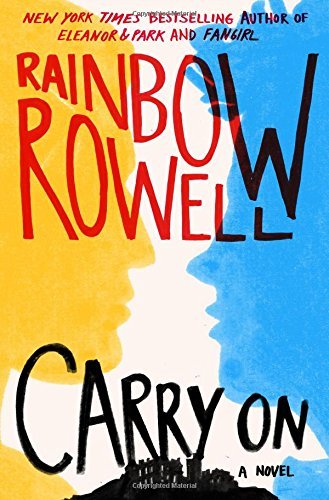
Cover image of Carry OnSimon and Baz, Penelope and Agatha, the Insidious Humdrum, the Mage, and Watford – all born in Rainbow Rowell’s novel Fangirl – have their own story here. Simon’s origin story is similar to Harry Potter’s: he was an orphan living in the “Normal” world until age 11, when the Mage brings him to the Watford School to study magic. Now it’s Simon’s final year at Watford: the Mage has little time for him, and his roommate/enemy/suspected vampire Baz has not returned to school. The Insidious Humdrum still threatens the magical world, which is already divided between the traditional old families and the Mage’s revolutionary ideals.

Simon Snow is the main character, but Penny, Baz, and Agatha each get a turn to narrate, as does Lucy, whose identity (other than her name) isn’t immediately clear. Simon wants to enjoy his last year at Watford, but also to defeat the Humdrum once and for all; Penny (think Hermione with a rebel streak) is his (platonic) best friend and a talented magician whose parents are both professors; Agatha doesn’t want to be involved in dangerous adventures at all, and secretly prefers the Normal world, though she can’t admit it to her parents; and Baz, once he returns to Watford after an unexplained six-week absence, wants to decode the message his mother’s ghost left for him with Simon.

Carry On has plenty of pop culture references – the words “carry on” come from Queen’s “Bohemian Rhapsody” – partly due to the fact that magic, in Simon Snow’s world, is based almost entirely on words: the more often certain words are used in specific combinations, the more powerful of a spell they become. Shakespeare and nursery rhymes, therefore, are quite powerful; cliches and lyrics to pop songs may be powerful for a time, but lose their power when they fall out of fashion. I enjoyed this not-so-subtle reminder of the power of language, as well as Rowell’s hat-tips to other fantasy novels: there are obvious similarities to Harry Potter, of course, but there’s also something Philip Pullman-esque about the way that adults are willing to sacrifice children in service to the what they perceive as the greater good.

Fangirl‘s Cath would be happy with the way that Simon and Baz’s relationship evolves, but I won’t say more than that here. The way that Rowell weaves Baz’s mother’s death and his being a vampire into the plot, however, is quite clever. Carry On absolutely stands on its own as a fantasy novel that anyone can enjoy, and those who liked Fangirl will definitely want to read it. While I prefer Rowell’s realistic fiction (or in the case of Landline, mostly realistic fiction with the addition of a magic-fucking-phone), I thoroughly enjoyed Carry On.


Reading is not something extra. It’s something essential.

One thing about pregnancy is that, at some point, it becomes visible, and therefore public. I’ve heard lots of advice from friends, family, co-workers, and total strangers, most of it unsolicited, though not necessarily unwelcome.

One topic that comes up a fair amount is reading, and how much of it I will or won’t be able to do after the baby is born. I am either “optimistic” or “delusional” about this, depending who you ask. One parent of a four-year-old basically said to forget the whole idea, but another parent of two said, “If something is a priority, you make time for it.” Fewer things may be priorities, he allowed, but if something matters to you, you’ll find a way. Another friend who recently had a baby said she’s been able to read while nursing – a pretty significant chunk of time.

As Jennifer LaGarde just wrote (“Giving Yourself Permission to Read“), “Reading is not something extra. It’s something essential.” Even if I go from reading my usual ten(+/-) books a month down to five, that’s still a lot of reading – and those are just adult and YA books. I’m sure I will be reading a lot of picture books! (Most recently, I loved Mac Barnett’s Leo: A Ghost Story.)

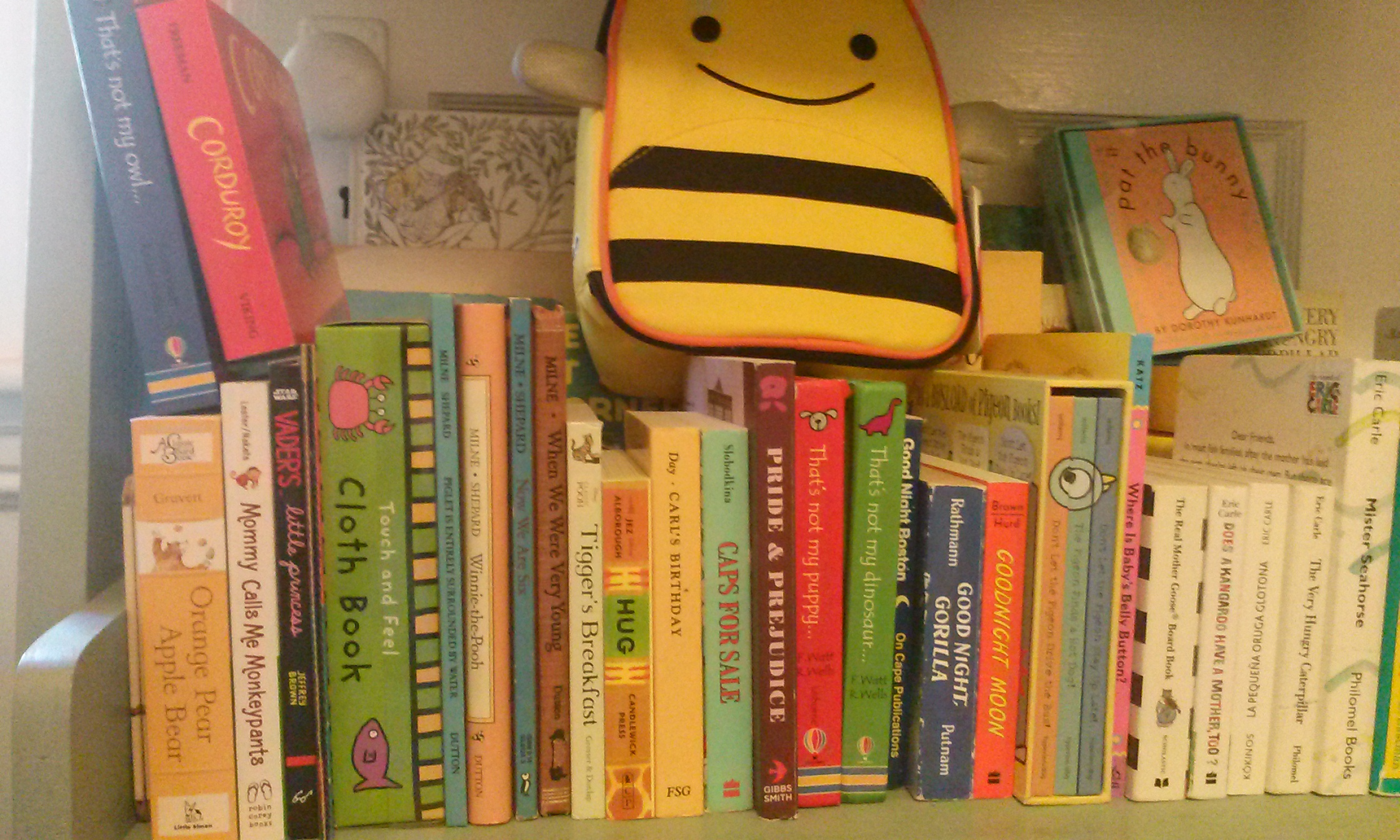
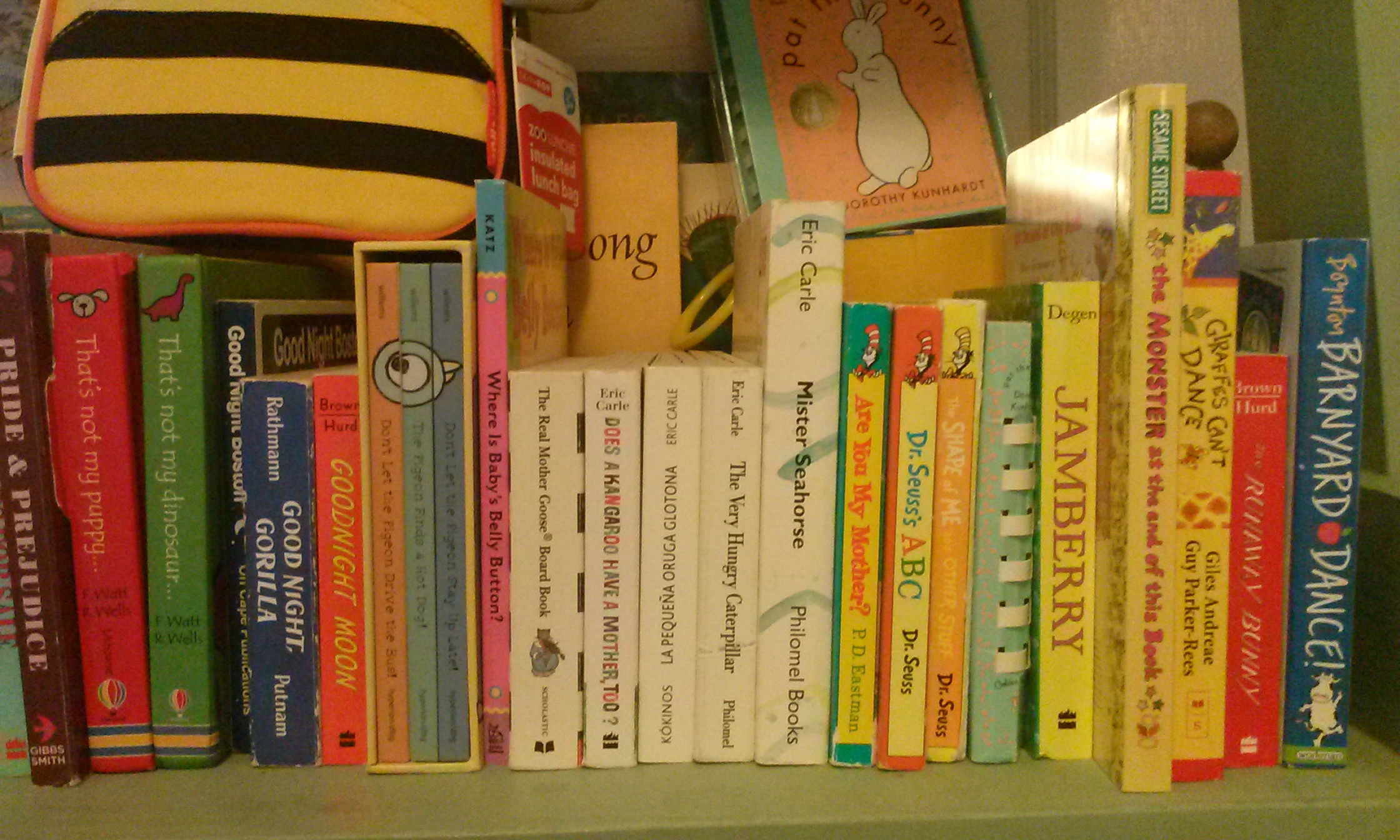
Reading is essential not just for me, but for the baby. Early literacy can’t start too early! Here’s our shelf of board books from baby’s library, including gifts, yard sale and book sale acquisitions, hand-me-downs, and one or two new purchases I couldn’t resist:

Shelf of board books with bee lunchbox on top

Some are old favorites (Goodnight Moon, Pat the Bunny, Eric Carle and Dr. Seuss), some are newer favorites (Hug, the pigeon books by Mo Willems, Orange Pear Apple Bear), and some are brand-new discoveries like the That’s Not My… series, which have a tactile element like Pat the Bunny.

Shelf of board books

Not pictured because they’re already packed in the diaper bag for the hospital: Tana Hoban’s high-contrast Black on White and White on Black (popular with infants, we’ve heard) and Eric Carle’s The Very Hungry Caterpillar (popular with me).

Are you a parent or a children’s librarian? What are your (or your kids’) favorite board books or picture books?