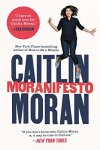
 On November 30, journalist and author Caitlin Moran (pronounced CAT-lin mo-RAN) spoke in conversation with Boston Globe columnist Meredith Goldstein at the Brattle Theater in Cambridge, hosted by the Harvard Bookstore. It was dark and rainy, but good to be in a room full of feminist librarian types. I haven’t yet read Moran’s newest book, Moranifesto, but I loved her book How to Be A Woman and her previous essay collection, Moranthology. I initially discovered her via her essay “Alma Mater” in The Library Book, and I still think of a passage from it often:
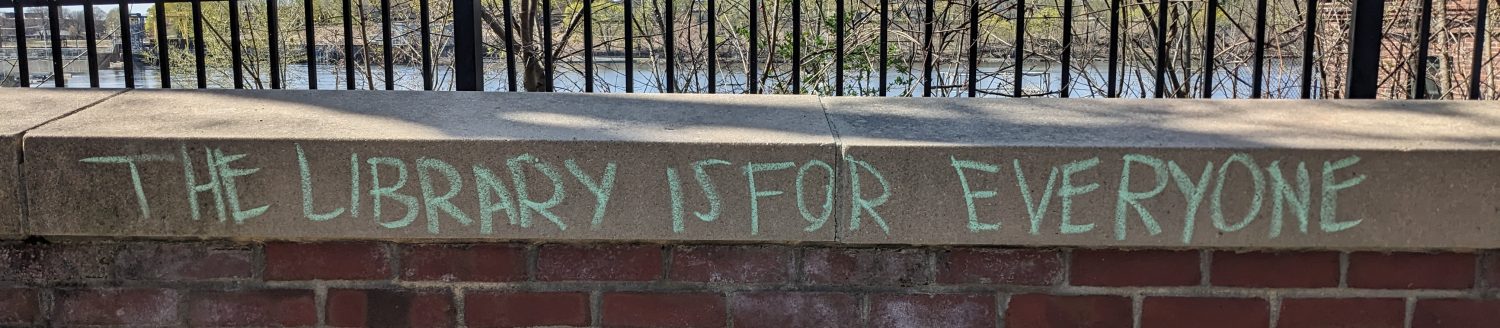
“The shelves were supposed to be loaded with books – but they were, of course, really doors….A library in the middle of a community is a cross between an emergency exit, a life raft and a festival. They are cathedrals of the mind; hospitals of the soul; theme parks of the imagination….They are the only sheltered public spaces where you are not a consumer, but a citizen instead.”
-“Alma Mater,” Caitlin Moran
Like most of the audience, I was prepared for Moran to be her unselfconscious, energetic, hilariously uncensored self, and she launched in right away about having just gotten her period and being on codeine (which I’m pretty sure you cannot get over the counter in this country) and coffee. The coffee was winning, I think, because she was talking faster than Lauren Graham.
In shifting from writing about pop culture and feminism, Moran said that at first she had felt “ill-qualified” to write about politics, but gained confidence when she realized that many political figures were former journalists. She stated, “Politics does not work anymore,” and said that we need to form new political parties in the U.K. and U.S. Moran believes in action: “If you started complaining three minutes ago, you should’ve started doing something two minutes ago.”
Of certain of our current political figures, Moran said, “These are not politicians, they are agents provocateurs.” She said that the tone of politics has been set by the Internet, which is largely young, male, and lawless – “like California during the Gold Rush.”
“EVERYTHING is going to change in the next twenty years.”
Moran believes the left’s biggest enemy is itself. Whereas the goal of conservatism is to keep things as they are (the status quo), the left has two goals: to redistribute power and to invent a future. It is far harder to create something new than to preserve something, which leads to greater dissent, even among those who agree on a progressive agenda.
Moran read from one of the essays in Moranifesto, “Advice to Teenage Girls.” Some of her advice:
- “‘Yet’ is a very useful word.”
- “When in doubt, listen to David Bowie.”
- “Go out there and change the world so it works for you.”
“I think everyone should write a manifesto,” Moran said. What will her next book be? How to Be Famous. “Celebrities are the Greek gods of our time.”
Q&A
The questions from the audience were mostly serious, but the answers ranged. In one case Moran’s answer skittered so far from the topic of the question so quickly that the only possible explanation is a tesseract. Suffice to say that Moran has clearly given the issue of Muppet sex some thought. Her answer offended an audience member; Moran listened to the complaint and responded that she was glad the person had spoken up: “I try to make everyone feel like they can say anything.”
Another audience member asked how we can encourage a cultural shift so that sexual violence and rape is taken seriously? Moran’s idea is to drop the word “sexual” in front of the word “assault”; “physical assault” sounds more serious.
Moran also talked about the online environment and social media. She said, “If you had a town planner, they’d never build the Internet the way it is. There are no safe public spaces….We need to find a new way [of designing and using social media]. This is a “problem of culture, not politics.” There is more money in argument and dissent than in agreement, thus “the world becomes angrier and more afraid.” The U.S., Moran pointed out, will never be invaded – our biggest danger is ourselves (internal dissent).
Ending on a serious note, Moran said that the Brexit vote and the Trump election are part of the same phenomenon, dating back to the 2008 crash. Neither approach of the current political systems – austerity or stimulus – brought anyone to justice for the events of 2008. Instead, the strategy of those in power to stop a revolution was to create a sub-class so people’s anger was directed down instead of up (to the elite).
And back out into the rainy night we went.
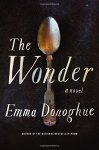 The Wonder by Emma Donoghue: Donoghue switches fluidly between contemporary and historical novels, and she excels at both. The Wonder is the story of Nightingale-trained English nurse Lib Wright, who takes a two-week job watching Irish eleven-year-old Anna O’Donnell, who claims not to have eaten in four months. Is it a miracle or a hoax? Lib is sure it’s a hoax and that Anna is a liar, but she quickly comes to care for the girl, and concern at her deteriorating condition compels her to ask not how Anna is maintaining her fast, but why she feels the need to fast at all. The answer is a tangle of religious beliefs and a dark family secret.
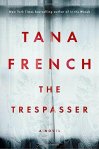 The Trespasser by Tana French: I’ve been devoted to Tana French’s psychological suspense novels since In the Woods, and I’m always eager to read her new books, though I think The Likeness will always be my favorite. The Trespasser takes place largely in the police office and interview rooms rather than out on the scene; it was a touch long but never felt sluggish, as Conway and Moran dug into what was apparently a domestic murder but turned out to be more complicated than that.
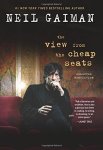 The View From the Cheap Seats: Selected Nonfiction by Neil Gaiman: This one sneaked up on me; it was not preceded by a lot of fanfare. I’d read a few of the pieces already but enjoyed them again, particularly
 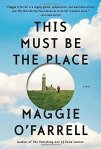 This Must Be the Place by Maggie O’Farrell: O’Farrell is another of my favorite authors and I read an e-galley of this novel in a few huge gulps, the result being that I don’t remember it as well as if I’d read it more slowly. It’s the story of Daniel Sullivan and his various family members, in various parts of the world (Donegal, Paris, California, New York, Chile), at various times (from the 1980s to 2016). O’Farrell has a genius for character; I would read this again and probably enjoy it just as much.
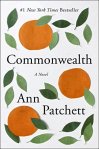 Commonwealth by Ann Patchett: On my admittedly long list of favorite authors, Patchett is firmly in the top five. Commonwealth is the story of two families who break apart and combine, leaving the children to cope with divorce, cross-country moves, and a singular tragedy. Various family members (but not all of them) narrate over a long time frame, during which their personal tragedy is made public in a famous author’s thinly fictionalized account.
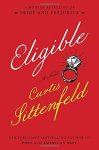 Eligible by Curtis Sittenfeld: I had high expectations for this book (Curtis Sittenfeld! Pride & Prejudice!), and though some reviews were negative or mixed, I thoroughly enjoyed it, as did the other members of my book club. Sittenfeld brings the P&P story and characters into present-day Cincinnati, and she does it very well: with cleverness and wit and invention. She makes one or two significant changes from the original plot and characters, but remains true to the heart of the story.
 The Last Painting of Sara de Vos by Dominic Smith: I do love a good art history story, and this one didn’t disappoint. It takes place in three time periods: Holland in the 1630s, when the painting is created; Manhattan in the 1950s, when the painting is stolen and copied; and Sydney, Australia in 2000 when both the original and the forgery arrive at a museum show. Suspenseful and satisfying, a good choice for those who liked The Art Forger (B.A. Shapiro) or The Miniaturist (Jessie Burton).
 A Gentleman in Moscow by Amor Towles: I loved Rules of Civility so much that I was doubtful his next novel could be nearly as good, but my library colleague raved about it and it’s gotten very good reviews. I’ve just started reading and am enjoying it so far.
 These stories are set in different places and times, real and imaginary, past and present. The characters are different as well: optimistic and pessimistic, gay and straight, poor and middle-class and wealthy, Christian and Jewish and pagan, Black and white, skeptical and romantic. (One can see why it’s YA authors who are leading the #WeNeedDiverseBooks campaign.) All in all, it’s a pretty near perfect collection, and I’m looking forward to Stephanie Perkins’ other anthology, Summer Days and Summer Nights: Twelve Love Stories.
 Some novels take famous figures from history and are centered around important historical events. In the case of Philippa Gregory’s The Other Boleyn Girl and Hilary Mantel’s Wolf Hall and Bring Up the Bodies, it is the court of King Henry VIII in England. In the former, Anne Boleyn’s sister Mary is the main character during Anne’s rise, marriage to Henry VIII, the formation of the Church of England, and Henry’s disenchantment with (and beheading of) Anne. For her books – the first two of a planned trilogy – Mantel takes Thomas Cromwell as her main character.
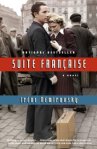 Other novels are about ordinary people in extraordinary times, and the draw of these stories is how their authors are able to make the time and place come to life in a way that seems real. Like Henry VIII’s era, World War II is a popular time period for historical fiction; most recently, the exceptional All the Light We Cannot See by Anthony Doerr was a bestseller (and with good reason). A few of my favorite WWII novels are Suite Francaise by Irene Nemirovsky, The Guernsey Literary and Potato Peel Pie Society by Annie Barrows and Mary Ann Shaffer, Corelli’s Mandolin by Louis de Bernieres, Life After Life by Kate Atkinson, and Code Name Verity by Elizabeth Wein.
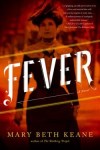 Still a third type of historical novel features extraordinary people in ordinary (for them) times. These characters are as vivid as their settings: Mary Malone (better known as Typhoid Mary) in Fever by Mary Beth Keane, set in turn of the century New York. Katy Kontent in Amor Towles’ Rules of Civility, also in New York, in the 1930s. Regret, a Korean “picture bride” in Alan Brennert’s Honolulu. Tom and Isabel in post-WWI Australia in The Light Between Oceans by M.L. Stedman. Mattie Gokey in the Adirondacks in 1906 in Jennifer Donnelly’s A Northern Light, and Desdemona Hart in 1930s Massachusetts in Maryanne O’Hara’s Cascade.
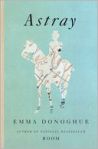 For those who have been counting, this has been more than ten, but I want to mention just three more. Astray is a collection by Emma Donoghue, in which each story was inspired by a real piece of history; Donoghue is so inventive that she can spin two sentences from an old newspaper into a complete, absorbing story.
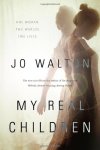 I just finished this tonight, and I loved it; it spans a century, and the part that takes place from WWI to WWII reminded me strongly of Kate Atkinson’s Life After Life. We begin in 2015, when Patricia is in a nursing home, “very confused.” On top of her ordinary memory problems due to aging, she remembers two separate lives. The reader wants to know which is real, of course, but both are equally real in the world of the book; only in the final pages does Patricia work it out (at least, I think she does; it’s a bit open-ended). This has been on my to-read list for a while and my book club is discussing it this month; I’m eager to hear what others thought of it
 Like Sittenfeld and Van Booy, Chris Cleave is another of my favorite authors (2016 is a good year for me in this respect, and I hear there will be a new Ann Patchett this fall!). With Everyone Brave is Forgiven, Cleave departs from contemporary fiction and delves into historical fiction, specifically the early years of World War II. Mary and Tom are in London during the Blitz, and Alistair is suffering during the siege of Malta. Unlike in Gold – my favorite of his previous novels – I did not quite feel as though the characters were wholly real. Mary’s sensibility was imperceptible from a progressive modern one, and Tom and Alistair were too perfectly British, with their dry wit, pithy quips, and good manners even in the face of bombs and starvation. Still, this is high-quality WWII fiction; it reminded me a little of Corelli’s Mandolin, perhaps just because of the Malta setting. I enjoyed it, but I hope he returns to the present in his next novel.
 Cain gives a bit of history about how, especially in America, we’ve shifted from a “Culture of Character” (in which “the ideal self was serious, disciplined, and honorable”) to a “Culture of Personality” (a focus on how one is perceived by others). The “Extrovert Ideal” is now pervasive in the workplace as well as in schools, despite the fact that 1/3 to 1/2 the population is introverted and that there are actually disadvantages* to setting up schools and offices to suit only extroverts.
