Vacation reading and July TBR check-in

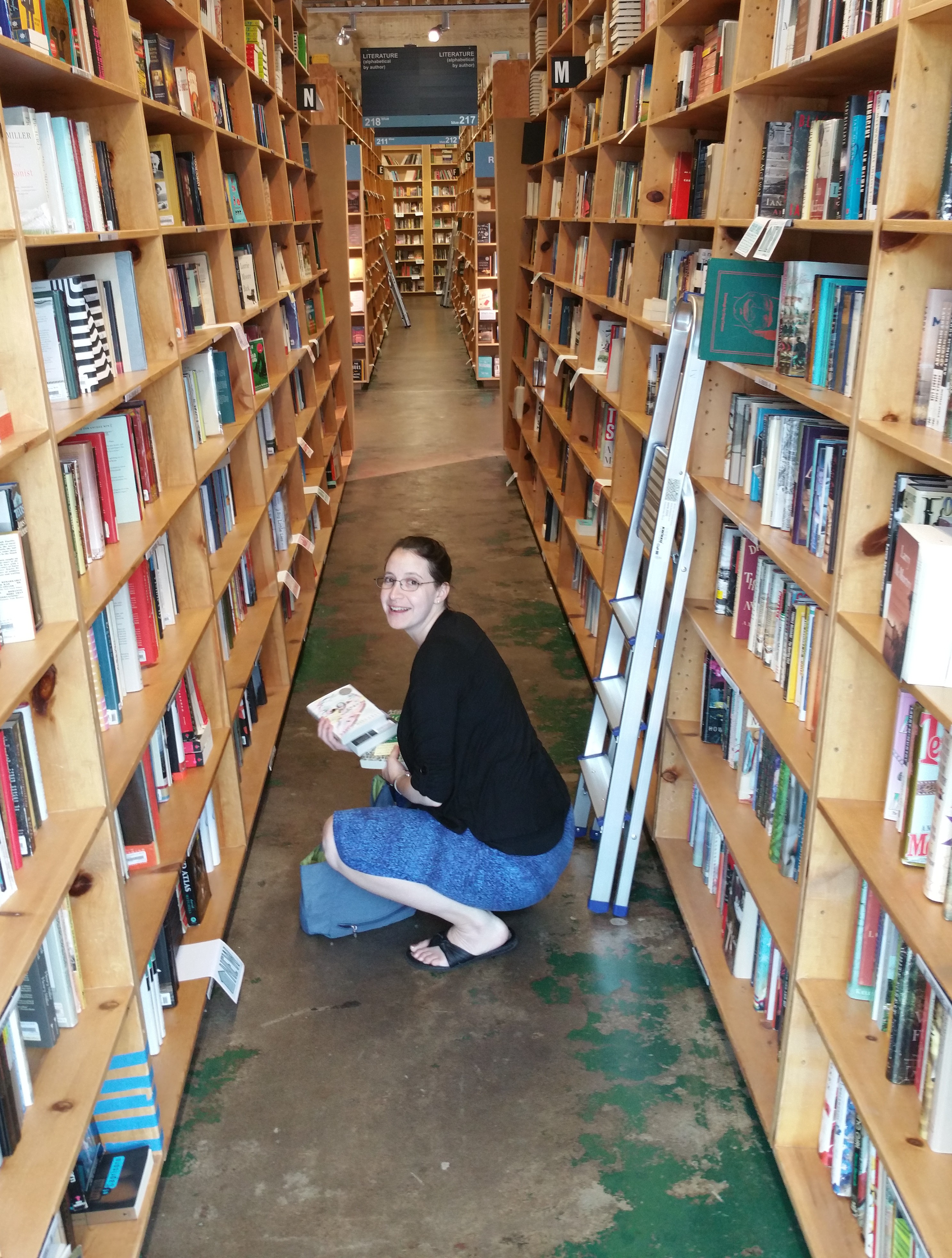
In my book, vacations of any sort include reading. (Though this is not the case for everyone; recently, I was stunned to learn that a fellow librarian was traveling to Europe without a single book. I was actually struck speechless. What do you do with all that time on in airports and on the plane? Waiting in line for things? Before bed? Is this common, for people to travel without books?) At any rate, our summer vacation this year consisted almost entirely of sleeping, eating, walking, and reading.

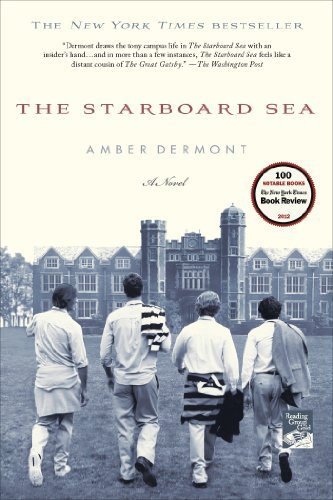
Cover image of The Starboard SeaI knocked my TBR list down by one by finally reading The Starboard Sea by Amber Dermont, which I’ve had on my shelf in paperback for well over a year. It’s a boarding school book, and I’m a sucker for those (see: A Separate Peace, Looking for Alaska, Prep, The Disreputable History of Frankie Landau-Banks, The Tragedy Paper, The Secret Place). It reminded me a bit of Looking for Alaska and a bit of Ordinary People in the way the main character, Jason, experiences the loss of someone close to him (two someones, actually) and struggles with his grief alone. Like today’s “helicopter parents,” the 1980s parents of most of the students have high expectations for them, but they don’t hover – far from it. The kids are afraid of failure, but the parents use money and influence to bail them out when they make mistakes, protecting them from real consequences whenever possible but doing so from a distance. Jason’s problems can’t all be remedied with the second chances that money can buy, and he recognizes this.

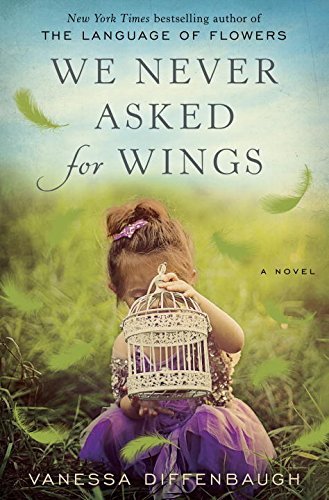
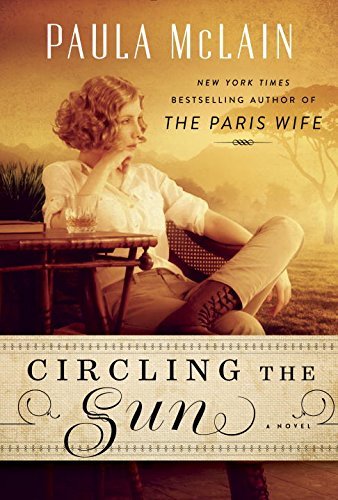
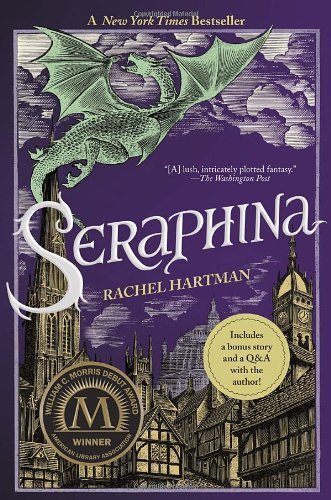
I enjoyed The Starboard Sea, but it wasn’t my favorite of the books I read during vacation. Actually, I’m not sure I can pick a favorite. I read three excellent galleys that I was thrilled to have gotten my hands on: David Mitchell’s Slade House; Vanessa Diffenbaugh’s We Never Asked for Wings; and Paula McLain’s Circling the Sun. I also finished Seraphina by Rachel Hartman, and read a stack of picture books in a tiny local library. Reviews of all of these are or will be on LibraryThing soon, but here’s the short version:

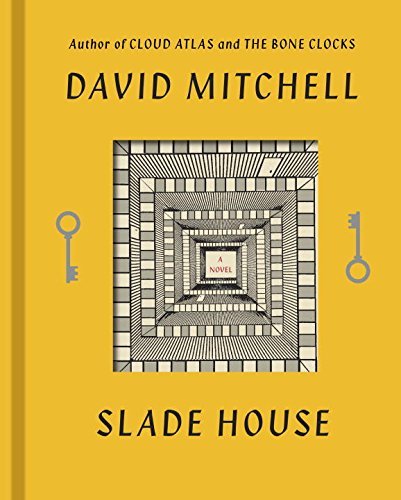
Cover image of Slade HouseSlade House: Those who loved The Bone Clocks will devour this, as it takes place in the same Mitchell universe. It’s a much more compact book, length-wise, and, like Life After Life by Kate Atkinson, it has a somewhat looping pattern. The Bone Clocks is literary fiction with fantasy elements (the Anchorites and the Horologists, etc.), and Slade House is that too, but it also has a few hallmarks of the horror genre (e.g. The Haunting of Hill House), especially the ending. There are the usual allusions and references to characters from other Mitchell books: one of the characters works for Luisa Rey’s Spyglass magazine, though Luisa isn’t mentioned by name; Marinus from Bone Clocks and Thousand Autumns makes an appearance in the final section; and of course there’s the ubiquitous moon-grey cat. Slade House can certainly stand alone, but might be more enjoyable if you’ve already read some Mitchell.

Cover image of We Never Asked for WingsWe Never Asked for Wings: The Language of Flowers was not a once-off – Vanessa Diffenbaugh is a really good writer, and she takes characters uncommon to literary fiction and puts them at the center of her stories. Wings is about a struggling Mexican-American family in California. Letty’s parents, who effectively raised her two children (15-year-old Alex and six-year-old Luna), suddenly return to Mexico, leaving Letty to learn how to be a mother for the first time. Alex misses his grandparents, especially his grandfather, Enrique, a feather artist who taught him about birds and migration patterns. He goes searching for his father, bringing him back into Letty’s life for the first time in 16 years, and if that wasn’t enough, Alex also tries to get his girlfriend, Yesenia, out of a bad situation – but ends up getting her into a far worse one. Diffenbaugh writes with compassion and understanding, but her books aren’t “issue books” – they’re about her characters, who all seem utterly lifelike.

Cover image of Circling the SunCircling the Sun: This book spans Beryl’s childhood in Kenya through her early adult life, from about 1904 into the 1920s, with a prologue/epilogue set in 1936. Beryl is an adventurous woman, but even in Africa there are societal rules to follow (or break, and bear the consequences). She trains racehorses, marries and divorces and marries again, has affairs, and learns to fly a plane. I enjoyed Circling the Sun, and the quality of the storytelling is on par with that of The Paris Wife, but I felt there was a loss of momentum in the later parts of the book. Perhaps I simply read it too quickly, and I would have appreciated it more in smaller chunks. Still, it’s very good, and I haven’t read much fiction set in Kenya; the descriptions conveyed an excellent sense of the place and time.

Cover image of SeraphinaSeraphina: I was interested in this from the moment I heard about it, yet it didn’t make it to the top of my list until recently. I am so glad I read it; it’s a unique YA fantasy novel (with a new sequel, Shadow Scale) set in a world where dragons can take human form. Thanks to a peace treaty brokered 40 years ago, dragons and humans have been co-existing (somewhat uneasily), but tensions are on the rise. Seraphina, the new assistant music mistress at the palace, is caught in the middle of the conflict by the nature of her identity. The audiobook is excellent, though as usual I had to check the print for spellings of the invented vocabulary.

That’s some of my summer reading – what’s yours?


I want to go to there: places books have made us want to visit

I promise it’s not going to be all Top Ten lists all the time from here on out*, but I am new to The Broke and the Bookish and some of their prompts are too tempting to ignore.

*For example, you might be wondering who the next Librarian of Congress will be, in which case I recommend you mosey over to the page Jessamyn West set up, Librarian of PROgress. It turns out that the Librarian of Congress doesn’t even technically have to be a librarian, though, in my humble opinion, it would be good if s/he were, not least to avoid a terrible misnomer.

The Top Ten Tuesday list that caught my eye this time is top ten places books have made us want to visit. Both real and imaginary places are on the list, but we’ll start with the real:

1. The Orkneys, Scottish islands that are the setting for most of The Flight of Gemma Hardy, Margot Livesey’s retelling of Jane Eyre. They are a bit remote to get to, but I’d still love to go.

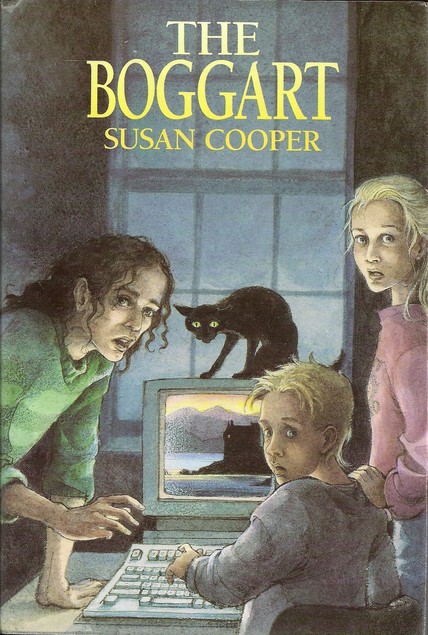
Cover image of The Boggart2. The Isle of Skye, because of both Susan Cooper’s The Boggart and Neil Gaiman’s Trigger Warning. It must be magical if those two honed in on it.

3. Antibes, France, because of the American expatriate scene there in the 1920s (Fitzgeralds, Murphys, etc.). I’ll give credit to Everybody Was So Young by Amanda Vaill for piquing my interest.

4. Various locations in London, especially the Tower of London (where Anne Boleyn was executed) and the Globe Theater (Shakespeare!) (modern reconstruction, I know, but still). We can’t time travel, not exactly, but it is an incredible feeling to stand in the exact place where a historical figure (or fictional character) once stood.

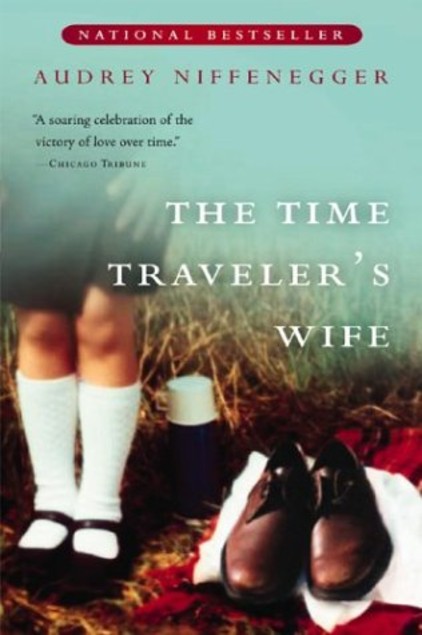
Cover image of The Time Traveler's Wife5. Various locations in Chicago, including but not limited to the Art Institute, Millennium Park, the Newberry Library, Ann Sather’s Swedish Diner, and the Monroe Street Parking Garage – all because of The Time Traveler’s Wife. And speaking of Chicago…

6. The Field Museum’s exhibit on the 1893 World’s Fair, because of Devil in the White City by Erik Larson.

7. The Temple of Dendur in the Met in New York, partly because of an episode of Sesame Street (or else a dream I had – did anyone else see that episode?) and partly because of From The Mixed-Up Files of Mrs. Basil E. Frankweiler.

And now for the imaginary:

8. Lyra’s Oxford in The Golden Compass, because I’d want to know what my daemon would be.

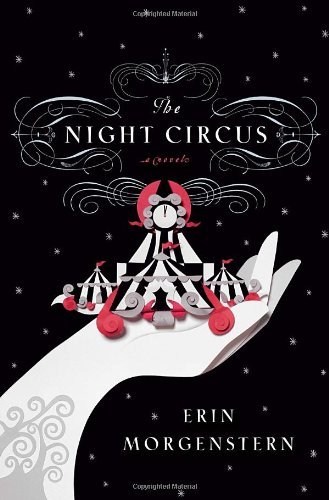
Cover image of The Night Circus9. Who could read The Night Circus and not want to visit Le Cirque de Reves? The real question is, which tent would you visit first? Which treat would you taste first?

10. I have to copy from the Broke and the Bookish for the last one, because I’d love to visit J.K. Rowling’s Diagon Alley and Hogsmeade. If only Muggles were allowed…

This list would seem to indicate that I have read books set almost exclusively in the U.S., Europe, and fantasy lands, which isn’t the case, but the books I’ve read set in Russia, Asia, Africa, and South America haven’t filled me with the desire to travel there myself – I’m happy just reading about them.

Which places from books have caught your imagination? Where have you traveled because of books, and has it been satisfying or disappointing? Which places have you traveled to first and read about afterward, and how is that different?

Top Ten Books I’ve Read So Far in 2015

I always enjoy threegoodrats’ “Top Ten Tuesday” posts, inspired by The Broke and the Bookish, and this week I thought I’d chime in as well (even though it isn’t Tuesday), because the topic is “top ten books I’ve read so far in 2015” and that sounded like a fun list to make.

Listed in the order that I read them, with links to reviews/quotes in LibraryThing:

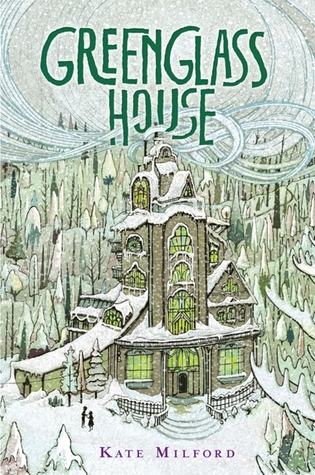
Cover image of Greenglass House1. Greenglass House by Kate Milford: Friends and strangers alike will attest I have not shut up about this book since reading it in January. It is absolutely overflowing with “appeal factors” such as: adoption, a snowbound closed-house mystery (a la Agatha Christie) in a smugglers’ inn, a role-playing game, stories within stories, an entire fictional place complete with its own history and lore, plenty of hot chocolate, Christmas, and a ghost. And it’s got a beautiful cover.

2. Alanna (Song of the Lioness quartet) by Tamora Pierce: I definitely should have read this in middle school or at least high school, but I’m glad I didn’t let it slip by completely. A fantastic set of fantasy novels with that “strong female protagonist” that everyone loves (plus horses, plus a magical crystal that prevents pregnancy). I inhaled all four of these in the space of a week.

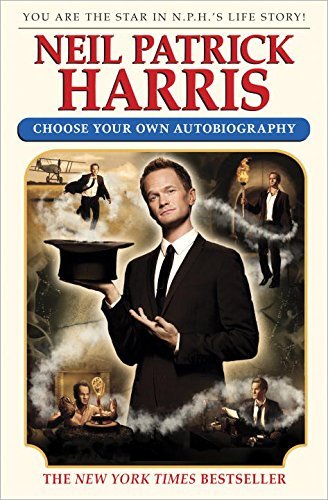
Cover of NPH Choose Your Own Autobiography3. Neil Patrick Harris: Choose Your Own Autobiography: This is one of the best audiobooks I’ve ever listened to (but get the print version too so you can see the pictures). Entertaining and funny but not at the expense of depth. A must for all NPH fans, and the “choose your own adventure” format worked better than it had any right to.

4. Don’t Make Me Think by Steve Krug: I’ve been meaning to read this for ages – it could/should have been on my 2015-TBR list – and it was well worth it. Anyone who uses computers, let alone anyone who makes software or hardware, ought to read this book (and also Don Norman’s The Design of Everyday Things).

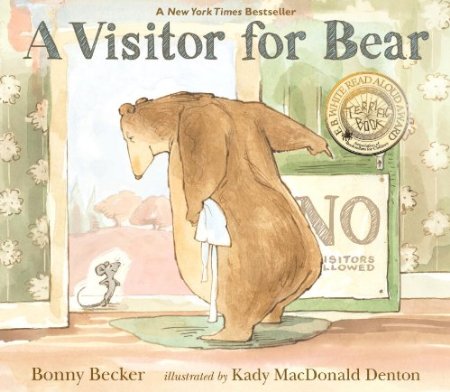
Cover of A Visitor for Bear5. Bear & Mouse series by Bonny Becker: Starting with A Visitor for Bear (spoiler: it’s Mouse!), I adored these picture books, which have just the right amount of beauty, charm, and humor. A Birthday for Bear, A Bedtime for Bear, and A Library Book for Bear are all worthwhile follow-ups to the first in this series.

6. Dead Wake by Erik Larson: For someone who has read an awful lot about the Titanic, this was my first book about the Lusitania, and it was fascinating. I’d been a little disappointed by Larson’s last, In the Garden of Beasts, but Dead Wake was gripping from start to finish. Larson provides several points of view: captain, crew, and passengers on the ship; the U-boat crew; President Wilson; and the secret, pre-Bletchley “Room 40” in England.

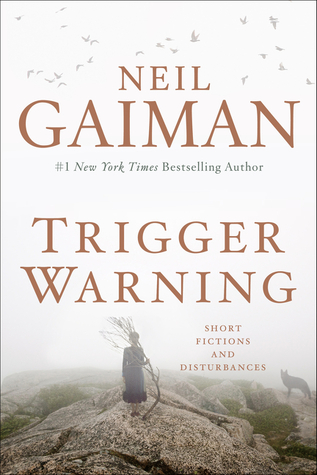
Cover image of Trigger Warning7. Trigger Warning by Neil Gaiman: Another fantastic audiobook, read by the author himself. There’s not a dud in this collection of strange stories, myths, and even poems, but there are a few standouts; my favorites were the Doctor Who story “Nothing O’Clock,” “Black Dog” (featuring Shadow from American Gods), and “And Weep, Like Alexander.”

8. Bringing Up Bebe by Pamela Druckerman: Like many much-hyped books, I avoided this for a while, but when I read it I discovered it was much more practical and less frothy than I had expected. A useful insight into another way of doing things (plus a recipe for yogurt cake).

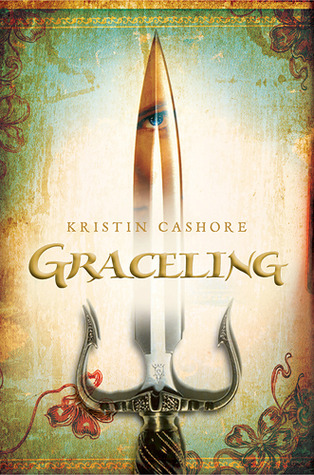
Cover image of Graceling9. Graceling, Fire, and Bitterblue by Kristin Cashore: I just wrote a whole separate blog post about how much I loved these three books. I already want to re-read (re-listen-to) Graceling. If you liked the Song of the Lioness quartet or the His Dark Materials trilogy, you need to read these.

10. Far From the Tree by Andrew Solomon: I started this back in 2013, but didn’t finish until I bought the e-book; in this case, not carrying around a thousand-page tome really did help. If everyone in the world read just the introduction to this book (48 pages or so), the world would be a better place. Solomon is a talented writer who did an immense amount of research, speaking with experts and families, and Far from the Tree provides an astonishing level of insight into various kinds of difference or “horizontal identities.”

I will resist the temptation to continue the list with honorable mentions. What have your favorite books been so far this year?

Graceling, Fire, and Bitterblue by Kristin Cashore

For nearly two months, I have been immersed in the world that Kristin Cashore created in Graceling, Fire, and Bitterblue, completely swept up in the events of the Seven Kingdoms and the Dells. Every element in these books is perfectly balanced:

  • Character. Each book features a strong female character: Katsa (Graceling) is “Graced” with what others think is the power to kill, but she comes to realize is the power to survive. Fire doesn’t have Katsa’s physical strength, but she has mental grit, and a determination to use her “monster” powers of influence only for self-defense, not to control people as her father did. Bitterblue is neither a Graceling nor a monster, but a queen – and she must figure out how to put her kingdom back together after her father’s manipulative 35-year rule.
  • Setting. Cashore’s talent for world-building is comprehensive. Graceling and Bitterblue take place in the Seven Kingdoms (largely in the Middluns, Monsea, and Lienid), where some people are born with two different-colored eyes that denote a Grace – some kind of special power – and are subject to their kings’ control. Bitterblue takes place in Monsea, but there is news of uprisings and rebellions in other kingdoms, and the discovery of a tunnel that might lead to an entirely new land. That new land is the Dells, where Fire takes place. There are no Gracelings in the Dells, but there are monsters: brightly-colored animals and, rarely, people whose beauty is compelling to others and can be used to mesmerize.
  • Plot. Most of the kings in the Seven Kingdoms are corrupt, and King Leck of Monsea is beyond corrupt: he uses his Grace to control people’s minds. In Graceling, Katsa starts the Council to combat the kings’ unfairness; she teams up with Prince Po of Lienid to rescue his niece, Leck’s daughter Bitterblue, once they realize that Leck isn’t as kindly as his reputation suggests. In Fire, the Dells, too, is about to explode into conflict: the new king, Nash, and his brother Brigan, the commander of the army, face threats from powerful lords from the north and the south. The royal family wants Fire to use her powers to compel captured spies to give up their secrets; she is reluctant, because her father Cansrel used his monster powers to influence King Nax (Nash and Brigan’s father), but she agrees, after setting some ground rules. Just as war breaks out, Fire is kidnapped by a monster-trader and a peculiar, creepily sinister boy with two different-colored eyes.
  • Theme. These books are full of adventure and intrigue; Katsa, Fire, and Bitterblue face significant physical, mental, and emotional obstacles, and they all insist on their independence, while also learning who they can trust and rely on. They are determined to do the right thing, but the right thing isn’t always clear; they are especially concerned that they not abuse their powers (Katsa’s Grace, Fire’s monster-ness, Bitterblue’s position as queen). The importance of independent thought – and the danger of the lack of it – is highlighted in each of the three books by the existence of those with the power to control others’ minds, read others’ thoughts and feelings, or communicate wordlessly. Trust and consent is especially important in romantic relationships; each character has to overcome some deception or lie of omission in a relationship and recover from it. The truth – in their own lives as well as the broader historical context – is valued highly.

These three books neatly avoid the trilogy trap where second book merely serves as a bridge from the world-building of the first book to the action, climax, and denouement of the third. Fire is set in another land – the Dells, not the Seven Kingdoms – and precedes Graceling by a number of years. A reader could pick up Fire before Graceling and not, I think, be lost; a reader could also go straight from Graceling to Bitterblue – as I was tempted to do – and not be confused, though the ending of Bitterblue would be less satisfying.

Romance is an element in each of the three books. Katsa and Po, in Graceling, remind me of Lyra and Will in Philip Pullman’s His Dark Materials trilogy (which is an exception to the “trilogy trap” I mention above) in the way that they face obstacles together. Katsa is staunch in her refusal to marry and insists on her independence; she also has no wish to be a mother, and takes measures to ensure that this does not occur. (Like Alanna in Tamora Pierce’s Song of the Lioness quartet, Cashore’s leading women have access to a version of birth control: in their case, it’s herbs.) But just because Katsa won’t marry doesn’t mean she’s a nun, and the attraction and love between her and Po is undeniable.

Fire, too, insists on her independence, breaking off a sexual relationship with her longtime friend Archer when he becomes jealous and controlling (hypocritically so). “You don’t love me as much as I love you,” he says to her, and she replies, Love doesn’t measure that way. Fire finds love with Brigan, the king’s brother and the commander of the army; having seen firsthand Cansrel’s effect on King Nax, Brigan is suspicious of Fire and guards his mind against her. Their relationship is a slow process, but is all the stronger for it as they learn to trust one another.

Bitterblue begins to fall for Sapphire (Saf) while she is in disguise, and when he finds out her true identity, he is furious. His reaction causes Bitterblue to examine more deeply her identity as queen, and the wealth and power she has taken for granted. They reconcile (more herbs are required), but like many first loves, they are not meant to be; my guess is that Bitterblue ends up with Giddon, in whom she often confides and to whom she promises always to be honest.

Cover image of Graceling
Graceling, 2008

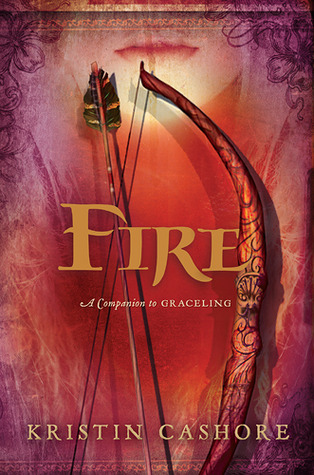
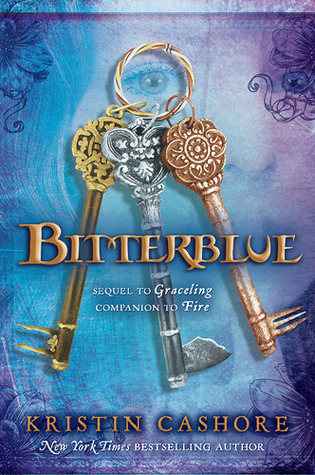
World-building, adventure, intrigue, and romance aside, the cover designs deserve to be mentioned. Beautiful and timeless, they represent their main characters’ talents (fighting/survival for Katsa in Graceling, archery for Fire and her friend Archer in Fire, ciphering and keys for Bitterblue) and colors (Katsa’s blue-and-green eyes, Fire’s hair, Bitterblue’s name).

Cover image of Fire
Fire, 2009

If you look carefully, there’s a face somewhere in each: one of Katsa’s eyes reflected in her knife, Fire’s face floating behind her bow and arrows, Bitterblue’s face behind the set of skeleton keys that gain her entry to Leck’s rooms. But the faces are not so much a part of the image that they will look dated a decade or two from now.

Cover image of Bitterblue
Bitterblue, 2012

Graceling, Fire, and Bitterblue were every bit as good as I’d been told to expect, and I’m sure I will be thinking about them and recommending them to other readers for years to come. I’m already tempted to re-read Graceling – my favorite of the three – but I’ll try to make myself wait. The audiobook versions of all three books are excellent, but Graceling, with a full cast, was again my favorite. (Don’t give the print books a miss, though – they’ve got useful maps, and Bitterblue has illustrations of Ashen’s embroidery cipher, the Dellian alphabet, and the bridges.) If you loved His Dark Materials and are looking for your next fantasy series, here it is.

Blog posts elsewhere: privacy tools and summer reading lists

In addition to blogging here and at my personal blog (mostly photos of the dog or the garden, with occasional recipes), I also write for the Robbins Library blog and, nominally at least, I’m a contributor to Teaching the Tools, a blog about libraries and technology education.

Library Freedom Project logoI just wrote my first full-length blog post for Teaching the Tools, a recap of Alison Macrina’s (The Library Freedom Project) presentation to the Minuteman Library Network (MLN) Teaching Technology Interest Group (TTIG), which I co-chaired for the past two years. Alison, who used to be a librarian at the Watertown Free Library, was kind enough to come to our June TTIG meeting and present about a variety of privacy tools. You can learn about the TOR Browser, Duck Duck Go, Privacy Badger, HTTPS Everywhere, Let’s Encrypt, and KeePass at Teaching the Tools.

While I was there (and writing the annual report for the TTIG group), I added a blog post to recap our March meeting, including a link to the presentation slides on Teaching Technology: Assessment and Evaluation. If you teach technology at your library – even if your instruction is no more formal that tech-related questions at the reference desk – check it out.

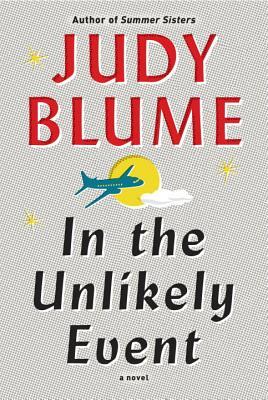
Cover image of In the Unlikely EventIf you’re in the mood for lighter fare – looking for a few summer reading books, perhaps? – I’ve been writing about books for the Robbins Library blog. Here’s an annotated list of lists: the top summer reading books according to various sources. I also wrote a recap of a Book Talk I did with my co-worker, separated into fiction and nonfiction. I’m looking forward to Judy Blume’s adult novel this summer, In the Unlikely Event, and a whole slew of new books this fall, including novels from David Mitchell and Rainbow Rowell. There’s always something to look forward to (or back on, if you’re revisiting classics) in the book world…

TBR challenge and other reading

Cover image of GracelingIt’s the end of May (or it was when I started writing this post; now it’s early June), time for a TBR check-in: I’m still on track to read twelve of my TBR books by the end of the year, though progress has been slower lately. Graceling by Kristin Cashore was on my list, and I loved it so much I went straight on to Fire and now Bitterblue. I don’t feel bad about this at all; rather I’m delighted to have found such a strong YA trilogy (using that word loosely) that I hadn’t read yet. (See my reviews and quotes from Graceling and Fire on LibraryThing.)

I’ve also received a few galleys that captured my attention: Ann Packer’s The Children’s Crusade, Lisa Lutz’s How to Start a Fire, Kate Atkinson’s A God in Ruins (companion to Life After Life), Annie Barrows’ The Truth According to Us (just finished), and Paula McLain’s Circling the Sun (up next).

I’ve had The Te of Piglet on my bedside table since January, and I think I’m giving up on it. Partly the bedside table location is to blame, but the author’s writing style – with constant interruptions from Pooh and Piglet – is not endearing, and I don’t entirely agree with his philosophy. Though there are good bits here and there, I’m not enjoying it enough to continue.

What will be my next selection from my TBR pile? Between Shades of Gray if I’m feeling like YA historical fiction, The Starboard Sea if I want a boarding school book, or The Waterproof Bible if I need Andrew Kaufman’s (All My Friends Are Superheroes) wacky blend of humor, magical realism, and emotion.

Are you participating in a reading challenge this year? How are you doing? Have you discovered any gems?

Learning from novels

Here, now, in the future – ever since 2010 it has seemed like the future – we are flooded with information, bombarded with it. It used to be that a significant part of a librarian’s job was finding information; now, much of it is sifting the good from the bad, the reliable from the slanted, biased, agenda-powered, and outright made-up.

The Internet, unlike books, does not come with a neat copyright page; it can be difficult to tell when something was written, let alone who by, and what that person’s affiliations and qualifications are. Much “information” is actually opinion – and then there is advertising or “sponsored posts,” and it’s enough to start calling the Information Age the Misinformation Age instead (sounds Orwellian, doesn’t it?).

This is just to say – and you can keep your plums, William Carlos Williams – that where you get your information is of crucial importance, and that it can be very hard to remember. Was it an article from The New Yorker or The Atlantic? Was it on Slate, Salon, or – please no – Buzzfeed?

Or was it, perhaps, from a novel? Over a lifetime of reading, I’ve acquired many facts from fiction. Ask me to cite my sources, and I’m as likely to mention a Dick Francis mystery novel or a Cory Doctorow YA novel as I am to mention long-form journalism from a reputable source.

Cover image of Life After LifeAbout two years ago, as I was immersed in Kate Atkinson’s mind-bendingly good Life After Life, I came across this sentence:

“[Her knowledge] was random yet far-ranging, the sign that one has acquired one’s learning from novels, rather than an education.”

I recognized the sentiment immediately. Fortunately, I’ve acquired my learning from novels in addition to a formal education, but I find that more often than not, it’s the facts from novels that stick in my mind, and I can more easily recall a specific novel than a particular article. (Another quote, from Jenny Offill’s marvelous Dept. of Speculation: “These bits of poetry that stick to her like burrs.”) Then, of course, there’s always the Internet to fact-check the fiction.

What facts have you learned from fiction?


Did you miss the moment?

“Did you miss the moment? And, would it kill you to miss it for good? I think it would.”

This is, according to my memory, the beginning of a prose poem inside the liner notes of a CD by a band called Chamberlain that I discovered when I was fifteen or sixteen. The song lyrics were printed in the booklet too, in the obligatory tiny font, but this wasn’t a song, and yet it’s lodged in my head all the same.

The teen years are an incredible time to encounter new things, a time when you feel things intensely (“more feelingly feel,” as Rilke would have it), absorb them, adopt them as your own. You are, to some extent, a product of your time, but you also pick and choose from what’s on offer to construct your identity: do you listen to the Top 40 or do you scavenge punk rock records made before you were born? Do you read Jane Austen or Stephen King (or both)?

But the real question is, as an adult, do you latch onto books and music in the same way? Do you feel, at twenty-six or thirty-six or forty-six, the way you did at sixteen? If you didn’t hear The Smiths as a teenager, are you likely to love them as passionately as someone who did, or does it just sound morose and kind of whiny? (For the record, I discovered The Smiths at the perfect time, thanks to Stephen Chbosky’s including the song “Asleep” on a mix tape in The Perks of Being a Wallflower, which led directly to my purchase of Louder Than Bombs.)

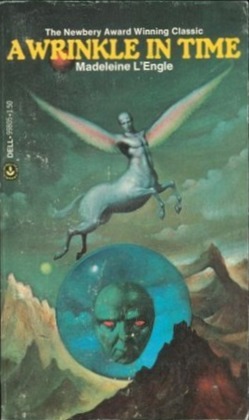
Cover of A Wrinkle in TimeMore to the point for book lovers: If you didn’t read A Wrinkle in Time or Anne of Green Gables or The Perks of Being a Wallflower or The Golden Compass or Alanna at “the right time,” did you miss the moment?

I’m not sure. When I began dating my now-husband, we kept having these conversations where I would mention a book that I just assumed “everyone else” had read, and he would say he hadn’t read it, and my jaw would drop, and I would lend him a copy or, if I didn’t have it on hand, buy one at a used book store and give it to him to read. He was very good about reading them (see: now-husband), but it was hit or miss. A Wrinkle in Time simply isn’t and never will be part of the fabric of his mind in the same way that it is woven into who I am. The Golden Compass, on the other hand, he liked so much he read The Subtle Knife and The Amber Spyglass without any prompting from me (and then he nicknamed our dog “the subtle knife” when she tried to nose between us on the couch).

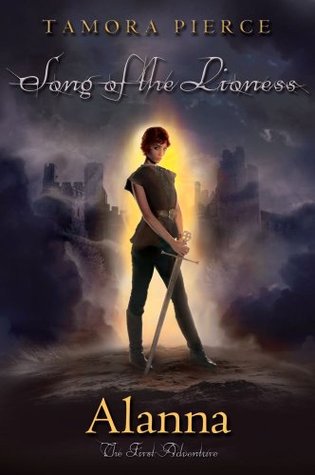
Cover of Alanna: The First AdventureEvery reader misses some things that “everyone else” has read, and I am no exception. Recently, I read Alanna by Tamora Pierce, which had been recommended to me by a friend who couldn’t believe I hadn’t read it (sound familiar?). I read the other three books in the Song of the Lionness quartet as soon as possible. My adult mind cheered for feminism (a fantasy novel with birth control!), while my tween mind (though we didn’t have that word then) inhaled the characters, the story, the world-building and mythology, the romance.

I wish I’d read Alanna when I was twelve or thirteen, but I enjoyed it immensely as an adult too. It is rare for me now to lose myself in a book in the way I did routinely when I was younger, but it still happens – and it happens more often, I’ve noticed, in books with a fantasy, dystopian, science fiction, or magical element, books like The Night Circus or The Bone Clocks or Station Eleven. These books are worlds in which I’m immersed, rising out of them at the end only reluctantly and regretfully. But of course, I can always read them again.

In Gabrielle Zevin’s novel The Storied Life of A.J. Fikry, the title character writes a note to his adopted daughter about “the necessity of encountering stories at precisely the right time in our lives.” He urges her to remember that “the things we respond to at twenty are not necessarily the things we will respond to at forty and vice versa. This is true in books and also in life.” The perfect time to encounter a book may be when you’re thirteen, or it may be when you’re thirty; you may read it once when you’re thirteen and once when you’re thirty and discover different things the second time, or simply enjoy it all over again.

Though some books and some readers will never be a match – and that’s okay – it’s worth keeping an open mind and going back to books you may feel you’ve missed. Now might be the perfect moment.

Book Club Books

In the fall of 2008, when I was living in Brooklyn, I helped to start and run a book club. We met consistently (once a month, give or take) for about a year. According to my records (i.e. a post-it note), here’s what we read:

October 2008 – The Corrections by Jonathan Franzen
November 2008 – On Beauty by Zadie Smith
January 2009 – Call Me By Your Name by Andre Aciman
February 2009 – The Mayor of Castro Street: The Life and Times of Harvey Milk by Randy Shilts; Matrimony by Joshua Henkin
March 2009 – Watchmen by Alan Moore
April 2009 – You or Someone Like You by Chandler Burr
May 2009 – Slouching Toward Bethlehem by Joan Didion
July 2009 – Kafka on the Shore by Haruki Murakami
August 2009 – All the King’s Men by Robert Penn Warren
September 2009 – Inherent Vice by Thomas Pynchon

11 books total: 8 novels, 1 essay collection, 1 nonfiction, 1 graphic novel

In the spring of 2010 I moved from Brooklyn to Massachusetts. It took me a little while, but I found a book club again that fall, and have managed to keep it together, more on than off, since then. According to my records (i.e. a piece of yellow legal paper and, more recently, a google spreadsheet), here’s what we’ve read so far:

November 2010 – The History of Love by Nicole Krauss
December 2010 – Alice I Have Been by Melanie Benjamin
January 2011 – A Visit from the Goon Squad by Jennifer Egan
February 2011 – Cloud Atlas by David Mitchell
March 2011 – Mrs. Dalloway by Virginia Woolf
May 2011 – Room by Emma Donoghue
June 2011 – Wuthering Heights by Emily Bronte
July 2011 – The Thousand Autumns of Jacob de Zoet by David Mitchell
August 2011 – The Fates Will Find Their Way by Hannah Pittard
September 2011 – Pale Fire by Vladimir Nabokov
February/March 2012 – Bossypants by Tina Fey; Is Everyone Hanging Out Without Me? (And Other Concerns) by Mindy Kaling; Seriously…I’m Kidding by Ellen DeGeneres
April/May 2012 – The Flight of Gemma Hardy by Margot Livesey
August 2012 – The Perks of Being a Wallflower by Stephen Chbosky
December 2012 – Anna Karenina by Leo Tolstoy
January 2013 – Yes, Chef by Marcus Samuelsson
March 2013 – The Receptionist by Janet Groth
April/May 2013 – We Sinners by Hanna Pylvainen
June 2013 – Little Wolves by Thomas Maltman
August 2013 – Beautiful Ruins by Jess Walters
September 2013 – Shine Shine Shine by Lydia Netzer
October 2013 – Lean In by Sheryl Sandberg
Nov 2013 – The Interestings by Meg Wolitzer
January 2014 – Longbourn by Jo Baker
February 2014 – Flawless: Inside the Largest Diamond Heist in History by Andrew Scott Selby; The Gardner Heist: The True Story of the World’s Largest Unsolved Art Theft by Ulrich Boser
March 2014 – Hello Goodbye Hello: A Circle of 101 Remarkable Meetings by Craig Brown
April 2014 – Code Name Verity by Elizabeth Wein
May/June 2014 – Orlando by Virginia Woolf
July 2014 – The Haunting of Hill House and/or We Have Always Lived in the Castle and/or “The Lottery” by Shirley Jackson
August/September 2014 – Summer Sisters by Judy Blume
October 2014 – Outlander by Diana Gabaldon
November 2014 – Mr. Penumbra’s 24-Hour Bookstore by Robin Sloan
December 2014 – Americanah by Chimamanda Ngozi Adichie
January 2015 – Wild Girls by Mary Stewart Atwell
February/March 2015 – Breasts by Florence Williams
April 2015 – The Interpreter of Maladies by Jhumpa Lahiri

37 books total: 28 novels, 10 nonfiction (including memoir), 1 short story, 2 repeat authors (Virginia Woolf and David Mitchell)

After this many years of book club experience – plus over a year of co-leading a book group in the library – I stand by my “What Makes a Good Book Club Book?” post from 2012. A book should have a little conflict or a central dilemma, be thought-provoking or eye-opening, prompt readers to consider the past, present, or future in a different light. Page count and availability are also important practical considerations.

Are you in a book club? What have been your favorite and least favorite books to discuss? Do you have tips for moderators or facilitators? Do you start with a simple thumbs-up/thumbs-down? How do you choose what to read next? Leave a comment!

Lynne Truss at the library

Late last year, I saw that Lynne Truss (author of Eats, Shoots & Leaves; cue grammatically justified string of exclamation points) was publishing a novel this spring. I requested the e-galley, and received not only the galley itself, but a note from an acquaintance asking if I’d be willing to write a blurb for it. (Claire and I met in 2007 at the Columbia Publishing Course; after a stint at Knopf, she’d landed at the excellent Melville House, whereas I had left publishing after a few years and gone into libraries instead.)

I wrote the blurb, and then I asked if, by any chance, Lynne would be doing a U.S. book tour, and if so, would she like to come speak at the library where I work? Indeed, as it happened, Lynne would be coming to the States, and incredibly, she did make a special trip to the library. And I have to say, Lynne is one of the loveliest authors I’ve ever had the pleasure to meet, as well as one of the funniest. Below is a little summary of the event.

Cross-posted at the Robbins Library blog.

Lynne Truss read to an audience of more than twenty people at the Robbins Library this past Monday night, inspiring much laughter and a few book purchases. Lynne read from her new novel, Cat Out of Hell, and she read from two sections near the beginning, “So you don’t have to know quite so much.”

Cat Out of Hell 300dpi (2)Lynne told us that the novel was commissioned by Hammer, a publisher of horror in the U.K. “I only wrote it because someone wanted it….Anything I’m asked to [write], I’m more likely to [write]….I like to write for a person.” She had never written in the horror genre before, but knew right away she wanted to write a comic gothic novel exploring the origin of the common phrase “cats have nine lives.” (Originally, her idea was for a story called Nine Lives, about a cat who had killed nine people. That’s not quite what happens in Cat Out of Hell.)

She knew from the beginning she wanted to use a pastiche structure, as she has long been a fan of “the phony documentary element of gothic novels,” which are often represented as a collection of letters and other documents (or, in the case of Bram Stoker’s Dracula, typewritten – a new technology at the time).

One concerned potential reader asked Lynne, “Does the cat die?” to which Lynne replied, “You’ll be much more worried about the dog.” (The dog is called Watson, so that his owners, Alec and Mary, can use Lynne’s favorite Sherlock Holmes line: “Come at once, if convenient. If not convenient, come all the same.”)

Lynne's American publisher, Melville House, made a video for the book's release. What do the cats think of all this?
Lynne’s American publisher, Melville House, made a video for the book’s release. What do the cats think of all this?

As for humor – Cat Out of Hell is quite funny – one audience member asked if Lynne laughed at her own jokes as she is writing. “Yes!” But humor is “high-risk: if people don’t find it funny then you’ve failed completely. And humor is very subjective.”

Structure aside, Lynne didn’t have the content of the story plotted out before she began writing. “If I don’t know where it’s going, the reader can’t possibly be ahead of me!” I’ve read a fair few mysteries in my time, and I’d agree with the author here – it would be rather difficult to guess where the story is going. You’ll just have to read it for yourself!

Other Lynne Truss books:

Eats, Shoots & Leaves: the zero-tolerance approach to punctuation

Talk to the Hand: the utter bloody rudeness of the world today, or, six good reasons to stay home and bolt the door

Making the Cat Laugh: one woman’s journal of life on the margins

The Lynne Truss Treasury: columns and three gothic novels