Swifter, Higher, Stronger

Last night, I went to listen to Chris Cleave talk at the Brookline Booksmith, an excellent independent bookstore. (Earlier in the day, Cleave spoke at Porter Square Books, another lovely indie.) The talk was completely worth the crosstown trip in rush hour. Cleave is a delightful speaker; he’s energetic, articulate, intelligent, funny, and self-effacing. He talked about his writing process and about the research he did for each book, and then read a little bit from his newest, Gold, and answered questions from the audience.

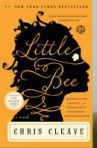
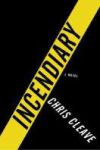
Cleave’s approach, as a journalist-turned-author, is to investigate “timeless questions in a timely manner.” For Incendiary, the question was, “Why do governments take better care of rich people than poor people?” For Little Bee (published as The Other Hand in the U.K.), the question was, “Should we step outside our comfort zone to bring others into it?” And for Gold, the question was, “How much ambition should we give up in the name of love?”

Olympians, Cleave pointed out, have “a different scale of ambition.” For Olympic athletes, unlike the rest of us, it is “necessary for everyone else in the world to fail” for them to win. Rivalries are intense; but rivalry is similar to “romantic love…[it] lifts both people up better than they could have been individually.” In Gold, Zoe and Kate train together and push each other to be their best, each hoping that her best is the best.

In researching Gold, Cleave interviewed top-level athletes, as well as doctors and nurses at a children’s hospital. “These people operate at such emotional extremes….It’s my job to describe indescribable things…[to visit the] extreme edges [of] exceptional lives and report back.” Cleave also trained on a bicycle himself, discovering a “savage joy” in winning (“That’s why you do the research, to go out and find things you weren’t expecting”), as well as the “unbridgeable gulf” between top athletes and the rest of us. Cleave said that the race scenes between Kate and Zoe are the heart of the book (“reclaiming action for literary fiction”). As a reader I’m not sure I agree, though the race scenes are well-written and intense.

Of the two high-level struggles in Gold – Kate and Zoe’s rivalry, eight-year-old Sophie’s fight against leukemia – Cleave said, the characters either see the difference or they don’t. Kate, as Sophie’s mother, has more often sacrificed ambition for love than love for ambition; Zoe is the opposite, and whether she will or can change is one of the central questions of her character and of the book.

After Cleave read a brief passage from Gold (Kate and Zoe’s coach Tom Voss speaking with Zoe’s agent on the phone, early in the book), there was a Q&A period. The first question was, “How do you write children well?” As a father of three children (or “experimental subjects”), he observes closely, with special attention to speech patterns; Charlie, from Little Bee, was closely modeled on Cleave’s eldest son. “Moments are ephemeral, you have to preserve them,” he said. “I’m nostalgic for the present even before it’s become the past.”

Why, I asked, did all three of his books contain infidelity? “I’m interested in people who are in transition,” he answered. People in steady states aren’t interesting; you don’t see many novels about happy marriages. When characters are in flux/in crisis/changing, “there’s only so much you can change” – your city, your job, your partner. Infidelity isn’t one of Cleave’s “timeless questions,” and his writing about it is remarkably free of judgment.

Another woman in the audience asked how Cleave wrote women characters so well. “Well there is a lot of dressing up involved,” he joked. Asking taboo questions during interviews was one successful tactic; wearing headphones (sound off) in public was another. He then explained an early rule he set for himself: “[I’m] not writing about me.” Counter to the common advice to “write what you know,” Cleave sets out to “cross a boundary every time” he picks up a pen. “I’m very curious about people,” he said, and one can tell from his books that he is a careful listener and close observer indeed.

During the book signing after the reading and Q&A, Cleave was polite and engaging. When I asked him if he had ever considered another outcome for Sophie, he said right away that he had, in the first draft, but he changed it. “Sensitive readers,” however, will pick up on certain sentences that are so full of foreboding that they have nearly the same impact as another outcome would have done. (Sorry if that’s vague; I’m trying to avoid spoilers.)

All in all, I now have even more respect for this author than before. If he comes through your city or town on his tour, I encourage you to go see him, and of course I highly, highly recommend picking up a copy of Gold.

Read the Goodreads interview with Chris Cleave.

Chris Cleave’s books on Goodreads:
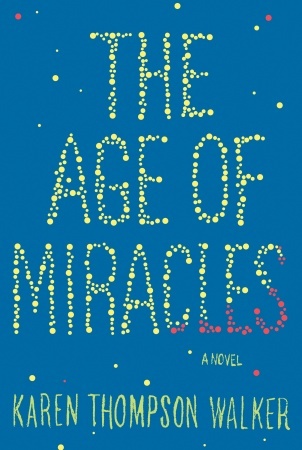
The Age of Miracles by Karen Thompson Walker

There’s been plenty of buzz about Karen Walker Thompson’s debut novel, The Age of Miracles. Often I’m skeptical of hype, but I did enjoy this book very much. Rather than jumping on the post-apocalyptic or dystopian bandwagon, The Age of Miracles is a slightly different genre, “speculative fiction.” It reminds me of Alan Weisman’s nonfiction thought experiment book, The World Without Us, which examines what would happen to the planet if humans disappeared. In this case, however, the premise is that the earth’s rotation – for some undiscovered and unexplained reason – has slowed.

This, of course, has immediate and drastic effects on ordinary life for the narrator, Julia, and her family and friends. Unlike most post-apocalyptic or dystopian books, here the reader gets to experience the transition itself, rather than being dropped into a world after the catastrophe – whether natural or man-made – has occurred. In addition to “the slowing,” there are the changes Julia would be going through anyway as an eleven-year-old girl; the author’s focus is on character and theme, on the effects of the slowing rather than its cause.

Julia narrates her childhood in the past tense, at a distance of several years. Her reflection is more matter-of-fact than nostalgic: “One thing that strikes me when I recall that period of time is how rapidly we adjusted. What had been familiar once became less and less so…But I guess every bygone era takes on a shade of myth” (82).

There is no definite solution to the slowing, no wrapping up of loose ends or determination of the narrator’s ultimate fate. Julia and her friend Seth’s message, written in wet concrete, serves as the conclusion: We were here.

Beautifully written and thought-provoking, I can see this inspiring great discussions in book clubs.

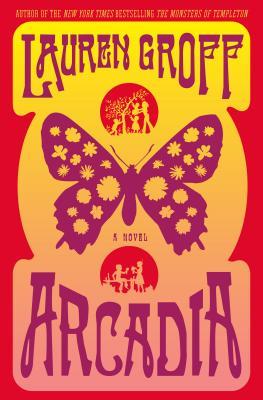
Arcadia by Lauren Groff

He keeps his deepest belief tight to him: that people are good and want to be good, if only you give them a chance. That’s the most magnificent thing about Arcadia, he knows. It is the shell that protects them. (98)

I just finished Arcadia by Lauren Groff two days ago, and I’m inclined to agree with the back-of-book blurb from Richard Russo: “It’s not possible to write any better without showing off.” I have enjoyed Groff’s previous work (The Monsters of Templeton, Delicate Edible Birds) and she just seems to be getting better. Arcadia is the story of Bit, who was born to hippie parents on a commune – Arcadia – in rural New York. The first sections of the book are his childhood and teenagerhood in Arcadia, as the commune evolves and eventually dissolves. Then there is a skip forward in time, and Bit is an adult living in New York City, with a small daughter and a disappeared wife. The final section, which takes place in the near future (2018), is full of hope and fear: a pandemic, SARI, is sweeping the globe. At the same time, Bit’s mother Hannah is dying of ALS. Hannah, Bit, and Bit’s daughter Grete return to the house Bit’s father Abe built in Arcadia to wait out the pandemic and take care of Hannah.

The imagination required to create the atmosphere of Arcadia and the character of Bit is similar to that of Room, Emma Donoghue’s novel about a boy who has spent his whole life in one room, and is overwhelmed by the world when he escapes. As the 1970s end and the commune crumbles, Bit’s entire way of life, everything he has known and that has been normal to him, disappears, and he has to learn to live in the world “outside.” (Regretfully, this transition doesn’t get its own section, but it is briefly sketched out in the adult Bit’s memories.)  Everyone must leave their childhood behind, but it is a rare case in which the whole community and its way of life ceases to exist as well. “It isn’t important if the story was ever true,” Bit realizes. “…He knows stories don’t need to be factual to be vital. He understands, with a feeling inside him like the wind whipping through a room, that when we lose the stories we have believed about ourselves, we are losing more than stories, we are losing ourselves (208).

One of the things that does remain is Bit’s relationships with others from Arcadia; most of them reconnect later in life. Many also end up in New York City, which would seem to be the opposite of a commune, but in fact has similarities. as Bit says to his father Abe, “It wasn’t the country that was so beautiful about the whole Arcadian experiment, don’t you see? It was the people, the interconnection, everyone relying on everyone else, the closeness. The villages are all dying now, small-town America is dying, and the only place where the same feeling exists now is here, in the city, millions of people all breathing the same air” (208).

Overall, this is a work of tremendous imagination and empathy. I would suggest it to anyone, particularly those who enjoyed Groff’s earlier work, Emma Donghue’s Room, or Jennifer Egan’s A Visit From the Goon Squad.

Summer Books

It’s been far too long since I’ve posted any book reviews here (though I’m always active on Goodreads). I realized recently that the last several books I’ve read are either very new or haven’t been published yet, but all come out this summer, so I’m offering a little preview.

Broken Harbor by Tana French (July 24, 2012)
This is the fourth Dublin Murder Squad book. I hesitate to call it a series, because you can read the books in any order and they are all perfectly good standalone novels; however, characters in one book often appear in the other books. Broken Harbor features detective Scorcher Kennedy, who investigates what looks like a quadruple-homicide in a housing development called Brianstown (an area that used to be called Broken Harbor). Together with his rookie partner, Kennedy digs for the truth, relying on expertise and instinct. French does a beautiful job maintaining the suspense throughout, and there’s real character development there as well. I’d rank this just below The Likeness (my favorite of hers), and if you’re looking for a good creepy murder mystery with some good twists and turns, this one’s for you.

The Red House by Mark Haddon (June 12, 2012)
Author of The Curious Incident of the Dog in the Nighttime and A Spot of Bother, Haddon follows those two successes with another. It may take some time to adjust to the style of storytelling – point of view often changes from one paragraph to another – but once you get to know the characters, the reading experience becomes smoother. The Red House is the story of eight people on holiday, and the way in which Haddon tells the story shows their relationships to each other as well as what is going on in their own lives. It’s nothing earth-shattering, but it is very well done.

The Lost Prince by Selden Edwards (August 16, 2012)
I had high hopes for this one, as it is a follow-up to The Little Book, which I adored. The Little Book involved time travel to fin de siecle Vienna, and was fascinating because of its setting, characters, and plot (the time travel bit). The Lost Prince simply isn’t as good. The main character, Eleanor Burden, returns from Vienna with her destiny in her hands: specifically, in a journal that sketches out future events that she must help bring about. She struggles to follow the incomplete instructions, never knowing if her actions are the right ones. She is determined and brave, but the sense of magic and adventure that The Little Book had is lacking in The Lost Prince. Even twists that should have the impact of revelations (relating, for example, to Arnauld “the Haze” Esterhazy’s true past) lack power.

One Last Thing Before I Go by Jonathan Tropper (August 21, 2012)
If you liked Tropper’s previous work – How to Talk to a Widower, for example, or This is Where I Leave You – then picking this up is a no-brainer. Again, Tropper delivers a heartbreaking suburban comedy. Silver, our middle-aged male narrator, has an ex-wife, an estranged daughter, supportive parents, and friends in situations similar to his own. His life is stagnant, but when he discovers that he has a life-threatening medical condition, he has to decide if he wants to live or wants to die. For most, this isn’t a tough question, but it takes Silver the length of the book to decide. Meanwhile, there are moments of laughter, introspection, shame, and love. Recommended, especially for fans of Nick Hornby and Michael Chabon.

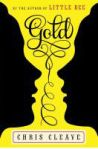
Gold by Chris Cleave (July 3, 2012)
I missed Cleave’s first two books, Incendiary and Little Bee, but now I see I shall have to go back and look them up, because Gold blew me away. It is the story of three Olympic cyclists – Zoe, Kate, and Jack – their coach, Tom, and Jack and Kate’s eight-year-old daughter Sophie, who has leukemia. Zoe, Jack, and Kate met at age nineteen, and Zoe and Kate have been friends and rivals ever since. They are now thirty-two, and London 2012 will be their last Olympics. Due to a rule change, however, only one of them will be able to qualify to go. Will it be Zoe, who has been racing away from events in her past since childhood, and for whom winning is everything? Or will it be Kate, who, having missed out on Athens and Beijing to take care of Sophie, inarguably deserves to go? The relationships between these five characters, as much as the actual events of the story as it unfolds, are the reason to keep reading. This is a five-star (five-Olympic ring?) book.

Tango with censorship

Ray Bradbury can go ahead and start rolling over in his grave pretty much right away: a committee of parents, teachers, and administrators in the Davis County district in Utah have voted to restrict access to the book In Our Mothers’ House (yes, that apostrophe is correct, it’s about a family with two mothers). This in itself is not unusual; books are challenged all the time, and sometimes moved (from the children’s section to young adult, or from YA to adult, or behind the counter, as in this case).

However, the district has taken the additional step of asking librarians to pull other titles that may cause controversy. (And Tango Makes Three, a picture book based on a true story of two male penguins at the Central Park Zoo who hatched a chick from an egg and raised it together, is likely next.) McCarthyism, anyone?

It’s easy to get outraged against censorship; there are hundreds, if not thousands, of eloquent examples in print and on the web. (Here’s a defense of In Our Mothers’ House in The Salt Lake Tribune.) But let us take a step back and consider the purpose and mission of the library. How do these “controversial” books appear on library shelves in the first place, and why should they stay there despite strenuous objection from community members?

Most libraries have a collection development policy: guidelines for what kinds of materials the library ought to have in order to serve its community. Different libraries may choose to allocate their resources in different ways, but most public libraries aim to provide a broad range of materials – educational, recreational, and cultural – for people of every age, socioeconomic status, race, religion, political affiliation, and sexual orientation.

Our collection development policy states, “The…community includes people from diverse educational, cultural and economic backgrounds displaying a wide variety of interests, needs, values, viewpoints and occupations.” It continues, “The library has the obligation not only to serve its current users but also to search for materials and methods that will meet the needs of new members of the community and those who have not been traditional library users.”

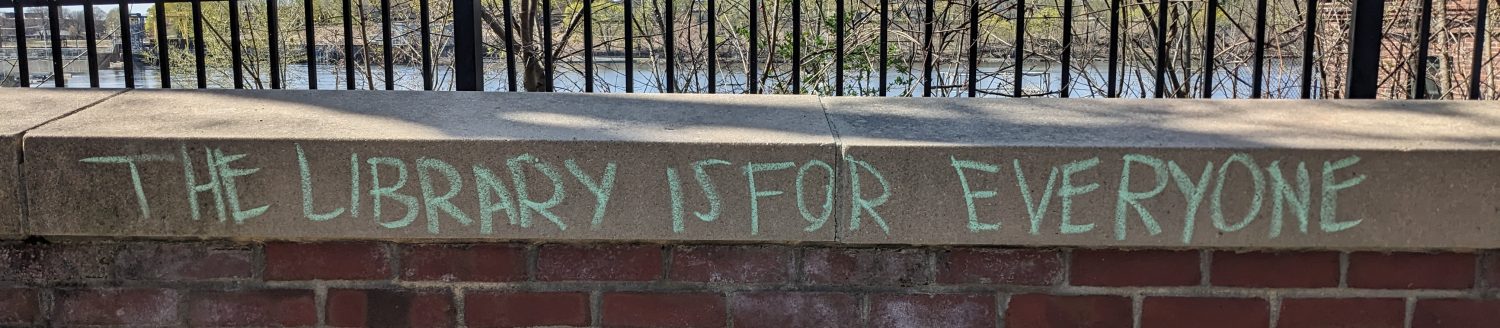
The library is, or should be, an inclusive place. It should be a safe space. If parents want control over what their children are reading, that is perfectly within their rights – but exercising control over what everyone else’s children are reading is most definitely not.

Librarians are advocates for everyone in their communities. We are advocates for equal access to information. It is our responsibility to make sure that there are materials for everyone. (The Utah librarians who added In Our Mothers’ House to the school library collection did so in part because a child in the elementary school has two mothers.) As one librarian said, at a panel at MLA, “If you have to come up with a reason not to buy something, that’s when you should add it to your collection.” We are in the business of selection, not censorship.

If a library had plenty of books for adults but none for children, someone would object. If a library had a hundred books about Christianity but none about Buddhism, someone would object. If a library collected books by and about Republicans but not Democrats, someone would object. A balanced collection includes materials for and from many points of view – an increasingly rare thing in a world where most news sources are slanted, and only offer one viewpoint.

If history is any indication, there will always be people who want to censor books. There will also always be people who defend them.

The science of working together

At the launch event for Interop: The Promise and Perils of Highly Interconnected Systems, the authors John Palfrey and Urs Gasser gave an overview of interop and provided several relevant examples. Though they began years ago on a theoretical level (does increased interop lead to increased innovation?), interop is a deeply practical topic.

“Interop” here is short for interoperability, defined as “the ability to transfer or render useful data and other information across systems (including organizations), applications, or components.” The authors decided that this initial definition, however, could be broadened into “the science of working together” on many layers: institutional, human, data, and technological.

Though it may sound abstract, there are many good examples of how interoperability is important in daily life. Solutions to big societal problems depend on interop, said Palfrey and Gasser. They talked first about “smart cities,” which depend on sharing information: between police, firefighters, and ambulances, for example, and between various forms of transit (does your bus pass also work for the subway and the commuter rail systems?).

Next they talked about open platforms, such as Facebook, which made its API available so that anyone could build an app. However, this interconnectedness has a down side: many points of connection means more vulnerability to privacy and security breaches. (This is also true of credit cards – another example of interop – which are vulnerable to identity theft.)

Facebook is an example from the private sector, but the public sector can drive interop as well, by regulation and legislation, as Europe has done for standardized cell phone chargers.

Naturally, one of the areas in which I am most interested is that of libraries. Libraries, said Palfrey, are facing two large interop problems: preservation of knowledge over time, and the lack of an open standard for e-lending.

The first issue has to do with reformatting; over the past decade or two, data has been stored not just in print, but in a whole variety of other ways, including floppy disks, microfilm, microfiche, CDs, and on computers in a variety of formats, some of which are no longer readable because the software necessary is no longer in use. Libraries must be vigilant to make sure that the information they have is preserved in an accessible form.

The second problem is one that has been in the news more or less constantly for a few years: there is no open standard for e-lending. Instead, there are a lot of proprietary formats that are not interoperable at all (e.g. you can’t read a kindle book on a nook device). “This is crazy,” Palfrey said. “Why is this [print book] still better technology?”

I hope and trust that, in the next few years, an open standard for e-lending will develop. In an ideal world, both libraries and individuals would be able to buy and lend any e-book, which could be read on any device.

Fingers crossed.

Upcoming local events

There are two local events coming up that I’m looking forward to; the first is tonight in the Harvard Law School building, where authors John Palfrey and Urs Gasser will be discussing their new book, Interop: The Promise and Perils of Highly Interconnected Systems. Palfrey and Gasser also co-authored Born Digital, and I’ve seen Palfrey speak before on the subject of the Digital Public Library of America (DPLA); he is intelligent and articulate.

The second event, at the Brookline Booksmith on June 8, is an author talk of a different sort. Jenny Lawson, a.k.a. The Bloggess, will be appearing for her new book, Let’s Pretend This Never Happened: (A Mostly True Memoir). As a fan of both blog and book, I am really excited to see her in person. If you haven’t heard of her before, I recommend reading her posts about Copernicus and Beyonce as an introduction.

Recommended Recommenders

A recent blog post on the Boston Globe site highlights seven “book recommendation websites” people can turn to for reading suggestions. I was already familiar with four of the seven, but decided to explore the rest for comparison’s sake. If I’ve made a mistake, feel free to correct me in the comments; conversely, if you are a devoted member of one of these sites and want to sing its praises, please feel free to do that as well!

Goodreads
This is a site I use every day; I’ve been a member since 2007, and have over a thousand books on my “shelves.” Goodreads offers a great way to keep track of what you’ve read (including when you read it, what you thought about it, your rating – out of five stars – and who recommended it to you), what you’re currently reading, and what’s on your to-read list for the future. You can create more shelves in addition to these three – historical fiction, for example, or biography – and you can see what your friends have read. Goodreads will recommend books for you based on your shelves, and you can see others’ lists, take quizzes, and sign up for giveaways. There are also many “Goodreads authors,” published authors who participate as members. One of my favorite features of the site is that it combines personal recommendations with crowd-sourced ones, so I can see what my friends thought of a book as well as what everyone else of Goodreads thought of it. Great usability, too – the interface is pleasant and intuitive, you can sort your lists by author, title, date read, date added, rating, etc., and you can get some nice descriptive statistics too.

LibraryThing
LT is similar to Goodreads in many ways: you can create your own shelves and tags, see your friends’ books, create a profile, get recommendations, and participate in giveaways. LT offers richer metadata, including Dewey Decimal Classification and Library of Congress Classification (DDC and LCC). The interface isn’t quite as user-friendly, but it’s a robust site, and if Goodreads didn’t exist, I’d happily use LT as my primary books-and-reading website.

Shelfari
Shelfari is powered by Amazon, which means two things: (1) it is designed to get you to buy books, preferably from Amazon, and (2) the design is beautiful and the user experience (UX) is fantastic. I remember an earlier version of the site, which was kind of clunky – maybe why I chose Goodreads instead of Shelfari five years ago – but it’s clean and colorful now. Shelfari rates high on content and interactivity; like Goodreads and LibraryThing, it’s a social networking site for readers (or in their words, “a community-powered encyclopedia for book lovers”). The front page pushes books that are already popular, including New York Times bestsellers and Amazon bestsellers, but if you dig deeper into the site, you can narrow by category or subject. One of the most useful features I discovered was the Series tab, where you can see all the books in an author’s series, in the correct order – definitely helpful at the reference desk.

Whichbook
I’ve already written about Whichbook; I like it very much. It isn’t nearly as robust as Goodreads, LT, or Shelfari, but it isn’t meant to be; it’s less a social networking site for bookworms and more of a reader’s advisory site. It’s whimsical, with its sliding scales (optimistic to bleak, funny to serious, safe to disturbing) instead of a traditional search box, and it does a good job suggesting off-the-beaten-path books rather than the most popular books. There are lists as well, in categories such as “Bad Luck and Trouble” and “Weird and Wonderful,” and you can also create your own lists. Whichbook promotes libraries over Amazon: the “borrow” button is ahead of the “buy” button.

What Should I Read Next?
WSIRN, as it’s called, is one of the most basic sites in this collection. You can create two lists: like and dislike. You can get recommendations based on any title on your list; however, these recommendations are based “purely on collective taste.” That is, books on the same list become associated with each other. This might work fine if everyone liked only one genre, so all mysteries were associated with each other, all romances associated with each other, etc., or if users were able to create and name multiple lists (e.g. “favorite biographies”), but that’s not the case. I have read and loved many books that were wildly different from each other, and the only thing they had in common was that I liked them; I wouldn’t necessarily recommend them both to the same person. That said, WSIRN is a simple, quick tool, and the developers may add functionalities in the future.

The Staff Recommends
The Staff Recommends is, as far as I can tell, McSweeney’s editor-at-large John Warner. (Supposedly also his “team of readers,” but all the reviews I read on the site were written by John.) TSR calls itself “an advertorial publication,” meaning they do get paid for recommending books, but they only recommend books they like; furthermore, proceeds are donated to a nonprofit, so I feel confident that the recommendations are honest. So, if you happen to have the same taste as John and his “team of readers,” you’re in luck! Whether you agree with him or not, the reviews are thoughtful and well-written. As of today, there are eight current selections and a few lists (e.g. crime novels) consisting of shorter reviews of more titles. TSR offers fewer points of view and less content than most of the other sites in the article, but it’s worth bookmarking nonetheless.

Gnooks
The main appeal of this site is the “literature map” that it creates when you type in the name of an author. However, there’s no information as to how the relationships between authors are determined. I want to know why Author A and Author B are considered similar: is it the subjects they write about? Their writing style? Hard to say. You can also get recommendations based on authors you like (I tried it; results were pretty accurate, but there were only three). I probably won’t use this regularly, but I do like that it’s author-centric rather than book-centric.

Decisions, Making

Two seemingly unrelated bits of news/opinion in this post, but both have to do with decision-making on some level. To start, one of the first articles I read this morning was Ann Patchett’s op-ed in the New York Times about the Pulitzer Prize Board’s failure to select a fiction winner from the three finalists. As Patchett points out, this is not only disappointing for the authors (“It’s fine to lose to someone, and galling to lose to no one”), it’s also a letdown for readers and for booksellers. Here are the past winners.

Another article I read today is from ASIS&T: Thom Haller wrote on the topic “What happens when architectural questions are not asked?” (architecture, here, is information architecture, or IA). He used Facebook as an example, and it’s a good one: who hasn’t been confused by Facebook’s changing structure, or its hierarchy and organizing principles (or lack thereof), not to mention its always-in-flux privacy policies? The problem Haller discussed was that of labels (or lack of labels) for “content clusters,” and it’s something that would probably come up in a basic usability test; right now, it’s not really clear what the difference between “public” and “all” is, unless there is a label for each group of options (there isn’t).

For such a huge site, there are some surprising difficulties in terms of navigation and settings. I almost have to assume that these difficulties are planned, or at least unresolved, on purpose; it seems like Facebook wants certain actions (privacy settings, unfriending) to be difficult.

So as not to end on a negative note, please enjoy this list of fake Massachusetts town names from McSweeney’s. And may I also recommend Jenny Lawson’s (a.k.a. The Bloggess) just-published memoir, Let’s Pretend This Never Happened? Read a snippet here. (Unless you’re at work, because most people’s work doesn’t usually provoke hysterical laughter, and this might. You’ve been warned.)

YA for Grown-ups

You know that xkcd comic, “Someone is WRONG on the internet”? I actually don’t feel that way too often. Not because there isn’t plenty of misinformation on the internet, or a lack of opinions out there with which I disagree, but because I don’t spend most of my time looking around for things to argue with and get all bent out of shape about.

However, I followed a link from this new “Y.A. for Grownups” column, and wouldn’t you know it, SOMEONE IS WRONG ON THE INTERNET. Joel Stein, columnist for Time magazine, believes that “Adults Should Read Adult Books.” And ONLY adult books. And here is something that gets me bent out of all recognizable shape: someone telling me what I can’t (or shouldn’t) read. (Remember “no one ever told me no”? Or the simple fact that telling a kid – or anyone, really – s/he can’t read/do/have something is a surefire way to get them to want to read/do/have that thing with every fiber of their being?)

Maybe I’m just contrary. However, I believe there is value in YA literature for adults as well as teens. First of all, remember, most adults reading fiction are reading fiction for pleasure and entertainment, so who’s to tell them (us!) what to read or not read? Second, Stein admits he hasn’t read any of the major YA books out there now: not The Hunger Games, not Twilight, not Harry Potter. So right off the bat there’s the issue of passing judgment on something he isn’t familiar with, and only citing the biggest blockbuster names out there. Yeah, okay, he happens to be right that Twilight is not literary, but neither is Nicholas Sparks (yes, it’s pick-on-Nicholas-Sparks week here), and Stein isn’t bashing adults who read The Notebook.

But Joel Stein, I dare you, I dare you, to read Jennifer Donnelly’s A Northern Light and write it off in the same fashion. Read it and say it has no value and that adults should only read “adult” books. That we should read only the books – literary or not – aimed at our age group. (Speaking of age groups, “YA” is just the publishers’ designation for marketing purposes. There’s no strict definition, but usually the main character is a child or teenager, the book is from their point of view – first person or third limited – and it takes place in the present or recent past.)

You know what? Whatever Joel Stein thinks, I’m not embarrassed to read YA books in public. Maybe I feel like re-reading The Giver or Bridge to Terabithia or The Boggart or The Golden Compass, or maybe I feel like keeping abreast with newer YA books, like The Hunger Games or Uglies or A Fault in Our Stars – wait, how did I even get to this point in this tirade without mentioning John Green? Joel Stein, I dare you to read A Fault in Our Stars as soon as you’re done with A Northern Light.

Anyway, the point is, look: I was in middle school once, so while I won’t say I’m 100% immune to embarrassment, I am most emphatically NOT embarrassed to read YA books in public, and I’m years beyond caring what anyone else on the train thinks about it. What books make me cringe? None.*

*Fine, one: I had to read Pretty Little Liars for a YA Lit class and it was awful. I did not want to read it in public. You can have that one, Joel.