Best of 2011, Part the Third: Fiction (I)

Here is the first batch of novels I’d recommend from my reading last year. Enjoy, discuss, ask questions! I’ll be posting more soon.

The first three Thursday Next books by Jasper Fforde – The Eyre AffairLost in a Good Book, and The Well of Lost Plots – are highly recommended for English majors or otherwise literary types with senses of humor. Set in a surreal version of England in the 1980s, literature is all-important, and Special Ops literary detective Thursday Next encounters such characters as Jane Eyre, Miss Havisham, and the Cheshire Cat throughout her cases. These books are extremely quirky with a lot of made-up jargon, and they’re fast-paced, but if you’re enough of a word-nerd, you’ll keep up. That said, I felt the quality of the series dropped off after the third book, which is why I only recommend the first three books here.

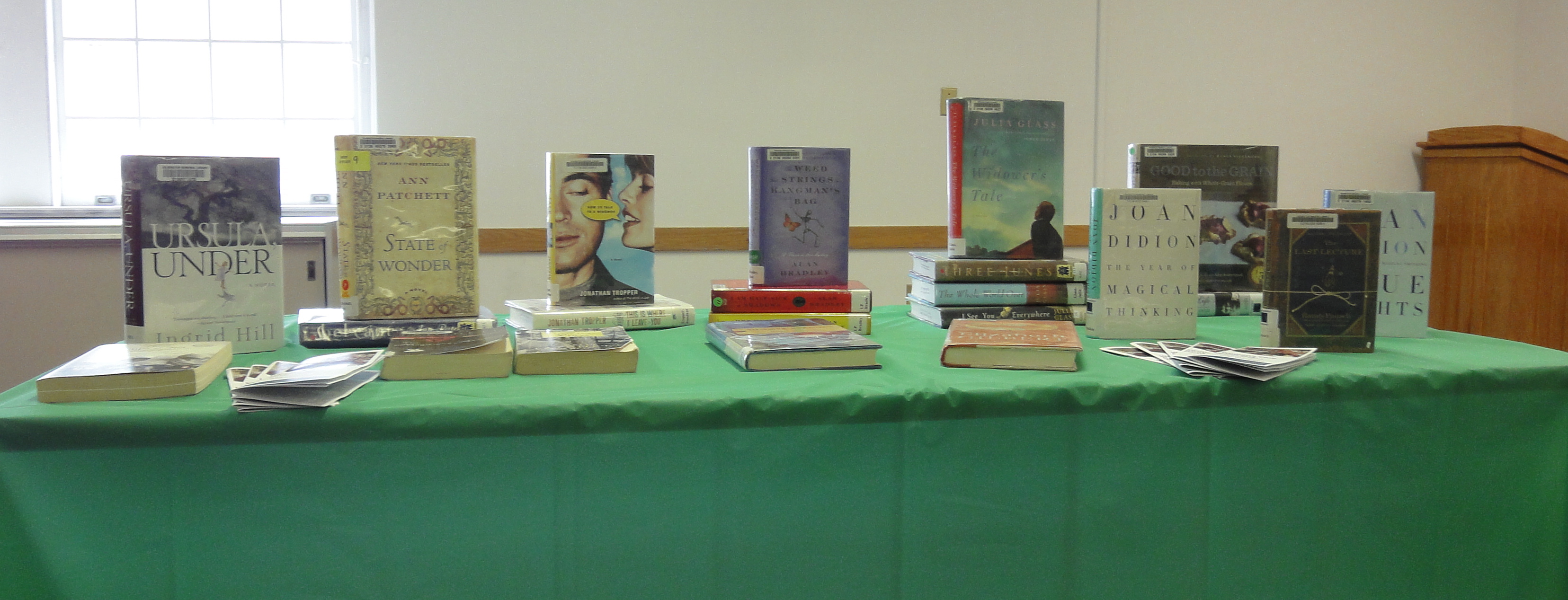
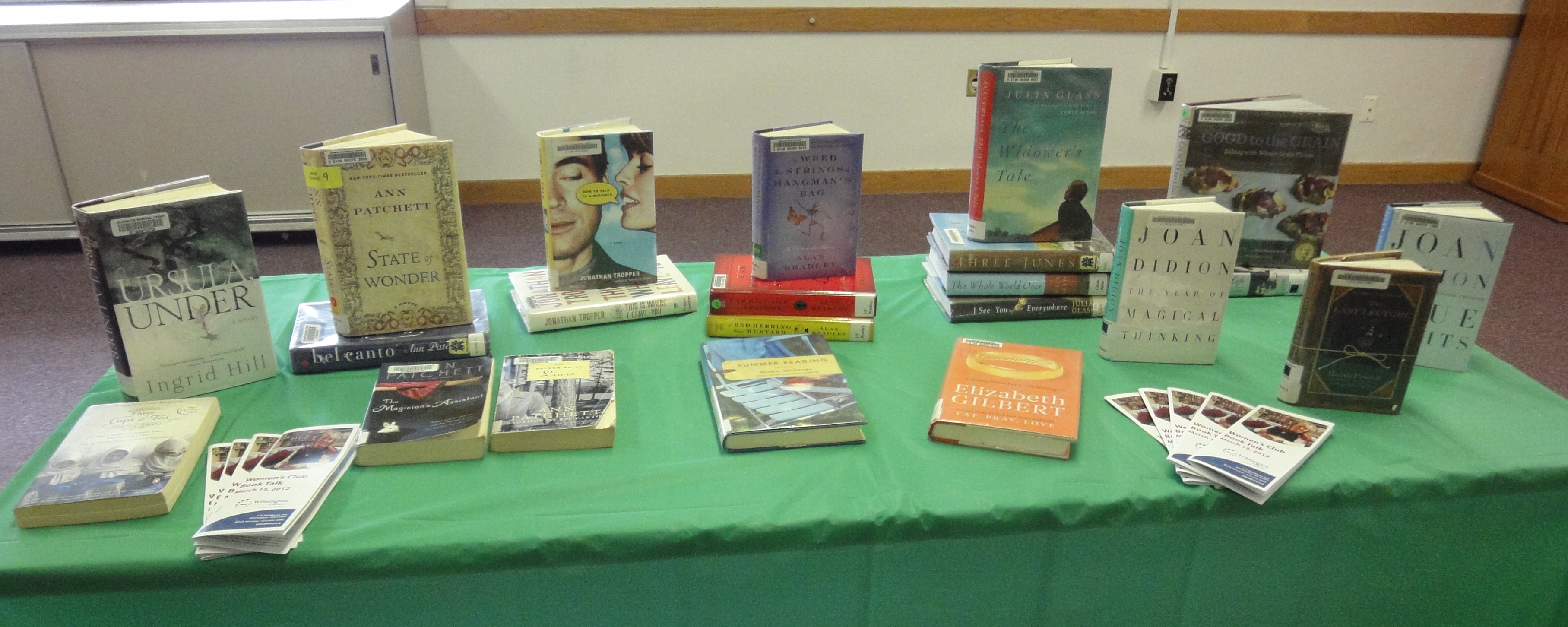
I’ve already raved about State of Wonder by Ann Patchett on my other blog and on the website of the library where I work, so I’ll just say here that Ann Patchett is absolutely one of my all-time favorite authors for a few reasons, all of which are on display in State of Wonder. First, there’s her complete mastery of setting; in State of Wonder, that includes both the Amazon and Minnesota. Wherever she writes about, it seems like she has lived there her whole life, the description is so rich and real. Second, her characters are real people; she understands them all so well, and there’s a real sense of empathy. Thirdly, the plot generally hinges on a situational conflict, rather than a protagonist-antagonist confrontation; this makes the story more interesting and complicated. Finally, the writing itself is just beautiful.

Geraldine Brooks is another author whose new books I always look forward to (Caleb’s Crossing is on my to-read list). She wrote March and Year of Wonders, both of which I’d recommend, as well as People of the Book, which is about a Hanna Heath, Australian rare book expert who is called in to restore the famous and long-lost Sarajevo Haggadah. Each time Hannah turns up a clue to the book’s past, the story jumps to that point in the book’s history: from Spain to Italy to Austria to Bosnia, each in a different time period, tracing the book’s journey to Hanna’s care in the present day. People of the Book is a great choice for those who enjoy stories-within-stories, those who are interested in history or rare book conservation, or those who just like good storytelling.

The Lover’s Dictionary by David Levithan was another of my “staff picks” for the library. It is Levithan’s first foray into literature for adults (he has written extensively for teens, including Boy Meets Boy and Love Is The Higher Law, and has collaborated with other YA authors – Rachel Cohn on Nick and Norah’s Infinite Playlist, John Green on Will Grayson, Will Grayson). The Lover’s Dictionary is funny and poetic by turns, showing a genuine understanding of two people in a relationship. “Definitions” – from “aberrant” to “zenith” – tell the whole story of one couple, from meeting and moving in together to fighting and making up. Through these brief snapshots – anywhere from one line to a few pages – a complete story is communicated.

Best of 2011, Part the Second: Humor and Baking

To break the general nonfiction category down to a manageable size , here are my picks for humor and baking:

Humor:

Sh*t My Dad Says, by Justin Halpern
This was funnier and had more depth than I expected it to be, considering it was spawned from a Twitter account. The quotes of the dad in question are organized thematically into categories and separated by short essays. This book really is laugh-out-loud funny (e.g., On Accidentally Eating Dog Treats: “Snausages? I’ve been eating dog treats? Why the f**k would you put them on the counter where the rest of the food is? F**ck it, they’re delicious. I will not be shamed by this.”)

Bossypants, by Tina Fey, and Is Everyone Hanging Out Without Me? (And Other Concerns), by Mindy Kaling
I wrote about these together on the library’s “staff picks” book review section. They are both in short essay format, easy to read a little at a time or straight through; but more importantly, they are smart and funny. If you like 30 Rock (Fey) or The Office (Kaling), chances are you will like these books. (Also, I found out that Mindy wrote my all-time favorite episode of The Office, “The Injury,” wherein Michael grills his foot on a George Foreman, Dwight gets a concussion, and Jim sprays him in the face with a squirt bottle. But that is neither here nor there.)

Cookbook:

Good to the Grain, by Kim Boyce
This was one of my staff picks, too. Boyce is a pastry chef and a mother, so her goal is to make healthy recipes without sacrificing any of the deliciousness – and by and large, she succeeds. Every recipe (especially the whole wheat chocolate chip cookies) I’ve made from this book has been a success. The sections are organized around the type of flour the recipes require, so you can try out one type at a time.

Best of 2011, Part the First: Young Adult

Saving the two major categories – adult fiction and nonfiction – for later, here are a few of the best young adult (YA) books that I read in 2011 (not necessarily published in 2011).

Looking for Alaska, by John Green
I was utterly blown away by this book. It is set at a boarding school in Alabama, where the main character Miles Halter (a.k.a. Pudge) comes seeking a “great perhaps.” What he finds is a teacher who makes him think, a friend who makes him laugh, and a girl who makes him dream – and breaks his heart. The structure of the book is unique: it is divided into two parts, Before and After, and instead of chapter headings there are countdowns (e.g. 121 days before; 29 days after). Looking for Alaska is a classic, tragic coming-of-age story, along the lines of Bridge to Terabithia and A Separate Peace. (I highly recommend John Green’s other books as well, including his newest, The Fault in Our Stars.)

Little Brother, by Cory Doctorow
Warning: This book will make you paranoid, for at least as long as it takes to read it and several days after. It features Marcus, a high school hacker who uses his intelligence primarily to evade the school’s efforts to invade his privacy. Marcus and his friends get drawn into a much bigger battle against a much more powerful enemy when the Department of Homeland Security picks them up after the Golden Gate Bridge is blown up. Part thought experiment, part meditation on privacy, security, and freedom (though meditation is too quiet a word to describe this book), Little Brother is thought-provoking, action-packed, and a little bit frightening – it’s our world, once-removed.

The Body of Christopher Creed, by Carol Plum-Ucci
Simply one of the best YA mysteries I have read in ages. Social outcast Christopher Creed goes missing after leaving an ambiguous note, and his classmate Torey Adams cannot let the disappearance rest – especially when rumors that Chris was murdered begin swirling, and fingers are pointed at people that Torey is sure are innocent. Torey is often introspective, musing on the nature of popularity and friendship, but this intensifies the suspense of the story rather than slowing it down. (There is also a sequel, Following Christopher Creed, which does not disappoint.)

Uglies, by Scott Westerfeld
A dystopian novel in a sea of dystopian novels, Uglies exceeded my expectations. In Tally Youngblood’s world, everyone is surgically transformed from an Ugly to a Pretty when they turn 16, and Tally can’t wait – but her transformation depends on betraying her friends, who ran away to escape being turned Pretty. When Tally goes after them, her journey and the people she meets open her eyes to what being Pretty really means. (This series continues through Pretties, Specials, and Extras. I read Pretties, and enjoyed it, but did not feel compelled to continue after that.)

A Northern Light, by Jennifer Donnelly
Fans of historical fiction: stop whatever you’re doing, go find this book, and read it. Set in the Adirondacks in 1906, A Northern Light is 16-year-old Mattie Gokey’s story. Mattie’s mother is dead, and Mattie has shouldered her duties on the farm, including taking care of her younger siblings. Mattie dreams of being a writer, and has a teacher who believes in her and encourages her; but a future as a writer is incompatible with the deathbed promise she made to her mother. Will Mattie put her family first, or her own dreams? Her decision hinges on a bundle of letters that a visitor leaves in her care, with instructions to destroy them – but Mattie reads them, and it changes the course of her life. (Inspired by the same case that inspired Theodore Dreiser’s An American Tragedy.)

Best of 2011: Prequel

[Yes, most people were more timely with their “best of 2011” lists. Better late than never, right?]

I’m not as statistics-happy as some, but I realized recently that Goodreads keeps some stats for you, and puts them into pretty little bar charts and scatter-plots. I’ve been using Goodreads pretty religiously since I discovered it mid-2007, and here’s what it had to tell me:

That’s 139 books in 2008 (the first full year I kept track), 133 books in 2009, 115 in 2010, and 124 last year, in 2011; it’s an average of 9.5-11.6 books per month.

Here’s another cool thing Goodreads calculates for you: page count! In 2008, I read 45,921 pages, or about 3,827 pages per month; last year, I read a total of 37,469 pages, an average of 3,122 pages per month. (This is just books, not articles online or for classes.)

Finally, it creates a scatter plot of the publication dates of books you’ve read, with the pub date on the y-axis and the date you read the book on the x-axis. There’s a pretty dense cluster around the late ’90s and early 2000s, which makes sense as I read a lot of contemporary fiction, but there are some older books too, back as far as the early 1800s.

What statistics don’t tell you, of course, is anything about content. Which books did I love, which would I read again, which would I recommend? I’m glad you asked! I read a number of books I loved in 2011, and I’ll share those here soon. Meanwhile, here are some favorites from 2009 (I seem to have skipped a write-up for 2010): nonfiction, poetry, plays, and young adult fiction; short stories, classics, and “re-reads”; and fiction.


People just don’t make sense anymore

A brief round-up of mostly unrelated pieces of news/commentary:

In a blog post for the Harvard Business Review, Dan Pallotta discusses the problems of “abstractionitis,” “acronymitis,” “Valley Girl 2.0,” and “meaningless expressions” – in other words, people don’t use real words with real meanings anymore.

It would be great if there was Netflix for books…oh wait, there is! It’s called the library.

Borders employees take one last jab at Amazon, reminding customers of one advantage physical stores have over online ones.

Amazon vs. Bricks-and-Mortar

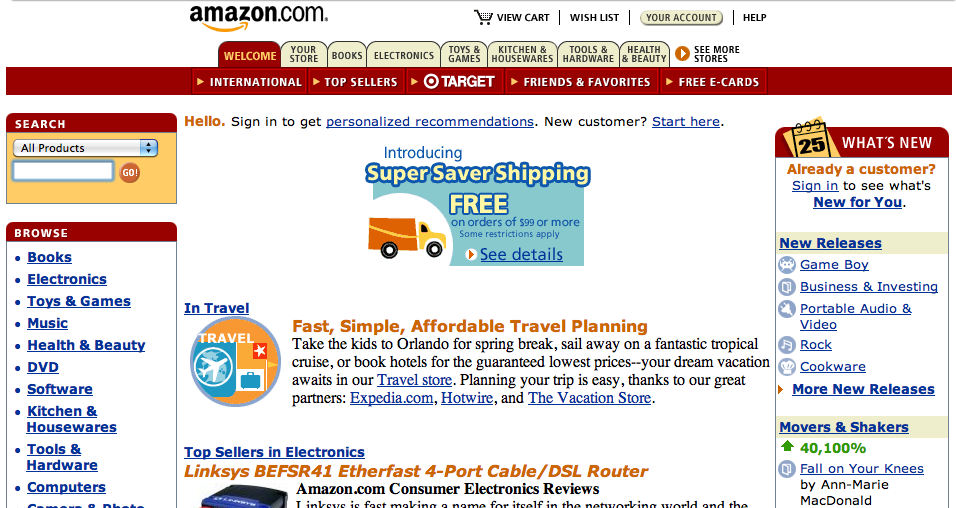
It’s not even Amazon vs. the independent bookstores anymore; now it’s Amazon against any physical bricks-and-mortar bookstore that offers browsability, serendipity, and (hopefully) knowledgeable, informed, helpful staff who can make personalized suggestions tailored to your needs, likes, and dislikes.

Author Richard Russo wrote an op-ed in The New York Times on December 11 about Amazon’s competitive strategy of encouraging buyers to use its price check app in stores by offering credits to consumers, who then buy from Amazon instead of from stores. (It should be noted that while book prices can be checked with the app, they do not qualify for the promotion.)

Russo sent this news on to a number of other authors, including Scott Turow (president of the Authors Guild), Stephen King, and Ann Patchett. King called the strategy “invasive and unfair”; Turow suggested that it might not be “lawful” for Amazon to encourage consumers to go to a store solely to obtain pricing information without any intention of buying; and Patchett said, “I do think it’s worthwhile explaining to customers that the lowest price point does not always represent the best deal. If you like going to a bookstore then it’s up to you to support it. If you like seeing the people in your community employed, if you think your city needs a tax base, if you want to buy books from a person who reads, don’t use Amazon.”

Authors and bookstore owners and employees aren’t the only ones who object to Amazon’s price check promotion; Maine Senator Olympia Snowe said, “Amazon’s promotion – paying consumers to visit small businesses and leave empty-handed – is an attack on Main Street businesses that employ workers in our communities.”

Fortunately, it is not all bad news for bookstores. An “unusually vibrant selection” of books this season seems to have helped bookstore foot traffic and sales, which are up from this time last year. Former Borders customers are finding other bookstores, too. One bookstore owner in Seattle said, “What’s extraordinary about the books that are out there is that they’ve been so well written and such a pleasure to read. Maybe people have an appetite for nonfiction right now, just for some sort of grounding in reality.”

The book business is, as much as book lovers would like to deny it, a business, but Amazon’s price check app and promotion are “bare-knuckles” enough to leave a bad taste in one’s mouth. Before doing ordering all your holiday presents on Amazon, consider what you get for a few extra dollars at the bookstore: personal recommendations from people who read. Of course, the level of service stores offer varies, but if you’re in the Cambridge/Somerville area, I can recommend the excellent Porter Square Books in good faith.

And if you aren’t looking to buy, just looking to read, another great place to get a recommendation is your local library. 🙂

Two Approaches

The Authors Guild has spoken out against Amazon’s Lending Library, arguing that Amazon’s contracts with publishers cover only the sale of books, not lending or giveaways. For additional background on this issue, here’s my November 3 post with several links. The Guild may have a point here, and urges its authors to contact their agents and publishers.

In the “good news” category, however, we have Ann Patchett’s new independent bookstore, Parnassus Books, opening soon in Nashville, TN. The most recent NYT article notes that small, independent bookstores compete “where Amazon cannot: by being small and sleek, with personal service, intimate author events and a carefully chosen rotation of books” (including e-books). Best of luck to Ann, her business partner Karen Hayes, and Parnassus Books!

Open Library

If you aren’t already familiar with Open Library, a project of the non-profit Internet Archive, you now have one more reason to head over and check it out: all 50 state librarians have voted to build an alliance with IA. What does this mean? The Chief Officers of State Library Agencies (COSLA) and Open Library will be working together to ensure free access to e-books through all public libraries in the U.S.

Already, anyone can borrow e-books from Open Library‘s collection of 10,000 e-books, provided by the Internet Archive and its partner libraries. You can borrow up to 5 books for 2 weeks each, in a variety of formats (in-browser, e-Pub, or PDF). If your public library is a member, you may have access to even more.

Happy reading!

How to Cook Without a Book?

“But a Nook can’t read, so a Nook can’t cook. So…what good to a Nook is a hook cook book?”
One Fish Two Fish Red Fish Blue Fish, Dr. Seuss

I’m sure that’s not what Barnes & Noble had in mind when they named their e-reader.

A recent article in the New York Times asks if cookbooks are obsolete (leading question much?). It describes how a number of wonderful apps are sweeping traditional cookbooks and recipe cards off the kitchen counter and back onto their shelves to gather dust.

As usual, there is plenty of room for both sides. Certainly, some people will gravitate toward these apps and e-versions of cookbooks on tablets or e-reader devices, either replacing or enhancing their print cookbooks; others will ignore the new toys (audio, video, flowcharts, built-in timers and glossaries) and continue using their print books.

There’s also a middle ground: Eat Your Books offers a way to search through all the indexes of all your cookbooks for a particular recipe. The recipes themselves can’t be accessed through the site unless they are free online, but by searching the indexes of all the books you already own, you can find what you’re looking for much more easily; it’s a way of semi-digitizing your cookbooks. You can also add blogs such as Chocolate & Zucchini and Smitten Kitchen to your “shelves” and search those too.

Incidentally, the NYT article neglects to mention what would happen if one were to spill soup onto one’s iPad.

Bookmaking for Beginners

On Saturday, I took a Bookmaking for Beginners workshop taught by Sarah Smith through GSLIS Continuing Education. The workshop began with a short lecture about different kinds of bindings through history, and how contemporary artists are re-using and making books. The rest of the day was all hands-on: we started with the one-sheet fold-up and the accordion structure, then the blossom fold, Turkish map fold, and Korean map fold; then we learned how to make single-section and two-section pamphlets, and finally how to do chain-stitch.

All the books! From top to bottom: Blossom fold, Korean map fold, accordion fold (with covers), woven flexagon, Turkish map fold, two-section pamphlet, one-section pamphlets, chain-stitched binding.

From left to right: two-section pamphlet, one-section pamphlets (3- and 5-station), and Korean map fold.

This is the Korean map fold book: it’s the same one that looks like a little cedar block in the previous picture. It’s bulky because it contains six pieces of 8.5″x11″ paper, folded into 8 sections each.

This is the two-section pamphlet; the sections are each made up of four sheets of paper, each folded in half once. The cover has a pleat in the middle, and there are three “stations” (holes) where the waxed thread goes through all the layers to hold it together.

This is a one-section pamphlet, also with three stations. I gave the other pamphlets rounded corners, but I folded the edges of this cover in, so it has French flaps (like fancy trade paperback editions sometimes do).

All four pamplets: the top two have five stations, the bottom two have three.

Standing up like this, these remind me of The Monster Book of Monsters from Harry Potter (when Hagrid teaches the Care of Magical Creatures). On the left is the blossom fold; on the right, the Turkish map fold.

Here’s the Turkish map fold, open. It does fold down nice and flat – I think I have a city map of Paris folded in a similar way.

This has the best name of all: woven flexagon. We started with one long sheet (the cream-colored paper), and used a blade to make slices about 1″ apart; then, we took the colored papers and wove them between the slices. It’s quite cheerful-looking, but I have no idea what I’ll do with it.

A simple accordion fold, with covers made of binder’s board covered with decorative paper. We got to use polyvinyl acetate (PVA), an archival-safe plastic adhesive, to glue the paper cover over the board. Sarah showed us how to tuck the corners in with a bone folder to make them smooth and sharp.

The same book, lying open. I preferred the sewing to the folding; I couldn’t make the folds 100% exact. Sarah also showed us how to make an accordion fold with pockets, which I would have liked to cover with the binder’s board, but mine didn’t quite stack straight.

Finally, the chain stitch – this is the longest book, with five sections, or signatures, sewn together.

Here’s the chain-stitched booklet, closed. The stitching makes a nice pattern.

Other than being pretty, the chain stitch is also a nice binding because it allows the book to open flat, which is good for journals and sketchbooks, because you can write or draw deeper into the margins without worrying about the gutter.

All the bindings!

A flock of books – all hand-made in less than seven hours. Even though I probably won’t be using these bookmaking skills in a practical setting anytime soon, the workshop was a good experience: I learned new things, stretched the part of my brain that relates to making tactile things, and created a physical product to use or give as gifts. All in all, a Saturday well spent.