Read about the Keynote and breakout session with Deborah L. Plummer here.
11:45am “Advocacy for Access and Equity to Massachusetts School Libraries,” Greg Pronevitz, James Lonergan, Robin Cicchetti (Concord-Carlisle Regional High School)
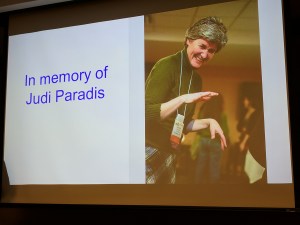
Greg Pronevitz (formerly of MLS, currently a consultant) introduced this session off by acknowledging the great impact of Judi Paradis, a school librarian and advocate for school libraries. Judi was instrumental in the formation of the Legislative Special Commission on School Library Services in Massachusetts, which produced the report The Massachusetts School Library Study: Equity and Access for Students in the Commonwealth. “This study is a result of her efforts,” Pronevitz said.
The report concluded that there is a lack of equity in Massachusetts schools. In its long-range action plan to build equity, it suggests hiring someone at DESE (the Department of Elementary and Secondary Education) to manage school library services; at present, it isn’t even possible to get a complete count of the number of schools that have libraries (let alone librarians, book budgets, and appropriate technology). A possible partnership between DESE and MBLC could conduct a census of school libraries, librarians, and services. School libraries should also be included in ESSA (Every Student Succeeds Act) funding. The report also recommends that the state set regulatory minimum standards, to ensure at least some level of equity and access for students, whether they’re in rural, suburban, or urban districts.
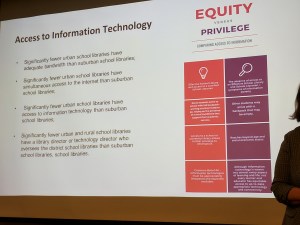 James Lonergan from MBLC (Massachusetts Board of Library Commissioners) mentioned a number of other possible partnerships and stakeholders, including COSLA, the Massachusetts Teachers Association, EveryLibrary, and MLA. MBLC already supports school libraries through LSTA grants, the Commonwealth Catalog, and access to statewide databases; in fact, schools account for two-thirds of the use of state databases – would DESE consider contributing?
Robin Cicchetti, Head Librarian at Concord-Carlisle Regional High School and one of the authors of the Equity and Access study, spoke about the important takeaways from the school library impact studies:
- A strong school library program (SLP) leads to higher overall test scores
- Access to better libraries means higher reading scores
- School librarians provide much more than access to books
- High levels of poverty mean little access to books
- Access to books appears to offset the impact of poverty
- Economically disadvantaged children benefit at a higher rate
Unlike a classroom teacher, a school librarian can have a relationship with an elementary student for six years (in a K-5 school), getting to know their interests and preferences and helping them find the right books and other resources for them. Because many schools have lost their librarians due to budget cuts, nearly a whole generation of students (and teachers) does not know what a librarian can offer – “And you don’t know what you don’t have.”
More information about the Massachusetts School Library Research Project is located on this LibGuide hosted by Salem State.
1:45pm “Neutrality in the Library – A Continuing Conversation,” Laura Saunders and Rachel Williams
Simmons School of Library and Information Science (SLIS) associate professor Laura Saunders and assistant professor Rachel Williams each spoke for several minutes before opening up the conversation to the audience. “Neutrality” has been a hot topic in libraryland over the past year, especially around the Library Bill of Rights as discussed, amended, and un-amended at ALA last summer and last winter. (See Meredith Farkas’ take in American Libraries, “When Values Collide,” November 1, 2018.)
“Neutrality replicates existing oppression. Being true to our professional core values around access, diversity, and social responsibility requires finding ways to make historically marginalized members of our communities feel that they belong in our libraries and are reflected in our collections, staffing, and services.” -Meredith Farkas
Some questions that arose during the session (from the speakers and the audience) included: Are libraries ever really neutral? How do we define “neutral”? What does that mean in practice? What/who are we including/excluding? Our libraries reflect our communities; how do we make sure our libraries reflect everyone in our community? Do all library users feel safe? What voices do we support and amplify?
Are libraries neutral, can we be neutral, should we be neutral? (Remember, a position of neutrality doesn’t necessarily mean an outcome of neutrality.) As information professionals, do we want to promote/defend intellectual freedom when it comes at the cost of social responsibility? What are the impacts of intellectual freedom? Which voices will be limited, which will be amplified? If access to information is a human right, should the education to be able to evaluate information be a human right also (information literacy)?
It was pointed out that freedom of speech is a “negative right” (i.e., “Congress shall pass no law…”). Government cannot get in the way of freedom of speech, but it doesn’t have to promote it either.
The session closed with Saunders’ reference to Dante’s Inferno, in which neutrality was found to be “not just unethical, but damning.”
2:45pm “Youth Services Quick Start for Everyone,” Monica Brennan, Turner Free Library (Randolph, MA)
Brennan brought plenty of energy and enthusiasm to this session, which wasn’t quite what I expected but had an important core point: Identify your “tribe” (or team, or pack), what they need to know, and what you can learn from them. There are a couple “tribes”: one is library staff, especially those who may be working only a few hours a week in the children’s department and may feel especially overwhelmed and underprepared to answer specific questions about levels from kids, parents, teachers, and caregivers. Make sure everyone who works in the children’s department feels comfortable answering those questions, or knows where to find the information. (This might be preparing a binder full of pathfinders, posting the various levels and their grade equivalents and some representative books, or whatever else works for you and your staff.)
Another “tribe” includes those who come into the children’s department and may have knowledge to share with you: parents, teachers, caregivers, coaches, kids, siblings, peers, librarians. Find out what the schools are using, talk to teachers (especially if they have very specific requirements). People are usually happy to share what they know, what they like, and what they don’t like.
Brennan shared two readers’ advisory tips that I liked: one was simply asking the kid to give a thumbs-up/thumbs-down when you show them or tell them about a book. This saves them from talking if they’re shy, but quickly allows you to gauge their interest and move on. Another strategy involves tiny colored post-it notes, which she sticks on/near books in the stacks so kids can browse without a librarian hovering; if it’s busy, you might use different colors for different kids.
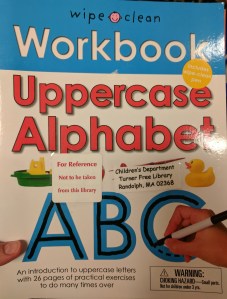 “Everyone deserves to be trained in kid’s services, but not everyone is” – Brennan gave an overview of the areas of the library (fiction/nonfiction, picture books, early readers, chapter books) and the different levels (Lexile, Fountas & Pinnell, DRA). Kids need books at their “level” to learn certain skills and grow as a reader, but can “reach” for books they’re interested in and are motivated to read. She is a big fan of the NoveList K-8 database, which can be a useful tool for those who aren’t as familiar with children’s books.
Brennan is passionate about children’s services and early literacy in particular; to that end, she has developed backpack kits that kids can check out for pre-K, toddlers, and infants. It’s never too early to start reading together; “families that read together achieve together.”
Librarians can “model it”: be open, be cool, be confident, be fun. Encourage a growth mindset with a “Let’s find out together” approach. Remember that “There’s no more important library patron than our youth,” and “The windows and mirrors you have as a kid literally shape the rest of your life.”
Read about Wednesday’s MLA sessions here.



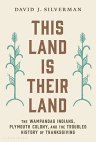 Kara spoke about her historical family connection to Martha’s Vineyard – which was inhabited by the Wampanoag people before First Contact, but is now inhabited by descendants of colonizers – and Indigenous efforts to regain land that was wrongfully taken from them: “The stealing of native land wasn’t just a one-time event…[it] continues to this day.”
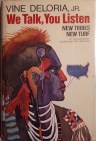 Kara recommended two books for further reading: This Land Is Their Land by David J. Silverman and We Talk, You Listen by Vine Deloria Jr. (I would add that another good book on this topic is Occupying Massachusetts by Sandra Matthews, David Brule, and Suzanne Gardinier.)
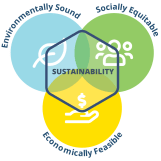 The ALA added Sustainability to its
 Uniting against book bans tied in nicely to William Adamczyk’s update from the MLA Legislative Committee. There was a hearing on Monday, October 30 that was relevant to several different library interests (you can
 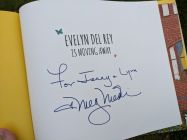 After lunch, it was time for MEG MEDINA! Yes, she’s caps-lock-worthy: she’s the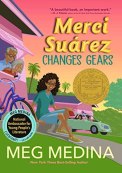
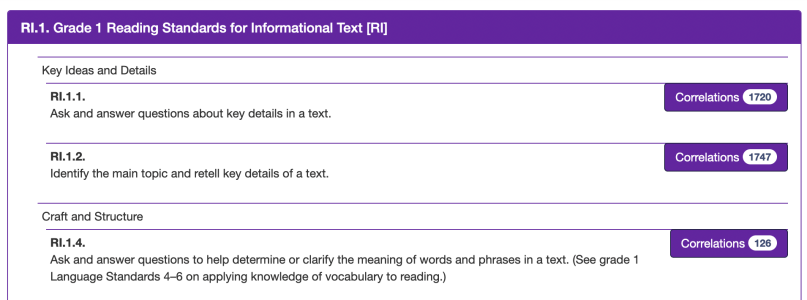
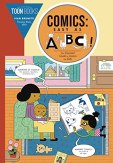 The brilliant Liza, who insists she is not an expert on comics (but who is totally an expert on comics, and is also an excellent teacher) started us off with a variety of hands-on activities to choose from, as part of her presentation on how to teach comics/graphic novels in school, and how to get teachers, administrators, and parents on board (because GRAPHIC NOVELS ARE REAL BOOKS; this is supported by research).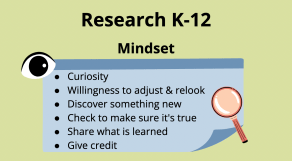


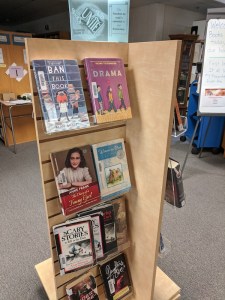 I looked up the ALA’s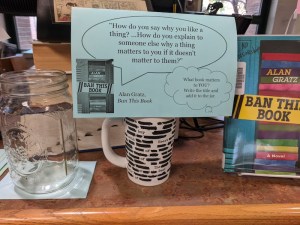


 Jenny Arch