Yearly wrap-up, 2013 edition

In the spirit of those sites that do a weekly wrap-up (like Dooce’s “Stuff I found while looking around” and The Bloggess’ “Sh*t I did when I wasn’t here”), here are a few odds and ends I found while going through my work e-mail inbox and my drafts folder.

How to Search: “How to Use Google Search More Effectively” is a fantastic infographic that will teach you at least one new trick, if not several. It was developed for college students, but most of the content applies to everyday Google-users. Google has its own Tips & Tricks section as well, which is probably updated to reflect changes and new features.

How to Take Care of Your Books: “Dos and Don’ts for Taking Care of Your Personal Books at Home” is a great article by Shelly Smith, the New York Public Library’s Head of Conservation Treatment. Smith recommends shelving your books upright, keeping them out of direct sunlight and extreme temperatures, and dusting. (Sigh. Yes, dusting.)

The ARPANET Dialogues: “In the period between 1975 and 1979, the Agency convened a rare series of conversations between an eccentric cast of characters representing a wide range of perspectives within the contemporary social, political and cultural milieu. The ARPANET Dialogues is a serial document which archives these conversations.” The “eccentric cast of characters” includes Ronald Reagan, Edward Said, Jane Fonda, Jim Henson, Ayn Rand, and Yoko Ono, among others. A gem of Internet history.

All About ARCs: Some librarians over at Stacked developed a survey about how librarians, bloggers, teachers, and booksellers use Advance Reader Copies (ARCs). There were 474 responses to the survey, and the authors summarized and analyzed the results beautifully. I read a lot of ARCs, both in print and through NetGalley or Edelweiss, and I was surprised to learn the extent of the changes between the ARC stage and the finished book; I had assumed changes were copy-level ones, not substantial content-level ones, but sometimes they are. (I also miss the dedication and acknowledgements.)

E-books vs. Print books: There were, at a conservative estimate, approximately a zillion articles and blog posts this year about e-books, but I especially liked this one from The Guardian, “Why ebooks are a different genre from print.” Stuart Kelly wrote, “There are two aspects to the ebook that seem to me profoundly to alter the relationship between the reader and the text. With the book, the reader’s relationship to the text is private, and the book is continuous over space, time and reader. Neither of these propositions is necessarily the case with the ebook.” He continued, “The printed book…is astonishingly stable over time, place and reader….The book, seen this way, is a radically egalitarian proposition compared to the ebook. The book treats every reader the same way.”

On (used) bookselling: This has been languishing in my drafts folder for nearly two years now. A somewhat tongue-in-cheek but not overly snarky list, “25 Things I Learned From Opening a Bookstore” includes such amusing lessons as “If someone comes in and asks for a recommendation and you ask for the name of a book that they liked and they can’t think of one, the person is not really a reader.  Recommend Nicholas Sparks.” Good for librarians as well as booksellers (though I’d hesitate to recommend Sparks).

The-Library-Book-154x250_largeOn Libraries: Along the same lines, I really enjoyed Lucy Mangan’s essay “The Rules” in The Library Book. Mangan’s “rules” are those she would enforce in her own personal library, and they include: (2) Silence is to be maintained at all times. For younger patrons, “silence” is an ancient tradition, dating from pre-digital times. It means “the absence of sound.” Sound includes talking. (3) I will provide tea and coffee at cost price, the descriptive terms for which will be limited to “black,” “white,” “no/one/two/three sugars” and “cup.” Anyone who asks for a latte, cappuccino or anything herbal anything will be taken outside and killed. Silently.

On Weeding: It’s a truth often unacknowledged that libraries possessed of many books must be in want of space to put them – or must decide to get rid of some. Julie Goldberg wrote an excellent essay on this topic, “I Can’t Believe You’re Throwing Out Books!” I also wrote a piece for the local paper, in which I explain the “culling” of our collection (not my choice of headline).

“What We Talk About When We Talk About Public Libraries”: In an essay for In the Library with the Lead Pipe, Australian Hugh Rundle wrote about the lack of incentives for public librarians to do research to test whether public libraries are achieving their desired outcomes.

Public Journalism, Private Platforms: Dan Gillmor questions how much journalists know about security, and how much control they have over their content once it’s published online. (Article by Caroline O’Donovan at Nieman Journalism Lab)

Censorship and Invisibility

Barbara Jones, the president of the ALA Office for Intellectual Freedom (OIF), has written an excellent piece over at the Huffington Post. Here’s a short excerpt, but I encourage you to read the whole article:

“I am deeply concerned about the current deluge of removals of classic books from the American literary canon. I thought that, as a society, we had reached a consensus that the literary canon should represent diverse segments of U.S. society. Multicultural literary works are not being included because of some need for “political correctness.” They are included because they are excellent and have been acknowledged as such by countless awards for literary merit. Though books that deal with controversial topics may make some readers uncomfortable, such literature offers a vehicle for true learning and understanding.”

(Emphasis added.)

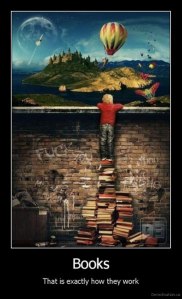
readbannedbooks2013As Rebecca points out in another great article on the Robbins Library blog (“Freedom to Choose”), “There’s great value in discussion, and books are, by far, the safest route into many of these discussions.” With a few exceptions, the books that get people up in arms are novels, not nonfiction. This only proves that fiction is powerful; that it engages readers’ imagination and empathy, allowing them to experience a time, place, culture, or situation that they might not otherwise be exposed to – or, if they are exposed to it, they may be unprepared.

A little over a year ago, I wrote about the power and importance of fiction (“The Gleam in the Dark”), citing “Your Brain on Fiction” by Annie Murphy Paul from The New York Times and “Why Fiction is Good for You” by Jonathan Gottschall from the Boston Globe. Those pieces are worth a re-read now, during Banned Books Week, to remind us all about the value of stepping into someone else’s shoes, and the magical power fiction has to let us do that.

booksthisishowtheywork


“Everyone has a different idea of what constitutes ‘appropriate content’”

There is lots of great Banned Books Week-related stuff on Twitter this week (#BannedBooksWeek), and today’s Library Link of the Day was an NPR segment from Tell Me More called “Could banning books actually encourage more readers?” (Answer: we hope so!) My favorite find via Twitter (so far, at least) is this post from Shoshana at the Brookline Booksmith. It was a good reminder that librarians aren’t the only ones fighting for intellectual freedom and defending everyone’s right to read; publishers and booksellers are in it with us. 

Shoshana wrote, “Everyone has a different idea of what constitutes ‘appropriate content.’ I’ve talked with a lot of parents about what’s right and what’s not right for their kids to read. Some parents want to avoid anything “scary.” Others ask about the The Hunger Games and relax as soon as they learn that although it’s about teenagers being forced to fight to the death, it doesn’t have any sexual content….What I love about the customers in our kids’ section, though, is that the question is pretty much always what’s appropriate for the particular kid in question, not what should be published or be on our shelves….People around here seem to get that what’s all wrong for one reader might be just right for another; even siblings have different levels of scariness tolerance or ability to understand difficult topics.”

She makes a great point: what is “appropriate” for one reader may not be appropriate for another (this is one of the reasons that putting ratings on books is a terrible idea). This is part of readers’ advisory, and it’s a great skill – as a bookseller or a librarian – to be able to talk with parents about what their kids are ready to read (or to talk directly with kids; I know an eight-year-old who didn’t feel ready to read Harry Potter when he was seven, but feels like he might be ready now).

Remember: Every reader his/her book, and every book its reader.


Banned Books Week 2013

bannedbooksweek2013banner

Banned Books Week is probably my favorite event on the calendar of library and literary events. It is a celebration of the freedom to read whatever you want, the freedom from censorship. It also provides encouragement to those who are still fighting for the right to read – those whose state Board of Education presidents want Toni Morrison’s The Bluest Eye out of the classroom, those who miss out on hearing Rainbow Rowell – author of the excellent Eleanor & Park – speak at their school or public library because a few parents in the community object to the swear words in the book. (Those are just two recent examples; read more about them in my Banned Books Week post on the Robbins Library blog.)

Last year for Banned Books Week, I wrote about which books were most commonly banned or challenged, and who did the challenging; I also shared a few of my favorite “better book titles for banned books.” Two years ago, less punctually, I shared a quote from Jenny Lawson, author of Let’s Pretend This Never Happened: A Mostly True Memoir (which I am certain has been challenged many times since its publication). Also in 2011, I wrote about attending the panel “Whose Common Sense?” at the ALA Annual Conference, where the four panelists (including David Levithan!) discussed why books for teens should not be labeled or censored.

Even if you don’t pick up a book this week, take a moment to appreciate the fact that you could, if you wanted, and that no one would try to control your reading choices, or keep something out of reach because they thought it was inappropriate. We should all get to make our own reading choices.

To close, I’ll quote my co-worker Rebecca, who authored a column for the local paper about Banned Books Week. She wrote, “There’s great value in discussion, and books are, by far, the safest route into many of these discussions (i.e., reading and talking about that book the deals with teen pregnancy is preferable to your teen talking to you about what it’s like to be pregnant).  Books are safe spaces to experience new things.  New thoughts.  New ideas.  Different points of view.  They are a way to journey back in time and careen far into the future.  Books teach us how to empathize with each other, how to stand up for the little guy, and how to recognize the bad guys in our lives….We experience strong emotion alongside our favorite characters – joy, catharsis, loss, excitement.  Books are a safe way to learn about life, without all the painful bumps and bruises.”

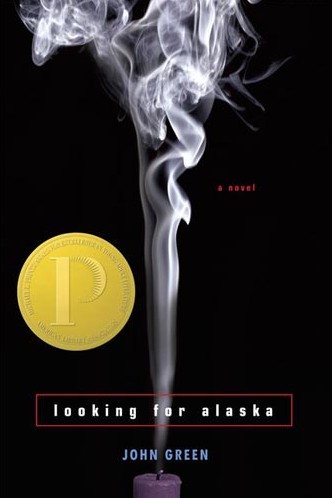
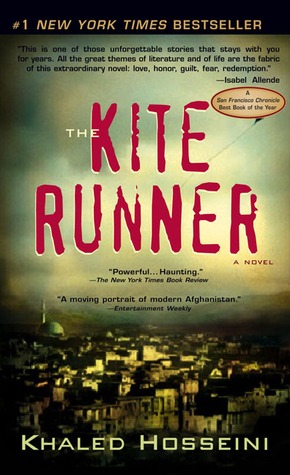
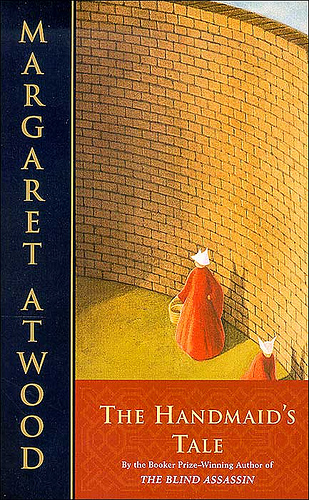
When the opportunity arises, stand up for your own right to read, and help defend others’ right to read as well. Books change lives – almost always for the good. What’s one book you read that changed your life? A book you’re glad you didn’t miss out on? A book you’d recommend to others? Here are a few banned/challenged books that I wholeheartedly love and recommend:

lookingforalaskaEleanorPark_cover2-300x450kiterunner

handmaidstale


The Sleeping Policeman: DRM is not harmless

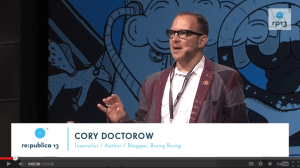
doctorow_cory_republica_2013The title of Cory Doctorow’s recent talk at the re:publica conference in Berlin, “It’s not a fax machine connected to a waffle iron,” is a phrase I heard him use at an event for his recent book, Homeland (the follow-up to Little Brother) at the Harvard Bookstore in March. Indeed, the two talks shared a theme as well as some overlapping material, but I believe it’s worth writing about again. (I’ve provided the approximate times of the video for quotes, if you want to jump right to that section of the talk.)

Doctorow explained digital rights management (DRM) in simple terms, then said, “From the beginning it was a fool’s errand. This is a break once, break everywhere exercise in futility that can’t prevent copying” (~10min30sec). Those who create DRM know that it doesn’t stop copying, but that it’s a speed bump (“sleeping policeman,” in Britain). However, “the speed bump is between the people who want to do the right thing and their enjoyment of the media….The speed bump is only there if you’re doing the right thing” (~11min/~12min). DRM will be broken by those who are tech-savvy, and will frustrate users who aren’t, even when they’re trying to use the product they purchased in an “approved” way.

Doctorow continued, “It’s impossible to talk about technology questions without examining and weighing legal code at the same time as we consider software code” (~14min). The World Intellectual Property Organization (WIPO), established in 1967, “made it illegal to reverse engineer or interoperate with any technology that had any DRM in it” (15min30sec). This has had the chilling effect of reducing innovation; products are designed to be resistant to user modification (this is called “robustness”). Therefore, “digital rights management effectively bans free and open-source software” (~18min40sec).

“Why does it matter if you can’t interoperate with a system?” Doctorow asked rhetorically. One answer is, because it kills innovation (~19m). Take DVDs and DVD players, for example: “DVDs have been out since 1996. And not one feature has been added to them since 1996….You are legally allowed to watch your DVDs. Period….And that is what you get when you add DRM to any technology” (~21min30sec/~23min).

But interoperability “is only the first-order casualty of DRM.” The most dire consequence of DRM is (the loss of) transparency (~23min20sec). Devices come pre-loaded with “anti-features” that instead of saying “yes, Master,” say “I can’t let you do that, Dave” (~23min45sec). Lest we find these anti-features on our devices and simply put them in the trash, they are hidden from us:  they are “designed to lie to you” (~25min).

And that, Doctorow said, is the true cost of DRM. “When you add DRM to a system, you create a legal requirement for opacity, and an injunction against reporting weak security….Computers have the power to liberate us or to enslave us. When computers don’t tell us what they’re doing, they expose us to horrible risks. And when the law prohibits third parties from finding out what our computers are doing, and telling us about it, those risks are magnified” (~28min/29min30sec).

Computers, Doctorow pointed out, are ubiquitous. He gestured to the audience, “Everything in this room has a wireless interface. You are basically in a microwave oven now” (~33min40sec). And he warned against complacency: “We [the tech-savvy] can break DRM, but that doesn’t mean it’s harmless” (~36min15sec). DRM and other ways that our technology is designed to work against us instead of for us have serious consequences. “People who believed that computers and networks could solve problems also saw that they had the potential for terrible oppression” (~37min). The internet is “the nervous system of the 21st century, where everything we do today involves the internet and everything we do tomorrow will require it” (~39min20sec). “We can build a network that is part of our freedom or part of our oppression….I want a free and fair world….There is no way to fight oppression without free devices and free networks” (~45min30sec/~44min20sec).

Quotes from the Q&A

The first person referred to the story Doctorow had mentioned about Barnaby Jack’s identification of a security flaw in implanted defibrillators: “I wouldn’t want to attach my heart to the internet.”

In response to another question, Doctorow made an analogy between the regulation of drinking water in London and the regulation of computer networks: “It should always be legal to blow the whistle. It should always be legal to know things about your water….We should regulate water with the gravitas of something that is literally life or death, not just for us, but for everybody in the world whose  destinies we’re intermingled with. And this is true of networks and computers…” (~54min30sec)

Another question concerned the youngest generation, and how they might contribute. Doctorow said, “I really firmly believe that a sense of agency, control, and the right to tinker is at the core of raising a generation that will not allow their computers to become tools of oppression” (~58min30sec). He mentioned two tools that allow kids to create rather than consume: Popcorn, a video remixing tool from Mozilla, and Scratch, a simple programming language from the Lifelong Kindergarten Group at the MIT Media Lab. (Of course, once you’ve created content, you have to be aware of how and where you’re sharing it; if you’re using a platform such as facebook or tumblr, what are their terms of agreement? And around we go again.)

Watch Cory’s talk here, or by clicking on the image at the top of this post.

Banned Books Week: Celebrating the Freedom to Read

Preparing for Banned Books Week at the library (September 30-October 6), I’m getting excited ahead of time. The American Library Association (ALA) has several cool badges and banners available to download for free (remember to give credit for the images if you use them).

Reprinted by permission of the American Library Association.

On the ALA site, you can also see lists of the most frequently banned/challenged books, by author, year, or decade. You can also see that almost half of the Radcliffe (now Columbia) Publishing Course Top 100 Novels of the 20th Century have been challenged or banned; if you did any of your assigned reading in school, I can pretty much guarantee that at least one of those books is on that list.

The most frequently challenged/banned books list is overwhelmingly comprised of classics (think To Kill A Mockingbird and Brave New World) and young adult literature (The Giver, A Wrinkle in Time, Harry Potter). The most common reasons for challenges are “sexually explicit,” “offensive language,” and “unsuited to age group,” and the most likely challenger, by a tremendous margin, is a parent.

I was fortunate that during my childhood and adolescence, my parents, teachers, and librarians never told me I couldn’t read a book. Reading has always been a positive part of my life, not something that ever harmed me – even when I was reading material “unsuited to my age group.”

Let’s all celebrate our freedom to read, not just September 30-October 6, but all year, every year – because reading is magic.


The gleam in the dark: writing and reading fiction

I’ve been a fan of Lauren Groff’s writing for years, so I was delighted to find this interview with her (via Twitter). The interviewer, Jason Skipper, asked Groff about her research for Monsters of Templeton and Arcadia, and Groff replied, “Research is about following the gleam into the dark.” She followed this beautiful sentence by talking about the difference between “creative” facts that spur one’s imagination, as opposed to those facts that dampen the process. This makes sense: just think about researching for work of historical fiction. Some facts will be fascinating, suggesting plot points all on their own, while others will seem like obstacles to the story.

Skipper then asked Groff about connection, “as a person born on the cusp of the digital age – making you old enough to remember a time without it, and young enough to realize its potential.” I have copied most of Groff’s resonant reply: “We are cuspies, aren’t we? There’s a glow to that time before things went all matrix on us, before everyone was plugged into the mainframe by their fingertips….I do remember people talking more. Nostalgia is dangerous, though, and I can’t tell whether those days actually were more authentically connected, whether they seemed so because I was an adolescent, or whether memory is spackling everything over with a thick layer of pretty-pretty.”

She continued, “In terms of writing, I think what most fiction writers treasure more than anything is the feeling that they’re living for the length of a book inside another person.” This echoes the sentiment in editor Jennifer Jackson’s publicity letter in the ARC of Peter Heller’s The Dog Stars: “[The book] reminded me why I became a reader in the first place: because it is the best chance you will ever have to live another life.” Both author and reader see books as a means of escape and of empathy.

This isn’t a coincidence. In an article entitled “Your Brain on Fiction” in The New York Times earlier this year, professor of cognitive psychology and novelist Keith Oatley suggested that reading produces “a vivid simulation of reality.” The article’s author, Annie Murphy Paul, wrote, “Fiction with its redolent details, imaginative metaphors and attentive descriptions of people and their actions offers an especially rich replica. Indeed, in one respect novels go beyond simulating reality to give readers an experience unavailable off the page: the opportunity to enter fully into other peoples thoughts and feelings.”

Paul continued, “The novel, of course, is an unequaled medium for the exploration of human social and emotional life,” and cited work by Dr. Oatley and Dr. Raymond Mar indicating that “individuals who frequently read fiction seem to be better able to understand other people, empathize with them and see the world from their perspective…novels, stories and dramas can help us understand the complexities of social life.”

Just over a month after the “Your Brain on Fiction” article ran in the Times, the Boston Globe ran a piece by Jonathan Gottschall called “Why Fiction is Good for You.” (Originally, I was going to cite both these pieces in a post called “A spoonful of fiction makes reality go down,” about why kids should be able to read what they want without parents or teachers fearing that the content of the books will damage them somehow; it seems that rather the opposite is true.) Gottschall reports, “Research consistently shows that fiction does mold us…mainly for the better, not for the worse.” When people read fiction, they imagine themselves in the characters’ lives – which may be completely different from their own. This encourages empathy, and “by enhancing empathy, fiction reduces social friction.”

Imagination leads to understanding; understanding leads to empathy. It turns out – surprise, surprise – that stories are good for us.

10/4/2013 Edited to add: A study published in the journal Science found that after reading literary fiction, “as opposed to popular fiction or serious nonfiction, people performed better on tests measuring empathy, social perception and emotional intelligence.” Read the article from the New York Times “Mind” section, in which author Louise Erdrich is quoted: “For Better Social Skills, Scientists Recommend a Little Chekhov”

Tango with censorship

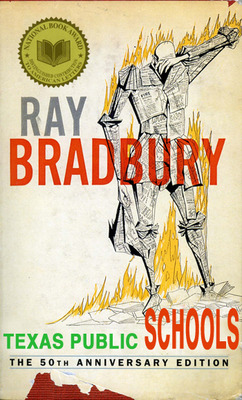
Ray Bradbury can go ahead and start rolling over in his grave pretty much right away: a committee of parents, teachers, and administrators in the Davis County district in Utah have voted to restrict access to the book In Our Mothers’ House (yes, that apostrophe is correct, it’s about a family with two mothers). This in itself is not unusual; books are challenged all the time, and sometimes moved (from the children’s section to young adult, or from YA to adult, or behind the counter, as in this case).

However, the district has taken the additional step of asking librarians to pull other titles that may cause controversy. (And Tango Makes Three, a picture book based on a true story of two male penguins at the Central Park Zoo who hatched a chick from an egg and raised it together, is likely next.) McCarthyism, anyone?

It’s easy to get outraged against censorship; there are hundreds, if not thousands, of eloquent examples in print and on the web. (Here’s a defense of In Our Mothers’ House in The Salt Lake Tribune.) But let us take a step back and consider the purpose and mission of the library. How do these “controversial” books appear on library shelves in the first place, and why should they stay there despite strenuous objection from community members?

Most libraries have a collection development policy: guidelines for what kinds of materials the library ought to have in order to serve its community. Different libraries may choose to allocate their resources in different ways, but most public libraries aim to provide a broad range of materials – educational, recreational, and cultural – for people of every age, socioeconomic status, race, religion, political affiliation, and sexual orientation.

Our collection development policy states, “The…community includes people from diverse educational, cultural and economic backgrounds displaying a wide variety of interests, needs, values, viewpoints and occupations.” It continues, “The library has the obligation not only to serve its current users but also to search for materials and methods that will meet the needs of new members of the community and those who have not been traditional library users.”

The library is, or should be, an inclusive place. It should be a safe space. If parents want control over what their children are reading, that is perfectly within their rights – but exercising control over what everyone else’s children are reading is most definitely not.

Librarians are advocates for everyone in their communities. We are advocates for equal access to information. It is our responsibility to make sure that there are materials for everyone. (The Utah librarians who added In Our Mothers’ House to the school library collection did so in part because a child in the elementary school has two mothers.) As one librarian said, at a panel at MLA, “If you have to come up with a reason not to buy something, that’s when you should add it to your collection.” We are in the business of selection, not censorship.

If a library had plenty of books for adults but none for children, someone would object. If a library had a hundred books about Christianity but none about Buddhism, someone would object. If a library collected books by and about Republicans but not Democrats, someone would object. A balanced collection includes materials for and from many points of view – an increasingly rare thing in a world where most news sources are slanted, and only offer one viewpoint.

If history is any indication, there will always be people who want to censor books. There will also always be people who defend them.

YA for Grown-ups

You know that xkcd comic, “Someone is WRONG on the internet”? I actually don’t feel that way too often. Not because there isn’t plenty of misinformation on the internet, or a lack of opinions out there with which I disagree, but because I don’t spend most of my time looking around for things to argue with and get all bent out of shape about.

However, I followed a link from this new “Y.A. for Grownups” column, and wouldn’t you know it, SOMEONE IS WRONG ON THE INTERNET. Joel Stein, columnist for Time magazine, believes that “Adults Should Read Adult Books.” And ONLY adult books. And here is something that gets me bent out of all recognizable shape: someone telling me what I can’t (or shouldn’t) read. (Remember “no one ever told me no”? Or the simple fact that telling a kid – or anyone, really – s/he can’t read/do/have something is a surefire way to get them to want to read/do/have that thing with every fiber of their being?)

Maybe I’m just contrary. However, I believe there is value in YA literature for adults as well as teens. First of all, remember, most adults reading fiction are reading fiction for pleasure and entertainment, so who’s to tell them (us!) what to read or not read? Second, Stein admits he hasn’t read any of the major YA books out there now: not The Hunger Games, not Twilight, not Harry Potter. So right off the bat there’s the issue of passing judgment on something he isn’t familiar with, and only citing the biggest blockbuster names out there. Yeah, okay, he happens to be right that Twilight is not literary, but neither is Nicholas Sparks (yes, it’s pick-on-Nicholas-Sparks week here), and Stein isn’t bashing adults who read The Notebook.

But Joel Stein, I dare you, I dare you, to read Jennifer Donnelly’s A Northern Light and write it off in the same fashion. Read it and say it has no value and that adults should only read “adult” books. That we should read only the books – literary or not – aimed at our age group. (Speaking of age groups, “YA” is just the publishers’ designation for marketing purposes. There’s no strict definition, but usually the main character is a child or teenager, the book is from their point of view – first person or third limited – and it takes place in the present or recent past.)

You know what? Whatever Joel Stein thinks, I’m not embarrassed to read YA books in public. Maybe I feel like re-reading The Giver or Bridge to Terabithia or The Boggart or The Golden Compass, or maybe I feel like keeping abreast with newer YA books, like The Hunger Games or Uglies or A Fault in Our Stars – wait, how did I even get to this point in this tirade without mentioning John Green? Joel Stein, I dare you to read A Fault in Our Stars as soon as you’re done with A Northern Light.

Anyway, the point is, look: I was in middle school once, so while I won’t say I’m 100% immune to embarrassment, I am most emphatically NOT embarrassed to read YA books in public, and I’m years beyond caring what anyone else on the train thinks about it. What books make me cringe? None.*

*Fine, one: I had to read Pretty Little Liars for a YA Lit class and it was awful. I did not want to read it in public. You can have that one, Joel.