YA for Grown-ups

You know that xkcd comic, “Someone is WRONG on the internet”? I actually don’t feel that way too often. Not because there isn’t plenty of misinformation on the internet, or a lack of opinions out there with which I disagree, but because I don’t spend most of my time looking around for things to argue with and get all bent out of shape about.

However, I followed a link from this new “Y.A. for Grownups” column, and wouldn’t you know it, SOMEONE IS WRONG ON THE INTERNET. Joel Stein, columnist for Time magazine, believes that “Adults Should Read Adult Books.” And ONLY adult books. And here is something that gets me bent out of all recognizable shape: someone telling me what I can’t (or shouldn’t) read. (Remember “no one ever told me no”? Or the simple fact that telling a kid – or anyone, really – s/he can’t read/do/have something is a surefire way to get them to want to read/do/have that thing with every fiber of their being?)

Maybe I’m just contrary. However, I believe there is value in YA literature for adults as well as teens. First of all, remember, most adults reading fiction are reading fiction for pleasure and entertainment, so who’s to tell them (us!) what to read or not read? Second, Stein admits he hasn’t read any of the major YA books out there now: not The Hunger Games, not Twilight, not Harry Potter. So right off the bat there’s the issue of passing judgment on something he isn’t familiar with, and only citing the biggest blockbuster names out there. Yeah, okay, he happens to be right that Twilight is not literary, but neither is Nicholas Sparks (yes, it’s pick-on-Nicholas-Sparks week here), and Stein isn’t bashing adults who read The Notebook.

But Joel Stein, I dare you, I dare you, to read Jennifer Donnelly’s A Northern Light and write it off in the same fashion. Read it and say it has no value and that adults should only read “adult” books. That we should read only the books – literary or not – aimed at our age group. (Speaking of age groups, “YA” is just the publishers’ designation for marketing purposes. There’s no strict definition, but usually the main character is a child or teenager, the book is from their point of view – first person or third limited – and it takes place in the present or recent past.)

You know what? Whatever Joel Stein thinks, I’m not embarrassed to read YA books in public. Maybe I feel like re-reading The Giver or Bridge to Terabithia or The Boggart or The Golden Compass, or maybe I feel like keeping abreast with newer YA books, like The Hunger Games or Uglies or A Fault in Our Stars – wait, how did I even get to this point in this tirade without mentioning John Green? Joel Stein, I dare you to read A Fault in Our Stars as soon as you’re done with A Northern Light.

Anyway, the point is, look: I was in middle school once, so while I won’t say I’m 100% immune to embarrassment, I am most emphatically NOT embarrassed to read YA books in public, and I’m years beyond caring what anyone else on the train thinks about it. What books make me cringe? None.*

*Fine, one: I had to read Pretty Little Liars for a YA Lit class and it was awful. I did not want to read it in public. You can have that one, Joel.
Let Us Now Praise Libraries, Librarians

An article in the Boston Sunday Globe caught my eye this morning, with the headline “Let Us Now Praise Libraries, Librarians.” (A true librarian would have titled it “Let Us Now Praise Librar*”; hats off to you if you get the joke.) The article’s author, Anthony Doerr, writes about his childhood reading, “Here’s what I think about now: No one ever told me no. Not Mom, not the prim librarians stamping return dates onto slip after slip. No one ever said: This book is outside your age range; this book is too complicated.”

I had a similar childhood experience, reading far ahead of my “age appropriate reading level” and not coming to any harm. I’ve thought about this topic before (see the last three paragraphs of the post “Whose Common Sense?“), and I’m glad to see a similar attitude in print. Doerr writes, “…I worry that we are presenting reading to our kids as a labor to suffer through for which a reward can be earned at the end….The message to young people is obvious: Books are good for you. What’s missing, however, is the idea that sustained reading is magic, a kind of magic that can be wildly addictive, even dangerous.”

He then goes on to create a fantastic analogy, based on the fact that when the brain is stimulated (“when a person is thinking imaginatively and creatively”), it produces endorphins: “Great books are like drugs, readers [are] like junkies, and, yes, to stretch the analogy into absurdity, good librarians [are] like drug dealers.” He finishes, “So, to all you beautiful librarians out there, with National Library Week in the offing….Keep on putting books in the hands of readers, because as every good dealer knows, all it takes is one fix and your patrons are hooked.”

One of the most magical, engaging, imaginative, creative books I can think of is Nick Bantock’s Griffin & Sabine, which is the first of six books (all equally magical) detailing the correspondence between Griffin and Sabine. It’s not your typical epistolary novel (see The Guernsey Literary and Potato Peel Pie Society, also an excellent book), because each postcard and letter Griffin and Sabine exchange is rendered with “their” artwork and handwriting; the reader pulls actual letters out of actual envelopes. (For this reason, my first encounter with the books was in Special Collections at the Mount Holyoke College library.) If you can find these, I highly recommend them; you will find yourself immersed and filled with wonder. “Sustained reading is magic,” indeed.

The Day After

Here are several links regarding SOPA, PIPA, and yesterday’s blackout:

Columbia Law School professor Tim Wu pointed out the Web’s strength in this New York Times article, in which he was quoted as saying, “This is the first real test of the political strength of the Web, and regardless of how things go, they are no longer a pushover. The Web taking a stand against one of the most powerful lobbyers and seeming to get somewhere is definitely a first.”

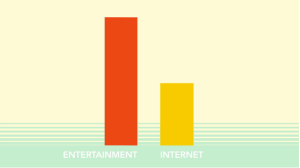
Political strength and economic strength are linked, and as the “Protect IP/SOPA Breaks the Internet” video notes, the “internet industry” now dwarfs the entertainment industry (most of Hollywood is for SOPA/PIPA, while most internet companies – including Google, Facebook, Wikipedia, and YouTube – oppose it). (See 2:48-2:57 – the yellow “internet” bar shoots skyward past the red “entertainment” bar.)

The American Library Association (ALA), which opposes SOPA/PIPA, put together this Quick Reference Guide (PDF), clearly delineating the basics and the structure of each bill. Read the District Dispatch in which ALA applauds the blackout.

Mashable offers a “read between the lines” deconstruction of the official White House response to two petitions (“Stop the E-PARASITE Act” and “Veto the SOPA bill”). The White House addresses legislative scope, non-legislative solutions, censorship and innovation, internet security and stability, and “demands of Congress a more intimate understanding of the Internet in general.”

Lastly, here’s a funny/poignant cover of Don McLean’s “American Pie” on TechCrunch.

Amazon, Overdrive, Privacy?

Sarah Houghton, a.k.a. the Librarian in Black, has posted a 10-minute video offering her point of view on “why the Kindle format lending from Overdrive is anti-user, anti-intellectual freedom, anti-library, and something that all librarians should be aware of and disturbed by.” One of her core issues is that, when Kindle users borrow e-books from the library, Amazon keeps track of those records. Customers may be used to Amazon tracking their purchases, but libraries are much more careful about patron data.

The American Library Association (ALA) website has a section devoted to intellectual freedom, and to privacy and confidentiality. This section states, “Lack of privacy and confidentiality chills users’ choices, thereby suppressing access to ideas. The possibility of surveillance, whether direct or through access to records of speech, research and exploration, undermines a democratic society.” Therefore, “confidentiality of library records is a core value of librarianship.” Amazon does not care about keeping your reading or borrowing history private and confidential, and this is what Houghton – and many other librarians – are upset about. Patrons may be willing to sacrifice privacy and confidentiality for convenience, but many libraries have privacy policies in place – supported by state law – specifically in order to protect patron privacy. That isn’t something that ought to be given up lightly.

Banned Books Week…

…has passed. But I just found this quote and wanted to share:

“Book-banning is ridiculous, if for no other reason than it makes people want to read the banned book even more. The exchange of ideas (even unpopular or inconvenient ones) is important in making us who we are, and helping us to promote independent thought. Also, books about witches and talking animals are awesome.” –Jenny Lawson, a.k.a. The Bloggess, for CafeMom