STEAM Time

After nearly a year, Comics Club/Comics & Crafts had run its course, and it was time to try something new. I came up with STEAM (Science, Technology, Engineering, Arts, and Math) Time: once a week, kids in kindergarten through fifth grade can come and try out something new and different, from building challenges to puzzles to coding games to art projects.

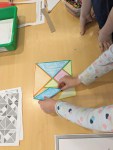
Our first STEAM Time was a success! Nine kids of various ages showed up, and I presented the options: Robot Turtles (a board game that teaches the basic principles of coding) and Caesar ciphers (I had prepared several of these – from this PDF – with cardstock and brads for kids to create and decipher each other’s codes). As a backup option, I also brought Spot It, a picture-matching game.

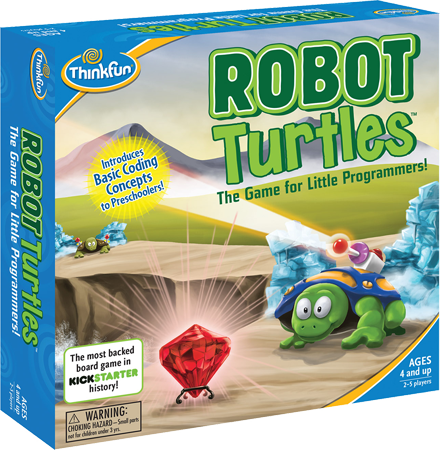
Robot Turtles boxThree of the younger kids started with Robot Turtles, and the others began making codes for each other to decipher. I gave a basic explanation about how to use the Caesar cipher (or shift cipher), then helped the kids get Robot Turtles set up, then helped the ones who were having trouble figuring out the ciphers. (I think one thing that tripped them up initially was the letter-letter correspondence, rather than letter-number correspondence; the only number you need with this kind of cipher is the “shift,”; it’s not an A=1, B=2 kind of code.) But eventually, everyone figured it out, and then they could swap ciphered messages to decipher!
Meanwhile, back in Robot Turtle land, each kid got a chance to give instructions (the coder role) and follow instructions (the turtle role). And when the Caesar cipher kids got tired of (de)ciphering, they switched to a rousing game of Spot It!

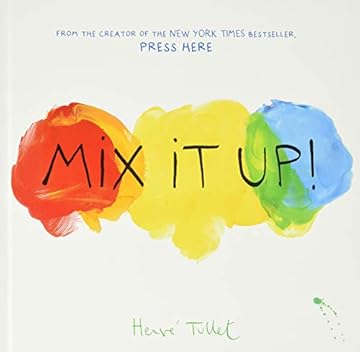
Cover image of Mix It Up by Herve TulletIn the next few weeks, we’ll have a building challenge with blocks (we have both regular and life-size Jenga), a puzzle challenge (a 36-piece jigsaw with the picture showing, then upside down), penny boats, Snap Circuits, primary color painting (think Mix It Up!), and more. What STEAM activities do you like to do with kids?
What can you draw in six seconds?

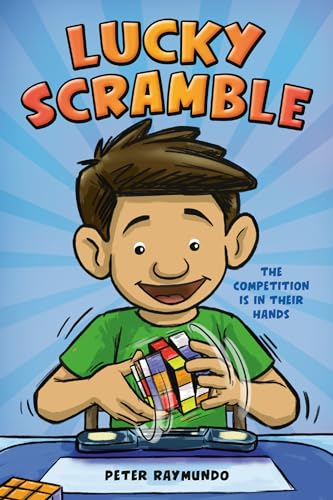
Cover image of Lucky ScrambleThe kids’ graphic novel book club I started last fall is still going strong, with about 4-7 kids attending each month. This month we read Lucky Scramble by Peter Raymundo, about a kid named Tyler who goes to a Rubik’s cube competition. Our icebreaker question was “What’s your favorite kind of puzzle?” and a lot of the kids said “Rubik’s cube,” even though none of us could solve one. (I said word puzzles, like wordle, and it turns out all of the kids also do the NYT puzzles!)
We discussed the different characters and storylines, what we expected and what surprised us, parental pressure, and attitudes toward competition and winning. We each had a copy of the book for reference, and the kids are so good about citing page numbers so we can all be on the same page, literally.

I asked them what they thought they could do in six seconds – the length of time champion speed-cubers can solve a 3×3 – and that turned into “What can you draw in six seconds?” So we moved over to the tables, got paper and pencils, and tried it! Turns out, not much – but after having only six seconds to draw something, a minute feels like a long time! So we did a one-minute drawing, a two-minute drawing, and finally a five-minute drawing (during which one of the kids turned out a staggeringly impressive dragon drawing).

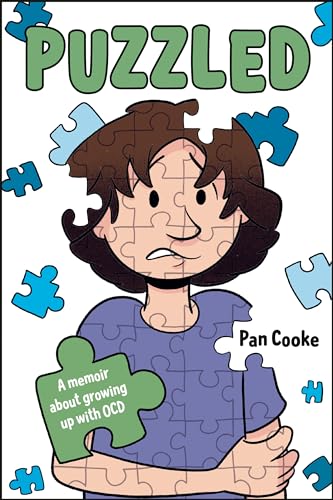
Cover image of Puzzled by Pan CookeLast, the kids voted on which book to read next. The choices were Curveball by Pablo Cartaya, Pebble & Wren by Chris Hallbeck, and Puzzled by Pan Cooke. The first two got one vote each and Puzzled got two votes, so that will be our February book – but all three books got checked out. It was a good afternoon!
Stuffed Animal Sleepover

First things first: gratitude to the youth librarians on the statewide listserv, massyac, for their generosity in sharing tips and tricks for a stuffed animal sleepover program! Their collective advice was quick, clever, and invaluable, as usual. Being part of a profession whose core values include sharing really has its benefits!

PXL_20241230_213341922


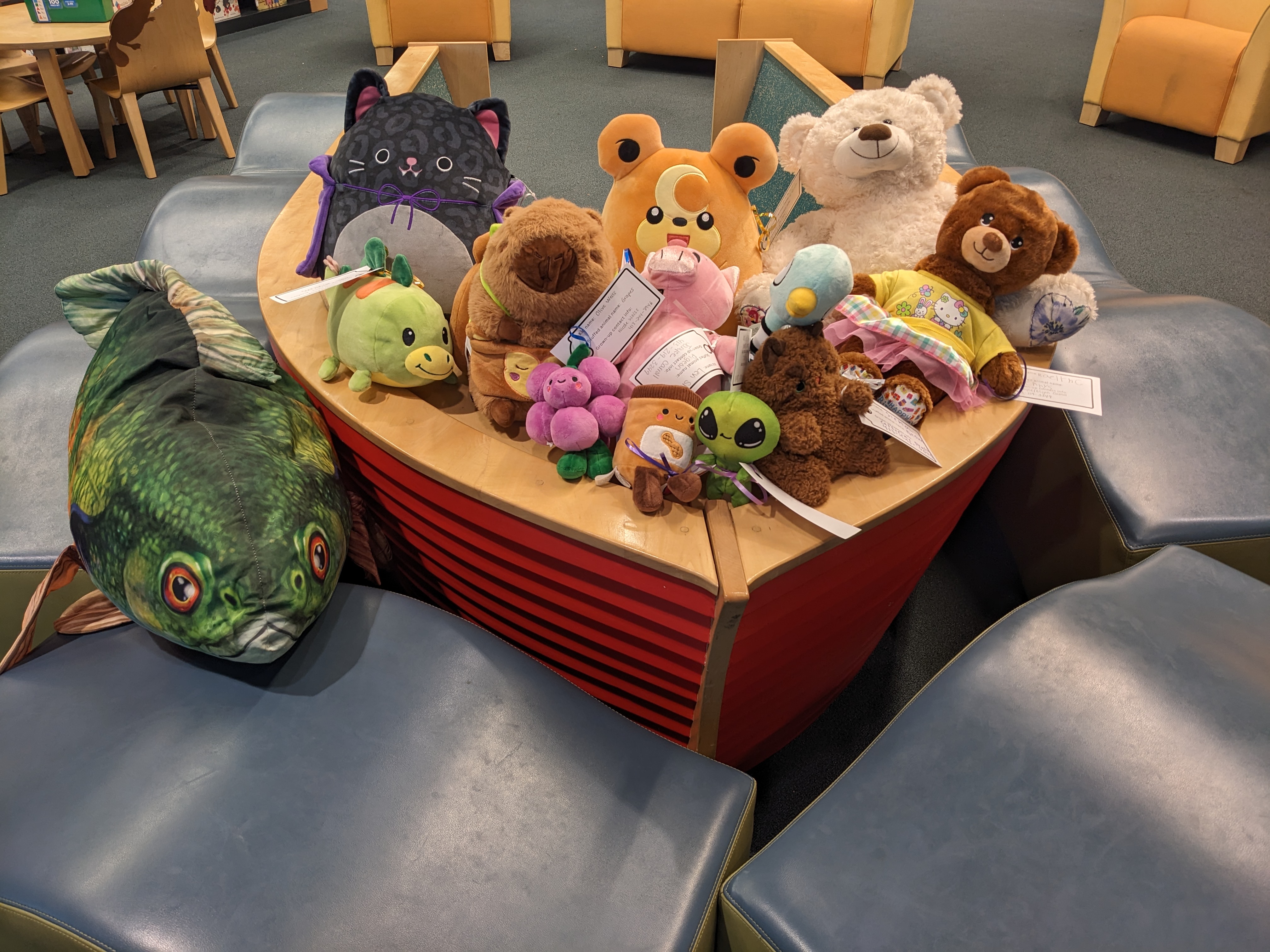
Above: Group shot! All the stuffed animals on the library boat (or in the ocean)

So, what’s a stuffed animal sleepover? Kids bring their stuffed animals to the library, leave them overnight, and pick them up the next day. While the cats (people) are away, the mice (stuffed animals) do play! They make friends with each other, take rides on the book cart, play with library toys, and snuggle up to listen to a story. At pickup time, each stuffed animal gets a little packet to take home with photos and a note about their overnight activities, and a library book recommendation, which they can choose to check out.

PXL_20241230_213712616

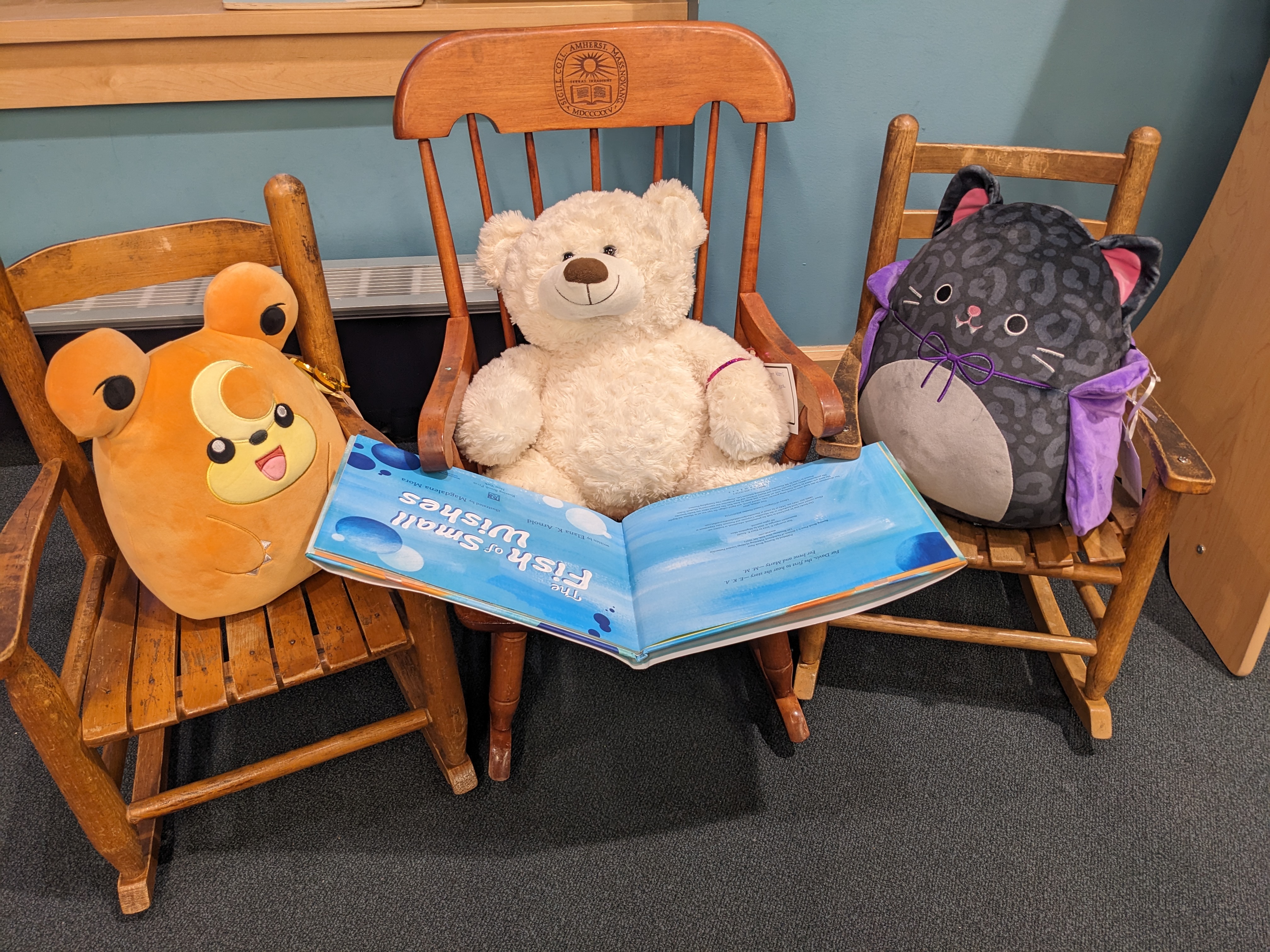
Above: Three stuffed animals in rocking chairs read a picture book together

Here are the most important (and repeated) pieces of advice I received and used from massyac responses:

  • Allow more time than you think you need for setting up and taking photos; use an assistant if you can!
  • Collect information (kid’s name, stuffed animal’s name, adult’s contact info) at drop-off time, and attach a tag to each stuffed animal.
  • Make a take-home booklet, post to social media, or create a slideshow of photos

Thank you, massyac! I employed my nine-year-old as assistant, and she was an excellent helper. Staging and taking the photos didn’t actually take that much time – an hour or less. Creating the personalized book recommendations and packets, creating the photo album, and posting to social media took about two hours. If you wanted to save some time, you could do less personalization and give everyone the same booklet – it’s still fun!

PXL_20241230_225659717

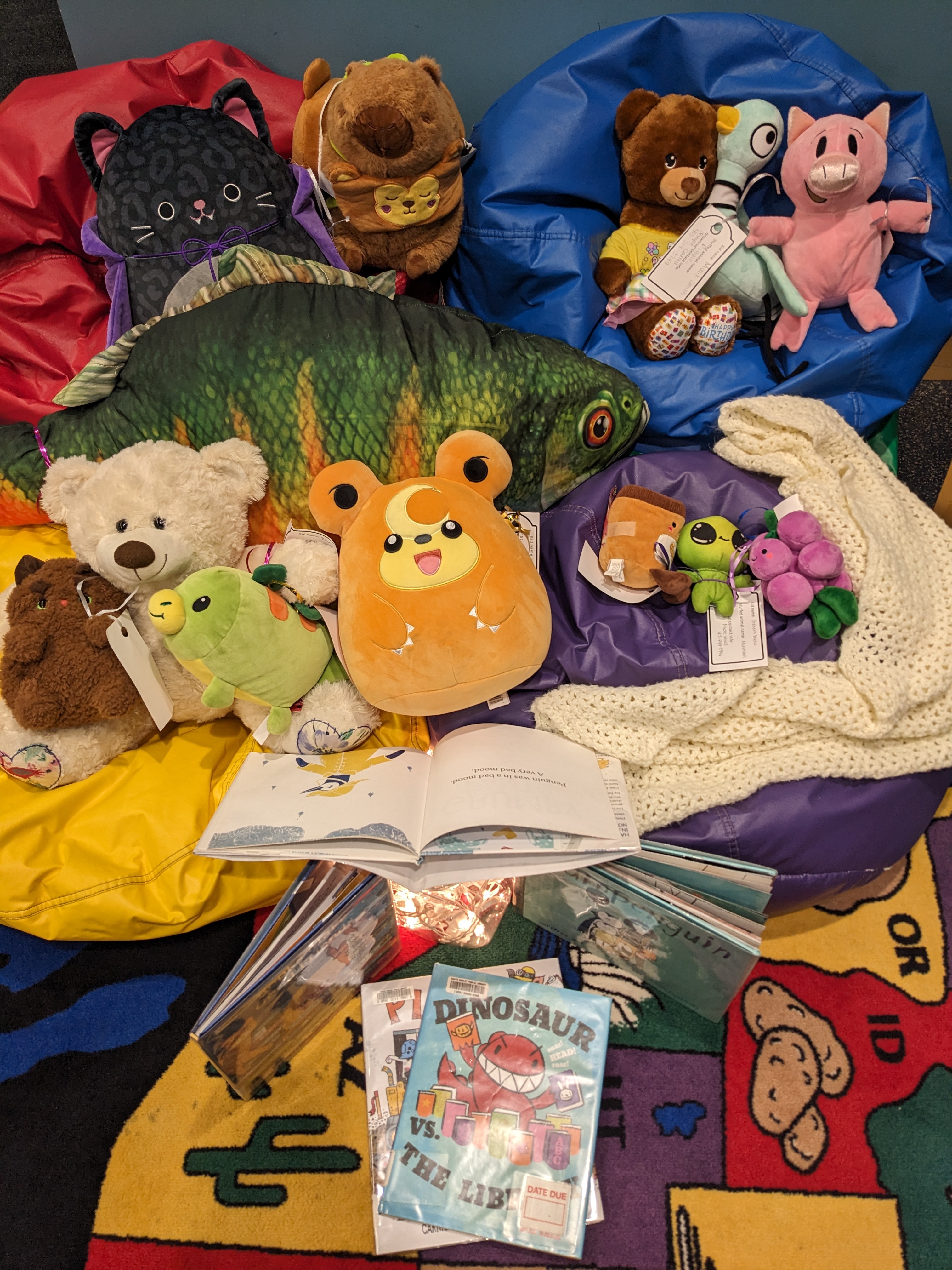
Above: All the stuffed animals snuggling on bean bags, reading a story together

At drop-off time, kids filled out a “sleepover permission slip” with information about their stuffed animals (name, personality, favorite book, a portrait), and a tag we tied on with ribbon. The favorite book question helped us decide which book(s) to recommend.

PXL_20241230_220042735

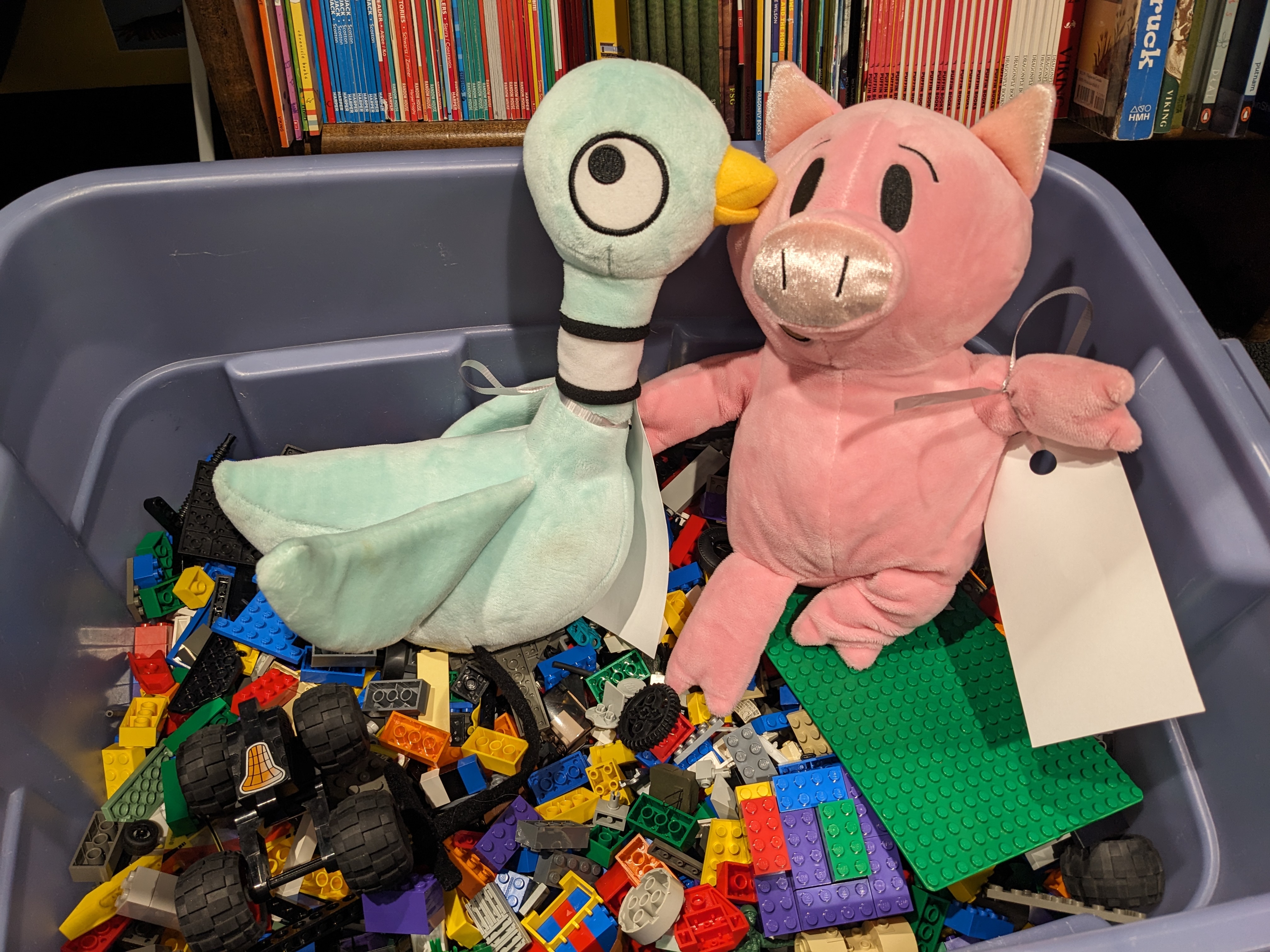
Above: Pigeon and Piggie play in the Lego bin

Miraculously, everyone who registered for the program showed up during the drop-off window, and everyone came to pick up their stuffed animals the next day! There was a waitlist for the program – again, on the advice of other librarians, I capped registration at 10 (and still ended up with 12) – so we’ll be doing it again in the spring, and those on the waitlist will get priority.

PXL_20241230_214327804

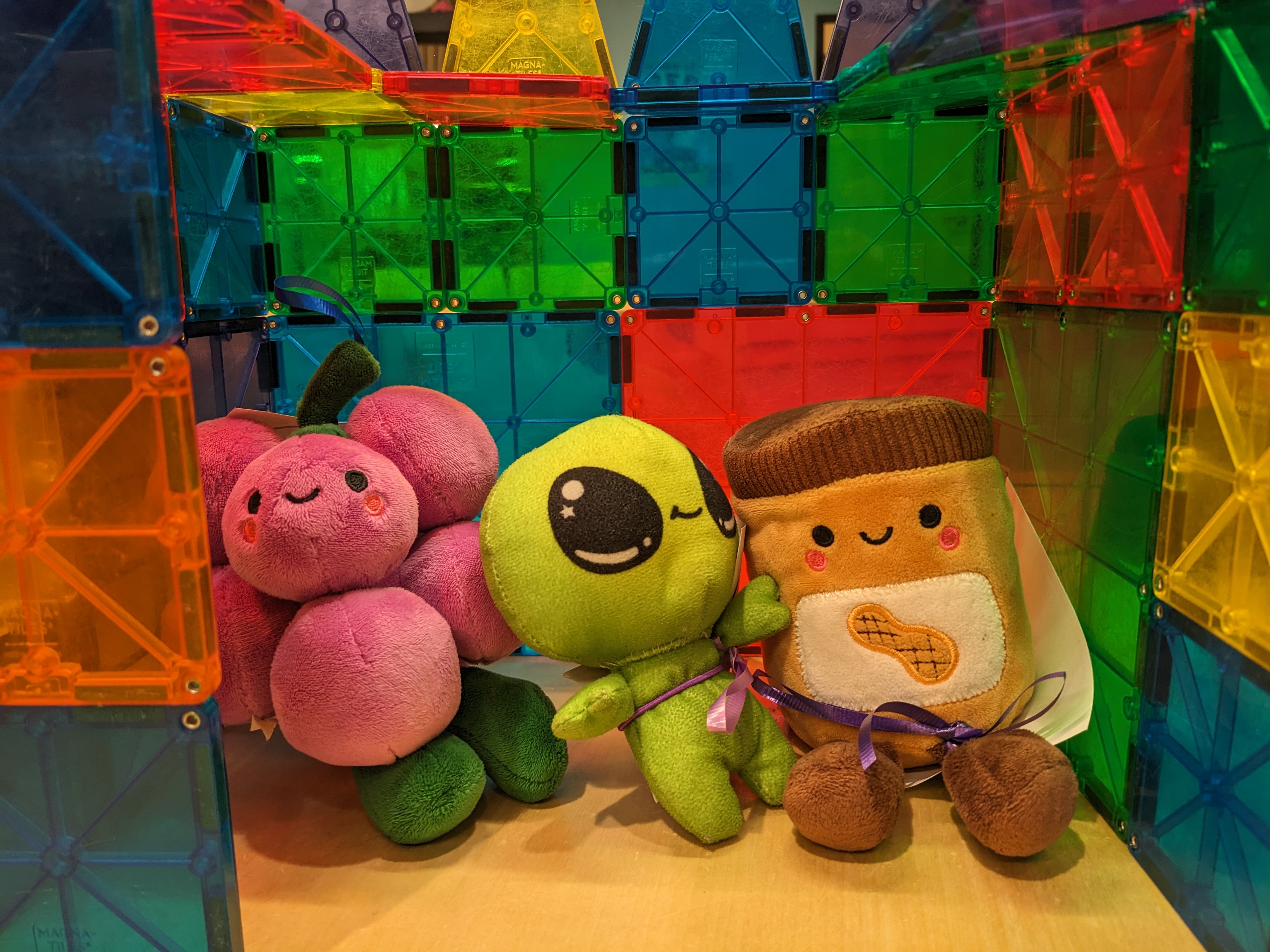
Above: Grapes, Munchkin, and Peanut Butter hang out in a cool MagnaTile house

Overall, our first stuffed animal sleepover was a success! Have you hosted one at your library? What are your favorite tips and tricks? Is this the most adorable program, or what?

Passive programming

Which Dinosaur Are You? sticker votePassive programming, or self-directed programming, is a type of program that library patrons can participate in independently or with only minimal interaction with library staff. This recent SLJ article  mentioned several ideas, including collaborative art projects, community collections (show-and-tell), livecams and interactive displays, photo booths, play dates, polls, readers’ advisory activities, scavenger hunts, sensory gyms, and stuffed animal sleepovers.
Here are some self-directed programs I’ve offered over the past year+ in the children’s area of the library:Book Browse Bear

  • Coloring table with crayons and seasonal coloring pages
  • Seek-and-find with Shelly the Turtle: When kids find Shelly (a hand-puppet turtle), they get a hand stamp and the chance to hide her for the next seeker to find. (We used to have Inchy the Bookworm, but Inchy went permanently missing after a few months.)pom-pom voting station
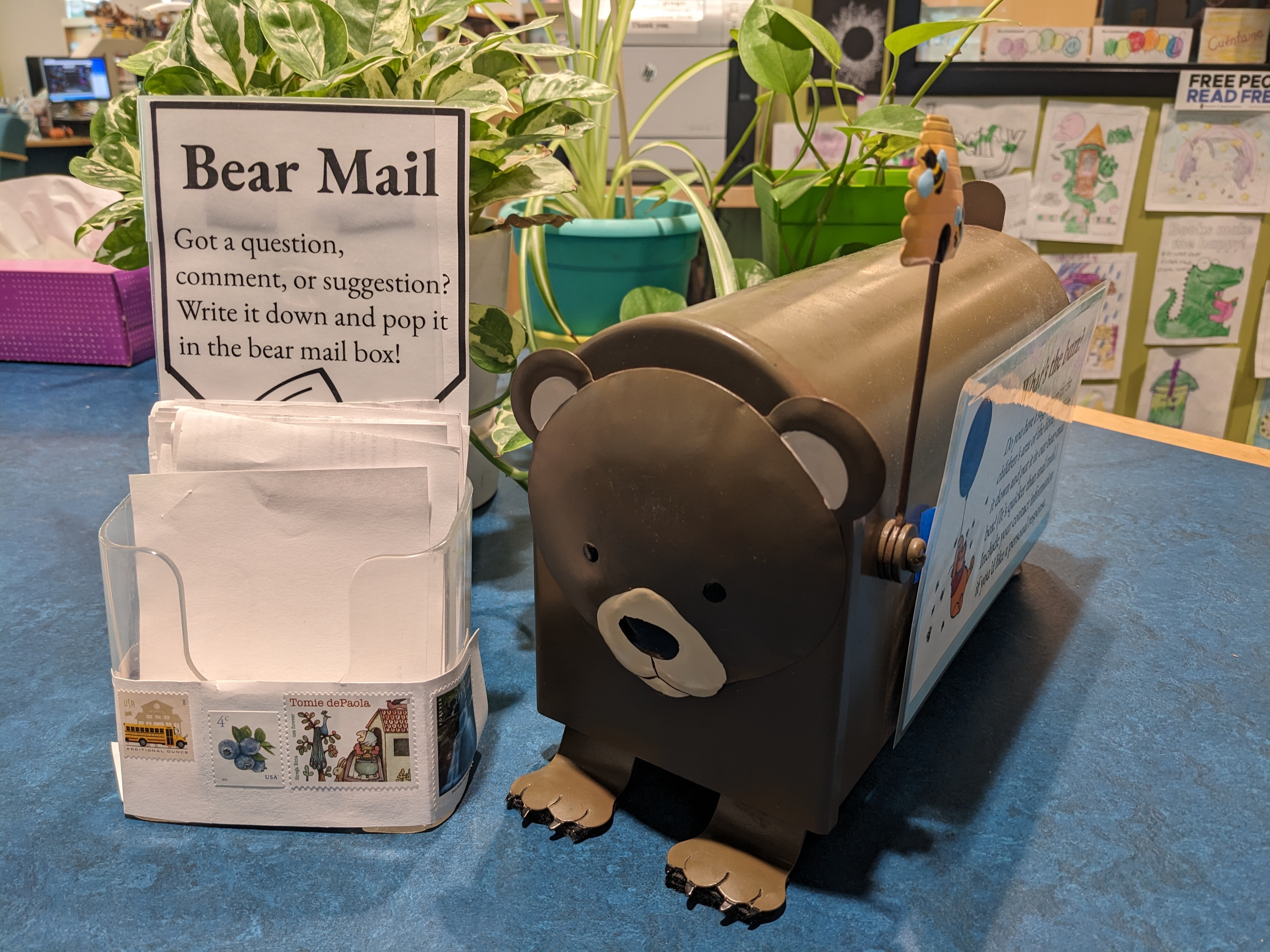
  • Desk mailbox (“bear mail”) and answer wall
  • Play area with wooden boat and wave seats, MagnaTiles, chunky wooden puzzles, MegaBlox, a flannel board/magnetic board, activity cubes, and tic-tac-toe cushions; secondary play area with a train table and dollhouse. This will look different in every library depending what you have the space/budget for, but it shows that the library is a welcoming place to play, as well as a place to get books.
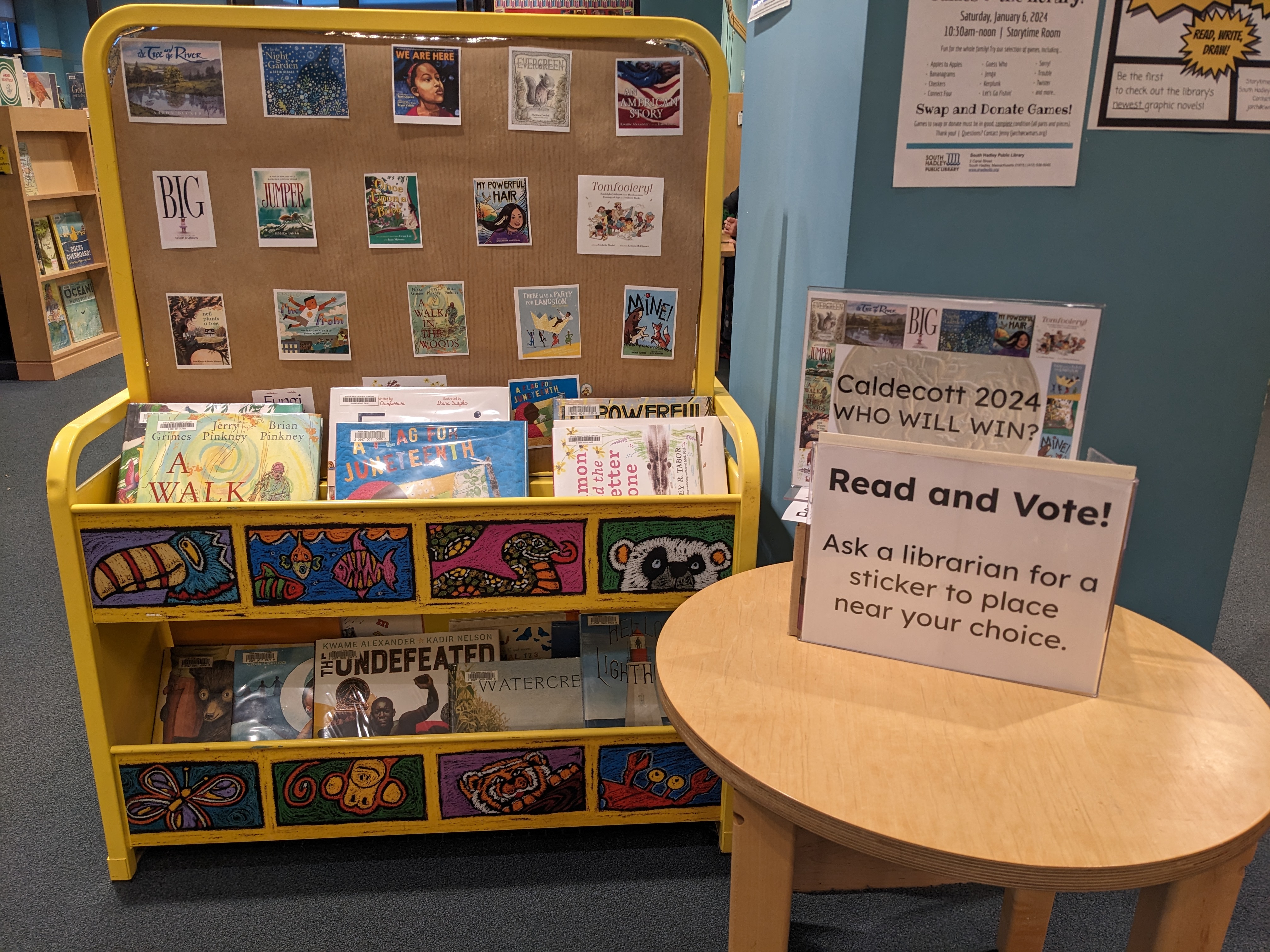
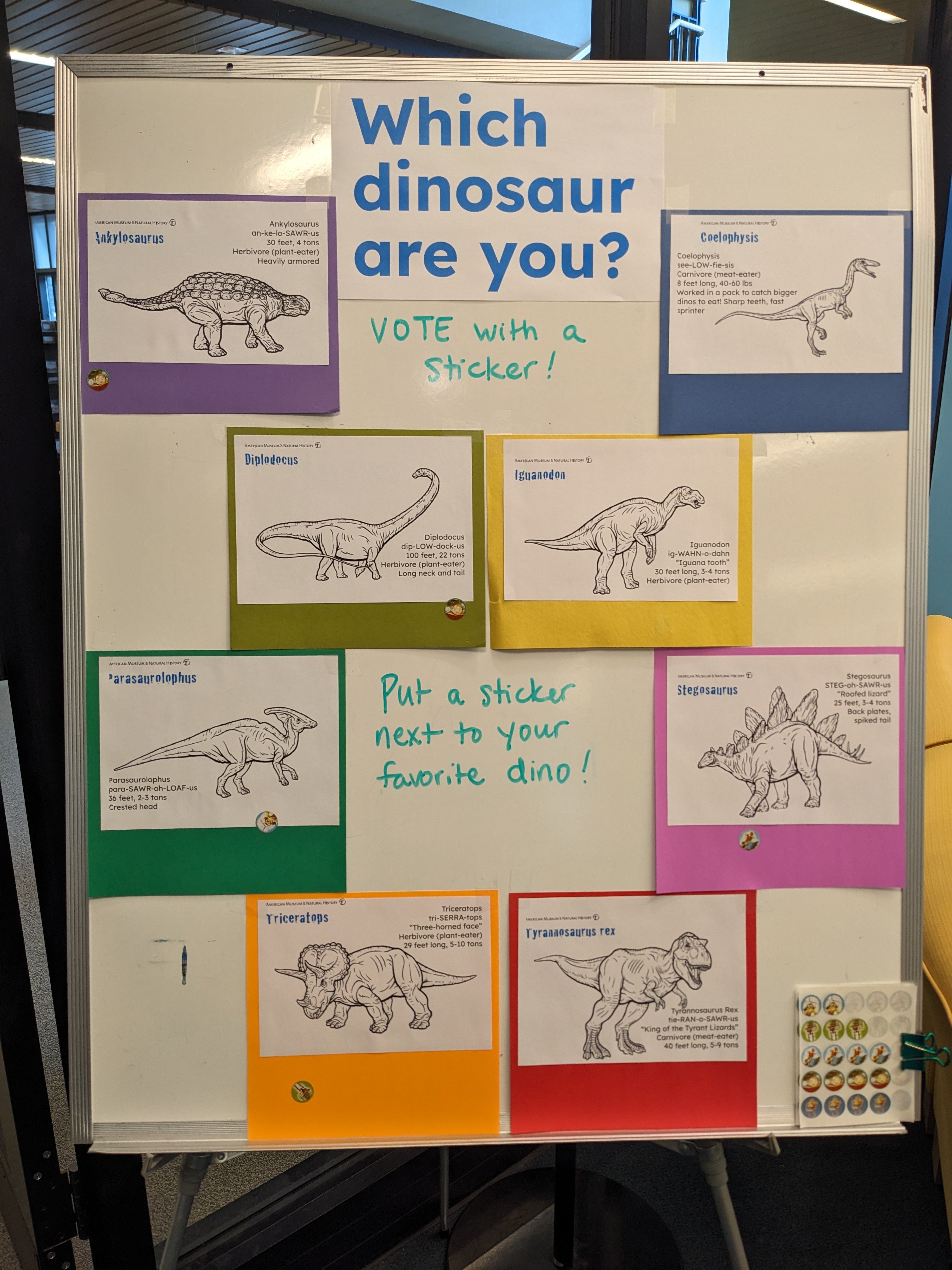
  • Sticker votes: These are great for all kinds of fun topics. We’ve done traditional fairytales vs creative retellings, Caldecott picks, and which dinosaur are you?
    Display of Caldecott contenders and stickers to vote
  • Summer reading scavenger hunt for familiar literary characters (Pete the Cat, The Princess in Black, Lunch Lady, Fancy Nancy, etc.). Kids who complete the hunt get a sticker or temporary tattoo for a prize. Working in teams is encouraged!
  • Winter vacation scavenger hunt for the animals from Brown Bear, Brown Bear, What Do You See?
  • Book buttons (reader choice and librarian choice): These are little laminated circles that can be taped to a book’s spine to show browsers that another reader recommends the book.Bear-shaped desk mailbox with beehive flag and scrap paper for writing notes
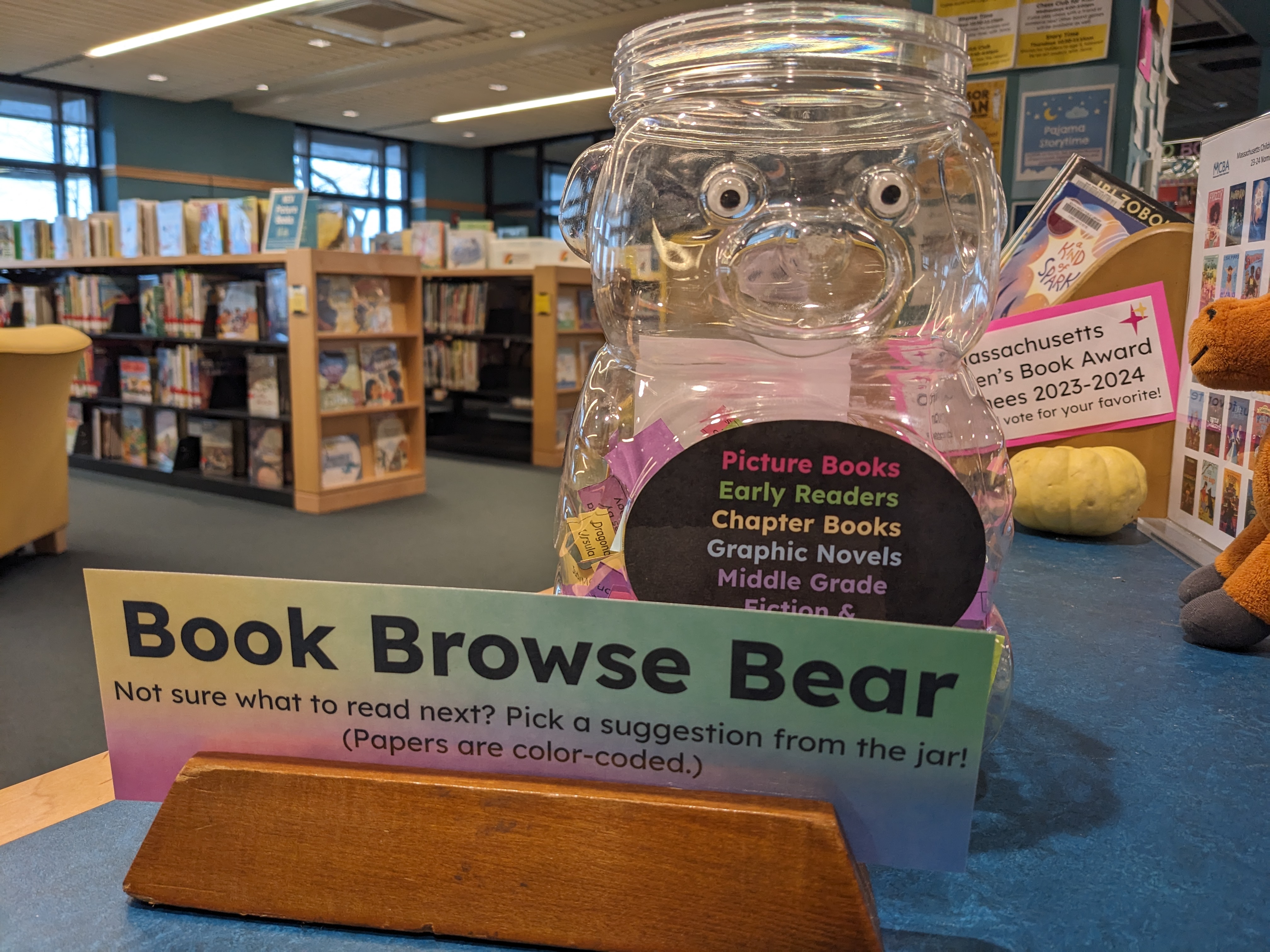
  • “Book Browse Bear”: A bear-shaped jar filled with book suggestions, color-coded by type of book (picture books, early readers, graphic novels, etc.).
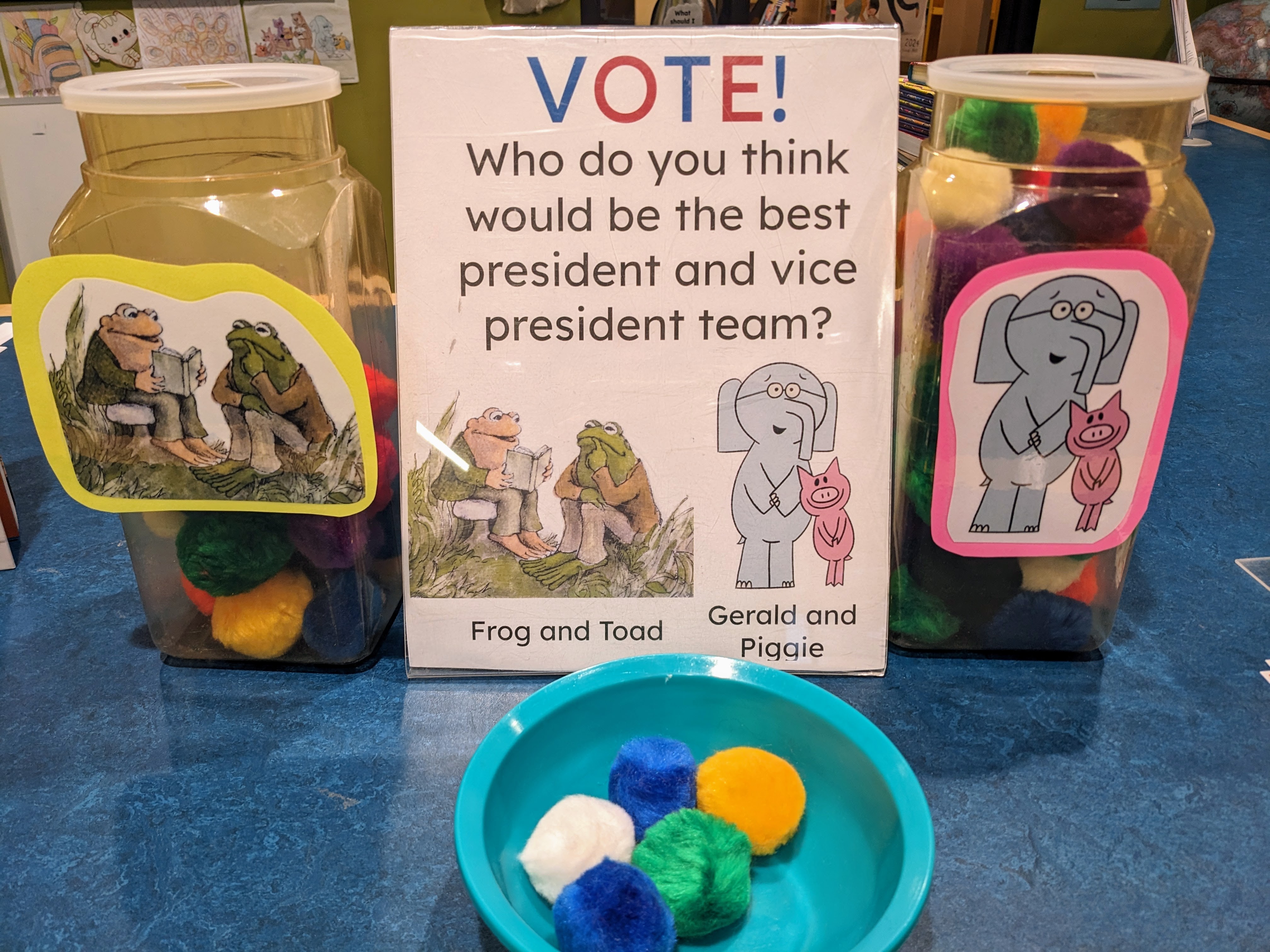
  • Pom-pom polls: In the weeks before the U.S. presidential election, kids could vote for Gerald & Piggie or Frog & Toad for president/VP. (One grown-up, enviously: “Nice for the kiddos to have two good choices.”)
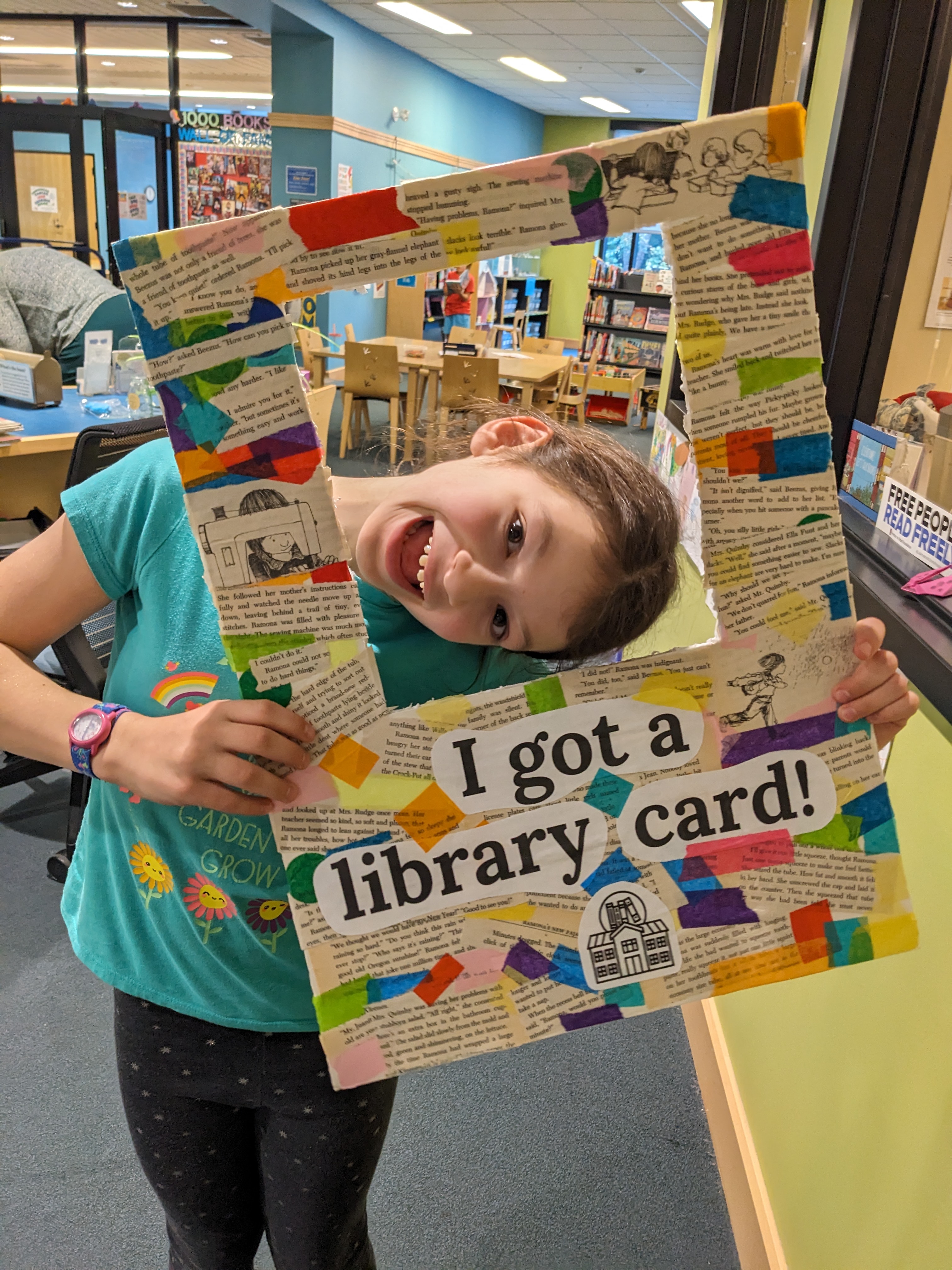
  • Caregiver cafe: Sort of like playgroup, but less structured; gives the adults a chance to socialize while the kids play in a safe area with age-appropriate toys and board books.Kid holding "I got a library card" photo frame
  • “I got a library card!” photo frame: I made this with a deaccessioned copy of Ramona and Her Mother, tissue paper, mod-podge, and posterboard, and I keep it at the children’s desk. When kids sign up for their first library card, I ask if they want a photo. Some say yes, some say no – either way is fine! I like to think that at least a few photos will be shared with family and friends to celebrate young readers, and if they give permission, we put it on the library’s social media too.
    Gratitude paper chain
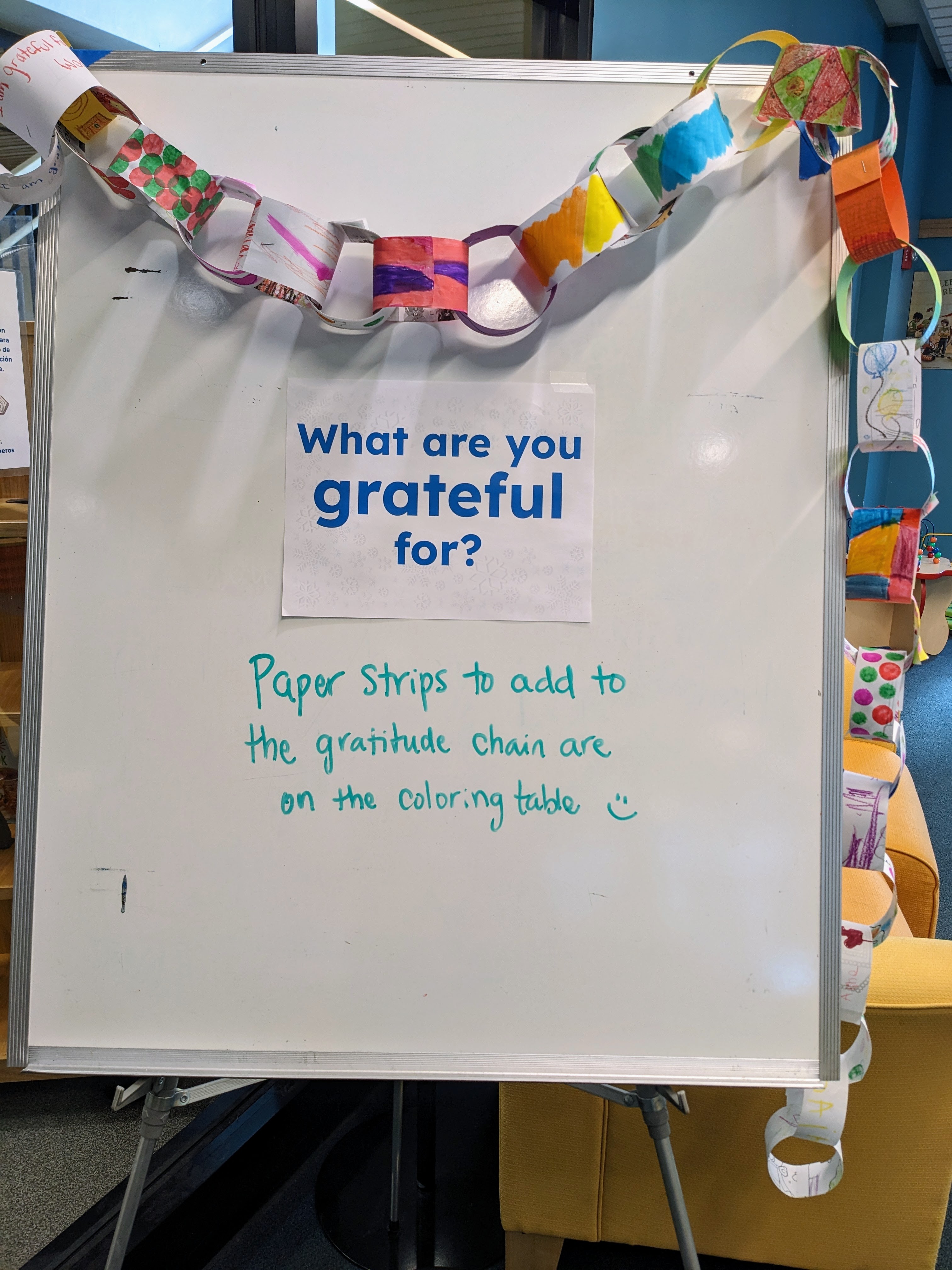
  • Gratitude paper chain: For December, I’ve replaced the usual coloring pages on the coloring table with paper strips (made from a year’s worth of coloring table scrap paper). People draw or write what they’re grateful for on the paper strips and add it to our paper chain throughout the month.

Many/most of these ideas I’ve borrowed and adapted from other libraries that I’ve visited or read about (as in the SLJ article above). What self-directed programs do you like?

Dino-vember

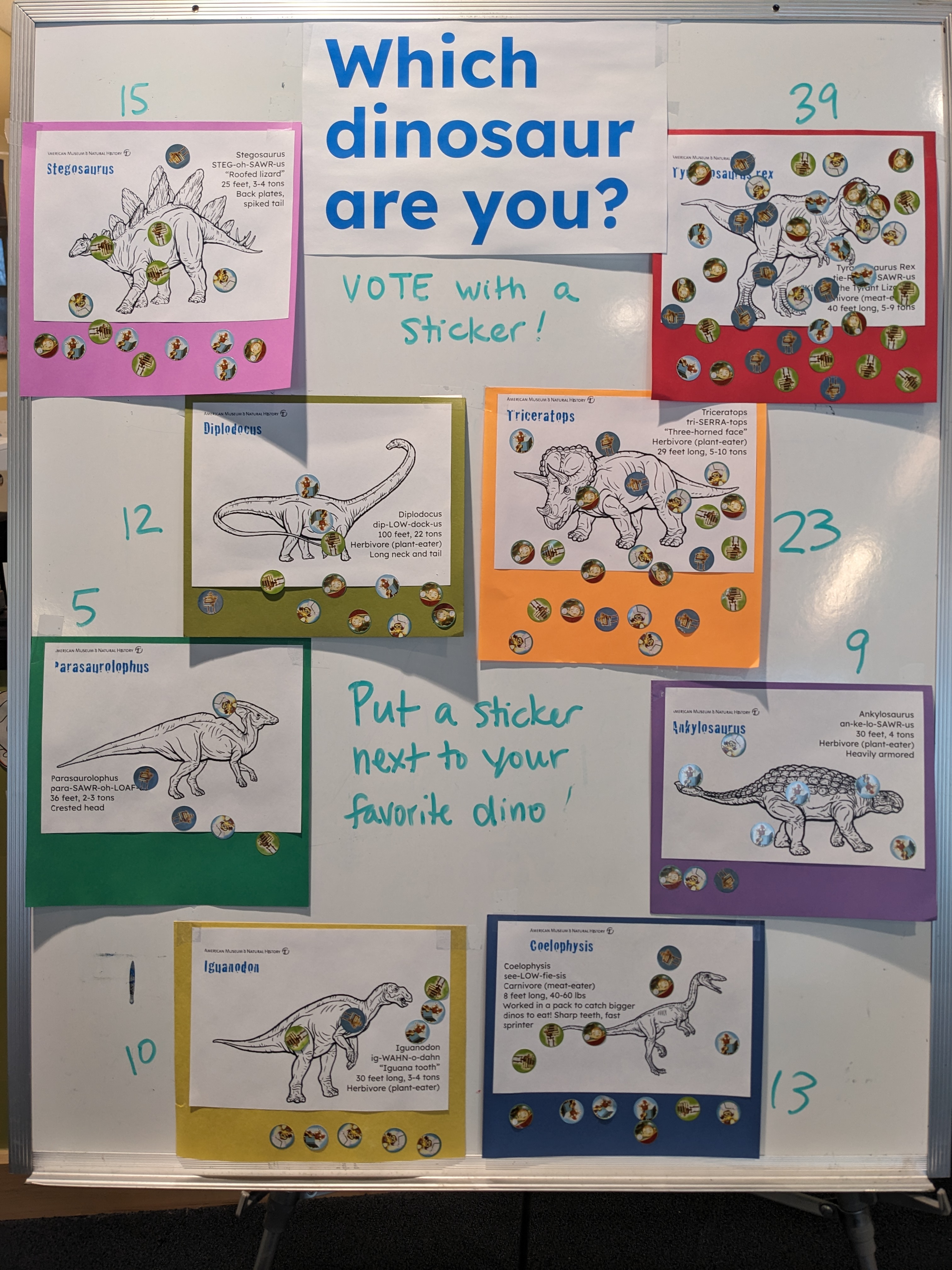
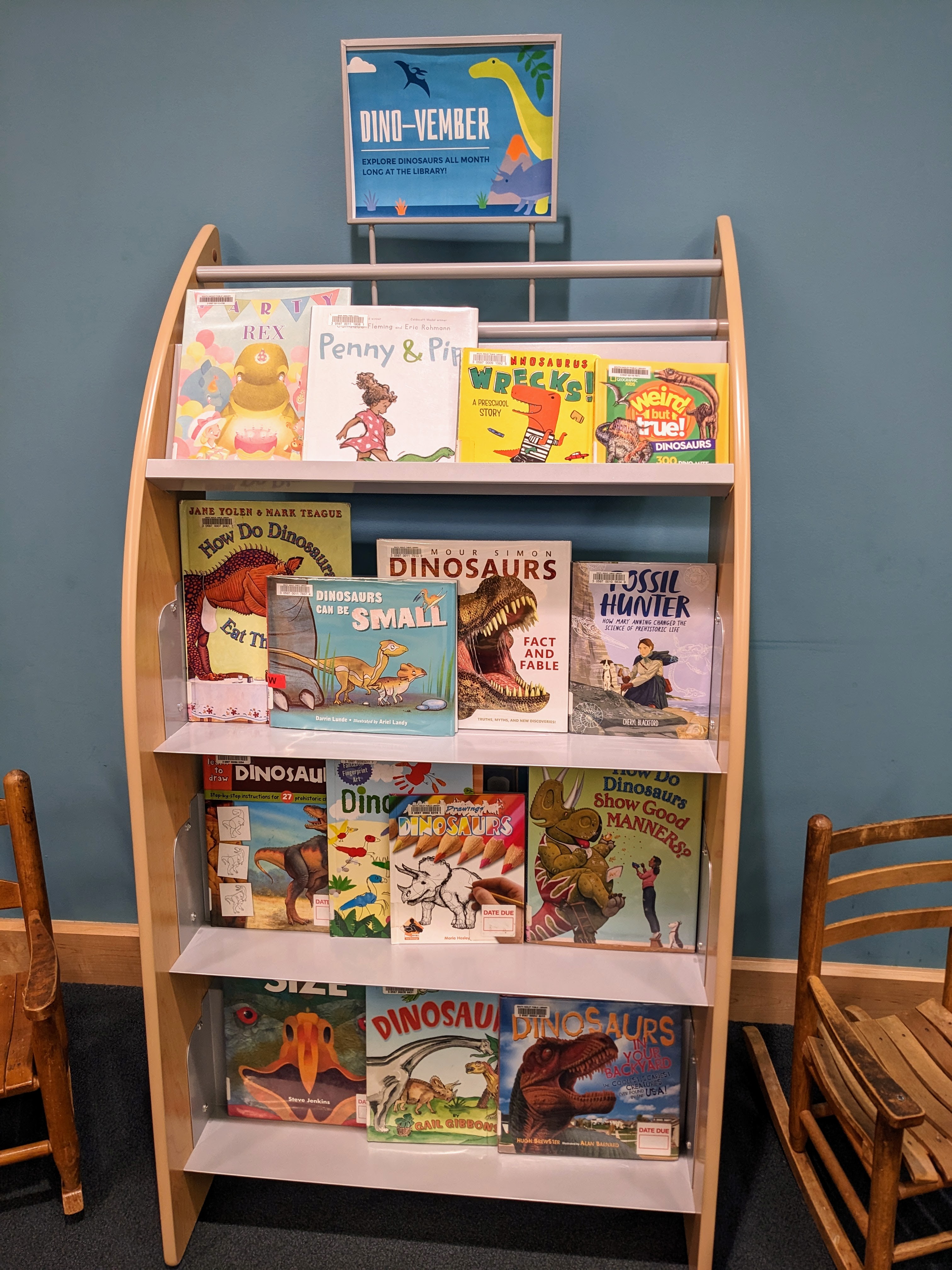
This ALSC post about Dino-vember inspired me to do a dinosaur display and a “Which dinosaur are you?” sticker vote this month. (Books for Indigenous Peoples’ month, also November, are displayed on an all-audiences display just outside the children’s room, at the bottom of the stairs.) Dinosaur illustrations are from the American Museum of Natural History; for extra facts and pronunciation, I referenced The Dinosaur Awards by Barbara Taylor (Frances Lincoln Children’s Books, 2021).

Which Dinosaur Are You? sticker vote board Dino-vember book display

A selected dinosaur booklist:

  • Tyrannosaurus Wrecks! by Sudipta Bardhan-Quallen, illus. Zachariah Ohora
  • I Dreamt I Was A Dinosaur by Stella Blackstone, illus. Clare Beaton
  • You Can’t Be A Pterodactyl! by James Breakwell, illus. Sophie Corrigan
  • How Dinosaurs Went Extinct: A Safety Guide by Ame Dyckman, illus. Jennifer Harney
  • Penny & Pip by Candace Fleming, illus. Eric Rohmann
  • Dinosaurs! by Gail Gibbons (NF)
  • On This Spot: An Expedition Back Through Time by Susan Goodman, illus. Lee Christiansen (NF)
  • We Don’t Eat Our Classmates by Ryan T. Higgins
  • How Big Were Dinosaurs? by Lita Judge (NF)
  • Dinosaurs Can Be Small by Darrin Lunde, illus. Ariel Landy
  • Dinosaur Feathers by Dennis Nolan (NF)
  • Dinosaurs in Space by Todd Sturgell
  • Goldilocks and the Three Dinosaurs by Mo Willems
  • Have You Seen My Invisible Dinosaur? by Helen Yoon

Pajama Storytime: One year anniversary

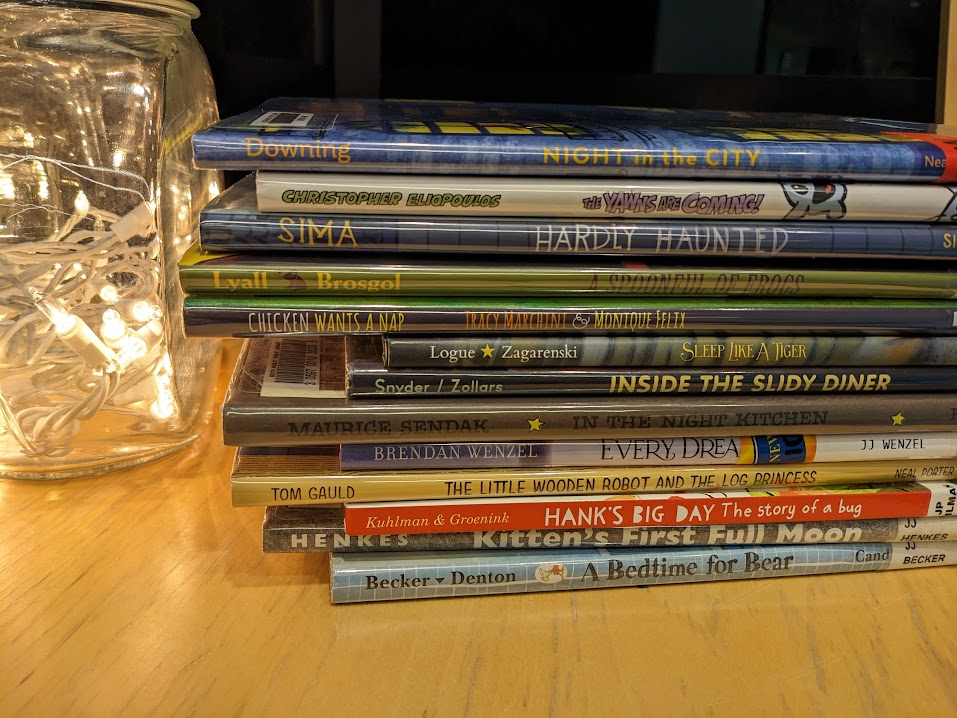
twinkle lights in a jar, a stack of booksThis Monday was the one-year anniversary of the Pajama Storytime program I started last fall. Some excited loyal regulars came in their jammies and slippers with their stuffed animals, and a brand-new family came too (they heard about it from a grandparent who visits the library weekly). We had cocoa and cookies and read some new books and some old favorites:
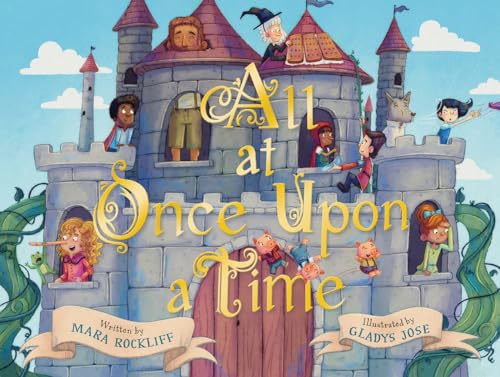
  • All At Once Upon A Time by Mara Rockliff, illustrated by Gladys Jose
  • Sleep: How Nature Gets Its Rest by Kate Prendergast
  • Cub’s Big World by Sarah Thomson, illustrated by Joe Cepeda
  • Where the Wild Things Are by Maurice Sendak (yes, everyone’s read it before; no, we hadn’t read it at Pajama Storytime yet. And I just read this cool article about it by picture book makers Jon Klassen and Mac Barnett. Pay attention to the moon!)
  • Hoodwinked by Arthur Howard
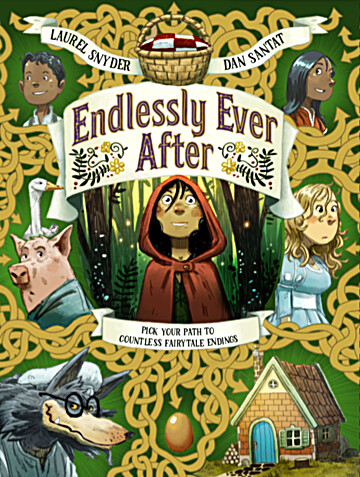
  • Endlessly Ever After: Pick Your Path to Countless Fairy Tale Endings! by Laurel Snyder and Dan Santat

Cover of Endlessly Ever AfterEndlessly Ever After has become a mandatory staple since last December; it’s the book we always end with, but it’s different every time because of its pick-your-path nature. (Our storytime group is beyond excited that there is going to be another one in, I think, 2026? Laurel and Dan, if you need beta readers, we are at your service.)
Here are a few other books we’ve read more than once at Pajama Storytime:

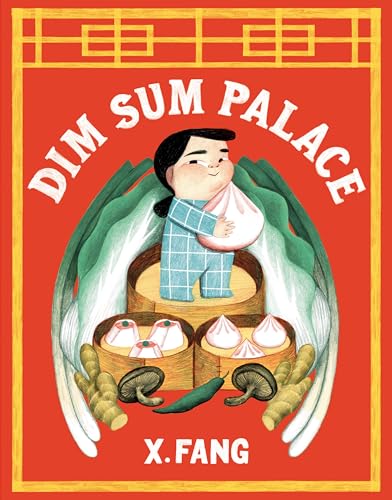
  • Dim Sum Palace by X. Fang (this has Night Kitchen vibes)
  • The Yawns Are Coming by Christopher EliopoulosCover image of Dim Sum Palace
  • Goodnight Veggies by Diana Murray and Zachariah Ohora
  • Night in the City by Julie Downing
  • Tell Me What to Dream About by Giselle Potter
  • Telling Stories Wrong by Gianni Rodari and Beatrice Alemagna
  • Are You Awake? by Sophie Blackall
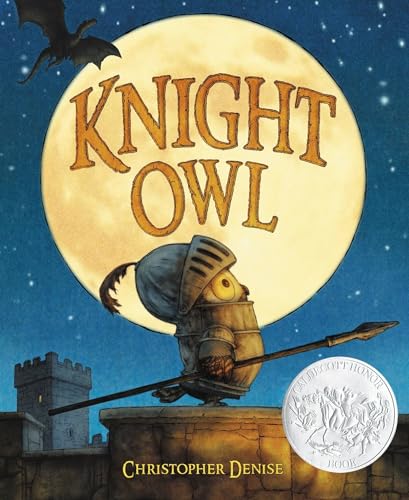
  • Knight Owl by Christopher Denise
  • Just Because by Mac Barnett and Isabelle Arsenault
  • Cover image of Knight Owl

  • The Little Wooden Robot and the Log Princess by Tom Gauld
  • If You Come to Earth by Sophie Blackall
  • Inside the Slidy Diner by Laurel Snyder and Jaime Zollars
  • Mama in the Moon by Doreen and Brian Cronin
  • There’s a ___ in Your Book by Tom Fletcher

Cover image of All At Once Upon A TimeAs you can see, we lean toward bedtime books and fairy tales, including fractured fairy tales. I can already tell All at Once Upon A Time is going to be a repeat read; it goes so well with Endlessly, and the kids – and grown-ups! – who come to Pajama Storytime are old enough to understand and enjoy the humor. That’s something I love about Pajama Storytime: I get to read some wonderful books that are simply too long or complex for my morning storytime, which is mostly toddlers. There are great picture books for that age, too, and I love them, but Pajama Storytime lets me share more books with a different audience.
Allons-y! But not next week, the library will be closed on Monday for Indigenous Peoples’ Day.

“Bearmail”: Answering questions via desk mailbox

Many years ago at the Fox Branch Library in Arlington, MA, I noticed a bulletin board in the lobby. On the bulletin board were questions and comments that people had dropped into a suggestion box – and the library staff’s answers to those questions and comments. [Insert brain-exploding emoji here] What a brilliant, transparent way to communicate with patrons! Also, if one person has a question, others likely have the same question, so answering publicly helps more than just one person.

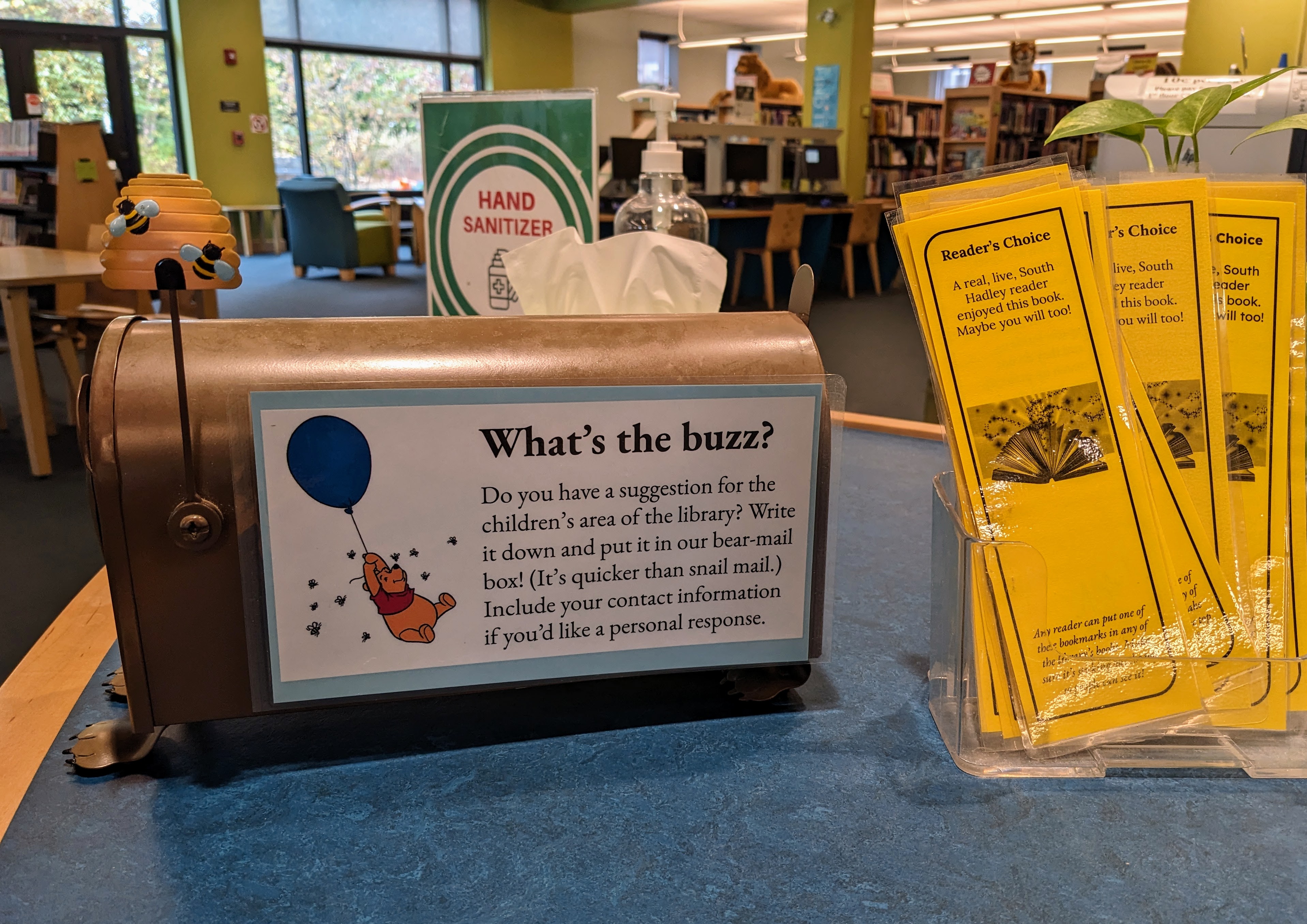
Bear-shaped desk mailbox with beehive flag and scrap paper for writing notesWhen I started my current job as the children’s librarian at a public library, I found an unused mailbox shaped like a bear, complete with little beehive flag. I set it up on my service desk, inviting people to leave notes – questions, comments, suggestions, anything! On a nearby column, I tape up the notes with my responses.

Over the last year, I’ve gotten dozens of notes. Sometimes people leave a note while I’m sitting right here, other times when I’m away from my desk. Sometimes it’s kid scribbles (great early literacy and fine motor practice!), occasionally a complaint or praise, most often a suggestion or question about the books in our collection or the programs that we offer.

Side view of bear mailbox, with "what's the buzz?" instructionsA few sample notes and responses (lightly edited for spelling, etc.):
  • “Do you have any recommendations for Matilda-length chapter books about fantasy? With no pictures?” –> “Sure! Here are some to try: Greenwild by Pari Thomson, The Guardian Test by Christina Soontornvat, Earwig and the Witch by Diana Wynne Jones, Tuesdays at the Castle by Jessica Day George, Falling In by Frances O’Roark Dowell”
  • “Recommendation for PJ Storytime: The Nuts: Bedtime at the Nuthouse. It’s one of our faves!” –> “Thanks for the suggestion! I requested it from another library.” [I read it at a subsequent Pajama Storytime program.]
  • “Get more scary books!” –> “OK! Have you already tried Goosebumps, Eerie Elementary, and Scary Stories to Tell in the Dark?”
  • “I think you guys should have bunnies and hamsters here.” –> “I would love to have a library pet! Maybe someday….In the meantime, have you seen Miss Bethany’s fish Moose?”
  • “You should start a face drawing club.” –> “Comics Club meets every Tuesday afternoon! We also have lots of How to Draw books you can borrow and take home.”
  • “The library should do book bingo again!” –> “We are! [Dates of summer book bingo program]”
  • “Saturday morning activities would be great!” –> “We try to do at least one a month! Anything in particular you’d like to see?”More mystery books
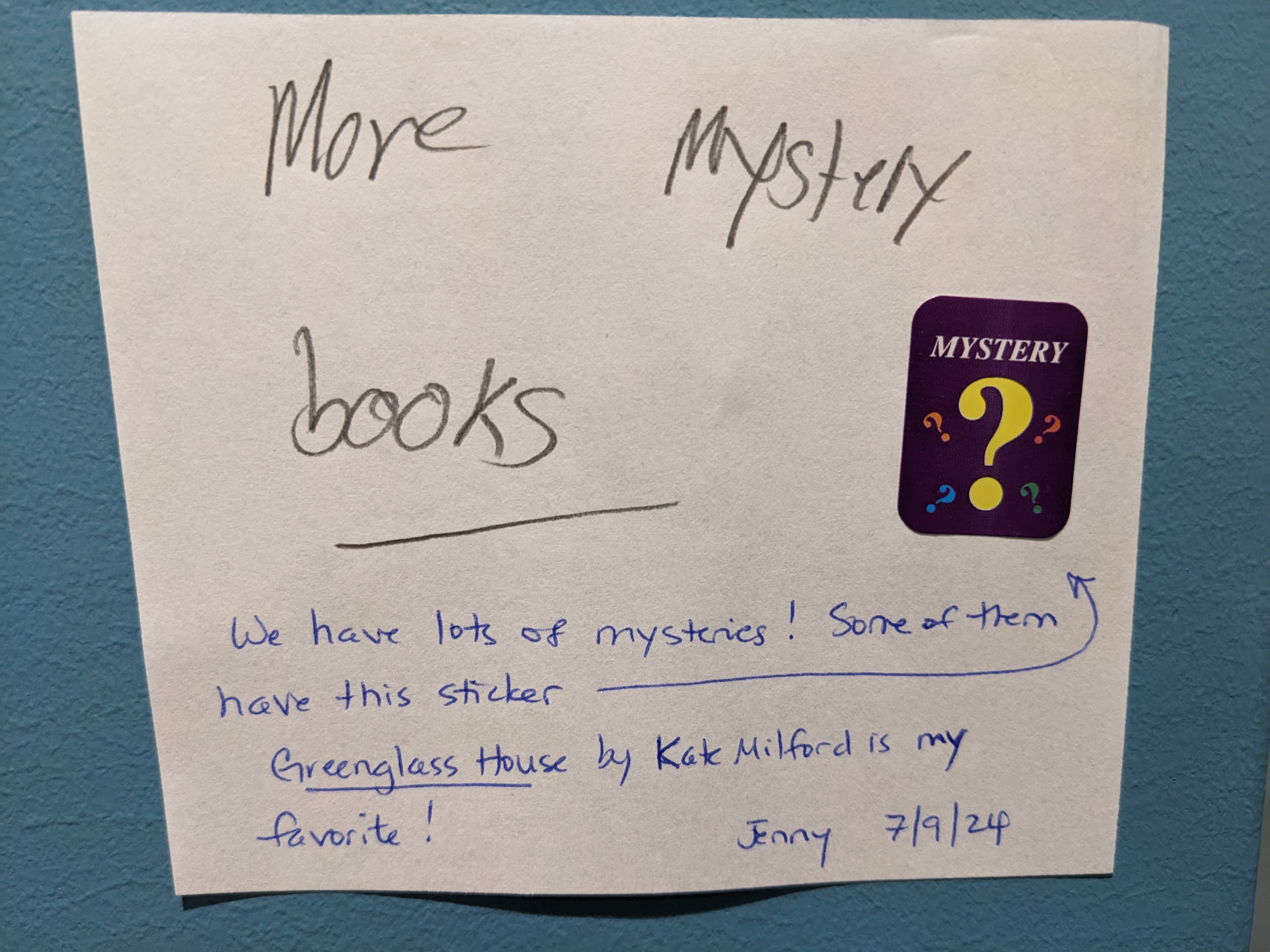
  • “More mystery books” –> “We have lots of mysteries! Some of them have this sticker. One of my favorites is Greenglass House by Kate Milford.”
  • “Can you get the book Out of My Dreams [by Sharon Draper] when it comes out?” –> “Absolutely! We have to have the sequel to Out of My Mind and Out of My Heart. It will be published September 3, 2024.”
  • “Make more Roald Dahl books like The Twits” –> “Roald Dahl died in 1990 and can’t write any more books…Have you tried George’s Marvelous Medicine?”

One person asked, “Why aren’t the librarians here a lot of the time I’m here?” This one is kind of heartbreaking, but there is only one children’s librarian here (me). I work 40 hours a week (which is plenty! I miss my 35-hour week), but the library is open 52 hours, so the children’s desk is unstaffed at that time. People can get help at the main circulation desk, but it’s not the same level of service as having a children’s librarian present in the room to greet everyone and ask if they need help. I’m also not at my desk if I’m running a program, like Rhyme Time, Story Time, or one of the book clubs. What’s the answer to this one, then? An apology, and a request: Ask the Town to fund more staff for the library!

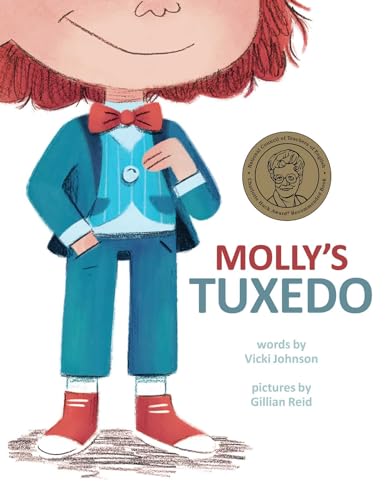
cover image of Molly's TuxedoTo end on a happy note (no pun intended): My favorite note so far was about how the book Molly’s Tuxedo by Vicki Johnson, illustrated by Gillian Reid, was affirming for a child deciding what to wear ahead of a family holiday, and helped foster a conversation with a grandparent too. The note-writer concluded, “Thank you for your commitment to diversity + inclusion!” It’s gratifying to see that books really do make a difference. I was able to share this note with the book’s author on social media, and I hope she was half as pleased as I was.

There are lots of reasons to encourage open communication and solicit feedback on a regular basis. You’ll hear about what you can do better, get ideas for positive changes, and you may be pleasantly surprised or get a laugh now and then! How do you communicate with patrons in your library?

Library Book Clubs for Kids, or, I Heart Back Matter

When I first started as the children’s librarian at the public library where I now work, I wasn’t sure if book clubs for kids would be popular, so they weren’t the first programs I added; that honor went to Lego – a slam dunk if there ever was one – and Comics Club, which is still going as Comics & Crafts.

Cover image of Meet YasminBut then – I forget where, and I’m sorry because I’d love to give credit for this – I heard about a “My First Book Club” program at another library, and I decided to give it a try. We had our first meeting in July; I was thinking that people might have a bit more free time in the summer, and it could also help rising kindergarteners meet each other and get used to a semi-formal aducational environment if they hadn’t already been in a preschool program.

Cover image of See the CatFor “My First Book Club,” there is no need to read the book(s) ahead of time; I request enough copies for everyone to follow along as we read together. In July we read Meet Yasmin by Saadia Faruqi, illustrated by Hatem Ali, and the Geisel award-winning See the Cat: Three Stories About A Dog by David LaRochelle, illustrated by Mike Wohnoutka. I asked the kids to make some predictions, observations, and ask and answer questions about the story; then we decorated bookmarks with a flower pattern like Yasmin.

Cover image of What About WormsHere’s the “I Heart Back Matter” part of this post: Back matter is the stuff you find at the end of the book, after the story. It’s more common in nonfiction (think glossary, sources, index), but a lot of picture books, early readers, and especially graphic novels also throw in a little bonus content: a recipe, an art project, step-by-step instructions for how to draw the main character. This is where I got the model for Yasmin’s flower-patterned bookmark. (More on back matter later.)

Cover image of Fox and Chick The PartyIn August we read Fox and Chick: The Party and Other Stories by Sergio Ruzzier and What About Worms?! by Ryan T. Higgins, and colored some What About Worms?! coloring sheets provided by the publisher.

In September we read Flubby Is Not A Good Pet by J.E. Morris and Fox the Tiger by Corey R. Tabor, and made paper plate masks with crayons, markers, dot paints, feathers, and glue, to disguise ourselves like Fox. The craft drew in extra kids who hadn’t attended the book part of the program – the more, the merrier!

Now that a book club for younger kids was up and running, I figured I ought to have something for the eight- to eleven-year-old age group as well, and a Graphic Novel Book Club seemed like the best choice because graphic novels are so popular and accessible. (Graphic novels are a format, not a genre, so we can still have plenty of variety – realistic, historical, fantasy, sci-fi, mystery, nonfiction, memoir, etc.).

Batcat

I decided to start us off with Batcat by Meggie Ramm, a short, funny book with a strong theme of being yourself (and that you can be more than one thing). I requested about ten copies of the book (plus a few copies of the sequel, Batcat: Sink or Swim) and kept them in a stack on my desk for people to borrow in the weeks leading up to our first book club meeting.

For the first meeting, we started off with introductions (name, pronouns, grade/school, and favorite ice cream flavor), then a discussion of the book with questions I prepared. I had also prepared some comics vocabulary on a whiteboard, but all these kids were already fluent readers of the format and knew what panels, speech balloons, thought bubbles, and emanata were, so we moved on to some drawing activities. Here again, I found helpful back matter – how to draw Batcat and Al the Ghost – and we looked at the endpapers as well, which showed a map of Spooky Isle. Kids could choose to try drawing the characters, create a map of a real or imagined place, or make an 8-page minicomic.

Cover image of Witches of BrooklynFinally, a perk of coming to the first meeting: the kids got to vote on what they wanted to read next. I pulled three books from our collection: Bedhead Ted, Things in the Basement, and Witches of Brooklyn. Witches of Brooklyn won the vote, so that will be October’s book!

Do you have a book club at your school or library? What are your favorite tips and tricks? What about favorite early readers or middle grade graphic novels?

Library card sign-up month and more

It’s been a very busy summer at the library, which is good! This is the first children’s summer reading program I planned pretty much solo. Fortunately, there is a children’s librarian at the branch library, and a teen services librarian here who were both able to tell me what had been done in the past, what worked, and what could change, so I leaned on them as I tried to simplify and streamline as much as possible – and plan fun programs people would want to come to, as well as continuing all our regular offerings.

Our summer reading program officially ended on Friday, August 9, with all-ages indoor mini-golf. Over 125 people attended over three hours, and it was pretty rowdy and fun. Since then, things have quieted down just a bit, the back-to-school books have been flying off the display (I felt kind of bad putting up a back-to-school display on August 1, but it was obviously the right call – those books are in demand!), and thoughts turn to fall…
ALA Library Card Sign-Up Month Transforers graphic

September is Library Card Sign-Up Month. Hispanic Heritage Month begins halfway through the month, on September 15, and Banned Books Week – when we celebrate the freedom to read (#fREADom) even more than we usually do – is September 22-28. (People will also certainly begin asking for Halloween and spooky books before October 1.)

To prepare for Library Card Sign-Up month, I cut a square out of some foam core to make a frame, then used the pages from a copy of Ramona and Her Mother I’d had to weed (based on condition – I replaced it!) and some colored tissue paper and modpodge to create a photo frame. You know, like they have at farm stands and Renaissance Faires:

I Got A Library Card! frame

close-up of mod-podged collage with text from Ramona

Librarian smiling inside I Got A Library Card! frame

This is something we can use year-round, and adults and teens can use it too (if they want). It took about an hour, and actually turned out pretty much the way I had envisioned – not always the case with arts and crafts projects.

Setting kids up with their first library card is a great part of the job. (At our library, kids have to be five years old – some come in on their birthdays! – but other libraries have different rules.) It’s also a good time to emphasize that our library is fine-free (no late fees or overdue fines) and that if anything happens to a book in their care – torn pages, water damage, etc. – they should let us know when they return it, because a lot of times it’s something we can repair! A big reason lots of libraries have started going fine-free is to reduce the barrier to library use. Don’t let one damaged (or even lost) book keep you away from the library forever.

This fall, you can be a library ambassador. Look up your local library’s policies, and tell your friends if your library is fine free!

Day in the life of a children’s librarian

Cover of This Is Exciting!I hope that, by now, we have largely dispensed with the myth that librarians spend all day reading in buildings that are temples of quiet. There’s not much quiet, there’s not much sitting, and there’s barely any reading, unless you count reading aloud at storytimes, or reading professional review journals to decide what books to add to the collection. So what DOES a children’s librarian do all day? Here’s a sample of one day this week, during which I…

  • Updated the whiteboard in the lobby with the day’s programs
  • E-mailed the statewide listserv of youth librarians with a readers’ advisory question for a patron
  • Read the Library Link of the Day and Betsy Bird’s blog, Fuse8
  • Withdrew some old books from the science section
  • Posted to the library Facebook and Instagram accounts
  • Created a new flannel board to go with Bear in A Square by Stella BlackstoneBear in a Square book and flannel board
  • Vacuumed the storytime rug
  • Storytime (four books, several songs, one game of “Little Mouse” on the flannel board) and craft project (decorating paper popsicle shapes with crayons, markers, and stickers, and gluing them to popsicle sticks)
  • Took down the first half of summer scavenger hunt and put up the second half of summer scavenger hunt (these are laminated literary characters, e.g. Pete the Cat, Fancy Nancy, Dog Man, that I tape up around the children’s area)Summer Scavenger Hunt 1
  • Helped a kid find picture book versions of “City Mouse, Country Mouse”
  • Added a kid’s photo to the 1000 Books Before Kindergarten wall of fame
  • Stamped kids’ hands when they found Shelly the Turtle
  • Handed out temporary tattoos to kids who completed the scavenger hunt
  • Got a hug from a shy regularShelly the Turtle sign and photo
  • Finished reading Grief Is for People by Sloane Crosley while eating lunch
  • Helped a local bookseller’s kid request some books from another library, and chatted with the bookseller about upcoming titles
  • Added books to a list to purchase from our vendor
  • Put Lego and board games in the story/craft room
  • Withdrew old fiction books
  • Received replies from librarian listserv and compiled book recommendations for the patron who asked
  • Performed surgery on Zoe the Snake (i.e. sewing up a busted seam on a beloved stuffed animal)
  • Made an example yarn animal (a tiny turtle) for a craft program (idea from the ALSC blog)
  • Cleaned up Lego and board games
    Yarn Turtle
  • Helped a kid find a book about Neil Armstrong and the moon landing
  • Went home! (At home we are reading The Lightning Thief (Percy Jackson and the Olympians) by Rick Riordan.)