HarperCollins Book Buzz and Modernist Cuisine

Lumping two events together so as not to be a complete commercial for either. The HarperCollins Book Buzz consisted of a panel of HarperCollins marketing people talking about upcoming HC titles (including The Lantern by Deborah Lawrenson, galleys of which they distributed at the event). They also mentioned several readers’ advisory-type blogs (all quotes below are taken from the respective sites’ About pages):

NetGalley is a “connection point for book publishers, reviewers, media, librarians, booksellers, bloggers and educators…Professional readers–reviewers, media, journalists, bloggers, librarians, booksellers and educators–can join and use NetGalley at no cost.”

EarlyWord is “a Blog and Web site on a mission — to give libraries the earliest information possible on the books their customers will be looking for, so they can stay ahead of demand. By giving readers what they want, when they want it, we believe libraries can increase their circulation and their support.”

The Book Report Network (BookReporter) provides “thoughtful book reviews, compelling features, in-depth author profiles and interviews, excerpts of the hottest new releases, literary games and contests, and more every week.”

And now for something completely different…(except in that it is a book, or more accurately several volumes)…

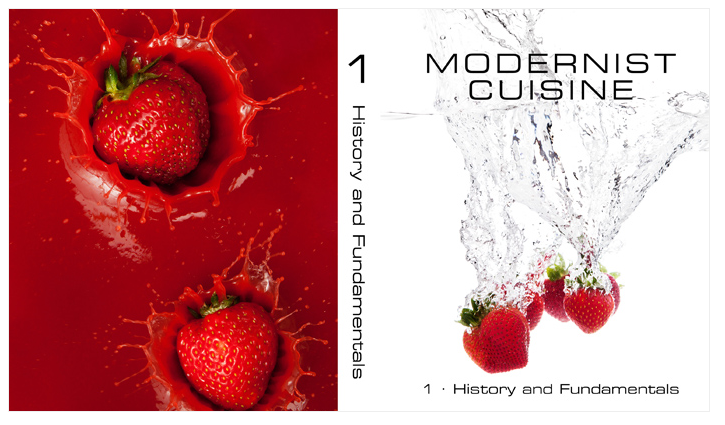
“In Modernist Cuisine: The Art and Science of Cooking, Nathan Myhrvold, Chris Young, and Maxime Bilet—scientists, inven­tors, and accom­plished cooks in their own right—have cre­ated a six-volume 2,400-page set that reveals science-inspired tech­niques for prepar­ing food that ranges from the oth­er­worldly to the sub­lime. ”

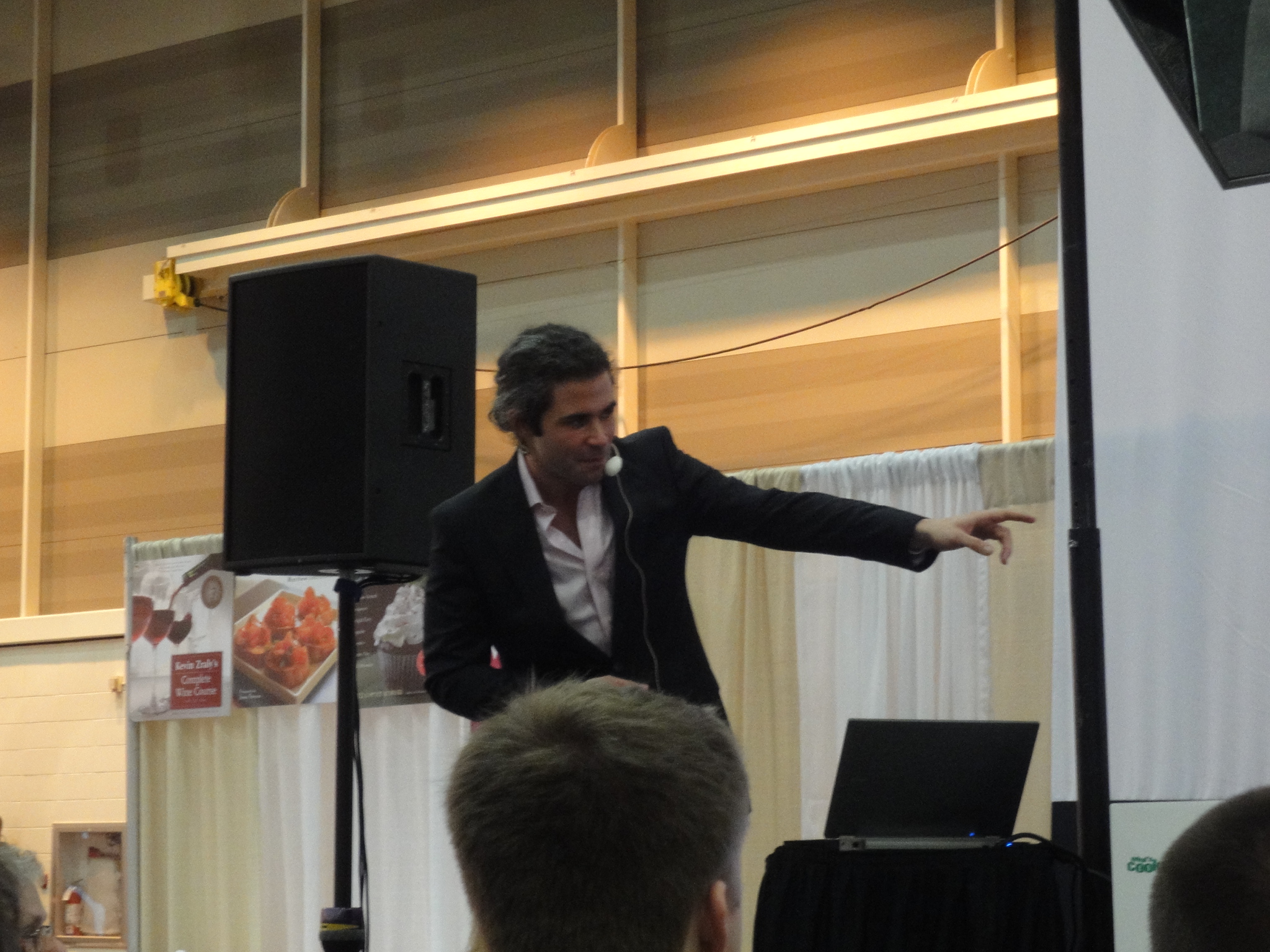
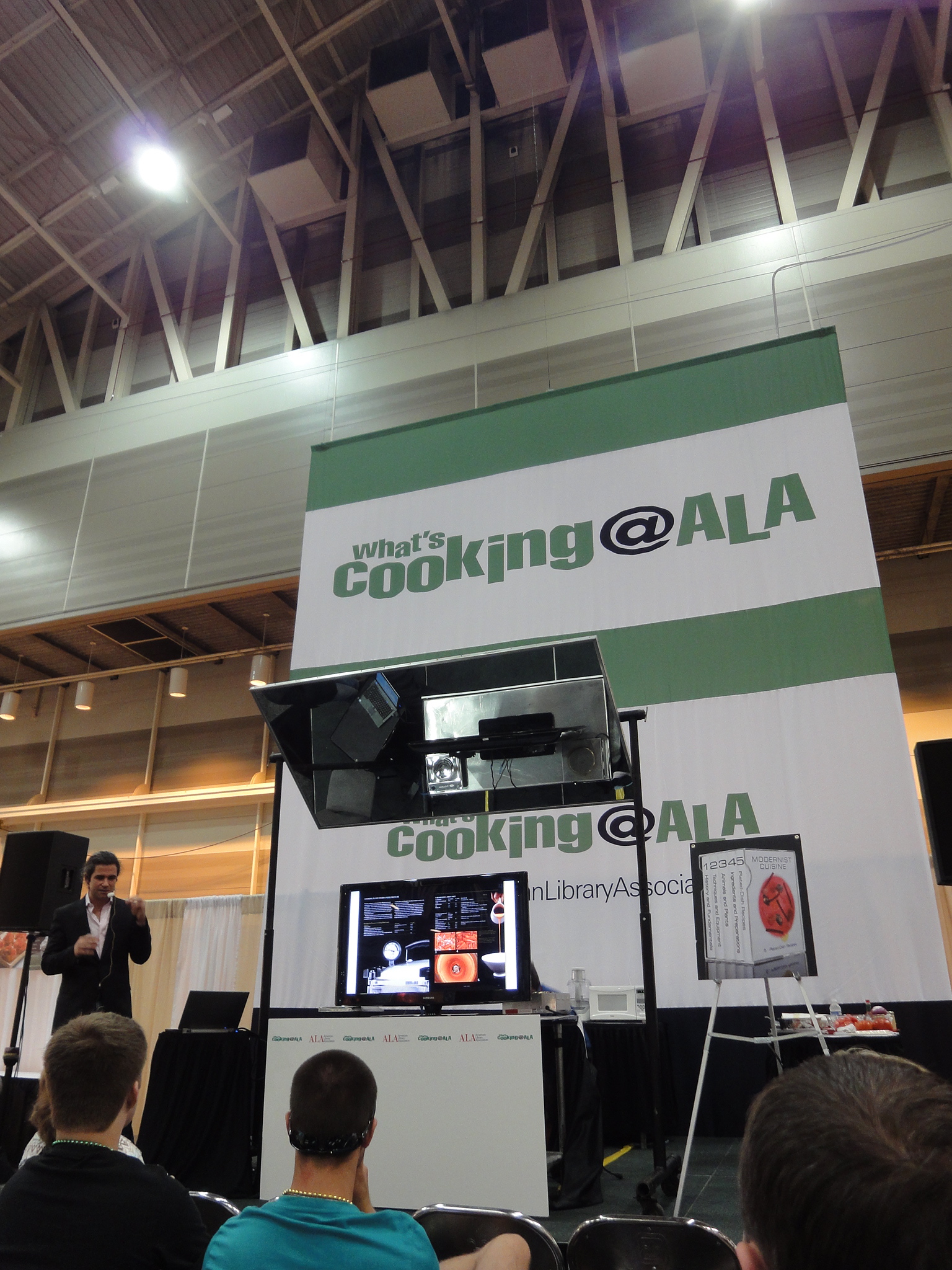
Maxime Bilet himself was at the What’s Cooking at ALA? stage, demystifying Modernist Cuisine. I have actually had the opportunity to browse through it, and was completely overwhelmed, but Bilet helpfully pointed out that recipes for superior macaroni & cheese and caramelized carrot soup can be found in Vol. 3, and that recipes for beurre blanc, pistachio gelato, and chocolate mousse can be found in Vol. 4.

And for those who are wary of “modernist,” scientific cooking, Bilet says, “Cooking relies on science…Healthful cooking is flavorful cooking.” Another helpful tip: you can oxidize wine in a blender.

Now you know.

Keep ‘Em Coming – Fiction Series Creators Talk Shop

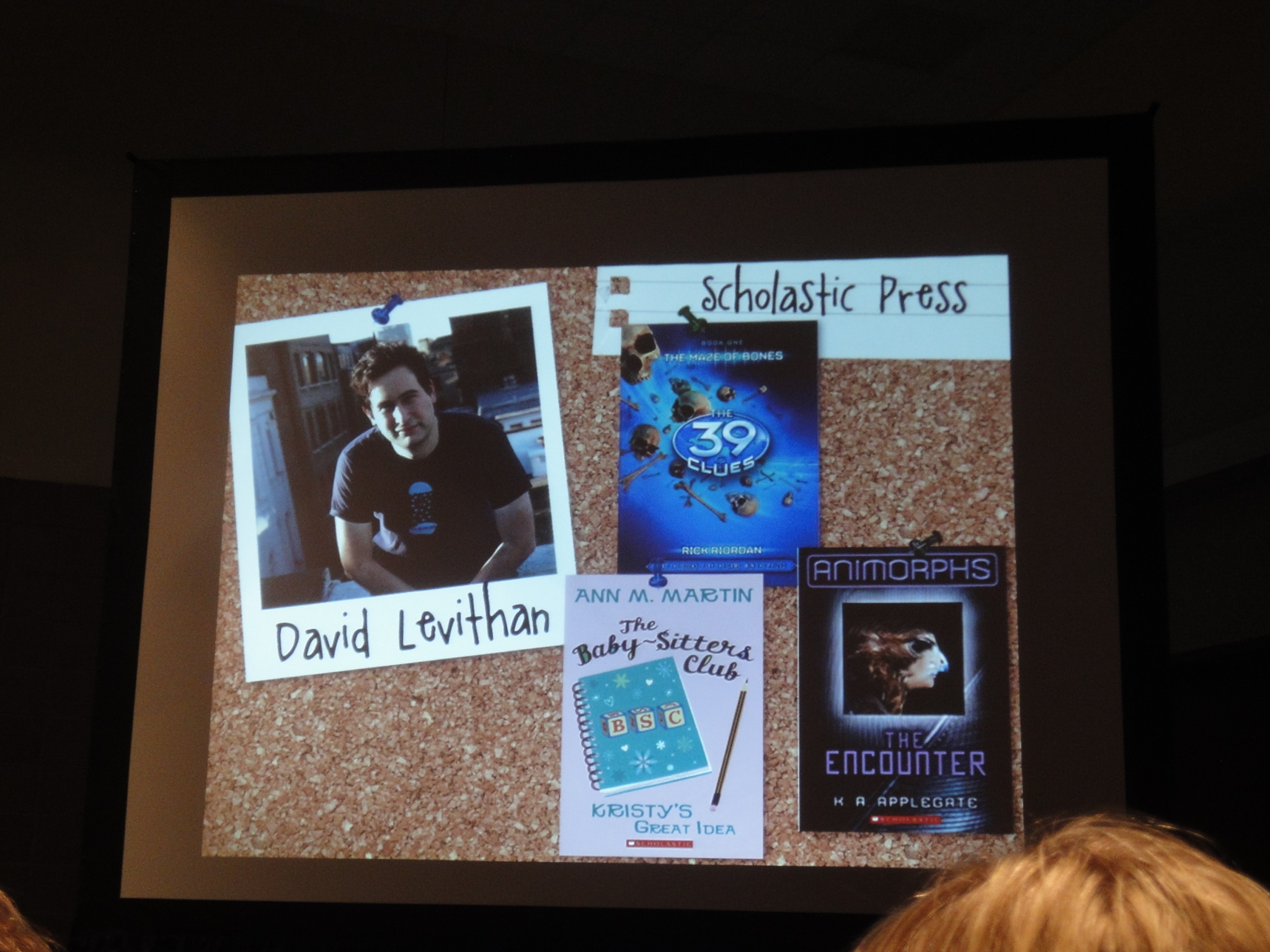
I may have left this one off the list originally because it wasn’t one I had planned to go to. However, it was a really interesting panel: authors Lauren Myracle, Jonathan Stroud, Dan Gutman, and author/editor David Levithan. Of these, I had only heard of David Levithan previously (he wrote The Lover’s Dictionary, which I thought was unique and poetic and just generally wonderful. Read it!) He has also, it turns out, written a whole bunch of young adult (YA) novels, and has edited over 300 YA series books, including many of the Babysitters’ Club books. (“I was the 19-year-old male reading The Babysitters’ Club on the subway…with a highlighter.”)

One explanation for the popularity of series books among teens, Levithan said, was “the love of story, the love of wanting to know what happens next, wanting the story to continue.” When kids – and adults, I would contest – find a book they like, they want more of it. However, speaking as an author rather than as an editor, Levithan said that sometimes, “There’s a reason I ended the book there – the story’s over.”

Other bits of wisdom from the panel:

Lauren Myracle: “Middle school is painful. Writing is painful. But writing about middle school…surprisingly cathartic!”

“Every book must be a game-changer.” I forget who said this – Stroud or Gutman, I think – but they were emphasizing the need for something to happen in each book in the series that caused the character to grow. The story may have its arc, but each book must have an arc of its own as well as be part of the larger story.

Jonathan Stroud talked about the importance of building a brand, which is easier with series books than with stand-alone novels.

Lauren Myracle: “Series are born in different ways.” Sometimes a story might be conceived as a series from the beginning; other times reader response might prompt a second book, and then a third.

Though there may not be the proliferation of series fiction for adults as there is for the YA group, adults are likely – speaking solely from experience here and not from any particular data – to develop loyalty to certain authors. The characters may not be the same from book to book, but one can have confidence in the quality of writing, character, and story.

“Books are magic”

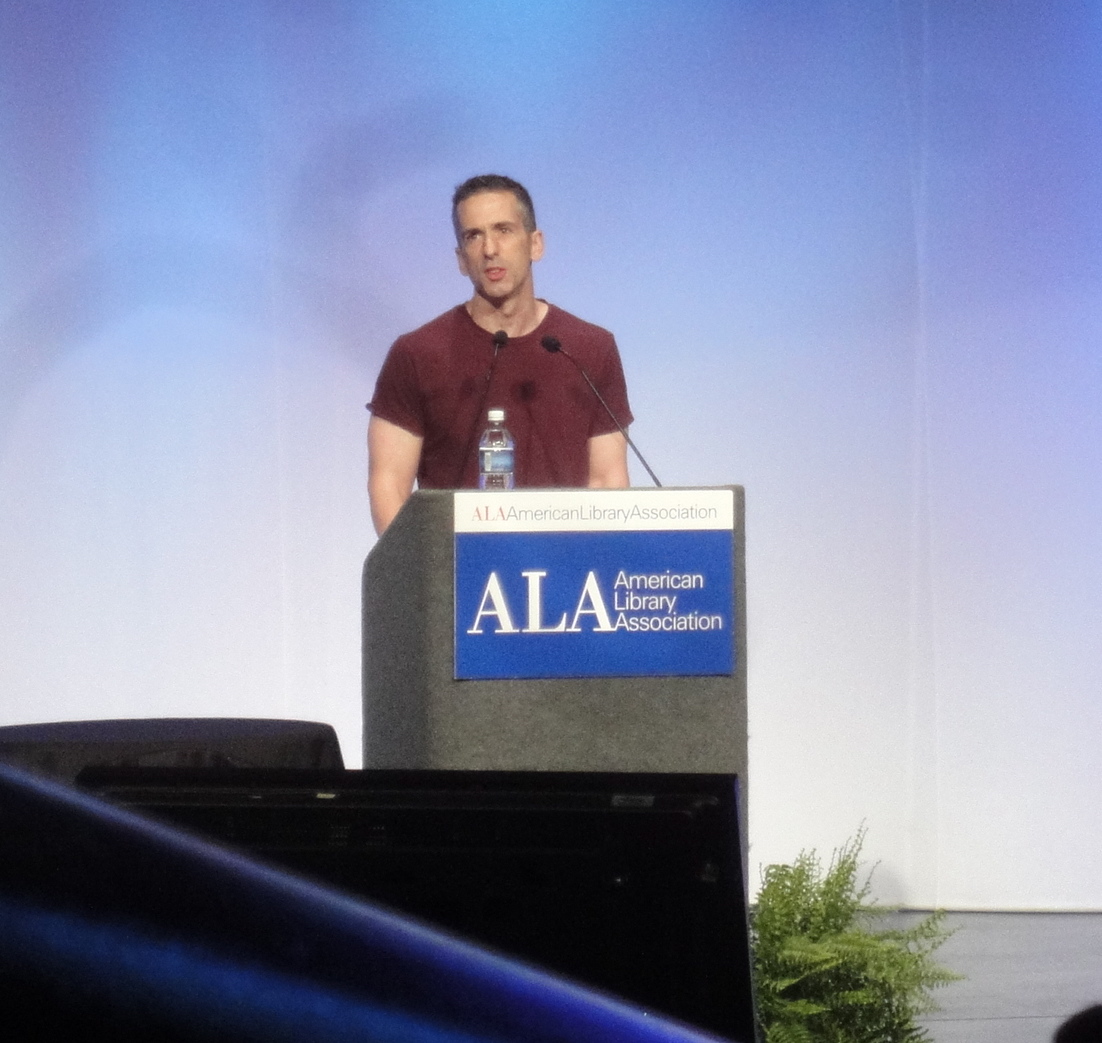
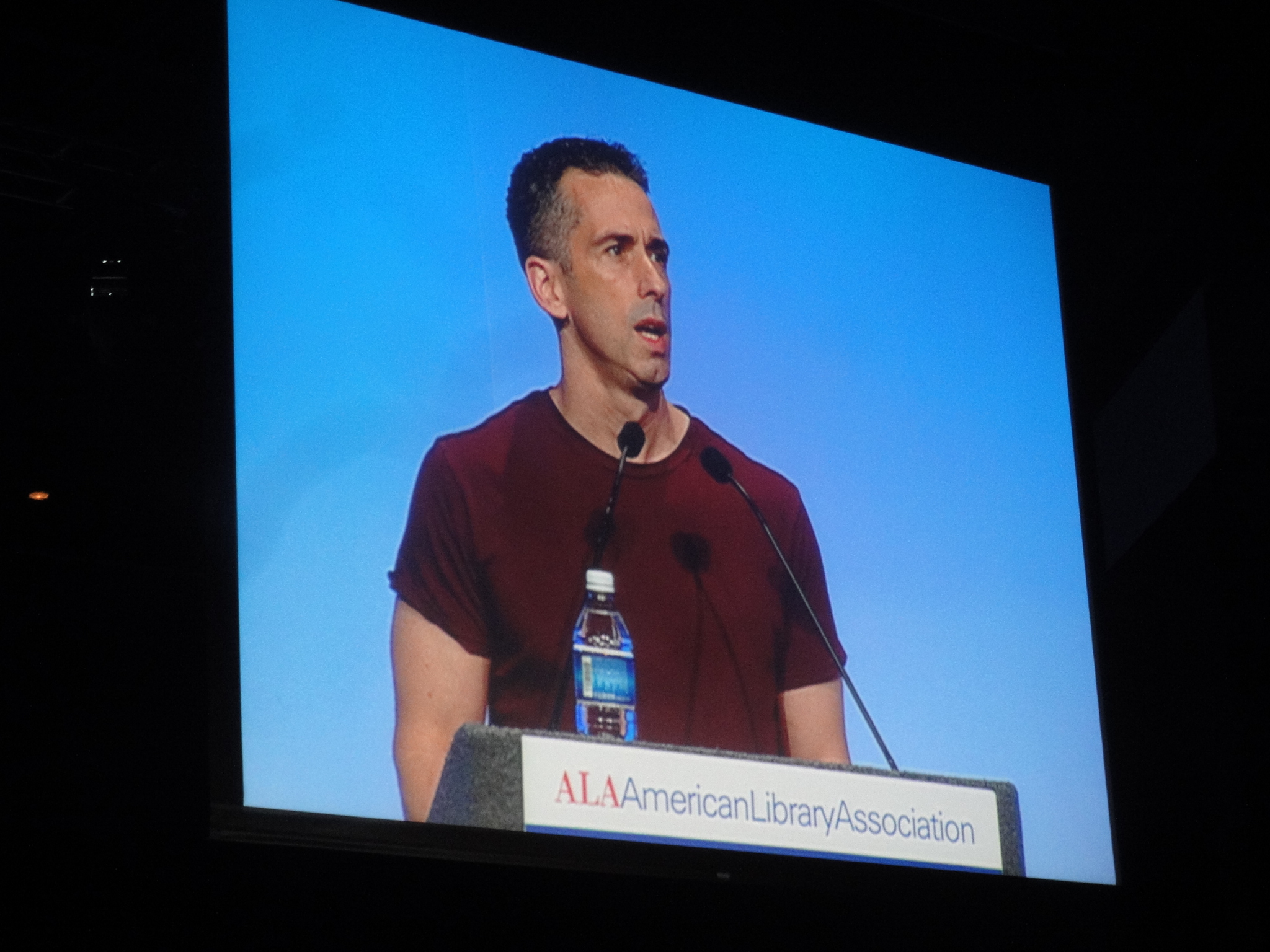
Dan Savage was the opening session speaker at ALA Annual. He writes the Savage Love column for the Seattle Stranger and is the founder of the It Gets Better Project. At ALA, he spoke primarily about the evolution of the It Gets Better Project (the goal of which, for those who haven’t heard of it, is to show gay teens that their future can be better than their present), and why, despite the massive popularity of the videos, he wanted to make a book as well: “I’m a print guy and I think books are magic.”

Well, that went over well in a crowd of librarians. But beyond a simple love of books, he said, “We also did the book to challenge school libraries and school librarians.” Some kids may not have internet access, but most have access to libraries, and over 1,500 copies of the It Gets Better book have been donated to libraries.

Overall, I enjoyed his talk very much; he’s an articulate and funny speaker, and a champion of libraries. Got the conference off to a great start!

ALA Annual Conference, New Orleans

This is just to say (yes, William Carlos Williams) that the ALA Annual Conference was an amazing experience. Here’s a rundown of the programs I attended; I’ll be typing up my notes from each and sharing a brief summary here over the next several days. Many thanks to Simmons College GSLIS and Don Wood at ALA for making it possible for me to go!

Friday, June 24
Opening session – Dan Savage, speaker
Exhibit floor opening

Saturday, June 25
HarperCollins Book Buzz
Modernist Cuisine presentation/demonstration

Sunday, June 26
LITA Tech Trends (panel)
Wikimedia, Sue Gardener
GSLIS Alumni reunion

Monday, June 27
Rating systems for young readers (panel)

As part of the Students to Staff program I also worked with some wonderful people at the Press Room and the @yourlibrary booth, checking in reporters and photographers and telling people about the Campaign for America’s Libraries, respectively.

More to come!

Friends of the Library

Monday of this week was the annual meeting of the Friends of the Somerville Public Library. There was a guest speaker, Kenneth Gloss, the proprietor of the Brattle Book Shop in Boston. I have been there once – last summer a friend and I made a project of visiting all the used book shops we could find in Boston and Cambridge – and can vouch that it is an excellent place to poke around.

Gloss brought some “show and tell” objects: a 14th-century manuscript page (which has held up better than cheap novels printed much more recently); a cookbook from the 1790s that included a recipe for “how to cook eel, the common way”; and a facsimile of Poe’s Tamerlane. “Almost anything you can think of out there, people are interested,” he said.

For those who are interested in valuable/rare books, here are a few things to check for:

  • Is it a first edition?
  • Does it have an intact dust jacket (for hardcovers)?
  • Is it in good condition?
  • Is it signed by the author?
  • Is it an association copy? That is, has the author inscribed it to someone in particular?

And for those who are wondering about how to store old books properly, a good rule of thumb is “if you’re comfortable, the books are comfortable” – it shouldn’t be too hot or too cold, too dry or too humid. Keep the books out of direct sunlight, and don’t pack them too tightly on the shelf (or so loosely that they lean over).

For the book collectors out there, I also recommend Allison Hoover Bartlett’s excellent and enthralling The Man Who Loved Books Too Much: The True Story of a Thief, a Detective, and a World of Literary Obsession.

SLA Day on the Job

Last Wednesday I had the opportunity to spend the day with Curriculum Services Specialist Ann Cullen at Harvard Business School’s Baker Library as part of the Special Library Association’s (SLA) Day on the Job program. Coincidentally, another GSLIS student who I had met twice before (once as part of an informational panel for prospective students, and once at the Somerville Public Library, where we both volunteered at the Friends of the Library book sale earlier this month) was starting her summer internship at Baker that day, so we went around together.

Ann – herself a doctoral student at GSLIS – introduced us to several other Knowledge and Library Services (KLS) librarians and staff. We also got to sit in on a meeting of reference librarians discussing virtual reference; saw behind the scenes of the historical collection; and of course we got a tour of Baker (and got to see inside Widener as well). I may never work in a business library, but Day on the Job provided an excellent inside look at a top-notch academic library. A great experience!

ACRL Creative Collaborations

Yesterday was the ACRL (Association of College and Research Libraries) New England Chapter Spring 2011 Conference at the College of the Holy Cross in Worcester. This was my first library conference and, other than having to get up extra-early to drive to Worcester, it was a great experience. I met and talked to several librarians, some of whom were Simmons GSLIS alums, all of whom were friendly and interesting.

I also especially enjoyed one of the morning breakout sessions, where Judy Montgomery and Rebecca Sandlin from Bowdoin College in Maine gave a presentation strategies for collaboration between the library and IT department. Some of their tips: collaborative strategic planning; identify core shared values; leverage positive relationships; collaborate visibly on projects; reward collaborative projects and attitudes; and have equal partnership to preserve both cultures.

Bowdoin’s LIT (Library/Information Technology) partnership would have been a great example to study in the Principles of Management class at Simmons: an organic process of real leadership, thoughtful collaboration, and internal buy-in, rather than a top-down forced merger.

Overall, the ACRL conference was a great learning experience – and a chance to get my feet wet before ALA Annual (next month!).

Digital Library Launch

Tomorrow, the digital library we have been building in LIS-462 is officially launching! Over the course of the semester, the class has digitized the scrapbook of Caroline Stokes, a student at Simmons from 1929-1933. We’ve done everything from digitization to metadata, writing content to creating the database and website. It has been a huge effort but a great learning experience. View the Caroline Stokes Scrapbook here.

The Caroline Stokes Scrapbook home page.

GSLIS After Dark Poster Session

Tonight, I had the opportunity to present a poster about my experience working in the library of America’s Test Kitchen at the annual GSLIS alumni event, “GSLIS After Dark.” My fellow library intern and I had put the poster together over the past few weeks; we made it as a PowerPoint slide, converted it to PDF, and had it printed by PhD Posters. It turned out really well, and we enjoyed sharing our experience with other students and alumni.

We called our poster “Books for Cooks: The America’s Test Kitchen Library,” and it had information (too small to see here) about our mission, outreach to staff, and projects we’ve tackled, like creating a library map and moving the catalog online with LibraryThing. Most people who stopped by seemed interested…of course, we also had snacks: homemade blondies from a recipe in Baking Illustrated.

Preserving Your Personal Digital Memories

We used to keep photographs in shoeboxes or albums, and documents in file cabinets; what now that many of our photographs and important documents are digital?

As part of ALA’s Preservation Week, Bill LeFurgy at the Library of Congress gave a webinar entitled “Preserving Your Personal Digital Memories,” which M.I.T. Preservation Librarian Ann Marie Willer was kind enough to stream and make available to GSLIS students.

LeFurgy outlined the risks to digital files: obsolete storage equipment (e.g. floppy disks), scattered files (on different devices or services), and user mistakes, forgetfulness, and procrastination (how often do you back up your files?).

He introduced the concept of active management and broke it down into four steps:

  1. IDENTIFY where you have digital files
  2. DECIDE which files are most important
  3. ORGANIZE selected files
  4. MAKE COPIES and STORE them in different places

Simple enough, and the time and effort you put in is up to you (though the more time and effort, the better your results).

LeFurgy recommended storing files on CD-R, but said that no storage technology could be trusted for more than five years; it’s a good idea to test it annually, whether it’s a CD, an external hard drive, or a USB drive.