“Before Bean met Ivy, she didn’t like her”: Chapter books to recommend

Cover of Dory Fantasmagory: Center of the Universe“Chapter books,” in my library, are what I think of as “bridge” books between early readers (think Frog & Toad, Elephant & Piggie, etc.) and longer, more complex fiction. Chapter books are the sweet spot for emerging readers whose decoding and comprehension has improved beyond early readers, but who may not yet be ready – in terms of reading ability or emotional maturity – for longer, in-depth works like Freewater, The Eyes and the Impossible, and The First State of Being (the last three Newbery medal winners). They often have black-and-white spot illustrations or even full color illustrations (like The Princess in Black and Our Friend Hedgehog), but they aren’t picture books.

Here, I want to focus on those chapter books that I find myself recommending to families over and over again at the library and out in the wild. If your favorite go-tos aren’t on this list, I’d love to hear about them too!

Series
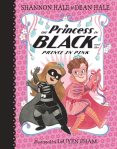
  • Cover image of The Princess in Black and the Prince in PinkThe Princess in Black by Shannon Hale, illustrated by LeUyen Pham: These are surefire hits for most kids moving out of early reader territory. Magnolia may look all pretty and proper in pink, but when the monster alarm goes off, she ducks into a closet, changes into all black, and goes off to fight monsters! The fight scenes have plenty of silly sound effects. The audiobooks, read by Julia Whelan, are exceptionally good.
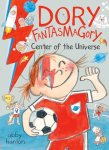
  • Dory Fantamagory by Abby Hanlon: Dory is one of my all-time favorite characters, with a clear division between her real world (mom, dad, older siblings Violet and Luke) and her imaginary one (villain Mrs. Gobblegracker, fairy godmother Mr. Nuggy, and monster Mary under the bed). Throughout the series, Dory makes a best friend (The Real True Friend), struggles with learning to read (Dory Dory Black Sheep), plays soccer with a former enemy (Center of the Universe), and more.
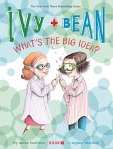
  • Ivy & BeanCover image of Ivy and Bean: What's the Big Idea? by Annie Barrows, illustrated by Sophie Blackall: The first book in this series has a killer opening sentence: “Before Bean met Ivy, she didn’t like her.” Soon, of course, the two are thick as thieves and get into all kinds of mischief together. My favorite book in the series is What’s the Big Idea?, where Ivy and Bean work together on a science project to make grown-ups love nature so they’ll want to protect it (it’s not as didactic as it sounds).
  • Desmond Cole, Ghost Patrol by Andres Miedoso and Eerie Elementary by Jack Chabert: These are series I recommend for kids who want something silly/scary/creepy/gross. They’re a little less horror genre than Goosebumps (but we have Goosebumps in the chapter book section too, for kids who want those!).
  • The Questioneers by Andrea Beaty, illustrated by David Roberts: Kids who loved the Questioneers picture books (e.g. Rosie Revere, Engineer), or who are familiar with the TV show Ada Twist, Scientist can move right up with Rosie, Iggy, Ada, and Sofia, who use teamwork and individual skills to solve problems and mysteries. Cover image of Jo Jo Makoons
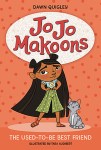
  • Jo Jo Makoons by Dawn Quigley, illustrated by Tara Audibert: Spunky seven-year-old Jo Jo lives on a fictional Ojibwe reservation (the first book in the series was an AILA middle grade honor book) and goes through all the usual kid conundrums, from making new friends to getting a snow day to facing a sleepover.
  • Book Buddies by Cynthia Lord, illustrated by Stephanie Graegin: In Ivy, Lost and Found, a formerly beloved doll ends up in a library collection for children to borrow. Each doll and stuffed animal in the collection gets a book for the adventures they have when they go home with the children who check them out. If young readers like this one, they might move on to Toys Go Out by Emily Jenkins or even The Borrowers by Mary Norton.
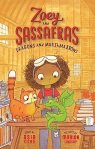
  • Cover image of Zoey and Sassafras: Dragons and MarshmallowsZoey & Sassafras by Asia Citro, illustrated by Marion Lindsay: This series is a brilliant blend of science (the scientific method) and fantasy (magical creatures and plants). It’s really fun!
  • The Story of Gumluck the Wizard by Adam Rex: A crow named Helvetica narrates this tale of a bumbling but good-hearted little wizard. Gumluck stories are light fairytale-ish fantasy with plenty of humor and a dash of philosophy.
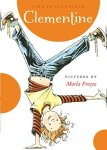
  • Cover image of ClementineClementine by Sara Pennypacker: I love, love, love third grader Clementine; she sits right next to Ramona Quimby in my heart. She lives with her family in Boston and refuses to call her brother by his given name (you never find out his real name, in all seven books) because it’s not fair she got stuck with a fruit name and he didn’t, so she always calls him different vegetable names (Cabbage, Spinach, Bok Choy, etc.). Her mom is an artist, her dad is the building handyman, and her upstairs neighbor Margaret is a perfectionist who frequently tells tales of the terrors of fourth grade. Jessica Almasy does an absolutely stellar job narrating the audiobooks, but don’t miss Marla Frazee’s interior illustrations.
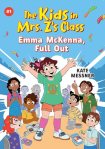
  • Cover image of The Kids in Mrs. Z's Class: Emma McKenna, Full OutThe Kids in Mrs. Z’s Class (Kate Messner, series editor): Five stars and two thumbs up for the concept and execution of this series, in which each of the 18 kids in Mrs. Z’s class at Curiosity Academy gets to star in their own book, each written by a different author. The series can be read in any order, though it’s not a bad idea to start with Messner’s series opener, Emma McKenna, Full Out. It’s a great way to introduce readers to a slew of authors whose books they may want to try next!

Standalone
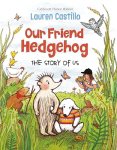
  • Cover image of Our Friend HedgehogOur Friend Hedgehog by Lauren Castillo: This absolute darling full-color illustrated story is about friendship and moving and journeys. There’s a sequel, A Place to Call Home, but I’m still putting it in the standalone category, because it does. Castillo also writes and illustrates picture books; Nana in the City won a Caldecott Honor.
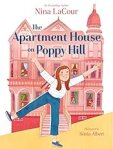
  • The Apartment House on Poppy Hill by Nina LaCour, illustrated by Sonia Albert: Nine-year-old Ella lives with her moms, and she is in everyone’s business! Cover image of The Apartment House on Poppy HillBut what is going on with her secretive upstairs neighbors? This one also has a sequel now (Ella Josephine, Resident in Charge), which is worth checking out. Ella is confident and organized, comfortable talking to adults and even helping them solve problems; she’s the kind of kid who dreams of leading meetings, and she’s fun to read about whether you are that kind of person yourself or not.
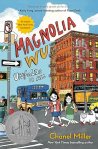
  • Magnolia Wu Unfolds It All by Chanel Miller: This 2025 Newbery Honor book is set in and around a New York City laundromat run by Magnolia’s parents. Cover image of Magnolia WuWhen Magnolia’s new friend Iris encourages Magnolia to return lost socks to their owners, it’s an opportunity for Magnolia to show Iris everything she loves about the city, even though Iris misses her old home. The two encounter anti-Asian hate, but they love and are proud of their families and their community, and they figure out how to smooth the bumps in their growing friendship and come out stronger together.
  • The Story of Diva and Flea by Mo Willems, illustrated by Tony DiTerlizzi: Now ten years old, this story still appeals, especially to animal lovers and/or kids who are interested in wandering around Paris vicariously.
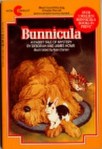
  • Cover image of BunniculaBunnicula by James Howe: This “rabbit-tale of mystery” was published in 1979 and I contend that it holds up today. (There’s also a graphic novel version now.) Harold the dog and Chester the cat are appalled when their humans bring home a mysterious black and white rabbit they found while seeing the movie Dracula; Chester believes “Bunnicula” is a vampire bunny and goes to great lengths to vanquish him, to Harold’s unease. Pun-filled sequels follow (Howliday Inn, The Celery Stalks at Midnight), but the original stands alone.

So, those are some of my go-to recommendations. What’d I miss?
Speculative books ask “What if…?”

Most kids learn at least a little about genre in school; they can probably name a few, like mystery, historical, fantasy, and science fiction. I, too, was familiar with the traditional genre labels, until I took a workshop with Joyce Saricks, author of The Readers’ Advisory Guide to Genre Fiction, while I was working at the Robbins Library in Arlington. In her book, and in the workshop, she examined books through the lens of appeal factors, and divided them into the adrenaline genre, the intellect genres, the landscape genres, and the emotion genres.

I no longer have my original notes on the workshop, but I believe it was Joyce Saricks who used the term “speculative” as well, for books that ask “What if…?” Although she classifies fantasy as a landscape genre and science fiction as an intellect genre, both imagine worlds different from ours in some way. This, for me, is a reading sweet spot: not space opera or high fantasy (though I read those too), but a world that’s like ours, but with a twist: there’s time travel, or a coup changes the political landscape, or there’s been a climate catastrophe, or a lethal pandemic, or women are more powerful than men. Or humans have disappeared altogether! They are alternate histories, dystopias, or futuristic stories. These books challenge and stretch readers’ imaginations, encouraging us to place ourselves in that situation and imagine: What if?

Speculation has value as rehearsal; reading is a way to experience something and think through your responses and reactions without having to experience the situation in real life. Here are some of the speculative books I’ve enjoyed over the years. Some are lighthearted, some scary, some a little too close to reality for comfort.

NonfictionCover image of The World Without Us

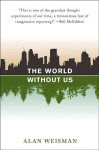
  • The World Without Us
  • What If We Get It Right?

Fiction

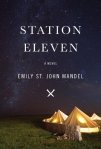
  • Station Eleven by Emily St. John Mandel
  • The Time Traveler’s Wife by Audrey Niffenegger
  • This Time Tomorrow by Emma Straub
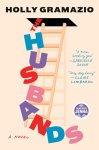
  • The Husbands by Holly GramazioCover image of The Husbands
  • Famous Men Who Never Lived by K. Chess
  • Parable of the Sower by Octavia Butler
  • The Future by Naomi Alderman
  • Stories of Your Life and Others by Ted Chiang
  • An Unkindness of Ghosts by Rivers Solomon
  • The Bone Clocks by David Mitchell
  • Beautyland by Marie-Helene BertinoCover image of Station Eleven
  • The Ministry of Time by Kaliane Bradley
  • Moonbound by Robin Sloan
  • The Night Bookmobile by Audrey Niffenegger

Fiction (in which things are very different for women, specifically)

  • The Handmaid’s Tale by Margaret Atwood
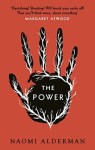
  • The Power by Naomi AldermanUS cover of The Power by Naomi Alderman
  • When She Woke by Hillary Jordan
  • Red Clocks by Leni Zumas
  • When Women Were Dragons by Kelly Barnhill

Young Adult

  • The Loneliest Girl in the Universe by Lauren James
  • Unwind by Neal Shusterman

Children’s

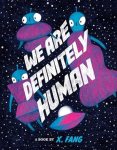
  • We Are Definitely Human by X. FangCover image of We Are Definitely Human
  • Journey by Aaron Becker
  • When You Reach Me by Rebecca Stead
  • We’re Not From Here by Geoff Rodkey
  • Finn and Ezra’s Time Loop Bar Mitzvah by Joshua Levy
  • The Color of Sound by Emily Barth Isler
  • The First State of Being by Erin Entrada Kelly
  • The Last Cuentista by Donna Barba Higuera

What are your speculative favorites? What do you like or dislike about the genre?

Book Tasting

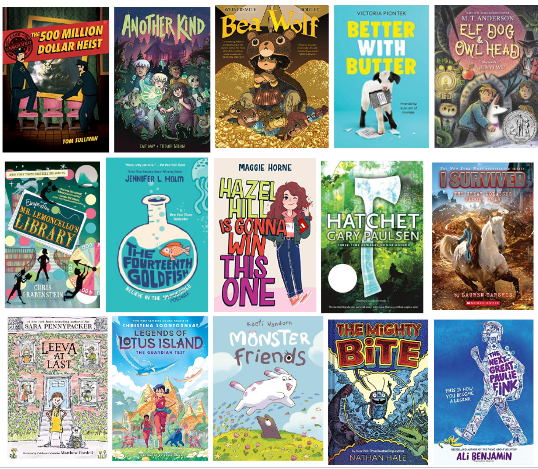
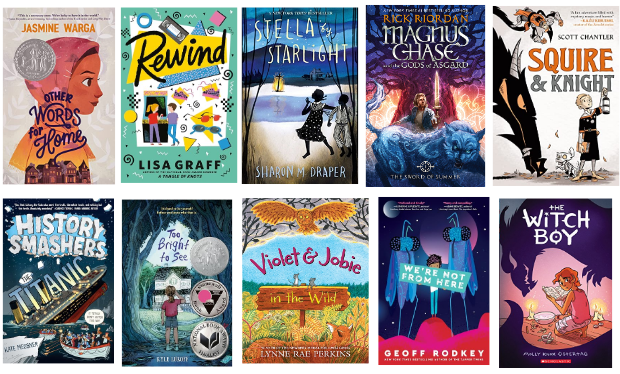
What is a book tasting? In this case, it’s a chance for a group of people (about 12 homeschooled kids from about third through sixth grade) to meet a group of books. They get a chance to browse, then get officially introduced via a book trailer, jacket copy, a brief read-aloud, or a book talk. Then they get to examine the books again, and vote for their top five to be the choice for their first book club meeting. Some spreadsheet-ing occurs, and then the winner is announced, and many books are checked out.

I planned this event with one of the homeschooling parents. I modeled the “menu” of books on past MCBA lists, which is how we ended up with 24 titles to “taste” today. It’s so hard to limit the list once the ideas start flowing – some of the kids in the group had suggestions as well – but 15-20 titles would have been sufficient, still allowing for various genres and formats without being overwhelming. (Although I don’t think the kids were overwhelmed, and those who had suggested titles were pleased to see them!)

HomeschoolBookTasting1HomeschoolBookTasting2

Kids browsed the books while everyone trickled in. Once everyone arrived, we did introductions (name, pronouns, favorite baked good) and considered the question, “How do you choose a book to read?” Kids mentioned the cover, the back or jacket copy, and the “first page test.” Perfect!

To introduce the books, I found some book trailers (links below) so I didn’t have to talk for forty minutes straight, and so kids could hear directly from some of the authors. (I also found one playlist – thank you, Lisa Graff! – which we listened to as people arrived, and an “AWWWW”-worthy photo of M.T. Anderson’s dog.) I wondered if the quality or format of the presentation for each book would sway the votes one way or another – would the top-choice books be the ones with the glossiest production value? – but my guess is this only happened in one case (Escape from Mr. Lemoncello’s Library).

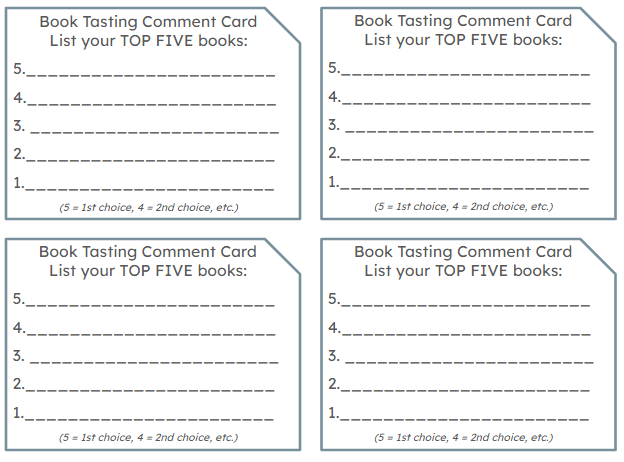
In the end, Gary Paulsen’s classic Hatchet won, with Lemoncello close behind, and Another Kind and The 500 Million Dollar Heist tied for third. I used an English major version of ranked choice voting, assigning 5 points to each person’s first-choice book, 4 points for second choice, 3 for third, and so on. The most votes (not points) any title got was five, and kids cheered or at least accepted the outcome (especially since other titles might be future discussion choices, and they could check out any book they wanted from the table today).

Book Tasting Comment Card - Top Five

Book trailer, articles, photos, and playlists:

We’ll reconvene in about six weeks to discuss the book, and I’ll be looking for a companion picture book for some of the group’s younger siblings to discuss. Maybe something about forests or general outdoorsy-ness, rather than a survival story. What picture book pairs well with Hatchet?

Storytime Top Ten

Reading Jbrary’s annual roundup of 2023 Favourite Storytime Picture Books made me think back to the list of Great Books for Two- and Three-Year-Olds I prepared back in April 2019. It’s actually still a pretty solid list! I don’t repeat books in storytime that often, because there are always so many good new ones, but there are several books on my 2019 list that are still in my rotation – Grumpy Pants, Huff & Puff, Hooray for Hat!, Where is the Green Sheep?, Carrot and Pea, A Parade of Elephants, and more.

I skimmed back over my storytime titles from September and picked a few to build this new list of storytime success books. Of course, every storytime is different – depending on who shows up, and how many, and what their energy level is, it’s a real YMMV (Your Mileage May Vary) situation. And there are some books that the kids connect to, and others the adults love – it isn’t always both. But as I see it, the storytime is for everyone who attends, from babies to grandparents. (I usually make a note when someone checks out one of the storytime books after the program is over; if they liked it enough to take it home, that’s a good sign!)

So, here are ten to try:

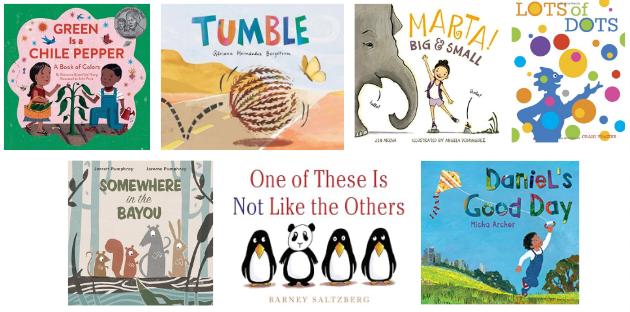
  • Are You Big? by Mo Willems
  • The Button Book by Sally Nicholls and Bethan Woollvin
  • Dim Sum Palace by X. Fang
  • Daniel’s Good Day and Wonder Walkers by Micha Archer
  • Lots of Dots by Craig Frazier
  • Mr. Scruff by Simon James
  • Now by Antoinette Portis
  • One of These Is Not Like the Others by Barney Saltzberg
  • Somewhere in the Bayou by Jarrett and Jerome Pumphrey
  • Tumble by Adriana Hernandez Bergstrom

Cover images of Green is a Chile Pepper, Tumble, Lots of Dots, Marta Big and Small, Somewhere in the Bayou, One of these is Not Like the Others, Daniel's Good Day

And here are 10 more that overlap with the Jbrary list:

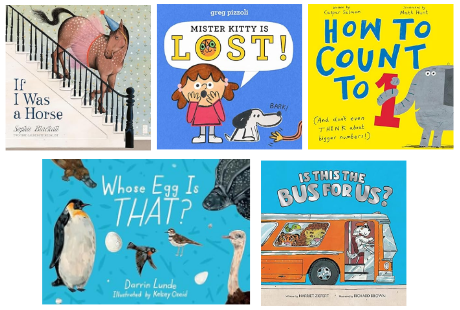
  • How to Count to One by Caspar Salmon
  • If I Was A Horse by Sophie Blackall
  • I’m Going to Build A Snowman by Jashar Awan
  • Is This the Bus for Us? by Harriet Ziefert and Richard Brown
  • Just One Flake by Travis Jonker
  • Mister Kitty is Lost! and Lucky Duck by Greg Pizzoli
  • The Rainbow Snail by Karin Akesson
  • Roll Little Pea by Cecile Bergame and Magali Attiogbe
  • Superbaby! by Stephanie Parsley Ledyard and Lincoln Agnew
  • Whose Egg/Footprint/Poop Is That? by Darrin Lunde and Kelsey Oseid

Cover images of If I Was A Horse, Mister Kitty Is Lost, How to Count to One, Whose Egg Is That, Is This the Bus for Us

Over the past half-year, I’ve made an effort to include Spanish/English bilingual books in my storytimes. Some of the ones that have worked well are:

  • Marta! Big and Small by Jen Arena and Angela Dominguez
  • I’m Hungry / Tengo Hambre and How Are You / Como Estas? by Angela Dominguez
  • Round Is A Tortilla / Green Is A Chile Pepper / One Is A Pinata by Roseanne Greenfield Thong and John Parra

What are your storytime favorites?

Book Browse Bear: Serendipitous Suggestions

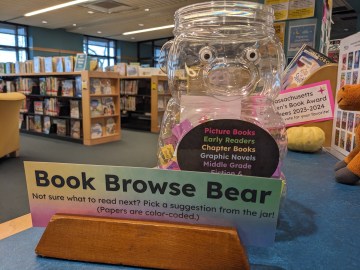
Inspired by the “don’t know what to read?” jar up in our teen room, which has suggestions by genre, and by an empty bear-shaped container I found in the closet, Book Browse Bear was born! There are about 40 titles in each of the following categories: picture books, early readers, chapter books, middle grade graphic novels, and middle grade fiction & nonfiction. (These are color-coded, naturally.) It’s been fun to see people digging into the jar, and fun to help them find the books on the shelves (or another book, if that one is checked out).

Book Browse Bear

If you’d like to make something similar for your library, you can use the link above to make a copy of my lists and adapt them to the collections on your shelves. It’s a great way to promote some favorite titles, especially backlist ones that may not be circulating as well anymore. Happy browsing!

Book Lists for Tough Topics

In any workplace, there are going to be certain questions you’ll be asked over and over again. (“Where’s the bathroom?” for example.) As a children’s librarian, people ask me lots of questions about library programs and services, and ask for help finding books – in particular, books about animals, books about “things that go” (trucks, construction vehicles, etc.), and books about dinosaurs. I am always happy to hand a kid a book about a backhoe or a brachiosaurus or a bat! But I also get questions from caregivers about weightier topics: starting school or switching schools, moving to a new home, managing big feelings, welcoming a new baby, or dealing with grief over the loss of a loved one.

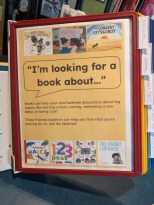
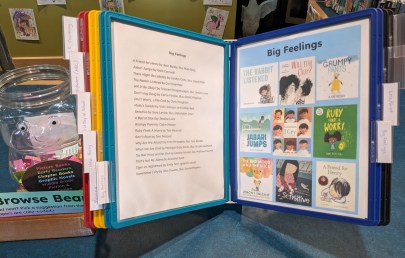
"I'm looking for a book about" page of the book listsWell, I may not theme my storytimes, but I’ve been keeping a google doc since about 2018 with lists of books by topic; between that and my notes-to-self in LibraryThing, I’m usually prepared with suggestions when these questions come up. This month, I’ve worked to create up-to-date lists for my library, with titles we own so that patrons can have a book in hand right away. I relied on my own lists, consulted some lists the previous librarian had created, and used some of the features in the library catalog to come up with suggestions for books about the first day of school, moving, new siblings, big feelings, and grief/loss, as well as alphabet and counting books and wordless picture books.

In my library travels, I’ve seen themed lists like these displayed in “flippy things” like this desktop reference system, which I was able to get for my library. The lists now live there, and I plan to keep them updated as relevant titles are published each year. If you’d like to see the lists, or adapt them for use in your own school or public library or classroom, the lists are available as a google doc and the visual lists (with book covers) are available as google slides. Feel free to make a copy and make them your own.

Book List open to "Big Feelings"

Next to the “flippy thing” in the photo above, you can kind of see the “Book Browse Bear,” another (more fun/random/spontaneous) readers’ advisory tool I made this month. But that will be another post!

Tis the season for picture books and graphic novels

I developed these two presentations for the senior center, but why not share more widely?

Picture This: Picture-Perfect Gift Books for the 2023 holiday season (or whenever! Books are good 365 days a year).

With an older audience in mind, I focused on recent titles from our current golden age of picture books, from wordless wonders like Aaron Becker’s Journey to Caldecott winners like Sophie Blackall and Matthew Cordell, from nonfiction to humor to holidays. Does a kiddo in your life need a new picture book this month? Sure they do!

Humor slide from Picture Books presentation: The Big Cheese, Bathe the Cat, Gotta Go, A Very Cranky Book

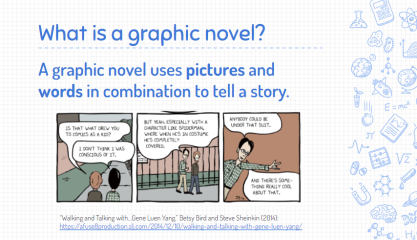
What Are Graphic Novels (and why are they so great)? is an attempt to introduce adult readers to a format that might be new for them, and to dispel the harmful idea that graphic novels aren’t “real” books. (Graphic novels ARE real books! If your kids/students are reading graphic novels, they’re reading! And they probably have better visual literacy skills than you do. While I’m up here on my soapbox, audiobooks are real books, too.)

"What is a graphic novel?" slide from GN presentation

Links will take you to Google Slides presentations. For both sets of slides, I used SlidesCarnival (shout-out to my grad school friend Becca for introducing me to this resource).

Readers, I hope you check some of these books out from the library, or buy (local if you can!). School and public librarians, feel free to copy and remix if that’s helpful to you; please give credit. Neither of these presentations is intended to be comprehensive – just some award winners and lots of my own personal favorites. Happy reading!

Success stories: great read-alouds for K-3

There’s a big difference between reading a picture book to yourself, reading it with one other person, and reading it to/with a group. (If you frequently read aloud to children and you haven’t already read Megan Dowd Lambert’s Reading Picture Books With Children, I highly recommend it for making your storytimes more interactive and engaging.) Without further ado, here are some of the picture books that worked incredibly well at my school this year, for students in kindergarten through third grade:

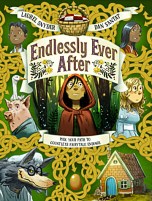
  • Endlessly Ever After by Laurel Snyder and Dan Santat: Cover of Endlessly Ever AfterBecause this is a choose-your-own-adventure book, you can read it several times with the same group (and they will ask for it again and again!). Every time a choice comes up, I read both choices and ask them to vote. This works with upper elementary as well as with the younger grades.
  • Don’t Hug Doug by Carrie Finison and Daniel Wiseman: Cute, friendly, glasses-wearing Doug likes YOU, he just doesn’t like hugs, except under very specific circumstances (are you Doug’s mother? Is it bedtime?). Approachable Doug is the perfect character to deliver this important message about consent.
  • Dozens of Doughnuts by Carrie Finison and Brianne Farley: This is a rhyming delight, with the most delicious endpapers ever. Perfect for fall, just as bears like LouAnn are going into hibernation.
  • The Leaf Thief by Alice Hemming and Nicola Slater: An autumnal, excellent execution of the buddy comedy featuring high-strung Squirrel and tolerant Bird is a funny story and a great way to explain what happens to leaves in fall. There’s a spring version, too (Don’t Touch That Flower!)
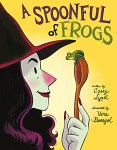
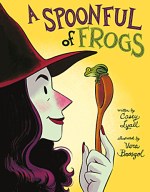
  • A Spoonful of Frogs by Casey Lyall and Vera Brosgol: spoonful of frogsThe witch main character and the frogs she tries to add to her soup are perfect for around Halloween time, and “PUT the FROGS on the SPOON” may become a mantra.
  • Triangle/Square/Circle by Mac Barnett and Jon Klassen: These three books, as a group, worked beautifully when kindergarteners were learning about shapes, and they are just fantastic to read aloud; they don’t get old, and the characters’ feelings and dilemmas are easy for the kids to understand and empathize with.
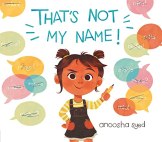
  • That’s Not My Name by Anoosha Syed: thatsnotmynameThis is great for the beginning of the year when everyone is learning each other’s name. Most kids can relate to the experience of having someone mispronounce your name or call you the wrong name, and they know the feeling; this book encourages them to insist on being called the right name the right way, and take the time to do the same for others.
  • I Want My Hat Back/This Is Not My Hat by Jon Klassen: Yes, more Klassen, but these two books are brilliant for all ages. Ask the kids what happened at the end; their inferences may surprise you.
  • How to Apologize by David LaRochelle and Mike Wohnoutka: Straightforward, kid-friendly language and funny illustrations present an important lesson in a humorous and impactful way. A good one for the beginning of the year, or any time. Cover image of Hot Dog
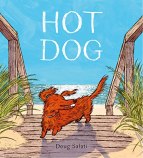
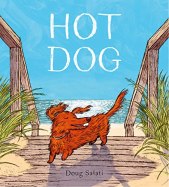
  • Hot Dog by Doug Salati: This year’s Caldecott winner was popular not just during our Mock Caldecott unit in January, but kids have been asking me to borrow it since then – it clearly stayed with them.
  • Knight Owl by Christopher Denise: A Caldecott honor book that was also included in our Mock Caldecott unit (it got the most votes in our school), Knight Owl features absolutely beautiful art, an adorable hero, and a solution involving pizza.
  • Somewhere in the Bayou by Jarrett and Jerome Pumphrey: “Smack! Splash!” This book is built on pattern, repetition, onomatopoeia, surprise, and empathy. It was fantastically popular in our Mock Caldecott, and so fun to read aloud – it truly doesn’t get old.
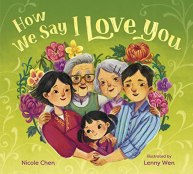
  • How We Say I Love You by Nicole Chen and Lenny Wen: howwesayiloveyouThis has strong appeal on three levels: first, there’s the seek-and-find element (a heart on each page); next, the cultural representation; and finally, the way it opens a discussion of how we show love in our own families. Every single class I read this book with (first through third grade) came up with a whole list, with nearly every kid contributing, and some adding more than one idea.
  • Sam and Dave Dig A Hole by Mac Barnett and Jon Klassen: Yes, Barnett/Klassen again. The kids absolutely freak out as Sam and Dave remain oblivious to the “spectacular” pink gems they bypass as they dig. Kids notice that the dog knows where they should be digging, though, and they love comparing the front and end spreads to spot the differences.
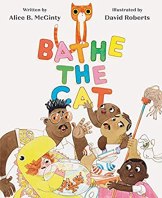
  • Bathe the Cat by Andrea Beaty and David Roberts: Cover image of Bathe the CatPure good fun; the kids catch on quickly as the family’s to-do list gets more and more ridiculous. Great representation, too, of a mixed-race family with two dads.
  • How Do Dinosaurs… by Jane Yolen and Mark Teague: These rhyming stories are classics for a reason. I like …Learn to Read and …Go to School for the relevant educational setting. Many kids will already be familiar with this series, if not these specific titles, and they’re usually happy to see and hear them again.
  • Interrupting Chicken by David Ezra Stein: The idea and the execution are equally good, the humor is spot-on, and the two sequels maintain the quality of the original (when you store your cookies in a clock, it’s always cookie time!).
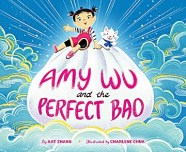
  • Amy Wu and the Perfect Bao by Kat Zhang and Charlene Chua: amywuperfectbaoKids identify with Amy’s problem, and even if the word “bao” is unfamiliar, nearly every culinary tradition has a version of dumplings (knish, empanada, pierogies, etc.). Amy finally figures out the solution to her problem, and her loving, supportive family (including pink-haired grandma and adorable white kitten) is right there with her.
  • A Seed Grows by Antoinette Portis: I think this is what’s called “deceptively simple,” but it’s brilliant in its simplicity. It ties in with K/1st curriculum when they study plants, and there’s an opportunity to build in movement: start in a crouch as a seed, grow up toward the sky/ceiling, branch arms for leaves and blossoms, and gently fall back down.
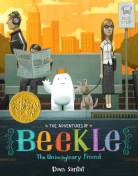
  • The Adventures of Beekle by Dan Santat: caldecott-beekleThis Caldecott winner uses color effectively to show an (un)imaginary friend’s journey into the real world. (See also: Real to Me by Minh Lê and Raissa Figueroa)
  • Don’t Touch My Hair by Sharee Miller: A little Black girl loves her hair, but doesn’t love when other people touch it without asking. She tries running away from the problem, but eventually uses her voice to set boundaries.
  • Oh, No! by Candace Fleming: Effective use of repetition encourages students to participate in the chorus (“oh, no!”) as one animal after another falls into a pit, then cheer for their eventual escape as the meaning of the final “oh, no” shifts.

Do you have any knock-em-out-of-the-park read-alouds? Please share in the comments!

ALA Youth Media Awards 2023

Cover image of Hot Dog
What a day for a dog!

Last year, I followed the ALA YMA on Twitter while preparing to teach seventh graders online research skills; the year before, I watched in my pajamas with my five-year-old on my lap. This year, I missed the beginning of the livestream, but the timing worked out so that a third grade class was in the library when the Caldecott awards were announced, and they were so excited!

As I watched not just the Caldecotts but all the other awards roll in, it struck me more than any previous year how many deserving books there are. Not that I disagree with the committees’ choices – plenty of books I cheered for, others I hadn’t read – but there are just so. many. good. books in any given year! And because I was on this year’s Heavy Medal committee (Mock Newbery) and ran a Mock Caldecott program at my school, I was more attuned than usual to award predictions.

So rather than recap today’s winners, I’m going to list a few middle grade and picture books I think could have gotten awards, and just happened not to, but are still wonderful and you should read them:

Middle grade:

  • A Rover’s Story by Jasmine Warga
  • Violet and Jobie in the Wild by Lynne Rae Perkins
  • The Ogress and the Orphans by Kelly Barnhill
  • Different Kinds of Fruit by Kyle Lukoff
  • Where the Sky Lives by Margaret Dilloway
  • The Insiders by Mark Oshiro
  • The Door of No Return by Kwame Alexander
  • Black Bird, Blue Road by Sofiya Pasternak
  • A Duet for Home by Karina Yan Glaser

Picture Books

  • Mina by Matthew Forsythe
  • Blue: A History of the Color as Deep as the Sea and as Wide as the Sky by Nana Ekua Brew-Hammond, illustrated by Daniel Minter
  • Sweet Justice by Mara Rockliff, illustrated by R. Gregory Christie
  • A Spoonful of Frogs by Casey Lyall, illustrated by Vera Brosgol
  • I Don’t Care by Julie Fogliano, illustrated by Molly Idle and Juana Martinez-Neal
  • Endlessly Ever After by Laurel Snyder, illustrated by Dan Santat
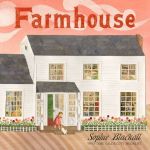
  • Farmhouse by Sophie Blackall
  • Snow Horses by Patricia MacLachlan, illustrated by Micha Archer

Squirrels that turn out to be cats, magic doors that lead to a refuge and friendship, a Mars rover with human emotions, a choose-your-own-adventure fairytale, escaping frogs, an unsung civil rights hero, some beautiful collage, and more – there’s something for everyone, and awards are only a piece of it all. Congratulations to all authors and illustrators who put something out into the world in 2022; readers are grateful.

What to read next?

How do you find the next book you’ll read, especially when you need a new book every one to four days? I gather suggestions from many places, adding titles to my to-read list faster than I can read them (even picture books!). Here are some of my best resources for finding books:

  • Recommendations from friends and colleagues: True, a lot of my friends are librarians, or teachers, or simply bookworms. After years of trading recommendations, we’ve learned each other’s tastes, so we have a good idea who will love a certain book (or not) and why. I also add to my to-read list monthly(ish) during my Adults Who Read Children’s Books Club meeting; it’s a group of school and public librarians, and their recommendations are incredible.
  • Reviews in trade publications: School Library Journal, Booklist, and Kirkus are my go-to sources. Even if you don’t have access to these, most public library online catalogs have at least one or two review sources built into them, so if you look up a book, you can see a review (or two or three).
  • Other reviews: Larger public libraries often have free-to-the-public copies of BookPage, and there are a handful of sites I check in on occasionally, like BookRiot.
  • Wowbrary: Some public libraries use this service; I get a weekly e-mail from mine with a list of new books in different categories.
  • Book Twitter: I joined Twitter when I was in library school, and I mainly follow authors (and illustrators), bookstores, libraries, publishers, agents, editors, and other bookish accounts. It’s the one social media app I have on my phone, and often enough I’ll see book news there before anywhere else.
  • Publisher newsletters: What with one thing and another, I’ve ended up on a lot of publishers’ newsletters: I get notices from Candlewick, HarperCollins, Little Brown Young Readers, Penguin Random House, Chronicle, and more. These tend to promote upcoming titles or those that are topical in some way (e.g. for Hispanic Heritage Month or Black History Month).
  • Publishers Lunch: An industry newsletter I started getting in 2007 when I began working at a literary agency and never unsubscribed from. I no longer read it every day, but often find something good when I do.
  • Edelweiss and NetGalley: These two sites offer digital Advance Reader’s Copies (ARCs, or galleys) to librarians; they’re a good place to browse for upcoming titles and get an early look.
  • LibraryThing Early Reviewers: As an active LT user, I browse these offerings monthly and often request (and receive!) an ARC of a book I’m excited about.
  • Library Link of the Day: This is more for library news than specific book recommendations – and lately, sadly, a majority of the links have been about attempted challenges or bans at schools and public libraries throughout the country. (Then again, these are recommendations, in a way, since I’m definitely the kind of person who will seek out a book others are trying to limit access to.)
  • Library patrons: Working in a library, I’m not only surrounded by books, I’m surrounded by readers! Readers are happy to tell you when they think that you, too, would enjoy their most recent favorite book. And isn’t it my professional responsibility to see what all the fuss is about?
  • Logo of 31 Days, 31 Lists from Fuse8End-of-year lists: For #kidlit people, Betsy Bird’s “31 Days, 31 Lists” is a treasure trove; I think at least three-quarters of the books on my kitchen table right now are because of her. I also enjoy NPR’s Book Concierge, which has been renamed Books We Love; there are lots of filters to play with along the left side, so you can narrow down the many recommendations, or search past years (it goes back to 2013). Of course, every trade and popular publication does its own end-of-year list(s) as well.

Where do you get your book recommendations? Is there a fantastic source I could add to my list?

Edited 1/8/2022: Bookshops! I can’t believe I left them off my original list, but I’ve discovered many, many wonderful books through in-person browsing and recommendations from booksellers (especially at the Carle Museum shop) and bookstore e-mail newsletters. If you haven’t already, sign up for your favorite local bookstore’s newsletter.