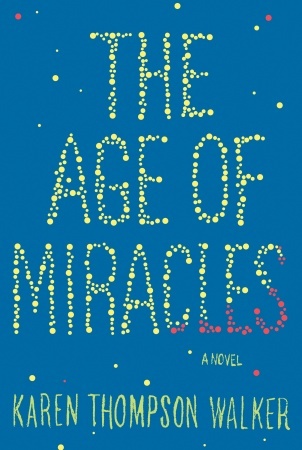
The Age of Miracles by Karen Thompson Walker

There’s been plenty of buzz about Karen Walker Thompson’s debut novel, The Age of Miracles. Often I’m skeptical of hype, but I did enjoy this book very much. Rather than jumping on the post-apocalyptic or dystopian bandwagon, The Age of Miracles is a slightly different genre, “speculative fiction.” It reminds me of Alan Weisman’s nonfiction thought experiment book, The World Without Us, which examines what would happen to the planet if humans disappeared. In this case, however, the premise is that the earth’s rotation – for some undiscovered and unexplained reason – has slowed.

This, of course, has immediate and drastic effects on ordinary life for the narrator, Julia, and her family and friends. Unlike most post-apocalyptic or dystopian books, here the reader gets to experience the transition itself, rather than being dropped into a world after the catastrophe – whether natural or man-made – has occurred. In addition to “the slowing,” there are the changes Julia would be going through anyway as an eleven-year-old girl; the author’s focus is on character and theme, on the effects of the slowing rather than its cause.

Julia narrates her childhood in the past tense, at a distance of several years. Her reflection is more matter-of-fact than nostalgic: “One thing that strikes me when I recall that period of time is how rapidly we adjusted. What had been familiar once became less and less so…But I guess every bygone era takes on a shade of myth” (82).

There is no definite solution to the slowing, no wrapping up of loose ends or determination of the narrator’s ultimate fate. Julia and her friend Seth’s message, written in wet concrete, serves as the conclusion: We were here.

Beautifully written and thought-provoking, I can see this inspiring great discussions in book clubs.

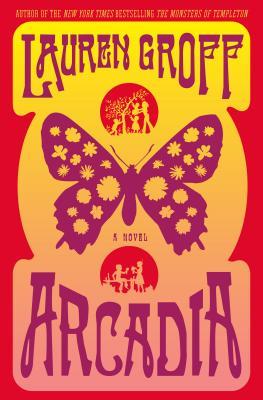
Arcadia by Lauren Groff

He keeps his deepest belief tight to him: that people are good and want to be good, if only you give them a chance. That’s the most magnificent thing about Arcadia, he knows. It is the shell that protects them. (98)

I just finished Arcadia by Lauren Groff two days ago, and I’m inclined to agree with the back-of-book blurb from Richard Russo: “It’s not possible to write any better without showing off.” I have enjoyed Groff’s previous work (The Monsters of Templeton, Delicate Edible Birds) and she just seems to be getting better. Arcadia is the story of Bit, who was born to hippie parents on a commune – Arcadia – in rural New York. The first sections of the book are his childhood and teenagerhood in Arcadia, as the commune evolves and eventually dissolves. Then there is a skip forward in time, and Bit is an adult living in New York City, with a small daughter and a disappeared wife. The final section, which takes place in the near future (2018), is full of hope and fear: a pandemic, SARI, is sweeping the globe. At the same time, Bit’s mother Hannah is dying of ALS. Hannah, Bit, and Bit’s daughter Grete return to the house Bit’s father Abe built in Arcadia to wait out the pandemic and take care of Hannah.

The imagination required to create the atmosphere of Arcadia and the character of Bit is similar to that of Room, Emma Donoghue’s novel about a boy who has spent his whole life in one room, and is overwhelmed by the world when he escapes. As the 1970s end and the commune crumbles, Bit’s entire way of life, everything he has known and that has been normal to him, disappears, and he has to learn to live in the world “outside.” (Regretfully, this transition doesn’t get its own section, but it is briefly sketched out in the adult Bit’s memories.)  Everyone must leave their childhood behind, but it is a rare case in which the whole community and its way of life ceases to exist as well. “It isn’t important if the story was ever true,” Bit realizes. “…He knows stories don’t need to be factual to be vital. He understands, with a feeling inside him like the wind whipping through a room, that when we lose the stories we have believed about ourselves, we are losing more than stories, we are losing ourselves (208).

One of the things that does remain is Bit’s relationships with others from Arcadia; most of them reconnect later in life. Many also end up in New York City, which would seem to be the opposite of a commune, but in fact has similarities. as Bit says to his father Abe, “It wasn’t the country that was so beautiful about the whole Arcadian experiment, don’t you see? It was the people, the interconnection, everyone relying on everyone else, the closeness. The villages are all dying now, small-town America is dying, and the only place where the same feeling exists now is here, in the city, millions of people all breathing the same air” (208).

Overall, this is a work of tremendous imagination and empathy. I would suggest it to anyone, particularly those who enjoyed Groff’s earlier work, Emma Donghue’s Room, or Jennifer Egan’s A Visit From the Goon Squad.

Summer Books

It’s been far too long since I’ve posted any book reviews here (though I’m always active on Goodreads). I realized recently that the last several books I’ve read are either very new or haven’t been published yet, but all come out this summer, so I’m offering a little preview.

Broken Harbor by Tana French (July 24, 2012)
This is the fourth Dublin Murder Squad book. I hesitate to call it a series, because you can read the books in any order and they are all perfectly good standalone novels; however, characters in one book often appear in the other books. Broken Harbor features detective Scorcher Kennedy, who investigates what looks like a quadruple-homicide in a housing development called Brianstown (an area that used to be called Broken Harbor). Together with his rookie partner, Kennedy digs for the truth, relying on expertise and instinct. French does a beautiful job maintaining the suspense throughout, and there’s real character development there as well. I’d rank this just below The Likeness (my favorite of hers), and if you’re looking for a good creepy murder mystery with some good twists and turns, this one’s for you.

The Red House by Mark Haddon (June 12, 2012)
Author of The Curious Incident of the Dog in the Nighttime and A Spot of Bother, Haddon follows those two successes with another. It may take some time to adjust to the style of storytelling – point of view often changes from one paragraph to another – but once you get to know the characters, the reading experience becomes smoother. The Red House is the story of eight people on holiday, and the way in which Haddon tells the story shows their relationships to each other as well as what is going on in their own lives. It’s nothing earth-shattering, but it is very well done.

The Lost Prince by Selden Edwards (August 16, 2012)
I had high hopes for this one, as it is a follow-up to The Little Book, which I adored. The Little Book involved time travel to fin de siecle Vienna, and was fascinating because of its setting, characters, and plot (the time travel bit). The Lost Prince simply isn’t as good. The main character, Eleanor Burden, returns from Vienna with her destiny in her hands: specifically, in a journal that sketches out future events that she must help bring about. She struggles to follow the incomplete instructions, never knowing if her actions are the right ones. She is determined and brave, but the sense of magic and adventure that The Little Book had is lacking in The Lost Prince. Even twists that should have the impact of revelations (relating, for example, to Arnauld “the Haze” Esterhazy’s true past) lack power.

One Last Thing Before I Go by Jonathan Tropper (August 21, 2012)
If you liked Tropper’s previous work – How to Talk to a Widower, for example, or This is Where I Leave You – then picking this up is a no-brainer. Again, Tropper delivers a heartbreaking suburban comedy. Silver, our middle-aged male narrator, has an ex-wife, an estranged daughter, supportive parents, and friends in situations similar to his own. His life is stagnant, but when he discovers that he has a life-threatening medical condition, he has to decide if he wants to live or wants to die. For most, this isn’t a tough question, but it takes Silver the length of the book to decide. Meanwhile, there are moments of laughter, introspection, shame, and love. Recommended, especially for fans of Nick Hornby and Michael Chabon.

Gold by Chris Cleave (July 3, 2012)
I missed Cleave’s first two books, Incendiary and Little Bee, but now I see I shall have to go back and look them up, because Gold blew me away. It is the story of three Olympic cyclists – Zoe, Kate, and Jack – their coach, Tom, and Jack and Kate’s eight-year-old daughter Sophie, who has leukemia. Zoe, Jack, and Kate met at age nineteen, and Zoe and Kate have been friends and rivals ever since. They are now thirty-two, and London 2012 will be their last Olympics. Due to a rule change, however, only one of them will be able to qualify to go. Will it be Zoe, who has been racing away from events in her past since childhood, and for whom winning is everything? Or will it be Kate, who, having missed out on Athens and Beijing to take care of Sophie, inarguably deserves to go? The relationships between these five characters, as much as the actual events of the story as it unfolds, are the reason to keep reading. This is a five-star (five-Olympic ring?) book.

Recommended Recommenders

A recent blog post on the Boston Globe site highlights seven “book recommendation websites” people can turn to for reading suggestions. I was already familiar with four of the seven, but decided to explore the rest for comparison’s sake. If I’ve made a mistake, feel free to correct me in the comments; conversely, if you are a devoted member of one of these sites and want to sing its praises, please feel free to do that as well!

Goodreads
This is a site I use every day; I’ve been a member since 2007, and have over a thousand books on my “shelves.” Goodreads offers a great way to keep track of what you’ve read (including when you read it, what you thought about it, your rating – out of five stars – and who recommended it to you), what you’re currently reading, and what’s on your to-read list for the future. You can create more shelves in addition to these three – historical fiction, for example, or biography – and you can see what your friends have read. Goodreads will recommend books for you based on your shelves, and you can see others’ lists, take quizzes, and sign up for giveaways. There are also many “Goodreads authors,” published authors who participate as members. One of my favorite features of the site is that it combines personal recommendations with crowd-sourced ones, so I can see what my friends thought of a book as well as what everyone else of Goodreads thought of it. Great usability, too – the interface is pleasant and intuitive, you can sort your lists by author, title, date read, date added, rating, etc., and you can get some nice descriptive statistics too.

LibraryThing
LT is similar to Goodreads in many ways: you can create your own shelves and tags, see your friends’ books, create a profile, get recommendations, and participate in giveaways. LT offers richer metadata, including Dewey Decimal Classification and Library of Congress Classification (DDC and LCC). The interface isn’t quite as user-friendly, but it’s a robust site, and if Goodreads didn’t exist, I’d happily use LT as my primary books-and-reading website.

Shelfari
Shelfari is powered by Amazon, which means two things: (1) it is designed to get you to buy books, preferably from Amazon, and (2) the design is beautiful and the user experience (UX) is fantastic. I remember an earlier version of the site, which was kind of clunky – maybe why I chose Goodreads instead of Shelfari five years ago – but it’s clean and colorful now. Shelfari rates high on content and interactivity; like Goodreads and LibraryThing, it’s a social networking site for readers (or in their words, “a community-powered encyclopedia for book lovers”). The front page pushes books that are already popular, including New York Times bestsellers and Amazon bestsellers, but if you dig deeper into the site, you can narrow by category or subject. One of the most useful features I discovered was the Series tab, where you can see all the books in an author’s series, in the correct order – definitely helpful at the reference desk.

Whichbook
I’ve already written about Whichbook; I like it very much. It isn’t nearly as robust as Goodreads, LT, or Shelfari, but it isn’t meant to be; it’s less a social networking site for bookworms and more of a reader’s advisory site. It’s whimsical, with its sliding scales (optimistic to bleak, funny to serious, safe to disturbing) instead of a traditional search box, and it does a good job suggesting off-the-beaten-path books rather than the most popular books. There are lists as well, in categories such as “Bad Luck and Trouble” and “Weird and Wonderful,” and you can also create your own lists. Whichbook promotes libraries over Amazon: the “borrow” button is ahead of the “buy” button.

What Should I Read Next?
WSIRN, as it’s called, is one of the most basic sites in this collection. You can create two lists: like and dislike. You can get recommendations based on any title on your list; however, these recommendations are based “purely on collective taste.” That is, books on the same list become associated with each other. This might work fine if everyone liked only one genre, so all mysteries were associated with each other, all romances associated with each other, etc., or if users were able to create and name multiple lists (e.g. “favorite biographies”), but that’s not the case. I have read and loved many books that were wildly different from each other, and the only thing they had in common was that I liked them; I wouldn’t necessarily recommend them both to the same person. That said, WSIRN is a simple, quick tool, and the developers may add functionalities in the future.

The Staff Recommends
The Staff Recommends is, as far as I can tell, McSweeney’s editor-at-large John Warner. (Supposedly also his “team of readers,” but all the reviews I read on the site were written by John.) TSR calls itself “an advertorial publication,” meaning they do get paid for recommending books, but they only recommend books they like; furthermore, proceeds are donated to a nonprofit, so I feel confident that the recommendations are honest. So, if you happen to have the same taste as John and his “team of readers,” you’re in luck! Whether you agree with him or not, the reviews are thoughtful and well-written. As of today, there are eight current selections and a few lists (e.g. crime novels) consisting of shorter reviews of more titles. TSR offers fewer points of view and less content than most of the other sites in the article, but it’s worth bookmarking nonetheless.

Gnooks
The main appeal of this site is the “literature map” that it creates when you type in the name of an author. However, there’s no information as to how the relationships between authors are determined. I want to know why Author A and Author B are considered similar: is it the subjects they write about? Their writing style? Hard to say. You can also get recommendations based on authors you like (I tried it; results were pretty accurate, but there were only three). I probably won’t use this regularly, but I do like that it’s author-centric rather than book-centric.
In the Beginning

What makes you decide to read a certain book? Is it the cover (whether or not you should judge a book by its cover, many do), the flap copy, a friend’s recommendation, familiarity with the author? Something else?

Friends’ recommendations are important to me, and sometimes I’ll look at reviews as well. I always read the flap copy (on the back of a paperback or the inside front flap of a hardcover), but often what clinches it is the first sentence. Am I hooked after the first sentence? After the first page? I figure the author must put as much or equal thought and effort into the first sentence as any other in the book, the first sentence being the equivalent of a first impression.

Here are a few memorable first sentences:

“Leon Trotsky is trying to kill me.” –The Autobiography of Joseph Stalin: A Novel, Richard Lourie

“I had this friend, you see, that everyone loved.
(My name is Sid Halley.)
I had this friend that everyone loved, and I put him on trial.” –Come to Grief, Dick Francis

“It was a dark and stormy night.” –A Wrinkle in Time, Madeleine L’Engle

“Lyra and her daemon moved through the darkening hall, taking care to keep to one side, out of sight of the kitchen.” –The Golden Compass, Philip Pullman

“If you are not here, then why are you everywhere?” –Love Begins in Winter, Simon Van Booy (epigraph)

What are your favorite beginnings, most memorable first sentences?

What You Read When You Don’t Have To

Someone I know is leaving soon to take a job in a foreign country. He will be away for a long time, and wanted to stock up on books (ebooks, actually, on his Kindle) before leaving. I did a little reader’s advisory interview, and he said he had read and enjoyed fantasy and sci-fi in the past but wasn’t much of a reader otherwise and was looking to expand. Here’s what I recommended, with occasional genre/subject/additional works notes in parentheses (forgive me for not putting each title into italics):

Classic dystopia
1984, George Orwell
Brave New World, Aldous Huxley
Fahrenheit 451, Ray Bradbury
Anthem, Ayn Rand
The Giver, Lois Lowry (and sequels Gathering Blue and Messenger; YA)
The Handmaid’s Tale, Margaret Atwood
Oryx and Crake, Margaret Atwood

Classic fantasy/sci-fi
The Hitchhiker’s Guide to the Galaxy, Douglas Adams
His Dark Materials (trilogy: The Golden Compass, The Subtle Knife, The Amber Spyglass), Philip Pullman (YA)
A Wrinkle in Time, Madeleine L’Engle (also: A Wind in the Door, A Swiftly Tilting Planet, Many Waters; YA)
Neverwhere, Neil Gaiman (fantasy)

Contemporary Literary Fiction
The Amazing Adventures of Kavalier & Clay, Michael Chabon (comic books, history; Pulitzer Prize)
High Fidelity, Nick Hornby (music)
The Prince of Tides (and/or The Lords of Discipline), Pat Conroy (the South, violence, families)
The Story of Edgar Sawtelle, David Wroblewski (dogs)
The Poisonwood Bible, Barbara Kingsolver (missionary family in Africa)
The Brothers K, David James Duncan (brothers, baseball)
Faithful Place, Tana French (mystery/suspense)
This Is Where I Leave You, Jonathan Tropper (crazy families, funny)
A Thousand Splendid Suns, Khaled Hosseini (Afghanistan)
Edited to add (4/13/12): Life of Pi, Yann Martel
Edited to add (4/13/12): The Septembers of Shiraz, Dalia Sofer (Iran)

Classic American Literature
East of Eden, John Steinbeck
Lolita, Vladimir Nabokov (though English was the author’s third language)
The Great Gatsby, F. Scott Fitzgerald
For Whom the Bell Tolls, Ernest Hemingway
Ordinary People, Judith Guest

Nonfiction
Science/Environment
The Ghost Map, Steven Johnson
The World Without Us, Alan Weisman
A Short History of Nearly Everything, Bill Bryson
The Immortal Life of Henrietta Lacks, Rebecca Skloot
In Defense of Food, Michael Pollan

History
The Professor and the Madman, Simon Winchester
Under the Banner of Heaven, Jon Krakauer (also Into the Wild and Into Thin Air)
Unbroken, Laura Hillenbrand (also Seabiscuit)
In Cold Blood, Truman Capote (true crime)
How the Irish Saved Civilization, Thomas Cahill
The Wordy Shipmates, Sarah Vowell (Massachusetts Bay Colony)
In the Garden of Beasts, Erik Larson (American family in Germany, pre-WWII)

Popular Psychology
The Tipping Point, Malcolm Gladwell
How We Decide, Jonah Lehrer

Biography/Memoir
The Happiness Project, Gretchen Rubin
What I Talk About When I Talk About Running, Haruki Murakami
On Writing, Stephen King
Charles & Emma, Deborah Heiligman (YA)

Essays
Manhood for Amateurs, Michael Chabon
How To Be Alone, Jonathan Franzen
The Polysyllabic Spree, Nick Hornby (books/music)
-anything you can find by Ann Patchett, including The Getaway Car and This is the Story of a Happy Marriage

The title of this post borrows from an Oscar Wilde quote, “It is what you read when you don’t have to that determines what you will be when you can’t help it.” Feel free to add additional recommendations in the comments.

Let Us Now Praise Libraries, Librarians

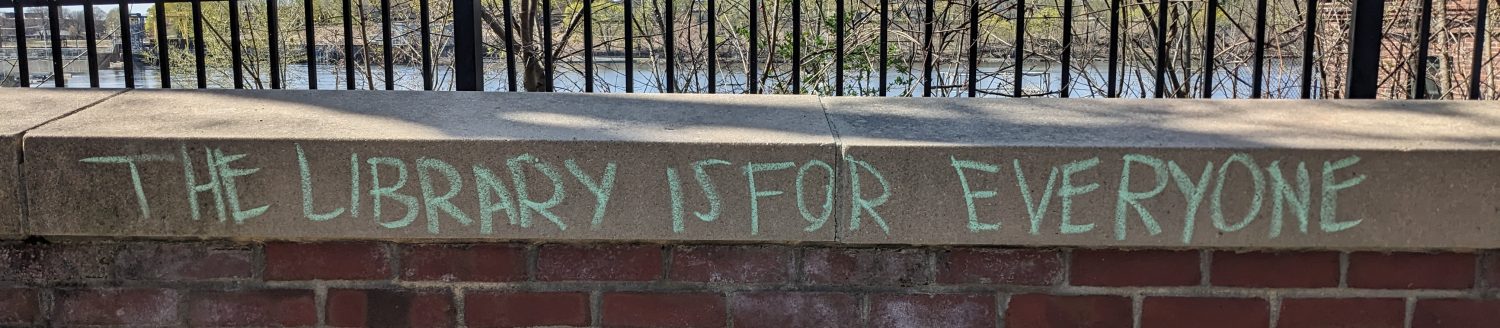
An article in the Boston Sunday Globe caught my eye this morning, with the headline “Let Us Now Praise Libraries, Librarians.” (A true librarian would have titled it “Let Us Now Praise Librar*”; hats off to you if you get the joke.) The article’s author, Anthony Doerr, writes about his childhood reading, “Here’s what I think about now: No one ever told me no. Not Mom, not the prim librarians stamping return dates onto slip after slip. No one ever said: This book is outside your age range; this book is too complicated.”

I had a similar childhood experience, reading far ahead of my “age appropriate reading level” and not coming to any harm. I’ve thought about this topic before (see the last three paragraphs of the post “Whose Common Sense?“), and I’m glad to see a similar attitude in print. Doerr writes, “…I worry that we are presenting reading to our kids as a labor to suffer through for which a reward can be earned at the end….The message to young people is obvious: Books are good for you. What’s missing, however, is the idea that sustained reading is magic, a kind of magic that can be wildly addictive, even dangerous.”

He then goes on to create a fantastic analogy, based on the fact that when the brain is stimulated (“when a person is thinking imaginatively and creatively”), it produces endorphins: “Great books are like drugs, readers [are] like junkies, and, yes, to stretch the analogy into absurdity, good librarians [are] like drug dealers.” He finishes, “So, to all you beautiful librarians out there, with National Library Week in the offing….Keep on putting books in the hands of readers, because as every good dealer knows, all it takes is one fix and your patrons are hooked.”

One of the most magical, engaging, imaginative, creative books I can think of is Nick Bantock’s Griffin & Sabine, which is the first of six books (all equally magical) detailing the correspondence between Griffin and Sabine. It’s not your typical epistolary novel (see The Guernsey Literary and Potato Peel Pie Society, also an excellent book), because each postcard and letter Griffin and Sabine exchange is rendered with “their” artwork and handwriting; the reader pulls actual letters out of actual envelopes. (For this reason, my first encounter with the books was in Special Collections at the Mount Holyoke College library.) If you can find these, I highly recommend them; you will find yourself immersed and filled with wonder. “Sustained reading is magic,” indeed.

Bring back the midlist!

There’s a great blog post on YARN (Young Adult Review Network) about the danger of the blockbuster mentality in the publishing world, and about the value of the fast-disappearing “midlist” – books that neither sold millions of copies nor flopped, by authors who had talent and the potential and promise to keep writing good quality books.

We can all identify the blockbusters – The Hunger Games, Twilight, Harry Potter are the obvious ones in YA, and all of those had crossover appeal, which helped them sell even more. There are adult blockbusters too – just look at The New York Times bestseller list. Again, nothing against reading popular books, but let’s brainstorm our favorite off-the-beaten path books – fiction or nonfiction, YA or adult. Here are a few of mine:

Overture by Yael Goldstein

All My Friends Are Superheroes by Andrew Kaufman

The China Garden by Liz Berry

The Good People of New York by Thisbe Nissen

The Stolen Child by Keith Donohue

A Pigeon and a Boy by Meir Shalev

The Various and Celandine by Steve Augarde

Lucky Girls: Stories by Nell Freudenberger

Love Begins in Winter: Stories, Simon Van Booy

What about you? Books that maybe haven’t hit the bestseller list or been heaped with literary awards or prizes, books that haven’t received much publicity buzz from publishers or reviewers, but good books nevertheless. Share your favorites in the comments!

Best of 2011, Part the Third: Fiction (I)

Here is the first batch of novels I’d recommend from my reading last year. Enjoy, discuss, ask questions! I’ll be posting more soon.

The first three Thursday Next books by Jasper Fforde – The Eyre AffairLost in a Good Book, and The Well of Lost Plots – are highly recommended for English majors or otherwise literary types with senses of humor. Set in a surreal version of England in the 1980s, literature is all-important, and Special Ops literary detective Thursday Next encounters such characters as Jane Eyre, Miss Havisham, and the Cheshire Cat throughout her cases. These books are extremely quirky with a lot of made-up jargon, and they’re fast-paced, but if you’re enough of a word-nerd, you’ll keep up. That said, I felt the quality of the series dropped off after the third book, which is why I only recommend the first three books here.

I’ve already raved about State of Wonder by Ann Patchett on my other blog and on the website of the library where I work, so I’ll just say here that Ann Patchett is absolutely one of my all-time favorite authors for a few reasons, all of which are on display in State of Wonder. First, there’s her complete mastery of setting; in State of Wonder, that includes both the Amazon and Minnesota. Wherever she writes about, it seems like she has lived there her whole life, the description is so rich and real. Second, her characters are real people; she understands them all so well, and there’s a real sense of empathy. Thirdly, the plot generally hinges on a situational conflict, rather than a protagonist-antagonist confrontation; this makes the story more interesting and complicated. Finally, the writing itself is just beautiful.

Geraldine Brooks is another author whose new books I always look forward to (Caleb’s Crossing is on my to-read list). She wrote March and Year of Wonders, both of which I’d recommend, as well as People of the Book, which is about a Hanna Heath, Australian rare book expert who is called in to restore the famous and long-lost Sarajevo Haggadah. Each time Hannah turns up a clue to the book’s past, the story jumps to that point in the book’s history: from Spain to Italy to Austria to Bosnia, each in a different time period, tracing the book’s journey to Hanna’s care in the present day. People of the Book is a great choice for those who enjoy stories-within-stories, those who are interested in history or rare book conservation, or those who just like good storytelling.

The Lover’s Dictionary by David Levithan was another of my “staff picks” for the library. It is Levithan’s first foray into literature for adults (he has written extensively for teens, including Boy Meets Boy and Love Is The Higher Law, and has collaborated with other YA authors – Rachel Cohn on Nick and Norah’s Infinite Playlist, John Green on Will Grayson, Will Grayson). The Lover’s Dictionary is funny and poetic by turns, showing a genuine understanding of two people in a relationship. “Definitions” – from “aberrant” to “zenith” – tell the whole story of one couple, from meeting and moving in together to fighting and making up. Through these brief snapshots – anywhere from one line to a few pages – a complete story is communicated.

Best of 2011, Part the Second: Humor and Baking

To break the general nonfiction category down to a manageable size , here are my picks for humor and baking:

Humor:

Sh*t My Dad Says, by Justin Halpern
This was funnier and had more depth than I expected it to be, considering it was spawned from a Twitter account. The quotes of the dad in question are organized thematically into categories and separated by short essays. This book really is laugh-out-loud funny (e.g., On Accidentally Eating Dog Treats: “Snausages? I’ve been eating dog treats? Why the f**k would you put them on the counter where the rest of the food is? F**ck it, they’re delicious. I will not be shamed by this.”)

Bossypants, by Tina Fey, and Is Everyone Hanging Out Without Me? (And Other Concerns), by Mindy Kaling
I wrote about these together on the library’s “staff picks” book review section. They are both in short essay format, easy to read a little at a time or straight through; but more importantly, they are smart and funny. If you like 30 Rock (Fey) or The Office (Kaling), chances are you will like these books. (Also, I found out that Mindy wrote my all-time favorite episode of The Office, “The Injury,” wherein Michael grills his foot on a George Foreman, Dwight gets a concussion, and Jim sprays him in the face with a squirt bottle. But that is neither here nor there.)

Cookbook:

Good to the Grain, by Kim Boyce
This was one of my staff picks, too. Boyce is a pastry chef and a mother, so her goal is to make healthy recipes without sacrificing any of the deliciousness – and by and large, she succeeds. Every recipe (especially the whole wheat chocolate chip cookies) I’ve made from this book has been a success. The sections are organized around the type of flour the recipes require, so you can try out one type at a time.