Recently a parent friend of mine asked me for book recommendations for her kid’s upcoming third birthday, and she specifically requested diverse books. I loved the question, and wanted to share the list I came up with. I’ve written about #WeNeedDiverseBooks before (here’s the official WNDB site), and I’m also mindful of #OwnVoices, i.e. diverse characters written/illustrated by diverse authors (as opposed to, say, a white author writing a Black character). For this list, I’m including books that feature characters that are something other than straight, white, cisgender, upper/middle-class, and non-disabled.
With one exception (And Tango Makes Three), these books have human characters. A tremendous number of picture books have animal characters; they often have wonderful, inclusive messages, but I feel that they don’t quite fit the description.
This is by no means a comprehensive list, but these are books my daughter (also about three years old) and I have enjoyed repeatedly over the past year or so. Many are award winners, and I’ve included the names of the awards so that you can find other past winners and honor books.
Alma And How She Got Her Name by Juana Martinez-Neal: Alma Sofia Esperanza Jose Pura Candela has a very long name, which she doesn’t like, until her father tells her where each part came from; in this way, Alma finds something in common with each of her ancestors and takes new pride in her name. (Caldecott Honor, School Library Journal Best Picture Book)
And Tango Makes Three by Justin Richardson and Peter Parnell, illustrated by Henry Cole: Here’s the animal book exception. Roy and Silo, two male penguins at the Central Park Zoo, hatch an egg and raise Tango as their own chick. (Nonfiction)
The Class by Boni Ashburn, illustrated by Kimberly Gee: Twenty different children get ready for the first day of school, when they become one class. The rhyming text and the illustrations work together to show the broad range of personalities and backgrounds coming together; it’s a light and lovely first day of school book.
Crown: An Ode to the Fresh Cut by Derrick Barnes, illustrated by Gordon C. James: A joyous celebration of the confidence a new haircut gives a young Black boy. (ALA Notable Book, Ezra Jack Keats New Writer Award, Kirkus Prize)


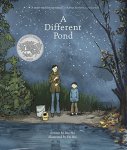
A Different Pond by Bao Phi, illustrated by Thi Bui: A young Vietnamese-American boy goes fishing with his father very early in the morning – not for fun, but to have food to eat. This whole book has the feeling of a starlit, predawn hush, as the boy enjoys the time with his father even as he learns about the family’s tragic history. (Caldecott Honor, Boston Globe-Horn Book Award, Charlotte Zolotow Award)
Dim Sum for Everyone by Grace Lin: A little girl goes to a dim sum restaurant with her parents and two older sister; each person orders their favorite dish and they all share. A simple story, but an excellent introduction into another culture via food. (See also: A Big Mooncake for Little Star by the same author.)
Don’t Touch My Hair by Sharee Miller: A young Black girl, Aria, loves her hair – but doesn’t like when other people touch it without asking permission. A strong and necessary message about consent.
Dreamers by Yuyi Morales: A mother brings her infant son to the U.S. from Mexico; a public library helps them feel welcome, and inspires the mother to create her own books. (Pura Belpre Award)
Hanukkah Hamster by Michelle Markel, illustrated by André Ceolin: Edgar, an Israeli taxi driver in a U.S. city, finds a hamster in his cab and cares for it while he tries to find the owner. (Maybe not the best choice for a March birthday, but keep it in mind for December. See also: All-of-a-Kind Family Hanukkah by Emily Jenkins, illustrated by Paul O. Zelinsky [Sydney Taylor Book Award], and The Little Red Hen and the Passover Matzah by Leslie Kimmelman, illustrated by Paul Meisel.)
Jabari Jumps by Gaia Cornwall: A young Black boy goes to the pool with his father and little sister, ready to jump off the high diving board. His bravery wavers, and his dad gives him both encouragement and an easy out. Ultimately, Jabari jumps. (ALA Notable Children’s Book, Charlotte Zolotow Honor)
Julián Is A Mermaid by Jessica Love: Julián loves mermaids, but when he dresses up as one, how will his abuela react? She takes him to what looks like the Coney Island Mermaid Parade. (Stonewall Book Award)
Last Stop on Market Street by Matt de la Peña, illustrated by Christian Robinson: CJ takes a bus through the city with his grandmother to help at a soup kitchen. (Newbery Medal, Caldecott Honor, Coretta Scott King Honor, ALA Notable Book) Note: This author/illustrator team also produced Carmela Full of Wishes, and pretty much everything that Robinson illustrates could be on this list; I particularly love School’s First Day of School (with Adam Rex), When’s My Birthday? (with Julie Fogliano), and Rain.


Mae Among the Stars by Roda Ahmed, illustrated by Stasia Burrington: Mae Jemisin was the first African-American female astronaut and the first African-American woman to go into space, and it started as a childhood dream – one that her parents encouraged, but her white teachers and classmates didn’t. (Biography)
Rosie Revere, Engineer by Andrea Beaty, illustrated by David Roberts: The story of second-grader Rosie, great grand-niece of Rosie the Riveter and a passionate inventor – in secret, because she’s afraid of being laughed at. When Great Aunt Rose comes to visit, she brings an encouraging message: “Life might have its failures, but this was NOT it.
The only true failure can come if you quit.” (See also: Izzy Gizmo by Pip Jones, illustrated by Sara Ogilvie, and Violet the Pilot by Steve Breen.)
Want to Play Trucks? by Ann Stott, illustrated by Bob Graham: Two little boys – one white, one brown – meet at a playground; one likes dolls and twirly dresses, another likes trucks. They find a way to play together easily; in the background, the moms chat. (Bob Graham also wrote and illustrated Let’s Get A Pup, Said Kate, in which Kate’s parents are casually tattooed and pierced.) Deftly pierces stereotypes about “boy” and “girl” toys and preferences.
As I said, this is just the tip of the iceberg – there are so many incredible, diverse picture books out there, with more being published every year. Check out other award winner or honor books, or the publisher Lee & Low (“About everyone, For Everyone”). The titles above are just a few I think are worth checking out of the library or adding to your personal collection. Happy reading!






 It’s almost time for the mid-year wrap-up of books I’ve read and liked best so far this year. There’s still plenty of June left, but I’m preparing for a book talk later this month, so it seemed like a good time to go over the past five months of reading in my
  Picture Books
 The Little Red Hen and the Passover Matzah by Leslie Kimmelman
 An Unkindness of Ghosts by Rivers Solomon
 When They Call You A Terrorist by Patrisse Khan-Cullors and asha bandele
 The Boy From Tomorrow by Camille P. DeAngelis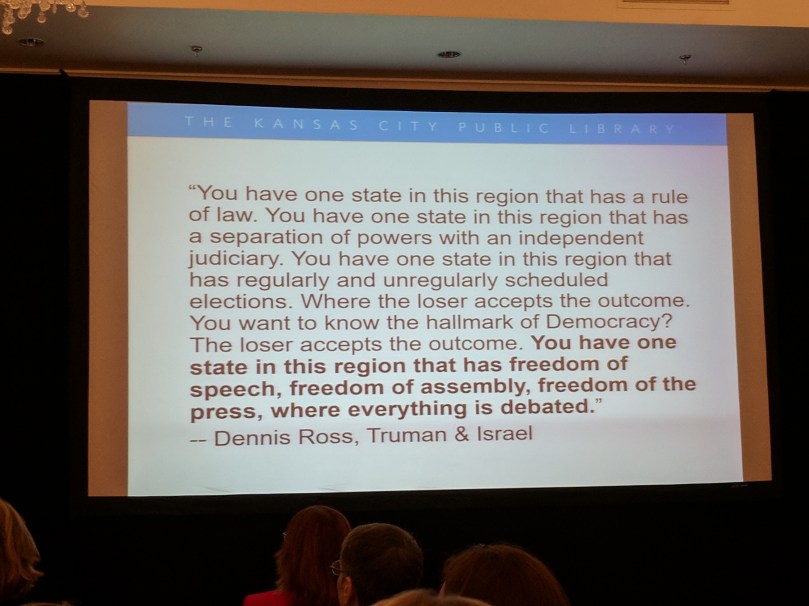
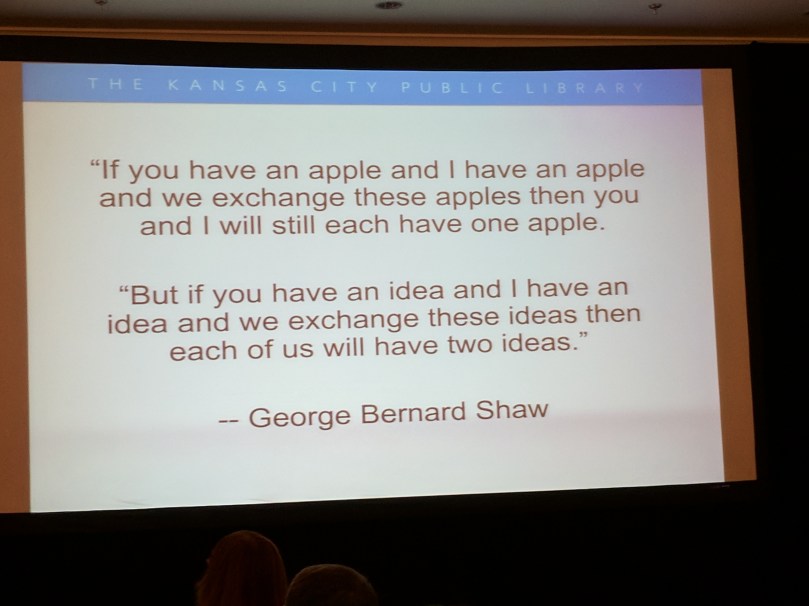
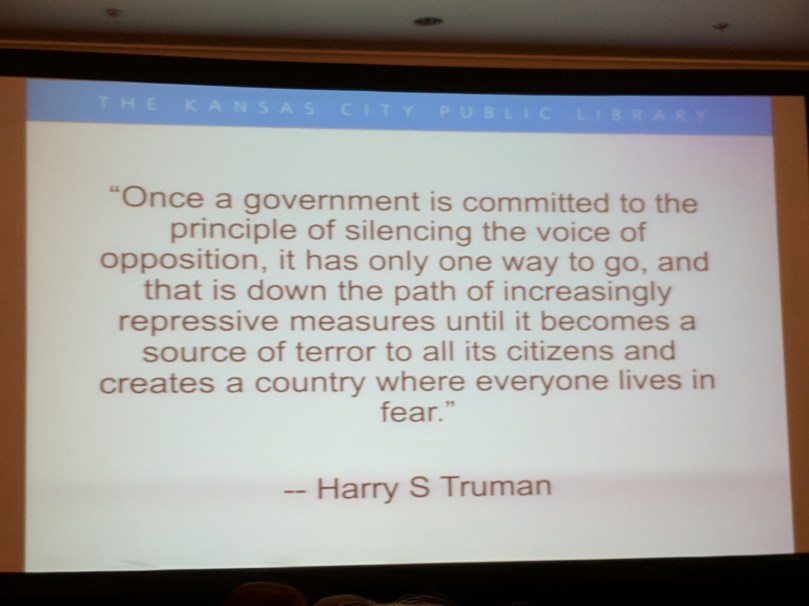
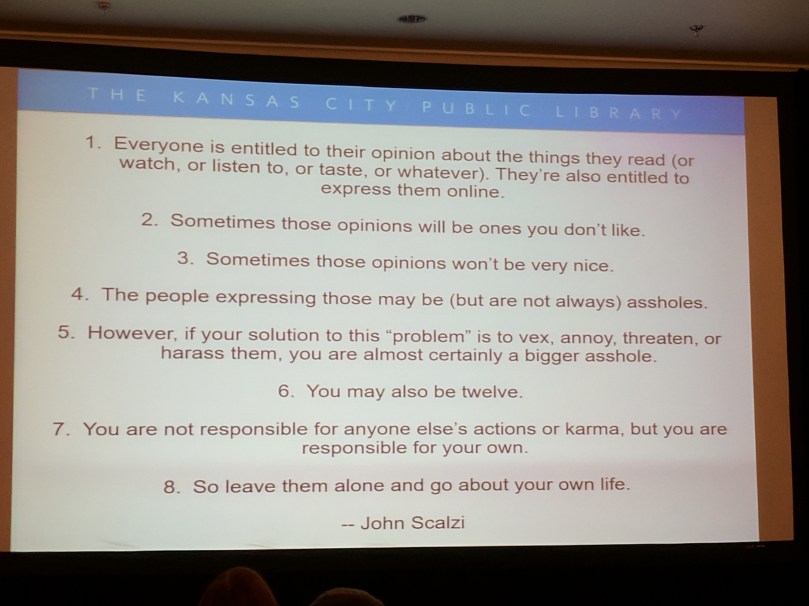
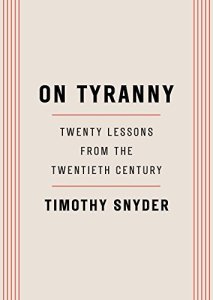 The closing keynote session featured Timothy Snyder, professor of history at Yale and author of (most recently) On Tyranny: Twenty Lessons from the Twentieth Century (2017) and The Road to Unfreedom: Russia, Europe, America (2018). The talk was entitled “The New Authoritarianism: Where It Comes From and What Readers and Citizens Can Do About It,” and was essentially a summary of On Tyranny. If you missed the talk, read the book – it’s only 126 pages.




 Bill Bryson is well-known and well-liked; you’ve probably heard of (or already read)
  Boston surgeon Atul Gawande is also a wonderful author, who writes with medical expertise and deep empathy, and is driven by a constant desire to improve. His most recent book is
  I discovered Steven Johnson through his book
  Erik Larson is another perennially popular nonfiction author, and with good reason: his well-researched books often use multiple narratives to tell the same story, enhancing the aspect of suspense through different perspectives. The pacing, particularly in his latest,
 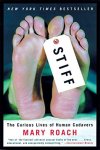 Mary Roach‘s clever one-word titles (with the exception of
  If you only ever read one 900+ page book in your life, there is a very good case for
  Even wonder what would happen to Earth if all the humans just…disappeared? Alan Weisman takes that thought experiment and expands it into a book in
  Joan Didion: There are too many books to list here, but try her memoirs,
  Stephen King: King is best known for his novels, of course, but his book
  Gretchen Rubin:
 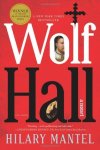 Some novels take famous figures from history and are centered around important historical events. In the case of Philippa Gregory’s The Other Boleyn Girl and Hilary Mantel’s Wolf Hall and Bring Up the Bodies, it is the court of King Henry VIII in England. In the former, Anne Boleyn’s sister Mary is the main character during Anne’s rise, marriage to Henry VIII, the formation of the Church of England, and Henry’s disenchantment with (and beheading of) Anne. For her books – the first two of a planned trilogy – Mantel takes Thomas Cromwell as her main character.
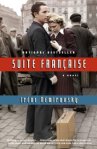 Other novels are about ordinary people in extraordinary times, and the draw of these stories is how their authors are able to make the time and place come to life in a way that seems real. Like Henry VIII’s era, World War II is a popular time period for historical fiction; most recently, the exceptional All the Light We Cannot See by Anthony Doerr was a bestseller (and with good reason). A few of my favorite WWII novels are Suite Francaise by Irene Nemirovsky, The Guernsey Literary and Potato Peel Pie Society by Annie Barrows and Mary Ann Shaffer, Corelli’s Mandolin by Louis de Bernieres, Life After Life by Kate Atkinson, and Code Name Verity by Elizabeth Wein.
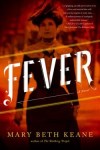 Still a third type of historical novel features extraordinary people in ordinary (for them) times. These characters are as vivid as their settings: Mary Malone (better known as Typhoid Mary) in Fever by Mary Beth Keane, set in turn of the century New York. Katy Kontent in Amor Towles’ Rules of Civility, also in New York, in the 1930s. Regret, a Korean “picture bride” in Alan Brennert’s Honolulu. Tom and Isabel in post-WWI Australia in The Light Between Oceans by M.L. Stedman. Mattie Gokey in the Adirondacks in 1906 in Jennifer Donnelly’s A Northern Light, and Desdemona Hart in 1930s Massachusetts in Maryanne O’Hara’s Cascade.
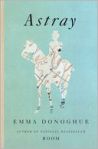 For those who have been counting, this has been more than ten, but I want to mention just three more. Astray is a collection by Emma Donoghue, in which each story was inspired by a real piece of history; Donoghue is so inventive that she can spin two sentences from an old newspaper into a complete, absorbing story.
 Jenny Arch