Best of 2011: Fiction (continued)

“I’ll be posting more soon,” I wrote (February 28, 2012). If we are going by geological time, I suppose nearly two years later qualifies as “soon,” but by normal human calendar time, I missed the mark a bit. Here is the final batch of read-in-2011 favorites, a continuation of this “best of 2011” post.

Many of these books have gotten a fair amount of attention in the last couple years (Cloud Atlas was made into a movie), and some authors have published additional books since these: Hilary Mantel followed up Wolf Hall with Bring Up the Bodies, Patrick Somerville published This Bright River in 2012, Emma Donoghue published Astray the same year, and Simon Van Booy came out with the slender and luminous The Illusion of Separateness last year. Here, though, are my brief and belated roundups of some favorite novels I read in 2011.
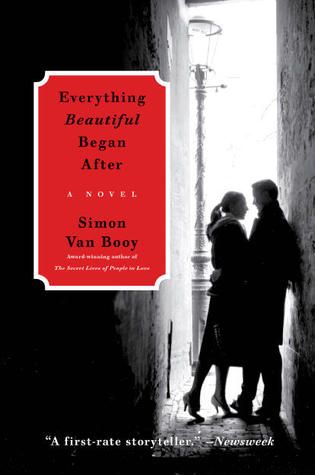
everythingbeautifulEverything Beautiful Began After by Simon Van Booy (2011): Having read Simon Van Booy’s short stories (The Secret Lives of People in Love; Love Begins in Winter), I was looking forward to his first novel, and it didn’t disappoint, although I think his style is best suited to short stories and novellas. Characters take precedence over plot in this story (except for one main event): the relationships between Rebecca, Henry, and George are the central aspect of the story. The setting – Athens, Greece – is also a character of sorts. Van Booy’s writing is poetic, and creates a mood that lingers even when you’ve put the book down.
goonsquadA Visit from the Goon Squad by Jennifer Egan (2010): This novel spans a few decades, stretching into the near future; sections are linked through loosely connected characters. Each section serves as a snapshot or cross-section of a time in a life, and the character’s interaction with others during that time. I enjoyed these sections on their own (many parts appeared in The New Yorker in advance of the novel’s publication) and would have gladly spent more time with the characters. However, I remember not liking the sections set in the future as much as the ones set in the past or present, and now that it has been a few years, I don’t remember the overall arc of the book.
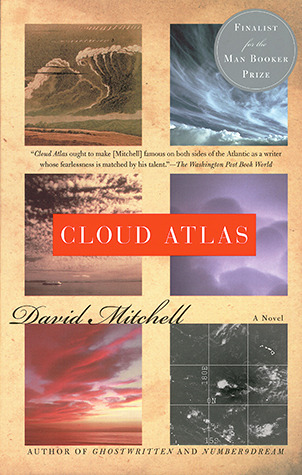
cloud_atlasCloud Atlas by David Mitchell (1999): As impressed as I was with Goon SquadCloud Atlas blew me away. Structurally, the book is unlike any other I’ve ever read: like the eponymous “sextet for overlapping soloists” described in the novel (“In the first set, each solo is interrupted by its successor: in the second, each interruption is recontinued, in order”), the book is made up of six sections, five of which are divided in half, with the sixth in its entirety in the middle of the book. The six narratives are so wildly different in setting, character, voice, and style that they could have been written by different authors, but a single theme emerges. Most readers will prefer certain narratives over others, but overall, the book is masterful, and David Mitchell’s genius is apparent.
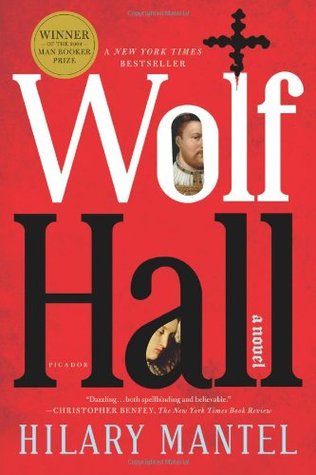
wolfhallWolf Hall by Hilary Mantel (2009): Anne Boleyn and Henry VIII are two of the most popular characters for historical fiction authors, but Thomas Cromwell, who lurks in the shadows in most books, takes center stage (center page?) in Mantel’s. She describes his miserable childhood, his travels as a young man, and his rise to power with superb and engaging thoroughness, so the reader empathizes with the character completely. Wolf Hall has a strange grammatical quirk – every “he” or “him” refers to Cromwell, regardless of subject/object conventions – but this quirk was ironed out in the subsequent Bring Up the Bodies. I can’t wait for the third and final book, The Mirror and the Light, expected sometime in 2015. (Will it, too, win the Booker Prize?)
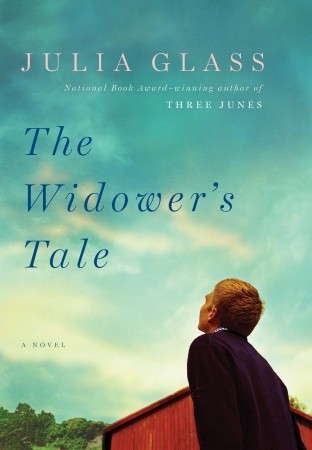
widowerstaleThe Widower’s Tale by Julia Glass (2010): Set in the Boston area, The Widower’s Tale may be Glass’ saddest book to date, but it is also one of her best. She weaves a web of interconnected characters, creates a beautiful and believable setting, and writes with emotional truth about the people she has brought to life – in this case, the Darling family, including retired librarian and grandfather Percy; his daughters, high-achieving Trudy and floundering Clover; and his grandson, Harvard student Robert.
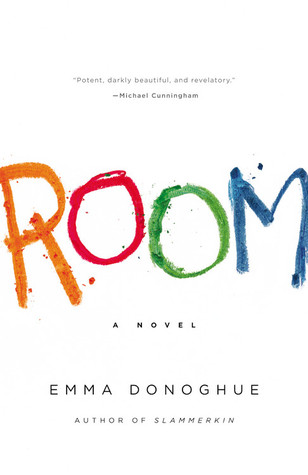
room_donoghueRoom by Emma Donoghue (2010): A distinctive departure for Donoghue (Slammerkin, The Woman Who Gave Birth to Rabbits: Stories, The Sealed Letter), Room centers closely on two characters, mother and child, in a tightly circumscribed environment – the single, eponymous room. The reader gleans that the mother has been kidnapped, imprisoned, and raped, but her five-year-old son Jack knows none of this; the room is his whole world. When they manage to escape, the real world is a shock to both of them, for different reasons and in different ways. A novel premise, thoughtfully carried out.
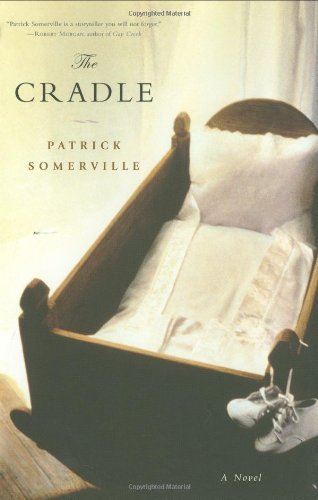
cradle_somervilleThe Cradle by Patrick Somerville (2009): For better or worse, there wasn’t a tremendous amount of buzz about this book when it came out, so reading it felt like a wonderful and secret discovery. It is about the marriage of Matt and Marissa, who, facing impending parenthood, are reflecting on their own family histories. On the back of the book, Benjamin Percy wrote, “Like a magic trick, The Cradle will make you blink, chew your lip, try to figure out how he did it, how in the world Patrick Somerville managed to sneak this big, beautiful story of familial love into such a slender novel – a saga writ small, swiftly paced, intricately structured, precisely told.” Well put.
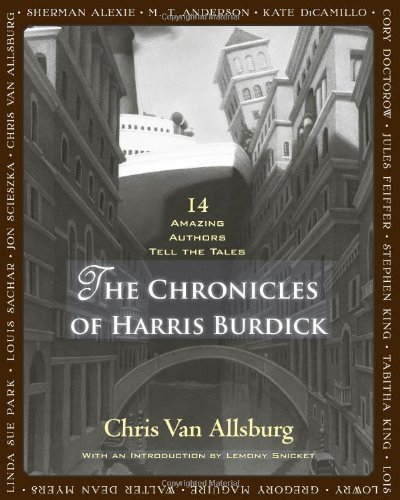
chroniclesharrisburdickThe Chronicles of Harris Burdick: fourteen amazing authors tell the tales (2011): I have long been entranced by Chris Van Allsburg’s illustrations, especially The Chronicles of Harris Burdick. Each illustration in this collection has a title and a caption that tantalizes the imagination. As the subtitle of this edition suggests, fourteen authors have taken on the challenge here, with one story per illustration (how did they decide who got which?). Each tale is magical and inventive; some are funny, some are dark. My favorites are “Oscar and Alphonse,” written by Van Allsburg himself, and “The House on Maple Street” by Stephen King. Great for most ages (10 and up?).
 

Best of 2011, Part the Third: Nonfiction

Some might say it’s too late to revisit favorite nonfiction books read in 2011, but I disagree, partly because I am intent on cleaning out my drafts folder, and partly because plenty of good nonfiction stands the test of time. Especially when that test is only three years. (Those who are interested in my other “best of 2011” reading posts can catch up with the “prequel,” favorite young adult books, humor and baking books – separate categories, same post – and fiction).

As I’m now writing about books I read about three years ago and my memories of them are not comprehensive, my notes will be correspondingly brief, but I still remember and recommend the following biographies, histories, and memoirs:

Under the Banner of Heaven: a story of violent faith by Jon Krakauer (2003): Booklist calls this a “true-crime/religious expose, which delves deep into the heart of Mormon fundamentalism,” which sums it up neatly. Krakauer alternates between a history of Mormonism and contemporary Mormon fundamentalism. As always, he chooses a gripping topic and writes in a clear, compelling way.

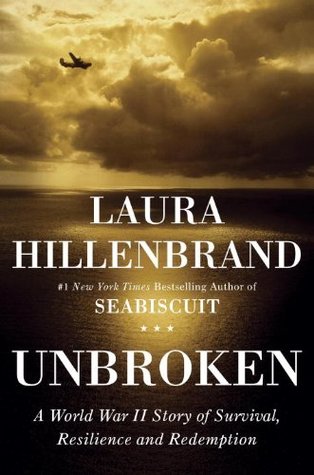
unbrokenUnbroken: a World War II story of survival, resilience, and redemption by Laura Hillenbrand (2010): Incredibly, for a book that came out four years ago, there are still holds on the library copies. This is an enduring work: an incredible piece of scholarship and research, written in an accessible and gripping way, with some truly stomach-churning scenes. Technically it’s a biography of Louis Zamperini, an Olympic runner in the 1930s and an airman in WWII who was shot down, spent over a month at sea, only to be held as a Japanese POW for the remainder of the war, but the story seems too big to belong to just one person.

The Devil in the White City: murder, magic, and madness at the fair that changed America by Erik Larson (2003): Larson’s book, too, remains popular more than a decade after its initial publication. He tells twin narratives: that of the Chicago World’s Fair architects, and that of the serial killer Henry Holmes. The year 1893 comes alive, both the “white city” and the “black city.” I had thought that the two narratives would eventually weave together and converge, and that doesn’t happen, but it’s still an excellent read – sometimes terrifying, filled with interesting details (did you know the Ferris Wheel premiered at the Chicago World’s Fair?), and never boring.

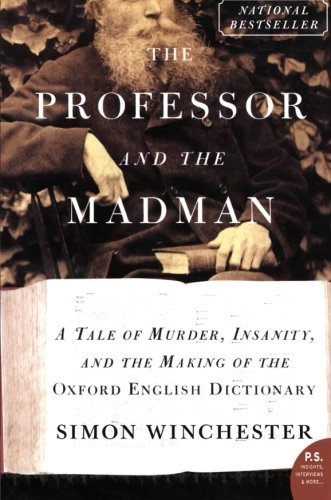
professorandmadmanThe Professor and the Madman: a tale of murder, insanity, and the making of the Oxford English Dictionary by Simon Winchester (1998): The subtitle really sums it all up. The eponymous professor, James Murray, was the editor of the first edition of the OED, and the eponymous madman was one Dr. William Minor, an American doctor incarcerated in an asylum in England, and a significant contributor to the OED. Fascinating on a number of levels, and refreshingly brief at under 300 pages.

Tender at the Bone by Ruth Reichl (1998) and My Life In France by Julia Child (2006): Those who like memoirs and who are interested in food couldn’t choose a better book than Tender at the Bone. Reichl is a funnier writer than I expected, and I still intend to read her other books (Garlic and Sapphires, Comfort Me With Apples). Having said that, for those who like history and travel as well as memoirs and cooking, My Life in France is the book for you. Child is funny, observant, brave, and unselfconscious; I adored this book.

Life by Keith Richards (2010) and John Lennon: The Life by Philip Norman (2008): If you are planning to read both of these books, read Lennon first; Norman’s book is packed with detail, thanks to his thorough research, but it is less lively and immediate than Richards’ Life. Partly the difference stems from the voice; Lennon is a biography, while Life is an autobiography, and Richards’ account has the benefit of being in his own words. He remembers far more than anyone could expect him to, and in addition to plenty of anecdotes, Life contains memorable lines like “I imagined everything. I never thought it would happen.” (The audiobook is great too.) The Norman is a bit drier, but it does contain plenty of early Beatles history, who-wrote-what-and-why bits, and perspective on the later years; while one can’t help thinking John was a bit of a jerk, Yoko Ono is presented in a way that even I can’t hate her (as I was brought up to do). On balance, though, Keith’s book is just more fun.

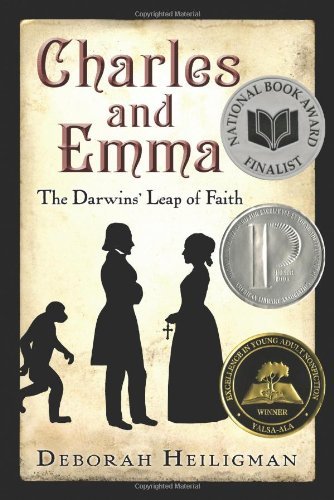
charlesandemmaCharles and Emma: The Darwins’ Leap of Faith by Deborah Heiligman (2008): Biographies written for adults – especially biographies of such major historical figures as Charles Darwin – tend to be doorstops, which can deter those of us who want to learn about someone without, perhaps, learning every single thing about them that a biographer can unearth. Charles and Emma is written for a young adult audience, but it’s a wonderful book for older readers too. Heiligman chooses to view Darwin’s life through the lens of his marriage to his cousin Emma Wedgwood; she is a faithful Christian, and he is a scientist whose theory still sends modern Christians into fits (see: evolution vs. “intelligent design” in science textbooks). Their marriage is a microcosm of this debate that is still ongoing, but it is a thoughtful and respectful one.

Yearly wrap-up, 2013 edition

In the spirit of those sites that do a weekly wrap-up (like Dooce’s “Stuff I found while looking around” and The Bloggess’ “Sh*t I did when I wasn’t here”), here are a few odds and ends I found while going through my work e-mail inbox and my drafts folder.

How to Search: “How to Use Google Search More Effectively” is a fantastic infographic that will teach you at least one new trick, if not several. It was developed for college students, but most of the content applies to everyday Google-users. Google has its own Tips & Tricks section as well, which is probably updated to reflect changes and new features.

How to Take Care of Your Books: “Dos and Don’ts for Taking Care of Your Personal Books at Home” is a great article by Shelly Smith, the New York Public Library’s Head of Conservation Treatment. Smith recommends shelving your books upright, keeping them out of direct sunlight and extreme temperatures, and dusting. (Sigh. Yes, dusting.)

The ARPANET Dialogues: “In the period between 1975 and 1979, the Agency convened a rare series of conversations between an eccentric cast of characters representing a wide range of perspectives within the contemporary social, political and cultural milieu. The ARPANET Dialogues is a serial document which archives these conversations.” The “eccentric cast of characters” includes Ronald Reagan, Edward Said, Jane Fonda, Jim Henson, Ayn Rand, and Yoko Ono, among others. A gem of Internet history.

All About ARCs: Some librarians over at Stacked developed a survey about how librarians, bloggers, teachers, and booksellers use Advance Reader Copies (ARCs). There were 474 responses to the survey, and the authors summarized and analyzed the results beautifully. I read a lot of ARCs, both in print and through NetGalley or Edelweiss, and I was surprised to learn the extent of the changes between the ARC stage and the finished book; I had assumed changes were copy-level ones, not substantial content-level ones, but sometimes they are. (I also miss the dedication and acknowledgements.)

E-books vs. Print books: There were, at a conservative estimate, approximately a zillion articles and blog posts this year about e-books, but I especially liked this one from The Guardian, “Why ebooks are a different genre from print.” Stuart Kelly wrote, “There are two aspects to the ebook that seem to me profoundly to alter the relationship between the reader and the text. With the book, the reader’s relationship to the text is private, and the book is continuous over space, time and reader. Neither of these propositions is necessarily the case with the ebook.” He continued, “The printed book…is astonishingly stable over time, place and reader….The book, seen this way, is a radically egalitarian proposition compared to the ebook. The book treats every reader the same way.”

On (used) bookselling: This has been languishing in my drafts folder for nearly two years now. A somewhat tongue-in-cheek but not overly snarky list, “25 Things I Learned From Opening a Bookstore” includes such amusing lessons as “If someone comes in and asks for a recommendation and you ask for the name of a book that they liked and they can’t think of one, the person is not really a reader.  Recommend Nicholas Sparks.” Good for librarians as well as booksellers (though I’d hesitate to recommend Sparks).

The-Library-Book-154x250_largeOn Libraries: Along the same lines, I really enjoyed Lucy Mangan’s essay “The Rules” in The Library Book. Mangan’s “rules” are those she would enforce in her own personal library, and they include: (2) Silence is to be maintained at all times. For younger patrons, “silence” is an ancient tradition, dating from pre-digital times. It means “the absence of sound.” Sound includes talking. (3) I will provide tea and coffee at cost price, the descriptive terms for which will be limited to “black,” “white,” “no/one/two/three sugars” and “cup.” Anyone who asks for a latte, cappuccino or anything herbal anything will be taken outside and killed. Silently.

On Weeding: It’s a truth often unacknowledged that libraries possessed of many books must be in want of space to put them – or must decide to get rid of some. Julie Goldberg wrote an excellent essay on this topic, “I Can’t Believe You’re Throwing Out Books!” I also wrote a piece for the local paper, in which I explain the “culling” of our collection (not my choice of headline).

“What We Talk About When We Talk About Public Libraries”: In an essay for In the Library with the Lead Pipe, Australian Hugh Rundle wrote about the lack of incentives for public librarians to do research to test whether public libraries are achieving their desired outcomes.

Public Journalism, Private Platforms: Dan Gillmor questions how much journalists know about security, and how much control they have over their content once it’s published online. (Article by Caroline O’Donovan at Nieman Journalism Lab)

What’s the first thing you remember?

A couple days ago, our library director issued a call for contributions to our annual “staff picks/best books” column for the local paper. I skimmed my LibraryThing catalog to look over what I’d read this past year, disqualifying anything that was published before 2012…and I ended up with nineteen (19)* titles that belonged in my own personal “favorite” category.

*Compiling the “other favorites” list at the end of this post, I added a few more.

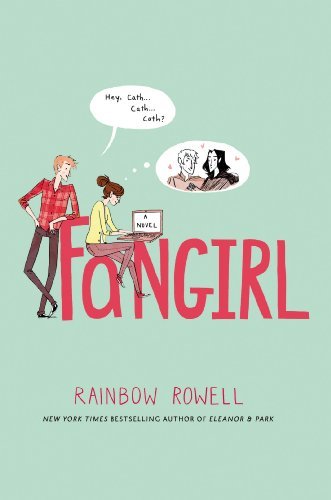
fangirlFor my contributions for the column, I excluded YA books because many of us on staff – including, of course – the YA librarian – read and love YA, and I figured the books I would write about (Every Day by David Levithan, Eleanor & Park and Fangirl by Rainbow Rowell, Wonder by R.J. Palacio, The Raven Boys and The Dream Thieves by Maggie Stiefvater, Code Name Verity by Elizabeth Wein, and Just One Day by Gayle Forman) are the ones they would write about also.

I still couldn’t possibly narrow it down to fewer than five. Here’s what I wrote about my choices (below), and after those are the rest of the list.

Instructions for a Heatwave by Maggie O’Farrell
O’Farrell’s sixth novel is set in London during the legendary heatwave of 1976. Robert Riordan goes to get the paper one morning and disappears; his wife, Gretta, is frantic, and calls their three grown children home. Misunderstandings between siblings are resolved and buried secrets come to light, but the true genius of this book is how deeply the reader sees inside each character, while the characters lack that same insight into each other.

feverFever by Mary Beth Keane
I’m afraid this brilliantly imagined work of historical fiction did not receive the buzz it deserved. Keane brings Irish immigrant Mary Mallon, a.k.a. “Typhoid Mary,” to life in early 1900s New York, and creates a portrait of a woman whose calling was cooking, but whose cooking was lethal. For perhaps the first time, readers will have sympathy for Mary.

The Smartest Kids in the World by Amanda Ripley
Ripley follows three American exchange students through a year in Finland, Poland, and South Korea – all countries whose PISA scores have shot up over the past decade – to investigate how these countries have improved their education systems and whether the United States can adopt a new approach successfully. The writing is lively and clear, the research is solid, the results are not tremendously surprising – it comes down to teachers and rigor.

lifeafterlife_atkinson

Life After Life by Kate Atkinson
Life After Life is like the movie Sliding Doors, but with more doors; protagonist Ursula Todd tries them all, dying and being reborn into her same life again and again. Born in England in 1910, Ursula lives through (or doesn’t) World War I, the Spanish flu, World War II and the Blitz. It’s historical fiction, time travel, and philosophical what-if all rolled into one masterful book.

The Impossible Lives of Greta Wells by Andrew Sean Greer
“The impossible happens once to each of us,” the story begins. Greta in 1985 is grieving: her twin brother is dead of AIDS and her lover has left her. But then Greta wakes up in 1918, and then in 1941. In each time, she is herself, in the same apartment, with the same friends and family, but their relationships are different. As Greta cycles through three selves – in 1918, 1941, and 1985 – she eventually realizes she must decide whether to return to her present, or stay in the past. Toward the end of this beautiful book, she concludes, “What is a perfect world except for one that needs you?”

happymarriage

Other nonfiction favorites:
Lean In by Sheryl Sandberg
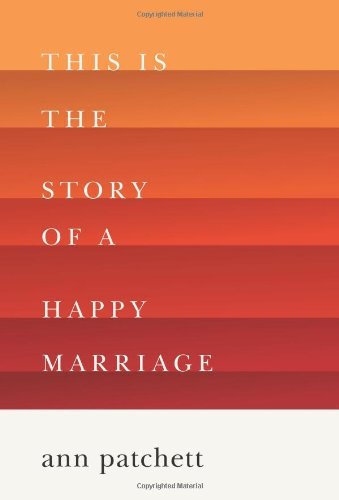
This is the Story of a Happy Marriage by Ann Patchett (essays)
I Don’t Know by Leah Hager Cohen
The Reason I Jump by Naoki Higashida, translated by KA Yoshida and David Mitchell
Just My Type: A Book About Fonts by Simon Garfield
Dear Friend: Rainer Maria Rilke and Paula Modersohn-Becker by Eric Torgersen (1998)

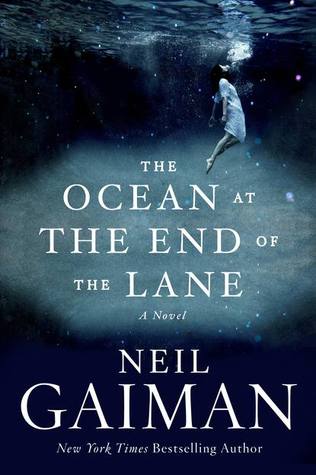
oceanattheendofthelane

Other fiction favorites:
The Ocean at the End of the Lane by Neil Gaiman
Sisterland by Curtis Sittenfeld
Me Before You by Jojo Moyes
The Aviator’s Wife by Melanie Benjamin
Z: A Novel of Zelda Fitzgerald by Therese Anne Fowler
The Vanishing Act of Esme Lennox and The Hand That First Held Mine by Maggie O’Farrell
Astray by Emma Donoghue (short stories)

gogiants

Poetry:
Go Giants by Nick Laird
Aimless Love by Billy Collins
Dog Songs by Mary Oliver

Here are last year’s favorites.

The title of this post is a line from Tom Stoppard’s play Rosencrantz and Guildenstern Are Dead.

LibraryThing vs Goodreads, redux

Back in April I wrote about transitioning from Goodreads to LibraryThing after Amazon bought Goodreads. The transition was a bit halting, but I have now more or less stopped updating my Goodreads account (though I still contribute to my library’s account for readers’ advisory purposes) and shifted all my activity over to LibraryThing.

Though both Goodreads and LT are social reading sites, they are different in a number of ways. For example, let’s look at the messages on their home pages, before sign-in. Here’s Goodreads:

goodreads_home_logo

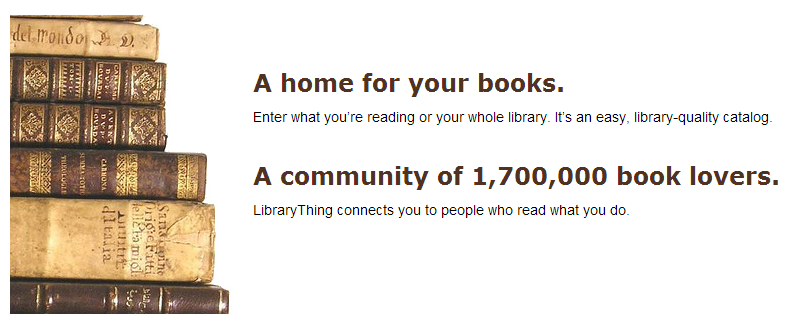
And here’s LibraryThing:

LT_home_logo

Goodreads (“Meet your next favorite book”) is encouraging readers to find new books to read, through lists (“shelves”), ads, and other users’ reviews. LibraryThing, on the other hand (“A home for your books…A community of book lovers”) emphasizes its cataloging quality and its user community.

There are a variety of uses for social reading sites (and by no means are Goodreads and LibraryThing the only choices), but my primary uses are (in descending order of importance):

  1. Keep track of what I’ve read and what I want to read.

  2. Write and store reviews and notes on the books I’ve read.

  3. See what my friends are reading and read their reviews.

I also appreciate the chance to get the occasional early review copy (I’ve gotten one or two from Goodreads over the past six years, and at least four from LT over the past year), and the serendipity of connecting with authors (more than once, authors on Goodreads have contacted me after I’ve written a review of their book: one ended up attending a book club meeting, and another gave a presentation at the library).

So, how do the two sites compare? Let’s go point by point.

Keep track of what I’ve read and what I want to read. I’m certainly able to do this on both sites. Goodreads has “read,” “currently reading,” and “to-read” shelves, whereas LibraryThing has “to-read” and “currently reading” collections (everything else is, by default, “read”). I like Goodreads’ “date added” sorting option, but I like that LibraryThing offers different display styles.

LY_styleoptions

Write and store reviews and notes on the books I’ve read. One of LT’s aforementioned display styles includes reviews – so you can see all your reviews at a glance, rather than having to click into each book’s record. You can also click directly into the review to make any edits. There is no way to skim all your reviews in Goodreads.

See what my friends are reading and read their reviews. Goodreads has a clear advantage here, because most of the people I know who are on a social reading site are on Goodreads. I’m not that interested in reading strangers’ reviews, but I do like seeing what my friends are reading. Fortunately, I still get e-mails from Goodreads with updates that include friends’ reviews.

goodreads_greenbuttonIn terms of function, then, the sites aren’t all that different. Though I’m committed to LT now, I still don’t find it as intuitive or user-friendly as Goodreads (though, like most LT users, I’m not a fan of Goodreads’ dreaded green button).

LibraryThing organization

Even after a few months of using LibraryThing, I still don’t navigate it effortlessly. The font is absolutely tiny, which leads to a cluttered appearance. Searching within your library takes a second or two longer than I’d like to return results (yes, I’m impatient). The organization also takes some getting used to – the Home tab shows your most recent books, but if you click into a book’s record from there, it just shows metadata and other users’ reviews, not your review or when you started or finished the book; that information is under the Your Books tab (this is where you can choose your own display style).

There’s a separate tab to Add Books, and when you search, there’s usually only one edition of the book, whereas Goodreads lists all of them (hardcover, paperback, mass market, audiobook, various publishers, etc). However, if you put in the ISBN of the specific edition you’re looking for, it will show up.

The other tabs – Groups, Talk, Local, More, and the mysteriously named Zeitgeist (“more information than you require,” indeed, though it’s probably useful/interesting for some) – I don’t use often, though I probably should look at the Local tab more often to see what’s going on. It’s customizable too, so you can choose your favorite bookstores, libraries, or other literary venues to see what authors might be in town. The More tab includes the link to Early Reviewer books.

Stats are accessed from the Home tab; I don’t look at stats that often, just a few times a year, but LT presents them pretty creatively. For instance, my library (which, to be fair, includes books on my “to-read” shelf as well as those I’ve read and am currently reading), if stacked book upon book, would be slightly taller than the Great Pyramid, slightly shorter than the Washington Monument. The value of its weight in gold would be $22,173,471. Goodreads data, on the other hand, is a bit more straightforward – number of books read in a calendar year, number of pages read, etc. I wish LT had these types of numbers as well.

Overall, I’m not thrilled with LibraryThing, but I’m going to stick with it because it isn’t owned by Amazon, which means my personal data isn’t being harvested (at least not so rapaciously and overtly). Perhaps some of the things that irk me about it will change, and more of my friends will join over time. Till then, it does what I need it to do.

Recaptains to the rescue

allegiantAllegiant, Veronica Roth’s third and final installment of the trilogy that began with Divergent, has finally hit the shelves (and promptly been snatched up by eager readers). I’m still waiting for a library copy, but in the meantime I needed to refresh my memory of the first two books. I’m in the habit of writing reviews of nearly everything I read, and indeed I wrote about Divergent and Insurgent, but with series there are always details that fade, and I try not to give away the ending in my reviews. However, I also don’t want to re-read all the preceding books in a series every time a new one comes out, so what to do? (Hannah Gomez at The Hub has one solution, but I don’t have the willpower for that.)

Recaptains to the rescue! I forget where I originally heard about the Recaptains. (If it was you who told me about them, please let me know. I have a feeling it may have been via Maggie Stiefvater, who wrote the recap for her own book, The Raven Boys.) The Recaptains, as the name suggests, write recaps – not reviews – of series books, including spoilers to help those who read the first book(s) but want a refresher before starting the next in the series.

If you, too, are waiting for a copy of Allegiant, here are the recaps of Divergent and InsurgentThey aren’t perfect, but they serve their purpose. And if you’ve read them both but still aren’t sure about continuing on with the final book, the FYA review of Allegiant is pretty safe (no major spoilers).

“Everyone has a different idea of what constitutes ‘appropriate content’”

There is lots of great Banned Books Week-related stuff on Twitter this week (#BannedBooksWeek), and today’s Library Link of the Day was an NPR segment from Tell Me More called “Could banning books actually encourage more readers?” (Answer: we hope so!) My favorite find via Twitter (so far, at least) is this post from Shoshana at the Brookline Booksmith. It was a good reminder that librarians aren’t the only ones fighting for intellectual freedom and defending everyone’s right to read; publishers and booksellers are in it with us. 

Shoshana wrote, “Everyone has a different idea of what constitutes ‘appropriate content.’ I’ve talked with a lot of parents about what’s right and what’s not right for their kids to read. Some parents want to avoid anything “scary.” Others ask about the The Hunger Games and relax as soon as they learn that although it’s about teenagers being forced to fight to the death, it doesn’t have any sexual content….What I love about the customers in our kids’ section, though, is that the question is pretty much always what’s appropriate for the particular kid in question, not what should be published or be on our shelves….People around here seem to get that what’s all wrong for one reader might be just right for another; even siblings have different levels of scariness tolerance or ability to understand difficult topics.”

She makes a great point: what is “appropriate” for one reader may not be appropriate for another (this is one of the reasons that putting ratings on books is a terrible idea). This is part of readers’ advisory, and it’s a great skill – as a bookseller or a librarian – to be able to talk with parents about what their kids are ready to read (or to talk directly with kids; I know an eight-year-old who didn’t feel ready to read Harry Potter when he was seven, but feels like he might be ready now).

Remember: Every reader his/her book, and every book its reader.


Fall Titles: The Signature of All Things, The Lowland

This fall should be a good one for publishers and readers alike. Many beloved authors are coming out with new titles in September, October, and November, including Margaret Atwood (MaddAddam), Stephen King (Doctor Sleep), Amy Tan (The Valley of Amazement), and several others. I was lucky enough to read advance copies of two of these anticipated titles: The Lowland by Jhumpa Lahiri, and The Signature of All Things by Elizabeth Gilbert.

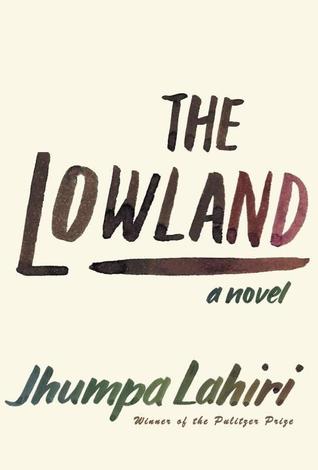
lowland First, and most eagerly awaited, The Lowland: a friend of mine who attended ALA in Chicago snagged a galley and generously let me borrow it. Lahiri (Interpreter of Maladies, The Namesake, Unaccustomed Earth) treads familiar ground with a story of an Indian family, some of whom move to the American Northeast, and some of whom stay behind in India.

Those who read the fiction section of The New Yorker may recognize the first several pages of The Lowland, in slightly altered form; it was published as “Brotherly Love” in the June 10 issue earlier this year. The brothers are Subhash and Udayan: the elder is cautious, the younger is reckless (“[Subash’s] parents did not have to worry about him and yet they did not favor him. It became his mission to obey them, given that it wasn’t possible to surprise or impress them. That was what Udayan did”).

Though the brothers grow up side by side, their paths diverge, with Udayan becoming involved in a dangerous political movement – the drastic consequences of which echo for decades after Udayan’s death and Subhash’s marriage to his brother’s widow, Gauri.

The narration is a close third person, shifting perspectives every so often, from Subhash, to Gauri, to their daughter Bela, to the brothers’ mother Bijoli, and finally to Udayan. Lahiri creates intensely believable characters in the Mitra family, and she covers a significant time span with her spare, beautiful prose.

The Lowland has been shortlisted for both the National Book Award and the Man Booker Prize.

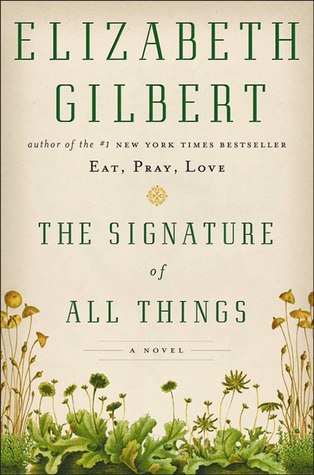
signatureofallthingsThe Signature of All Things by Elizabeth Gilbert (Stern Men; Eat, Pray, Love; Committed) covers an even greater span of time, at a much more leisurely pace. For once, I could not agree more with the Publishers Weekly review, which is a marvel of conciseness. This thoroughly researched story begins with Henry Whittaker, a scrappy young thief whose father works at Kew Gardens. Henry eventually becomes one of the wealthiest men in Philadelphia, and his daughter, Alma, grows up on the family estate, White Acre.

Alma is given all the advantages Henry did not have, especially education; but, because she is plain (especially compared to her beautiful adopted sister, Prudence), she must resign herself to spinsterhood while Prudence and their mutual friend, Retta, both marry.

Alma devotes her time to business – after her mother Beatrix’s death, she is Henry’s right hand – and the study of mosses. Her life continues in this quiet, circumscribed, but more or less satisfying manner until the arrival of Ambrose Pike, an orchid artist. For the second time in her life, Alma falls in love, and she and Ambrose marry, but the marriage is not what either of them expected, and Ambrose leaves White Acre.

Soon afterward, the inimitable Henry Whittaker dies, and Alma decides, finally, to leave White Acre and travel. She follows Ambrose’s path to Tahiti, and after a few years there, makes her way to her mother’s homeland of Holland.

Gilbert incorporates her research into the story in a way that is natural, not distracting – a harder task than it appears. From beginning to end, she maintains control over the story and the characters; I was aware of the narrator’s voice and presence throughout the time I was reading. Perhaps this slight distance was the reason I did not feel the full emotional impact of admittedly dramatic events throughout Alma’s life. Still, this is a unique book, and an especially great choice for those who are interested in botany, science, history, or travel.

NELLS resources

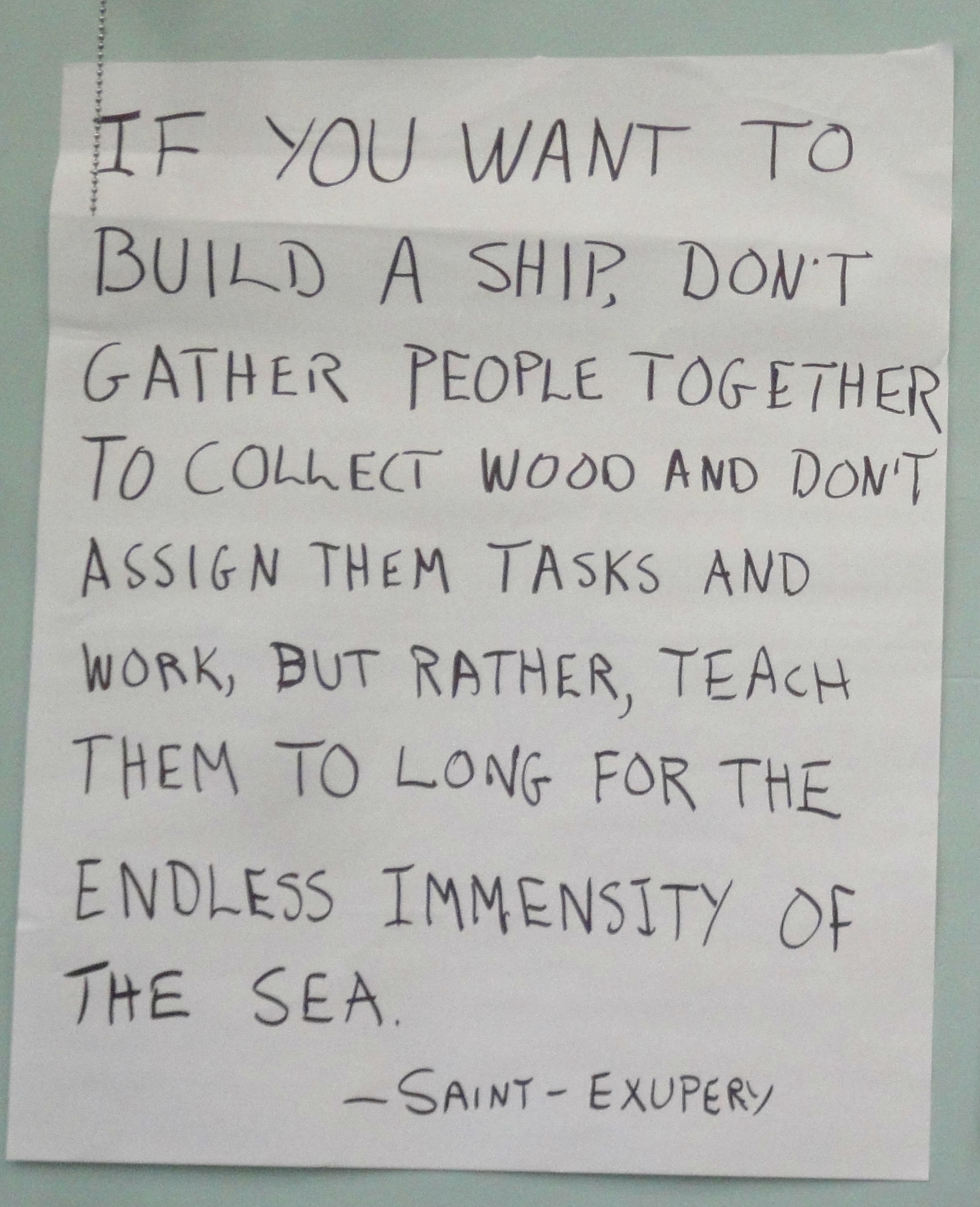
st-exuperyOn the first day of NELLS, each participant and mentor received a binder full of resources, including a “selected list of readings on leadership” compiled by Maureen Sullivan, which I have reproduced below (she said it was okay to share):

Bennis, Warren et al. Transparency: How Leaders Create a Culture of Candor

Bennis, Warren and Joan Goldsmith. Learning to Lead: A Workbook on Becoming a Leader

Berger, Jennifer Garvey. Changing on the Job: Developing Leaders for a Complex World

Bridges, William. Managing Transitions.

Cohen, Allan and David Bradford. Influence without Authority.

Farrell, Robert and Kenneth Schlesinger. Managing in the Middle (an ALA Guide for the Busy Librarian)

Fisher, Roger and Daniel Shapiro. Beyond Reason: Using Emotions as You Negotiate

Heifetz, Ronald et al., The Practice of Adaptive Leadership: Tools and Tactics for Changing Your Organization and the World

Kinlaw, Dennis. Coaching for Commitment. Jossey-Bass, 1999.

Kouzes, James M. and Barry Z. Posner. A Leader’s Legacy and The Truth About Leadership

McKee, Annie et al. Becoming a Resonant Leader

Patterson, Kerry et al. Crucial Conversations and Crucial Confrontations

Sinek, Simon. Start with Why: How Great Leaders Inspire Everyone to Take Action

Stueart, Robert D. and Maureen Sullivan. Developing Library Leaders.

rollingridge_mazeOf course, many other books and articles were mentioned by Maureen and others during the week. I have listed as many of those as I could find here, but if other NELLS folks want to add more in the comments, that would be great. Links for books go to the Minuteman or OCLC catalog, links for articles go to various websites.

Alexie, Sherman. “Superman and Me.” The Story and Its Writer: an Introduction to Short Fiction.

Amabile, Teresa. Growing Up Creative: Nurturing a Lifetime of Creativity

Boyatzis, Richard. The Competent Manager: a Model for Effective Performance

Brazelton, T. Berry. Touchpoints Birth to Three: Your Child’s Emotional and Behavioral Development  (mentioned in the context of managing emotions)

Conger, Jay. “The Necessary Art of Persuasion.” Harvard Business Review, May 1998. (Article preview is available, the rest of the article is behind the HBR paywall.)

Conner, Daryl. Managing at the Speed of Change: How Resilient Managers Succeed and Prosper Where Others Fail

De Rosa, Cathy, et al. From Awareness to Funding: A Study of Library Support in America. OCLC, 2008. (Web | PDF)

Drucker, Peter. “Managing Oneself.” Harvard Business Review, January 2005. (Article preview.)

Gabarro, John and Kotter, John. “Managing Your Boss.” Harvard Business Review, January 2005. (Article preview.)

Gladwell, Malcolm. Blink: the Power of Thinking Without Thinking

Goleman, Daniel. “Leadership That Gets Results.” Harvard Business Review, March 2000. (Article preview.)

Gross, Valerie. Transforming Our Image, Building Our Brand: the Education Advantage

Hallowell, Edward. CrazyBusy: Overstretched, Overbooked, and About to Snap: Strategies for Handling Your Fast-Paced Life and The Childhood Roots of Adult Happiness: Five Steps to Help Kids Create and Sustain Lifelong Joy and Connect

Harwood, Richard. The Work of Hope: How Individuals & Organizations Can Authentically Do Good (free ebook from link)

Heath, Chip. Switch: How to Change Things When Change is Hard.

Heifetz, Ronald et al. “Leadership in a (Permanent) Crisis.” Harvard Business Review, July 2009. (Article preview.)

Hesselbein, Frances, et al. The Organization of the Future

Kegan, Robert. The Evolving Self: Problem and Process in Human Development (he has written other books as well, including Change Leadership: a Practical Guide to Transforming Our Schools, but I think The Evolving Self was the one Maureen mentioned)

Kotter, John. “Accelerate!” Harvard Business Review, November 2012. (Article preview.)

Kretzmann, Jody and Rans, Susan. The Engaged Library: Chicago Stories of Community Building. Urban Libraries Council, December 2005. (PDF)

Lankes, R. David. Expect More: Demanding Better Libraries for Today’s Complex World

MacKinnon, Rebecca. Consent of the Networked: the World-Wide Struggle for Internet Freedom

Margolis, Michael. Believe Me. GetStoried.com

Maurer, Rick. Beyond the Wall of Resistance: Unconventional Strategies that Build Support for Change

Moore, Mary. The Successful Library Trustee Handbook. ALA, 2005.

Neiburger, Eli. Libraries Are Screwed. September 2010. (YouTube video, approx. 20 min. altogether, part 1 | part 2)

Nelson, Sandra. The New Planning For Results: a streamlined approachALA, 2001.

O’Toole, James, and Bennis, Warren. “A Culture of Candor.” Harvard Business Review, June 2009. (Article preview.)

Updated to add: Perlinska, Agnieska and Chapados, Chip. The Conversation: Simple Truths to Make Life Work

Sandberg, Sheryl. Lean In: Women, Work, and the Will to Lead

Scholtes, Peter. The Leader’s Handbook: Making Things Happen, Getting Things Done

Shewhart, Walter A. “Plan Do Check Act (PDCA).” (Wikipedia article)

Quinn, Robert. Deep Change: Discovering the Leader Within

Underhill, Paco. Why We Buy: the Science of Shopping

Von Oech, Roger. A Whack on the Side of the Head: How You Can Be More Creative

ALA Chicago

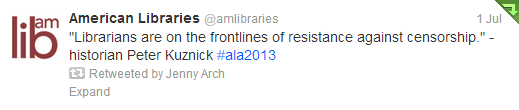
I didn’t get to attend ALA’s Annual Conference in Chicago this year, but I followed along virtually on Twitter (#ala2013) and through others’ blog posts and articles.

alaRT

On June 27, Maureen Sullivan announced the launch of the “Authors for Library eBooks” initiative. A District Dispatch blog post, “Bestselling authors call for library ebook lending,” quotes Jodi Picoult: “Whether it’s a digital file or a paper copy, I want readers to find my books—and all books—in their libraries!” (As readers of this blog know, not all publishers make all their ebooks available for libraries to purchase.)

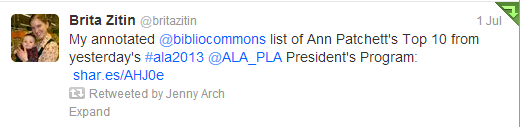
My friend Brita, who attended the conference through the Student-to-Staff program (the same way I did in 2011), wrote this great piece on Ann Patchett’s PLA President’s Program: “Ann Patchett, Readers’ Advisor Extraordinaire.” She also created a Bibliocommons list of Patchett’s top ten recommendations.

ALAbibliocommons

YA Authors Decode Dystopia“: I would have loved to have been in the audience for this author panel on dystopian fiction, featuring Lois Lowry, Cory Doctorow, Veronica Roth, and Patrick Ness. The authors identified “an important component of dystopian fiction that makes it so appealing: the ability to place oneself intimately in the action. The ‘what if’ factor draws readers into dystopian fiction, making them imagine how they would react if faced with calamity.”

I would have loved to sit in on PLA’s “Long e-Overdue” panel as well, which featured Jamie LaRue of the Douglas Country (CO) Libraries, Mary Minow of Library Law, and Michael Porter of Library Renewal. The idea of “library-managed e-content platforms”  as an alternative to middleman-style vendors such as OverDrive and 3M is a great goal to aim for.

I also followed along with the “New Adult: What Is It & Is It Really Happening?” panel on July 1 via Twitter (#ala13na). The panelists provided a huge list of “new adult” resources, including articles, blog posts, and booklists. Depending on who you listen to, “new adult” is either a “hot new category” in publishing, or a useless and annoying marketing ploy; it’s either fiction that features main characters in the 18-25 (ish) age range, bridging the gap between YA and adult, or it’s typical YA but with sex scenes. It’s definitely an emerging niche, though, and there’s lots to discuss.

Finally, from American Libraries Magazine, there’s a list of “10 Steps to a Better Library Interior.” The first step (“fresh perspective”) even includes one of my favorite cleaning/de-cluttering tips, which is to take everything out, then only put back the things you really want to keep. (Or at least imagine you’re doing so: obviously it’s impractical to move computers, furniture, and tens of thousands of books out of the library and into the parking lot.)

Conferences are both exhausting (travel, long days, rushing from one room to another, meeting lots of new people) and energizing (meeting new people, encountering new ideas, thinking about how you can bring those ideas back to your own library or workplace). I’m glad I was able to follow along virtually this year, thanks to those who wrote, tweeted, and linked.

Edited to add: My friend and fellow Student-to-Staffer (2011) wrote a great recap of all the programs, panels, and roundtables she attended at ALA 2013, including sessions on young adult literature, graphic novels, ARCs, and the New Adult panel. It’s worth a read, especially if you’re a YA librarian and/or a school librarian.