The Growing Pains of E-Books

Like many librarians in public libraries, I spend a fair amount of time explaining how various e-readers work, how the digital media catalog (separate from the regular library catalog) works, and how to accomplish the many steps required to download an e-book from the library collection.

I know that we live in a time of unprecedented and rapid technological growth and change, and that what we are going through now is just growing pains. The book industry, like other media industries (music, film), is trying to figure out how to deal with this change.

But it’s not happening fast enough, or thoughtfully enough. The prevalent model right now is one book, one reader: libraries buy (or, more often, license) one digital copy of a book, and one library user can borrow it at a time. With vendors and digital rights management (DRM), publishers are attempting to make the digital world obey the same rules as the print world, but this is artificial and must give way to a better model.

Even with the current model, most major publishers are not participating; they refuse to sell or license e-books to libraries. This comes as a surprise to many library users, which means librarians must do a better job of raising public awareness, notes San Rafael Public Library Director Sarah Houghton (a.k.a. the Librarian in Black).

There are other models out there: Brian Herzog (a.k.a. the Swiss Army Librarian) explains a newer platform called Freading, a token-based system that eliminates waiting lists. The main catch is that Freading’s 15,000+ books don’t include any from the “Big Six” publishers (HarperCollins, Random House, Penguin, Macmillan, Hachette, Simon & Schuster), and therefore many popular titles.

Eventually – sooner rather than later, one hopes – the major publishers will see that their fears are unfounded, and that selling or licensing e-books to libraries will not gut their sales. (After all, selling print books to libraries didn’t kill the book industry.) In an article that reported research findings showing “a symbiotic relationship between library patronage and consumer book purchasing,” School Library Journal editor-in-chief Rebecca Miller said, “It’s exciting to have data to back the sense that library use is also an economic engine for the book industry. Publishers now have proof of how libraries support their business models.”

For years, articles asking “Are libraries obsolete?” and wondering, “Will [fill in the blank] be the death of libraries?” have abounded. Libraries are still here, though, and most want to remain relevant; we want to continue offering “the highest level of service to all library users through appropriate and usefully organized resources” (ALA Code of Ethics). In many cases, libraries offer not just access to resources but also a community center, a place for people to meet, learn, work, and create. Now, with the rise of self-publishing, the question has become: Are publishers relevant? Are publishers obsolete?

Not quite yet. The mainstream publishing industry still has value. Its editors and publicists have decades of experience in identifying great work, improving it and polishing it through the editorial process, spreading the word about it through publicity and advertising, and printing and distributing it.

But the Big Six aren’t the only game in town. While they drag their feet, libraries would do well to consider other sources of e-content. As Jamie LaRue points out in his recent Library Journal piece, “All Hat, No Cattle: A call for libraries to transform before it’s too late,” independent publishers have shown themselves to be much more open to working with libraries than mainstream publishers have been. Additionally, digitization projects throughout the country have made more content available online; and of course there is self-published material.

So, publishers: what’s stopping you from reaching more readers by selling e-books to the “staggeringly effective marketing machine” (LaRue) that is the library? And librarians: it’s time for us to work together to explore other options instead of letting the Big Six call the shots. As LaRue points out, “If we pay public dollars for content, then we must be able to take possession of the copies. Anything else is sheer vendor lock-in and shirks our obligation to preserve the public record.”

Libraries and librarians are waiting, impatiently but often too quietly, for publishers to work with us on this. It has the potential to be a situation where everyone wins: publishers profit, authors reach a wider audience, libraries provide excellent service, readers have access to a wide variety of resources.
 

The science of working together

At the launch event for Interop: The Promise and Perils of Highly Interconnected Systems, the authors John Palfrey and Urs Gasser gave an overview of interop and provided several relevant examples. Though they began years ago on a theoretical level (does increased interop lead to increased innovation?), interop is a deeply practical topic.

“Interop” here is short for interoperability, defined as “the ability to transfer or render useful data and other information across systems (including organizations), applications, or components.” The authors decided that this initial definition, however, could be broadened into “the science of working together” on many layers: institutional, human, data, and technological.

Though it may sound abstract, there are many good examples of how interoperability is important in daily life. Solutions to big societal problems depend on interop, said Palfrey and Gasser. They talked first about “smart cities,” which depend on sharing information: between police, firefighters, and ambulances, for example, and between various forms of transit (does your bus pass also work for the subway and the commuter rail systems?).

Next they talked about open platforms, such as Facebook, which made its API available so that anyone could build an app. However, this interconnectedness has a down side: many points of connection means more vulnerability to privacy and security breaches. (This is also true of credit cards – another example of interop – which are vulnerable to identity theft.)

Facebook is an example from the private sector, but the public sector can drive interop as well, by regulation and legislation, as Europe has done for standardized cell phone chargers.

Naturally, one of the areas in which I am most interested is that of libraries. Libraries, said Palfrey, are facing two large interop problems: preservation of knowledge over time, and the lack of an open standard for e-lending.

The first issue has to do with reformatting; over the past decade or two, data has been stored not just in print, but in a whole variety of other ways, including floppy disks, microfilm, microfiche, CDs, and on computers in a variety of formats, some of which are no longer readable because the software necessary is no longer in use. Libraries must be vigilant to make sure that the information they have is preserved in an accessible form.

The second problem is one that has been in the news more or less constantly for a few years: there is no open standard for e-lending. Instead, there are a lot of proprietary formats that are not interoperable at all (e.g. you can’t read a kindle book on a nook device). “This is crazy,” Palfrey said. “Why is this [print book] still better technology?”

I hope and trust that, in the next few years, an open standard for e-lending will develop. In an ideal world, both libraries and individuals would be able to buy and lend any e-book, which could be read on any device.

Fingers crossed.

Real Good for Free

I’ve read a lot of articles and blog posts over the past few years about e-readers, e-books, and the resulting tension between publishers and libraries. In the “Sparring Over E-Books” section of her article “Changing Policies on Digital Books Wreak Havoc on Libraries,” Jenny Shank repeats the publishers’ argument about “friction.” Essentially, publishers are fine with libraries lending books to patrons for free, as long as it is slightly more difficult for people to use the library than to buy books in a store or online. However, if it’s just as easy to borrow a book from the library as it is to buy it, then (the argument goes), sales will plummet.

Let’s backtrack to the days before online ordering, when buying a book meant going to a bookstore, and borrowing one meant going to the library. If you got a book from the library, you had to return it, meaning you had to make one extra trip; if you bought the book, you didn’t have to go back to the bookstore until you wanted to. An extra trip is a little extra friction, a little added inconvenience (assuming you aren’t the kind of person who goes to the library every week whether your books are due or not).

With online sales of both e-books and print books, it became much easier to buy books and have them shipped to you; frictionless, one might say (except for the friction of the money leaving your account). Now that libraries are also offering e-books – or at least trying to – some publishers are objecting that there ought to be some inconvenience introduced to the process, that it should be harder to borrow an e-book than to buy one. To these publishers I say: have you ever tried to borrow an e-book from a library? For most systems, “one-click” doesn’t enter into it.

But for argument’s sake, let’s pretend borrowing an e-book from a library is as easy as buying and downloading one from Amazon or Barnes & Noble (or one of the independent bookstores that offers e-books). People have been able to get books from the library for free for years. And has that caused the collapse of the publishing industry? No, it has not. (Remember: libraries buy their books from publishers! Libraries are customers, too. And libraries buy a lot of books.)

One book borrowed does not equal one lost sale. In fact, people who borrow are also people who buy; this is true of music as well as books, as Christopher Harris points out in American Libraries (“Giving Away Music Increases Sales…Just Like For Books”).

The title of this post comes from a Joni Mitchell song. “Real Good for Free” is on the album Miles of Aisles.

Happy birthday, Mom! via Google+

I live in Massachusetts; my brother and mom live in northern and southern California, respectively. And yet, all three of us were able to “hang out” together for Mom’s birthday, thanks to the group video chat that is Google Hangouts. Thank you, technology, for enabling the off-key singing of “Happy Birthday”!

In all seriousness, though, there is much talk about whether technology in general and social media in particular bring people together and foster closeness, or whether, conversely, they increase isolation and only foster shallow ties. I won’t speak about Facebook or Twitter (or Pinterest, or Instagram, or Tumblr, or…), but video chat – through Google Hangouts, Skype, or another service – is truly amazing. When you can’t be face-to-face, it’s the next best thing.

Inventing the Future

Following links from this week’s issue of American Libraries Direct, I found two excellent, thoughtful articles about the current (and probably future) state of the publishing business, including background on Amazon and the ongoing Department of Justice case against Apple and the major publishers. The articles are so well-written and clear that I don’t have much to add, but I highly recommend reading them if you’re at all interested in ebooks – as a consumer, author, publisher, or librarian.

The first piece, “Why everyone is probably wrong about the DoJ ebooks case” by librarian Hugh Rundle, outlines both sides of the conversation taking place about ebooks: the confusion over what the DoJ case is actually about (investigating collusion to keep consumer prices high), and the short- and long-term implications of Amazon’s pricing (and effective monopoly) of ebooks. Rundle argues that the major publishers handed Amazon its current de facto monopoly on ebooks by insisting on DRM (Digital Rights Management). He concludes that “the future of books is not the present of books,” and that “the best way to predict the future is to invent it.”

Rundle linked to Charlie Stross’s piece, “What Amazon’s ebook strategy means.” Here is a fantastic article that includes Amazon’s history from its founding in 1994, as well as some important definitions (disintermediation, monopoly, and monopsony). Stross, too, argues that DRM is dead, or should be: “By foolishly insisting on DRM, and then selling to Amazon on a wholesale basis, the publishers handed Amazon a monopoly on their customers—and thereby empowered a predatory monopsony.”

Rundle also linked to a post on David Pakman’s blog, “Why should ebooks cost $15?” In this piece, Pakman writes, “Absent from most of this [ebook] coverage are two main questions: a) what is the right price for eBooks and who gets to set it, and b) why are eBooks not interoperable on different devices?” Leaving aside the first question for the moment, his second question is one of the main reasons I still don’t have – or want – an ereader. Imagine how much more appealing buying and reading ebooks would be if all ebooks were DRM-free and could be read on all devices – Kindles, nooks, iPads, Sony eReaders. As it is, however, if you buy a Kindle and some Kindle books, but then decide you want to switch to a nook…well, too bad, you can’t take your books with you, because you can’t read Kindle books on a nook.

Given all this, we can hope that ebooks will be DRM-free sooner rather than later. Increased interoperability would certainly be good for consumers, and maybe for publishers and retailers too.

Building the Digital Public Library of America

On Friday a friend and former classmate and I went to the “Building the Digital Public Library of America” program at Harvard, where Robert Darnton and John Palfrey both spoke and answered questions. Darnton is the Director of the University Library and also a professor at Harvard, as well as a co-founder of the DPLA, and the author of The Case for Books, among many others; Palfrey is also a Harvard professor and the chair of the DPLA steering committee, as well as the author of Born Digital and other books.

The DPLA is envisioned as “an open, distributed network of comprehensive online resources that would draw on the nation’s living heritage from libraries, universities, archives, and museums in order to educate, inform and empower everyone in the current and future generations.” Naturally this goal is viewed by some as utopian or simply impossible, but as Darnton said Friday, “We don’t have answers, [but we do have] the determination, expertise, funds, and public support…We will make it happen.” Calling the DPLA a big task is an understatement, but, Palfrey said, “This is exactly the moment to think this big…[if we don’t] we are falling short.”

There are design challenges and technical challenges, but “these challenges can be met and will be met,” said Palfrey. As for what exactly the DPLA will contain or look like, he said, “What is the DPLA? We’re not sure yet. And we’re not sure on purpose.” People have dedicated themselves to workstreams for the five elements of the DPLA: code, metadata, content, tolls & services, and community.

The biggest challenge is that of copyright; it’s why Google Books ultimately failed. In order to succeed, there must be some agreement between the creators (authors), the publishers, and the service/platform/distributors. Unlike Google Books, the DPLA aims to provide free access, not commercial access, to a broad public. Behind the DPLA is the belief that access to information is (a) the right of citizens, and (b) fundamental to democracy.

Models of this type already exist; one is Europeana, “a single access point to millions of books, paintings, films, museum objects and archival records that have been digitised throughout Europe. It is an authoritative source of information coming from European cultural and scientific institutions.”

The digital divide is one concern; despite the growth of e-readers and e-books, and the widespread (but not complete) availability of Internet access, for many people, print content is still more accessible than digital content, especially when digital content comes encumbered with DRM and other limitations.

Another concern, raised during the Q&A on Friday, is how the DPLA will affect public libraries. The people working on the DPLA are pro-library; many are librarians. Darnton emphasized that they are designing the DPLA “not to undercut public libraries…[but rather] to reinforce public libraries.” The DPLA, he argued, would make public libraries more important: not only could they serve as an access point, but librarians could create and curate local collections. Overall, the DPLA “is a very complex ecosystem and we need guides through it.” Librarians, Darnton says, can be those guides.

This is one of my answers when people ask if librarians are necessary anymore, because “everything is on the Internet.” Perhaps it is (though not everything is Google-able) – but can you find it? The proliferation of information, both in print and online, is overwhelming – “information overload,” anyone? – and most people could use some help sifting through the hundreds, thousands, or millions of search results to find something reliable and relevant. That’s one reason why librarians are necessary – and this librarian is excited to search within the DPLA as soon as it is up and running, just over a year from now.

Jonathan Franzen quote

Jonathan Franzen, author of novels The Corrections and Freedom and essay collections How to Be Alone and The Discomfort Zone, on e-books and the pace of technological change:

“One of the consolations of dying is that [you think], ‘Well, that won’t have to be my problem.’ Seriously, the world is changing so quickly that if you had any more than 80 years of change I don’t see how you could stand it psychologically.” (Quoted from an article in The Guardian (UK), “Jonathan Franzen warns ebooks are corroding values,” 1/30/12.)

Research and Publication

Two recent pieces in the New York Times – an article and an op-ed – address the issue of the publication of scientific research, and access to that research. The op-ed, “Research Bought, Then Paid For” by Michael Eisen, the founder of the non-profit, open-access Public Library of Science (PLoS), argues that research that was funded or subsidized by taxpayers ought to be available to those taxpayers free of charge. In a nutshell, “if taxpayers paid for it, they own it.” Eisen encourages scientists to publish their work in open-access journals instead of journals like Science, Nature, and Cell, which charge steep subscription fees – often to the same universities whose researchers submitted the papers and provided peer-review services for free.

The January 16 article “Cracking Open the Scientific Process” explains the issue in a slightly more balanced way (and reveals that some open-access journals, PLoS included, charge authors publication fees to authors). However, though of course the issue is more complicated than it appears at first glance, Eisen has a point about the principle of the thing: publicly funded research should be available to the public. Additionally, as the Jan. 16 article illustrates, many sites allow and encourage collaboration and networking, enhancing the scientific community and helping solve research questions more quickly.

I am reminded of the TED Talk on Open-source cancer research, wherein researcher Jay Bradner published and shared research instead of patenting it – the opposite, he pointed out, of what a pharmaceutical company would do – based on the principles of open-source and crowdsourcing.

A January 20 article in The Atlantic (“Locked in the Ivory Tower: Why JSTOR imprisons academic research”) also addresses the issue of the “broken economics of academic publishing.” The author summarizes, “Step back and think about this picture. Universities that created this academic content for free must pay to read it. Step back even further. The public – which has indirectly funded this research with federal and state taxes that support our higher education system – has virtually no access to this material, since neighborhood libraries cannot afford to pay those subscription costs.” She suggests circumventing the publishers, eliminating the print journal, and putting the content online.

Whether or not that’s the solution that enough people, organizations, and institutions eventually coalesce around, it’s clear that something must be done about the current state of academic research and publication – and it will probably happen sooner rather than later.

Edited to add (2/4/12): Some researchers, inspired by open-access champion Peter Suber and British mathematician and Fields medalist Tim Gowers, are boycotting the journal publisher Elsevier.

Technology as a means to an end

Earlier this month, there was an op-ed in the New York Times titled “Internet Access Is Not a Human Right.” One of the main points of the piece was that internet access is always a means to an end – the “end” being some kind of content or service or tool.

It’s not an exact parallel, but this reminded me of the difference between information literacy – the ability to recognize the need for information, and to locate, evaluate, and use that information effectively – and information technology skills. Likely, you’ll need certain technology skills in order to locate information, but just because you know how to use search engines, databases, or online catalogs does not mean you have all the other skills as well.

As the Association of College & Research Libraries (ACRL) states, “Information literacy, while showing significant overlap with information technology skills, is a distinct and broader area of competence. Increasingly, information technology skills are interwoven with, and support, information literacy.” However, they aren’t the same thing. The means to access information has changed, is changing, and will continue to change in the future; ensuring that everyone has the right to access and the skills to do so  is the important thing.

The Day After

Here are several links regarding SOPA, PIPA, and yesterday’s blackout:

Columbia Law School professor Tim Wu pointed out the Web’s strength in this New York Times article, in which he was quoted as saying, “This is the first real test of the political strength of the Web, and regardless of how things go, they are no longer a pushover. The Web taking a stand against one of the most powerful lobbyers and seeming to get somewhere is definitely a first.”

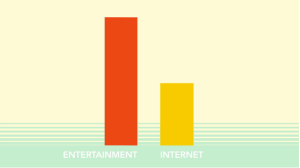
Political strength and economic strength are linked, and as the “Protect IP/SOPA Breaks the Internet” video notes, the “internet industry” now dwarfs the entertainment industry (most of Hollywood is for SOPA/PIPA, while most internet companies – including Google, Facebook, Wikipedia, and YouTube – oppose it). (See 2:48-2:57 – the yellow “internet” bar shoots skyward past the red “entertainment” bar.)

The American Library Association (ALA), which opposes SOPA/PIPA, put together this Quick Reference Guide (PDF), clearly delineating the basics and the structure of each bill. Read the District Dispatch in which ALA applauds the blackout.

Mashable offers a “read between the lines” deconstruction of the official White House response to two petitions (“Stop the E-PARASITE Act” and “Veto the SOPA bill”). The White House addresses legislative scope, non-legislative solutions, censorship and innovation, internet security and stability, and “demands of Congress a more intimate understanding of the Internet in general.”

Lastly, here’s a funny/poignant cover of Don McLean’s “American Pie” on TechCrunch.