If you missed the first half of this write-up about the Massachusetts School Library Association conference, it’s here (Part 1). Now, on to the excellent sessions from Monday, March 22.
Morning keynote
Cultivating Genius and Joy: Culturally and Historically Responsive Education for Equity, Excellence and Joy, Dr. Gholdy Muhammad
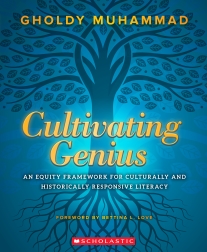 Dr. Muhammad is the author of Cultivating Genius, and an amazing speaker with an inspiring message, a deep understanding of history, and the expert delivery of a slam poet (the live chat was full of librarians planning to buy her book or see if she was available to speak to their schools or other organizations). “STORIES MATTER,” she said (it sounded like it was in all caps), and she referenced the danger of a single story (see: “The Danger of a Single Story,” Chimamanda Ngozi Adichie’s TED Talk). In this case, the story she was referring to was one of “at-risk, confrontational, defiant, unmotivated, non-readers.” Instead, “We must not call readers struggling until we call systems struggling.”
Dr. Muhammad delivered a fast-paced history of Black educators in U.S. history, much of which has been forgotten or intentionally erased: “When you have an erasure of Black genius in education, we see it transfer over to our schools and our communities.” She referenced the Cooperative Children’s Book Center (CCBC), which consistently produces data showing that children’s literature overwhelmingly is produced by white creators and features white characters. She asked, If our books are supposed to be windows to the world, how come only one kind of kid gets to see themselves as astronauts, superheroes, etc.? “It is a human agenda when some people’s stories matter more.”
Dr. Muhammad talked about multicultural education and social justice: “Our schools must have justice at the center….If the system does not help all, it helps no one.” And finally, she described and gave examples of the five lenses/pursuits she uses to examine a text or teach a lesson: Identity, Skills, Intellect, Criticality, and Joy. Most assessment – especially standardized testing – only focuses on skills, but that is only a piece of learning. Dr. Muhammad asked, “How will you make it impossible for students to fail?” (and, “Is it ethical to keep doing the same things we’ve been doing?”).
After the [Diversity] Audit, Liz Phipps-Soeiro
Phipps-Soeiro is an elementary school librarian in the Cambridge Public School system, as well as a consultant and a community organizer. She had an excellent, break-all-the-rules slide show that led with the statement, “I am learning and unlearning every day.” (The second piece of this is so important. Librarians often claim the identity of “lifelong learners,” but much of the new knowledge is really updating and improving on the old.)
Before beginning a diversity audit, a librarian should ask themselves the following questions:
- What does “diverse” mean to me?
- How am I using that word?
- Am I still centering a dominant cultural narrative?
- Am I only thinking about race?
- How does my identity affect what I value and judge as “diverse”?
- What might I consider? (race, region, power, urban/rural, gender, class, sexuality, religion, ability, chronic illness, neurodivergence, oppression/liberation, collectivism/individualism
A diversity audit is a good first step, but move beyond quantitative data. “Stories are our profession.” Look beyond the identity of the character and creator, while acknowledging that “no one book can do everything.” Books can uphold some stereotypes/tropes/myths and break others at the same time.
Engage in self-reflection, hone your critical lens, and beware of “tourist curriculum” (a superficial approach, often featuring holidays or food, then returning to the “regular” curriculum, which further centers a white identity). Be aware of which narratives are amplified or erased.
And involve your students! Give them the vocabulary they need, demonstrate that it is okay to ask questions. The librarian can engage and facilitate powerful book discussions with children (“Does this book support or challenge any stereotypes?”). Analyze books explicitly; kids bring that vocabulary and willingness to discuss out of the library and into classrooms and home.
During the Q&A, a high school librarian commented, “Audit for bias, not just diversity.”
Here is a tool for selecting diverse texts from Learning for Justice (formerly Teaching Tolerance).
Beyond Books: Supporting English Learners in Your School Library, Emily Houston, Kendall Boninti, and Paige Graves
Houston, Boninti, and Graves all work at Cambridge Rindge & Latin School (CRLS), and their presentation was about a concerted effort they’ve made to bring English Language Learners (ELL) into the library and make it a welcoming space for them. They’ve done that by focusing on the physical space, partnering with community-based nonprofit Enroot, and using a Project-Based Learning (PBL) approach.
- Physical space: You want students to be able to “feel that joy” of navigating the space independently. Are there spaces to meet different needs (independent study vs collaboration vs socializing)? Are signs in multiple languages, are they color-coded, do they include images? CRLS has created an Inquiry Lab/Makerspace with lots of donated/upcycled materials for hands-on experimentation.
- Student-centered space: Once you’ve identified an underserved group, how do you get them to come into the library? The CRLS Library partnered with Enroot to develop a monthly series: “Lunch & Learn: Building Community Through Playful Learning.”
- Project-based learning: PBL is an equitable and authentic approach to teaching and learning; it connects students to issues that matter to them and gives them an opportunity to do something. Best practices for PBL: student-centered (voice and choice), authentic and complex problem/challenge (do not simplify, amplify), builds community (social aspect of language), tap into students’ fund of cultural knowledge, explicitly teach vocabulary, scaffolding, lots of visuals, hands-on, play and joy, reflection (include in every lesson with ELL), equitable assessment. All of this is good for ELL and good for every student! “To ignore important issues [in our country, the world] in school makes school irrelevant.”
Tips and Tools for Nonfiction Read-Alouds, Melissa Stewart
Melissa Stewart has written so many nonfiction books for kids. She is a rockstar! And her website has a ton of resources, including this whole section on nonfiction read-alouds. Stewart made the case that kids love read-alouds, and kids love nonfiction! The most recent data (1996) suggests that at least 40% of the books kids check out for pleasure reading are nonfiction; if that’s the case, shouldn’t read-alouds mirror that percentage? (She wants to do an updated study/survey of how much of kids’ pleasure reading is nonfiction; if you work in a library and want to help her out with that, get in touch!)
What are some of the barriers to reading nonfiction aloud?
- Locating appropriate nonfiction titles
- Reading aloud in a way that engages students
- Encouraging and facilitating student responses to nonfiction read-alouds
Spoiler alert, it turns out that these “barriers” are easily overcome! To start, Stewart offers guidance on choosing appropriate nonfiction titles. And, each year, she writes a nonfiction roundup, so you can search her blog for “best nonfiction of” and get annual lists. As for making your reading engaging, “There’s no reason you have to read an entire book,” and sometimes with nonfiction it works better not to. If there’s primary and secondary text, you could just read the main text (especially for younger students); you could also just share one part, or a little bit at a time, rather than reading cover to cover in one sitting. Students will get excited and respond, especially if you’re enthusiastic about it.
Some teachers and librarians just need the nudge that “nonfiction read-alouds can tie in to curriculum, but can also be ‘just for fun.'” When I was doing storytimes for two- and three-year-olds, I admit I didn’t use many nonfiction picture books at all (exception: Skulls! by Blair Thornburgh), but the next time I get in front of a read-aloud crowd, I’m definitely going to include more nonfiction picture books.
Author Panel: M.T. Anderson, Heather Vogel Frederick, Janae Marks, Mitali Perkins
This was just so fun. I’ve read books by all of these authors (Feed, The Mother-Daughter Book Club, From the Desk of Zoe Washington, and Forward Me Back to You, respectively) and they all really seemed to enjoy talking about books and writing together. A few quotes:
- You learn something from writing every book even if they don’t end up on shelves. (Marks)
- You just never know what you’re going to discover. (Anderson, re: traveling and research)
- “Stories written long ago are not all good or all bad but a mix of both.” The books you read early in your life are formative. Eras shaped people (and authors). (Perkins)
- “So many of our books grow from our own lives.” (Frederick)
Whew! So, that was my first MSLA conference. And while I’m excited to meet all these librarians in person someday, the virtual conference experience was very smooth and enjoyable (and the coffee and meals were excellent. And I got to be in my sweatpants and slippers the whole time. There’s a silver lining to Zoom for sure). Thank you again to all of the presenters and conference committee, and thank you if you’re reading this!





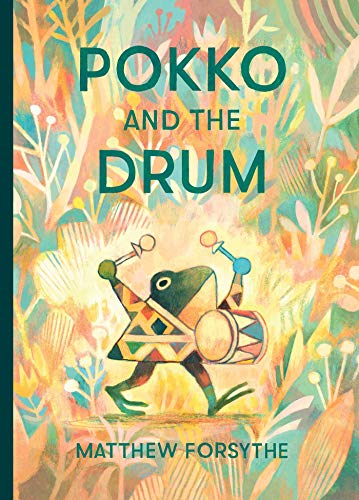 Those of us who do storytimes for little kids know that we shouldn’t expect them to sit quietly, hands folded in laps, listening ears on – not at all! The best storytimes I’ve attended or led incorporate movement, singing, and plenty of wiggling. (Directed movement is better than chaotic movement: one of the best tips I got when I was new to leading storytimes was that if things got rowdy, to sing “Twinkle Twinkle, Little Star” – with motions – because it’s soothing and works as a good reset. You can also sing any short rhyme three times: first regular, then loud, and finally very softly.)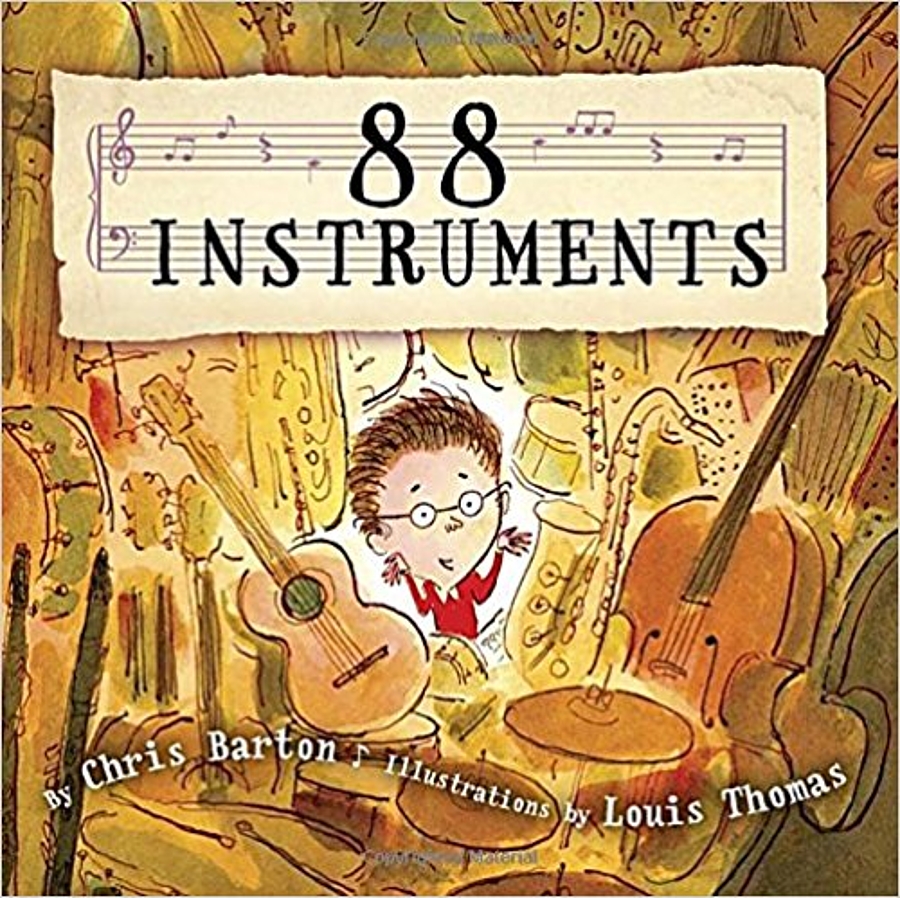
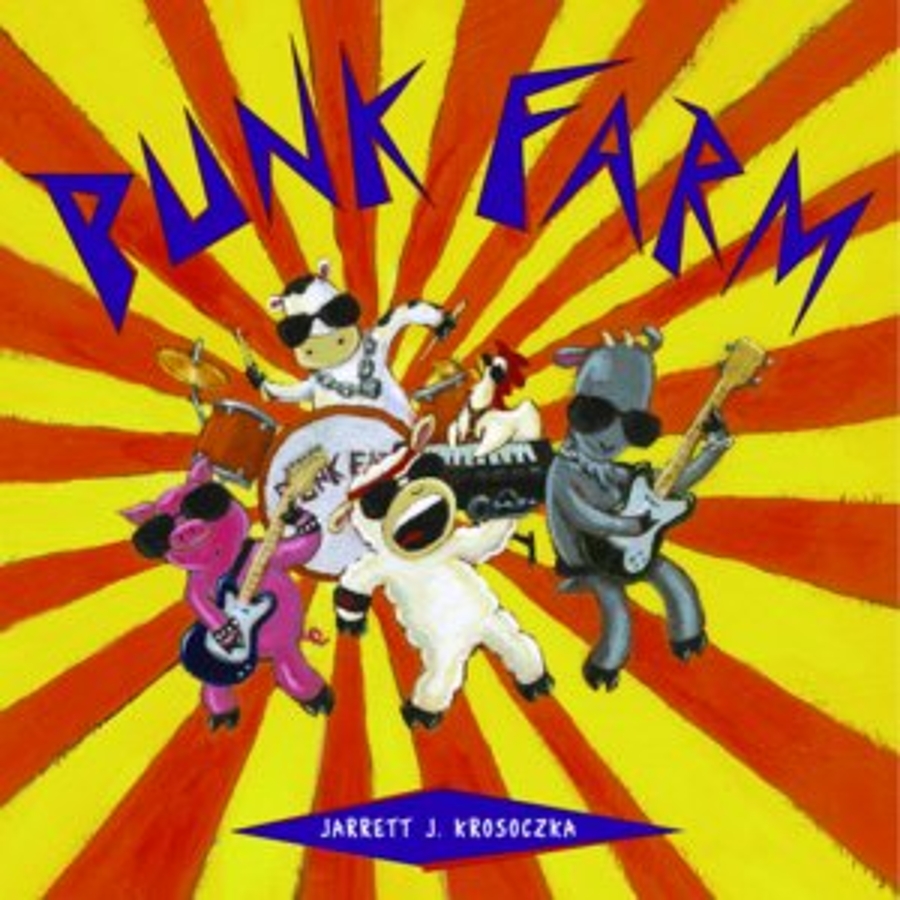

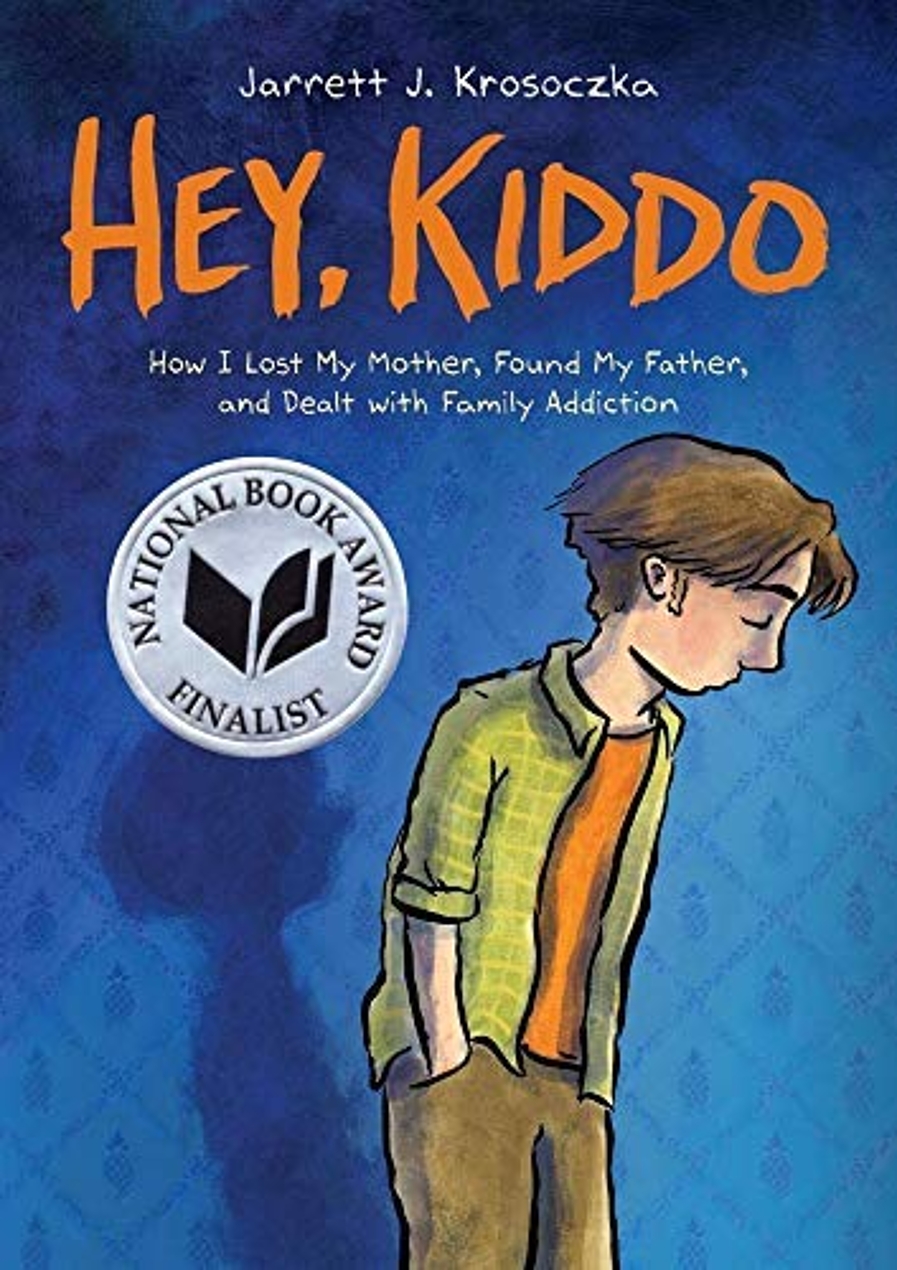 Krosoczka is the Massachusetts-based author of the popular Lunch Lady series of early graphic novels, as well as the award-winning graphic memoir Hey, Kiddo. He talked about his long history of virtual author visits and book launches, and how his model has changed over the years as technology has changed. He asked himself, “I don’t want to be just a talking head, how can I make this more interesting?” When the pandemic arrived in March 2020, he began “Draw Every Day with JKK,” a popular series of drawing sessions. His home setup has improved with time; he noted that phone cameras are usually better quality than computer cameras, and if you mount one on a tripod, it doesn’t hurt to put googly eyes on it so you know where to look. Krosoczka closed with, “Students just want to be heard. They just want an adult to listen.”
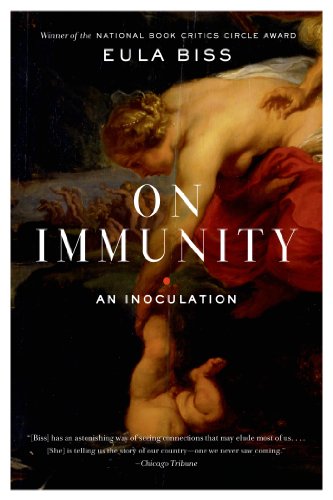 I’ve been following Eula Biss’s writing since I got a galley of On Immunity: An Inoculation back in 2014 (she said during this interview that she “would love for that book to become obsolete,” but if you know anyone asking themselves “to vaccinate or not to vaccinate?” please buy them a copy). Eula joined writing instructor and Emerita Senior Faculty Associate Deb Gorlin to discuss her writing career and her newest book, Having and Being Had.


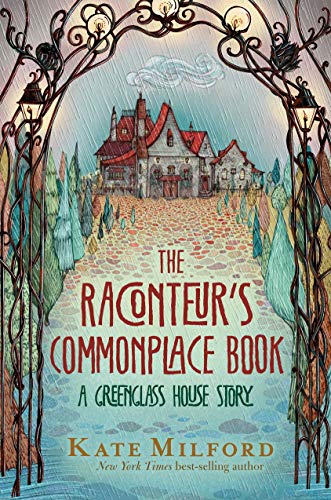 If we’ve met in real life, probably I have talked your ear off about Kate Milford’s Greenglass House books. Her kind of world-building is one of my favorite kinds: our world, but different. And the ways that it’s different are so inventive and compelling to me, from Nagspeake’s shifting iron and the Skidwrack river to the existence of roamers, a culture of smuggling, and an evil catalog company. Plus, the structure of her books is excellent, and nearly always features an ensemble cast of interesting characters, many of whom cross between books – basically, David Mitchell for middle grade, but completely her own. And her newest book, The Raconteur’s Commonplace Book, is actually the book that Milo (main character of Greenglass House) reads – so Kate invented a book-within-a-book, then wrote that book. And like Greenglass House, it’s an Agatha Christie-style strangers-stuck-in-a-house-together setup.
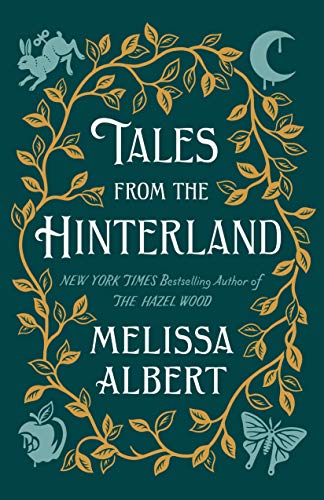 Melissa Albert pulled off a similar trick with Tales of the Hinterland, which she first dreamed up within the context of The Hazel Wood. Tales is a book of dark fairytales that is out of print and hard to access, adding to its mystery and allure. As a reader and a writer, I am in awe: it’s hard enough to invent a creative work that exists for your characters within the world of the book, like Nick Hornby does in Juliet, Naked and David Mitchell does in Utopia Avenue. This piece of art exists for the characters, and grows in the reader’s imagination until it has nearly mythological status. So then, to write that book – and have it meet or exceed expectations – takes immense bravery and talent. Brava!
