Quotes from Books, XII

Why did I start this off in Roman numerals? I’m gonna be on real shaky ground after thirty (XXX). Fortunately there is a ways to go before then.

Once again, these quotes fall into a few natural buckets: funny/clever/sharp observations, poetic language, and theme. Quests, grief, magic…and snails’ teeth.

  1. That’s the thing with quests, she realized. You had to get back to where you started. And then you had to keep living. (Run for the Hills by Kevin Wilson)
  2. “You’re going to be sad forever, Lucy. But that’s not all you’ll be. There’s room for much more.” (Candle Island by Lauren Wolk)
  3. “Everyone has to learn how to do everything at some point. You don’t get extra points for learning early.” (The Things We Miss by Leah Stecher)Cover image of Gumluck and the Heroes
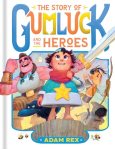
  4. “One day there won’t be any difference between you, except that you’ll have forgotten all the hurtful things you said to her, and she won’t. She will remember.” (The Story of Gumluck and the Heroes by Adam Rex)
  5. “What is the happening?!” (We Are the Wibbly by Sarah Tagholm)
  6. The enchantment is only there because everyone believes, together. (Kaya Morgan’s Crowning Achievement by Jill Tew)
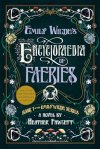
  7. One doesn’t need magic if one knows enough stories. (Emily Wilde’s Encyclopaedia of Faeries by Heather Fawcett)Cover image of Emily Wilde's Encyclopaedia of Faeries
  8. “Did you ever notice that everyone thinks their own life is normal, but each person’s life is so different?” (Run Away With Me by Brian Selznick)
  9. Bereavement….happens to everyone. But you feel it alone. (H is for Hawk by Helen MacDonald)
  10. It seemed far more sensible to belong to a species that had evolved natural tooth replacement than to belong to one that had developed the dental profession. (The Sound of a Wild Snail Eating by Elisabeth Tova Bailey)

See earlier collections of “quotes from books” here.

Upselling in the library

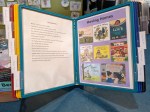
“Upselling” is a sales term that refers to convincing customers to purchase additional items or a more expensive version of the same item. However, we can “upsell” in libraries too – and it doesn’t cost people anything! It’s just a way of promoting library materials or services that patrons may not be aware of…yet. For example:Booklist menu, with text on the left and book cover images on the right. Theme: Moving Homes

  • Readers’ Advisory: Someone is moving soon, and wants some books about moving to help prepare their child(ren). I can recommend a few – and I can also walk them over to the menu of booklists I made on frequently requested topics like moving, first day of school, new baby, and big feelings. This is also a good time to mention the Book Bundle service, where patrons can fill out a form and get personalized book recommendations.
  • Museum Passes: If a patron is checking out books about art or natural history, or mentions that they are looking for activities for the family, ask if they know about the library’s museum pass program. Patrons can reserve museum passes from the library for discounted or free admission!
  • Programs: When talking with families with kids in certain age ranges, make sure they’re aware about any programs you offer for kids in that age group – for instance, baby lapsit storytime for infants, Rhyme Time and Story Time for toddlers and preschool, STEAM and graphic novel book club for elementary-age students.
  • round Libby app iconE-books and Audiobooks: Do patrons know about Libby? Some parents/guardians may even be using Libby themselves for e-books and digital audiobooks, but aren’t aware that there are thousands of kids’ titles too! I make sure to mention this if a family tells me they have a road trip coming up, because audiobooks make long drives much better.
  • Library Network: Most public libraries belong to a consortium, a network of other libraries in the state that share materials. So, if my library doesn’t have a book, another library will lend it to us. Patrons can borrow it from their home library, return it to their home library, and the system will take care of getting the book back to its place. I use this system daily, but rather than taking it for granted, I appreciate how truly magical it is. And, with the simple but functional library app, patrons can place hold requests, see what they have checked out, renew items, and make lists.
  • Databases: Libraries have access to databases across a variety of topics: newspapers, language learning, test prep, even crafting! Although, with the administration’s drastic cuts to the Institute of Museum and Library Services (IMLS), database access in Massachusetts has been reduced lately.

How do you upsell in the library?

Quotes from Books, XI

This batch is from two years ago. The quotes from Horse, Black Bird, and Maizy Chen all seem thematically linked: when you see something wrong in the world, you can take action to help. The chipmunk joke is still one of my all-time favorites (to tell it properly, it must be accompanied by frenzied arm-waving).

  1. Through stories we can experience a person living an entirely different life. Through stories we can experience a vast range of challenging situations and intense emotions without actually suffering from them. The best stories broaden our horizons, deepen our thinking, and spark our compassion. The best stories help us make better real-world decisions. (How to Build A Human by Pamela S. Turner)
  2. Perhaps, after all, one’s purpose in this world was to be forgotten, not remembered. (Shrines of Gaiety by Kate Atkinson)
  3. “That is the world as it is. If you do not like it, join me in attempting to change it. Otherwise, keep your peace.” (Horse by Geraldine Brooks)
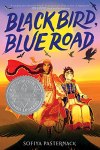
  4. “I can’t fix how I acted before. I can just change how I act in the future.” (Black Bird, Blue Road by Sofiya Pasternak)Cover image of Black Bird, Blue Road
  5. “…it’s an honor to help someone.”
    “How is it an honor?”
    “When you’re in a position to help, that means you’re in a good place in your own life.”
    (Maizy Chen’s Last Chance by Lisa Yee)
  6. “Where do chipmunks go in a tornado?” “All over the place.” (Violet and Jobie in the Wild by Lynne Rae Perkins)
  7. But we can’t pretend it didn’t happen – because when you pretend a thing didn’t happen, that means it can happen again. (Attack of the Black Rectangles by A.S. King)
  8. Each hour of sleep is an hour of healing. (“Sleep,” Marshmallow Clouds, Ted Kooser and Connie Wanek)
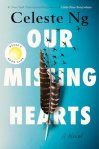
  9. It can’t go on, everyone said, but it kept going on. (Our Missing Hearts by Celeste Ng)Cover image of Our Missing Hearts
  10. Why did I tell you so many stories? Because I wanted the world to make sense to you. I wanted to make sense of the world, for you. I wanted the world to make sense.  (Our Missing Hearts by Celeste Ng)

What “sparklets” have jumped out at you from your reading lately?

See previous Quotes from Books here.

Chalk painting and STEAM

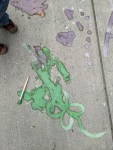
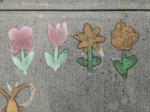
green and purple chalk paintingI cannot bear waste, so I’m always seeking ways to use up the last little bits of things – for example, little nubs of sidewalk chalk too small to draw with. Over school vacation week, my handy 9yo assistant happily picked all the small bits of chalk out of the bin and bashed them up (carefully) with a hammer. (She separated the chalk by color into different bags and crushed them on a piece of cardboard outside.) I funneled the colored chalk into separate containers, and waited for good weather…which arrived today! After story time, I mixed the powdered chalk with water in bowls, and we went outside to the library patio for some chalk painting. It was great fun! There’s still plenty of chalk left, so we may do this at STEAM as well later this summer.

chalk paint flowersNow that I’ve reduced STEAM time for kids ages 5-11 to a manageable frequency (twice a month instead of every week), it’s been going great. Here are some of the activities we’ve done since the program began in January:

  • Robot Turtles board game
  • Spot It! card game
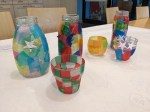
  • Creating and decoding messages with Caesar ciphers glass jars covered in tissue paper and modpodge
  • Penny boats (supplies: aluminum foil, watertight bins, water, about $5 in pennies)
  • Jigsaw puzzles
  • Word scrambles
  • Building block challenges with big and regular-size Jenga blocks
  • Primary color painting
  • 3D paper snowflakes (supplies: paper, stapler/tape, scissors, yarn or ribbon)
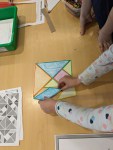
  • Make Your Own Board Gamea pair of hands arranging tangrams into a square
  • “Stained glass” luminaria (supplies: old honey or jam jars, tealights, colored tissue paper, mod-podge, brushes)
  • Make Your Own Tangrams (supplies: cereal boxes, Tangram template, markers/crayons, scissors, glue). This is one of my favorites, because of the way it combines art and math; I’m looking forward to doing tessellations later.
  • Scattergories Jr.
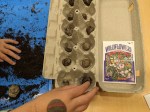
  • Origami bookmark cornerswildflower seed bombs in egg carton with seed packet
  • Wildflower seed bombs (supplies: clay, compost, seeds; egg cartons to transport them home)

Sometimes, we start STEAM with a book to introduce the topic, or to use as a reference during our activity. For example:

  • Mix It Up! by Herve Tullet (for primary color painting)
  • The Science of Seafaring by Anne Rooney, Big Book of Science Experiments (2011), Alpha Bravo Charlie by Sara Gillingham (for penny boats)
  • Maker Comics: Design A Game! by Bree Wolf (for make your own board game)
  • Math Lab for Kids by Rebecca Rapoport and Highlights Tangrams (for Tangrams)
  • Yoko’s Paper Cranes by Rosemary Wells (for origami bookmarks)
  • Wintergarden by Janet Fox and Up in the Garden and Down in the Dirt by Kate Messner (for seed bombs)

In general, this has been a fairly easy, low-budget program to run. I keep a running list of ideas, books, and materials in a google doc, and use a lot of recyclable materials (like cereal boxes or honey jars) or ones we already have (like paint and paint brushes), or share new supplies with teen programs (teens made seed bombs too).

Guest presenters occasionally lend their expertise: in early spring, an author from Northeast Wildlife visited to teach about animal tracks, scat, and food sources (lots of animals each acorns!). This summer, our regional health nurse is bringing UV bead bracelets to emphasize the importance of sun protection, and one of our library trustees, who is also a master quilter, is going to lead a session on hand-sewing and help us make a small quilt we can hang in the library. So, we’re STEAMing along!

Quotes from books, X

It’s been…oh dear…about three years since I posted in the “quotes from books” series, though this one (and the one following) has been sitting in my drafts folder for about that long. After a weekend of intense focus on writing, I’m looking back at these and noticing how the quotes I choose fall into three categories: something funny or clever, poetic language, or something to do with theme.

  1. The more questions she asked, the more questions she thought up.” (A Closed and Common Orbit, Becky Chambers)
  2. If this were a novel, he might simply be a poorly written character. But there are no poorly written people. Only ones you don’t yet understand.” (The Verifiers, Jane Pek)
  3. “Grief is a language they don’t have to speak. It communicates just fine on its own.” (A Year to the Day, Robin Benway)
  4. And it didn’t stop being magic just because you found out how it was done.” (The Wee Free Men, Terry Pratchett)
  5. Who is the world designed for?” (What Can A Body Do?, Sara Hendren)
  6. “The secret to getting people to like you / is to like yourself.” (In the Beautiful Country, Jane Kuo)
  7. She understood what she was supposed to think and believe, but that wasn’t the same thing as thinking and believing those things.” (A Song Called Home, Sara Zarr)
  8. A mother’s heroic journey is not about how she leaves, but about how she stays.” (I’ll Show Myself Out, Jessi Klein)
  9. True learning comes from being open to wrong answers.” (The End of the Wild, Nicole Helget)
  10. …her memories were all pictures without sound.” (This Time Tomorrow, Emma Straub)

I’ve been listening to old (but new-to-me) episodes of the podcast Harry Potter and the Sacred Text lately, on a friend’s recommendation. Of all the “sacred practices” I’ve heard Vanessa and Casper use so far – lectio divina, sacred imagination, havruta, florilegia, and pardes – I’m partial to lectio divina and havruta, but when they introduced florilegia – “essentially a quote journal” – well, that’s something I’ve been doing most of my life.

NESCBWI25: Hope is the thing with feathers

NESCBWI conference logoThe New England Society of Children’s Book Writers & Illustrators (NESCBWI) spring conference was last weekend in Stamford, and it felt much like a library conference…possibly because every other attendee I met was either a teacher, librarian, or a teacher-librarian. I took a mere 14 pages of notes, which I’ll try to condense to key takeaways here. But first, I’m grateful to the organizers (almost all volunteers), presenters, panelists, and other attendees for creating an opportunity to come together to share a love of children’s literature and art, offering encouragement as well as actionable advice, and reaffirming our mission to tell and share all stories, for all kids.

From Rajani LaRocca’s morning keynoteCover image of Red White and Whole
In which there was extensive, and justified, quoting of Madeleine L’Engle:

  • Everyone deserves to see themselves in books, and everyone deserves to read about people who are not exactly like them – and learn how much we have in common. “Stories make us more alive, more human, more loving.” –Madeleine L’Engle
  • Rajani’s hopes for her stories: None of us is just one thing. History doesn’t define us but it should inform us. Create communities where everyone belongs.
  • Children are not pre-human, they are pre-adult. “The great thing about getting older is that you don’t lose all the other ages you’ve been.” -Madeleine L’Engle
  • We write, even fiction, to tell the truth. Write the stories that matter to you, because if they matter to you, they matter to us all.
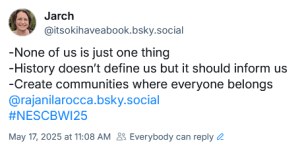
screencap of bluesky quoting Rajani LaRocca

“Heartbeat and Pacing of Picture Books” with Deborah Freedman
Cover image of Carl and the Meaning of LifeDeborah Freedman is an author/illustrator with a background in art and architecture; she also gave the closing keynote. She has written and illustrated many books, including Carl and the Meaning of Life.

  • Deborah showed storyboards of her own picture books, with thumbnail sketches. “It’s easy to trick ourselves into thinking something’s more finished than it is – don’t get too tight too early.”
  • She showed many examples, including: Where the Wild Things Are* by Maurice Sendak (for its brilliant pacing and “meaty middle”), Wave by Suzy Lee (for its brilliant use of the gutter), Giant Squid by Candace Fleming and Eric Rohmann (for structure that reflects the story), Again! by Emily Gravett (for its pacing and humor), Uptown by Bryan Collier (for its call-and-response).
  • She talked about page turns as they relate to pacing (“Each page is like an open question or incomplete thought…you have to turn the page to find out the answer”). “The gutter acts as a comma, page turn acts like a giant comma.”
  • “Detail can slow a story down – use it intentionally.”

*In their newsletter “Looking at Picture Books,” Jon Klassen and Mac Barnett dissected Where the Wild Things Are. Even if you know this book very, very well, you will likely notice something new.

“Words That Float: Writing the Novel in Verse” with Rajani LaRoccaCover image of Mirror to Mirror
  • Verse novels, like picture books, can tackle difficult subjects in a way that is accessible rather than overwhelming. There is more space on the page, more space in the mind and heart of the reader to process what’s going on.
  • Verse novels are best suited to stories that are character-driven, with interiority, emotion, told in close first person, present tense, not plot-heavy; the focus is on the interior journey rather than a complicated plot (but you DO have to have a plot). Character is the heart of a verse novel; the most important transformation is emotional.
  • Find the kind of poetry that fits your character and what they’re trying to say. If you have multiple characters, each might use a different type of poetry. Voice is inherently tied to character.
  • Repeat things at the beginning, middle, and end of the book. The meaning changes because your character has changed. You want the ending to reflect the beginning. A “keystone poem,” often written early on, encompasses the theme, important symbol, or central conflict of the story; it’s the “hub” or center of the wheel from which all the “spokes” emerge.
  • Tell the truth: “We read fiction because we want to know the truth about people.”
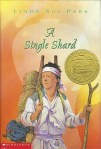
  • Linda Sue Park’s advice on repetition: If something isn’t mentioned in the first half of the book, don’t use it in the second half.
  • Examples of excellent verse novels: Blood Water Paint by Joy McCullough, The Poet X by Elizabeth Acevedo, The Last Fifth Grade of Emerson Elementary by Laura Shovan, Unsettled by Reem Faruqi, Garvey’s Choice by Nikki Grimes
  • Recommended podcast: Day Brain vs. Night Brain
  • There was so much more packed into this presentation! These are merely a few mushrooms from the mycorrhizal network (see how I didn’t say “tip of the iceberg”? Use original metaphors! Although “mycorrhizal” is maybe not the most poetic.)

facade of Stamford Public Library (Ferguson)After lunch, I walked over to Stamford’s Public Library. It is amazing!
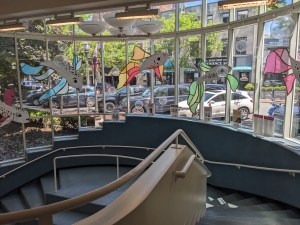
Ferguson interior stairwell and windows

Editor panel, moderated by Pam Vaughan

Editors Jessica Anderson (Christy Ottaviano/LBYR), Julie Blivens (Charlesbridge), Alexandra (Alex) Hinrichs (Islandport), Sasha Illingworth (LBYR), and Matt Phipps (GP Putnam’s Sons/PYR) answered a series of questions about the publishing industry today.

  • Challenges in the industry? One person is often doing the work of multiple people, which slows things down (and publishing is already kind of a slow business).
  • R&R? If an editor asks for a Revise & Resubmit, do it!! But take your time with it – they don’t need it back right away. They want to see that you’ve listened and put the work in.
  • Acquiring? Editors have different communication styles – as do authors. Phone calls, video calls, email, texting, or some of each.
  • What’s in a rejection? “Not right for our list” means it doesn’t fit the profile of what they know they’re good at selling. “It just didn’t come together for me” means it’s not there yet – go back to your critique group. “I don’t have a vision for this” may mean they can see problems but not solutions, or that they’re not the right “campaign manager” for this author/book. You want someone who can be a strong advocate for you and your work.
  • Current MSWL? Editors talked about their current Manuscript Wish Lists. “Finding the right editor for the right illustrator is like matchmaking.”
  • Common mistakes in submissions? Not researching the publishing house. Not including an attachment. Not specifying a category/age range (e.g. middle grade fantasy, 8-12). Not embedding art (for illustrators).
  • Hopeful signs in children’s publishing? Everyone feels passionately about children’s literacy. Children’s literature is inherently hopeful. More independent bookstores are opening up, more small presses. “We are each other’s community.”

Story Studio with Christy Yaros

  • This lightning-fast workshop could have easily taken a whole day, if not a week! (Christy did offer another workshop earlier in the day.) In this one, the focus was on the theme: What is your book trying to say, and how do you weave it in so it doesn’t feel forced? At each step, we did a quick writing exercise answering the guiding questions.
    • Step 1: What emotional or philosophical truth sits at the heart of your story? What does your protagonist learn by the end? What belief does your story affirm, challenge, or complicate? What question about life does your story explore?
    • Step 2: Theme lives in the tension between what your character wants and what they need. Fill in the blanks: At the beginning, my character believes __ (linked to what they want). By the end, they understand __ (linked to what they need). This shows that __ (they have gone on this emotional journey, your theme in action).
    • Step 3: Relationships that reinforce or resist: Which characters help your theme shine? Which ones challenge or contradict it? Presenting alternate interpretations of the theme gives the reader choices, rather than telling them what to believe. We’re giving kids a framework for how to look at stuff.
    • Step 4: Emotional moments that bring theme to life: Look for moments where your character’s belief is tested – and something hurts but teaches.
  • Think of theme as what your character needs; plot is what they want; and the arc is where want and need come up against each other.
  • Christy recommended the book Craft in the Real World (2021) by Matthew Salesses

“Bookends: Beginnings & Endings in Picture Books” with Pam VaughanCover image of Tenacious Won't Give Up
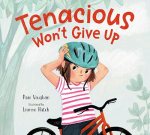
  • There were many practical takeaways from this workshop, and lots of examples. Pam contacted other authors and asked them for early drafts of the first and last sentences of their published books, so we could compare and see how they’d changed from the early versions to the final ones.
  • Five Cs (character, curiosity, conflict, connection, care) and the W effect – the attitude of your book (wonder why / wow! / wait, what? weird / word choice / witty / whisk you away).
  • Sometimes your beginning hints, winks, links, nods, and/or leads to your ending.
  • In a picture book, conflict can be a subtle thing, it doesn’t have to be a fight.
  • Story structure may be circular, cumulative, conceptual, classic, list, pattern, dialogue, quest, mirror, interactive.
  • Your beginning: Cut for clarity? Add for context? Hint at your ending? Hone your voice? Toy with your word choice?
  • Endings are powerful. How do you want to leave your reader feeling? “Oohs” and “Ahhs” (Aha! Haha! Hmm…, Ahh…, Aww)
  • Tips for beginnings and endings: Try writing 10-20 first/last sentences. Read them out loud. Cut as many words as you can (but use as many words as you need). How many five Cs can you include? Can you amp up the W effect? Connect your beginning to your ending (and your ending to your beginning).
  • Recommended text: The Heroine’s Journey (2020) by Gail Carriger

Agent Panel: Marissa Brown, Chrisy Ewers, Amy Thrall Flynn, Stephen Fraser, Carter Hasegawa, Rachel Orr, Sera Rivers

  • What does an agent do? Agents wear many hats! Matchmaker (between author and editor), unlicensed therapist, unlicensed financial advisor (chasing down royalty payments), looking for new talent (those R&Rs are unpaid – agents don’t get paid until they sell a book), negotiator (between author and publishing house), strategize and advocate for an author’s career.
  • Advice for after an author signs with an agent? There is a lot of waiting – be writing while you’re waiting! Publishing is a small world; be someone people want to work with (courteous, punctual, nothing hideous on social media, etc.). Reputations matter.
  • When you offer representation, what questions do you want authors to ask you? Remember it is a mutual interview. What kind of working relationship do you want? What kind of feedback do you want, and how much? What’s your communication style? “Any agent is not the right agent.” Show that you’ve done your research.
  •  Pet peeve or “pet fave”? Didactic stories (peeve). Getting to call an agent with an offer (fave). Thoughtful revisions that show the author listened to your advice (fave).  “Always look for: why would a child want to read this? How does it connect with your audience? Your mission as a creator of books for children, you have to be thinking about who the book is for. We need to respect children and understand their world.” -Amy
  • One hopeful thing about the industry? Books are inherently hopeful. It’s an evergreen industry – children are born every day and they need stories and books. “We’re gonna win. Hope always wins.” -Sera

After the panel, authors and illustrators were encouraged to join a critique group (find NESCBWI critique groups here). Everyone went home Saturday with lots to think about!meme of Dwight Schrute from The Office, Assistant to the Regional Manager
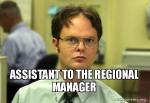
On Sunday, we met the NESCBWI regional team. (With apologies to these incredibly dedicated and hardworking volunteers, every time someone said “assistant regional advisor,” I thought “assistant TO the regional advisor.) Next, the Crystal Kite Awards were presented to Liz Goulet Dubois, Winsome Bingham, Abi Cushman, and Federico Erebia.

Winsome Bingham said (among other things):Cover image of The Walk
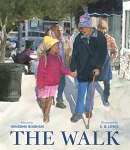
  • “If stories weren’t powerful, they wouldn’t be banning books.”
  • “There are so many different ways to tell a story.”
  • “We all like what we like…write what your heart tells you to write.”
  • All it takes is one person. “If you send your stuff out and no one gets it…keep writing.”
  • “Rejection is a good thing…if you don’t send your stuff out, they don’t know what you can do.”
  • “You have to believe there’s a reason you’re doing this. It’s not gonna pay off overnight, it’s a slow game.”

Federico Erebia said:Cover image of Pedro & Daniel
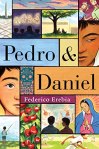
  • “It’s okay to be different, it’s okay to write different. There are many ways to tell stories.”
  • You realize at some point that you’re not just speaking up for yourself, you’re speaking up for a community – you may not even realize it’s your community.
  • I have been an activist for 45 years…”I have never been this afraid of America, in America, for America.”
  • “We have the power of the pen. We have our voices. Together we can effect change.”
  • “It may one day be too late to be on the right side of history.”

Abi Cushman said:Cover image of Wombats Are Pretty Weird
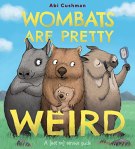
  • People don’t always get what you’re trying to do…[but also] sometimes your best just isn’t where it needs to be…and you just don’t know.”
  • Yes, this industry is tough, and yes, you’re going to get a lot of rejections. Keep writing the stories you’re passionate about in the way that you want to write them.

Deborah Freedman closing keynote
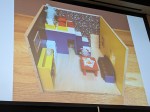
Mouse house modelRemember a thousand words ago when I said Deborah Freedman was going to come up again? Here she is! She gave a beautiful closing keynote with visuals of her beautiful art (and architectural models, including a little mouse house). Here are a few takeaways from her talk:

  • A well-written text trusts illustrators; a good book trusts readers.
  • What is the emotional heart of the book? What is the real conflict and resolution? It’s funny how long it can take and how hard it can be to figure out “what’s it about?”
  • The stories are made up, but the feelings are true.
  • How are we going to get through this world we’re in right now without connecting with each other?
  • A picture book might be a child’s first exposure to art and poetry.
  • We have to expand our own understanding of the world if we want to expand children’s understanding. When we explore what it means to be human we become better creators and maybe even better humans.

And that’s a wrap on NESCBWI25. I’m glad I went. I met lots of other writers and writer/illustrators and we exchanged contact information so we can critique and cheerlead and maybe see each other next year.

I’m grateful to my friend who hosted me during the weekend, and as a thanks for those who read this all the way to the end, here are some photos of her puppy:


Beagle puppy and ladybug toyBeagle puppy speckled tummy

If you’re still here and you want more SCBWI content, my blog posts from the Winter 2021 conference are here and here. Happy writing, and happy reading!
Everywhere Babies: Baby Lapsit Storytime

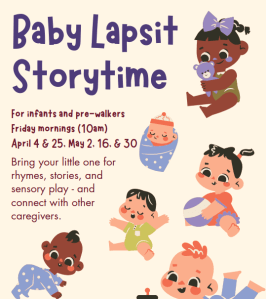
Our library’s weekly children’s programs – Rhyme Time, Story Time, and Playgroup – are all open to kids from birth to age five, but until this year we didn’t have anything specifically for babies. In late February, I introduced Baby Lapsit Storytime, for babies from birth to 12 months or walking, and people started coming right away!

Flier for baby lapsit program

Flier made in Canva

As always, Jbrary served as an excellent resource, as did Mel’s Desk, the Show Me Librarian, KCLS, the book Baby Storytime Magic by Kathy McMillan and Christine Kirker, and of course, the Massachusetts youth librarian listserv (a.k.a. massyac).

From these sources, as well as my own favorite board books and memories of the baby storytime I attended at the Belmont Public Library several years ago, I put together a 20-30 minute program of songs, rhymes, books, and early literacy tips (the PLA Early Literacy Calendar has lots of these; I hand out a copy of each month’s calendar and suggestions to those who want one). I collected baby-friendly toys (no choking hazards, easy to wipe down or wash) from our current collection of stuff, plus leftovers from the Toy Swap; I also use the play scarves from Rhyme Time (and bring them home with me to wash).

Room setup: Vacuum the rug and set the bean bags up in a circle. Pull some chairs over too for those who are more comfortable sitting. There’s room for “stroller parking” in the back. The box of baby toys stays on the table until after the more structured part of the program happens. Extra copies of board books go on the little side table next to my chair, and I set up extra books along the window ledge (other board books, picture books for babies, poetry, etc.); if they’re in easy reach, people will check them out!

  • Welcome and introductions: We start whenever at least one, but ideally two, baby/caregiver pair(s) has/have arrived. Because of what I call “baby time,” this isn’t always precisely at 10am.
  • Song: “Well Hello Everybody, Can You Touch Your Nose?
  • Rhyme/fingerplay: “Open Shut Them”
  • Early literacy tip (e.g. rhymes and songs are important for babies because they slow down words and help babies hear the different sounds – an important preliteracy skill)
  • Song cube* song (ABCs, Itsy-Bitsy Spider, I’m A Little Teapot, Where Is Thumbkin?, etc.)
  • Rhyme/bounce: “The Grand Old Duke of York” (usually twice)
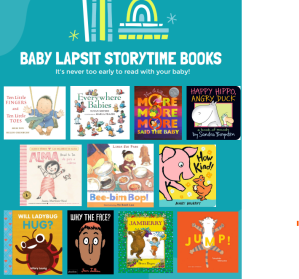
  • Book (see image and list below)**
  • Rhyme/play: Peekaboo to the tune of Frere Jacques
  • Song: “Head and Shoulders” by Ella Jenkins: we do head and shoulders, knees and toes, back and belly.
  • Early literacy tip (e.g. fingerplays help babies build the small muscles in their hands, preparing them to grip crayons so they can draw and write)
  • Scarf/rhyme: “Popcorn Kernels in the Pot” and/or “Jack in the Box”
  • Rhyme/bounce: “Trot, Trot to Boston” (I learned this one as an adult, it’s pretty New England specific)
  • Song: “Twinkle, Twinkle, Little Star”
  • Goodbye and closing: announce dates of next baby storytimes, and anything else interesting coming up – for example, we have a babywearing expert visiting next month, and a babies and kids clothing swap later this summer.
  • Play, socialize, and help! Put the toys on the rug and offer copies of the early literacy calendar. It’s so important for caregivers to have time to talk with each other, to exchange tips, to commiserate, to share information with each other. During this time I often play with babies, read them an extra book, offer info about library resources, or go and get specific books from our shelves.

*I got the song cube idea from another librarian friend. I make mine out of empty tissue boxes, paper, marker, crayons, and clear packing tape. Each side has a picture that corresponds to a simple, well-known song, e.g. a teapot for “I’m A Little Teapot,” a spider for “Itsy-Bitsy Spider,” a rowboat for “Row, Row, Row Your Boat,” a rocket ship for “Zoom zoom zoom, We’re going to the moon.” You can see a couple of examples from this Step Into Storytime post.

baby lapsit storytime books flier with book coversVisual book list made in LibraryAware

**A week or so ahead of time, I request a board book or full-size picture book for myself, and extra copies of the board book for caregivers to read along if they want. Here are the books we’ve read so far:

  • Ten Little Fingers and Ten Little Toes by Mem Fox and Helen Oxenbury
  • Everywhere Babies by Susan Meyers and Marla Frazee
  • More, More, More Said the Baby by Vera B. Williams
  • Happy Hippo, Angry Duck by Sandra Boynton
  • Alma, Head to Toe by Juana Martinez-Neal (this one is bilingual, English/Spanish; there is also Alma and Her Family, Alma at Home, and Where Is Pajarito?
  • Jamberry by Bruce Degen
  • How Kind! by Mary Murphy

Baby storytime has been an absolute delight, and I’m excited to keep it going. I’m grateful for the advice of other librarians and early literacy specialists, and to the caregivers for bringing their babies to the library. It’s never too early to begin reading with babies (or to sign up for 1000 Books Before Kindergarten!).

Unreasonable Hospitality in the Library

Last fall, the Massachusetts Library System (MLS) Youth Services Section (YSS) hosted a virtual “Lunch and Learn” with the folks from the Westwood Public Library‘s PR/marketing team. They spoke about being proactive and intentional instead of reactive, about brand consistency, quality control, and increased engagement with the community, and about sustainability and succession (so all the institutional knowledge doesn’t walk out the door when one person leaves).

Cover image of Unreasonable HospitalityToward the end, they recommended three books: The Non-Designers Design Book by Robin Williams, This Is Marketing by Seth Godin, and Unreasonable Hospitality by Will Guidara. I just read Unreasonable Hospitality, and was thinking about ways we can offer excellent service and hospitality in libraries. (Guidara writes mainly about his area of expertise, restaurants, but the core principles are applicable to any service industry.) How do we make people who visit the library feel welcome, at home, seen, listened to, and cared for? What needs can we anticipate and fulfill?

One thing public libraries in Massachusetts do that often strikes people as magical when they first learn about it is our inter-library loan system. If a local library doesn’t have the book you want on its shelf when you want it – either because they don’t own it or it’s checked out – you can request a copy, and another library in the consortium will send it over. You can return the book to your home library or any other library in the network, and that library will make sure the book gets back to its owning library. It’s the magic of sharing! (And an algorithm, and van drivers, and sorters at the central facility, etc.) This saves people time and money, and it’s a pretty cool service.

ILL is a core service of libraries as far as I’m concerned, and so are programs: author talks and book signings, storytimes, Lego and games, book clubs, ELL and language learning groups, knitting and sewing groups, history and science lectures. The library is that “third place” where people can gather for entertainment, education, and community, without having to purchase anything. Being responsive to what the community wants – making sure people know that staff are open to ideas and willing to try new things – is part of building community and trust. It’s why I encourage patrons to talk to me in person, contact me by e-mail, or put a note in my desk mailbox. A lot of the new programs I’ve developed over the past year and a half have come out of these interactions, including Pokemon Club and the toy swap.

Hospitality means going beyond your organization’s core functions, however; beyond the “black and white” and into color, as Guidara puts it. What are the special, small, meaningful things you do to make people feel comfortable? In a children’s room, that might mean making sure all the outlets are covered, there’s a place to hang coats and park strollers, and there’s a changing table in every restroom. It could mean that books face cover-out as much as possible, there are toys to encourage play, and signage is friendly and informative. It could mean you have a first-aid kit ready to hand, bookmarks to give away, and stickers or hand stamps to ease the transition of leaving the library. It means greeting people who walk in the door, learning the names of the regulars…even remembering their tastes and preferences and making personalized recommendations.

What touches of hospitality have you put in place in your library (or bookstore, or other service workplace)? Where have you experienced remarkable, unexpected, “unreasonable hospitality” yourself?

A big part of what made “unreasonable hospitality” work in Guidara’s restaurants was that the staff was empowered to enact ideas, make exceptions, etc. without getting approval from a manager. This approach made me think of the organization and management of public libraries course I took in grad school; the teacher, an adjunct who had worked in many libraries, told us that the manager’s job is to make it possible for everyone else to do their jobs, and then get out of the way. In other words, don’t micromanage; instead, train and trust your staff, empower them to handle their responsibilities, make sure they have what they need to succeed, and be there to back them up. Unreasonable Hospitality is a beautiful example of that principle in action.

Spring Standouts

Ah, spring, the season of tulips and cherry blossoms! Or is it the season of endless cold rain, protests, war, economic collapse, and constitutional crisis? Either way, there are good books, and thank goodness.

I’ve read about 260 books since January and thought I’d feature some of the real standouts so far. These have all been published this year (2025, for those keeping track at home). Hat tip, as usual, to Betsy Bird at Fuse 8 (especially for My Presentation Today is About the Anaconda, which I would have missed if not for her), and Heavy Medal for Newbery-eligible titles.

Picture booksCover image of Let's Be Bees

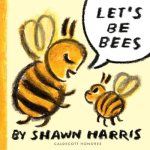
  • Let’s Be Bees by Shawn Harris: Hands-down one of the best toddler storytime books of the year, and maybe ever. The crayon drawings use kids’ own most common medium, and there are lots of sound effects. It’s hard to make a book this simple, and simply appealing.
  • The Interpreter by Olivia Abtahi, illus. Monica Arnaldo: A glorious book honoring the many kids who work as interpreters for their grown-ups; the hero of this book finds a way to balance her job as an interpreter with her job of being a kid. Filled with warmth and humor and really effective use of color in speech bubbles.Cover image of A Pocket Full of Rocks
  • The House on the Canal by Thomas Harding, illus. Britta Teckentrup: There are biographies, and there are histories, and then there are books that tell a story from a slantwise angle: the history of the house that became known as the Anne Frank House, from before it was built, through many different residents (human and animal) and disasters (fire, war) up to its present status as a museum.
  • Our Wild Garden by Daniel Seton, illus. Pieter Fannes: Two children convince their parents to re-wild their garden. This features specifically English flora and fauna, but is inspiring for any audience (although unfortunately, no matter how many little hedgehog doors we build here, we will not attract wild hedgehogs to our yards). The endpapers are flat-out gorgeous – they’d be amazing as fabric, wallpaper, or wrapping paper.
  • A Pocket Full of Rocks by Kristin Mahoney, illus. E.B. Goodale: Another marvelous read-aloud, for any time of year. A child collects rocks in winter, flower petals in spring, seashells in summer, and acorns in autumn, and uses them all in a fairy garden, then empties the jar, makes presents for their family, and starts over. The way this kid follows their interests without being deterred reminds me a bit of Mabel (see below). And I always love Goodale’s illustrations. Cover image of Every Monday Mabel
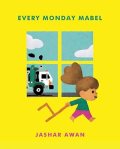
  • Every Monday Mabel by Jashar Awan: Jashar Awan has had my attention since What A Lucky Day! (2020), and Mabel is an absolute storytime grand slam. Readers’ curiosity is piqued right away, wondering why Mabel thinks Mondays are the best, despite her family’s disinterest in her passion – which turns out to be the garbage truck, complete with arm that picks up the trash can and dumps it (and sound effects!). Mabel is satisfied – though sad her family missed out on the experience – but other kids throughout the neighborhood celebrate the truck’s arrival as well.
  • Wind Watchers by Micha Archer: More beautiful collage art from Archer, and another calm and thoughtful story, as three kids observe and experience the wind through different weather and seasons. I particularly love one of the autumn spreads, with one kid perpetually suspended leaping into a pile of leaves.
  • Sweet Babe! A Jewish Grandma Kvells by Robin Rosenthal: Bold, stylish art for a bold, stylish grandma who just wants to kvell over her marvelous baby! The two play peek-a-boo, and just LOOK. AT. THIS. BABY! Who could say no? A Yiddish glossary is included, but I suspect that this book’s cultural specificity isn’t a barrier to its universality. Grandparents are gonna kvell!Cover image of Stalactite & Stalagmite
  • Stalactite & Stalagmite by Drew Beckmeyer: Brilliant premise, hilarious execution, exceptional art. I’ve never seen a picture book that covers millions of years, from trilobites to the present. Most of the story is in dialogue between Stalactite and Stalagmite and other visitors to their cave (a triceratops, a giant sloth, a human miner) and there’s an inconspicuous timeline along the bottom of each page.

Middle grade

  • A World Worth Saving by Kyle Lukoff: This high-stakes fantasy adventure with Jewish mythology and a trans main character trying to save a friend and assert his identity to his parents requires the reader’s full concentration. It’s unlike any other middle grade fiction out there today.Cover image of Away
  • Away by Megan E. Freeman: I loved Alone, and so did the kids of Massachusetts – it was an MCBA winner. This companion stands alone, or you could read them in either order. Away has the perspectives of four kids instead of one, and different types of narration, and it comes together really well. (Also, there is a dog, and nothing bad happens to the dog.) Away really raises questions about social trust, community, government, and good trouble.
  • Max in the Land of Lies by Adam Gidwitz: Last year’s Max in the House of Spies was the first in a duology; the second book has a much more compressed timeframe, in weeks rather than years, and it’s high stakes: Max has returned to Berlin with the dual missions of spying for the British and finding his parents. The pacing and tone are different from the first book, but Gidwitz carries it all off successfully.
  • Crumble by Meredith McLaren: In this graphic novel, the main character and her mother and aunt all have the power to bake their feelings into food (think Like Water for Chocolate). But they aren’t supposed to bake bad feelings, so what is Emily supposed to do when tragedy strikes and the only thing she wants to do is bake? Crumble handles grief delicately and honestly. And there are recipes.
  • Cover image of My Presentation Today is About the AnacondaMy Presentation Today is About the Anaconda by Bibi Dumon Tak: Animals gather to give presentations about other animals, with frequent interruptions from the audience. Some presentations are self-centered, others well-researched, others a bit peculiar. The animals’ reasons for choosing their subjects vary, and overall it’s an entertaining batch of oral reports filled with fascinating facts and scientific vocabulary.
  • Botticelli’s Apprentice by Ursula Murray Husted: This graphic novel set Florence features a determined “chicken girl” who dreams of being an artist, and an artist’s apprentice who’s stuck with an assignment he can’t accomplish; the two make a deal to help each other, and after a prickly start, they each learn from one another. Well-researched and full of information about early Renaissance Florence, the processes of preparing canvases and creating paints, and why there weren’t more female artists, this is historical fiction at its best. And there’s a mischievous dog. (Again, nothing happens to the dog. Although dogs really shouldn’t eat lapis.)Cover image of Botticelli's apprentice
  • Right Back At You by Carolyn Mackler: I have a feeling this one isn’t going to stick in my memory, but I loved it while I was reading it. It’s got just the kind of speculative premise I like – a kind of time wormhole through which the characters send letters from New York in 2023 to Pennsylvania in 1987 – and it reminded me of Erin Entrada Kelly’s You Go First in the way the two characters help each other work through their challenges.

Young Adult

  • Cover image of Under the Same StarsUnder the Same Stars by Libba Bray: Characters in three timelines – 1930s Nazi Germany, the divided Berlin of the 1980s, and 2020 COVID-19-era New York – are connected through a history of war, oppression, and resistance. Reading is subjective, of course, but I felt that each section had a similar emotional weight; often in books with past and present settings, one has more pull than another.

Adult

  • Show Don’t Tell by Curtis Sittenfeld: As a longtime Sittenfeld fan, I was pleased by all these stories, including a coda to Prep. Cover image of Everything Is Tuberculosis
  • Everything Is Tuberculosis by John Green: In engaging prose, Green demonstrates how modern TB has much more to do with injustice than with bacteria. The world has had the cure for TB since last century, and the disease has largely been eradicated in developed countries, yet millions still die of TB every year “where the cure is not.” A clear and urgent call for healthcare justice. (And the book design is just as clever as the contents: make sure to examine the endpapers!)
  • The Paris Express by Emma Donoghue: “A railway carriage is as intimate as a dinner party, but one with no host and guests assembled at random.” I got to see Emma Donoghue speak at a bookshop last month, and she was wonderful. My library hold on The Paris Express came in not long after, and I enjoyed the multiple perspectives of the people on the train, and the tension of wondering about the nature and scope of the impending disaster. Researched in depth and told with clarity and drama.
  • Do I Know You? A Faceblind Reporter’s Journey into the Science of Sight, Memory, and Imagination by Sadie Dingfelder: “What is it like to be someone else?” Dingfelder has prosopagnosia (faceblindness) and stereoblindness, but didn’t realize until adulthood that she wasn’t neurotypical. Her writing about the way she experiences the world is fascinating and funny.

So those are my top titles of 2025 so far. What are yours?

On Maintenance

Innovation is exciting and splashy; maintenance doesn’t get the same attention, but it’s absolutely essential. As Jenny Odell writes in How to Do Nothing: Resisting the Attention Economy (2020), “Our very idea of productivity is premised on the idea of producing something new, whereas we do not tend to see maintenance and care as productive in the same way.” And here’s John Green quoting Kurt Vonnegut in The Anthropocene Reviewed (2021): “[O]ne of the flaws of the human character is that ‘everybody wants to build and nobody wants to do maintenance.'”

Icon of a calendar and a clock from The Noun ProjectMy own human character is certainly flawed in other ways, but for the most part, I really enjoy “doing maintenance.” (Although it would also be really nice to trim my nails to the right length once and have them stay that way forever. Alas.) In the context of library work, though, it can be challenging to show how much time and care go into maintaining the programs, services, and space; nothing runs on autopilot, and everything takes time. Some tasks are daily, some weekly, some monthly, some quarterly or annually or as-needed, but it all adds up.

Library jobs are not the only ones affected by “scope creep” or “mission creep.” We’re often asked to – and praised for – “do(ing) more with less” (usually less resources and/or staff) but at some point, just maintaining everything you’re already doing takes all of your time, so in order to add something new, you have to take something away. In my current job, I’m fortunate that I’m not being pressured to do more all of the time, and I don’t have to push back and set those boundaries. (If you are in that position, a helpful phrase is, “Yes, we can do [new thing]. What are we going to reduce or stop doing in order to do [new thing]?” or some variant of that.)

Hands arranging tangrams on a tableMy approach for the first year or so of this job was to maintain the programs that were already in place and popular, and try some new things too: the “Throw it at the wall and see what sticks” approach. Some were successful and are still going (Lego & Games two afternoons a week); some never got off the ground (Girls Who Code, Caregiver Cafe); some were successful for a while but ran their course (Pokemon Club, Comics Club, My First Book Club). When introducing a new program, you want to give it a few chances; don’t cancel it if no one shows up the first time.

As the new calendar year begins, I’ve made some changes to our programs: I replaced Comics Club/Comics & Crafts with STEAM Time, and My First Book Club is going on hiatus until summer; it might be a summer-only program, as it’s especially helpful for families with rising kindergarteners. Caregiver Cafe didn’t work out, but Baby Lapsit Storytime has been a great success.

Again, I’m fortunate that I have the autonomy to make these decisions and these changes, and respond to community needs. “That’s how it’s always been done,” on its own, is not a good reason to continue doing things that way; at the same time, new is not always better. What programs are most popular in your library? What programs have flopped? Which have been successful?

three small blond kids holding a parachute