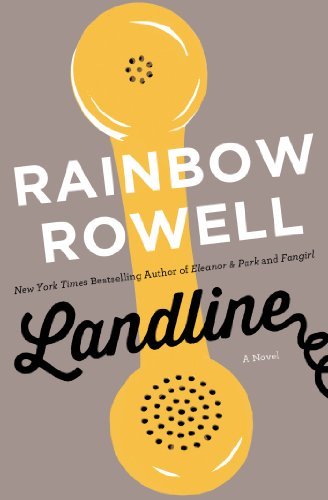
Landline by Rainbow Rowell

landline

She had to call. You can’t just ignore a phone that calls into the past. You can’t know it’s there and not call.

In her three previous books, Attachments, Eleanor & Park, and Fangirl, Rainbow Rowell has demonstrated an ability to create characters that are as recognizable as real people. She has proven herself adept at writing all kinds of relationships – romantic and otherwise – for characters in high school, college, and early adulthood. In Landline, Rowell leaves the YA realm and returns to the adult world, delving into the marriage of Georgie McCool and Neal Grafton.

Georgie and Neal meet in college, marry at twenty-three, and have two children. Georgie works as a TV writer with her friend Seth, who has been her writing partner for longer than Georgie and Neal have been together. Georgie and Seth are on the verge of achieving their longtime dream of getting their own show, but there’s a catch: they have to have material ready in a matter of days. But it’s almost Christmas, and Georgie is supposed to go with her family to Omaha for the holiday.

Instead, Georgie stays in California to work on scripts with Seth while Neal takes their daughters to Omaha. Georgie’s mother and sister treat her as though Neal has left her, which is not what Georgie thinks has happened at all…or has it? Georgie begins to fall apart. She can’t get in touch with Neal on the phone, until she tries calling from the old landline phone at her mom’s house. Talking to Neal on the phone brings back old memories of their time in college, and the terrible week when they were broken up, before he drove twenty-seven hours back from Omaha to California and proposed to her on Christmas morning. Georgie can’t remember that week very well, but as she talks to Neal, pieces she didn’t know were missing begin to fall into place.

The plot hinges on two phones: Georgie’s dead cell phone, and the landline (a.k.a. the magicfuckingphone). I found the landline, where present-day Georgie talks to past Neal, much easier to go along with than the idea that a responsible adult with children would let her cell phone die as often as Georgie did. But that’s my one complaint.

Rowell has an incredible depth of understanding of her characters, and of marriage generally, but she also has a lovely light touch: there are plenty of funny, witty moments alongside (and sometimes during) the darker, bleaker ones. At one point, Georgie realizes that even though Neal is perfect for her, she might not be perfect for him; that “she wanted him more than she wanted him to be happy.” Throughout the novel, Georgie wrestles with big questions like these. She has always known what she wanted: a career in TV, Neal, and her kids. Neal has never really known what he wanted, except for Georgie. Seth adds another layer of tension to Georgie and Neal’s relationship: there’s no love lost between Seth and Neal, but they’ve maintained a tense truce all these years, for Georgie’s sake. Is Seth ready to break that truce? 

Readers may occasionally pause to dwell on issues of feminism. (Georgie wanted to take Neal’s last name, but he wouldn’t let her, because “You don’t come into this world with a name like Georgie McCool and throw it away on the first pretty face.”) In the McCool-Grafton marriage, Georgie is the careerist, the breadwinner, the busy one, while Neal is the stay-at-home dad; Georgie’s own sister points out that Neal would get custody in a divorce. But the novel doesn’t read like a book with an agenda; it only presents a scenario that is the reverse of the traditional one.

Rowell is as magical as her landline phone. Georgie and Neal’s marriage, with all its history and weight, comes through clearly: their good moments and bad moments, the joys and stresses, the selfishness and compromises. Georgie and Neal recognize that they may not be perfect for each other, that their lives might not “fit together,” but, as Neal says, “Nobody’s lives fit together. Fitting together is something you work at. It’s something you make happen – because you love each other.” Stranded half a country away from Neal and her kids, Georgie has to figure out how to make it happen.

I had incredibly high expectations for this book, and though high expectations often lead to disappointment, that wasn’t the case here at all. Instead, I was wholly delighted, and I think Rowell’s fans will be too. In fact, moving seamlessly between YA and adult, she’s likely to bring her old fans with her and attract some new ones as well.

I received an e-galley of LANDLINE from publisher Macmillan via Edelweiss. The expected publication date is July 8, 2014. Quotes in the review above are from the galley, not the final copy.

Intro to Historical Fiction

Cross-posted, with a few changes, on the Robbins Library blog. Links go to past blog posts or LibraryThing reviews. 

Recently, a friend asked me for some recommendations of historical fiction books. She said she had read a lot of historical fiction when she was younger (think A Break With Charity by Ann Rinaldi and Number the Stars by Lois Lowry), and had recently enjoyed Elizabeth Gilbert’s The Signature of All Things. She has also enjoyed historical fiction by Geraldine Brooks (March, People of the Book) and Colm Toibin. She expressed a preference for books about wholly fictional characters rather than fictionalized real people from history.

Using the above information as a starting point, here’s what I came up with:

Code Name Verity by Elizabeth Wein: CodeNameVerityMarketed as a young adult novel, this book has earned rave reviews almost universally. I loved it for its journal-style narration; the friendship of its two main characters, captured spy “Verity” and downed pilot Maddie; and the fantastic plot twist. It is WWII fiction, but unlike much of WWII fiction, it doesn’t take place in Germany and doesn’t center around Jewish characters: Verity was captured on a mission from England into France, with Maddie as the pilot. The narrators on the audiobook are absolutely wonderful; there’s a lot of added value there, but the voices come through in the text as well. A wrenching, incredible book.

A Northern Light by Jennifer Donnelly: anorthernlightThis is another young adult book, a classic coming-of-age story set in the Adirondacks in 1906. I find it difficult to imagine the reader who could resist sixteen-year-old Mattie Gokey, who loves school and dreams of being a writer, but may end up sacrificing that dream to take care of her family, as she promised her mother on her deathbed. As an additional complication, there is a murder at the hotel where Mattie works – the same murder that inspired Dreiser’s An American Tragedy.

Astray by Emma Donoghue: astray_donoghueDonoghue has written historical novels and short stories before, but Astray is a standout collection. Each story is based on some fragment of historical truth, and Donoghue builds on these facts to create fully realized characters. Each story is preceded by its setting (time and place) and followed by a note about its inspiration. The audio production is stellar; I highly recommend listening to this book, because it makes the stories last longer. My favorite in the collection is “The Gift.”
Honolulu by Alan BrennerthonoluluHonolulu is excellent historical fiction: it sheds light on a little-known time and place in history, it has a compelling main character, and it covers several years without ever dragging in pace. The Library Journal review sums it up perfectly: “This sweeping, epic novel follows Jin from her homeland of Korea to a new life on the blossoming Hawaiian Islands. The year is 1914, and Jin is a “picture bride,” a sort of mail-order bride to a Korean man living in Hawaii whom she has never met. Not the wealthy husband she was promised, he is a poor laborer who treats her cruelly. Escaping her abusive husband, Jin must make her way in Honolulu, eventually finding love and stability…Seeing life through Jin’s eyes is a pleasure as she changes from a farm-bound, repressed immigrant girl to an outgoing, educated member of Hawaiian society…” There are also strong female friendships in this book, which is nice to see.

Losing Julia by Jonathan Hull: losingjuliaHonestly, it’s been over a decade since I’ve read this, but I remember really liking it; partly I found it refreshing (if that’s the word) to read a war book that wasn’t about WWII, though nowadays with the Downton Abbey craze we’re seeing more WWI fiction. Patrick Delaney narrates, focusing on three time periods in his life: his time as a soldier in WWI, ten years post-war, and his present situation in an old folks’ home. Hull’s description of war is graphic and immediate, and the love story is poignant and romantic without being sappy. I may have just talked myself into re-reading this.

The Light Between Oceans by M.L. StedmanlightbetweenoceansSet in Australia after the Great War (WWI), The Light Between Oceans has few characters but a big impact. Soldier Tom Sherbourne takes a job as a lighthouse keeper on a lonely island. On a trip back to the mainland, he meets and then marries Isabel Graysmark; they live together on the island, alone and happy, until Isabel has a miscarriage, then another, then another. At the center of this beautiful book is a moral dilemma, and a love story. It’s thought-provoking, discussion-worthy, and its setting in a remote part of Australia is unique.

Rules of Civility by Amor Towles:rulesofcivility I love this book for two reasons: narrator Katey Kontent, and the way 1937-1938 New York comes to life. I find it hard to believe this (first!) novel was written by an investment banker (with an M.A. in English from Stanford, but still), but obviously I shouldn’t judge; Rules of Civility (the title is from a pamphlet by the young George Washington) is a remarkable book. Katey is independent, well-read, serious, fun, and moral without being prissy. New York in the late thirties is a character all its own; if ever you were going to read a book for the setting alone, it could be this one.
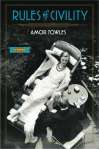
Cascade by Maryanne O’Hara:cascade If Mattie Gokey was ten years older and was an artist instead of a writer, she’d be Desdemona Spaulding, nee Hart. Set primarily in Massachusetts in the 1930s, with a few scenes in New York, this is the perfect book for fans of A Northern Light. Dez faces the family-or-career choice that many women still face today. In O’Hara’s own words, “life is full of tough choices between less-than-perfect alternatives.” Readers may sympathize or disagree with Dez’s decisions, but no one could say they were easy ones to make.

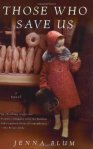
Those Who Save Us by Jenna Blum: thosewhosaveusThis is another WWII novel, one that alternates between WWII-era Germany and present-day Minnesota. I enjoy split narratives, and this one is easy to follow, but some readers prefer chronological narratives. The character in the present is Trudy, a history professor, and the character in the past is her mother Anna, who had an affair with a Nazi officer during the war. Anna has never talked to her daughter about her past, but Trudy is determined to find out what happened. This compelling book stands out among the glut of WWII fiction.
Corelli’s Mandolin by Louis de Bernieres: corellismandolinIt is rare to find a book that has moments of such humor (it begins with a doctor curing a man’s deafness by removing a pea from his ear) and scenes of such overwhelming horror, cruelty, and sadness; in fact, one of the most powerful scenes I have ever read is in this book, which takes place on the Greek island of Cephallonia before, during, and after WWII. Captain Corelli is a member of the occupying Italian army who falls in love with the daughter of the deafness-curing doctor. Yes, Corelli’s Mandolin is also a movie, but – as is nearly always the case – the book is better.

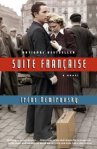
Suite Francaise by Irene Nemirovsky: suitefrancaiseAs if we did not already have enough reasons to hate Nazis, here’s another: they have deprived us of volumes 3-5 of this book. Suite Francaise contains two parts, “Storm in June” and “Dolce,” but the author intended to write five parts; unfortunately, she was arrested, deported to Auschwitz, and killed before she completed them. However, Nemirovsky – who was born in Russia, but moved to France with her family when she was a teenager – accomplished a great deal in the first two parts of Suite Francaise. She captures the atmosphere of France during the early part of WWII: in “Storm in June,” people flee Paris as the Germans invade, and in “Dolce” German officers are quartered in French homes in a small village. Moral complexities abound, as difficulties bring out the best and worst in people.
The Guernsey Literary and Potato Peel Pie Society guernseyby Annie Barrows and Mary Anne Shaffer: Don’t let this long, tongue-twister title put you off; Guernsey is a delightful epistolary novel (a novel in letters), and at its center is Juliet Ashton, an English author looking for a subject for a new book. Set in England in 1946, Guernsey has a WWII story embedded in it, but primarily the reader sees the aftereffects of the war, both in London and on the island of Guernsey. If I were forced to muster up a complaint about this book, it would be that the characters, especially Elizabeth, are too perfect; but I’ve read it three times now (once on audio, which I recommend) so it’s not really a complaint at all.

And here are some historical fiction novels that do take real historical figures as their main characters:

Fever by Mary Beth Keane (“Typhoid” Mary Mallon)

Z: A Novel of Zelda Fitzgerald by Therese Anne Fowler (Zelda Fitzgerald)

The Aviator’s Wife by Melanie Benjamin (Anne Morrow Lindbergh)

The Age of Desire by Jennie Fields (Edith Wharton)

Wolf Hall and Bring Up the Bodies by Hilary Mantel (Thomas Cromwell)

The Paris Wife by Paula McLain (Hadley Hemingway)

Loving Frank by Nancy Horan (Mamah Borthwick and Frank Lloyd Wright)

Above All Things by Tanis Rideout (George Mallory)
First Sale doctrine in the age of licenses

One of the ways I keep up to date with news pertaining to the library world is through Library Link of the Day, which is exactly what it sounds like. The link is usually to an article or blog post, sometimes a video or a longer document. On February 5, the link was to an article from the February 2014 edition of College & Research Libraries News, “Last sale? Libraries’ rights in the digital age,” by Jennifer Jenkins.

For those who aren’t clear on what “first sale” means, or those who are familiar with it but haven’t kept up with some of the more recent cases (Capitol Records v. ReDigi, for example), this article gives an excellent explanation of the history of first sale, the problems with applying it to the digital realm (where much content is licensed rather than sold/owned), and the possibilities for the future.

Jenkins covers all the points I’ve seen in other articles and blog posts thus far (Copyfight is one good source to follow, if this is an issue that interests you, and it should). The only piece I have to add is a response to the Copyright Office’s statement that “[p]hysical copies degrade with time and use; digital information does not…” While this is true in some sense, it’s false in another: digital formats change so quickly that it takes a significant investment to keep digital information accessible. (Word Perfect, anyone? Floppy disks?)

Technology changes quickly; content creators (e.g. publishers, the music industry, etc.) will adopt new formats and abandon* old ones, and those who “own” (or license) information in those formats will be up a creek unless they have the ability (and time, and money) to upgrade or migrate old formats to new ones.

Digital Rights Management (DRM) throws an additional monkey wrench into the mix. DRM, Jenkins writes, “adds a layer of technological controls that further restrain libraries’ freedoms.” Currently, the first sale doctrine applies only to physical items; digital items aren’t covered by first sale (yet). Libraries, like consumers, pay to license these items (e-books, digital audiobooks) instead of buying and owning them. Jenkins explains, “These licenses restrict libraries’ uses of e-books. If a library has a physical book, it can loan it out as many times as it is requested. It can send the book to another institution via interlibrary loan. Licenses often limit these activities.”

Digital first sale is important to libraries. Demand for e-books is growing, yet restrictive licenses mean that libraries are not always allowed to purchase e-books and lend them out in the same way as physical books. Publishers are experimenting with different models: higher prices for libraries, or prices comparable to consumer prices but with some kind of catch (a 26-loan limit, or a one-year expiration date), or simultaneous use (in rare cases). Right now, the publishers have more power than the libraries (or the consumers, who click “I Agree” to any Terms of Service to get content). Jenkins writes, “Many librarians are concerned that digital technology has upset the balance between users’ and owners’ rights.”

In writing about the ReDigi case, Jenkins stated, “Studies have shown that the effective way to drive down rates of illicit copying is to provide cheap and legal alternatives. Digital first sale could lead would-be downloaders to turn to a legal second-hand market.” Libraries, too, should be able to offer a legal alternative. Jenkins suggests that Congress could grant libraries specific rights “allowing them to lend, preserve, and archive electronic materials.” Makes sense to me.

*As Adobe is about to do by introducing new EPUB DRM this summer.

Best of 2011: Fiction (continued)

“I’ll be posting more soon,” I wrote (February 28, 2012). If we are going by geological time, I suppose nearly two years later qualifies as “soon,” but by normal human calendar time, I missed the mark a bit. Here is the final batch of read-in-2011 favorites, a continuation of this “best of 2011” post.

Many of these books have gotten a fair amount of attention in the last couple years (Cloud Atlas was made into a movie), and some authors have published additional books since these: Hilary Mantel followed up Wolf Hall with Bring Up the Bodies, Patrick Somerville published This Bright River in 2012, Emma Donoghue published Astray the same year, and Simon Van Booy came out with the slender and luminous The Illusion of Separateness last year. Here, though, are my brief and belated roundups of some favorite novels I read in 2011.

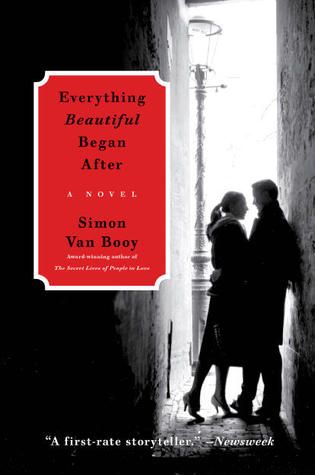
everythingbeautifulEverything Beautiful Began After by Simon Van Booy (2011): Having read Simon Van Booy’s short stories (The Secret Lives of People in Love; Love Begins in Winter), I was looking forward to his first novel, and it didn’t disappoint, although I think his style is best suited to short stories and novellas. Characters take precedence over plot in this story (except for one main event): the relationships between Rebecca, Henry, and George are the central aspect of the story. The setting – Athens, Greece – is also a character of sorts. Van Booy’s writing is poetic, and creates a mood that lingers even when you’ve put the book down.

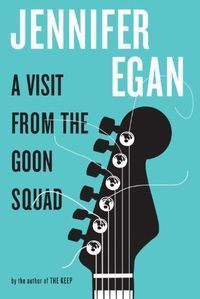
goonsquadA Visit from the Goon Squad by Jennifer Egan (2010): This novel spans a few decades, stretching into the near future; sections are linked through loosely connected characters. Each section serves as a snapshot or cross-section of a time in a life, and the character’s interaction with others during that time. I enjoyed these sections on their own (many parts appeared in The New Yorker in advance of the novel’s publication) and would have gladly spent more time with the characters. However, I remember not liking the sections set in the future as much as the ones set in the past or present, and now that it has been a few years, I don’t remember the overall arc of the book.

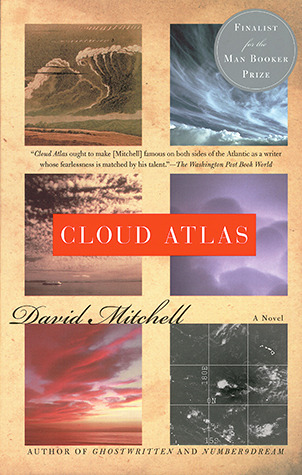
cloud_atlasCloud Atlas by David Mitchell (1999): As impressed as I was with Goon SquadCloud Atlas blew me away. Structurally, the book is unlike any other I’ve ever read: like the eponymous “sextet for overlapping soloists” described in the novel (“In the first set, each solo is interrupted by its successor: in the second, each interruption is recontinued, in order”), the book is made up of six sections, five of which are divided in half, with the sixth in its entirety in the middle of the book. The six narratives are so wildly different in setting, character, voice, and style that they could have been written by different authors, but a single theme emerges. Most readers will prefer certain narratives over others, but overall, the book is masterful, and David Mitchell’s genius is apparent.

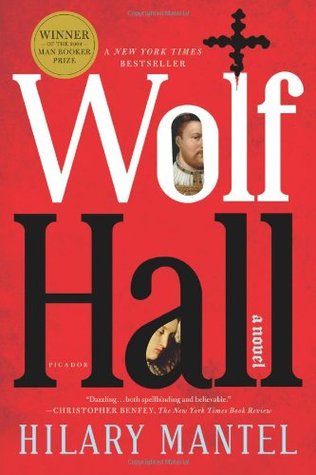
wolfhallWolf Hall by Hilary Mantel (2009): Anne Boleyn and Henry VIII are two of the most popular characters for historical fiction authors, but Thomas Cromwell, who lurks in the shadows in most books, takes center stage (center page?) in Mantel’s. She describes his miserable childhood, his travels as a young man, and his rise to power with superb and engaging thoroughness, so the reader empathizes with the character completely. Wolf Hall has a strange grammatical quirk – every “he” or “him” refers to Cromwell, regardless of subject/object conventions – but this quirk was ironed out in the subsequent Bring Up the Bodies. I can’t wait for the third and final book, The Mirror and the Light, expected sometime in 2015. (Will it, too, win the Booker Prize?)

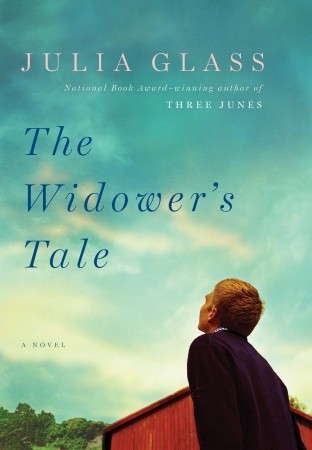
widowerstaleThe Widower’s Tale by Julia Glass (2010): Set in the Boston area, The Widower’s Tale may be Glass’ saddest book to date, but it is also one of her best. She weaves a web of interconnected characters, creates a beautiful and believable setting, and writes with emotional truth about the people she has brought to life – in this case, the Darling family, including retired librarian and grandfather Percy; his daughters, high-achieving Trudy and floundering Clover; and his grandson, Harvard student Robert.

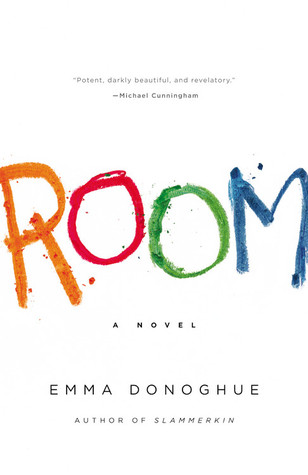
room_donoghueRoom by Emma Donoghue (2010): A distinctive departure for Donoghue (Slammerkin, The Woman Who Gave Birth to Rabbits: Stories, The Sealed Letter), Room centers closely on two characters, mother and child, in a tightly circumscribed environment – the single, eponymous room. The reader gleans that the mother has been kidnapped, imprisoned, and raped, but her five-year-old son Jack knows none of this; the room is his whole world. When they manage to escape, the real world is a shock to both of them, for different reasons and in different ways. A novel premise, thoughtfully carried out.

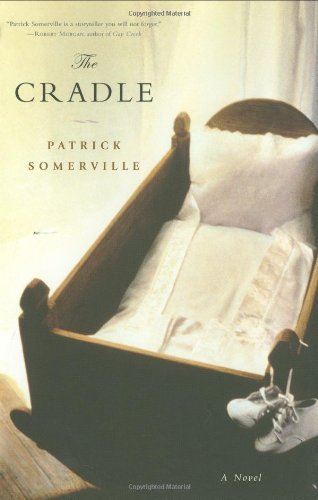
cradle_somervilleThe Cradle by Patrick Somerville (2009): For better or worse, there wasn’t a tremendous amount of buzz about this book when it came out, so reading it felt like a wonderful and secret discovery. It is about the marriage of Matt and Marissa, who, facing impending parenthood, are reflecting on their own family histories. On the back of the book, Benjamin Percy wrote, “Like a magic trick, The Cradle will make you blink, chew your lip, try to figure out how he did it, how in the world Patrick Somerville managed to sneak this big, beautiful story of familial love into such a slender novel – a saga writ small, swiftly paced, intricately structured, precisely told.” Well put.

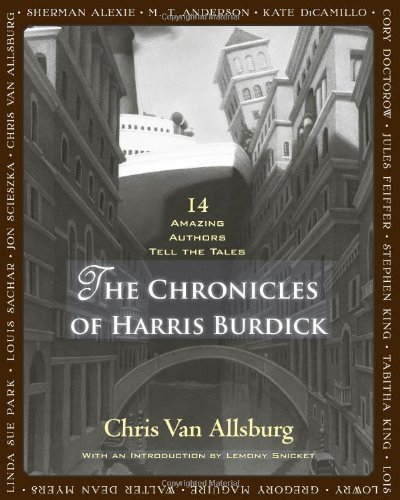
chroniclesharrisburdickThe Chronicles of Harris Burdick: fourteen amazing authors tell the tales (2011): I have long been entranced by Chris Van Allsburg’s illustrations, especially The Chronicles of Harris Burdick. Each illustration in this collection has a title and a caption that tantalizes the imagination. As the subtitle of this edition suggests, fourteen authors have taken on the challenge here, with one story per illustration (how did they decide who got which?). Each tale is magical and inventive; some are funny, some are dark. My favorites are “Oscar and Alphonse,” written by Van Allsburg himself, and “The House on Maple Street” by Stephen King. Great for most ages (10 and up?).


“New Adult” Revisited, Or, Where are all the books about college?

It’s easy to find books about characters in high school. And it’s easy to find books about adult characters anywhere, doing anything. But there is a sparsely populated area between these two: books about characters who are transitioning from childhood/teenagerhood to adulthood. A few years ago, in response to a post on the Young Adult Review Network (YARN), I struggled to come up with a handful of titles that fit this category. YARN responded with additional titles (November 2011), but I don’t think anyone was satisfied that there were enough “new adult” books at the time.

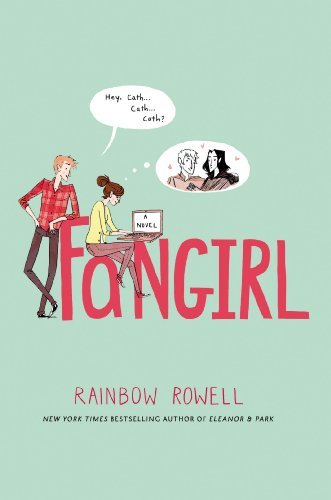
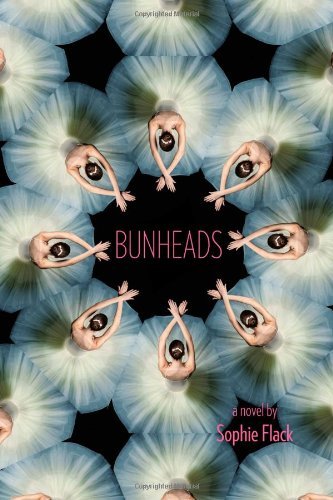
fangirlinfinitemomentofusThe topic came up again at ALA 2013. I didn’t attend in person, but followed the coverage on blogs and Twitter; Hannah Gomez’s piece for YALSA’s The Hub provides a great recap, as well as a link to a resource list, which has been updated – a pleasant surprise! – since the conference. (There’s another good piece on The Hub about adult books with teen appeal, from August 2012. I’d add Tell the Wolves I’m Home by Carol Rifka Brunt to this list, and I’m not alone – it’s a 2013 Alex Award winner.) I was glad to see that a few of my recent favorites that fit snugly into the “new adult” category are on the reader’s advisory resource list, including Bunheads by Sophie Flack, The Infinite Moment of Us by Lauren Myracle, Fangirl by Rainbow Rowell, Roomies by Sara Zarr and Tara Altebrando, and Just One Day and Just One Year by Gayle Forman; I’d also add How to Love by Katie Cotugno.

howtolovejustoneyearThe years after high school, whether they include college or not, and the first few years in the working world are a transitional time of great change and (hopefully) growth. It is strange that authors haven’t mined this emotion-rich area more. Perhaps these books fell into that gray area that is neither YA nor adult, and publishers weren’t sure how to market them, but if that’s the case, it’s a weak one: so many adults are openly reading YA lit now that these”crossover” books should appeal to both audiences, rather than being lost between them.

roomiesbunheads

Lourdes at YARN made an important point about some of the books I suggested back in 2011: that they contained an element of nostalgia, and were told from an adult point of view in a present that looked back on the past, as opposed to being told from the point of view of a young adult in the present. The books I mentioned above fit this criteria much better, and I hope to discover and read more of these (suggestions are welcome in the comments).

However, as a reader, I like the adult-looking-back perspective; one example I can think of is Joshua Henkin’s Matrimony, which starts when its three main characters are in college. Maggie Shipstead’s forthcoming Astonish Me (April 2014) also begins when its main character is a young adult, and it follows her until her own son is a teenager. (I’d definitely recommend it to anyone who liked Bunheads.) Much of the action in Karen Joy Fowler’s We Are All Completely Beside Ourselves takes place when the narrator is in college, though in the present she is middle-aged. Eleanor Brown’s The Weird Sisters also deals with three young women who have been out in the world for a few years, but who don’t yet feel like (or, sometimes, act like) adults. All the Light There Was by Nancy Kricorian is also adult fiction, but its main character, Maral, grows from fourteen to twenty during WWII in Paris – perfect for “new adults” who like historical fiction, as Maral makes several difficult and important choices as she comes of age.

The titles in the paragraph above were gleaned from my own reading over the past several months, so clearly “new adults” exist in literature – they can just be hard to find. I’d love to see more books like Fangirl and Roomies, though. Again, if you have suggestions, let me know in the comments!

Note: There are many definitions of the “new adult” category (and many disagreements about whether it’s a genre or a marketing ploy, exciting or a hassle), but no consensus. Therefore, I’m using my preferred definition of “new adult”: books about characters who are in the 18-25-year-old range, told from their perspective (not necessarily first person, present tense, but not from an adult perspective looking back). 

Best of 2011, Part the Third: Nonfiction

Some might say it’s too late to revisit favorite nonfiction books read in 2011, but I disagree, partly because I am intent on cleaning out my drafts folder, and partly because plenty of good nonfiction stands the test of time. Especially when that test is only three years. (Those who are interested in my other “best of 2011” reading posts can catch up with the “prequel,” favorite young adult books, humor and baking books – separate categories, same post – and fiction).

As I’m now writing about books I read about three years ago and my memories of them are not comprehensive, my notes will be correspondingly brief, but I still remember and recommend the following biographies, histories, and memoirs:

Under the Banner of Heaven: a story of violent faith by Jon Krakauer (2003): Booklist calls this a “true-crime/religious expose, which delves deep into the heart of Mormon fundamentalism,” which sums it up neatly. Krakauer alternates between a history of Mormonism and contemporary Mormon fundamentalism. As always, he chooses a gripping topic and writes in a clear, compelling way.

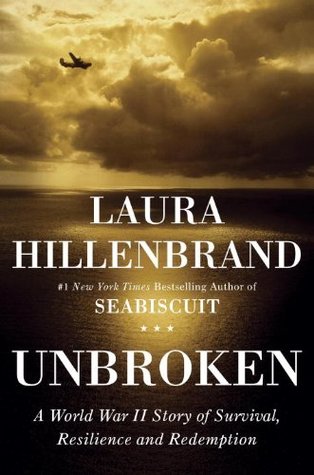
unbrokenUnbroken: a World War II story of survival, resilience, and redemption by Laura Hillenbrand (2010): Incredibly, for a book that came out four years ago, there are still holds on the library copies. This is an enduring work: an incredible piece of scholarship and research, written in an accessible and gripping way, with some truly stomach-churning scenes. Technically it’s a biography of Louis Zamperini, an Olympic runner in the 1930s and an airman in WWII who was shot down, spent over a month at sea, only to be held as a Japanese POW for the remainder of the war, but the story seems too big to belong to just one person.

The Devil in the White City: murder, magic, and madness at the fair that changed America by Erik Larson (2003): Larson’s book, too, remains popular more than a decade after its initial publication. He tells twin narratives: that of the Chicago World’s Fair architects, and that of the serial killer Henry Holmes. The year 1893 comes alive, both the “white city” and the “black city.” I had thought that the two narratives would eventually weave together and converge, and that doesn’t happen, but it’s still an excellent read – sometimes terrifying, filled with interesting details (did you know the Ferris Wheel premiered at the Chicago World’s Fair?), and never boring.

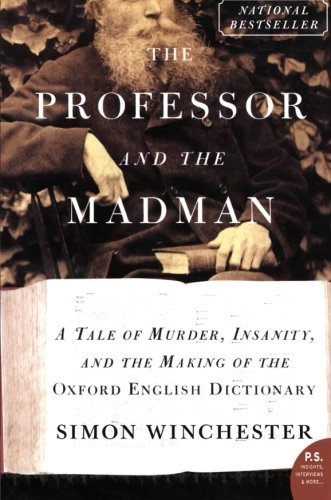
professorandmadmanThe Professor and the Madman: a tale of murder, insanity, and the making of the Oxford English Dictionary by Simon Winchester (1998): The subtitle really sums it all up. The eponymous professor, James Murray, was the editor of the first edition of the OED, and the eponymous madman was one Dr. William Minor, an American doctor incarcerated in an asylum in England, and a significant contributor to the OED. Fascinating on a number of levels, and refreshingly brief at under 300 pages.

Tender at the Bone by Ruth Reichl (1998) and My Life In France by Julia Child (2006): Those who like memoirs and who are interested in food couldn’t choose a better book than Tender at the Bone. Reichl is a funnier writer than I expected, and I still intend to read her other books (Garlic and Sapphires, Comfort Me With Apples). Having said that, for those who like history and travel as well as memoirs and cooking, My Life in France is the book for you. Child is funny, observant, brave, and unselfconscious; I adored this book.

Life by Keith Richards (2010) and John Lennon: The Life by Philip Norman (2008): If you are planning to read both of these books, read Lennon first; Norman’s book is packed with detail, thanks to his thorough research, but it is less lively and immediate than Richards’ Life. Partly the difference stems from the voice; Lennon is a biography, while Life is an autobiography, and Richards’ account has the benefit of being in his own words. He remembers far more than anyone could expect him to, and in addition to plenty of anecdotes, Life contains memorable lines like “I imagined everything. I never thought it would happen.” (The audiobook is great too.) The Norman is a bit drier, but it does contain plenty of early Beatles history, who-wrote-what-and-why bits, and perspective on the later years; while one can’t help thinking John was a bit of a jerk, Yoko Ono is presented in a way that even I can’t hate her (as I was brought up to do). On balance, though, Keith’s book is just more fun.

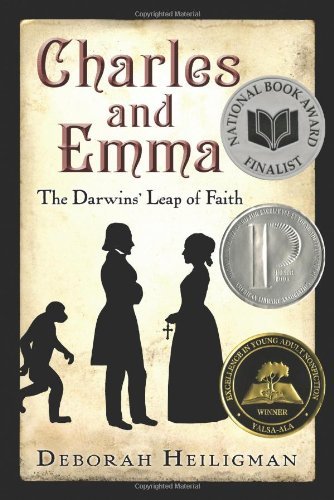
charlesandemmaCharles and Emma: The Darwins’ Leap of Faith by Deborah Heiligman (2008): Biographies written for adults – especially biographies of such major historical figures as Charles Darwin – tend to be doorstops, which can deter those of us who want to learn about someone without, perhaps, learning every single thing about them that a biographer can unearth. Charles and Emma is written for a young adult audience, but it’s a wonderful book for older readers too. Heiligman chooses to view Darwin’s life through the lens of his marriage to his cousin Emma Wedgwood; she is a faithful Christian, and he is a scientist whose theory still sends modern Christians into fits (see: evolution vs. “intelligent design” in science textbooks). Their marriage is a microcosm of this debate that is still ongoing, but it is a thoughtful and respectful one.

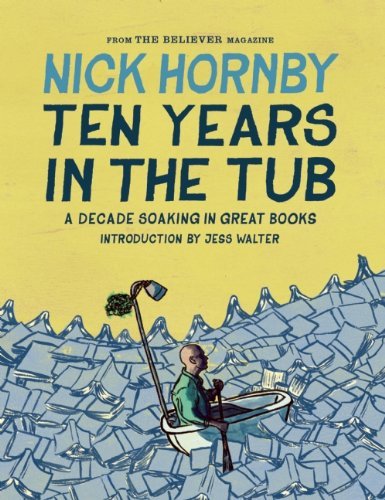
Ten Years in the Tub by Nick Hornby

I hesitate to mention this, as it’s January 14 and this is my first post here since the beginning of the year (though I did write about Simon Garfield’s engaging To the Letter, and the letter-writing resolution it inspired, on my other blog last week), but one of my new year’s resolutions is to post here more regularly: specifically, once a week, although occasionally there may be extra posts, and I’m allowing myself to miss the occasional week for vacations, illnesses, etc. I’m sure my twenty readers will be crushed by these lapses.

While I was considering a reasonable frequency for blog posts, I was also considering content. Should I limit myself to book reviews? That would focus things a bit more; this could be a book review blog. But I like having the latitude to write about any issue relevant to libraries, publishing, intellectual freedom, etc. that catches my interest, so I decided not to change the content much.

tenyearsinthetubThat said, Nick Hornby’s Ten Years in the Tub, a collection of his columns for the Believer over the past decade, presents a really excellent structure for writing about books, the only problem being that Nick Hornby’s already gone and done it. Even though, given 2,000 words a month, I’d write different things about different books (and I wouldn’t write at all about cricket or football), it seems a bit cheap to steal his format.

For today, then, I’ll just write about what Hornby has written about what he’s read. (How’s that for meta?) For those who aren’t familiar with his Believer column, he starts each one off with a list of “Books Bought” and “Books Read.” (It’s already a brilliant idea, isn’t it?) The overlap between the two lists varies from month to month, as you can imagine, and it’s interesting to see how one book leads to another, what gets read and what gets set aside, sometimes cropping up months later.

As he is writing about so many books in a relatively small space, his transitions can be a bit jarring (or rather, transitions are often lacking entirely); some books receive several paragraphs of attention and others are dealt with in a sentence or two. We can forgive this unevenness though, because Hornby writes with humor, self-deprecation, and intelligence. He often turns on himself, retracting something he wrote in a previous month or even earlier in the same column; for example, one month he writes, “Books are, let’s face it, better than everything else.” Yes! But the next time the World Cup rolls around, he does a reversal.

Hornby has a talent for articulating thoughts that might have occurred to many of us in a fuzzier form, but he does it in a way that is concise and sharp, observant and true. In two or three separate columns, he wrote about major works that have influenced literature in a significant way since their publication. Here he is, once he’s finally gotten around to reading In Cold Blood by Truman Capote: “But the trouble with influential books is that if you have absorbed the influence without ever reading the original, then it can sometimes be hard to appreciate the magnitude of its achievement.” And here again, after reading The Prime of Miss Jean Brodie by Muriel Spark (whose other books he gobbled up like candy – or perhaps the more apt metaphor in his case would be ‘inhaled like cigarettes’): “Influential books are often a disappointment, if they’re properly influential, because influence cannot guarantee the quality of the imitators, and your appetite for the original has been partially sated by its poor copies.” Finally, here he is on Voltaire: “The trouble with Candide is that it’s one of those books that we’ve all read, whether we’ve read it or not….The meat was picked off it and thrown to the crowd in the eighteenth century…”

It just so happens I’ve read and loved all three of those books, though I was younger than Hornby when I read them. (I’m still younger than him now. Ha!) Candide, in particular, I read in eleventh grade; I remember being intimidated because it was old, and French, and a classic, but felt better when I saw how tiny it was, and upon reading it thought it quite funny and not intimidating at all. I do see his point about The Prime of Miss Jean Brodie; I saw the movie after reading the book (I think) and Maggie Smith was – as she always is – tremendous, and memorable. The point stands, though, about influence, and it makes me feel a bit better that I didn’t love Catcher in the Rye the way I was supposed to, even though I read it when you’re supposed to (age 16 or thereabouts). For a young adult classic, I love The Perks of Being a Wallflower a hundred times better.

Though at one point Hornby warns against revisiting old favorites, in case they don’t hold up over time, he also sees forgetting as an opportunity. In one column, he writes, “A couple of months ago, I became depressed by the realization that I’d forgotten pretty much everything I’ve ever read….I am now cheered by the realization that, if I’ve forgotten everything I’ve ever read, then I can read some of my favorite books again as if for the first time.” This is cheering, indeed. I used to re-read books much more often than I do now; as Hornby says, “I don’t reread books very often; I’m too conscious of both my ignorance and my mortality.” But at least a few times a year, I’ll read a book that I know, usually even before I’ve finished it, that I want to read again. Off the top of my head: Gold by Chris Cleave, The Rules of Civility by Amor Towles, The Night Circus by Erin Morgenstern, and Me Before You by Jojo Moyes. (Incidentally, that’s two British authors and two Americans, two men and two women. Neat.)

After I graduated from college and began working in publishing, I went on what could pretty accurately be described as a two- or three-year fiction binge. I forget which year it was that I made a resolution to read at least one nonfiction book a month, but I did it when reading nothing but fiction came to feel like eating nothing but candy. (Not to say that fiction can’t be just as “good for you” as nonfiction. I’m not getting into that here.) So when Hornby wrote that he was “beginning to see that our appetite for books is the same as our appetite for food, that our brain tells us when we need the literary equivalent of salads, or chocolate, or meat and potatoes,” I knew exactly what he meant. (My reading diet has been much more balanced since that resolution, though it still skews toward fiction.)

In two of his more recent essays, Hornby wrote about books “of the moment” – those books saturated with contemporary period details, set in a very particular place and time, complete with all its cultural references. It’s often noted in criticism of books like this that they will lose their appeal over time. “The received wisdom is that novels too much of the moment won’t last; but what else do we have that delves so deeply into what we were thinking and feeling at any given period? ….Some fiction at least should deal with the state of the here and now, no matter what the cost to the work’s durability, no?” Hornby asks. These books, he argues, have just as much if not more historical value than well-researched historical fiction, because they provide insight to what people were thinking and feeling in a given place and time.

Speaking of “the moment,” why, when we have e-books, do people still buy and read printed books? In part because “all the books we own, read or unread, are the fullest expression of self we have at our disposal….With each passing year…our libraries become more and more able to articulate who we are.” For readers, our books are us, and our bookshelves show who we are, what we love, who we aspire to be. As Oscar Wilde said, “It is what you read when you don’t have to that determines what you will be when you can’t help it.”

As someone who often tracks down books referenced, even fleetingly, in other books, it’s not surprising that I ended up with a nice list of books to add to my already intimidatingly long “to-read” list by the time I came to the end of Ten Years in the Tub. Here they are:

skelligFiction (including children’s/YA)
Mystic River by Dennis Lehane
We’re in Trouble: stories by Chris Coake
Skellig by David Almond
Tom’s Midnight Garden by Philippa Pearce (nearly certain I read this as a child, but have forgotten it sufficiently to warrant a re-reading)
Ten Thousand Saints by Eleanor Henderson
any book by Anne Tyler

sarahvowellNonfiction
How to Live: or, a life of Montaigne, in one question and twenty attempts at an answer by Sarah Bakewell (on top of Hornby’s recommendation, I remember that the reviews and awards for this book were spectacular)
Book of Days: personal essays by Emily Fox Gordon
A Giacometti Portrait by James Lord
The Rights of the Reader by Daniel Pennac
Assassination Vacation by Sarah Vowell (this was already on my to-read list; I loved The Wordy Shipmates and Unfamiliar Fishes)


Yearly wrap-up, 2013 edition

In the spirit of those sites that do a weekly wrap-up (like Dooce’s “Stuff I found while looking around” and The Bloggess’ “Sh*t I did when I wasn’t here”), here are a few odds and ends I found while going through my work e-mail inbox and my drafts folder.

How to Search: “How to Use Google Search More Effectively” is a fantastic infographic that will teach you at least one new trick, if not several. It was developed for college students, but most of the content applies to everyday Google-users. Google has its own Tips & Tricks section as well, which is probably updated to reflect changes and new features.

How to Take Care of Your Books: “Dos and Don’ts for Taking Care of Your Personal Books at Home” is a great article by Shelly Smith, the New York Public Library’s Head of Conservation Treatment. Smith recommends shelving your books upright, keeping them out of direct sunlight and extreme temperatures, and dusting. (Sigh. Yes, dusting.)

The ARPANET Dialogues: “In the period between 1975 and 1979, the Agency convened a rare series of conversations between an eccentric cast of characters representing a wide range of perspectives within the contemporary social, political and cultural milieu. The ARPANET Dialogues is a serial document which archives these conversations.” The “eccentric cast of characters” includes Ronald Reagan, Edward Said, Jane Fonda, Jim Henson, Ayn Rand, and Yoko Ono, among others. A gem of Internet history.

All About ARCs: Some librarians over at Stacked developed a survey about how librarians, bloggers, teachers, and booksellers use Advance Reader Copies (ARCs). There were 474 responses to the survey, and the authors summarized and analyzed the results beautifully. I read a lot of ARCs, both in print and through NetGalley or Edelweiss, and I was surprised to learn the extent of the changes between the ARC stage and the finished book; I had assumed changes were copy-level ones, not substantial content-level ones, but sometimes they are. (I also miss the dedication and acknowledgements.)

E-books vs. Print books: There were, at a conservative estimate, approximately a zillion articles and blog posts this year about e-books, but I especially liked this one from The Guardian, “Why ebooks are a different genre from print.” Stuart Kelly wrote, “There are two aspects to the ebook that seem to me profoundly to alter the relationship between the reader and the text. With the book, the reader’s relationship to the text is private, and the book is continuous over space, time and reader. Neither of these propositions is necessarily the case with the ebook.” He continued, “The printed book…is astonishingly stable over time, place and reader….The book, seen this way, is a radically egalitarian proposition compared to the ebook. The book treats every reader the same way.”

On (used) bookselling: This has been languishing in my drafts folder for nearly two years now. A somewhat tongue-in-cheek but not overly snarky list, “25 Things I Learned From Opening a Bookstore” includes such amusing lessons as “If someone comes in and asks for a recommendation and you ask for the name of a book that they liked and they can’t think of one, the person is not really a reader.  Recommend Nicholas Sparks.” Good for librarians as well as booksellers (though I’d hesitate to recommend Sparks).

The-Library-Book-154x250_largeOn Libraries: Along the same lines, I really enjoyed Lucy Mangan’s essay “The Rules” in The Library Book. Mangan’s “rules” are those she would enforce in her own personal library, and they include: (2) Silence is to be maintained at all times. For younger patrons, “silence” is an ancient tradition, dating from pre-digital times. It means “the absence of sound.” Sound includes talking. (3) I will provide tea and coffee at cost price, the descriptive terms for which will be limited to “black,” “white,” “no/one/two/three sugars” and “cup.” Anyone who asks for a latte, cappuccino or anything herbal anything will be taken outside and killed. Silently.

On Weeding: It’s a truth often unacknowledged that libraries possessed of many books must be in want of space to put them – or must decide to get rid of some. Julie Goldberg wrote an excellent essay on this topic, “I Can’t Believe You’re Throwing Out Books!” I also wrote a piece for the local paper, in which I explain the “culling” of our collection (not my choice of headline).

“What We Talk About When We Talk About Public Libraries”: In an essay for In the Library with the Lead Pipe, Australian Hugh Rundle wrote about the lack of incentives for public librarians to do research to test whether public libraries are achieving their desired outcomes.

Public Journalism, Private Platforms: Dan Gillmor questions how much journalists know about security, and how much control they have over their content once it’s published online. (Article by Caroline O’Donovan at Nieman Journalism Lab)

Choose your favorite year-end metaphor, or, Bookish resolutions (again)

I dearly wish my “end-of-the-year to-blog-folder cleanup” could be as neat and tidy as Brian’s, but alas, there are 21 unfinished drafts, some going back as far as 2011. That might be a good project for the last days of December and the first part of January, but first I’m trying to compile my year-end reading statistics, a project that has been snarled by a mid-year switch from Goodreads to LibraryThing (documented here and here).

I’ve been using LT pretty much exclusively since September, but LT’s statistics, while charmingly quirky (are the authors of the books I read dead or alive?), aren’t the sort I’m looking for. Goodreads, on the other hand, offers stats that are less imaginative but more practical: how many books read this year? How many pages? I thought I’d solve the problem by importing some of my LT data back into Goodreads, sans reviews, but Goodreads didn’t recognize my “date started/date finished” headings (which I had to acquire in a hacky way to begin with, because that information isn’t included in LT’s export feature: I tweaked some display preferences, got a print view, copied and pasted into Excel).

So it’s all a bit of a mess, but as best I can tell I read 159 books this year (so far!), but subtract seven “partially-read” books from that number to get 152 books for 2013. That’s about 12.6 books per month (though again, December isn’t over, and I’m halfway through David Sedaris’ laugh-out-loud Let’s Explore Diabetes With Owls). This number is rather astonishingly close to last year’s: I read 159 books in 2012. I don’t really expect to improve upon that, but of course it’s not about the numbers really; it’s about the quality, and I did read some wonderful books this year.

And how did I do on my New Year’s resolution to read all the unread books on my shelves at home? Not terribly well at all. Of those pictured in the link, I read two (Olive Kitteridge and The Carriage House), but throughout the year the “at home and unread” shelf/pile(s) morphed. (Yes, I think morphed is the word.) I decided not to read (and therefore, to give away) several of them (see below), but many I still intend to read, and my dear sweet friends at various publishing houses sent even more. Fortunately, I had Christmas* day to take all my books off their shelves, dust, rearrange, and catalog: the “to be read” books are now on a shelf (okay, 1.5 shelves) in the living room, where I’ll be faced with them every day. I also bought the e-book of Far From the Tree, which I started and loved but could not make myself lug around (900+ pages!); now that it’s more portable I have no excuse.

*That’s what Christmas is for, right? Movies, Chinese food, and cataloging one’s books?

So, here’s the to-read shelf for 2014 (click to enlarge):

DSC06250

It’s all the books on the top shelf, starting with short stories, then fiction, then nonfiction, which continues onto the first part of the next shelf (see below).

DSC06251Do you see your favorite book on my to-read shelf? Tell me why I should move it to the top of the list!

Here are the books I deaccessioned (fancy word for “got rid of”) or am deaccessioning soon:

DSC06080

Of the books in the photo above, I read Olive Kitteridge, TransAtlantic, The Song Is You, and about half of TrafficThe others remain unread (by me).

DSC06245

Of those in this photo, I read the nine on top, but the five on the bottom went unread.

DSC06081

Of these, I read four and a half. Or thereabouts.

So that’s it, my year in reading. Did you make a bookish resolution? I’m curious to hear.


“Love is easy and strange”: Maggie O’Farrell

instructionsheatwaveI mentioned Instructions for a Heatwave by Maggie O’Farrell in my previous post highlighting some of my favorite books of 2013 (and a few from 2012). What I did not mention is that, since listening to John Lee narrate Instructions for a Heatwave, I’ve listened to or read every other novel of hers I could get my hands on, starting with The Vanishing Act of Esme Lennox (2006, read by Anne Flosnik), continuing with The Hand That First Held Mine (2010, also read by Anne Flosnik), and most recently, After You’d Gone (2001). Just now I’m waiting for The Distance Between Us (2004) to arrive from another library; after that, there’s My Lover’s Lover (2003), and then I’ll be waiting for her next book just like everyone else, I imagine – impatiently.

Ann Patchett, one of my all-time favorite authors, has said that she writes the same book over and over, and it is true that her books feature characters in situations that are unfamiliar to them, often accompanied by strangers. Agatha Christie wrote mysteries that took place in enclosed environments, such as a small village or a country estate; Jojo Moyes often (though not always) writes love stories that are connected through generations, adding an element of historical resonance and nostalgia. O’Farrell’s gift, talent, or fixation (as Patchett says, I write the book I want to read) is for explosive family secrets – usually something hidden from a younger generation by an older one, slowly uncovered as the two stories are woven together.

afteryoudgoneAfter You’d Gone is an early example of this pattern. Alice Raikes was born in Scotland but is living in London; one day, she takes a train to Edinburgh, where her sisters meet her at the station. However, when Alice goes to the loo, she sees something so shocking that she leaves her sisters, takes a train back to London, and, later that day, steps off the curb into moving traffic. While Alice lies in a coma and her family travels to be with her, Alice’s history and that of her family is slowly revealed. Alice’s mother Ann married Ben even though she did not love him – a fact not lost on Ben’s mother Elspeth – and when Alice learns her mother’s secret, it changes her own relationship to her whole family. This revelation, on top of Alice’s grief over a recent tragedy of her own, leads to Alice’s desperate action. The story is narrated mostly in the third person, but there are a few sections in first person, for no clear reason. This puzzlement aside, the book is almost flawless; though the plot is not as intricate and unguessable as in later books, the pacing and characters are superb.

vanishingactesmelennoxMore than almost any other book I’ve read, The Vanishing Act of Esme Lennox illustrates in heartbreaking fashion the social constraints on women as recently as two generations ago, by juxtaposing Esme’s story with that of her grand-niece, Iris. Iris receives a call one day from Cauldstone Hospital; despite her ignorance of Esme’s existence – her grandmother Kathleen (Kitty) never mentioned siblings – Iris is listed as the elderly Esme’s next of kin. Nevertheless, Iris can’t abandon Esme, so she brings her home with her temporarily. Esme – who doesn’t seem mad at all, despite having spent most of her life institutionalized – is stunned by Iris’ life: her freedom to live alone, wear what she likes, manage her own business, not rely on a husband or father. These were the things Esme wanted for herself, but which were unthinkable in her time, and that situation led to tragedy upon tragedy. Narration is in the third person, alternating between Iris’ and Esme’s point of view, occasionally interspersed with Kitty’s stream-of-consciousness thoughts from within her Alzheimer’s haze. In this way, the reader understands Esme’s story more fully than Iris does, but Iris still understands enough to piece together crucial parts of the past. The story concludes with Esme and Kitty meeting again for the first time since they were teenagers, and a final, shocking event.

handthatfirstheldmineThe Hand That First Held Mine also weaves two stories together from different time periods, but in this case it is less immediately apparent how they are connected. In the mid-1990s (?), Ted and Elina are at home with their new baby, after a horrifying labor and a near-death experience for Elina, the trauma of which she has blocked out. The memories trickle back, however, and having a baby in the house seems to be bringing back Ted’s earliest memories as well; these memories raise questions that Ted’s mother refuses to answer. The answers, of course, lie in the past: in the late 1950s, Lexie Sinclair runs away to London, where she falls in love with Innes Kent. She works at Innes’ magazine and eventually moves in with him, but this makes Innes’ wife Gloria furious, despite the fact that she and Innes are separated. Gloria turns her daughter Margot against Innes and Lexie, with long-reaching consequences for them all. (In fact, when I got to the part where a major piece of the puzzle is revealed, I actually said “Oh my God” out loud.) In The Hand That First Held Mine, O’Farrell’s genius for intricate plotting is breathtaking, and her gift for characterization will leave no reader unaffected.

Of all the reading I’ve done this year, Maggie O’Farrell’s books have been some of the best. Though I wouldn’t want to be one of her characters, I’ll be recommending her books for years to come.