As I think I’ve said before, I have rediscovered middle grade novels over the past year and have a new appreciation for them. Lately, I’ve read many graphic novels for this age group, and they are excellent – plus, some readers will pick up a graphic novel more eagerly than a traditional one. (Graphic novels: the gateway drug of reading.)
Raina Telgemeier, Svetlana Chmakova, Victoria Jamieson, and Shannon Hale depict the real struggles of sixth-, seventh-, and eighth-graders – the interpersonal conflicts and developments with friends, parents, siblings, and teachers. They address bullying and kindness; they know that middle school is a time when people are figuring out who they want to be, when what most of them want desperately is to fit in – and often, they act in ways they aren’t comfortable with in order to achieve that goal. (Hale’s Real Friends is autobiographical, as are Telgemeier’s Sisters and Smile).
New Kid by Jerry Craft covers that territory as well, but adds complexity by addressing race; Jordan Banks is one of the few Black kids at his New York private school, and while for the most part he doesn’t face overt racism, the microaggressions pile up, and it takes him some time to make friends he can talk to.
“So far, being a teenager is no fun at all.” -Smile, Raina Telgemeier
“I wasn’t sure leaving the group was the right choice. At least I’d had friends. Now sometimes I was so sad I could barely breathe.” -Shannon Hale, Real Friends
“I just…I feel like I don’t know who you are anymore.” “Well…maybe I don’t know who I am either!” -Roller Girl, Victoria Jamieson
“Kindness is the truest form of bravery.” -All’s Faire in Middle School, Victoria Jamieson
“Life is more complicated than sports. It’ll throw a lot of curveballs at you. You win some games and lose others…but in the end, it’s who’s on your team that really matters.” -Crush (Berrybrook Middle School), Svetlana Chmakova
“Oh, I see…it’s okay that this stuff happens to us…It’s just not okay for us to complain about it.” -New Kid, Jerry Craft
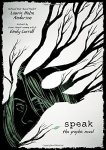 The past few months have also brought us graphic novel adaptations of Laurie Halse Anderson’s Speak and Lois Lowry’s The Giver. The former is YA rather than middle grade, and the art is quite different from the books above; Emily Carroll did an absolutely haunting job translating Speak into a new format. Melissa’s silence, the claustrophobic atmosphere of menace, and the slow healing and emerging that takes place are rendered in a way that honors and enhances the original.
“If you’re tough enough to survive this, they’ll let you become an adult.
I hope it’s worth it.” -Speak, Laurie Halse Anderson
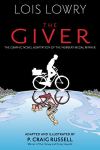 The Giver is often read in late grade school, though it’s one of those books that is thought-provoking no matter when in life you encounter it. Unlike the rest of the books here, it is set in a different reality than our own, a futuristic place of Sameness. P. Craig Russell produced the graphic novel version; cool blues and grays prevail, until Jonas’ moments of “seeing beyond” introduce flashes of color, and The Giver’s memories do the same. The Giver himself looks less Kindly and more ominous than I had pictured him, and the whole community has a 1950s vibe (on purpose). It’s very hard to improve on the original, and as one of the first utopia/dystopia novels that young readers encounter, it’s not in danger of falling by the wayside, but if this version of The Giver finds a new audience, all the better.
“We gained control of many things, but we had to let go of others.” The Giver, Lois Lowry



 Jenny Arch