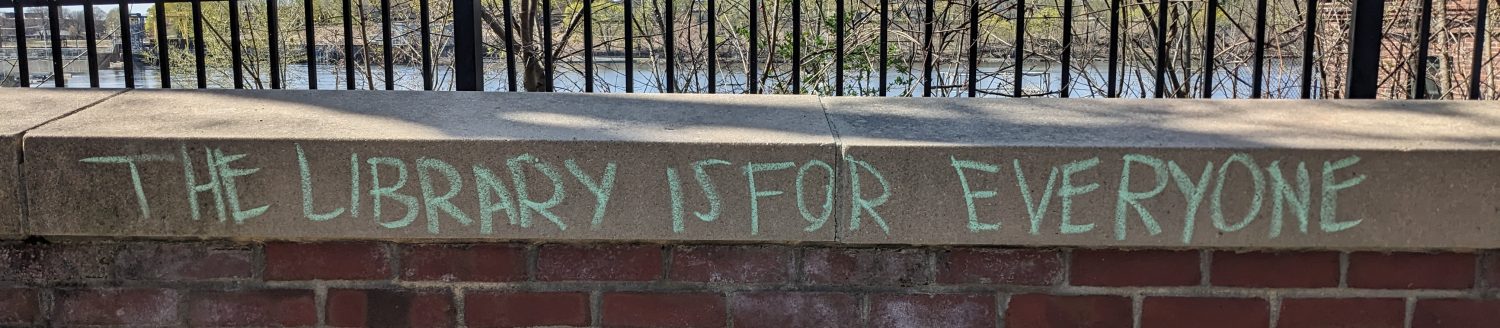
MLA 2024: The Heart of the Community

The Massachusetts Library Association (MLA) annual conference was yesterday and today in Framingham. I got to attend yesterday, and it was a full day of speakers, presentations, vendors, and catching up with library colleagues from around the state. The last MLA conference I attended was in 2019; I presented with two other librarians about DIY usability testing on library websites. (It seems like much, much longer than five years ago.)

First up, at 8:15am: “Expanding Literary Horizons: Hosting a Reading Challenge to Foster Diverse Reading Habits,” with Karolina Zapal (Massachusetts Center for the Book), Veronica Koven-Matasy (Boston Public Library), and Hannah Bernhard (UMass)

  • The UMass summer reading challenge began in 2020 as a way to build community and connection while students were at home. Hannah, with the office of Student Success, built cross-campus collaborations with the UMass libraries and the English department; this increased the program’s reach (contacting students by email) and visibility (social media). Participation has increased each year, and they have moved away from prize incentives toward a pizza party (again, bringing people together).
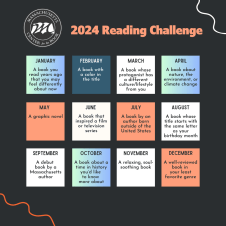
  • Veronica from the Boston Public Library talked about a number of reading challenges for adults: summer, winter, and year-long. The year-long challenge wasn’t as much of a success for BPL, but engagement with the winter (Jan-Feb) and summer (Jun-Aug) has been good. Bingo-style sheets include things other than “read a book” (e.g. learn something new about your neighborhood, listen to a new song, etc.). Reading challenges for adults bring new patrons into (or back to) the library, connect patrons with resources, encourage love of reading and support of the library, help patrons diversify their reading, offer opportunities to cross-promote other programming, engage staff, and are fun! They don’t use themes, but they do craft bingo items around book lists they make in advance, and they find newsletters a better way to communicate than social media.2024 Reading Challenge
  • The Center for the Book uses a “12 months, 12 books” model for their challenge, and relies on public libraries and independent bookstores as partners to spread the word and promote the challenge. People can sign up online and track their reading; there is a monthly newsletter and monthly prize drawings, and two year-end celebrations (in Northampton and Boston).

Exhibit Hall Break! I chatted with vendors from Transparent Language (I’ve been doing their ASL for Librarians course, and it’s fantastic), MLS, NELA, and others. I checked with both Baker & Taylor and Ingram to see if they had new award posters, but they didn’t; I found some downloadable ones from Follett, though.

10am: “Banned in the USA: A History of Censorship, Book Bans, and First Amendment Freedoms,” Jocelyn Kennedy, Executive Director of the Farmington (CT) Libraries

  • Jocelyn ran us through the history of censorship in the U.S., though she said that censorship has existed as long as the printed word, and even before: “We don’t like when other people say things that we don’t like.” A few keywords and cases to search if you’d like to learn more: First Amendment, Sedition Act, Tariff Act, obscenity laws, Anthony Comstock (grr. See: The Future of Another Timeline by Annalee Newitz), Title 18 of the Federal Criminal Code, Joseph McCarthy and HUAC, the Hayes Code, the Comics Code Authority, Miller v. California (1973), Island Trees Union Free School District v Pico (1982), ALA Office of Intellectual Freedom (OIF).Approved by the Comics Code Authority
  • Government censorship is only part of the picture; some industries and organizations self-censor, sometimes in order to prevent government censorship. (Think of those “parental advisory” stickers on music CDs, movie ratings, etc.)
  • Book challenges from individuals and organized groups are on the rise in the past few years, but the Pico v. Island Trees case set the precedent that school boards can’t remove books from school library shelves just because they don’t like them. Jocelyn said, “It’s important to remember that it’s a very small group of people who are pressing for censorship and book bans [but] they’re very well organized.” The best thing you can do is make sure you have a strong collection development policy and a strong consideration policy, backed by procedure. (If your library doesn’t have these policies, or needs to update them, the MLS helpfully collects examples.) And, administrators need to support frontline workers.

11:10am: Leading with Love: Celebrating Pride at Your Library,” Jenny Santomauro (Peabody Institute Library of Danvers), Taylor Silva (Fall River Public Library), Miz Diamond Wigfall (a.k.a. AJ)

  • FRPL hosted its first Drag Storytime in 2019, and hundreds turned out: so many that they had to offer the program several times that day. They hosted drag storytime several more times, again with high attendance and support and minimal protests, but in December 2022 the program was interrupted by hate group NSC-131, which tried to prevent people from entering; police presence helped ensure that the event ran uninterrupted. After another successful drag storytime in January 2023, leadership made the decision to move the venue from the library to the town recreation department, citing staff safety concerns. However, drag storytimes and Pride events continue in Fall River with plenty of support. Taylor leveraged existing relationships with individuals in the community and community groups to gain support for LGBTQIA+ friendly events and to offer more, like day trips, movie nights, craft programs, and a D&D group.
  • Jenny spoke about a drag makeup class for teens, offered in May before Pride one year. The class filled up just minutes after being posted online, but then attracted hateful comments and threats. They were “scared but determined….We didn’t want to kowtow to these hate groups…We wanted to show that the library was a strong ally.” Police took the threats seriously, and allies showed up to create a “wall of love.” At future LGBTQIA+ events, the library advertised to local groups and schools, only posting to social media immediately before the event. There is a “clear need and desire for queer programs” in Danvers, and more supporters show up in person than protestors do. 
  • Miz Diamond Wigfall echoed this sentiment, saying that “keyboard warriors” are active online but few show up in person. It’s also important to have all-ages queer programs and spaces, as so many queer spaces are 18+. Parents are grateful for their kids to have safe spaces.

Rainbow heart

12pm: Landscape Ideas for Education, Engagement, and Climate Resilience,” Elena Zachary, Regenerative Design Group, Greenfield, MA

  • Elena talked about climate change, and the effects it’s already having in New England, and different types and sizes of garden projects that can help mitigate extreme heat, drought, and extreme rainfall, flooding, and storms. It’s possible to reduce heat island effects through landscaping by planting shade trees, for example, or “pocket forests.”Cover image of Nature's Best Hope by Doug Tallamy
  • RDG works on other projects, such as creating rain gardens, accessible gardens, outdoor classrooms, educational gardens, pollinator gardens, bird-friendly gardens (better than bird feeders: you don’t have to worry about bears, or refilling the feeders), and historical and cultural heritage gardens.
  • What can libraries do? (1) Add native perennial plants to existing landscapes; (2) Plant and manage chemical-free (no chemical fertilizers or plants treated with neonics); (3) Mow less, and less often, and participate in No Mow May; (4) Leave the leaves – rake them off lawns and into beds to insulate shrubs and perennials, especially as there is less snowfall; (5) Use rain gardens, swales, and vegetation to infiltrate water onsite and avoid runoff.
  • What else? Engage the local community, find out what they want – benches for reading, a living seed library, plant exchanges, edible gardens? Use public land to set an example (good signage helps!) and educate people that they can transform their own spaces as well – every little bit helps.
  • Available grants: ARSL Sustainable & Resilient New England Libraries, LSTA/MBLC Dig In.

2pm: Martha’s Vineyard Land Transfers: Being an Ally to Indigenous Peoples and Beyond,” Kara Roselle Smith (Chappaquiddick Wampanoag)
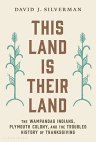
  • Cover image of This Land Is Their LandKara spoke about her historical family connection to Martha’s Vineyard – which was inhabited by the Wampanoag people before First Contact, but is now inhabited by descendants of colonizers – and Indigenous efforts to regain land that was wrongfully taken from them: “The stealing of native land wasn’t just a one-time event…[it] continues to this day.”
  • She showed a long clip from a TEDx Talk by Lyla June (Diné), “3000-Year-Old Solutions to Modern Problems,” in which June describes land management techniques that decenter humans and design for future generations. June explained that European colonizers misunderstood Indigenous land management practices – “living heirlooms” – and that Indigenous people are a “keystone species.”
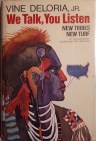
  • Cover image of We Talk You ListenKara recommended two books for further reading: This Land Is Their Land by David J. Silverman and We Talk, You Listen by Vine Deloria Jr. (I would add that another good book on this topic is Occupying Massachusetts by Sandra Matthews, David Brule, and Suzanne Gardinier.)

2:40pm: “Touchpoints in Libraries,” Lyndsay Forbes (MBLC) and Christi Farrar (MLS)

  • The Touchpoints training program was developed by T. Berry Brazelton in 1995, originally designed for health care settings but adapted for libraries. Why Touchpoints in libraries? “It’s about family engagement.” Touchpoints is a systems approach, and libraries are part of a child’s system.
  • Touchpoints is a way of addressing different perspectives and assumptions, recognizes our own biases, and moving from a deficit-based view to a strengths-based one. Library staff can change our interactions with patrons by understanding where we’re coming from and being good listeners.
  • Starting in 2020, the MBLC and MLS began the process of going through the “train the trainer” program and offered the first trainings with two cohorts in 2023; another training will be offered this fall. Cohort learning creates a professional learning network, encourages reflective practice, and models relationship building.

3:30pm: “Our Grandest Challenge with The Sustainable Libraries Initiative,” Rebekkah Smith Aldrich, MLS, LEED AP

  • “Even if we do everything right [climate-wise from here on], we have a minimum of another 30 years of increasingly severe and scary weather….It’s already here, it’s already impacting us.” The medical community is calling climate change the biggest threat to global public health: “The climate crisis will profoundly affect the health of every child alive today.” –The Lancet
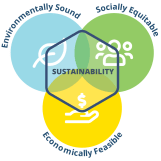
  • Triple Bottom Line graphicThe ALA added Sustainability to its Core Values in 2019. That means it should be part of our framework for libraries’ decision-making. Look at the “triple bottom line” definition: environmentally sound, socially equitable, economically feasible (see graphic at right).
  • Librarians can align for collective impact, like the Blue Marble Librarians are doing. Project Drawdown is a good resource: “embrace the idea that every job is a climate job.” Libraries can do a lot to mitigate climate change – even small changes like using LED lights add up, and putting up solar panels is even better. Put EV charging stations in the library parking lot, and build net-zero goals into strategic plans, like Concord.
  • Libraries are also important when it comes to disaster preparedness and community resilience. Communities with tighter social fabric will do better (see: Heat Wave by Eric Klinenberg). A few more resources and ideas:Cover of Heat Wave by Eric Klinenberg

Finally, Governor Maura Healey’s keynote speech was moved from the morning to the afternoon, to close out the day’s presentations. She quoted one of my all-time favorite library quotes, from Caitlin Moran’s essay “Alma Mater”:

A library in the middle of a community is a cross between an emergency exit, a life raft and a festival. They are cathedrals of the mind; hospitals of the soul; theme parks of the imagination….They are the only sheltered public spaces where you are not a consumer, but a citizen instead. -Caitlin Moran

Healey spoke generally of her childhood memories of libraries, and her support for intellectual freedom in Massachusetts. She mentioned the nationwide book banning trend and cited the challenge statistics from the ALA OIF, saying, “What a damaging and alarming trend. They want to remove books and programming that tell the truth….We are never ever gonna let that happen in Massachusetts. We cherish our libraries.” Healey acknowledged the link between libraries and democracy, and pledged support for library resources, including the economic development bill, which includes $150m for library construction grants. 

People asked excellent questions during the Q&A: about Healey’s support for libraries in public schools (“If you could give this same talk to school superintendents…”), about how municipal employees aren’t covered by FMLA (she gave a weird answer about housing costs instead), about legislation to protect library collections (“I’m in favor of any legislation that would ban the banning of books”), and, of course, what she’s reading right now (Margaret Atwood essays, The Climate Book by Greta Thunberg, and Russell Banks’ last book).

And that was a wrap (for me, anyway) on MLA 2024! I’m going forward with new ideas about how to make the library more sustainable and resilient, host queer-friendly programs, and run reading challenges (the good kind, not the banning kind). Thanks so much to all the presenters and panelists, vendors, and conference committee!

MLS Annual Meeting 2023

This year’s Massachusetts Library Association (MLS) Annual Meeting was at Fort Devens, where I have been many times – but only to play in ultimate frisbee tournaments. The meeting involved no cleats, frostbite, or heatstroke, which was an altogether different experience!

After a brief welcome from MLS Executive Director Sarah Sogigian and MLS Executive Board President Anna Bognolo (also the director of the Greenfield Public Library, which has a beautiful new building!), reporter Matt Shearer delivered a morning keynote full of short, funny videos of hyper-local news stories, such as the famous (in internet circles) story of one of the three Market Baskets on Boston Road closing in Billerica, and the sad tale of the Dunkin Donuts-less town of Stow, MA. Matt’s approach to reporting is, “I show up in small towns and try to find something cool.” After much exploring, he has concluded, “It is the people who make these towns special.” He says, “I’m trying to find the things that aren’t getting covered, the people whose voices aren’t getting heard.” And he recommended, when creating content, to have fun with it, and people will find it engaging.

The way that people respond to Matt’s videos – locally and more broadly, as many of his videos have gone viral – makes me think of the decrease in local news coverage over the past few decades, as local and regional papers fold, and people are left to rely on social media (e.g. Facebook, NextDoor) or national papers like The New York Times. This has contributed to a lack of trust in the print media, as there can be such a great distance between the issues that have a real impact on peoples’ day-to-day lives and the issues that national papers cover. Matt’s use of humor helps, too, and his genuine curiosity about people’s lives.

The business meeting was short and sweet, followed by an update from MBLC Director James Lonergan. He urged everyone to continue contacting state representatives to support library budget lines, all of which have seen increases recently. The focus next year will be on continued support for State Aid to libraries, and a bigger increase for the Massachusetts Center for the Book. Lonergan also mentioned MLS’ partnership with Unite Against Book Bans (MLS, MLA, and MSLA are all partners).

UniteAgainstBookBansUniting against book bans tied in nicely to William Adamczyk’s update from the MLA Legislative Committee. There was a hearing on Monday, October 30 that was relevant to several different library interests (you can watch it here), including library access to e-books and digital audiobooks, freedom to read, and protection against book bans. MLA has been working closely with MSLA and with EveryLibrary to have a funded, effective school library program and a licensed school librarian in every school in the commonwealth (see “The Top 5 Reasons for having a Licensed School Library Teacher in Every School“). The Massachusetts Teachers Association (MTA) is in full support of this effort. Another goal is for the MA Department of Elementary and Secondary Education (DESE) to designate a school library point person – someone who understands the importance and value of librarians in schools.
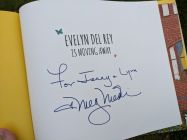
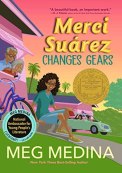
Title page of Evelyn Del Rey, with signatureAfter lunch, it was time for MEG MEDINA! Yes, she’s caps-lock-worthy: she’s the National Ambassador for Young People’s Literature, a faculty member of the Hamline MFA program, and the author of Merci Suárez Changes Gears, which won the Newbery Medal in 2019. She has written two sequels to Merci, as well as picture books Mango, Abuela, and MeTía Isa Wants A Car; and Evelyn Del Rey Is Moving Away. Most recently she has contributed to Chelsea Clinton’s She Persisted series of biographies, with entries on Sonia Sotomayor and Pura Belpré.
Medina graciously answered questions from Christi Showman Farrar and Kristi Chadwick from MLS. Some excerpts from their conversation:

  • When did storytelling start for you? When did you decide to become a writer? Medina’s family moved to the U.S. in the 1960s, due to political turmoil in Cuba; she believes that her family “used story to deal with the trauma of loss of homeland.” She did not begin writing fiction until she turned 40.
  • How do you decide whether the story is a novel, a picture book…does the story tell you what it’s going to be or do you make that decision? A little of both. Tía Isa would have made a funny middle grade novel. “When you sit with a story for a second, your heart sort of tells you the piece of it that matters most, and that helps you navigate” what age to write it for. What matters to you the most in that moment about telling that story?Cover image of Merci Suarez, with Newber
  • When books are published simultaneously (or nearly) in English and Spanish, what is the translation process like? “We have all points of language” in Latino families, with some fluent in English, some in Spanish, some in both. Availability of books in both languages allow the family to experience the story together, in the language they’re most comfortable with. “More language is more people you can talk to.”
  • What was your involvement in the graphic novel adaptation of Yaqui Delgado Wants to Kick Your Ass? Medina said it takes her a while when she sees visual representations of her work, even book covers, because the artist’s representation is always different from what she sees in her head. “I feel about graphic novels the way I feel about movies….This is a new generation and it’s a different art form….[I’m] glad it’s coming to a new generation of readers.”
  • What was the research process like for Burn Baby Burn? “You think you remember everything accurately…you don’t!” It was fascinating to dig into the research, including the NOW archives at NYU, which covered the Women’s March in much more detail than The New York Times. She asked, “Who’s telling the story? And what was omitted?” and added, “That idea of not being erased is vitally important right now.”
  • Question from a school librarian: How do you help teachers who are attached to classics understand that there is so much new talent? You’re not throwing away the classics, but nothing can become a classic if no one reads it. Medina suggested shelf talkers that pair the classic with the new, like Little House on the Prairie with Linda Sue Park’s Prairie Lotus. “Give people a way to think about those books. Give them a way to preserve both, if they must.”

Other questions and answers covered what it was like to get “the call” (from the Newbery committee), what she does in her role as the National Ambassador (“Book friend to America’s children”), outreach to Latino populations, how to get kids passionate about stories, and challenges to youth materials (she spoke to both the Senate and the House).

Thank you, Meg, for coming to our meeting, and for everything you do for children’s literature!

MLA 2019: The Greatest Job on Earth

The Massachusetts Library Association’s annual conference theme this year is “the greatest job on earth.” And I guess we can claim that, because a quick internet search shows there’s not a lot of consensus on the issue. Moving on!

The keynote speaker was Dr. Deborah L. Plummer, Vice Chancellor and Chief Diversity Officer at UMass Medical School and UMass Memorial and author; her presentation was called “Radical Respect in Troubling Times,” and it was followed by a “Communicating Across Differences Workshop.” Plummer spoke about how to turn “Us and Them into We” through conversation – and not just conversation with the people you already agree with. It’s easy to respect people who look / think / talk / behave / worship / vote like you; it takes work to get out of your echo chamber. But bumping up against difference is how we learn about others and about our own identities. 

The paradox of diversity, said Plummer, is that (1) we are unique and like no one else (personality); (2) we’re each like some other people (similar backgrounds, views, genes, etc.); (3) we’re all like everyone else (i.e., human). And we don’t each have one identity; we have multiple and intersecting identities. We may emphasize or project one or another of these depending who we’re with. “Identity pulling” is okay if you’re the one choosing to do it, but it’s not okay for one person to do it for someone else.

Plummer gave the attendees strategies for successful “bumping”: (1) Focus on being respectful rather than being right; (2) Check your assumptions, and de-escalate if necessary by saying something like “I’m sorry, I made an assumption”; (3) Mirror the other person’s style by “grabbing their handle” – figure out if they are coming from the head, the heart, or the gut/soul; (4) “Take a helicopter ride” and observe from a distance if the other person doesn’t have the capacity to change their viewpoint or behavior.

Plummer also listed her three components of radical respect:

  1. Admiration: “Wouldn’t it be great if we treated differences like a challenge instead of a threat?” (We have different physiological responses to these: we react to a challenge with adrenalin, and to a threat with cortisol.)
  2. Civility: Listen for understanding, rather than for rebuttal
  3. Dignity: Honor that needs and concerns exist. Where do they come from?

one vase or two facesThere was a break after the keynote, and then the next set of morning sessions. I chose to stay with Plummer for the “Communicating Across Differences Workshop,” which included some of the same material as her keynote with additional exercises and examples, starting with a few of the classic Psych 101 images to demonstrate our ability to make perceptual shifts. You can’t actually hold multiple realities or perspectives at once, but you can shift back and forth between them – and if you don’t see another reality on your own, sometimes you can once someone points it out to you. (Ah, see what she did there? Clever.)

In this session, Plummer spoke about the traditional approach to difference compared to the contemporary one, and used an analogy of an hourglass: If the sand in the top is the dominant culture (white, male, Christian, healthy and able-bodied, adult, heterosexual, upper-class, educated), those on top are afraid of simply flipping the hourglass; “we have a better chance for creating equity if we tip the hourglass on its side.”

Communicating successfully across differences is tricky; Plummer’s “Intention vs. Impact” slide shows how a sender’s intended message might impact a receiver. If the impact is positive, we have effective communication; if it’s negative, we need to acknowledge and clarify. Intent and impact are both important; one of Plummer’s examples was a Black Lives Matter display. Some people thought it was an anti-police message, which wasn’t exactly the sender’s intended meaning (it was more like, Black Lives Matter too).

intention vs impact flow chart slide

Following this slide was one with a number of conversational “bounce backs,” ways to recover and things to say when a conversation goes wrong, such as “Help me to understand…” and “My experience has been…” Everyone will make mistakes, and these can help move the conversation forward if done with a degree of cultural humility and commitment to learning.

diversity petalNext was a “diversity petal” exercise: we identified the dominant or “up” identities for race, gender, age, mental/physical ability, sexual orientation, class, education, and religion and then our own identities within each category, then placed a check mark next to any category where our own identity matched the dominant one. Plummer pointed out that marginalized people know more about the dominant culture; part of privilege is not having to learn about how life is for others. “Black people know a lot more about white people than white people know about Black people. Women know a lot more about men than men know about women. People who have a disability know a lot more about the world that’s designed for people who are healthy and able.”

We came back to the “multiple realities” images to hammer home the point that just because you don’t see (or experience) something doesn’t mean that it isn’t there (or doesn’t exist). Plummer is a champion of cross-racial friendships (Some Of My Friends Are…), and pointed out how going through life with people who are different than you can highlight the ways in which you experience the world differently (or ways in which the world treats you differently).

All of this is ongoing; no one has “arrived,” but we can commit to continuing the conversation.

To Be Continued (more sessions from Monday, and sessions – and a presentation library website usability testing – on Wednesday)


MLA Confronting Inequality conference

The Intellectual Freedom/Social Responsibility committee of the Massachusetts Library Association just put on an excellent one-day conference at the Milton Public Library. Speakers included Dr. Roopika Risam, recipient of the first Civil Liberties Champion award; Virginia Eubanks, professor of political science and author of Automating Inequality; and Chuck Collins of the Institute for Policy Studies and author of Born on Third Base (also, a Hampshire College alum, which I didn’t realize until after the conference).

Welcome slide to Confronting Inequality conference

Roopika Risam, of Salem State, worked with researchers at Columbia University and the University of Houston to produce Torn Apart/Separados, a data visualization project using public data (including a previously FOIAd list of detention centers and children’s shelters in the U.S.) to show the locations of ICE detention centers and their funding.  Risam said that she and other researchers asked themselves, “Can we [librarians, students, faculty] mobilize the skills we have to respond in times of crisis? Who are the people on the ground (lawyers, families), how can we be helpful to them?” The result was “Torn Apart/Separados,” released June 2018. Volume 2 – “to follow the money,” i.e. government contracts – was released later, and Risam showed us the “murderboard,” which shows connections between products, contractors, and subsidiaries.

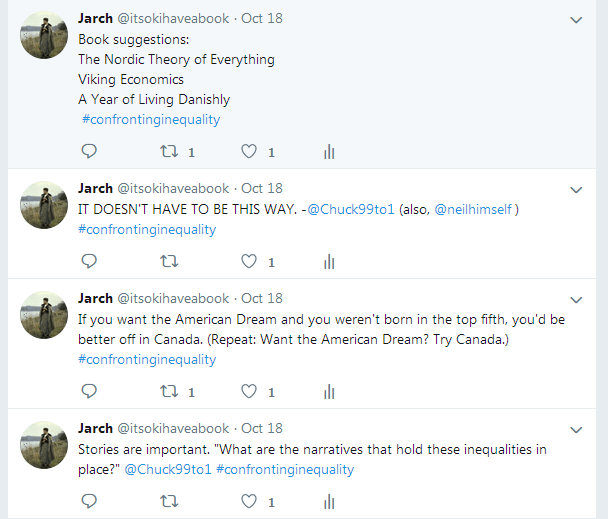
Next, we heard from Chuck Collins, author of Born on Third Base and Is Inequality in America Irreversible? Starting with personal stories, he also gave an overview of how the U.S. was on track to becoming a more equal society after WWII, when progressive taxation was invested in public goods like infrastructure, education, and mortgage loans. The American Dream of social mobility was much more possible then than it is now; now, the American Dream is more achievable in Canada.

Since the 1970s, assets at the top have multiplied with little to no effort, while wages have stagnated. Wealth at the top has now reached “absurdist levels,” with the combined wealth of the 400 richest individuals in the U.S. equaling the combined wealth of the bottom 60% of households in the country; the three richest individuals (Bezos, Buffet, and Gates) have as much as the bottom 50% of households. Almost one in five households have zero or negative net worth; the “precariat” is largest-growing group in this country. If we look at the story through the lens of race, a median white family has 35x wealth of a median Black family and 27x wealth of a median Latinx family.

chuckcollins1

Is this inequality good for anyone? No. (See: Capital in the Twenty-First Century, Thomas Piketty.) How do we make things more equal? There are plenty of answers, but the main one seems to be creating and maintaining a “social floor” or a “decency floor,” through which people cannot fall. Is this a “welfare state”? No, it’s a “pro-work state” that supports its people at a foundational level, adding security to everyone’s lives.

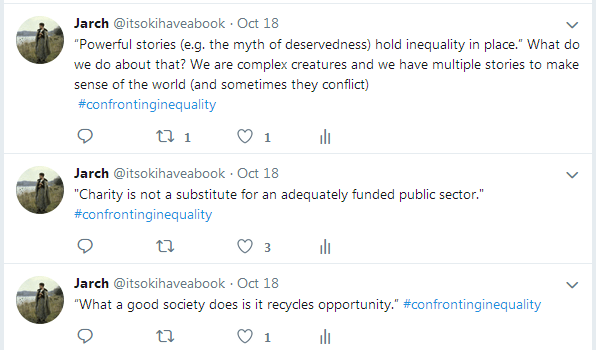
“What a good society does is it recycles opportunity,” says Collins. If you have millions or billions of dollars, you didn’t do it alone. But if you admit that you had help, you’re obligated to ensure a more level playing field for others. If you believe you did it alone (on hard work and merit), then you believe anyone else can do the same. “Powerful stories hold inequality in place,” such as “the myth of deservedness.” For some families – mostly white – public subsidies and assistance programs have led to stability, and wealth that can be passed down, but the recipients of this inheritance don’t always understand its origins. We can begin dismantling the myth of deservedness by identifying instances of advantage of privilege. “Tell true stories of how advantage works. Tell true stories about advantage.”

For more on the topic, check out Inequality.org.

chuckcollins2

Next up, we heard from Virginia Eubanks, author of Automating Inequality. Eubanks talked like most of my favorite teachers and professors: fast, energetic, full of memorable examples and cases, with plenty of evidence (some of it rendered in easily digestible, yet horrifying, cartoon form), wisdom and a sense of humor.

Eubanks described a number of terrible systems, from the Allegheny Family Screening Tool in Pennsylvania to the process for applying for public benefits in Indiana to the systems used in Los Angeles to match unhoused people with affordable housing.

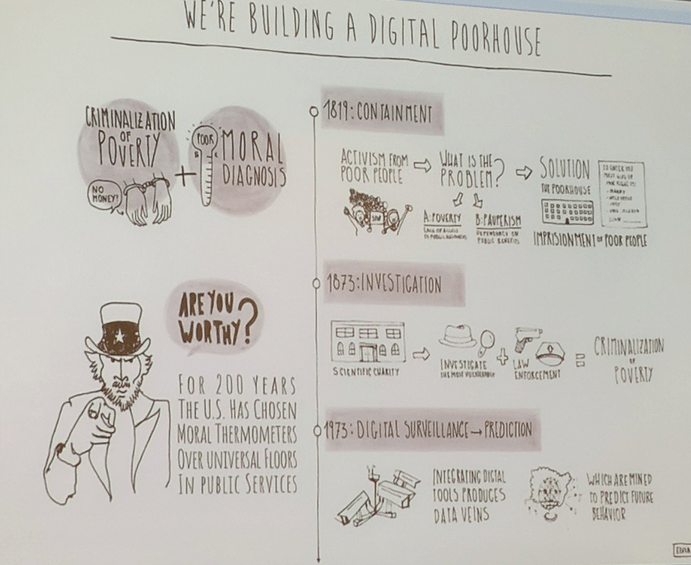
Like Collins, Eubanks brought up the idea of a social floor or a decency floor; she called it the universal floor. One of her slides said, “For 200 years the US has chosen moral thermometers over universal floors in public services.” She said, “Tools have not gotten better or fairer over time, they’ve gotten faster and scaled up. The narrative of austerity says there’s not enough for everyone and we have to make difficult decisions about who deserves basic human rights.” Tech tools promise to address bias, but really they just hide it, often leading to “a feedback loop of injustice.”

"We're building a digital poorhouse" slide

Do people really mean to create these systems? It doesn’t take bad intentions to create bad impacts. Speaking of the 58,000 unhoused people in L.A. and the shortage of affordable housing there (and she went into the history of that a little bit), Eubanks said, “Triage only makes sense if there are more resources coming. If there aren’t more resources coming, it’s not triage, it’s rationing….The fundamental danger of these systems is that they make us think small.”

So, what do we do? (1) Change the story about poverty; (2) Shift from diagnosis to universal floors; (3) Design less harmful technology. Eubanks said, “If you make these systems poorly, they’re only cheap at first. If you do them well, they’re time- and labor-intensive and expensive. It’s very expensive to punish poor people for being poor….I believe it would be much less expensive to create a universal basic floor.”

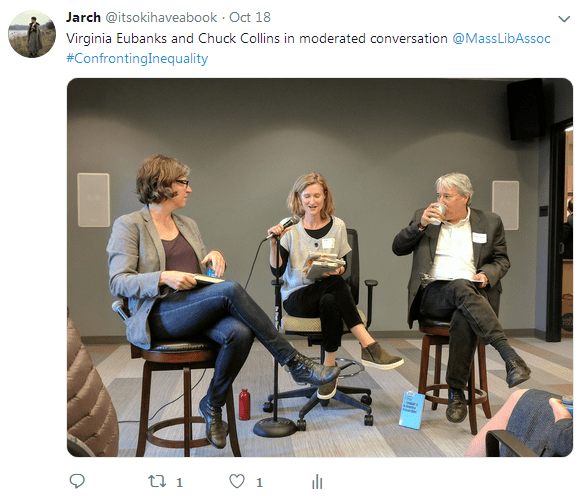
Photo of Eubanks, Fiorillo, Collins in conversation

The conference ended with a moderated discussion and Q&A with Collins and Eubanks. Andrea Fiorillo of the Reading Public Library started off with a question about the importance of storytelling. Eubanks answered, “The key to dismantling the digital poorhouse is changing the way how we think, talk, and feel about poverty.” She added, “We have to understand our own experience differently….It’s a system we’re supposed to use to share national wealth so we’re investing in each other.” Collins, in addition to the “myth of deservedness,” mentioned the “myth of disconnectedness” and the “myth of superiority.” His audience is often wealthy, and he challenges them to demystify their advantage and tell their true story. He said, “Do an inventory – what forms of help did you get? Understand that advantage is multigenerational. We are shaming people who need help and that rebounds on the whole culture.”

One question/comment from the audience raised the issue that the often-praised Nordic countries with strong social floors are more homogenous than the U.S.; is it more challenging to create a social floor in a more diverse country? “Racism has been used to divide people,” Collins said, and Eubanks stated, “We don’t have to be the same to take care of each other.”

They also discussed the ways in which people opt into their communities or opt out of them. For many, there are plenty of everyday choices that add up to supporting and being part of a community, or not: drive or take the bus? Send kids to public school or private? Order from Amazon or go to the local library or bookstore? In many cases, the affluent (not just the superrich) are opting out. “Be accountable to the other people who live in your community.”

Speaking of communities and libraries, “Public libraries and their partners can be places for face-to-face conversations. The more stakeholders the better,” said Collins. And Eubanks noted the ways in which librarians have filled in as de facto caseworkers for social services, as many applications are online and many people still don’t have internet access at home.

Overall, there are reasons to be optimistic; namely, the solutions to many of these problems are clear. The real issue is, is the political will there? And can we act fast enough?


Libraries: Our Common Wealth (MLA 2018)

The Massachusetts Library Association conference was in Framingham this year; I followed along on Twitter (#masslib18) for the first two days, and attended (and presented) on the third and final day.

It seems that the opening keynote by Debby Irving, author of Waking Up White, was extremely well received. For those who missed it, she has a TEDx Talk here.

The first session I attended on Wednesday morning was Co-Creating Library/Social Services Partnerships: A Statewide Collaboration, presented by Michelle Eberle of MLS, Joe Vallely from the MA Department of Mental Health, and Shelley Quezada from MBLC. Michelle showed data that a majority of libraries are interested in partnering with social workers, but only 30% already do, to manage issues like homelessness, mental health, substance abuse, and help for immigrants. Library workers are interested in partnering with social workers – perhaps even students of social work – and in receiving staff training such as mental health first aid. MLS has a LibGuide for “Responding to the Social Services Needs of Our Library Communities.

Next, Joe told the room about the outreach and engagement teams serving over 1600 individuals within Massachusetts. They have had a few trainings at different libraries to introduce themselves (“what we do”) and look for ways to collaborate. “We have a common mission,” which gives us the opportunity to collaborate to assist people in need. “You provide a safe, warm place where many individuals, who are very fragile, go.” Many are clients or potential clients – how can we begin to assist? The organization Eliot was also mentioned, a part of PATH (the federal Project for Assistance in Transition from Homelessness).

Shelley spoke next, telling the audience about available LSTA grants and how MBLC can help with the grant process. Before applying for a grant, she said, there are a number of questions to ask, including: Who are your best community partners? How do you identify them? What is the overarching goal for your library to achieve? What resources do you need (staff, materials, training, equipment, publicity, space, etc.)?

Shelley reeled off a list of additional resources, including: Massachusetts Behavioral Health Partnership, Mass Legal Help, the Opioid Overdose Prevention project of Mass.gov, and Mass 211. Audience participants added Pine Street and Rosie’s Place. Audience members also spoke up to say that “Even with a social worker on staff, there are overwhelming needs”; staff training is still necessary for trauma-informed care, mindfulness, etc., and a series of trainings is better than a one-time session (grant funding can help with this!). One person also spoke about enforcing library policies apologetically, but “It’s okay to have rules. Rules keep people safe.”

The need for social services for a variety of often related issues (mental health, homelessness, substance abuse, domestic violence) is receiving more attention recently due to the movie The Public (trailer), which writer/director/actor Emilio Estevez said was inspired partly by an article by Chip Ward (I’m guessing this one: “How the Public Library Became Heartbreak Hotel,” 2007).

For the next morning session, I chose Charlie Grosholz’s interactive session on “The Role of Fantasy in the Library.” This was a small, hands-on session in which Charlie led participants through three exercises: world building, character creation, and role play. But first, a definition: What is fantasy? It is the “improbable, impossible…held down by rules.” (As any reader of fantasy knows, even magic has rules; otherwise it would be surrealism.) Any of these three exercises would be a great prompt for a creative writing workshop, but they could be used in a variety of other programs too, or to re-envision the library itself. For example…

  • Around Halloween time, a library in a walkable area might host a program starting with a zombie attack scenario: Where in town are the safest places, the most valuable resources?
  • Character creation can be used to develop personas; staff can collaborate to build personas based on library “characters,” an exercise that can build empathy.
  • Role play allows people to build social skills, public speaking skills, empathy, and conflict resolution skills. Charlie ran a successful murder mystery party for teens, complete with costumes, music, artifacts, and Shirley Temples (there was a speakeasy theme).  Role play can also be used for emergency preparedness drills, or even in ELL conversation groups.

If your library has (or is thinking of starting) a Library of Things collection, acquire some board games; you can build programming around each new game as you introduce it, and bring fans of the games together.

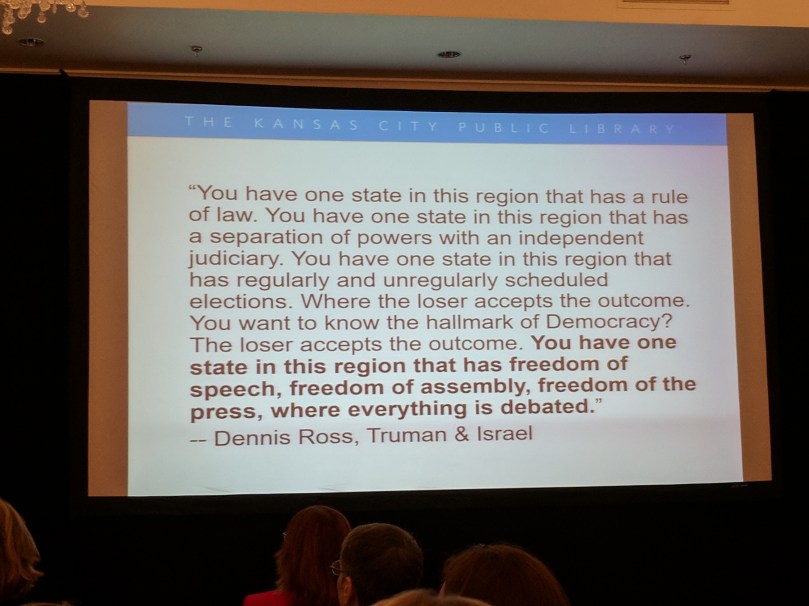
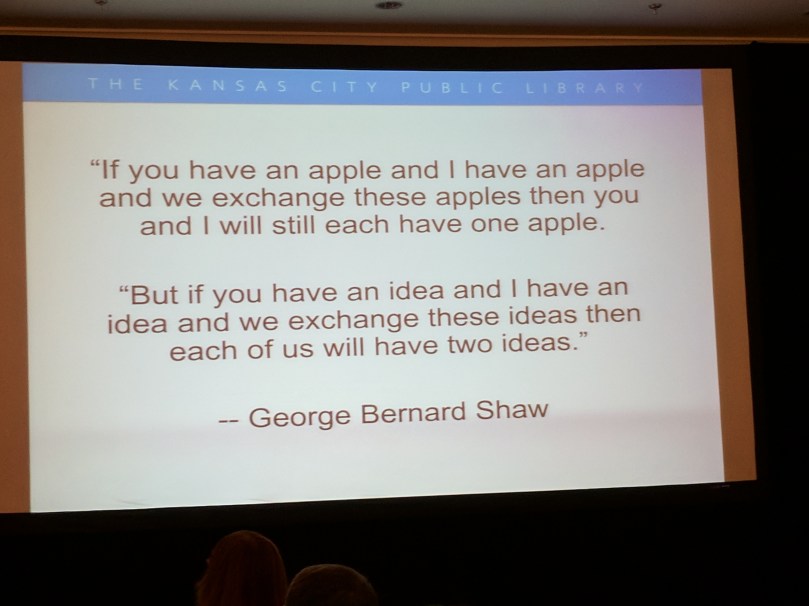
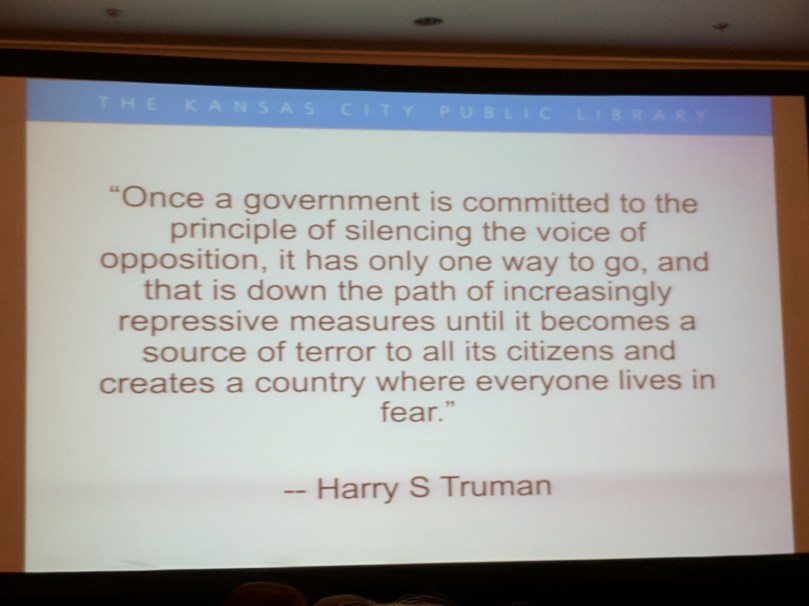
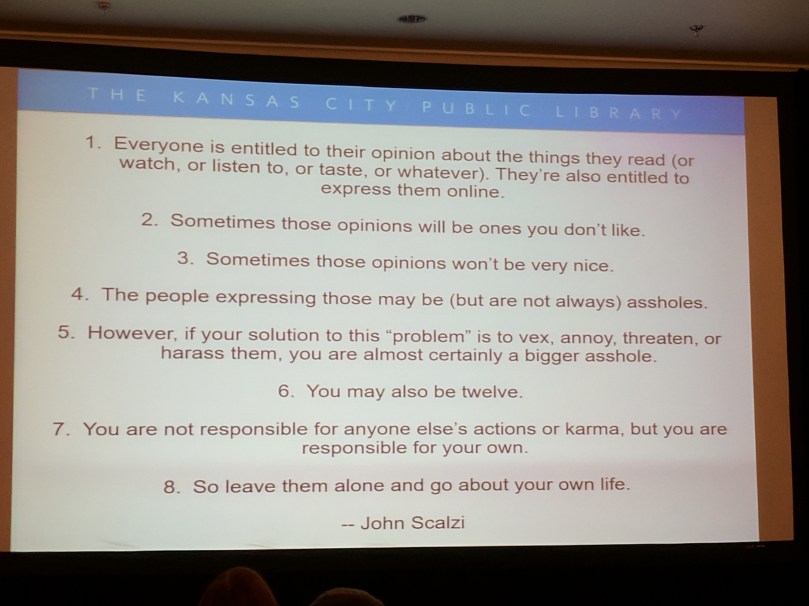
The last program of the morning was a general session, “Librarians on the Front Line: Protecting Free Speech,” presented by Steve Woolfolk of the Kansas City Public Library. Woolfolk’s name may be familiar to those in the library world; he was arrested during a program at his library for defending a patron’s right to speak. Though the case seemed incredibly clear-cut (for an overview, see the American Libraries article from October 2016), it dragged on until he was ultimately cleared. The incident certainly didn’t shake his dedication to free speech and the free exchange of ideas; when an audience member asked if it had had a chilling effect on programming at KCPL, Steve replied, “Nope! If anything, we’re getting more controversial.”

The First Amendment, he said, is about more than just being able to say what you want; “you have a right to express your ideas, and I have the right to be exposed to your ideas.” He pointed out that the government does not lead on issues, the public does – and librarians are already “committed to opening people’s minds.” He asked, why can’t we do with ideas what we do with books? Recommend something outside their comfort zone. “Nobody’s obligated to agree with the ideas they hear…but we have to make an effort to understand why people believe the things that they do.”

Steve’s talk was very well received, and I wasn’t the only one taking photos of his slides to post to Twitter.

Dennis Ross quote
Dennis Ross quote from the Truman & Israel author event
IMG_20180523_112815
George Bernard Shaw quote
IMG_20180523_113523
Harry S. Truman quote
IMG_20180523_114121
John Scalzi quote (from his blog)

After a break for lunch, it was time for “Readers’ Advisory in the Age of Uncertainty,” which I presented along with Kevin O’Kelly from Somerville Public Library and Louise Goldstein from Waltham Public Library. We each took a different angle on the topic: Louise talked about the “Initiating Inspiration” book group at the Waltham library, in partnership with the Agape Spiritual Community. The group met five times in its first year, discussing five different titles. Kevin talked about bibliotherapy, from the little-known Sadie Petersen Delaney (“Our Lady of Bibliotherapy”) to author Alain de Boton’s “School of Life” to the Changing Lives Through Literature program. And I talked about readers’ advisory at the reference desk, whether people are looking for escapism or a deeper understanding of current topics (or – through speculative literature – both!). My handout with book lists is here.

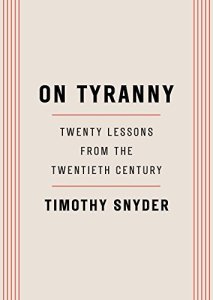
Cover image of On TyrannyThe closing keynote session featured Timothy Snyder, professor of history at Yale and author of (most recently) On Tyranny: Twenty Lessons from the Twentieth Century (2017) and The Road to Unfreedom: Russia, Europe, America (2018). The talk was entitled “The New Authoritarianism: Where It Comes From and What Readers and Citizens Can Do About It,” and was essentially a summary of On Tyranny. If you missed the talk, read the book – it’s only 126 pages.
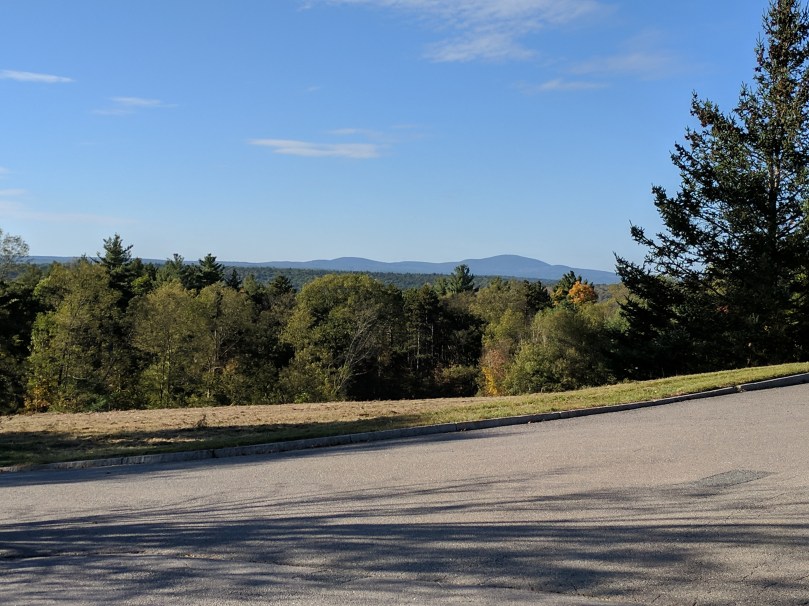
All in all, it was a worthwhile conference day! And let’s not forget Book Cart Drill Team


Libraries in a Post-Truth World: The Conversation Continues

Back in January, there was a one-day conference called “Libraries in a Post-Truth World,” where panelists, presenters, and participants discussed the problem of “fake news,” the spread of misinformation/disinformation, the nature of truth, and what role librarians can play to help boost information literacy and media literacy. (And more. It was a pretty packed conference. See blog posts one | two | three.)

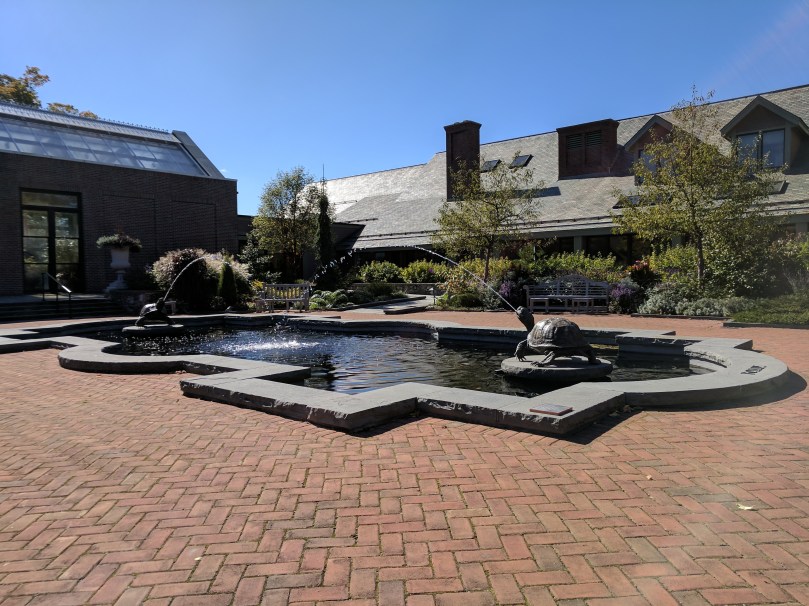
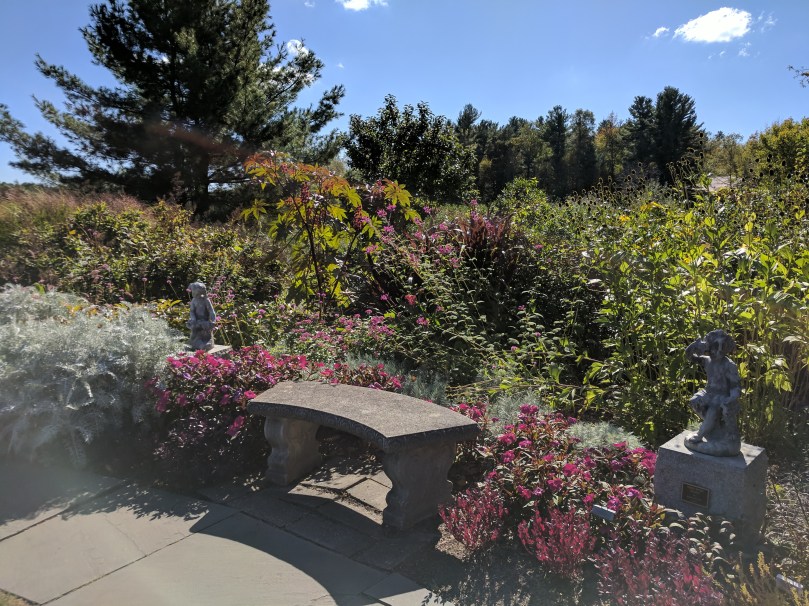
Another conference this month grew out of that one; the Massachusetts Library Association (MLA) Intellectual Freedom / Social Responsibilities Committee planned it, and it was held at Tower Hill Botanic Garden in Boylston, MA, which is by far the most beautiful place I’ve ever attended a conference.

View of Wachusett from Tower Hill Botanic Garden
View from Tower Hill Botanic Garden

The first speaker was Gail Slater, General Counsel for the Internet Association, based in Washington, DC. She had also spoken at ALA’s Midwinter conference in Boston, where she said she realized that “Librarians are the first responders and guardians of the Constitution” (a nice way to win over your librarian audience right away).

Slater’s topic was “The Right to Be Forgotten: Rulings in the EU, Their Impact on Global Internet Companies and Pending Legislation in the United States.” She spoke about “a wave of public policy challenges” to do with the internet now; one of the key questions is about internet companies’ (“online intermediaries”) responsibilities in terms of content posted by users. At the moment, Section 230 of the Communications Decency Act protects them from liability, but this “safe harbor” law may change.

Slater then moved on to speak about the Right to Be Forgotten. In a key case from Spain in May 2014, the European Court of Justice ruled that search engines are responsible for the content they point to. People in the EU have the right to be forgotten; they can petition Google to de-index links to content about themselves, as Mario Costeja Gonzalez did in the Spanish case. The information itself still exists, but a search engine won’t bring it up.

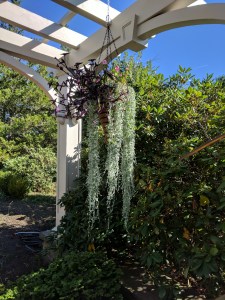
Plants in hanging basket
A hanging plant, Tower Hill Botanic Garden

Google handles these requests, weighing the public’s right to know against the individual’s right to privacy. Slater explained that in the EU, they place a higher value on the right to privacy, while in the US, we place a higher value on the right to know and free speech. This is “one of the bigger issues” on the geopolitical scale.

During the Q&A, someone asked a very good question: If a person can claim the Right to Be Forgotten or right of erasure, can a corporation claim it? Slater thought there were two reasons this was unlikely, even in the EU: first, the definition of a “data subject” is an individual citizen, not a corporation; and second, the request itself would become a news event, reminding everyone of the original story that the corporation is trying to erase.

Someone else asked what librarians can do about some of these issues. Slater said librarians can speak out about the importance of speech and the right to know. In the EU, privacy is considered a human right, but free speech is important too. She spoke of these as “competing equities” that require a careful balance.
Reflecting pool with turtle fountains
Turtle fountains in the Winter Garden, Tower Hill Botanic Garden

The second speaker was Shawn McIntosh, Assistant Professor of English and Digital Journalism & Communications at Massachusetts College of Liberal Arts. His topic was “Journalism Today: Learning to Trust the First Rough Draft of History.” Unlike Slater, he read a prepared speech, in the manner of a formal lecture. Rather ironically, he quoted Jay Rosen: “Journalism is a conversation, not a lecture.”
McIntosh spoke about what has and hasn’t changed in journalism. “Fake news” isn’t new, of course – there has always been propaganda, biased and partisan writing, and satire. However, “Willingness to accept the lies or spin them as ‘alternative facts’ or not caring is new.”

McIntosh said that his background in strategic communications (a.k.a. PR, a.k.a. “the dark side”) had been helpful: knowing how and why persuasion works, and how attitudes can be impervious to change even/especially when confronted with facts gives perspective to the news climate today. “Beliefs,” he said, “eat facts for lunch.” Research shows that presenting facts to counter someone’s beliefs does not work to change their minds (a disappointing thing for a roomful of librarians to hear).

Over the past few decades, McIntosh said, there has been a broad shift that is “dangerous to our civic and cultural life,” an erosion of public trust in experts and institutions. Journalists are seen as biased and untrustworthy sources. (Librarians, on the other hand, enjoy a high degree of social trust.)

Tree with fall foliage
A tree with fall foliage, Tower Hill Botanic Garden

What are the obstacles? Journalists are overworked and underpaid, and employees and coverage are being cut back, so there is more use of wire service content and less reporting on local issues. Less advertising leads to more cutbacks in a downward spiral. And the 24-hour news cycle certainly doesn’t help.

What can be done? “Journalism has to get back to its roots and break free from its modern traditions.” Rather than attempting or pretending to be objective, journalists must provide context for their stories. “Narrative and stories are how we make sense of the world….News is socially constructed. Acknowledge that.” Furthermore, because of mass communication and social media, the lecture style of journalism no longer works; it must be a conversation.  Within this conversation, though, “people will seek trusted voices,” and curation (the librarian ears perk up) “will play more of a role than it has so far.”

In this environment, McIntosh said, “Developing higher-order critical thinking skills is crucial….News literacy and information literacy skills are vital.” Librarians, of course, are on board with information literacy and media literacy, but McIntosh also said, “It can’t be all consumption, it must be production too.” People need to look under the hood to get an idea of how things work. Here, he said, is a “natural place for libraries, educations, journalists to meet.” People meeting face to face in libraries and classrooms can lead to “exchanges and dialogues between people of different views, [which] can start to break down polarization.”

Stone bench and plants

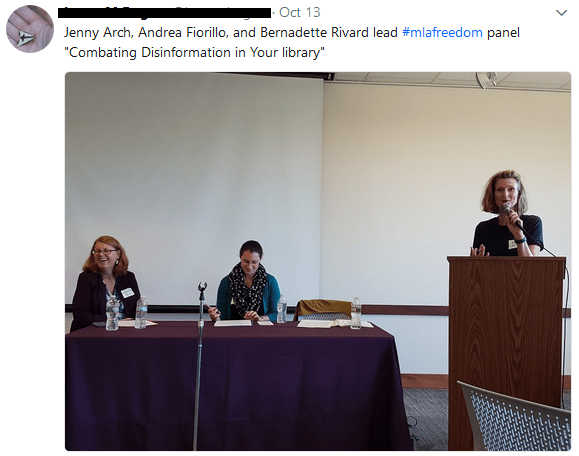
After a lunch break and a walk around the beautiful grounds, we reconvened in the conference room for a panel on “Combating Disinformation in Your Library.” I spoke, along with Andrea Fiorillo of the Reading Public Library and Bernadette Rivard of the Bellingham Public Library, about what we have done in our libraries to increase information literacy and media literacy.

Photo of panel from a conference attendee's Twitter account
Bernadette Rivard, Jenny Arch, Andrea Fiorillo

Last December, Bernadette wrote a blog post encouraging library users to “think before you share,” and giving tips on how to evaluate news sources. Andrea ran a “civil civics” series, bringing in speakers such as Melissa Zimdars (who was on the panel at the January conference; she also got online access to newspapers for the library’s patrons. (Most libraries still subscribe to newspapers in print, but because most people read the news online, digital subscriptions are another way the library can help connect people with quality information.) I spoke about my “What Is Fake News?” pamphlet, display, and library blog posts, and went over some tips that I’ll be sharing in a future library blog post.

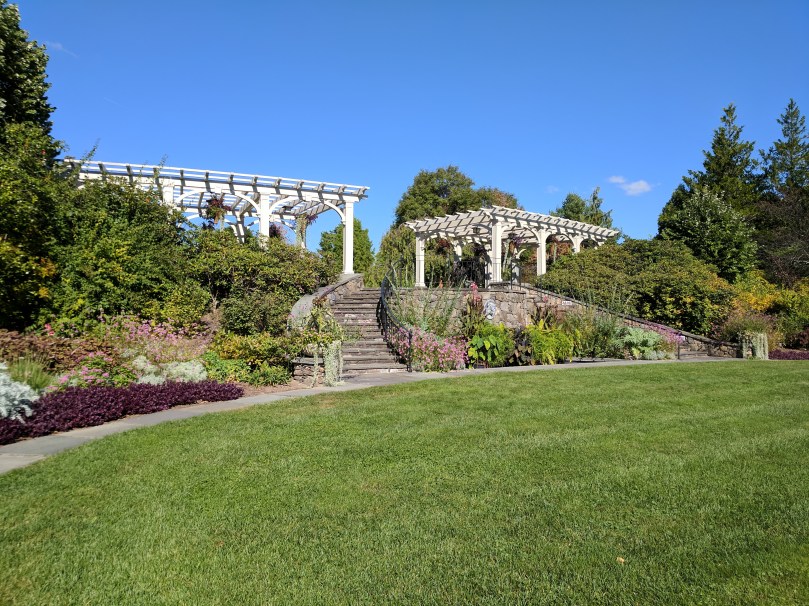
View of the pergolas from the Secret Garden

After the panel, we returned to our tables for small group discussion on the following four questions:

  1. What does the term “fake news” mean for librarians and the communities we serve?
  2. What are some creative and traditional approaches for librarians to support First Amendment awareness and education?
  3. What are your library’s barriers and supports to promoting media literacy?
  4. What has your library done and what would you like to do to support media literacy?

Conference organizers will be compiling the replies and sending them out to participants, so I may share those here later. At our table alone, we had a mix of public librarians (children’s and adult) and school librarians; I imagine academic librarians would have had a different set of answers. The hashtag for the conference, #mlafreedom, purposely didn’t include a date, so it may be used for related events in the future.

What does your library do to promote information literacy and media literacy? What role(s) do you think librarians can play in our current information environment? Do you have blog posts or handouts to share?


MLA 2017: Charting Our Course, continued

This is part II of my recap of the Massachusetts Library Association (MLA) Conference on May 23. Read part I here.

Mind in the Making: Creating Play & Learn spaces at your library

Katrina Ireland-Bilodeau (Northborough Free Library), Mia Cabana (Jones Library, Amherst), Steve Fowler (Bellingham Public Library)

Mind in the Making (MITM) is an MBLC/LSTA grant that all three of the presenters’ libraries applied for and won; they presented about how they used the grants at their libraries. Mind in the Making: The Seven Essential Life Skills Every Child Needs is also a book by Ellen Galinsky of the Families & Work Institute.

MITM is an “effort to share the science of children’s learning with the general public, families and professionals who work with them” – including, of course, librarians. Why libraries? We already have engagement (parents bring their kids) and community partnerships (people trust libraries).

Katrina, Mia, and Steve all shared wonderful ideas they had implemented in their libraries, from making changes to the physical space, to buying new furniture and toys, to incorporating educational tips into storytimes and other children’s programs. Here are some of the ideas they put into action:

  • Repurpose under-utilized space
  • Refresh rooms with new carpets and paint
  • Define different play zones for different ages
  • Borrow ideas from children’s museums (the Fall River Children’s Museum was name-checked; I recently saw a “mouthed toys bin” at the Boston Children’s Museum)
  • Get new furniture and toys to fuel imaginative play
    • A “dramatic play center” can be a puppet theater, grocery store, bank, farmer’s market, doctor’s office, and more – rotate themes regularly
    • Train tables are always popular!
    • Lakeshore and Playscapes were mentioned, but if you don’t have a budget, look for donations or see if a local vocational school can build something that you can buy for the cost of the materials
    • MagnaTiles are “one of the most imagination-fueling toys” and good for all ages
    • Blocks and animal figures are a must-have. Get alphabet blocks in other languages – reflect your community
  • Incorporate play into storytimes
  • Label toy bins with pictures of the contents (for kids) and educational tips (for caregivers)
  • Make connections with other community organizations
  • Is a plain or ugly surface showing, like the back side of a shelf or desk? Cover it with felt and make a felt board. (Or make a chalk board or a magnetic board…)
  • Move underused collections around; one library put their parenting collection on a mobile cart so they can bring it in to children’s programs for caregivers to browse
  • Vroom cards were also mentioned (“Vroom turns shared moments into brain building moments”)

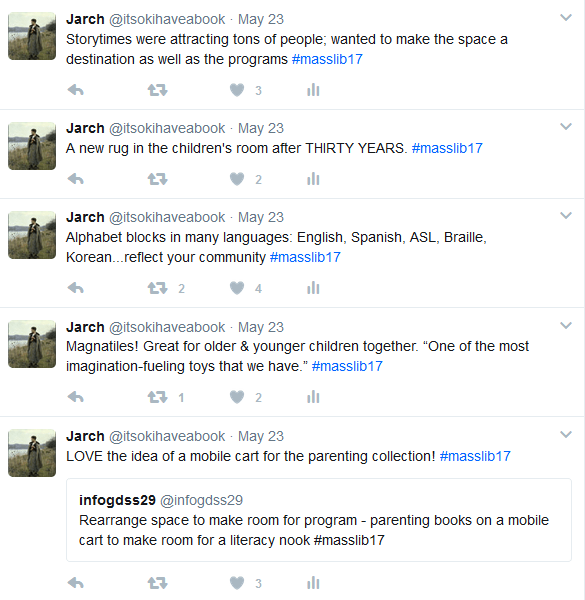
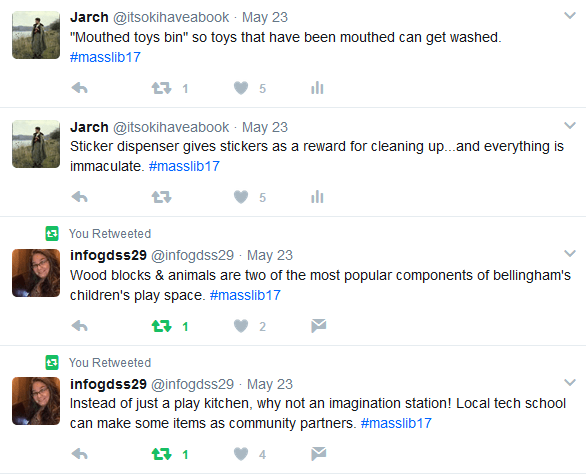
Screenshot of tweet about color maze

Screenshot of tweet about toys and research

Screenshot of several tweets about Mind in the Making

Screenshots of tweets from Mind in the Making session

As the libraries made the changes mentioned above, library staff saw changes in their children’s spaces: parents engaged with their children more, there was less arguing over toys, spaces were less messy because kids were better about cleaning up (“a place for everything and everything in its place” only works if everything has a place).

It’s not enough to get a bunch of new toys – there has to be intentionality. Librarians can model how to make connections between play and learning (for young children, play is learning) so caregivers can do the same.

YA Smackdown

During the “YA Smackdown,” about a dozen of us sat around on chairs and on the floor in one of the unused rooms at lunchtime. Prompts were pulled out of a box and anyone who had something to contribute spoke up. It was “a fun, low-key environment,” as promised. A comprehensive set of notes [PDF] are available from the MLA YSS wiki, so here is just a sample of our discussion from my notes:

Q: What’s the most successful Banned Books Week display you’ve done or seen?

A: (1) Covering book covers with brown paper and writing the reasons the books were banned on them (language, sex, violence, talking animals, etc.); (2) Making new book covers that illustrate the opposite of the book’s title (e.g. David Levithan’s Two Boys Kissing becomes Two Boys Not Touching At All).

Kindness rocks: Be kind. Everyone matters.
I actually found one of the “kindness rocks” a few months ago!

Q: How do you encourage kindness?

A: Model it! Say hello to teens when they enter, goodbye and “hope to see you again soon” when they leave (even/especially if they’re being kicked out). Participate in the Kindness Rocks project, which leaves kind messages painted on stones for people to find. Don’t allow insults (“Did you mean that as an insult? You can’t say it”).

Q: How do you connect teens with community resources?

This can be tricky, but one good idea used by Mattapoiset is to create a binder full of resources in the teen area. They can look through it without checking anything out, and take copies of anything they might need.

Q: What’s your favorite part of the day?

Coffee! No, seriously, readers’ advisory – “let’s go browse” the shelves to find some books. When teens come up to ask questions. Ordering books, receiving and unpacking new books.

Q: Recommended books with good racial/ethnic diversity?

A: The Hate U Give by Angie Thomas, The Upside of Unrequited and Simon Vs. The Homo Sapiens Agenda by Becky Albertalli, the Ms. Marvel graphic novels, The Inexplicable Logic of My Life by Benjamin Alire Saenz, The Lotterys Plus One by Emma Donoghue (for tweens and up), The Sun Is Also A Star by Nicola Yoon, Midnight Riot by Ben Aaronovitch (first book in the Rivers of London series – for older teens and adults).

Step Into Your Office: The Library as a Coworking Space

Susannah Borysthen-Tkacz (Cambridge Public Library), Gregor Smart (Boston Public Library – Kirstein Business Library and Innovation Center), Patrick Yott (Northeastern University Libraries)

Susannah moderated this session, guided by the overarching question “Is coworking a novelty or a profound shift in how we do things?” Statistics indicate that more and more of the workforce is made up of entrepreneurs, “solopreneurs,” and nontraditional workers. How can the library best serve these people?

One type of place we can take inspiration from is paid co-working spaces, like Workbar, which offer physical space (sometimes with 24/7 access), open work space, desks, locking file cabinets and storage space, meeting rooms, phone rooms, mail, a dining area, event space, and access to the other members to create an instant network and encourage “accelerated serendipity.” Co-working spaces aren’t free, though, so many people may choose to work at the library instead.

The library may not be able to offer all of the things that co-working spaces can, but we have one thing co-working spaces don’t: librarians. Most co-working spaces are unstaffed, and don’t offer research help or access to databases or other resources.

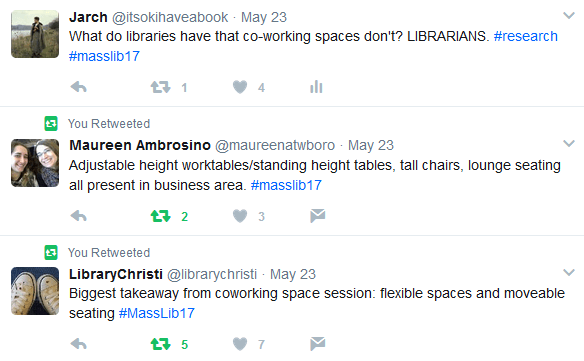
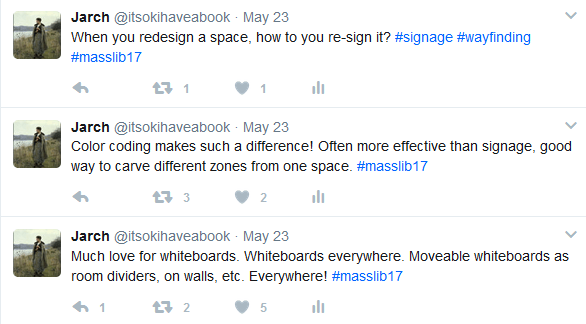
twitter-coworking2

Gregor and Patrick talked about the changes that have been made at Kirstein and Northeastern’s Snell Library, respectively. Gregor said that people want spaces for small meetings, webinars, learning languages, etc; it’s constantly a challenge to meet demand for collaborative workspaces. Both libraries use moveable screens (or, better yet, moveable whiteboards) so people can reconfigure the space as needed. Built-in alcoves are first-come, first-serve, while meeting rooms and work stations (Macs loaded with specialized software like Garage Band, PhotoShop, and Illustrator) can be reserved. Large event space can be rented.

Screenshots of tweets about co-working spaces in libraries

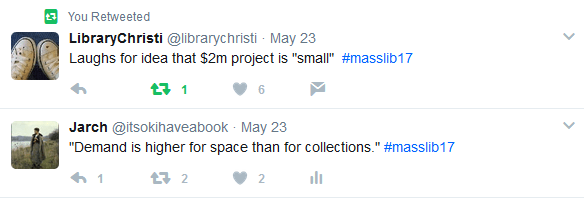
Most libraries won’t have a budget for a major redesign like Kirstein and Snell, but there are ways we can serve those who are seeking space to work solo or collaboratively. In fact, “Demand is higher for space than collections” might be the theme of most of the sessions I attended at MLA this year, from “Transforming Teen Spaces” to “Mind in the Making” to “Step Into Your Office.”

Screenshot of coworking tweets

If there’s any space in your library that is under-utilized (and have you weeded your print reference collection yet??), see if you can carve out spaces with movable screens. If you are buying furniture, make sure it moves too. Consider: is your food & drink policy friendly to people who use the library for long stretches of time? What is your policy on cell phones? (On Wednesday, there was a session about Private Talking Spaces from the Harvard Library Innovation Lab. I am curious to know more!)

That was the last session of the day for me. I enjoyed reading tweets from the other sessions throughout the day and afterward; the conference hashtag was #masslib17 if you want to catch up via Twitter. Did you go to the conference? What were your most exciting/useful/important takeaways?


MLA 2017: Charting Our Course

Conference days are long and tiring, but energizing too: It’s great reconnecting with former colleagues, classmates, and other librarian acquaintances and friends from committee meetings, other conferences, etc., and sometimes putting a face to a name from e-mail or Twitter. (The official hashtag for the conference was #masslib17.) And of course, there are always plenty of new ideas to steal borrow and resources to consult.

This year I made the most of my one day of MLA, starting with an 8:30am session and including the “YA Smackdown” during lunchtime. Without further ado…the recap!

Why Don’t Patrons READ Library Signage? Graphic Design and Libraries

Presented by Larissa Farrell (YA) and Jessica Lamarre (Children’s) from the Duxbury Free Library, and Jed T. Phillips (Tech & User Experience) from the Ames Free Library

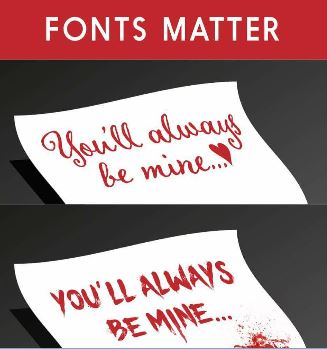
Fonts Matter example "You'll Always Be Mine" in two fonts
From the Duxbury presentation slides. Fonts matter!

This presentation was not about wayfinding signage, but about advertising and PR. Duxbury has a six-person marketing team, including one person from each department; they meet quarterly (at least) for some big-picture discussion, and work together to ensure a cohesive look across platforms (print, facebook, instagram, etc.). They suggested getting a mid-range digital camera that all library staff could use, to ensure a minimum photo quality.

The presenters explained pixels, resolution, file types, and hexidecimal (“hex”) colors, and then shared their favorite sources for free licensed fonts (fontspring.com, fontsquirrel.com) and copyright-free images (pexels.com, Google Creative Commons search, Canva, unsplash.com, pixabay.com, NASA, LOC, NYPL, Smithsonian). Remember, a picture’s worth a thousand words – but not clipart. (“Clipart is not ideal.” “Do not use clipart.”) Images, illustrations, and fonts will all begin to look dated over time, so if your library uses a template, consider refreshing your look every few years.

Screenshot of tweet: avoid comic sans and papyrus

All three presenters use the online design program Canva; libraries can get free business accounts that up to six people can use. In addition to Canva (and Canva Design School), other graphic design programs and software include Microsoft Publisher, Adobe Photoshop or InDesign, and classes through Lynda.com.

In addition to basic technical information and specific software recommendations, the presenters also discussed the principles of graphic design, and recommended Chip Kidd’s book Go: A Kidd’s Guide to Graphic Design, which I also recommend as both an intro and a refresher.

Screenshot of tweet: form after function. Hierarchy.

Additional takeaways: Make your entrance(s) welcoming. Remember that “Where is…?”-type signage can advertise your collections and services, as well as helping people orient themselves and find what they need.

Screenshot of a tweet: Clipart is not ideal.

Transforming Teen Spaces

Presented by Jennifer Forgit from the Cary Memorial Library in Lexington and Katrina Ealy from the Holbrook Public Library

While support for teen collections has grown in many libraries, spaces and programming haven’t necessarily. YALSA policy supports a space that is exclusively for teens (see YALSA’s Teen Space Guidelines). If you don’t have a dedicated teen space in your library, where do the teens congregate? Can you make that their space? Repurpose underutilized space or move things around. (Have you weeded your print reference collection lately? Really, really weeded it?)

In Lexington, Jen was part of a very long process culminating in a major shift that included renovation. “Lots of support means lots of stakeholders”: library director, staff, trustees, Teen Advisory Board (TAB), town facilities department, Friends, Foundation, architect, library patrons & donors. They were ultimately able to move adult fiction upstairs with the rest of the adult materials and create a teen space downstairs, on the same floor as the Children’s department, which made sense to most people: Jen said she encountered less resistance to change than she’d expected.

Both Jen and Kat recommended getting input from teens. Jen advised keeping your teens involved throughout the process: dreaming, planning, decision-making, fundraising, installation. Get them involved early. But don’t make promises you can’t keep. Get feedback on choices you already know are “safe” (e.g. furniture in your price range – but let them pick the color). Furniture and shelving on casters is a great idea, so the space can be reconfigured for different uses.

Screenshot of tweet: Teens love to sit on the floor. Get a cool rug.

Kat works at Holbrook now but presented about her former workplace, the South Yarmouth Library, which is a very small library in an old sea captain’s house. They were able to take over the Friends’ book sale room (“They made about five dollars a week”) to create a space for teens: they stripped old wallpaper and put on fresh paint, got a new rug and some furniture, and added cheap, cute decorations that can be replaced every so often. They didn’t have much of a budget – just enough to cover the rug and furniture – but “small changes can make a big difference.”

Once you’ve designated a teen space, post clear signage: Lexington’s Teen Space sign is about six feet tall and reads, “This room is exclusively for the use of library patrons who are in 6th-13th grade. Others are welcome to get books and other materials from the Teen Space, but please do not linger in the room.”

Advocacy tips:

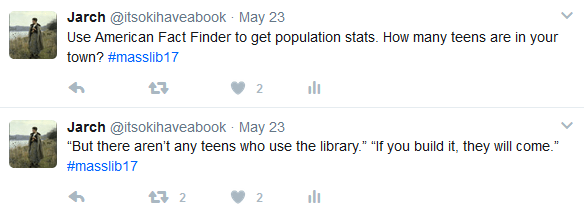
  • You can use American Fact Finder to look up population stats for your town. According to the 2015 American Community Survey, about 22.5% of Arlington’s population is 19 years old or under; nearly 10% are between 10-19 years old. That’s a not-insignificant chunk of the population.
  • The #1 reason teens try drugs is boredom (followed by anxiety and loneliness). We can help with that!
  • If someone objects, “But there aren’t any teens who use the library,” reply, “If you build it, they will come.”
  • Further resources: Teen Spaces: the step-by-step library makeover by Kimberly Bolan; VOYA’s YA Spaces of Your Dreams Collection edited by Anthony Bernier; and the aforementioned Teen Space Guidelines from YALSA.

Screenshot of two tweets about teen population stats from American Fact Finder and "if you build it, they will come"

Slides and notes from the Youth Services Section presentations are or will soon be available at the MLA YSS wiki. (Here is the MLA Conference 2017 link.) Stay tuned for my next blog post(s) on Mind in the Making, the YA Smackdown, and Step Into Your Office: The Library as a Co-Working Space.

Oh – and the Robbins Library Book Cart Drill Team finally won a much-deserved first place award! Watch the video.


MLA 2015: Through the Library Lens, Part II

Here we go, Day Two of MLA! Read about Monday sessions here.

Flexibility in Library Design, or Agile Libraries that Evolve with You, presented by Lauren Stara and Rosemary Waltos of the MBLC and Sal Genovese of the Walpole Public Library (Tuesday, May 5, 8:30am)

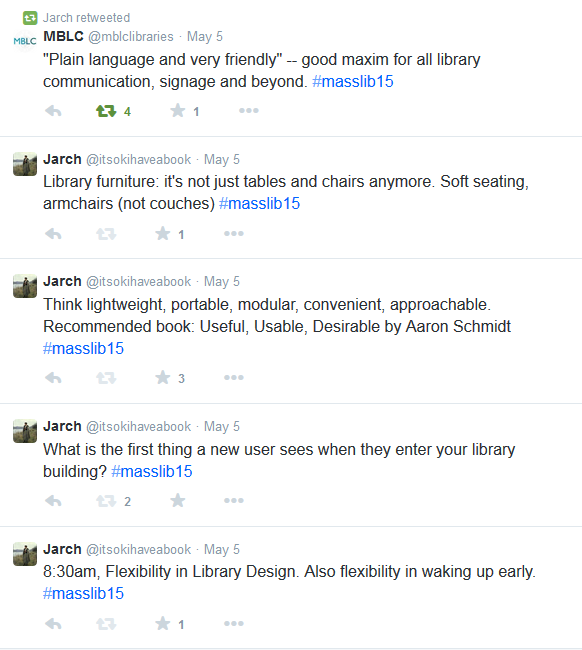
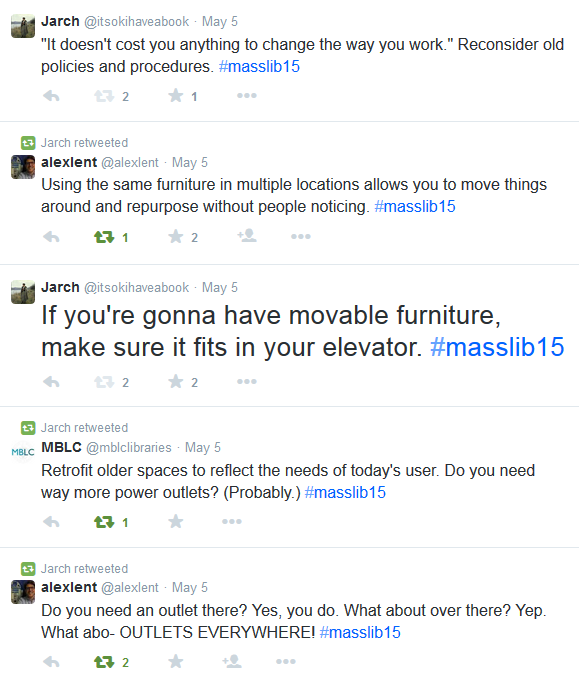
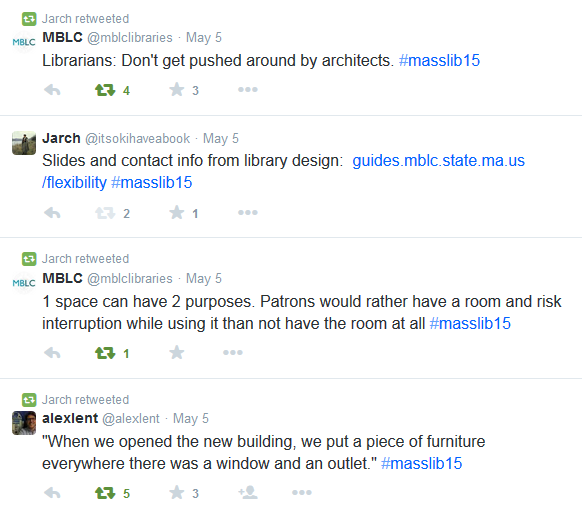
Three cheers for Lauren Stara, who posted her presentation slides online in advance of this session. Check out her slides for lots of great visuals of “lightweight, portable, modular, convenient, approachable” furniture, from service desks to comfy chairs; she included examples from many libraries in the U.S. and Canada. (The presenters’ contact info and a link to several useful Pinterest boards are available through that link as well.) There were tons of tweets during this session (see below), and between those and the slides, I don’t have much to add except that I’m in favor of flexible, adaptable design in libraries and I want to use at least 75% of these ideas right away. Also, I’ve added Aaron Schmidt’s Useful, Useable, Desirable to my ever-growing to-read list.

Screenshot of tweets including What is the first thing a new user sees when they enter your library building?Screenshot of tweets including If you're gonna have movable furniture, make sure it fits in your elevator.Screenshot of tweets, including "When we opened the new building, we put a piece of furniture everywhere there was a window and an outlet."

An Introduction to Fighting Surveillance and Promoting Privacy in Libraries, presented by Alison Macrina of the Library Freedom Project and Kade Crockford of the ACLU (Tuesday, May 5, 9:50am)

I’ve heard Kade and Alison before, but even though most of their presentation was familiar, it’s worth hearing and sharing again – plus I picked up a couple of new tips, as usual. Alison introduced a whole series of online privacy tools, which are also collected on the Library Freedom Project’s resources page.

Libraries can introduce patrons to some of these tools by installing them on public computers, and posting signs to explain the changes and raise awareness about protecting online privacy. The TOR browser is one option (“it’s not just for criminals anymore!”), and the Firefox browser with the DuckDuckGo search engine and HTTPS Everywhere and Privacy Badger plugins is another great choice. (I’m planning to switch from the Ghostery plugin to Privacy Badger, after learning that Ghostery sells information to advertisers – though this is something you can control in your settings if you do have it installed.) Good privacy options (secure texting and phone calls) for mobile phones  can be downloaded from Open Whisper Systems.

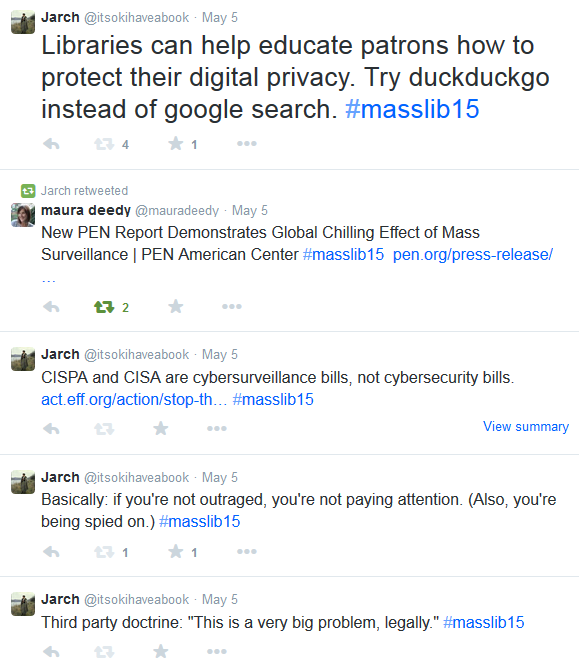
Screenshot of tweets, including Libraries can help educate patrons how to protect their digital privacy. Try duckduckgo instead of google search.

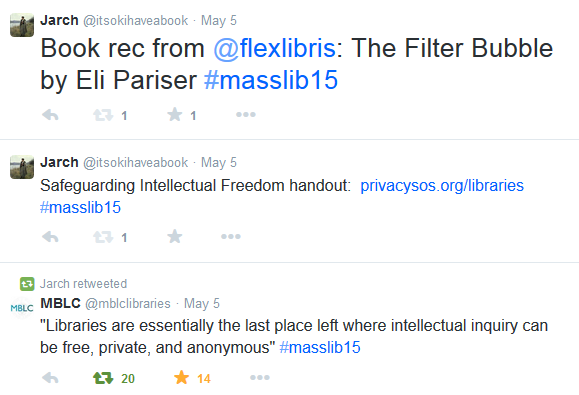
Screenshot of tweets, including Book rec from @flexlibris: The Filter Bubble by Eli Pariser #masslib15

Advocacy and Your Library, with panelists Edward M. Augustus, Jr., City Manager of Worcester; Representative Kate Hogan, 3rd Middlesex, Chair, Public Library Caucus; John Arnold, Town Moderator, Westborough. Moderators: Susan McAlister, Dinah O’Brien, and Beverly Shank, MLA Legislative Committee Co-Chairs  (Tuesday, May 5, 11:15am)

The takeaway point from this session: the importance of building a relationship with local legislators so that your only contact with them isn’t when you’re asking for money. (At the same time, “You are never going to get what you want if you don’t ask for it.”) It’s important for library staff to be involved, and also to encourage library trustees and patrons to advocate for the library; often, a patron’s voice is more persuasive to a legislator than a librarian’s. When librarians do speak on behalf of the library, the focus ought to be “We’re not here to preserve my job, we’re trying to make the community a better place.”

Demonstrating real outcomes for real people, through qualitative (anecdotes, stories) and quantitative (numbers and statistics) evidence, is most effective. Collaborating and building coalitions with other community groups is also helpful; there are many groups and limited resources. That said, libraries do a lot with a little – specifically, with 0.07% of the Massachusetts state budget.

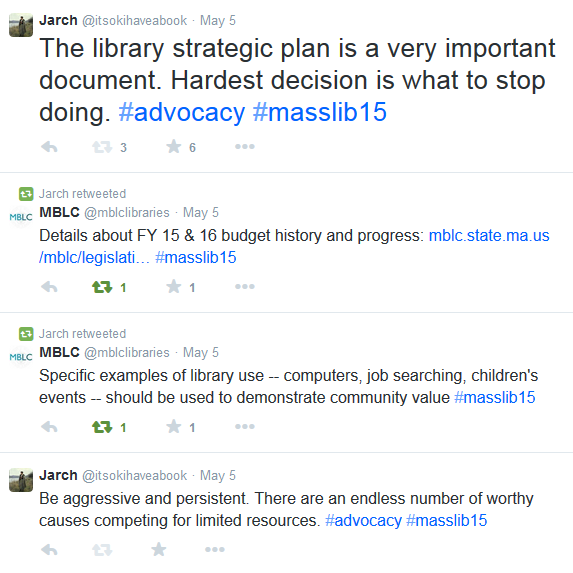
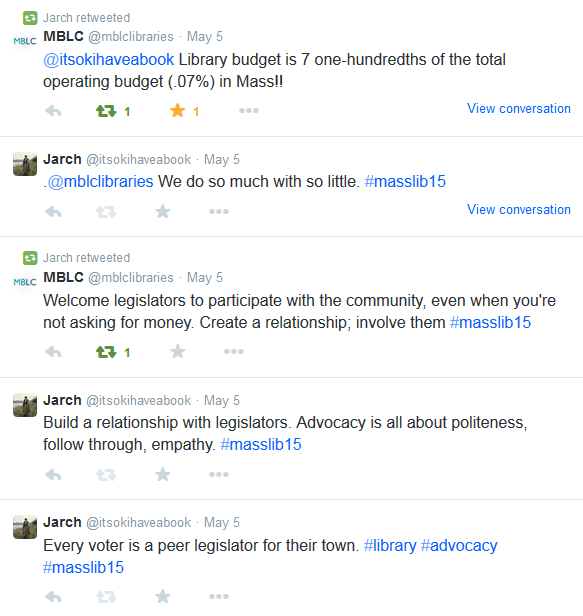
Screenshot of tweets, including Be aggressive and persistent. There are an endless number of worthy causes competing for limited resources. #advocacyScreenshot of tweets, including Library budget is 7 one-hundredths of the total operating budget (.07%) in Mass!!

A Whale of a Good Time: Summer Library Programming for All Ages, presented by Jennifer Harris and Margaret McGrath of the Plymouth Public Library (Tuesday, May 5, 2:30pm)

Attendees had two choices during this session: get inspired, or take your ball and glove and go home, because this was a hell of a summer reading program/community read (“One Book, One Community”). First of all, they got people to read Moby-Dick, which is impressive on its own. Second, they did a massive PR push, with mailings to 25,000 households and visits to all the elementary schools, raising awareness for all ages; high school art students were recruited to help with PR design. Third, they used every last drop of a $3,000 programming budget, spreading programs for all ages throughout the summer. Programs included three book discussions (it’s 600+ pages, folks), concerts on the lawn in front of the library, knot-tying lessons, a mini-readathon, a craft program series for teens, a hard tack tasting (verdict: not tasty), a movie screening, a Melville impersonator, a field trip to the New Bedford Whaling Museum, and visits from two separate inflatable whales.

Key to the success of the Plymouth Public Library program was staff buy-in and great brainstorming sessions, as well as a healthy budget, good planning, and great PR (in addition to the mailings, they were active on Facebook, Twitter, Flickr, and Pinterest, and events appeared in the Boston Globe and on local TV as well).

Our library does a Community Read (Arlington Reads Together) in the spring, separate from our summer reading programs for children, teens, and adults. I’m curious how many other libraries combine their Community Read with summer reading.

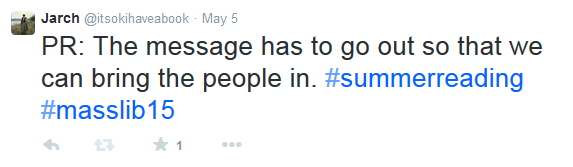
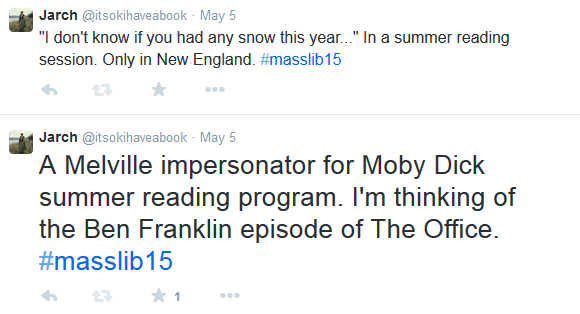
Screenshot of tweet: PR: The message has to go out so that we can bring the people in. #summerreading #masslib15Screenshot of tweet: "If someone doesn't call you back, and you call a few days later and they still don't call you back, move on!" #lifeadvice #masslib15Screenshot of tweets: A Melville impersonator for Moby Dick summer reading program. I'm thinking of the Ben Franklin episode of The Office. #masslib15

RA Toolbox: Staying Alive – Readers’ Advisory Continuing Education, presented by Laurie Cavanaugh of the Holmes Public Library, Nanci Milone Hill of the Parker Memorial Library, Molly Moss, of the Forbes Library, and Leane M. Ellis of the Lucius Beebe Memorial Library (Tuesday, May 5, 4:15pm)

Each panelist in this session had been the recipient of a LSTA grant for readers’ advisory, administered through the MBLC, so each panelist talked about how they’d implemented the grant, as well as how they’d come to be interested (and expert) in readers’ advisory. Molly had a background in science and academic libraries; readers’ advisory was the most intimidating part of working at a public library reference desk for her. She tackled the task and became involved in the Adult Reading Round Table (ARRT) of Illinois. There is now a Readers’ Advisory Round Table (RART) for every region of Massachusetts (Northeast, West, Metrowest, Southeast), and each one has a blog.

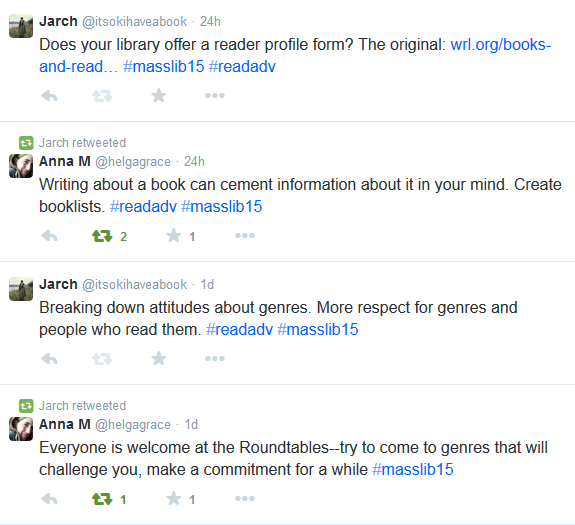
Grant money can be put toward speaker fees, conference fees, materials (books), shelf talker materials (those plastic things that clip on to shelves), staff time, and mileage. Nanci invited Duncan Smith from NoveList to speak to her staff, as well as the Sisters in Crime; Molly invited Barry Trott of the Williamsburg (VA) Regional Library. The WRL was the first library to put a “reader profile form” online; many libraries, including the Forbes in Northampton and the Robbins in Arlington, have adapted the form (with permission) to use on their own websites. Librarians at the Forbes have also done blitz-style RA, asking patrons to post to the library’s Facebook wall with a book they liked, and recommending another book based on that one.

All the panelists talked about genre studies. A typical model includes monthly or bi-monthly meetings where participants read one “benchmark” book in a genre or subgenre, and one secondary selection. This allows for common ground (the book everyone read) and new recommendations. Genre studies can be done within a library, in partnership between two libraries, and through the round table groups across the state. Virtual participants are welcome in the Massachusetts Readers’ Advisory Goodreads group.

Laurie said that readers’ advisory was “customer service in the digital age,” providing a personal touch. Leane, too, said that RA was “public service on a personal level for your readers and potential readers.” Customized forms are just one way to provide great recommendations to patrons; other models include “five to try” booklists, “If you like [author/title, TV show, etc.], you might also like [___],” subgenre booklists, and staff picks lists.

This session concentrated on the LSTA RA grant and implementing genre studies, rather than specific RA tips such as including appeal factors as well as a summary when talking or writing about a book (and no spoilers!). The RA interview was covered in a previous session, RA Toolbox: Conversing with the Reader – the Readers’ Advisory Interview. Additional RA tips and resources are available from MLS. The MLA RA Toolbox handout should, hopefully, be available soon on the Presentations & Handouts page of the conference site.

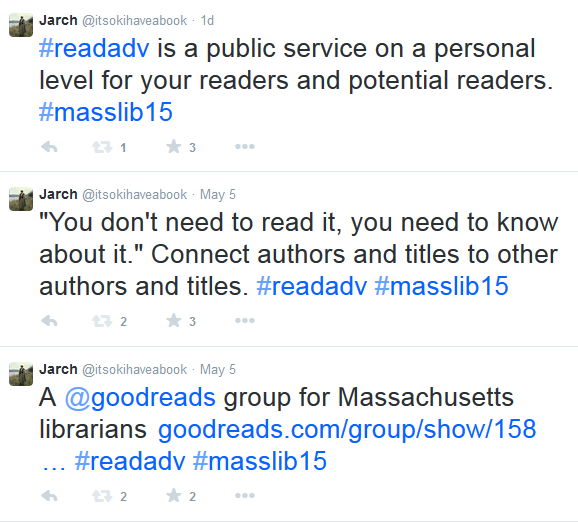
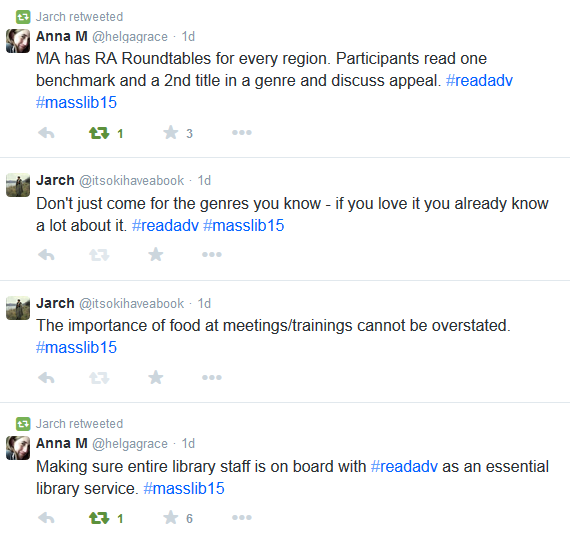
Screenshot of tweets including #readadv is a public service on a personal level for your readers and potential readers.Screenshot of tweets including Making sure entire library staff is on board with #readadv as an essential library service. #masslib15Screenshot of tweets including Writing about a book can cement information about it in your mind. Create booklists. #readadv #masslib15 2 retweets 1 favorite

Overall, a great conference experience that gave me plenty of ideas and resources to follow up on in the coming weeks, plus an opportunity to see friendly faces from grad school, past library work, fellow committee members, and even friends from Twitter.

If you have questions about any of these recaps, or have written your own recaps to share, please ask or link in the comments!


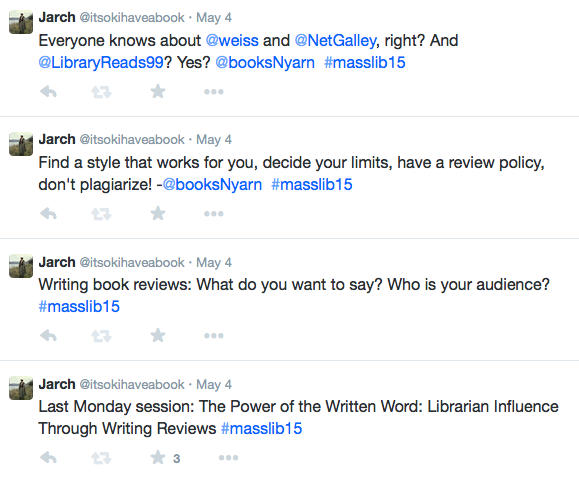
MLA 2015: Through the Library Lens, Part I

Thanks to my library’s wonderful support for professional development, once again I got to attend the Massachusetts Library Association (MLA) annual conference. This year’s theme was “through the library lens,” though none of the sessions I went to specifically addressed what that might mean. (Could it just be a joke about how most of us wear glasses?) (Probably not.) The conference hashtag was #masslib15 and several of us were active on Twitter during the conference.

Throughout my session recaps, I will include links to presentations and slides when possible; most aren’t available online yet, but they should be posted on the presentations & handouts page of the MLA site. (I spoke to a conference organizer about maybe having the materials posted online before the conference started; she said it was hard enough to get the details of everyone’s programs in advance of the conference, getting presentations ahead of time would be next to impossible.)

Bite-Size Learning: Staff Training a Little at a Time, presented by Michelle Filleul, Amy Lannon, and Patty O’Donnell of the Reading Public Library (Monday, May 4, 10:30am)

This session started off with a seven-minute video (“Did You Know 2014“); it’s worthwhile, but I recommend watching it without the sound. The main point is that the world is changing rapidly, especially technology. Libraries can encourage their staff to be “lifetime learners” and create a learner-centric culture by implementing a “bite-size learning” program: each participating staff member gets to spend an hour a week learning something new. This learning is self-directed, internally motivated, goal-oriented, and self-paced; it is relevant to the individual, and is experiential (learn by doing).

Individuals might choose to familiarize themselves with Overdrive or read storytime blogs; they might explore Ancestry.com or take a webinar on any number of subjects. Managers/leaders can start with competency checklists and tailor them to their departments. Staff set specific goals and check in with their supervisor each week to track progress; supervisors participate in the program too. Seeing department heads and directors learn new things sets a good example and breaks down the fear of failure that can accompany trying something out of one’s comfort zone.

A paralibrarian from Reading spoke movingly about how the bite-size learning helped her; she said, “Technology isn’t my thing, but learning is….I don’t want to become a senior citizen who didn’t keep up with technology. I want to communicate with the younger generation on their terms….We have to know how to do these things.” Learning new skills builds confidence in one’s ability to learn, and in one’s ability to help others – a pretty big payoff in exchange for an hour a week.

Screenshot of tweet: Self-directed learning: internally motivated, goal oriented, self-paced, relevant to learner, experiential #masslib15Screenshot of two tweets: Cross-training helps staff better understand and appreciate others' work in the library -and- Bite size learning: Overcome fear of failure, learn something new, increase confidence.

Stealth Reference: Reaching Non-Library Users, presented by Margot Malachowski from the Baystate Health Sciences Library, Anne Gancarz from the Chicopee Public Library, and John Walsh from the Newton Free Library (Monday, May 4, 1:15pm)

“Stealth reference” is a very cool name for what is usually referred to as “outreach.” Margot from Baystate talked about identifying your vulnerable populations, and aligning programs with community needs. She teaches the public directly, taking questions and answering them by mail (five stars for follow-up!), and she also teaches the people who teach the public, like The Literacy Project.

Screenshot of tweet: If a user population isn't using the library, the library may not be serving them effectively.

Anne from Chicopee asked herself, “Who am I seeking? What am I offering?” and asked what motivation potential users had to come to the library. Anne, I suspect, doesn’t sleep much: she has gone into schools, visited homebound patrons, worked with teens, connected to the visually impaired community, gone to the farmers’ market, worked with the sheriff and ex-offenders, and worked with the Council on Aging (COA); there is a bookmobile in her future. Anne suggested collaboration: with town departments like Parks & Rec, the COA, planning boards, and local events. She noticed that program popularity is cyclical; what works one year may not work the next year. “We’re always awesome and helpful,” she said, “but people don’t always know that.” If every library had a Community Services Librarian like Anne, more people would know about all the things libraries have to offer.

Screenshot of tweets and RTs, including "Any opportunity to discuss your library gives you the opportunity to engage your community of potential library users"

Last but not least, John also talked about leaving the library building, going where the people you want to be users are, and showing them what they’re missing. “They don’t know they want things” or they don’t think the library has them. He recommended contacting businesses in the area; even chains like Starbucks and Whole Foods sometimes have community relations people who may be eager to help. Bring some handouts with you, he advised, but those handouts should be immediately useful – a calendar of events, a link to the digital media catalog, etc.

One of the challenges libraries face with outreach efforts – assuming that library leadership supports it – is finding the time for staff to leave the building. Many public libraries are short-staffed, and most won’t consider leaving the reference desk unattended while librarians are at the farmers’ market, the high school, or the senior center. Off-desk hours are precious too – that’s when we order books and other materials, plan programs, create booklists and displays and flyers and a hundred other things – but starting small is better than nothing at all.

Connecting the Dots of Internet Freedom: The Future of Free Speech, presented by Evan Greer from Fight for the Future (Monday, May 4, 2:45pm)

Like many privacy advocates, Evan is an impassioned speaker. She concentrated on four modern threats to freedom of expression on the Internet: (1) attacks on Net Neutrality, (2) mass surveillance, (3) overzealous copyright enforcement, and (4) secretive trade deals, e.g. the Trans-Pacific Partnership (TPP). Her presentation was both entertaining and convincing, though I suspect the people in attendance were convinced before they showed up. I tweeted throughout this session; see below for tweets and additional links.

Screenshot of tweets, including Net Neutrality is the First Amendment of the Internet. Slowness equals censorship. Screenshot of tweets, including PEN America report on chilling effect of mass surveillance:  http://pen.org/global-chill  #masslib15Screenshot of tweets including TPP will export US copyright law to the rest of the world - minus Fair Use. Congress loves phone calls https://www.stopfasttrack.com/ Links:

Power of the Written Word: Librarian Influence Through Writing Reviews, presented by Kristi Chadwick of the Massachusetts Library System, Rebecca Vnuk of Booklist, and Nanci Milone Hill of the M.G. Parker Memorial Library in Dracut (Monday, May 4, 4:00pm)

Rebecca, Kristi, and Nanci all gave general advice about writing reviews as well as specific tips for which publications are looking for reviewers and whether or not they pay (mostly they don’t, but book reviewing shows engagement with the profession and looks good to potential future employers, etc.). They also talked about how they got started; they all “fell into it” (but only if “falling into it” means seeking out and creating opportunities for writing reviews and honing their blogging skills).

Rebecca (Shelf Renewal) talked about some of the standard review publications – Library Journal and SLJ, Booklist, Kirkus, VOYA – and their different style guides. Find your voice: is it conversational or formal? Figure out what you want to say and who your audience is. Incorporate readers’ advisory aspects (e.g. appeal factors) into your reviews, and a sense of humor. If you do get your reviews published in one of these sources, cut out your printed review and compare it to what you submitted, line by line; this will improve your reviews. Take cues from existing blogs and websites, and practice writing reviews on Amazon, Goodreads, or LibraryThing.

Kristi’s advice: find your review style, decide your limits, have a review policy, and don’t read other reviews of the book you’re reviewing (beware unintentional plagiarism). Identify the hook, the who/what/when/where/why, who the book will appeal to, and of course…no spoilers! Get e-galleys through NetGalley and/or Edelweiss and submit reviews to LibraryReads.

Screenshot of tweets, including Writing book reviews: What do you want to say? Who is your audience? #masslib15 -and- Find a style that works for you, decide your limits, have a review policy, don't plagiarize! -@booksNyarn Nanci suggested getting involved with your local Readers’ Advisory Round Table (every region of Massachusetts has one), and mentioned a few less obvious candidates for would-be reviewers and writers: NoveList, Public Libraries magazine, Bookmarks magazine, ALA Editions, the Massachusetts Center for the Book, and your local newspaper. Creating readers’ advisory materials for your own library is good practice too: shelf talkers (“If you like ___, try ___”), author and title readalikes, appeal readalikes, “five to try” (genre suggestions), etc.

As usual, presenters mentioned so many good resources and opportunities that follow-up will take me the next several weeks. And this was just day one – stay tuned for day two.