It’s now been nearly ten weeks since my library closed due to the spread of coronavirus, but people in both of my departments (children’s services and adult services) have been doing plenty of work from home. One early request from a department head was that we find one webinar of our choice each week to “attend” and share notes with the rest of the staff. Here are brief summaries and takeaways of some of the webinars and programs I’ve attended/watched over the past couple months – maybe they’ll be useful to you as well.
*
“READ WOKE: 5 Ways to Identify a #ReadWoke Book—and 3 #OwnVoices Authors to Diversify Your Collections,” Cicely Lewis, School Library Journal, October 23, 2019
Cicely Lewis, who started the #ReadWoke movement, introduced and moderated this panel of three authors: Kao Kalia Yang (A Map Into the World), Melanie Gilman (Stage Dreams), and NoNiequa Ramos (The Truth Is).
Read Woke books:
- Seek to challenge the status quo
- Have a protagonist from an underrepresented or oppressed group
- Challenge a social norm
- Give voice to the voiceless
- Provide information about a group that has been disenfranchised
The #WeNeedDiverseBooks movement was cited, as well as #OwnVoices (“stories about diverse characters written by authors that are a part of that same diverse group”).
Author quotes:
- Yang: “Want to write about things that matter. Write the kind of books that kids can grow up/old with. Books that make the world a more beautiful place.”
- Gilman: “It’s important for everyone to have access to their own history.” (Not the whitewashed version in textbooks)
- Ramos: “Our whole society is built with white supremacy and systemic racism in place…homophobia….those things leak into everything.”
- Gilman (re: school librarians worried about pushback): “Do you value the lives of the children who are going to be looking for books like this in your collection? Do you value the responsibility of libraries to have a book for everyone who walks through that door?”
Article: “‘Read Woke’ School Reading Challenge Makes an Impact,” Cicely Lewis, School Library Journal, March 29, 2018.
After this webinar, I developed a “Read Woke” middle grade book list for the library blog, and worked together with our teen librarian to put together a “Read Woke” book for teens as well.
*
Libraries and COVID-19: Providing Virtual Services, American Libraries Live, March 26, 2020, with Jason Griffey, Francisca Goldsmith, David Lee King, and Lindsey Gervais
I didn’t keep close track of who said what during this webinar, but here are the main takeaways:
- Don’t worry about fully replicating the experience of being in the library….any service you can provide is incredibly appreciated by the public…. Don’t try to be perfect…just meet your patrons where they are. Remember, we’ve been providing “virtual reference” by phone (and e-mail and chat) for ages!
- Make use of existing resources. Where do you already have an online presence? What digital resources do you already offer that you can advertise heavily now (e.g. databases, Overdrive/Libby, hoopla, Ancestry, etc.)
- Check other libraries’ websites to see what they are prioritizing and how they are communicating; consider having an FAQ on your landing page (e.g. “What do I do about overdue materials?”)
- Best practices for managing staff collaboration when many are working remotely? “Reset expectations.”
- Ask: What are your patrons’ needs? What is the easiest and simplest way to reach them?
- What about patrons who don’t have access to computer/internet/phone? Leave library wifi on so people can use it from outside; lend out hotspots if you can; partner with local radio and TV stations.
- How is virtual reference different from in-person reference? It’s harder to remember to be open-ended in our initial inquiries. (Figure out what they actually want to know, not what you first think they want to know.) There is less personal connection when you can’t rely on eye contact, body language, tone of voice. Be more tolerant. People might be more frustrated, having already done some online searching. Communicate when it may take you some time to answer a question. Use a variety of formats to reach your patrons.
*
SLJ Middle Grade Magic: A Virtual Event Dedicated to Middle Grade Literature, School Library Journal, April 8
Twitter: #middlegrademagic
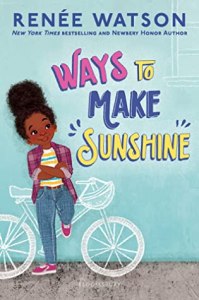
1pm Lunch keynote: Renee Watson, Ways to Make Sunshine
Renee Watson is a captivating speaker who grew up in Northeast Portland (OR) and was a reader and writer from an early age. She said that “magical spaces that nurtured me” included the library, her neighborhood, and the theater, and said, “Miracle and magic come out of desolate places…it’s a realistic thing to dream big.”
Watson said, “The work we are doing as librarians and writers and educators makes a difference, you don’t always know [the impact you’ll have],” mentioning the teacher who encouraged her to keep a journal in second grade, and the teacher who produced a play she wrote in eighth.
I really enjoyed two of the author’s previous novels (Piecing Me Together and Some Places More Than Others) and am looking forward to this one, when I can get my hands on it.
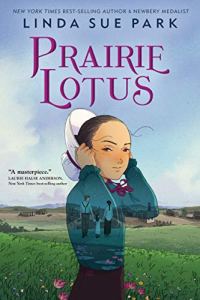 4pm Closing Keynote: Linda Sue Park, Prairie Lotus
In Prairie Lotus, Park wrote a book for herself as a young girl, reading the Little House on the Prairie books and wishing she could see herself in them. But she began her talk by showing illustrations of characters knitting in picture books: some were holding their knitting needles in a way that would have made it impossible to knit, while others were holding them correctly. Though it’s a small thing, “I still think it matters….because these pictures show, to me…that knitting isn’t important. It’s not important to get it right. And that feels disrespectful….They could have gotten it right (as Christian Robinson does) if if mattered to them.” And then she did a Brilliant Teacher Pivot and said, “This is just about knitting – but what if it’s about your culture? What if people don’t care enough to get it right with those kind of things?….Then you’re in the kind of territory where a book can actually harm a reader.” Though it’s not possible to get everything right, “We have a responsibility to try.”
(Let me just say, if I was a student, and a teacher started a class this way, I would be hooked. I would take every class they offered for the next four years.)
Park talked about “The danger of the single story,” the title of Chimamanda Ngozi Adichie’s TED Talk. She said, “The essence of Prairie Lotus for me is to try to dismantle the single story of that era of history.” In historical fiction, first question is, “Who else was there?” (Gilman also raised this point in the ReadWoke presentation.) The single story “is easier. It’s easier to tell that single story….The real story is more complex, more difficult, it takes more time. And it is worth every minute of that time.”
*
Libraries and COVID-19: Considering Copyright During a Crisis, American Libraries Live, April 3, with Lesley Ellen Harris, Jill Hurst-Wahl, and Kenneth D. Crews
I attended this webinar mainly because I was interested in what they’d have to say about public libraries offering virtual storytimes and read-alouds. They did discuss that – as well as getting students and teachers access to materials – but because of the nature of Fair Use, they didn’t offer hard-and-fast rules. Instead, they suggested (1) documenting all decisions you’ve made so far and that you make going forward; (2) applying Fair Use principles consistently; (3) being in touch with the library director and Board of Trustees; (4) using public domain, Creative Commons, and open access materials instead of copyrighted works whenever possible; and (5) keeping careful records – we will be looking back on this in the future.
- “Now is a time to think about copyright but not obsess about copyright.”
- “Make your decisions today with a view to how you’re going to reflect back on them.”
My take: Most publishers have relaxed their copyright restrictions temporarily, and have put forward specific ways their copyrighted materials can be used. (Here is the SLJ COVID-19 Publisher Information Directory.) Overall, they seem to prefer a closed platform (such as teachers may have in place with their students already), but realize that that may not be possible, so they generally allow posting to public platforms as well, if the material is taken down after a certain period of time, and if they’re notified by e-mail and/or tagged on social media.
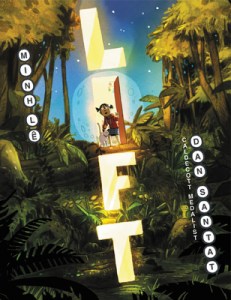
Authors want their books to be read and shared during this time, and publishers are highly unlikely to sue libraries for putting storytimes online while most of the country is under some version of a stay-at-home order. (Personally, I bought a copy of Minh Le and Dan Santat’s lovely picture book Lift from one of our local independent bookstores after my daughter and I watched Santat read it online the week before it came out. Book sales seem to be doing pretty well right now.)
*
Demo & Overview of Beanstack Mobile App and Web Service: “Make a Splash with Project Outcome: Measuring the Success of Summer Reading Programs,” April 13
This was a quick, thorough demo of how the Beanstack platform can be used for summer reading programs through the library. Different programs can be set up for children, teens, and adults; in keeping with library privacy values, minimal information (name and age) is required (the library can choose to add additional fields). Participants earn badges throughout the program, for books read and activities completed; the library can award prizes or have it just be for fun. Patrons can print their reading logs if they wish. There is also an “offline reader” mode.
Beanstack seems easy to use for both staff and patrons, and they claim to be “obsessed with [customer] support!” It can be used throughout the year for other challenges as well, such as 1000 Books Before Kindergarten or winter/spring vacation reading.
*
“Supporting Family Literacy While #SocialDistancing,” Mackin, April 30, with Jennifer Plucker, Deidra Purvis, and Greta Schetnan
The intended audience for this webinar was classroom teachers, but there were important takeaways for children’s librarians in public libraries as well. Classroom teachers have established relationships with students and parents, and a direct channel of communication (one hopes), but in terms of providing access to resources, public librarians can help prevent “summer slide” as well.
COVID-19 presents new challenges: increased time away from school and the “faucet” of resources; increased stress; the opportunity gap (some families have internet access and enough devices, others don’t); separation from support systems; and an exacerbation of existing inequality.
Just as classroom teachers and school librarians can, public librarians can provide access to “high-interest titles that serve as windows and mirrors,” and communicate with caregivers that they are their children’s first teachers. Literacy doesn’t come only from reading, but also from talking, singing, writing, and listening; many everyday activities (like cooking and baking) can build literacy skills.
Finally, though, “Time spent reading is the biggest predictor of reading achievement.” Ensuring access to high-interest books is paramount if we are to grow a generation of readers.
*
“Form-Based Readers’ Advisory: When Your Readers (and Staff) Are At Home,” NoveList, April 29, with Angela Hursh (NoveList), Melissa Andrews (Boston Public Library), Monique Christian-Long (Dallas Public Library), and Kristy Lockhart (Weymouth Public Library)
Three public librarians spoke about the personalized, form-based readers’ advisory services their libraries offer. Each has a different brand (Shelf Service, #DPLWhatsNext, BookMatch) and a slightly different process, but all three use a LibraryAware template/newsletter to send results to people who use the service (LibraryAware and NoveList are both EBSCO products).
Form-based RA is a great service to offer while the physical library building is closed; patrons get a personal touch, which is extra appreciated in these times, and librarians can make sure that the titles they recommend are available as ebooks or digital audiobooks. Though it wasn’t mentioned, I believe that the Williamsburg (VA) Public Library reader preference form was the original model for these libraries’ forms. (It is long and thorough, and can only be used by library cardholders.)
One of the most important questions is the first one an in-person readers’ advisory interview is likely to lead off with: What are some books/authors you love (either recently, or all-time favorites)? When sending suggestions back, include an explanation for “why we thought you’d like this title” – make a connection with something they wrote on the form.
With or without LibraryAware, form-based RA is something most libraries can offer, tailoring the variables (see below) to suit their capabilities and patrons’ wants/needs. Consider:
- The number and type of questions on the form
- Which questions are required and which optional; is the form open to anyone, or only cardholders?
- Turnaround time (how long between a patron submitting a form and receiving a response? One week is good)
- How many titles are suggested (usually between 5-10)
- How many library staff will answer the forms (is there a strict rotation, does it depend on current workload or RA strengths?)
- How is the form built? How are the replies generated? LibraryAware is one option, but a Google form and e-mail work too
- How will you advertise this service? How will you handle “surges”?
I loved answering these forms at my last library, and my current library is about to launch this service too.
*
“Trivia Pursued Remotely: Hosting Online Trivia Contests in a Time of Social Distancing,” Massachusetts Library System, May 12, presented by Mikaela “Miki” Wolfe of the Sharon (MA) Public Library
Ingredients for a successful trivia night: host, technology, content, audience.
Host: Miki was already hosting in-person trivia nights quarterly at the Sharon Public Library; now she is offering virtual trivia twice monthly, on Saturdays at 8pm, to give people a fun way to “hang out.”
Technology/gameplay: Miki said that the transition from in-person to online was fairly easy; they use the presenter view in Zoom to share slides with questions. The chat feature is used for questions and comments, NOT for answers; teams self-score(!) and a designated person from each team reports their score in the chat at the end of each round.
Content: There are three rounds, with 15 questions per round (one per slide), plus a picture round and some bonus content. Miki creates most of her questions from scratch (she generously shared years’ worth of questions), and while she recommended a few trivia sites to find questions, she warned against trusting what you find online – it’s always wise to cross-check. She also varies the difficulty of the questions.
Audience: Audience feedback is key to make sure the audience returns! (They had 50+ people at each virtual trivia event so far.) Each registered participant receives a survey, which can be shared with teammates.
*
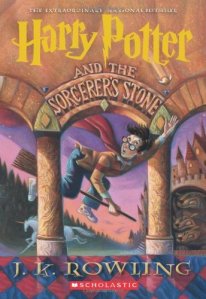 Harry Potter Trivia, Arlington (MA) libraries, May 13
Luckily, the day after Miki’s presentation, I got to attend a virtual trivia event through my town’s library – also using Zoom, also having participants self-score. It was low-key and fun, and with 10+ participants, there was room for casual chat (all related to Harry Potter). Fox Branch Manager Amanda Troha ran the event; she started by “sorting” participants into Houses by pulling slips of paper out of a hat – a great way to start while waiting for those who show up a few minutes late.
There were three questions per slide/round, and there were eight rounds, plus two picture rounds. Each slide of three questions was followed by an answer slide. The program lasted about an hour, and at the end, Amanda asked the participants (mostly kids/tweens) if they’d liked it, would they come again, were there other things they’d want trivia about? (Yes; yes; Star Wars, Disney, Marvel superheroes, Percy Jackson, Keeper of the Lost Cities, etc.)
After hearing about and experiencing virtual trivia with self-scoring, I am a convert! I’ve already started to work on shifting our planned Harry Potter trivia for late July from an in-person to an online event.
*
Are you a librarian working from home? Have you attended any webinars you’d recommend? Read any fantastic articles? Please share!
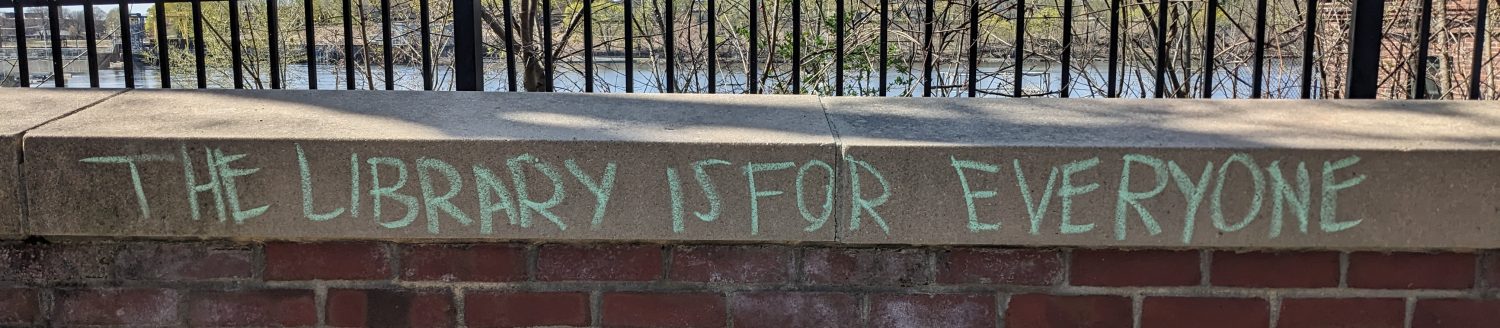
 Uniting against book bans tied in nicely to William Adamczyk’s update from the MLA Legislative Committee. There was a hearing on Monday, October 30 that was relevant to several different library interests (you can watch it here), including library access to e-books and digital audiobooks, freedom to read, and protection against book bans. MLA has been working closely with MSLA and with EveryLibrary to have a funded, effective school library program and a licensed school librarian in every school in the commonwealth (see “The Top 5 Reasons for having a Licensed School Library Teacher in Every School“). The Massachusetts Teachers Association (MTA) is in full support of this effort. Another goal is for the MA Department of Elementary and Secondary Education (DESE) to designate a school library point person – someone who understands the importance and value of librarians in schools.
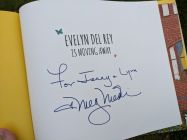 After lunch, it was time for MEG MEDINA! Yes, she’s caps-lock-worthy: she’s the National Ambassador for Young People’s Literature, a faculty member of the Hamline MFA program, and the author of Merci Suárez Changes Gears, which won the Newbery Medal in 2019. She has written two sequels to Merci, as well as picture books Mango, Abuela, and Me; Tía Isa Wants A Car; and Evelyn Del Rey Is Moving Away. Most recently she has contributed to Chelsea Clinton’s She Persisted series of biographies, with entries on Sonia Sotomayor and Pura Belpré.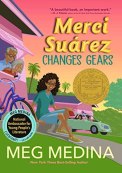
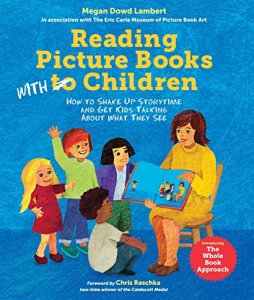 Megan Dowd Lambert presented a webinar on the Whole Book Approach through the Massachusetts Library System last month; I heard about it from Rhonda Cunha, the speaker at January’s Youth Services Interest Group meeting (more on that soon), and carved out time to watch it recently. Megan’s presentation was excellent, and I’m planning to read her book as well (Reading Picture Books with Children, Charlesbridge, 2015). Here are some highlights from her introduction to the Whole Book Approach in the MLS webinar.


 Jenny Arch