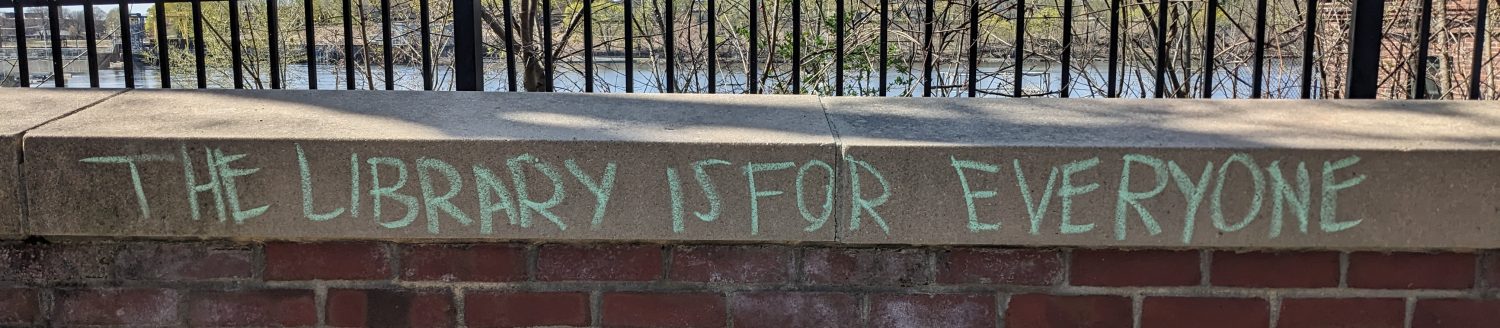
How reading shapes us

For many years I have loved this quote: “It’s what you read when you don’t have to that determines what you will be when you can’t help it.” I’m not sure where I first heard it, but it was attributed to Oscar Wilde. However, I’d never found an original source – it’s not in Dorian Gray or The Importance of Being Earnest – and somehow it didn’t quite sound like him. I searched online again recently and found this Quote Investigator piece from 2019, which gives a more likely source (Unitarian minister Charles Francis Potter) and explains how the mix-up occurred: Potter and Wilde each had a quote attributed to them in the “Reading” section of The Macmillan Book of Proverbs, Maxims, & Famous Phrases.

I was able to request the 1965 reprint of this nearly 3000-page book from my library system and see for myself on page 1939:
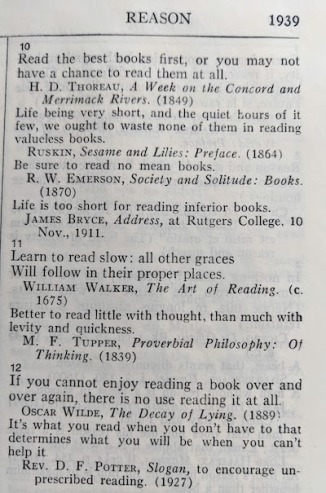
section of page 1939 of

“If you cannot enjoy reading a book over and over again, there is no use reading it at all.” -Oscar Wilde, The Decay of Lying (1889)

“It’s what you read when you don’t have to that determines what you will be when you can’t help it.” -Rev. D.F. [sic] Potter, Slogan, to encourage un-prescribed reading (1927)

So there we have it – the likely origin of the mis-attribution. But why is this quote important, and what does it mean? There’s also the poetry and rhythm and repetition of it; it’s almost iambic. But I think it’s stuck with me all these years because I didn’t completely understand it when I first heard it; of course, I heard it out of context, and the context helps.

Potter was urging students to read more than just what was assigned to them, to go above and beyond. Our assigned reading may not truly interest us; we’ve all had the experience of re-reading a paragraph several times without really absorbing it. As Samuel Johnson writes, “What we read with inclination makes a much stronger impression. If we read without inclination, half the mind is employed in fixing the attention (Boswell, Life, 1777, quoted on page 1938 of Macmillan).

What Potter seems to be saying is that what you read in your free time determines what kind of person you will be. And I think these days we can expand the definition of “read,” or at the very least include all kinds of reading/listening/watching: car manuals, political podcasts, history books, sung-through musicals, fairytales, cookbooks, how-to books, game instructions, long e-mails from school superintendents, nonprofits’ annual reports. Everything we read, or consume, makes us what we are – or put another way, “you are what you eat.”

Some more quotes on reading from The Macmillan Book of Proverbs, Maxims, & Famous Phrases:

Some read to think,–these are rare; some to write,–these are common; and some to talk,–and these form the great majority. (C.C. Colton, Lacon, Vol. ii, No. 9, 1820)

To read a book for the first time is to make the acquaintance of a new friend; to read it a second time is to meet an old one. (S.G. Champion, Racial Proverbs, p. 351, 1938, A Chinese proverb)

It is a tie between men to have read the same book. (R.W. Emerson, Journals, 1864)

‘Tis the good reader that makes the good book. (Emerson, Society and Solitude: Success, 1870)

Reading is the best medicine for a sicke man, the best musicke for a sadde man, the best counsel for a desperate man, the best comfort for one afflicted. (John Florio, Firste Fruites, fo. 52, 1578)

640px-Bates_Hall_-_Boston_Public_Library
Bates Hall, Boston Public Library. By Hari Krishnan – Own work, CC BY-SA 4.0, https://commons.wikimedia.org/w/index.php?curid=74145423

The Queen of Dinner Parties: in which I discover The Yale Book of Quotations

yalebookquotationsThe Library Link of the Day for September 30…you know, I’m having trouble even putting into words how delighted I was to read it (“Who Really Said That?” by Corey Robin in The Chronicle of Higher Education) and to find, as a direct result, The Yale Book of Quotations on the library shelf. I have always collected quotes – from books, from songs, from anywhere really. I am a magpie, and quotes are my shiny objects.

How, then, did I not discover The Yale Book of Quotations previously? I do not know. But needless to say that when I did find it, browsing through it was a purely joyful experience. (Book nerd. Yes. That has been established.) At last, I could find out whether Oscar Wilde’s last words really were “Either that wallpaper goes, or I do.” (Close enough: “Decidedly one of us will have to go.”) I could verify the wording of Clarke’s Third Law (“Any sufficiently advanced technology is indistinguishable from magic”) and discover that he also said, “How inappropriate to call this planet Earth when it is clearly Ocean” (1990).

I could be indignant that the lyrics of Eminem’s “My Name Is” and “The Way I Am” were included nearly in full, but there was only one quote from The Princess Bride (“Life is pain…anybody that says different is selling something”). Incidentally, you’d have to know that William Goldman wrote the book (and the screenplay) to find the Princess Bride quote, because the contents are organized alphabetically by author last name. (Would anyone look under Morgenstern, I wonder?)

For anyone who believes, as I do, that correct wording is important, and correct attribution is equally important, The Yale Book of Quotations is a goldmine. (“Oh, you’re going to be the queen of dinner parties,” my husband said when I bombarded him with my new discovery. “You won’t be able to take me anywhere,” I agreed.) With over 12,000 quotes in 851 pages (plus a keyword index that brings the total page count to 1067), this is one of those times when a book might just be better than the internet. Here are a few of its many gems:

“Mother told me a couple of years ago, ‘Sweetheart, settle down and marry a rich man.’ I said, ‘Mom, I am a rich man.'” -Cher, 1995

“When Tolstoy wrote that all happy families are alike, what he meant was that there are no happy families.” -Susan Cheever, 1991

“What America does best is to understand itself. What it does worst is to understand others.” -Carlos Fuentes, 1986

“Diplomacy is to do and say / the nastiest thing in the nicest way.” -Isaac Goldberg, 1927

“Gentlemen, include me out.” -Samuel Goldwyn, 1933

“You lose more of yourself than you redeem
Doing the decent thing.” -Seamus Heaney, 1984

[J. Cheever Loophole, played by Groucho Marx, speaking:] “I bet your father spent the first year of your life throwing rocks at the stork.” –At the Circus (motion picture) (1939) Screenplay by Irving Brecher.

[Responding to a fan’s request that he autograph a school chemistry book:] “Sure thing, man. I used to be a laboratory myself once.” -Keith Richards, 1994

[On looting after the fall of Baghdad:] “Stuff happens!” -Donald Rumsfeld, 2003

“A rattlesnake that doesn’t bite teaches you nothing” -Jessamyn West, 1979

“I myself have never been able to find out precisely what Feminism is: I only know that people call me a Feminist whenever I express sentiments that differentiate me from a doormat or a prostitute.” -Rebecca West, 1913

“It was in dealing with the early feminist that the Government acquired the tact and skillfulness with which it is now handling Ireland.” -Rebecca West, 1916

[Mother:] It’s broccoli, dear.
[Child:] I say it’s spinach, and I say the hell with it.
-E.B. White, New Yorker cartoon caption, 1928

“Our deepest fear is not that we are inadequate. Our deepest fear is that we are powerful beyond measure. It is our light, not our darkness, that most frightens us.” -Marianne Williamson, 1992 (frequently misattributed to Nelson Mandela)

I also wrote about this article and book on the Robbins Library blog.