About halfway through 2019, I’ve already read most of the books on my Top Ten Books to Read in 2019 list. The exceptions are Karen Thompson Walkers The Dreamers, which I heard mixed reviews about from friends and may not read; The Starless Sea by Erin Morgenstern, which I’m still incredibly excited about but which won’t be published till November; and The 57 Bus by Dashka Slater. (City of Girls just came out and is at the top of my pile at the moment.)
- Bowlaway I liked, but didn’t love as much as McCracken’s last collection of stories, Thunderstruck. I still went to her reading and Q&A at Porter Square Books, though (the write-up to that is still sitting in my drafts folder from February).
- Feel Free by Nick Laird I picked up ahead of the US pub date, at No Alibis in Belfast, Northern Ireland, which felt like a sneaky victory (one that only book nerds would care about).
- Kid Gloves by Lucy Knisley was excellent. She tells the story of her two miscarriages and traumatic delivery, and woven into her personal story are equally enlightening/horrifying facts about the history of childbirth and the current state of maternal health in the US.
- On the Come Up by Angie Thomas neatly sidestepped the “sophomore slump” (after The Hate U Give) and was excellent. “Unarmed and dangerous, but America, you made us, only time we famous is when we die and you blame us.”
- Darius the Great Is Not Okay by Adib Khorram was good, and it’s a rare YA novel (a rare English language novel, really) that takes place even partly in modern-day Iran and addresses depression and friendship between boys.
- The Poet X by Elizabeth Acevedo: I listened to the audiobook (the author reads it) and it was incredible. Absolute, top-quality novel in verse. I read her With the Fire On High also (in print) and loved how it showed Emoni balancing everything in her life and making decisions about her future.
- Walking Home by Simon Armitage: Enjoyed this, but glad I didn’t foist it on my book club. Would definitely recommend to fans of Bill Bryson’s A Walk in the Woods. “Distance, I’ve come to realise, is not the determining factor in terms of travelling time – it’s all about terrain.“
- Get in Trouble by Kelly Link: Can’t believe I didn’t read this as soon as it was published. I love her particular brand of speculative weird. “It’s a small world, after all. Bigger on the inside.”
- Tenth of December by George Saunders: Many of these stories were speculative as well, and dealt with themes of extreme inequality, and were kind of depressing.


So what about the second half of the year? There’s still plenty to look forward to!
- Confessions of the Fox by Jordy Rosenberg: I’m going to try to get my book club to read this one so we can discuss.
- The Season of Styx Malone by Kekla Magoon: Nominated for the Coretta Scott King award and an ALA Notable Book for Children, I’m thinking of trying this as an audiobook.
- The 57 Bus by Dashka Slater: Still on the list.
- The Sixth Extinction by Elizabeth Kolbert: I know it’s not going to be cheerful, but a fellow reader recommended it, and I’m interested. Also an ALA Notable Book.
- Big Sky by Kate Atkinson: I loved Case Histories, but felt like each successive Jackson Brodie novel dropped off a bit in quality; however, I love her stand-alones and I’m willing to give Brodie another go. Reviews are pretty good. (June)
- Time After Time by Lisa Gruenwald (June): I am a sucker for time travel and I got a galley of this through LibraryThing.
- Ask Again, Yes by Mary Beth Keane (June): Adored her two previous novels, Fever and The Walking People.
- The Dutch House by Ann Patchett (September): Ann Patchett! (Her first picture book, Lambslide, is excellent also. Just in case anyone was under the drastically mistaken impression that she was a one-trick pony.)
- The Secret Commonwealth (Book of Dust, Volume 2) by Philip Pullman (October): Beyond excited for this; I’m taking a vacation day the day it’s published.
- Dear Sweet Pea by Julie Murphy: The author of Dumplin’ and Puddin’ goes into middle grade, and I follow. (October)
- Roll With It by Jamie Sumner: This isn’t even in my library’s catalog yet, but I read about it via Abby the Librarian and it looks like the kind of middle grade graphic novel I love. (October)
- The Starless Sea by Erin Morgenstern (November): Can’t wait, can’t wait. I know it will be different from The Night Circus but I read a tiny snippet from the publisher and I feel confident the magic is there.


What have you read this year? What are you looking forward to?
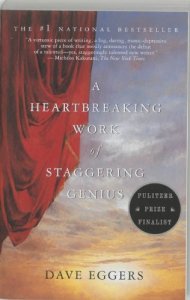 A Heartbreaking Work of Staggering Genius by Dave Eggers: This book mystified me when I read it – was it fiction? Memoir? What? – but I always liked the brash confidence of the title. And the bit about French fries.
 Recently finished or in-progress:
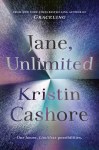 Jane, Unlimited by Kristin Cashore(!!!): Just heard about this from
 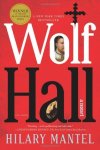 Some novels take famous figures from history and are centered around important historical events. In the case of Philippa Gregory’s The Other Boleyn Girl and Hilary Mantel’s Wolf Hall and Bring Up the Bodies, it is the court of King Henry VIII in England. In the former, Anne Boleyn’s sister Mary is the main character during Anne’s rise, marriage to Henry VIII, the formation of the Church of England, and Henry’s disenchantment with (and beheading of) Anne. For her books – the first two of a planned trilogy – Mantel takes Thomas Cromwell as her main character.
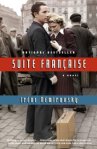 Other novels are about ordinary people in extraordinary times, and the draw of these stories is how their authors are able to make the time and place come to life in a way that seems real. Like Henry VIII’s era, World War II is a popular time period for historical fiction; most recently, the exceptional All the Light We Cannot See by Anthony Doerr was a bestseller (and with good reason). A few of my favorite WWII novels are Suite Francaise by Irene Nemirovsky, The Guernsey Literary and Potato Peel Pie Society by Annie Barrows and Mary Ann Shaffer, Corelli’s Mandolin by Louis de Bernieres, Life After Life by Kate Atkinson, and Code Name Verity by Elizabeth Wein.
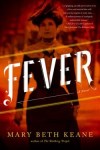 Still a third type of historical novel features extraordinary people in ordinary (for them) times. These characters are as vivid as their settings: Mary Malone (better known as Typhoid Mary) in Fever by Mary Beth Keane, set in turn of the century New York. Katy Kontent in Amor Towles’ Rules of Civility, also in New York, in the 1930s. Regret, a Korean “picture bride” in Alan Brennert’s Honolulu. Tom and Isabel in post-WWI Australia in The Light Between Oceans by M.L. Stedman. Mattie Gokey in the Adirondacks in 1906 in Jennifer Donnelly’s A Northern Light, and Desdemona Hart in 1930s Massachusetts in Maryanne O’Hara’s Cascade.
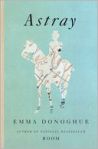 For those who have been counting, this has been more than ten, but I want to mention just three more. Astray is a collection by Emma Donoghue, in which each story was inspired by a real piece of history; Donoghue is so inventive that she can spin two sentences from an old newspaper into a complete, absorbing story.
 Jenny Arch