She Said, She Said: Quotes from Books

Here’s a Top Ten Tuesday feature from The Broke and the Bookish that I’m going to run with for weeks, months, quite possibly years: Quotes from Books I’ve Read Recently. As usual I read Linda’s Top Ten at Three Good Rats and got inspired. I write down quotes from nearly every book I read and keep them in my LibraryThing account, but I don’t often go back and look through them; here’s a great opportunity to do just that, at a time when saving time by recycling content is the perfect way to avoid complete radio silence on this blog (see: new baby in the house).

Here are ten quotes from books I’ve read recently. I chose these because they struck me as wise or poetic or true or funny, or all of the above.

  1. Every generation assumes that the way it does things is the way things are.Unfinished Business, Anne-Marie Slaughter
  2. What she doesn’t know yet is that ending a relationship cannot be done in one conversation over one evening, that such extrication takes days and months and sometimes years.My Lover’s Lover, Maggie O’Farrell
  3. “Your relatives are famous betrayers,” Penny argues. “There was a time in the 1700s when they weren’t even allowed to sign contracts.”Carry On, Rainbow Rowell
  4. The minute hand of the clock was a terribly slow lever, pushing the hour hand imperceptibly forward.  George, Alex Gino
  5. Memory is strange – part movie, part dream. You can never know if what you remember is the essential thing or something else entirely, a grace note. The Dive From Clausen’s Pier, Ann Packer
  6. There were musicians who never looked up from their hands or their instruments, but she’d seen quartets of straight men gaze at each other like they were making love. -“Cross,” Music For Wartime, Rebecca Makkai
  7. The choices don’t stop….Life is choices, and they are relentless. No sooner have you made one choice than another is upon you. –Being Mortal, Atul Gawande
  8. You could think of promises as a series of nets: some hold for a lifetime; others give way, surprisingly flimsy, in no time at all. –And the Dark Sacred Night, Julia Glass
  9. It is fairly amazing that we don’t get poisoned more often.At Home, Bill Bryson
  10. “There are four things that lead to wisdom….four sentences…[:]I don’t know. I need help. I’m sorry. I was wrong.”-Still Life, Louise Penny

More to come, in reverse chronological order from when I read them. What’s your favorite quote from a book?


Top Ten Tuesday: fantasy YA fantasy 101 syllabus

Yes, “fantasy” is in the title twice on purpose. Some people have fantasy sports teams, other people have fantasy syllabi for YA lit courses. Apparently. It’s another Top Ten Tuesday from The Broke and the Bookish: Top Ten Books That Would Be On Your Syllabus If You Taught YA Fantasy 101. I start my list with some “older” texts, defined as books I read (or could have read) when I was growing up, then continue with “newer” texts, published more recently. Nearly all of these are trilogies or series or have companion books, so I’ve added some standalone titles at the end.

Older:
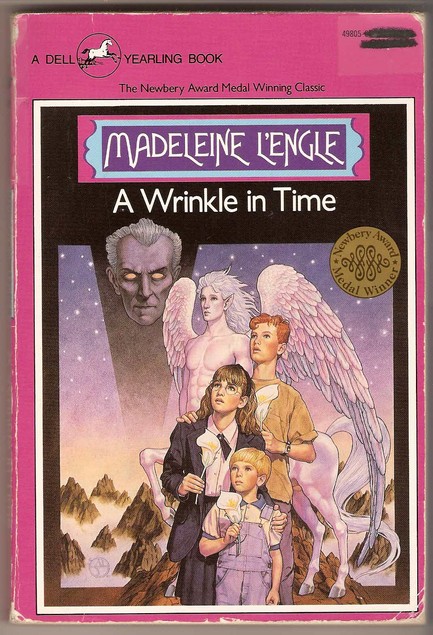
Cover image of the Dell/Yearling edition of A Wrinkle in TimeA Wrinkle in Time by Madeleine L’Engle: misfit Meg Murry and her odd genius little brother, Charles Wallace; kindly, quirky Mrs. Whatsit, Mrs. Who, and Mrs. Which; the concept of tessering; CENTRAL Central Intelligence; a rescue mission…A Wrinkle in Time is one of the foundational texts of childhood.

The Lion, the Witch, and the Wardrobe by C.S. Lewis: If you somehow missed this, you’ve probably gleaned what you need to know from cultural references already: the four Pevensie children travel through the back of a wardrobe and enter the magical kingdom of Narnia, where the White Witch reigns over a Christmas-less winter; the children help Aslan the lion save the kingdom, and are made kings and queens. Little details from this book (the lamp post; Turkish delight) have stuck with me, and I especially loved finding out the origin of the wardrobe in The Magician’s Nephew, though I felt some of the middle books in the set were dull. And of course there’s the religious aspect. But what would it be like to read The Magicians by Lev Grossman (see below) without having read Narnia first?
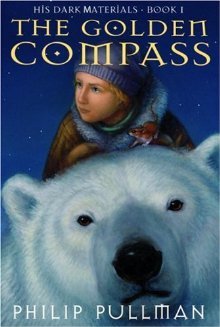
Cover image of The Golden CompassThe Golden Compass by Philip Pullman: Lyra is one of the greatest female characters ever written: she’s fierce and courageous, loyal and a liar, a risk-taker who doesn’t give up, someone with a strong sense of right and wrong. But Pullman doesn’t stop with Lyra: there’s also Will, who shares many of Lyra’s qualities; the concept of daemons (a part of your soul that lives outside you in animal form) and multiple worlds; witches and gypsies and armored bears. The ending of the third book in the trilogy, The Amber Spyglass, was the first – and still one of the only – ending I ever read that I would describe as heartbreaking.

Alanna by Tamora Pierce: A perfect quartet of books for growing young feminists. Alanna disguises herself as a boy to become a knight, but this doesn’t preclude romance later in the series – and birth control is addressed! I didn’t read these when I should have (13? 15?), but I devoured them as an adult.
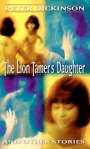
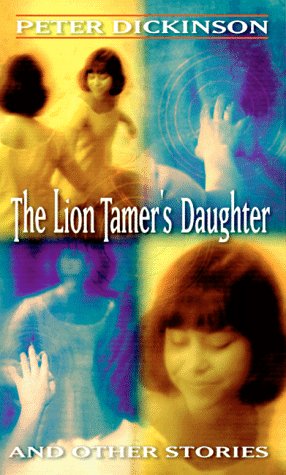
Cover image of The Lion Tamer's DaughterThe Lion Tamer’s Daughter by Peter Dickinson: Twins, doubles, doppelgangers, magicians, and mirrors come up again and again in fantasy and fairy tale, but this tale of Melanie and Melly Perrault has stuck with me for years.

The Princess Bride by William Goldman: Not technically YA, but there’s no reason not to include it on this “syllabus.” Everyone is familiar with the movie (right?? If you’re not, go and watch it, and come back when you are), and the book is just as good except there’s more: every character’s back story, and lots of humor, especially in the parentheticals and footnotes. Timeless and perfect.

Newer:

Harry Potter by J.K. Rowling: How was this not included on the Broke & Bookish list? Maybe it’s just assumed that everyone has read it already. Rowling’s world-building is superb, making readers long to enter Hogwarts School of Witchcraft and Wizardry, and she has created some incredibly kickass female characters, especially Prof. Minerva McGonagall, Hermione Granger, and Molly Weasley; Harry wouldn’t have lasted thirty seconds without these ladies on his side. There’s a good-vs.-evil faceoff in every book, but Rowling’s creativity never wanes.
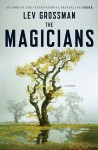
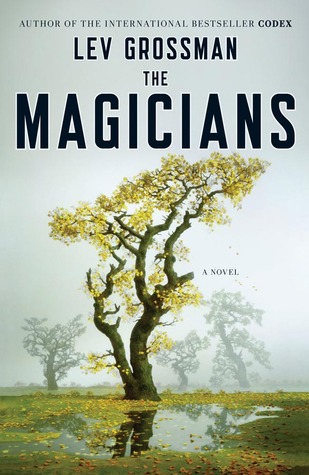
Cover image of The MagiciansThe Magicians by Lev Grossman: The Lion, the Witch, and the Wardrobe and Harry Potter should be prerequisites for this book, since Grossman draws so much from them, but he also creates something entirely original (and often quite dark; these are really adult books, ideal for more mature teens but not the twelve-year-old who just finished the Harry Potter books; also, main character Quentin is thirty in the third and final book, The Magician’s Land). Like the Pevensies, Quentin passes from the real world into the magical, but Brakebills is no Hogwarts, and Fillory is no Narnia.

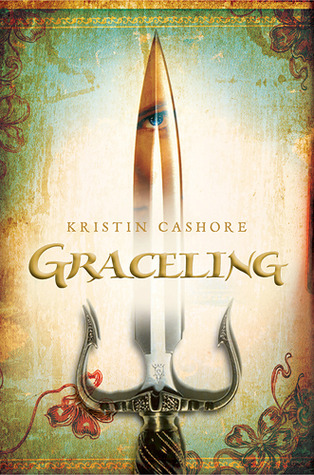
Graceling by Kristin Cashore: My favorite recent discovery, Graceling blends some of the best aspects from The Golden Compass and Alanna: world-building, a dangerous journey, and a fierce heroine – Katsa – who remains just as strong when she joins forces with another Graceling, Po.
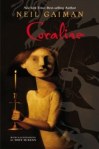
Cover image of CoralineNeil Gaiman: It’s hard to decide on a starting point, but reading something by Neil Gaiman would definitely be a requirement for this syllabus – his short story-turned-picture book Instructions, his adult novel The Ocean at the End of the Lane, his middle grade/YA books Coraline and The Graveyard Book, his older adult novels American Gods and Neverwhere, or one of his short story collections – the recent Trigger Warning was superb. He has a masterful grasp of myth and magic, and draws on this knowledge and understanding to create powerful, dark, creative works that seem timeless.

The Raven Boys by Maggie Stiefvater: The Raven Cycle is 3/4 complete as of this blog post, but I’m confident in Stiefvater’s imagination and skill. (For those who prefer a standalone, however, The Scorpio Races is fantastic: a tough young woman trying to keep her family together attempts to win prize money by capturing and riding one of the savage water horses in the annual – and frequently deadly – race on the beach on her small island of Thisby.) Like Gaiman, Stiefvater clearly knows her mythology and magic, and yet is able to write stories that have an echo of the familiar without being derivative in the slightest. She also has a thing for fast cars, if you happen to be into that.
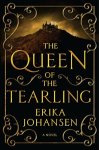
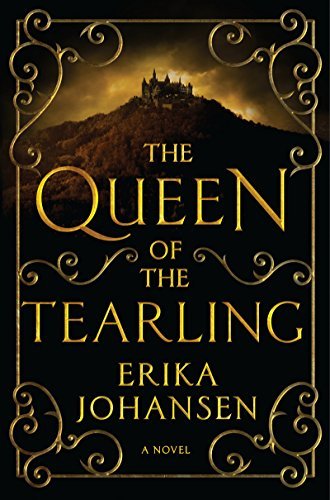
Cover image of Queen of the TearlingThe Queen of the Tearling by Erika Johansen: Ask me again in a year and this title/series may or may not sneak onto the list, but right now the first two books (the second is The Invasion of the Tearling) are fresh in my mind. Kelsea Ralaigh Glynn is the Tear Heir, but her kingdom is in shambles, and she doesn’t know the half of it. As soon as she begins to acquire information, though, she takes action; she reminds me of a less pensive Bitterblue (one of Cashore’s characters). Again, this is not technically YA: there is a lot of violence and rape, to the point where it’s been compared to Game of Thrones.

Extra credit for middle grade/YA standalone novels:

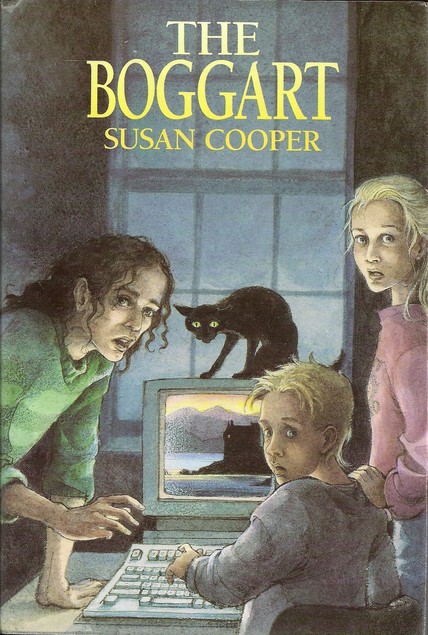
The Boggart by Susan Cooper: Cooper is better known for The Dark is Rising, but I read The Boggart and fell wholly in love with the mischievous magic worked by a homesick spirit.

Breadcrumbs by Anne Ursu: Ursu tips her hat to the whole fantasy canon in this modern-day fairy tale in which the princess rescues the prince.

Elsewhere by Gabrielle Zevin: The afterlife is not an uncommon subject, but Zevin’s take on it is unique, sad, and sweet.
Do not pass Go, hand over your two hundred dollars: Top Ten Auto-Buy Authors

Here’s a good Top Ten Tuesday from The Broke and the Bookish: “Top Ten of Your Auto-Buy Authors.” Like Linda, I don’t necessarily buy all these books, but I am very, very eager to get my hands on them somehow; we’ll call them my “auto-read” authors if not “auto-buy” (though in the case of most of these authors, I have at least one of their books on my home bookshelf. If not all their books. Or in at least one case, multiple copies of the same book).

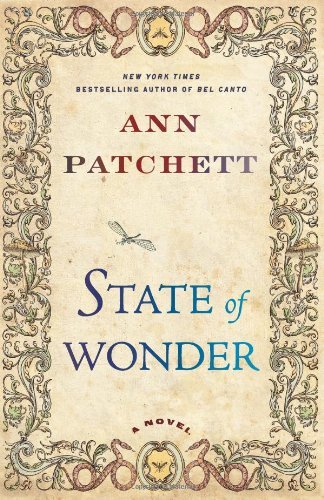
Cover image of State of Wonder by Ann PatchettAnn Patchett: Hands down, Ann Patchett is the first author who comes to mind in this category. I’m still absurdly grateful to the friend at her publisher who got me an advance copy of State of Wonder in February (for my birthday!) when the book didn’t come out till June. I adore everything Ann Patchett writes – fiction, nonfiction, essays, blog posts.

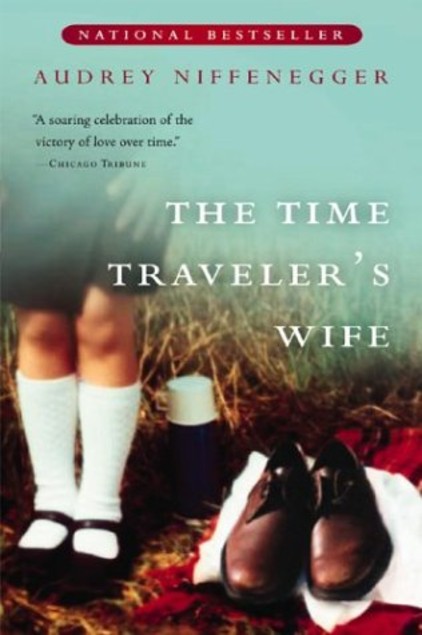
Audrey Niffenegger: I’ve already told my husband that when the sequel to The Time Traveler’s Wife comes out (there was a sample – Alba, Continued – included in the e-book version of TTW), I will need a minimum of five days entirely alone with no distractions of any kind. “It’s not going to take you a week to read,” he observed (correctly), but I don’t plan to read it just once. Memorization takes time.

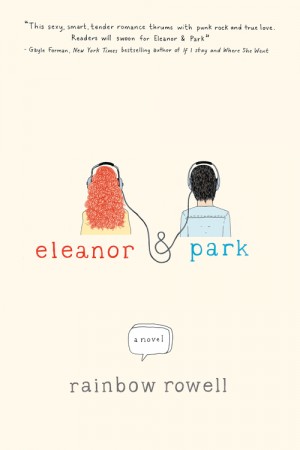
Cover image of Eleanor & Park by Rainbow RowellRainbow Rowell: I have adored all four of her books and am sad that Carry On is embargoed, as it comes out in October of this year and I may be somewhat busy then. (But not too busy to read, right?) Plus, Rebecca Lowman narrates the audiobook versions of Rowell’s books, and that is a match made in heaven.

David Mitchell: Mitchell’s October book, Slade House, was not embargoed, happily, and I was able to get an e-galley, which I inhaled on vacation last month. I love spending time in his universe. (And yet, still haven’t read Ghostwritten or Number9Dream.)

Maggie O’Farrell: Instructions for a Heatwave sent me scrambling for her backlist, which I quickly read my way through (save one). Cannot wait to read whatever she writes next. Such empathy for all her characters, such heartbreaking plot twists.

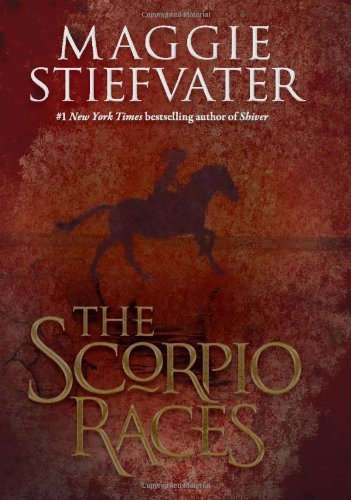
Cover image of The Scorpio Races by Maggie StiefvaterMaggie Stiefvater: What an astounding imagination she has. The Scorpio Races is still my favorite, but the Raven Cycle is amazing (still waiting for the fourth and final book!), and she even succeeded with werewolves in the Wolves of Mercy Falls trilogy. I wasn’t as keen on Shiver but am excited to see where she’ll venture next.

Neil Gaiman: Again, I haven’t read everything he’s written, but I have loved all his most recent work (Trigger Warning, The Ocean at the End of the Lane, etc.). (Yes, in this case I’m the person who “discovered” your favorite band long after you knew it was cool.) What Gaiman does with magic and myth is deeply satisfying, original, dark, and timeless.

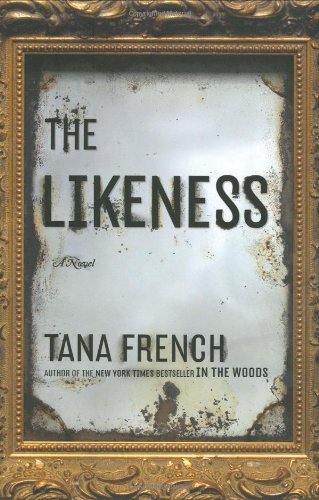
Cover image of The Likeness by Tana FrenchTana French: The Likeness is still my favorite, but the Dublin Murder Squad hasn’t dropped off in quality after five books; these mysteries are all deliciously creepy and psychologically dark, with exceptional character development. Plus the covers are gorgeous.

Chris Cleave: Just when I was beginning to wonder if/when he would publish a new novel, I see that Everyone Brave is Forgiven is due out in May 2016. I was going to say that I didn’t care what it was about, I was going to read it anyway, but the publisher’s description includes the words “WWII” and “London” and “1939,” so I’m even more hooked. And naturally there is a love triangle.

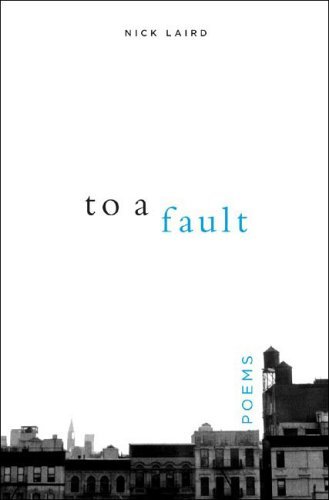
Cover image of To A Fault by Nick LairdNick Laird: I couldn’t possibly buy every book I read, or even every book I love, but I do find that it’s worth it to buy poetry, because (1) someone has to support the poets, and (2) I remember lines and sometimes stanzas but rarely entire poems, and poems are like songs: when parts of them get stuck in your head, the only thing to do is to read/listen to the whole thing. To A Fault, On Purpose, and Go Giants have a permanent place on my bedside bookshelf.

Four Americans and the rest English or Irish. Hmm.

I’m sure the moment I publish this I’ll think of at least five more “auto-read” authors, but I feel good about these ten. Also, impatient for their next books.

I want to go to there: places books have made us want to visit

I promise it’s not going to be all Top Ten lists all the time from here on out*, but I am new to The Broke and the Bookish and some of their prompts are too tempting to ignore.

*For example, you might be wondering who the next Librarian of Congress will be, in which case I recommend you mosey over to the page Jessamyn West set up, Librarian of PROgress. It turns out that the Librarian of Congress doesn’t even technically have to be a librarian, though, in my humble opinion, it would be good if s/he were, not least to avoid a terrible misnomer.

The Top Ten Tuesday list that caught my eye this time is top ten places books have made us want to visit. Both real and imaginary places are on the list, but we’ll start with the real:

1. The Orkneys, Scottish islands that are the setting for most of The Flight of Gemma Hardy, Margot Livesey’s retelling of Jane Eyre. They are a bit remote to get to, but I’d still love to go.

Cover image of The Boggart2. The Isle of Skye, because of both Susan Cooper’s The Boggart and Neil Gaiman’s Trigger Warning. It must be magical if those two honed in on it.

3. Antibes, France, because of the American expatriate scene there in the 1920s (Fitzgeralds, Murphys, etc.). I’ll give credit to Everybody Was So Young by Amanda Vaill for piquing my interest.

4. Various locations in London, especially the Tower of London (where Anne Boleyn was executed) and the Globe Theater (Shakespeare!) (modern reconstruction, I know, but still). We can’t time travel, not exactly, but it is an incredible feeling to stand in the exact place where a historical figure (or fictional character) once stood.

Cover image of The Time Traveler's Wife5. Various locations in Chicago, including but not limited to the Art Institute, Millennium Park, the Newberry Library, Ann Sather’s Swedish Diner, and the Monroe Street Parking Garage – all because of The Time Traveler’s Wife. And speaking of Chicago…

6. The Field Museum’s exhibit on the 1893 World’s Fair, because of Devil in the White City by Erik Larson.

7. The Temple of Dendur in the Met in New York, partly because of an episode of Sesame Street (or else a dream I had – did anyone else see that episode?) and partly because of From The Mixed-Up Files of Mrs. Basil E. Frankweiler.

And now for the imaginary:

8. Lyra’s Oxford in The Golden Compass, because I’d want to know what my daemon would be.

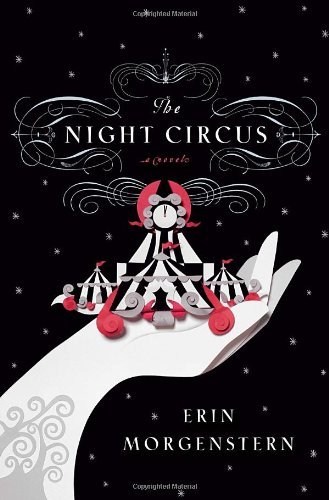
Cover image of The Night Circus9. Who could read The Night Circus and not want to visit Le Cirque de Reves? The real question is, which tent would you visit first? Which treat would you taste first?

10. I have to copy from the Broke and the Bookish for the last one, because I’d love to visit J.K. Rowling’s Diagon Alley and Hogsmeade. If only Muggles were allowed…

This list would seem to indicate that I have read books set almost exclusively in the U.S., Europe, and fantasy lands, which isn’t the case, but the books I’ve read set in Russia, Asia, Africa, and South America haven’t filled me with the desire to travel there myself – I’m happy just reading about them.

Which places from books have caught your imagination? Where have you traveled because of books, and has it been satisfying or disappointing? Which places have you traveled to first and read about afterward, and how is that different?

Top Ten Books I’ve Read So Far in 2015

I always enjoy threegoodrats’ “Top Ten Tuesday” posts, inspired by The Broke and the Bookish, and this week I thought I’d chime in as well (even though it isn’t Tuesday), because the topic is “top ten books I’ve read so far in 2015” and that sounded like a fun list to make.

Listed in the order that I read them, with links to reviews/quotes in LibraryThing:

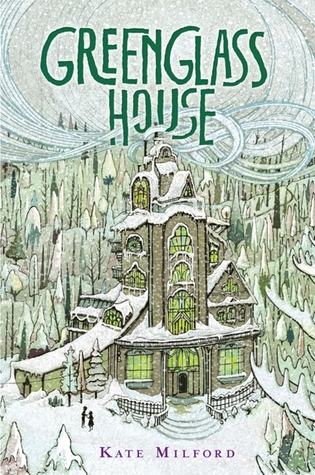
Cover image of Greenglass House1. Greenglass House by Kate Milford: Friends and strangers alike will attest I have not shut up about this book since reading it in January. It is absolutely overflowing with “appeal factors” such as: adoption, a snowbound closed-house mystery (a la Agatha Christie) in a smugglers’ inn, a role-playing game, stories within stories, an entire fictional place complete with its own history and lore, plenty of hot chocolate, Christmas, and a ghost. And it’s got a beautiful cover.

2. Alanna (Song of the Lioness quartet) by Tamora Pierce: I definitely should have read this in middle school or at least high school, but I’m glad I didn’t let it slip by completely. A fantastic set of fantasy novels with that “strong female protagonist” that everyone loves (plus horses, plus a magical crystal that prevents pregnancy). I inhaled all four of these in the space of a week.

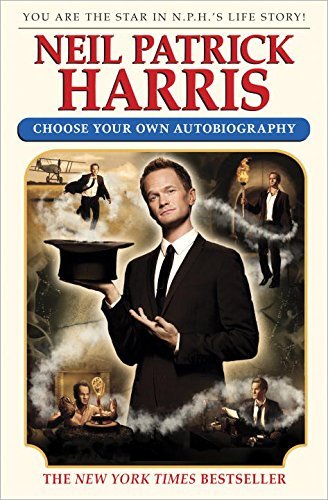
Cover of NPH Choose Your Own Autobiography3. Neil Patrick Harris: Choose Your Own Autobiography: This is one of the best audiobooks I’ve ever listened to (but get the print version too so you can see the pictures). Entertaining and funny but not at the expense of depth. A must for all NPH fans, and the “choose your own adventure” format worked better than it had any right to.

4. Don’t Make Me Think by Steve Krug: I’ve been meaning to read this for ages – it could/should have been on my 2015-TBR list – and it was well worth it. Anyone who uses computers, let alone anyone who makes software or hardware, ought to read this book (and also Don Norman’s The Design of Everyday Things).

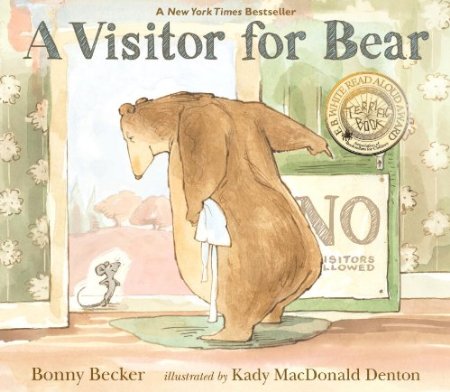
Cover of A Visitor for Bear5. Bear & Mouse series by Bonny Becker: Starting with A Visitor for Bear (spoiler: it’s Mouse!), I adored these picture books, which have just the right amount of beauty, charm, and humor. A Birthday for Bear, A Bedtime for Bear, and A Library Book for Bear are all worthwhile follow-ups to the first in this series.

6. Dead Wake by Erik Larson: For someone who has read an awful lot about the Titanic, this was my first book about the Lusitania, and it was fascinating. I’d been a little disappointed by Larson’s last, In the Garden of Beasts, but Dead Wake was gripping from start to finish. Larson provides several points of view: captain, crew, and passengers on the ship; the U-boat crew; President Wilson; and the secret, pre-Bletchley “Room 40” in England.

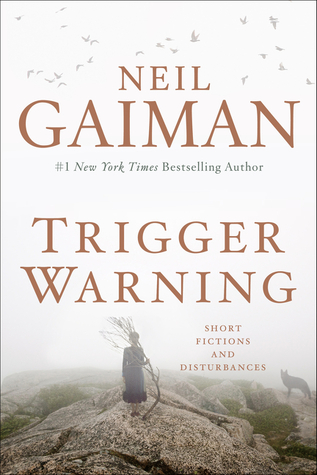
Cover image of Trigger Warning7. Trigger Warning by Neil Gaiman: Another fantastic audiobook, read by the author himself. There’s not a dud in this collection of strange stories, myths, and even poems, but there are a few standouts; my favorites were the Doctor Who story “Nothing O’Clock,” “Black Dog” (featuring Shadow from American Gods), and “And Weep, Like Alexander.”

8. Bringing Up Bebe by Pamela Druckerman: Like many much-hyped books, I avoided this for a while, but when I read it I discovered it was much more practical and less frothy than I had expected. A useful insight into another way of doing things (plus a recipe for yogurt cake).

Cover image of Graceling9. Graceling, Fire, and Bitterblue by Kristin Cashore: I just wrote a whole separate blog post about how much I loved these three books. I already want to re-read (re-listen-to) Graceling. If you liked the Song of the Lioness quartet or the His Dark Materials trilogy, you need to read these.

10. Far From the Tree by Andrew Solomon: I started this back in 2013, but didn’t finish until I bought the e-book; in this case, not carrying around a thousand-page tome really did help. If everyone in the world read just the introduction to this book (48 pages or so), the world would be a better place. Solomon is a talented writer who did an immense amount of research, speaking with experts and families, and Far from the Tree provides an astonishing level of insight into various kinds of difference or “horizontal identities.”

I will resist the temptation to continue the list with honorable mentions. What have your favorite books been so far this year?