 On May 14 I attended the Massachusetts Library System (MLS) workshop on Wayfinding & Signage, taught by Anna Popp. I’ve had an interest in this topic as long as I’ve been working in libraries (and maybe, as the kind of person who actually reads signs, for most of my life); I read Useful, Usable, Desirable almost ten(!) years ago, and have kept it in mind since.
MLS has an excellent LibGuide about Wayfinding and Signage with lots of resources; Anna covered a lot of the material here in her workshop, starting with the difference between the two:  Wayfinding helps people orient themselves in a space, figure out where they need to go, and how to get there; essentially, wayfinding is navigation. Signage is meant to influence a person’s behavior (e.g. borrow this book, attend this program, keep your voice down). Signage may be promotional (programs and services), operational (hours, policies), or instructional (how to use the printer), and therefore has an expiration date.
 So, wayfinding aids users navigating the space; signage influences users’ behavior. But before putting up any signs, ask: Who needs to know this? Where are they? What information do they need to make a decision? (In fact, Anna suggested inventory: taking down all signs, and only replacing the ones that are essential.) Try to avoid visual clutter by identifying the minimum amount of information necessary and including only that.
Anna also suggested taking some time to observe patrons in the library building. Pay close attention to “transition zones” (spaces that are between other places, like hallways, stairwells, entryways) and identify friction points. Where do people pause and look around? There are three levels of wayfinding: orientation, route decision, and destination. Where on their journey are people pausing and looking for help? “Folks need reassurance that they’re headed in the right direction.” If you can, get a patron to talk you through their experience – a walk-and-talk usability test. As library staff who work in the building every day, we may be too close to see problems that patrons encounter. (Also, we may not use the same bathrooms or even the same entrance to the building!)
We looked at lots of examples of wayfinding and signage in libraries – good, bad, and in-between – and talked about principles of design (choosing brand fonts, colors, and imagery; using white space; making sure it is ADA accessible).  Anna didn’t specifically mention it, but another consideration is users who don’t speak English. I do like visual signs and color coding, partly for this reason (although color coding will only work for about 85% of users).
Consider the user experience: Who is the centered audience? Who is the decision maker? Where will they be? How do they think about the library? For example, you might be advertising a toddler singalong; the toddlers are the audience, but the decision maker is the caregiver. Use natural, patron-centered language, not library jargon (e.g. research instead of reference).
So, now what? Anna suggested that we (1) inventory our signage, (2) name our fonts, colors, and icon family, and (3) identify our patrons’ destinations. Fortunately for me, the children’s room in my library isn’t hard to find: it’s directly ahead from the entrance (the circulation desk is on the right as people enter) and has CHILDREN’S in big frosted-glass letters above our door. But there are still things I can do within the children’s area to make it more navigable for folks; for example, in the sections that are shelved alphabetically, I could put in shelf markers where each letter begins. (Why are these ones from Demco so expensive?! I could use these instead and put the letters on myself…)
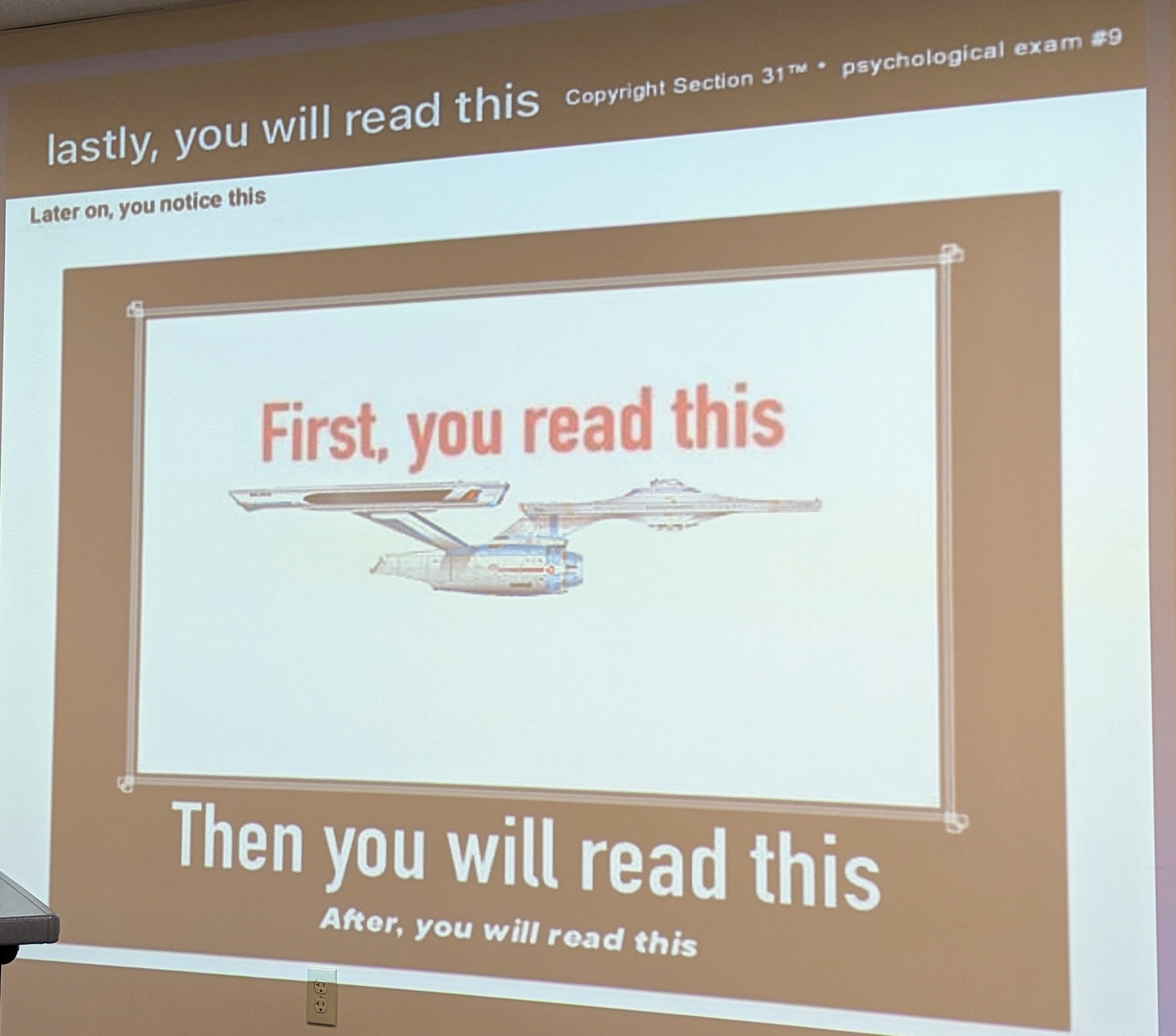
Above: the fun concluding slide to Anna’s presentation. I read the first three in order but switched the 4th and 5th. What about you?
All other images in this blog post come from The Noun Project.
 Jenny Arch