Since before the first Libraries in a Post-Truth World conference at the beginning of this year, I’ve been keeping a list of relevant articles. This list has expanded to include books, studies and reports, and other materials, and I am sharing it here. If you have relevant materials to add, please leave a comment here. If you would like to use this list for library programming, teaching, or related work, please feel free – I’d love to know about it if you do.
Though “fake news” is a term most people recognize these days (unfortunately), it is not the best term to use, for reasons Claire Wardle and Hossein Derakhshan state in their Council of Europe report:
We refrain from using the term ‘fake news’, for two reasons. First, it is woefully inadequate to describe the complex phenomena of information pollution. The term has also begun to be appropriated by politicians around the world to describe news organisations whose coverage they find disagreeable. In this way, it’s becoming a mechanism by which the powerful can clamp down upon, restrict, undermine and circumvent the free press.
We therefore introduce a new conceptual framework for examining information disorder, identifying the three different types: mis-, dis- and mal-information.
Misinformation is when false information is shared with no harmful intent; disinformation is when false information is shared to cause harm; and mal-information is when genuine information is shared to cause harm (e.g. by moving it from the private to the public sphere). Unfortunately, again, we are dealing with all three today (plus satirical sources like The Onion, which are the only good kind of fake news).
Again, feedback is welcomed; please let me know if you use this list, or have anything to add. I am particularly interested in using the rise of interest in the topic of fake news to advocate for librarians in schools, as they are the ones who do the important work of teaching research skills, critical thinking, information literacy, and media literacy.
As usual, I am using Linda’s list for inspiration, and it’s not a Tuesday at all. Also, there are eleven twelve, and I could keep going. This is a fun one.
A Heartbreaking Work of Staggering Genius by Dave Eggers: This book mystified me when I read it – was it fiction? Memoir? What? – but I always liked the brash confidence of the title. And the bit about French fries.
We Are All Completely Beside Ourselves by Karen Joy Fowler: I think I came to this as an Ann Patchett recommendation, but the title would have made me want to pick it up anyway.
Call Me By Your Name by Andre Aciman: It may have been the title that made me pick this book up, I can’t remember now. Either way, I’m glad I did.
I Was Told There’d Be Cake by Sloane Crosley: This one is on Linda’s list, but I liked the book better than she did. It probably helped that I read it in New York in my early twenties (the essays are about the author in New York in her twenties), and the title always makes me smile.
Eleanor Oliphant Is Completely Fine by Gail Honeyman: Well, obviously she’s not.
Men Explain Things to Me by Rebecca Solnit: The title is so good, and so appropriate, that it’s the only thing on the cover of this book: white text on a deep blue background. (I hate to think what Solnit would have done to a cover designer who put a pair of heels on the front of her book.)
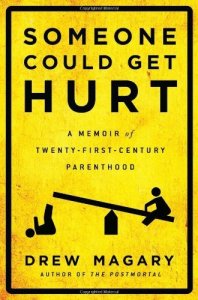
Someone Could Get Hurt by Drew Magary: A perfect title for a laugh-out-loud parenting memoir.
I Crawl Through It by A.S. King: My least favorite of her books – I really didn’t get it at all – but I love the title. Her others are good too (e.g. Please Ignore Vera Dietz).
Charlotte Sometimes by Penelope Farmer: I heard the song by The Cure before I read the book; both are atmospheric. I love discovering literature via music and vice-versa; when done well, it adds to both. (I discovered The Smiths’ song “Asleep” via The Perks of Being a Wallflower by Stephen Chbosky.)
A Burglar’s Guide to the City by Geoff Manaugh: The title was more promising than the book itself turned out to be, but then, how could that not be the case?
Shh! We Have A Plan by Chris Haughton: Initially, I didn’t think this picture book quite lived up to its funny title, but after enough re-reads I came to love it.
A Supposedly Fun Thing I’ll Never Do Again by David Foster Wallace: I’ve never read this collection of “essays and arguments,” but I’ve thought about this phrase a lot over the last two years. It’s rarely apt, but when it is, it’s so perfect.
Least favorite title:
Baking With Less Sugar by Joanne Chang: This doesn’t sound appealing at all.
What are your favorite titles? Least favorite? Book you read because of (or in spite of) its title?
Edited to add (12/5/2017): Everything Ravaged, Everything Burned by Wells Tower is a great title, as is Tim Kreider’s essay collection We Learn Nothing.
There is so much to love about this idea. Together, libraries and Repair Cafe/Fixit Clinic:
help build a more sustainable world
fight the “throwaway” culture of obsolescence
encourage an interest in how things work
teach useful skills
For the past several years, libraries have been talking about Makerspaces – and in some cases, carving out space and buying 3D printers. While I think that 3D printers are amazing for specific purposes (like making teeth), I’m afraid a lot of them are used for churning out cheap plastic junk. They may serve as an introduction to design and robotics, which is not to be discounted…but I think the repair cafe/fixit clinic idea is so much more useful. After all, learning a skill comes easier when you have a purpose: learning a coding language, for example, will probably be a wasted effort unless there’s something you want to make with it.
In this scenario, a broken item – lamp, toaster, necklace, scooter – provides motivation for learning, the library provides space and coordinates the event, and the Repair Cafe or Fixit Clinic provides the volunteers (who may bring the tools of their trade with them). In the AL article, Cottrell writes, “The goal of the U-Fix-It Clinic [is] allowing people to repair broken items instead of throwing them away, but also inspiring them to learn more about the products they consume and how they work. The event is part of a larger movement across the globe working to help keep broken items out of landfills and revive the lost art of repair.”
Knowing how things work – and how to go about fixing them – is empowering; it’s useful knowledge. In a piece for WGBH, “‘Fixit Clinics’ Help People Revive Their Broken Items,” Tina Martin interviewed the founder of Fixit Clinics, MIT grad Peter Mui, who said, “There’s a sense that [people] don’t have a choice when something breaks, there’s no repair people left anymore to fix this stuff.”
Mui wrote a guest blog post on ifixit.org, saying, “Once people start repairing, they start asking questions like ‘What went wrong?’, ‘Can it be fixed?’, and ‘How might it have been designed differently to avoid breaking in the first place?’ That last question is where we’re ultimately going with Fixit Clinic: to encourage products designed with maintenance, serviceability, and repairability in mind.”
As the things we use on a daily basis have become more complex (sometimes by necessity, sometimes not), design has become more opaque. I often think of Don Norman’s The Design of Everyday Thingswhile I’m working at the reference desk, explaining the “hamburger menu” to a patron, or helping them locate the miniscule, hidden power button on our new laptops. They often apologize, and I tell them it’s not their fault – it’s poor design. But as more and more of our things have microchips inside them, instead of parts we can see and tinker with, we’ve forgotten how to open things up and explore; we’ve given up on figuring out how things work – or why they stop working.
The mentality behind the Repair Cafe and the Fixit Clinic addresses these problems in a tremendously useful way. The Repair Cafe “About” page explains, “We throw away vast amounts of stuff….The trouble is, lots of people have forgotten that they can repair things themselves or they no longer know how. Knowing how to make repairs is a skill quickly lost. Society doesn’t always show much appreciation for the people who still have this practical knowledge, and against their will they are often left standing on the sidelines.”
The Fixit Clinic’s mission has similar themes: “Fixit Clinic conveys basic disassembly, troubleshooting, and repair skills using peoples’ own broken things as the vehicle. By sharing these skills while transferring them to others we teach critical thinking through the lens of our relationship to consumption and sustainability. We strive to demystify science and technology so that we can ultimately make better policy choices as a society.”
A community learning experience that brings people together to share skills and tools, and repair items that would otherwise end up in landfills and be replaced with new things: this is a perfect program for libraries to host. The Cambridge Public Library has partnered with the Repair Cafe in Cambridge already; I’d love for our library to do this as well, and I’m keeping the idea on the back burner. (The front burners are already occupied: I’ve just launched a cookbook club this fall, which is wonderful but a lot of work. If only we had more staff…)
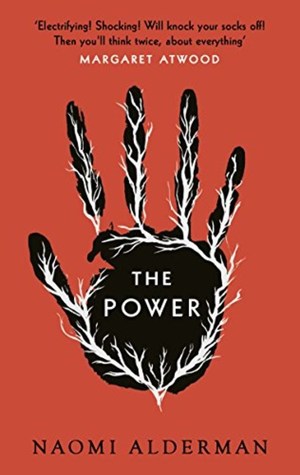
An absolutely remarkable thought experiment that is also an engaging, suspenseful novel. The premise is simple: “An environmental build-up of nerve agent…released during the Second World War…changed the human genome.” As a result, all girls have “the power,” the ability to send out an electrical jolt through their fingertips. Adolescents can “wake up” the power in older women. Some have more power (and better control) and some have less, but it’s not going away – which means that the historical gendered imbalance of power has flipped. Suddenly, women are more powerful than men, and in places where women have been most oppressed, “justice is at last being meted out.”
The framing device for this story is a letter from the author, Neil Adam Armon (an anagram of Naomi Alderman), to Naomi, asking for feedback on his “historical novel.” His novel is set in a time close to our present, but Neil and Naomi’s exchange takes place about five thousand years after the “Cataclysm,” in a future where women have been dominant for five thousand years.
A few characters, some of whose stories intersect, take us through the momentous emergence of the power: Roxy, daughter of a London crime boss; Allie, an orphan suffering sexual abuse at the hands of her foster parents; Tunde, a young male journalist who follows the most explosive events; and Mayor Margaret Cleary and her daughter, Jocelyn. Also throughout are Kristen and Tom, TV news anchors whose gender power balance shifts subtly but definitively throughout the novel.
The Power succeeds marvelously in its aim, and is therefore disheartening: it shows that when the disempowered attain power, they do not necessarily wield it any better than those who were previously in power. (As the voice in Allie’s head tells her, The only way to be safe is to own the place.) The solution, it is implied, is not simply to flip the gendered power imbalance, but to make it so that everyone is equal. And as the voice in Allie’s head also says: You can’t get there from here.
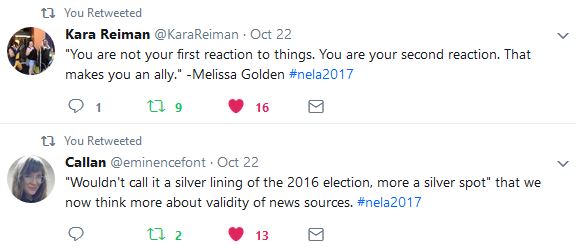
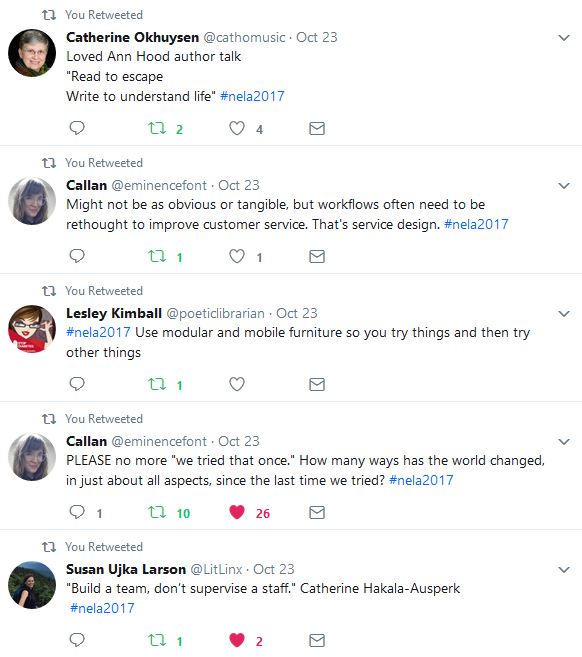
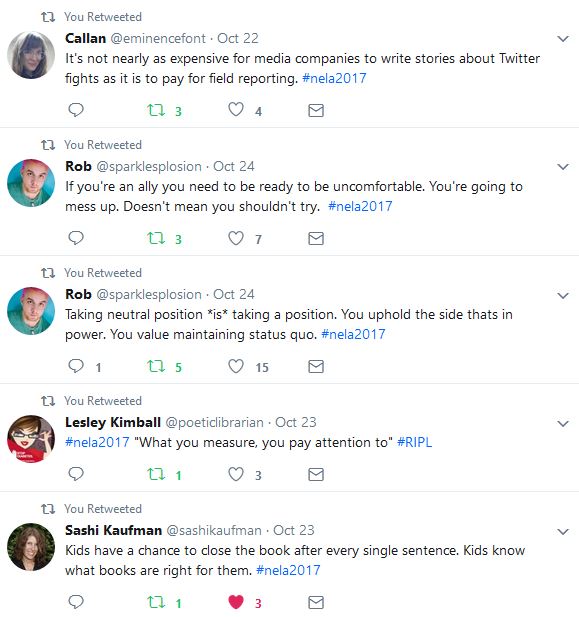
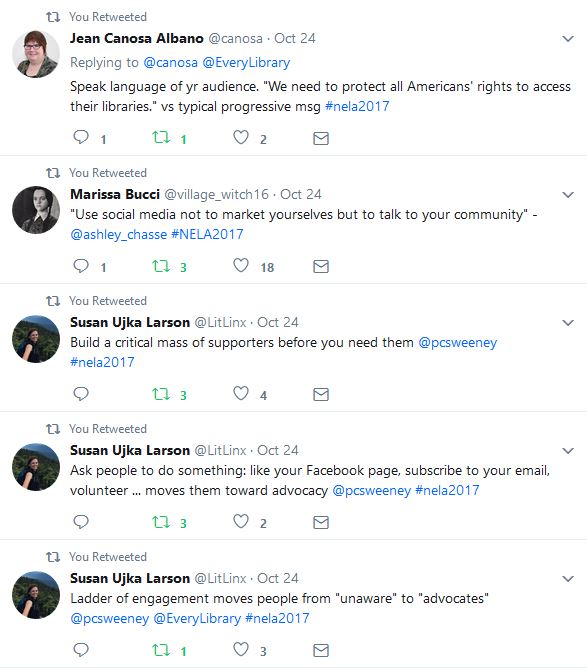
At every library conference, there are a few good souls who tweet key ideas, soundbites, stats, pictures of slides, and other tidbits from the sessions they attend. I didn’t go to the New England Library Association annual conference this year, but I did follow it on Twitter.
A few key themes emerged:
Media: A “silver spot” (not so much as to be a lining) of the 2016 election is the resulting heightened awareness of fake news and the importance of media literacy. A related point is that news organizations, pressured by the 24-hour news cycle and the lure of clickbait (clicks = revenue), may opt to cover “Twitter fights” instead of paying journalists for real field reporting.
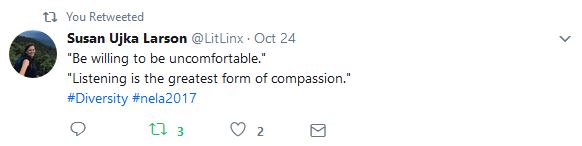
Allyship and “neutrality”: As my co-worker tweeted, “Taking a neutral position is taking a position”; it supports the status quo. Being an ally for historically marginalized populations may be uncomfortable – “You’re going to mess up. That doesn’t mean you shouldn’t try.” It is not your first reaction but your second that makes you an ally. Be willing to be uncomfortable, be willing to listen with openness and compassion.
Ch-ch-ch-changes: Think outside the box, move things around (mobile furniture!), try new ideas – and don’t use the “we tried it once and it didn’t work” excuse. When was the last time you tried? Changes in staff, the community, or technology may make an idea that failed last time succeed this time. This applies to workflows as well. Why do we do the things we do the way we do them? Does the original reason still apply, or would doing things a different way make more sense now (and serve patrons better)?
Library, community, and social media: Social media is more of a conversation than a lecture; use the library social media accounts (Facebook, Twitter, etc.) as an engagement tool, not just a marketing device. PC Sweeney, political director of EveryLibrary, advised libraries to “build a critical mass of supporters before you need them,” raising awareness and encouraging advocacy. (EveryLibrary is “the first and only national organization dedicated exclusively to political action at a local level to create, renew, and protect public funding for libraries of all types.”) It’s also important to “speak the language of your audience,” for example, “We need to protect all Americans’ rights to access their libraries.”
Statistics: “What you measure, you pay attention to.” And you pay attention to what you measure.
Kids and reading: “Kids know what books are right for them.” They can close a book at any time if they are scared or confused.
It sounds like the author talks – Ann Hood, Adam Gidwitz, and Garth Stein – were all wonderful, as well.
Thanks to those NELA participants who tweeted from the sessions!
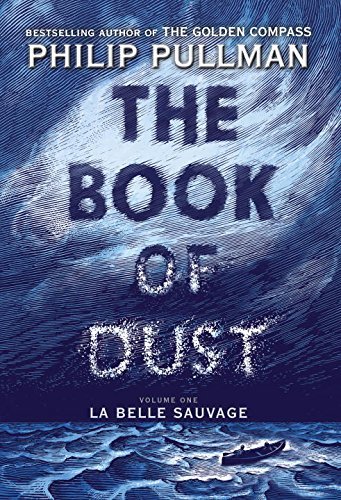
It’s been seventeen years since we left Lyra and Will under the hornbeam trees in their two separate Oxfords; twenty-two years since we met Lyra and Pan, scurrying through Jordan College. When the kind bookseller at Porter Square Books slid my copy of The Book of Dust across the counter, I teared up. “A lot of people are excited about this book,” she said, smiling. I mentioned that my daughter’s name was Lyra, and that today was her birthday. “Oh,” she replied, “You’re really excited.”
True. I took that day off and the next to read La Belle Sauvage, and when I finished, before noon on the second day, I immediately wanted the next volume. Alas, it will be another wait – so I simply began reading this one again.
Pullman brings us back to Oxford ten or eleven years before The Golden Compass begins, when Lyra is a six-month-old baby, and Malcolm Polstead – our new protagonist – is the eleven-year-old son of the owners of the Trout Inn, across the river from the Priory of St. Rosamond. Malcolm does work around the inn and and for the nuns, goes to school, and paddles around in his canoe, which he has named La Belle Sauvage. But things are changing, in Malcolm’s small world and in the larger one: the Magisterium (the Church) and the Consistorial Court of Discipline (CCD) are growing more powerful and frightening, and the League of St. Alexander comes to the schools, encouraging children to sign up and turn in anyone disloyal to the Church; this encouragement to inform on friends and family felt reminiscent of 1930s Germany.
This swing to the political/religious right is countered by liberal forces working in secret; one of these, Oakley Street, has a few familiar members, including scholar Hannah Relf and gyptian Coram van Texel (later to become Farder Coram). Malcolm becomes involved, meeting with Hannah weekly, but his true loyalty is to baby Lyra, who is in the care of the nuns at the priory. When a flood comes – as Coram warned – Malcolm and Alice Parslow (Parslow being another familiar name from The Golden Compass) take Lyra and flee in the canoe, but they are pursued by the CCD and by Gerard Bonneville, a scholar with knowledge of the Rusakov field whose daemon is a terrifying three-legged hyena.
The second half of the book takes place on the water, as Malcolm and Alice try to keep Lyra and themselves safe. First they plan to head to Jordan College in Oxford, where Malcolm thinks they could ask for sanctuary for Lyra, but the river is flowing too fast, and they head for London instead, hoping to find Lord Asriel and deliver Lyra to him. On the way they have several run-ins with scary figures, lose Lyra and get her back, and meet a fairy (a different sort of magic than any Lyra or Will encountered in His Dark Materials, but consistent with British fairy lore; Pullman has said he was inspired by William Blake). In the very last pages, Malcolm and Alice do find Asriel, and he manages to get them all to Jordan, where he entrusts the Master of the college with Lyra’s care; there the book ends.
Although La Belle Sauvage takes place about a decade before The Golden Compass, it has much the same feel. The CCD is immediately sinister, and unsurprisingly, Mrs. Coulter is behind the League of St. Alexander. Lord Asriel is much the same as he is in His Dark Materials. Hannah is to Malcolm much as Mary Malone is to Lyra; a scholar who mentors him, though she is somewhat in the dark herself. Baby Lyra’s brief time in a sort of orphanage, and Malcolm’s rescue of her there, is reminiscent of Bolvangar. But the most similar part, oddly enough, is Malcolm himself: he is like a blend of (older) Lyra and Will, with her facility for thinking on her feet (making up false names, for example) and his ability to be unnoticed. In their steadfastness to each other, despite initial antagonism, Malcolm and Alice are a bit like Lyra and Will as well; they rely on each other because they’re all they have, and that bonds them.
Now, we wait for the second volume of The Book of Dust, and we wait even longer for the third. I am confident that both will be worth the wait.
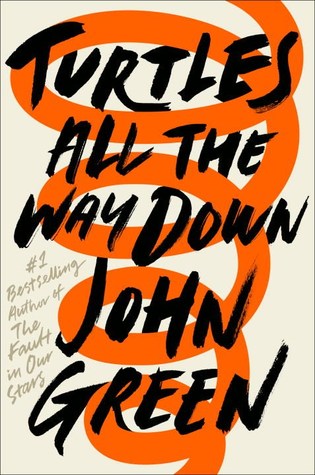
Aza Holmes – Holmesy to her best friend, Daisy – has a mental illness, a version of OCD. More than most people, she lives in her own head, but she doesn’t feel like she has control over her thoughts; she gets into obsessive thought-spirals, during which she withdraws from her surroundings, down into her worries, fears, and compulsions – only none of those are strong enough words to communicate her experience to others. Metaphor is the best she can offer, but even metaphor falls short: “The words used to describe it – despair, fear, anxiety, obsession – do so little to communicate it. Maybe we invented metaphor as a response to pain.”
The plot, such as it is, is rather simple: Daisy convinces Aza to reconnect with an old friend from “Sad Camp,” Davis, so they can collect a reward for information on his recently disappeared billionaire father. But there’s more sadness than mystery here: Davis knows his father was a criminal and a jerk, but his younger brother Noah still hopes his father will find a way to get in touch with them. Aza and Davis do rekindle their friendship, while Daisy finds romance with fellow high school student and artist Mychal.
Climactic scenes are not related to plot, but to character: Aza going deep into a spiral; Aza and Daisy fighting; a car accident, an underground art show. The people and the relationships are the heart of the book, and it’s Aza and Daisy’s friendship that is its core. The romances fizzle, but the friendship remains – even through to adulthood, as we find out in the last few pages, which have the flavor of an epilogue even if they aren’t marked as such.
Pettibon spiral
John Green’s hallmarks are all here: the fast-talking, articulate teens (who are more likely than the average bear to launch into enthusiastic speeches about science or art or history), the realistic relationships with parents and other adults (Aza’s therapist, for example), frequent literary quotations, and the way that technology suffuses all the teens’ relationships, from texting and FaceTime to blogs and fanfic and Wikipedia.
But Turtles All the Way Down is a deeper dive than, for example, An Abundance of Katherines. The characters face difficult issues, and not just mental health problems, though that is the primary one for Aza; there are also tensions around money and what it means to have too much (Davis) or not enough (Daisy), and the impact of losing one or both parents.
For all Aza’s difficulty in communicating her struggle to those closest to her, Green succeeds as well as one can in bringing readers into her experience (which is also, in many ways, his own). Turtles All the Way Down met, or even exceeded, my high expectations, and I plan to read it again. The not-an-epilogue toward the end was especially touching; I teared up a little on the last page.
Additional reading: Green answers many questions from readers on this reddit thread, including an image of the Pettibon spiral (image above) that Aza appreciates at Davis’ house; he also reveals that the fast-forwarding into Aza’s adult life at the end of the novel was his wife Sarah’s idea.
Back in January, there was a one-day conference called “Libraries in a Post-Truth World,” where panelists, presenters, and participants discussed the problem of “fake news,” the spread of misinformation/disinformation, the nature of truth, and what role librarians can play to help boost information literacy and media literacy. (And more. It was a pretty packed conference. See blog posts one | two | three.)
Another conference this month grew out of that one; the Massachusetts Library Association (MLA) Intellectual Freedom / Social Responsibilities Committee planned it, and it was held at Tower Hill Botanic Garden in Boylston, MA, which is by far the most beautiful place I’ve ever attended a conference.
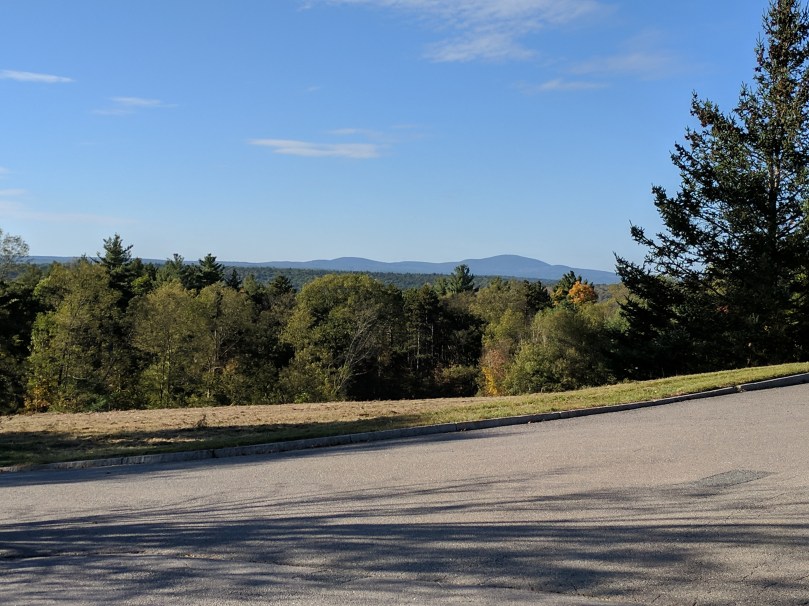
View from Tower Hill Botanic Garden
The first speaker was Gail Slater, General Counsel for the Internet Association, based in Washington, DC. She had also spoken at ALA’s Midwinter conference in Boston, where she said she realized that “Librarians are the first responders and guardians of the Constitution” (a nice way to win over your librarian audience right away).
Slater’s topic was “The Right to Be Forgotten: Rulings in the EU, Their Impact on Global Internet Companies and Pending Legislation in the United States.” She spoke about “a wave of public policy challenges” to do with the internet now; one of the key questions is about internet companies’ (“online intermediaries”) responsibilities in terms of content posted by users. At the moment, Section 230 of the Communications Decency Act protects them from liability, but this “safe harbor” law may change.
Slater then moved on to speak about the Right to Be Forgotten. In a key case from Spain in May 2014, the European Court of Justice ruled that search engines are responsible for the content they point to. People in the EU have the right to be forgotten; they can petition Google to de-index links to content about themselves, as Mario Costeja Gonzalez did in the Spanish case. The information itself still exists, but a search engine won’t bring it up.
A hanging plant, Tower Hill Botanic Garden
Google handles these requests, weighing the public’s right to know against the individual’s right to privacy. Slater explained that in the EU, they place a higher value on the right to privacy, while in the US, we place a higher value on the right to know and free speech. This is “one of the bigger issues” on the geopolitical scale.
During the Q&A, someone asked a very good question: If a person can claim the Right to Be Forgotten or right of erasure, can a corporation claim it? Slater thought there were two reasons this was unlikely, even in the EU: first, the definition of a “data subject” is an individual citizen, not a corporation; and second, the request itself would become a news event, reminding everyone of the original story that the corporation is trying to erase.
Someone else asked what librarians can do about some of these issues. Slater said librarians can speak out about the importance of speech and the right to know. In the EU, privacy is considered a human right, but free speech is important too. She spoke of these as “competing equities” that require a careful balance.
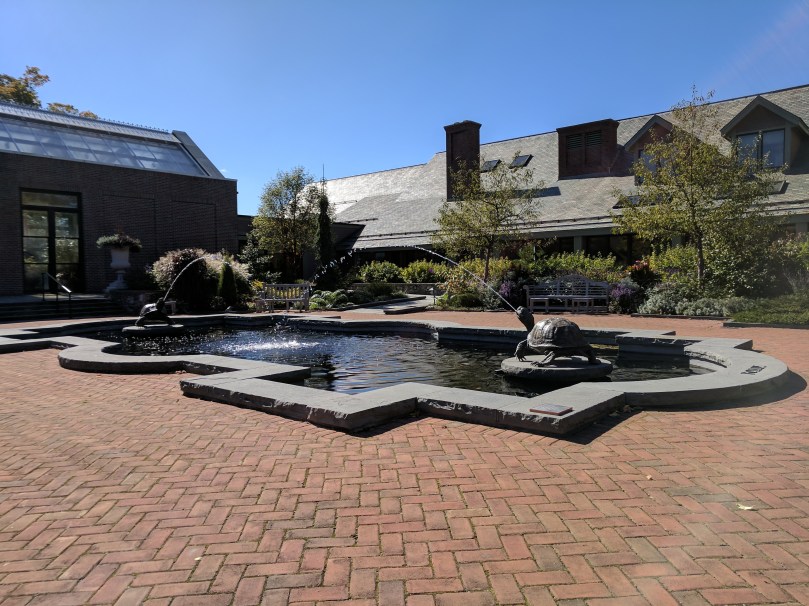
Turtle fountains in the Winter Garden, Tower Hill Botanic Garden
The second speaker was Shawn McIntosh, Assistant Professor of English and Digital Journalism & Communications at Massachusetts College of Liberal Arts. His topic was “Journalism Today: Learning to Trust the First Rough Draft of History.” Unlike Slater, he read a prepared speech, in the manner of a formal lecture. Rather ironically, he quoted Jay Rosen: “Journalism is a conversation, not a lecture.”
McIntosh spoke about what has and hasn’t changed in journalism. “Fake news” isn’t new, of course – there has always been propaganda, biased and partisan writing, and satire. However, “Willingness to accept the lies or spin them as ‘alternative facts’ or not caring is new.”
McIntosh said that his background in strategic communications (a.k.a. PR, a.k.a. “the dark side”) had been helpful: knowing how and why persuasion works, and how attitudes can be impervious to change even/especially when confronted with facts gives perspective to the news climate today. “Beliefs,” he said, “eat facts for lunch.” Research shows that presenting facts to counter someone’s beliefs does not work to change their minds (a disappointing thing for a roomful of librarians to hear).
Over the past few decades, McIntosh said, there has been a broad shift that is “dangerous to our civic and cultural life,” an erosion of public trust in experts and institutions. Journalists are seen as biased and untrustworthy sources. (Librarians, on the other hand, enjoy a high degree of social trust.)
A tree with fall foliage, Tower Hill Botanic Garden
What are the obstacles? Journalists are overworked and underpaid, and employees and coverage are being cut back, so there is more use of wire service content and less reporting on local issues. Less advertising leads to more cutbacks in a downward spiral. And the 24-hour news cycle certainly doesn’t help.
What can be done? “Journalism has to get back to its roots and break free from its modern traditions.” Rather than attempting or pretending to be objective, journalists must provide context for their stories. “Narrative and stories are how we make sense of the world….News is socially constructed. Acknowledge that.” Furthermore, because of mass communication and social media, the lecture style of journalism no longer works; it must be a conversation. Within this conversation, though, “people will seek trusted voices,” and curation (the librarian ears perk up) “will play more of a role than it has so far.”
In this environment, McIntosh said, “Developing higher-order critical thinking skills is crucial….News literacy and information literacy skills are vital.” Librarians, of course, are on board with information literacy and media literacy, but McIntosh also said, “It can’t be all consumption, it must be production too.” People need to look under the hood to get an idea of how things work. Here, he said, is a “natural place for libraries, educations, journalists to meet.” People meeting face to face in libraries and classrooms can lead to “exchanges and dialogues between people of different views, [which] can start to break down polarization.”
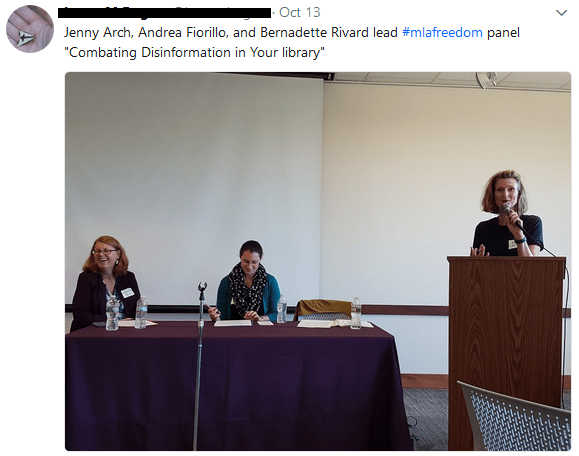
After a lunch break and a walk around the beautiful grounds, we reconvened in the conference room for a panel on “Combating Disinformation in Your Library.” I spoke, along with Andrea Fiorillo of the Reading Public Library and Bernadette Rivard of the Bellingham Public Library, about what we have done in our libraries to increase information literacy and media literacy.
Bernadette Rivard, Jenny Arch, Andrea Fiorillo
Last December, Bernadette wrote a blog post encouraging library users to “think before you share,” and giving tips on how to evaluate news sources. Andrea ran a “civil civics” series, bringing in speakers such as Melissa Zimdars (who was on the panel at the January conference; she also got online access to newspapers for the library’s patrons. (Most libraries still subscribe to newspapers in print, but because most people read the news online, digital subscriptions are another way the library can help connect people with quality information.) I spoke about my “What Is Fake News?” pamphlet, display, and library blog posts, and went over some tips that I’ll be sharing in a future library blog post.
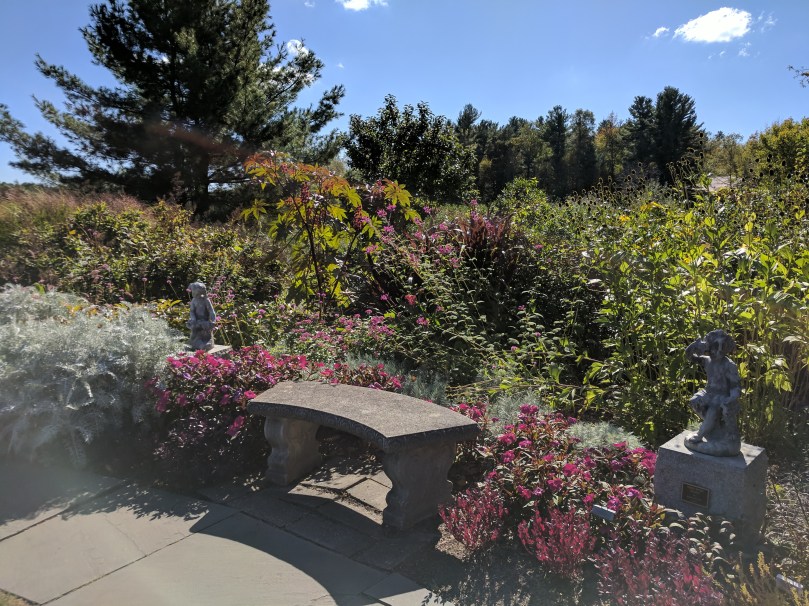
View of the pergolas from the Secret Garden
After the panel, we returned to our tables for small group discussion on the following four questions:
What does the term “fake news” mean for librarians and the communities we serve?
What are some creative and traditional approaches for librarians to support First Amendment awareness and education?
What are your library’s barriers and supports to promoting media literacy?
What has your library done and what would you like to do to support media literacy?
Conference organizers will be compiling the replies and sending them out to participants, so I may share those here later. At our table alone, we had a mix of public librarians (children’s and adult) and school librarians; I imagine academic librarians would have had a different set of answers. The hashtag for the conference, #mlafreedom, purposely didn’t include a date, so it may be used for related events in the future.
What does your library do to promote information literacy and media literacy? What role(s) do you think librarians can play in our current information environment? Do you have blog posts or handouts to share?
Arts and crafts didn’t end after elementary school like I expected they might. I put some basic arts and crafts (and graphic design) skills to work almost every month at the library (File under: “things they didn’t teach you in library school”). We have three main display tables, plus a set of shelves used seasonally (teen summer reading prizes in the summer, holiday CDs in November and December), and we change the displays every month. Rob’s awesome displays challenge the rest of us to up our game!
What’s the purpose of library displays? They convey information; they offer entertainment or humor; they ask passers-by to stop and engage (many of our displays have interactive elements); they highlight parts of the library collection; and they give people something to look at while they wait in line.
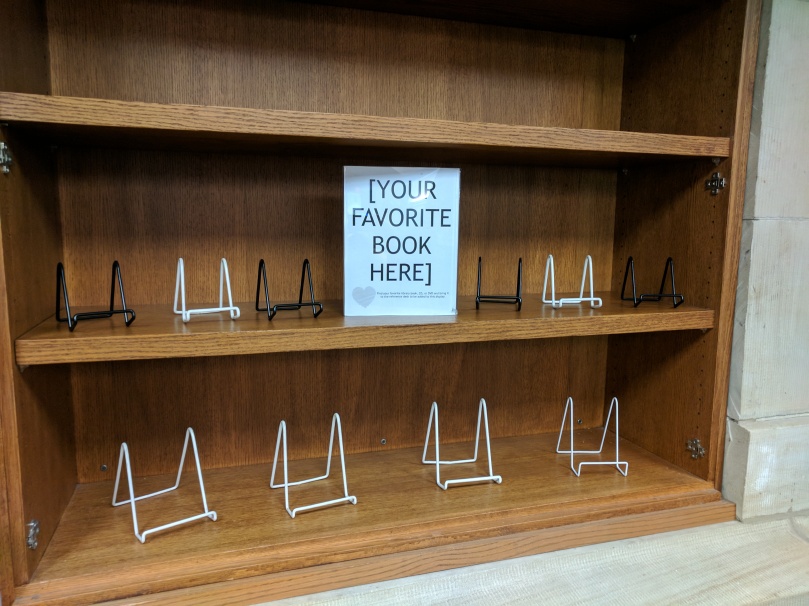
This is the simplest possible display: empty book stands with a sign that reads “[YOUR FAVORITE BOOK HERE]” and directions for how to add a book to the display. This display encourages engagement and participation by asking library users to recommend books (or movies or music) to each other.
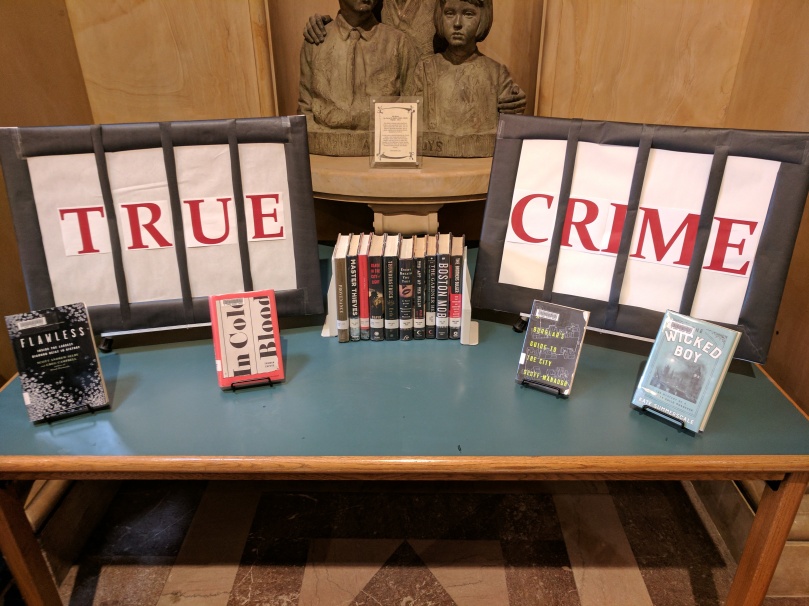
Sometimes displays feature a specific area of the collection; in this case, I highlighted our true crime books. It was very easy to pull books for this display, as they’re helpfully grouped in 364 (for Dewey nerds). I was pleased that I was able to pull off my vision of getting the words “TRUE CRIME” to look as though they were behind bars while still being legible. (The stone statue behind the table is not part of the display.)
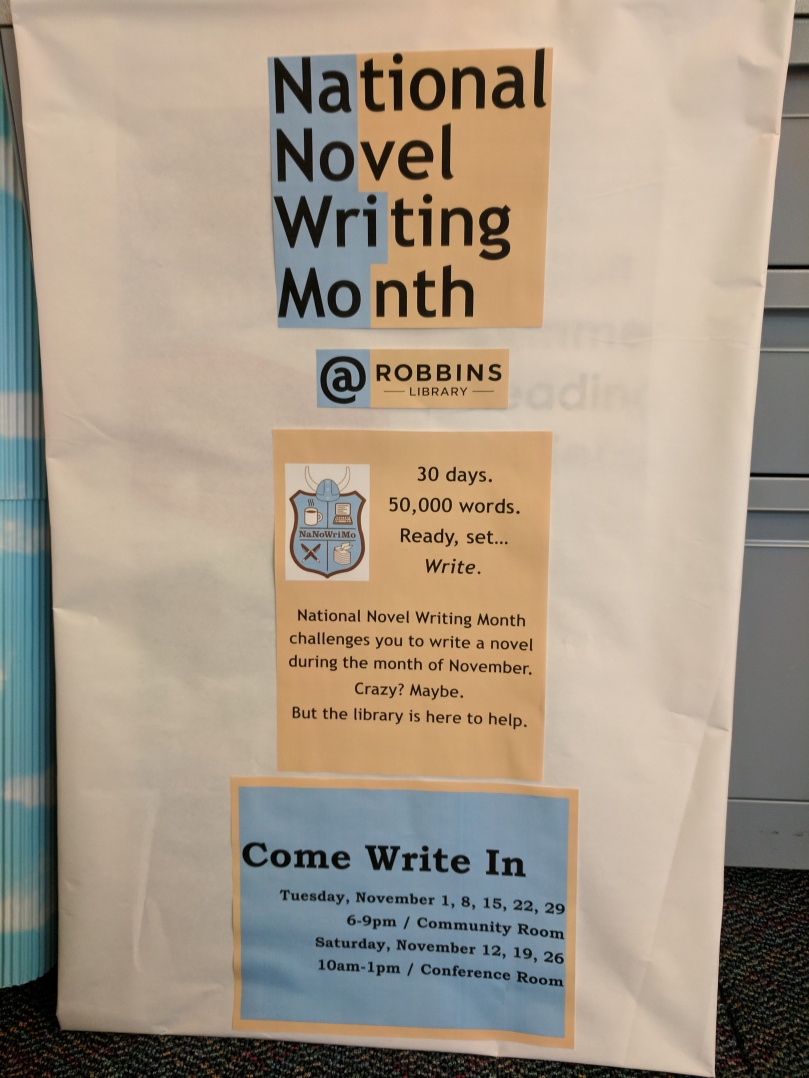
Some displays are annual; this one is part of last year’s National Novel Writing Month display. We hosted “Write-Ins” throughout the month. The display table included the schedule of write-ins and a word count calendar, along with some library books about writing, and the official NaNoWriMo poster for that year.
Not everyone knows what NaNoWriMo is, so I wanted to find a way to include both the whole name and the nickname; I achieved the effect by changing the background color behind the text. (I made this in Publisher, which gives the user more control and precision than Canva, plus it has the eyedropper tool that allows you to pick colors from a graphic or image and use that exact color for text or background; I used colors from the one of the NaNoWriMo graphics. Canva has other strengths, though!)
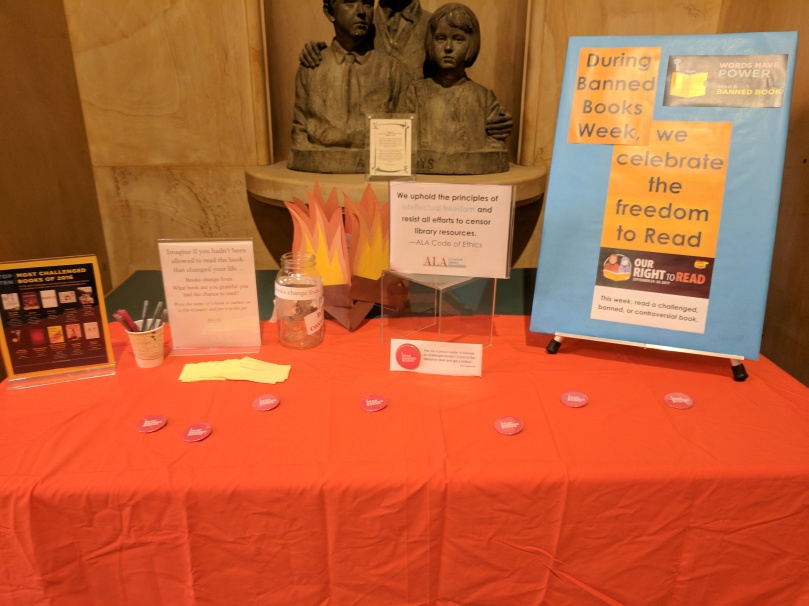
I always put up a display for Banned Books Week at the end of September; this one features a poster, a quote from the ALA Code of Ethics, an infographic from the ALA Office of Intellectual Freedom, some “I read banned books” buttons that I made, a small fake bonfire, and – my favorite interactive element – the “books change lives” jar, with comment cards and a cup of pens. The week after Banned Books Week, I pull the responses from the jar and write a blog post for the library.
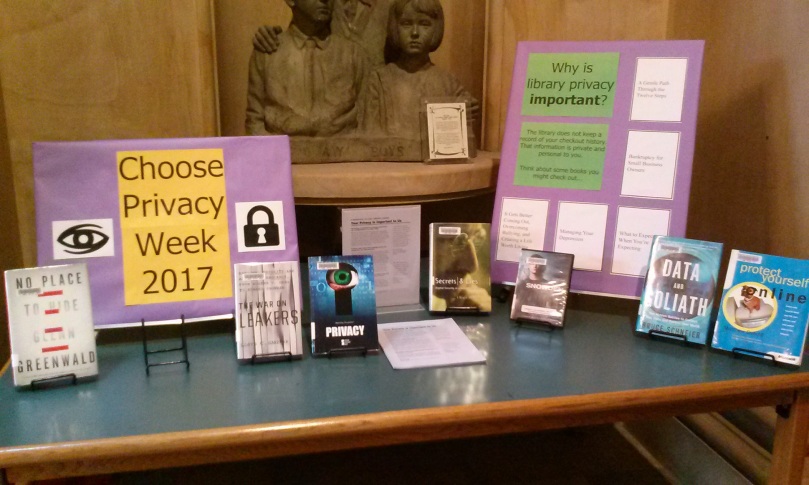
Choose Privacy Week is another annual display, in the first week of May. For this display, I designed two poster boards using simple, bold graphics and bright colors. The poster on the right in the photo that asks “Why is privacy important?” answers its own question in part by including the titles of library books that people might not want others to know they had checked out, from Managing Your Depression to What to Expect When You’re Expecting to It Gets Better.
I also included a fact sheet from ALA and books and DVDs about privacy from the library collection. People are always welcome to take library materials from the display to check out.
For Choose Privacy Week in 2015, I used a series of “True or False?” questions about privacy with answers under a flap of paper, so patrons were encouraged to interact with the display to get the answers.
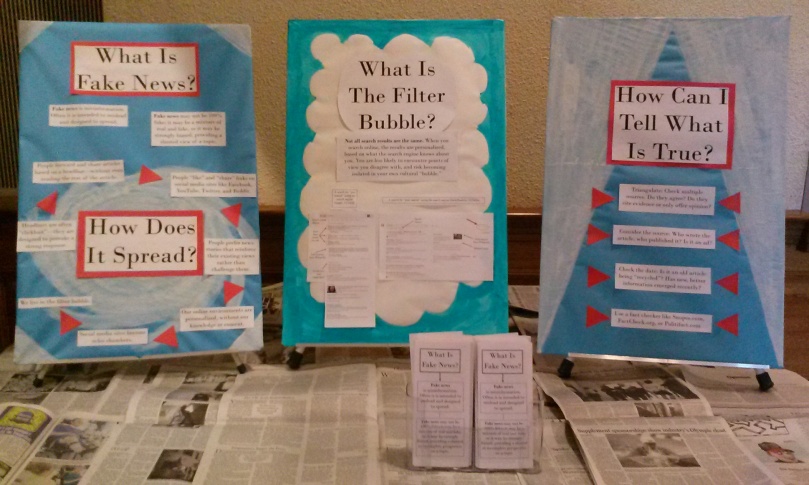
I started off the year with a “What is fake news?” display. Instead of using a tablecloth or butcher paper to cover the table, I used old newspaper. I put together three informational poster boards (a bit more text-heavy than usual), and included copies of a pamphlet with information about “fake news”: what is it, how it spreads, how to avoid spreading it yourself. (Basically, how to be a responsible information consumer. A PDF of the pamphlet is available here.)
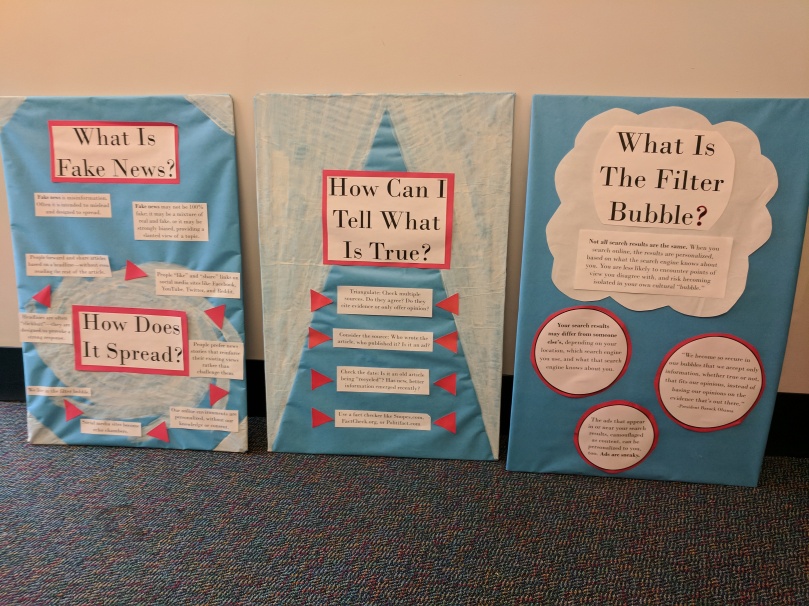
I updated one of the boards (“What is the filter bubble?”), as I will be bringing them to a conference and a class later this month.
None of these are particularly flashy – Rob might say I don’t use enough glitter, for one thing, and I could use more 3D objects and props – but I hope they get the point across. Do you make displays for your library? What are some of the ones you’re proud of? What materials and techniques do you like to use?
Once again, I’m borrowing a co-worker’s Top Ten Tuesday list to inspire my own. Hers was “Top Ten Books I read the first year I had my blog“; because my blog is not specifically a book blog, I looked to my Goodreads and LibraryThing accounts instead. I started my Goodreads account in 2007, though I didn’t start reviewing each book consistently until later.
What was I reading, then? Out of college (no more assigned reading) and into the publishing world (okay, sometimes assigned reading), bombarded with more novels than I could ever read, my reading choices fell into a few categories:
Contemporary fiction about which there was “buzz,” e.g. Michael Chabon’s The Yiddish Policemen’s Union, which I loved, and Ian McEwan (I tried and hated Saturday and Atonement; I liked On Chesil Beach better but decided that everyone else could just go ahead and continue loving him, but I was done).
Classics I didn’t read in school: No matter how good your education was, there’s no way you could read ALL the classics, but I had missed some key ones. I actually think this was for the better; I loved Pride and Prejudice much more in my early twenties than I think I would have as a teenager.
Nonfiction: Left to my own devices, I read barely any nonfiction for almost a year; then I realized I need to read some, so I made it a goal to read one a month. I started with a lot of memoir and biography (Audrey Hepburn, Jeannette Walls, Augusten Burroughs, Alice Sebold, Ann Patchett) and pop psychology (Malcolm Gladwell, Daniel Gilbert), but I sought out some feminist books as well, though I didn’t use that term at the time – I discovered Katha Pollitt (Learning to Drive) and read This Common Secret and The Girls Who Went Away. I caught up on classic nonfiction too, from Capote’s In Cold Blood to Joan Didion’s essays.
Poetry: I discovered Nick Laird’s poem “On Beauty” in Zadie Smith’s novel by the same title, and Laird’s To A Fault is still one of my favorite poetry collections.
But of course it was mostly fiction. I was just starting to separate out the authors I thought I should read from the ones I actually liked; there was some overlap, of course, but there was also Ian McEwan and Special Topics in Calamity Physics. So here’s the list part – what did I read then (mid-2007-early 2009) that I still love now?
Call Me By Your Name by Andre Aciman
To A Fault by Nick Laird (poetry)
In the Woods and The Likeness by Tana French
Ursula, Under by Ingrid Hill (I feel this one was overlooked, and I often put it on my Staff Picks shelf at the library, hoping others will discover it)
The Guernsey Literary & Potato Peel Pie Society by Annie Barrows and Mary Ann Shaffer
Eat, Pray, Love by Elizabeth Gilbert (the right book at the right time)
The Magician’s Assistant by Ann Patchett
An Exact Replica of a Figment of My Imagination by Elizabeth McCracken
Magic for Beginners and Stranger Things Happen by Kelly Link
Jane Eyre by Charlotte Bronte
Pride and Prejudice by Jane Austen
The World Without Us by Alan Weisman (nonfiction)
Overture by Yael Goldstein (found this on a remainder table at the Strand; overlooked in the same way as Ursula, Under)
Stardust by Neil Gaiman
Touchy Subjects by Emma Donoghue
It’s more than ten. Of course it is. And this is not to be confused with my all-time Top Ten list (either the one from 2007 or the one from 2017).
What books have stayed with you over the years? Which authors do you follow faithfully, which ones have you parted ways with?
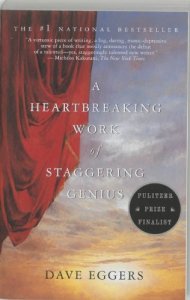 A Heartbreaking Work of Staggering Genius by Dave Eggers: This book mystified me when I read it – was it fiction? Memoir? What? – but I always liked the brash confidence of the title. And the bit about French fries.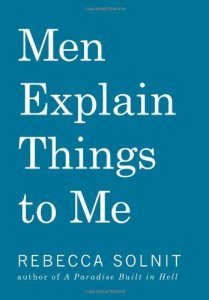

 It’s been seventeen years since we left Lyra and Will under the hornbeam trees in their two separate Oxfords; twenty-two years since we met Lyra and Pan, scurrying through Jordan College. When the kind bookseller at Porter Square Books slid my copy of The Book of Dust across the counter, I teared up. “A lot of people are excited about this book,” she said, smiling. I mentioned that my daughter’s name was Lyra, and that today was her birthday. “Oh,” she replied, “You’re really excited.”
 Aza Holmes – Holmesy to her best friend, Daisy – has a mental illness, a version of OCD. More than most people, she lives in her own head, but she doesn’t feel like she has control over her thoughts; she gets into obsessive thought-spirals, during which she withdraws from her surroundings, down into her worries, fears, and compulsions – only none of those are strong enough words to communicate her experience to others. Metaphor is the best she can offer, but even metaphor falls short: “The words used to describe it – despair, fear, anxiety, obsession – do so little to communicate it. Maybe we invented metaphor as a response to pain.”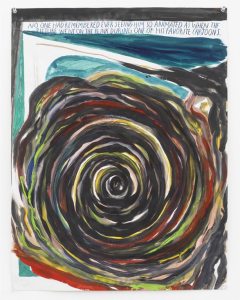



 Jenny Arch