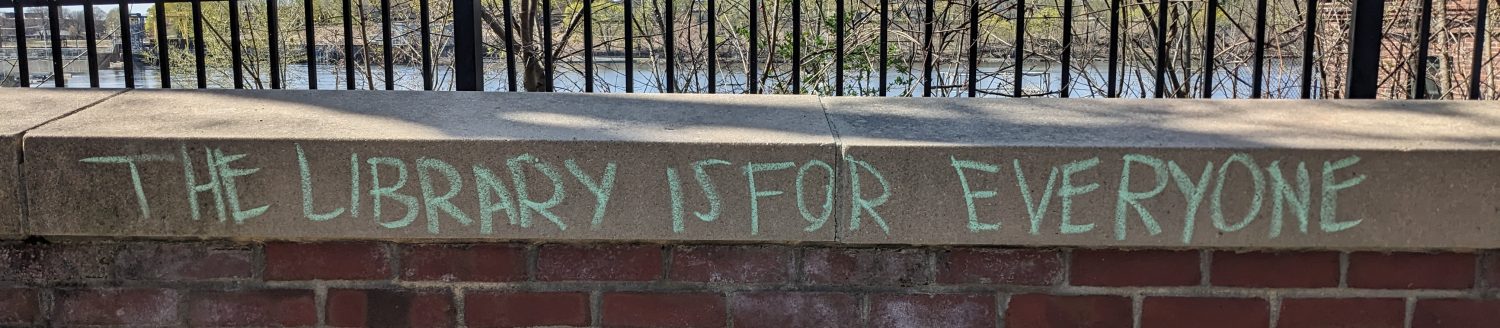
The Queen of Dinner Parties: in which I discover The Yale Book of Quotations

yalebookquotationsThe Library Link of the Day for September 30…you know, I’m having trouble even putting into words how delighted I was to read it (“Who Really Said That?” by Corey Robin in The Chronicle of Higher Education) and to find, as a direct result, The Yale Book of Quotations on the library shelf. I have always collected quotes – from books, from songs, from anywhere really. I am a magpie, and quotes are my shiny objects.

How, then, did I not discover The Yale Book of Quotations previously? I do not know. But needless to say that when I did find it, browsing through it was a purely joyful experience. (Book nerd. Yes. That has been established.) At last, I could find out whether Oscar Wilde’s last words really were “Either that wallpaper goes, or I do.” (Close enough: “Decidedly one of us will have to go.”) I could verify the wording of Clarke’s Third Law (“Any sufficiently advanced technology is indistinguishable from magic”) and discover that he also said, “How inappropriate to call this planet Earth when it is clearly Ocean” (1990).

I could be indignant that the lyrics of Eminem’s “My Name Is” and “The Way I Am” were included nearly in full, but there was only one quote from The Princess Bride (“Life is pain…anybody that says different is selling something”). Incidentally, you’d have to know that William Goldman wrote the book (and the screenplay) to find the Princess Bride quote, because the contents are organized alphabetically by author last name. (Would anyone look under Morgenstern, I wonder?)

For anyone who believes, as I do, that correct wording is important, and correct attribution is equally important, The Yale Book of Quotations is a goldmine. (“Oh, you’re going to be the queen of dinner parties,” my husband said when I bombarded him with my new discovery. “You won’t be able to take me anywhere,” I agreed.) With over 12,000 quotes in 851 pages (plus a keyword index that brings the total page count to 1067), this is one of those times when a book might just be better than the internet. Here are a few of its many gems:

“Mother told me a couple of years ago, ‘Sweetheart, settle down and marry a rich man.’ I said, ‘Mom, I am a rich man.'” -Cher, 1995

“When Tolstoy wrote that all happy families are alike, what he meant was that there are no happy families.” -Susan Cheever, 1991

“What America does best is to understand itself. What it does worst is to understand others.” -Carlos Fuentes, 1986

“Diplomacy is to do and say / the nastiest thing in the nicest way.” -Isaac Goldberg, 1927

“Gentlemen, include me out.” -Samuel Goldwyn, 1933

“You lose more of yourself than you redeem
Doing the decent thing.” -Seamus Heaney, 1984

[J. Cheever Loophole, played by Groucho Marx, speaking:] “I bet your father spent the first year of your life throwing rocks at the stork.” –At the Circus (motion picture) (1939) Screenplay by Irving Brecher.

[Responding to a fan’s request that he autograph a school chemistry book:] “Sure thing, man. I used to be a laboratory myself once.” -Keith Richards, 1994

[On looting after the fall of Baghdad:] “Stuff happens!” -Donald Rumsfeld, 2003

“A rattlesnake that doesn’t bite teaches you nothing” -Jessamyn West, 1979

“I myself have never been able to find out precisely what Feminism is: I only know that people call me a Feminist whenever I express sentiments that differentiate me from a doormat or a prostitute.” -Rebecca West, 1913

“It was in dealing with the early feminist that the Government acquired the tact and skillfulness with which it is now handling Ireland.” -Rebecca West, 1916

[Mother:] It’s broccoli, dear.
[Child:] I say it’s spinach, and I say the hell with it.
-E.B. White, New Yorker cartoon caption, 1928

“Our deepest fear is not that we are inadequate. Our deepest fear is that we are powerful beyond measure. It is our light, not our darkness, that most frightens us.” -Marianne Williamson, 1992 (frequently misattributed to Nelson Mandela)

I also wrote about this article and book on the Robbins Library blog.
Censorship and Invisibility

Barbara Jones, the president of the ALA Office for Intellectual Freedom (OIF), has written an excellent piece over at the Huffington Post. Here’s a short excerpt, but I encourage you to read the whole article:

“I am deeply concerned about the current deluge of removals of classic books from the American literary canon. I thought that, as a society, we had reached a consensus that the literary canon should represent diverse segments of U.S. society. Multicultural literary works are not being included because of some need for “political correctness.” They are included because they are excellent and have been acknowledged as such by countless awards for literary merit. Though books that deal with controversial topics may make some readers uncomfortable, such literature offers a vehicle for true learning and understanding.”

(Emphasis added.)

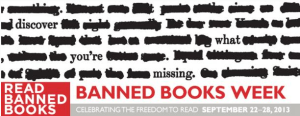
readbannedbooks2013As Rebecca points out in another great article on the Robbins Library blog (“Freedom to Choose”), “There’s great value in discussion, and books are, by far, the safest route into many of these discussions.” With a few exceptions, the books that get people up in arms are novels, not nonfiction. This only proves that fiction is powerful; that it engages readers’ imagination and empathy, allowing them to experience a time, place, culture, or situation that they might not otherwise be exposed to – or, if they are exposed to it, they may be unprepared.

A little over a year ago, I wrote about the power and importance of fiction (“The Gleam in the Dark”), citing “Your Brain on Fiction” by Annie Murphy Paul from The New York Times and “Why Fiction is Good for You” by Jonathan Gottschall from the Boston Globe. Those pieces are worth a re-read now, during Banned Books Week, to remind us all about the value of stepping into someone else’s shoes, and the magical power fiction has to let us do that.

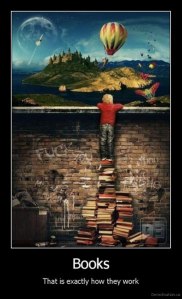
booksthisishowtheywork


“Everyone has a different idea of what constitutes ‘appropriate content’”

There is lots of great Banned Books Week-related stuff on Twitter this week (#BannedBooksWeek), and today’s Library Link of the Day was an NPR segment from Tell Me More called “Could banning books actually encourage more readers?” (Answer: we hope so!) My favorite find via Twitter (so far, at least) is this post from Shoshana at the Brookline Booksmith. It was a good reminder that librarians aren’t the only ones fighting for intellectual freedom and defending everyone’s right to read; publishers and booksellers are in it with us. 

Shoshana wrote, “Everyone has a different idea of what constitutes ‘appropriate content.’ I’ve talked with a lot of parents about what’s right and what’s not right for their kids to read. Some parents want to avoid anything “scary.” Others ask about the The Hunger Games and relax as soon as they learn that although it’s about teenagers being forced to fight to the death, it doesn’t have any sexual content….What I love about the customers in our kids’ section, though, is that the question is pretty much always what’s appropriate for the particular kid in question, not what should be published or be on our shelves….People around here seem to get that what’s all wrong for one reader might be just right for another; even siblings have different levels of scariness tolerance or ability to understand difficult topics.”

She makes a great point: what is “appropriate” for one reader may not be appropriate for another (this is one of the reasons that putting ratings on books is a terrible idea). This is part of readers’ advisory, and it’s a great skill – as a bookseller or a librarian – to be able to talk with parents about what their kids are ready to read (or to talk directly with kids; I know an eight-year-old who didn’t feel ready to read Harry Potter when he was seven, but feels like he might be ready now).

Remember: Every reader his/her book, and every book its reader.


Banned Books Week 2013

bannedbooksweek2013banner

Banned Books Week is probably my favorite event on the calendar of library and literary events. It is a celebration of the freedom to read whatever you want, the freedom from censorship. It also provides encouragement to those who are still fighting for the right to read – those whose state Board of Education presidents want Toni Morrison’s The Bluest Eye out of the classroom, those who miss out on hearing Rainbow Rowell – author of the excellent Eleanor & Park – speak at their school or public library because a few parents in the community object to the swear words in the book. (Those are just two recent examples; read more about them in my Banned Books Week post on the Robbins Library blog.)

Last year for Banned Books Week, I wrote about which books were most commonly banned or challenged, and who did the challenging; I also shared a few of my favorite “better book titles for banned books.” Two years ago, less punctually, I shared a quote from Jenny Lawson, author of Let’s Pretend This Never Happened: A Mostly True Memoir (which I am certain has been challenged many times since its publication). Also in 2011, I wrote about attending the panel “Whose Common Sense?” at the ALA Annual Conference, where the four panelists (including David Levithan!) discussed why books for teens should not be labeled or censored.

Even if you don’t pick up a book this week, take a moment to appreciate the fact that you could, if you wanted, and that no one would try to control your reading choices, or keep something out of reach because they thought it was inappropriate. We should all get to make our own reading choices.

To close, I’ll quote my co-worker Rebecca, who authored a column for the local paper about Banned Books Week. She wrote, “There’s great value in discussion, and books are, by far, the safest route into many of these discussions (i.e., reading and talking about that book the deals with teen pregnancy is preferable to your teen talking to you about what it’s like to be pregnant).  Books are safe spaces to experience new things.  New thoughts.  New ideas.  Different points of view.  They are a way to journey back in time and careen far into the future.  Books teach us how to empathize with each other, how to stand up for the little guy, and how to recognize the bad guys in our lives….We experience strong emotion alongside our favorite characters – joy, catharsis, loss, excitement.  Books are a safe way to learn about life, without all the painful bumps and bruises.”

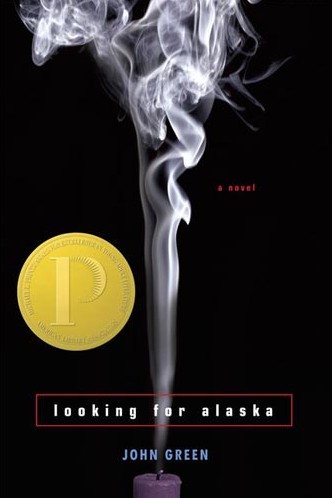
When the opportunity arises, stand up for your own right to read, and help defend others’ right to read as well. Books change lives – almost always for the good. What’s one book you read that changed your life? A book you’re glad you didn’t miss out on? A book you’d recommend to others? Here are a few banned/challenged books that I wholeheartedly love and recommend:

lookingforalaskaEleanorPark_cover2-300x450kiterunner

handmaidstale


Fall Titles: The Signature of All Things, The Lowland

This fall should be a good one for publishers and readers alike. Many beloved authors are coming out with new titles in September, October, and November, including Margaret Atwood (MaddAddam), Stephen King (Doctor Sleep), Amy Tan (The Valley of Amazement), and several others. I was lucky enough to read advance copies of two of these anticipated titles: The Lowland by Jhumpa Lahiri, and The Signature of All Things by Elizabeth Gilbert.

lowland First, and most eagerly awaited, The Lowland: a friend of mine who attended ALA in Chicago snagged a galley and generously let me borrow it. Lahiri (Interpreter of Maladies, The Namesake, Unaccustomed Earth) treads familiar ground with a story of an Indian family, some of whom move to the American Northeast, and some of whom stay behind in India.

Those who read the fiction section of The New Yorker may recognize the first several pages of The Lowland, in slightly altered form; it was published as “Brotherly Love” in the June 10 issue earlier this year. The brothers are Subhash and Udayan: the elder is cautious, the younger is reckless (“[Subash’s] parents did not have to worry about him and yet they did not favor him. It became his mission to obey them, given that it wasn’t possible to surprise or impress them. That was what Udayan did”).

Though the brothers grow up side by side, their paths diverge, with Udayan becoming involved in a dangerous political movement – the drastic consequences of which echo for decades after Udayan’s death and Subhash’s marriage to his brother’s widow, Gauri.

The narration is a close third person, shifting perspectives every so often, from Subhash, to Gauri, to their daughter Bela, to the brothers’ mother Bijoli, and finally to Udayan. Lahiri creates intensely believable characters in the Mitra family, and she covers a significant time span with her spare, beautiful prose.

The Lowland has been shortlisted for both the National Book Award and the Man Booker Prize.

signatureofallthingsThe Signature of All Things by Elizabeth Gilbert (Stern Men; Eat, Pray, Love; Committed) covers an even greater span of time, at a much more leisurely pace. For once, I could not agree more with the Publishers Weekly review, which is a marvel of conciseness. This thoroughly researched story begins with Henry Whittaker, a scrappy young thief whose father works at Kew Gardens. Henry eventually becomes one of the wealthiest men in Philadelphia, and his daughter, Alma, grows up on the family estate, White Acre.

Alma is given all the advantages Henry did not have, especially education; but, because she is plain (especially compared to her beautiful adopted sister, Prudence), she must resign herself to spinsterhood while Prudence and their mutual friend, Retta, both marry.

Alma devotes her time to business – after her mother Beatrix’s death, she is Henry’s right hand – and the study of mosses. Her life continues in this quiet, circumscribed, but more or less satisfying manner until the arrival of Ambrose Pike, an orchid artist. For the second time in her life, Alma falls in love, and she and Ambrose marry, but the marriage is not what either of them expected, and Ambrose leaves White Acre.

Soon afterward, the inimitable Henry Whittaker dies, and Alma decides, finally, to leave White Acre and travel. She follows Ambrose’s path to Tahiti, and after a few years there, makes her way to her mother’s homeland of Holland.

Gilbert incorporates her research into the story in a way that is natural, not distracting – a harder task than it appears. From beginning to end, she maintains control over the story and the characters; I was aware of the narrator’s voice and presence throughout the time I was reading. Perhaps this slight distance was the reason I did not feel the full emotional impact of admittedly dramatic events throughout Alma’s life. Still, this is a unique book, and an especially great choice for those who are interested in botany, science, history, or travel.

E-books in libraries

Cross-posted, in modified form, from the Robbins Library blog.
It’s a real struggle sometimes to refrain from prefacing the name Cory Doctorow with the phrase “my hero.” In addition to being an author (Little Brother and Homeland, among others), blogger, journalist, and the co-editor of Boing Boing, he is also a tremendous advocate for libraries. In particular, he often writes about the relationship between libraries and publishers.

Most public libraries have jumped on the e-book bandwagon, and have found some platform from which to lend e-books for patrons to borrow. However, these platforms are usually somewhat clunky (though they are improving), and publisher restrictions hamper what books libraries are able to buy and how we are able to lend them. Thus, for the most part, e-books work much the same way print books do: one person can use them at a time, and if more than one person wants to read a particular book, there is a waitlist.

The “one copy/one user” model, as it is called, is an artificial constraint put in place by the publishers, who require each e-book to come wrapped in digital rights management (DRM) software. DRM limits what readers can do with their e-books: an e-book with DRM will only work on certain devices, usually can’t be moved from one device to another, can’t be lent or shared, and can’t be copied.

Of course, publishers are correct to be concerned. E-books are new territory, and it’s much easier to copy a digital file than it is to copy a print book. However, as Doctorow points out, libraries are, and always have been, publishers’ greatest allies. Especially with the decline of brick-and-mortar bookstores, it is often librarians, not booksellers, who connect readers with new authors.

Here are a couple of paragraphs from one of Doctorow’s latest essays on the topic, but I encourage you to read the whole piece:

“There are libraries in every town, and even though they’re under terrible assault in the age of austerity, they remain the mark of a civilized society and benefit from librarians’ amazing organizational skills. The modern library has become something like a bookstore, where helpful staff who love books and authors take enormous pride in ‘‘hand-selling’’ the publishers’ products to their patrons. Libraries host some of the best author events, too, providing a vital space for readers and writers to connect.

Unlike every other channel for e-books, libraries are not the publishers’ competitors. They don’t want to sell devices. They don’t want to win over customers to a particular cloud. They just want readers to read, writers to write, and publishers to sell. They deserve a better deal than they’re getting.”

Librarians continue to push the conversation along, but meanwhile, we’re still buying (well, licensing) e-books for our patrons at unfair prices, under unfair restrictions. But it’s not all doom and gloom: some publishers, like sci-fi imprint Tor, are experimenting with DRM-free books, and so far that has not led to an explosion of e-book piracy, so perhaps more publishers will move in that direction.


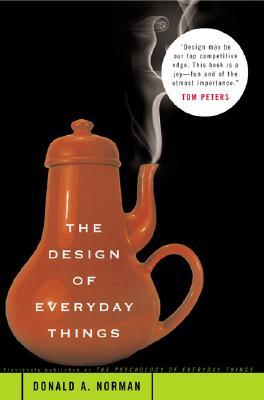
The Design of Everyday Things by Donald A. Norman

“Good design is actually a lot harder to notice than poor design, in part because good designs fit our needs so well that the design is invisible, serving us without drawing attention to itself. Bad design, on the other hand, screams out its inadequacies, making itself very noticeable.”

designofeverydaythings
The above quote is from the preface to the new edition of The Design of Everyday Things, which will be published in November (the preface is already available). If I’d known a new edition was coming so soon, I might’ve waited a few months, but as it is, the 1988 edition holds up fairly well. The examples are outdated, but the principles remain sound, and Norman even predicted certain technological advances (the smartphone, for example).

Norman’s principles of design truly do apply to everything that people make and use, from the simple (doors) to the advanced (computers). Though technology has improved since 1988 (now, of course, computers are everyday things), some of the same design flaws persist, and Norman’s decades-old observation still holds true to some extent: “[D]esigners of computer systems seem particularly oblivious to the needs of users…” Designers, who know their products well, often fall into the trap of thinking that they are the typical user, when in fact, they usually cannot predict the type of errors that users will commit.

So, what are these principles?

Visibility: Is it clear from examining the object in question how it can be used, or what should be done with it? For example, is the on/off switch in the front, or hidden around the back? I thought of an example of poor visibility right away: at our library, we have a coin box where patrons pay for their print jobs. This box is designed so that coins go in a slot at the top. The machine also accepts $1 and $5 bills, but the slot for the dollar bills is placed on the front of the box but very far down, near the floor. Patrons frequently come to the desk to get change for a bill, and we show them that the machine does in fact accept bills. A lot of them apologize for bothering us and blame themselves for not seeing the bill slot, but really, it is a bad design: the bill and coin slots should be grouped together.

Natural mapping: Essentially, does the way a thing works make sense? A joystick or a mouse employs natural mapping: forward=up, backward=down, left=left, right=right. Likewise a steering wheel in a car: turn right to move right, and left to move left. The opposite would be counterintuitive, confusing, and frustrating, and would lead to frequent error.

Conceptual model: Norman writes about three aspects of mental models: the design model, the system image, and the user’s model. The design model is the designer’s mental map of how their product works; the system image is what the product shows to the user; and the user’s model is a mental map of how they think the product works. In the preface to the 2002 edition, Norman writes, “Design is really an act of communication, which means having a deep understanding of the person with whom the designer is communicating.” Because the designer and the user don’t communicate directly, the user’s only insight into the designer’s mind is through the system image. Therefore, the designer must “explain” through the system image how the product works, and guide the user to perform the correct actions for the task they want to complete – not an easy feat. However, Norman writes, as a rule of thumb, “When instructions have to be pasted on something…it is badly designed.” Things work best when the designer and the user have similar conceptual models.

Feedback: Once the user has completed an action, how does s/he know whether it has worked or not? Humans generally are not comfortable with uncertainty, so a good design provides feedback to explain what is happening or has happened. “Design should…make sure that (1) the user can figure out what to do, and (2) the user can tell what is going on.” Feedback includes everything from progress bars (“Your download is 58% complete”) to descriptive error messages with helpful next steps.

Swash_ornament_zeimusu

While reading The Design of Everyday Things, Clarke’s Third Law came to mind: “Any sufficiently advanced technology is indistinguishable from magic” (Arthur C. Clarke). When processes become invisible, they come to seem magical and mysterious. The flip side is that “magic” is hard to take apart, fix, and put back together; cellphones aren’t like old radios. With much of today’s technology, it is difficult for users to tell what is happening, and, if something is going wrong, how to fix it. The Design of Everyday Things doesn’t necessarily help users who are frustrated with a product (except by assuring them that it likely isn’t their fault, but rather the fault of the design), but it does help us recognize bad design, think about how it could be better, and appreciate good design.

More quotes from the book can be found in my Goodreads review.

What to read and how to read it: RSS feeds and library blogs

When Google Reader announced it was shutting down, I considered several options and chose to migrate to The Old Reader. The migration took a few days because of heavy traffic, but once that was done and I started using it, I liked it a lot; it was the most similar and therefore least disruptive change.

However, right around the time I went to NELLS, The Old Reader was having some issues and it looked like it was going to be down for quite a while. To their credit, they’re doing everything they can to make The Old Reader sustainable in the long term, but I didn’t want to be without my RSS feed for that long.

feedly-logo1-640x297Instead of looking back at my first post on the topic (see link in first paragraph), I went ahead and chose Feedly. If I had looked back at my own research, I probably would have gone with Newsblur, but I’ve been fairly happy with Feedly. It’s easy to organize your subscriptions into folders and move the folders around; there are a number of view options; the app for the tablet is good. The left-hand sidebar menu tends to disappear (to give more room to what you’re reading), but reappears when you float over it.

But the RSS tool is only the how, not the what. The what, of course, is the content itself, and since NELLS I have added a few more blogs to my “Library Blogs” folder, including friends and fellow NELLS participants Anna at LCARSLIBRARIAN and Sarah at librarysarie. (Those links go directly to their posts about NELLS.)

A few of my other favorite library blogs:

  • Brian at SwissArmyLibrarian: SwissArmyLibIn addition to the always-interesting Reference Question of the Week, Brian also writes clear, concise, thoughtful posts relevant to the public library world. He has a lot of experience as a librarian, but I think his blog would be interesting for library patrons as well as other librarians. Plus, he works in Massachusetts, so if you’re in New England there’s a good chance you’ll see him in person at a conference. Say hi!
  • Sarah at LibrarianInBlack: Opinionated, honest, and unafraid to stand up for herself and her library, Sarah is the director of a public library in California. As she says on her “About” page, “I am a big technology nerd and I believe in the power of libraries to change lives.  Combined, they make a fearsome cocktail.”
  • Jessamyn at Librarian.net: Jessamyn writes from Vermont about libraries, technology, politics and government (she covered the Kirtsaeng v. Wiley case, for example). A great writer, relevant and interesting content. LibraryLoon
  • Gavia Libraria, the Library Loon: the pseudonymous Loon writes about issues within library school and academic libraries. I enjoy her opinionated style as well as the substance of each post. She recently linked to Meredith Farkas’ piece, “Managing the ‘whole person,'” which I highly recommend, especially to NELLS folks. Meredith’s blog is another good one for those interested in academic libraries and instruction in general.
  • Julie at Perfect Whole: Julie is a librarian, reader, and writer who until recently wrote twice-monthly essays, published on the first and 15th of the month. This schedule has been suspended recently but there are plenty of thoughtful, well-crafted essays as well as the occasional current post.  Her “I can’t believe you’re throwing out books!” essay sparked a lot of conversations about weeding.
  • Linda at ThreeGoodRats: Linda is one of my co-workers (we both write for the Robbins Library blog) and ThreeGoodRats is where she reviews the many, many books she reads. Her reviews are neat, to-the-point, honest, helpful (if you’re trying to decide whether or not to read that particular book), and insightful. She also has a Sunday knitting feature that will knock your (handmade) socks off. YALSATheHub
  • Young Adult blogs: I enjoy the unique review style at Forever Young Adult, though I don’t read 100% of the content. Some of their reviews are now featured on Kirkus. They also write TV show recaps. YALSA’s The Hub is another YA blog I browse (Anna of LCARSLIBRARIAN writes for them sometimes). There is a high volume of content so I don’t read everything, but a recent favorite post is “Too Many Trilogies.”

So those are a few blogs I make a point of reading. What are your favorites? And what have you found to replace Google Reader (assuming you were using it in the first place), and are you happy with it? Comment below!

Open Letter: Authors for Library E-Books

Naturally the subject of e-books in libraries arose during the week at NELLS. For those who are unfamiliar with the issue, Maureen Sullivan’s open letter to publishers (9/28/2012) is a good place to begin. In it, she explains how libraries support publishers by improving literacy, instilling a lifelong love of reading, and aiding discovery of new authors and genres. E-books in libraries will no more cannibalize e-book sales to consumers than print books in libraries have (i.e., they won’t; research shows that most people who borrow from the library also buy books).

A4LE_badge2

The Authors for Library E-Books campaign (@Authors4LE on Twitter; #A4LE) is an effort to encourage authors to speak out on this issue. Libraries and authors are natural allies, and we all need to speak up to bring this change about. To this end, I contacted a few authors that I have met over the years – through publishing or through author events at bookstores and at the library. I’ve included a template of my letter here; if you know an author (or two, or five, or twelve) who supports libraries, feel free to tweak this and send it along. I personalized each one by mentioning a recent reading of theirs that I’d attended, a program they’d done at a library, or a new book of theirs coming out soon.

An Open Letter to Authors for Library E-Books

Dear [Author],

I hope you are having a good summer so far. I know you are a strong supporter of libraries, and I thought you might like to join ALA’s “Authors for Library E-Books” effort.

I’m sure you’re aware of the ongoing discourse between publishers and libraries on this topic. As it stands, each publisher has come up with a different solution: HarperCollins, for example, licenses e-books to libraries at a reasonable cost, but those licenses expire after 26 uses. Other publishers, such as Random House, charge libraries more than three times the consumer price for e-books and digital audiobooks.

Author and library advocate Cory Doctorow has made a short (four minutes) video about why he supports the Authors for Library E-Books campaign. He says, “Libraries have been so important to the careers of writers, and librarians are such fabulous advocates for authors….Libraries should be able to buy books and they should be able to buy them on fair terms.”

Join Cory Doctorow, Jodi Picoult, Ursula Le Guin, and many other authors who stand with libraries on this issue. You can sign onspeak out, and learn more at the A4LE site, or of course feel free to contact me with any questions or feedback.

Sincerely,
Jenny

NELLS Discussion Questions

Many of our most lively and productive discussions during NELLS came out of asking questions; a single question could launch an hour-long conversation. I have included several of these questions below, including snippets of our discussions, but first, a definition:

Leader: a person who influences others in an identified situation or group to obtain a particular result that will benefit the organization. Such a position does not depend on a title or on some recognition of formal authority.

That is the definition of a leader from Developing Library Leaders by Robert Stueart & Maureen Sullivan (Neal-Schumann Publishers, 2010). The difference between a leader and a manager is not purely semantic; not all people in management positions are leaders, and many leaders are not in management positions. Thus, when a question is directed at “leaders,” it can apply to managers and non-managers alike.

What do you want to do/become? The scope of this question can be as large or small as you like, but keep in mind: “This is not a dress rehearsal – this is it.” As Maureen Sullivan said, “We are adults in development throughout our lives.” At the same time, she reminded us, “Perfection is not possible.”

What are the three greatest challenges that you face as a leader in your work? Identifying and articulating the challenges is a first step in beginning to address them in a productive manner.

Questions managers can ask those they are managing: What is one thing you would like to change and how could we do it? (One NELLS participant, a library director, said her approach was, “We’re not brain surgeons, no one’s going to die, let’s try it.”) What about [our library/this process] would you like to change? Managers can empower those they manage by saying, “Okay, try that.”

Where and when do challenges become opportunities? “Innovation happens most often through adaptation,” Maureen Sullivan pointed out.  Sustained change does not happen by a revolutionary process, but by an adaptive process.

Who are you, what do you bring, how can you sustain it over time? Consider your strengths. Also consider how you can stay energized and focused. (“Work-life balance” was mentioned here.)

Why are we doing what we do? There was a flood of answers to this question, put to the group by Rob Maier. One participant said that patrons frequently approached the desk at her library and prefaced their question with the phrase, “I don’t know who else to ask…” As a group, we determined that libraries are (or can be): the heartbeat of the community, a community center, a social good, access to information and resources, a nonjudgmental space, a path to citizenship, the cornerstone of democracy. Some of these answers sound lofty, but all are true.

Would you rather have a boss/employee who is passionate or effective? This was one of the best discussions of the week. Ideally, of course, you work with people who are both passionate and effective: people who are inspired, energetic, and visionary, and who have the ability to get things done on a detailed, day-to-day level. In reality, however, most people fall toward one end of the spectrum or the other: some see the big picture but aren’t great at the details, while others excel at getting things done efficiently and effectively, but aren’t overflowing with big ideas. The solution? Not everyone has to be everything, but make sure your staff has some of each.

Why aren’t libraries on the radar of non-library users? In every community, there are people who don’t use the library – not to check out books or movies, not as a quiet work space, not to attend programs for themselves or their children, not to access the internet. What can we do to convert more non-library users into library users? Is it a matter of advertising what we offer, or offering different things?

Questions to ask when assessing a new process or program: What went well/what worked? What didn’t work? If we did it again, what would we change? Evaluation is an important part of trying new things and improving them for the next time around.

What if you’re happy where you are and don’t want to get to “the top”? Most libraries are hierarchical to some extent, but what if you have no desire to be a library director? We discussed how to grow within your current position, and considered the question, What do you need to know to do your work?

What steps can we take to prepare for the future and ensure that our libraries thrive? Like many organizations, it can be difficult for libraries to move with agility and speed to adjust to change. This question bypasses reactive steps and encourages proactive ones. Libraries are ideal environments to foster a culture of experimentation and learning. We can help – in nearly every case, are already helping – close the digital divide. We can take more risks, without jumping on every new trend. Libraries can be like nimble little goats, surefooted on a rocky surface.

How is 24-hour access to the web changing your library and how do you want to lead that change? Again, the focus here is on leading change, not reacting to it. Library websites, accessible 24/7, are patrons’ only portal to library services when the building itself is closed. What resources can we offer, and how can we present those resources in a clear, organized, attractive way?

Do you feel barriers to political or community engagement? Can you overcome them? Librarians can and should be advocates for the library, which means community engagement and political engagement. The OCLC report, From Awareness to Funding: A Study of Library Support in America, is a good place to start. (For those in Massachusetts, Krista McLeod, co-chair of NELLS and director of the Nevins Memorial Library in Methuen, can provide additional resources.)