Happy National Library Week

This week is National Library Week, the time of year that we “celebrate the contributions of our nation’s libraries and librarians and promote library use” (as opposed to the rest of the year…when we also do those things). Jessamyn West wrote a NLW post full of great links at the actual beginning of the week, which is well worth checking out. The Swiss Army Librarian posted a wonderful quote from the very pro-library author Neil Gaiman back in 2011, which is worth revisiting. And of course, the #nlw13 tag is also active on Twitter.

On Monday afternoon – Marathon Monday – I was sitting with a friend of a friend who is considering leaving academia (she’s a few years into a PhD in English Literature) and becoming a librarian. We had met up to talk, and she asked me what librarians were like. I told her one of the striking things I had noticed about librarians as compared to people in other professions: on the whole, they – we – are collaborative, not competitive. We are friendly and helpful and very willing to share our work, our discoveries, and of course our favorite books. “There may be asshole librarians out there,” I said, “but I haven’t met one yet.”

NLW2013_logo

Banned Books Week: Celebrating the Freedom to Read

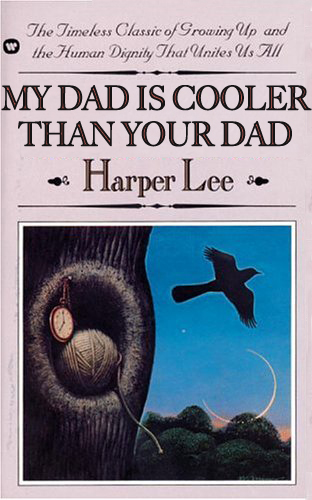
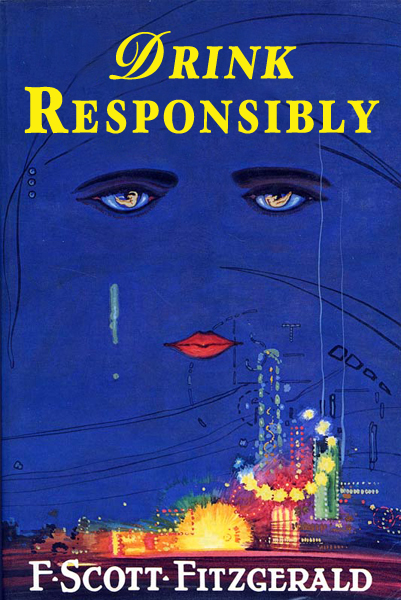
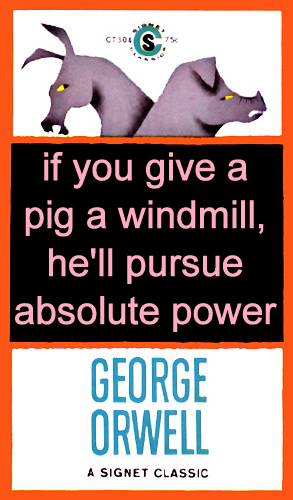
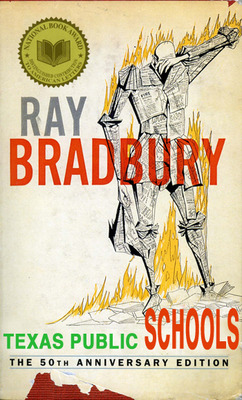
Preparing for Banned Books Week at the library (September 30-October 6), I’m getting excited ahead of time. The American Library Association (ALA) has several cool badges and banners available to download for free (remember to give credit for the images if you use them).

Reprinted by permission of the American Library Association.

On the ALA site, you can also see lists of the most frequently banned/challenged books, by author, year, or decade. You can also see that almost half of the Radcliffe (now Columbia) Publishing Course Top 100 Novels of the 20th Century have been challenged or banned; if you did any of your assigned reading in school, I can pretty much guarantee that at least one of those books is on that list.

The most frequently challenged/banned books list is overwhelmingly comprised of classics (think To Kill A Mockingbird and Brave New World) and young adult literature (The Giver, A Wrinkle in Time, Harry Potter). The most common reasons for challenges are “sexually explicit,” “offensive language,” and “unsuited to age group,” and the most likely challenger, by a tremendous margin, is a parent.

I was fortunate that during my childhood and adolescence, my parents, teachers, and librarians never told me I couldn’t read a book. Reading has always been a positive part of my life, not something that ever harmed me – even when I was reading material “unsuited to my age group.”

Let’s all celebrate our freedom to read, not just September 30-October 6, but all year, every year – because reading is magic.


Tango with censorship

Ray Bradbury can go ahead and start rolling over in his grave pretty much right away: a committee of parents, teachers, and administrators in the Davis County district in Utah have voted to restrict access to the book In Our Mothers’ House (yes, that apostrophe is correct, it’s about a family with two mothers). This in itself is not unusual; books are challenged all the time, and sometimes moved (from the children’s section to young adult, or from YA to adult, or behind the counter, as in this case).

However, the district has taken the additional step of asking librarians to pull other titles that may cause controversy. (And Tango Makes Three, a picture book based on a true story of two male penguins at the Central Park Zoo who hatched a chick from an egg and raised it together, is likely next.) McCarthyism, anyone?

It’s easy to get outraged against censorship; there are hundreds, if not thousands, of eloquent examples in print and on the web. (Here’s a defense of In Our Mothers’ House in The Salt Lake Tribune.) But let us take a step back and consider the purpose and mission of the library. How do these “controversial” books appear on library shelves in the first place, and why should they stay there despite strenuous objection from community members?

Most libraries have a collection development policy: guidelines for what kinds of materials the library ought to have in order to serve its community. Different libraries may choose to allocate their resources in different ways, but most public libraries aim to provide a broad range of materials – educational, recreational, and cultural – for people of every age, socioeconomic status, race, religion, political affiliation, and sexual orientation.

Our collection development policy states, “The…community includes people from diverse educational, cultural and economic backgrounds displaying a wide variety of interests, needs, values, viewpoints and occupations.” It continues, “The library has the obligation not only to serve its current users but also to search for materials and methods that will meet the needs of new members of the community and those who have not been traditional library users.”

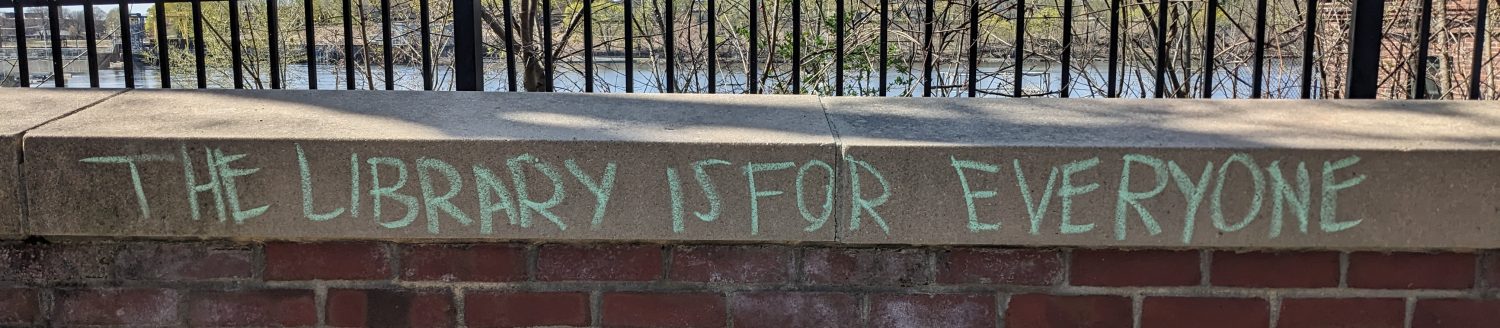
The library is, or should be, an inclusive place. It should be a safe space. If parents want control over what their children are reading, that is perfectly within their rights – but exercising control over what everyone else’s children are reading is most definitely not.

Librarians are advocates for everyone in their communities. We are advocates for equal access to information. It is our responsibility to make sure that there are materials for everyone. (The Utah librarians who added In Our Mothers’ House to the school library collection did so in part because a child in the elementary school has two mothers.) As one librarian said, at a panel at MLA, “If you have to come up with a reason not to buy something, that’s when you should add it to your collection.” We are in the business of selection, not censorship.

If a library had plenty of books for adults but none for children, someone would object. If a library had a hundred books about Christianity but none about Buddhism, someone would object. If a library collected books by and about Republicans but not Democrats, someone would object. A balanced collection includes materials for and from many points of view – an increasingly rare thing in a world where most news sources are slanted, and only offer one viewpoint.

If history is any indication, there will always be people who want to censor books. There will also always be people who defend them.
Inventing the Future

Following links from this week’s issue of American Libraries Direct, I found two excellent, thoughtful articles about the current (and probably future) state of the publishing business, including background on Amazon and the ongoing Department of Justice case against Apple and the major publishers. The articles are so well-written and clear that I don’t have much to add, but I highly recommend reading them if you’re at all interested in ebooks – as a consumer, author, publisher, or librarian.

The first piece, “Why everyone is probably wrong about the DoJ ebooks case” by librarian Hugh Rundle, outlines both sides of the conversation taking place about ebooks: the confusion over what the DoJ case is actually about (investigating collusion to keep consumer prices high), and the short- and long-term implications of Amazon’s pricing (and effective monopoly) of ebooks. Rundle argues that the major publishers handed Amazon its current de facto monopoly on ebooks by insisting on DRM (Digital Rights Management). He concludes that “the future of books is not the present of books,” and that “the best way to predict the future is to invent it.”

Rundle linked to Charlie Stross’s piece, “What Amazon’s ebook strategy means.” Here is a fantastic article that includes Amazon’s history from its founding in 1994, as well as some important definitions (disintermediation, monopoly, and monopsony). Stross, too, argues that DRM is dead, or should be: “By foolishly insisting on DRM, and then selling to Amazon on a wholesale basis, the publishers handed Amazon a monopoly on their customers—and thereby empowered a predatory monopsony.”

Rundle also linked to a post on David Pakman’s blog, “Why should ebooks cost $15?” In this piece, Pakman writes, “Absent from most of this [ebook] coverage are two main questions: a) what is the right price for eBooks and who gets to set it, and b) why are eBooks not interoperable on different devices?” Leaving aside the first question for the moment, his second question is one of the main reasons I still don’t have – or want – an ereader. Imagine how much more appealing buying and reading ebooks would be if all ebooks were DRM-free and could be read on all devices – Kindles, nooks, iPads, Sony eReaders. As it is, however, if you buy a Kindle and some Kindle books, but then decide you want to switch to a nook…well, too bad, you can’t take your books with you, because you can’t read Kindle books on a nook.

Given all this, we can hope that ebooks will be DRM-free sooner rather than later. Increased interoperability would certainly be good for consumers, and maybe for publishers and retailers too.

Technology as a means to an end

Earlier this month, there was an op-ed in the New York Times titled “Internet Access Is Not a Human Right.” One of the main points of the piece was that internet access is always a means to an end – the “end” being some kind of content or service or tool.

It’s not an exact parallel, but this reminded me of the difference between information literacy – the ability to recognize the need for information, and to locate, evaluate, and use that information effectively – and information technology skills. Likely, you’ll need certain technology skills in order to locate information, but just because you know how to use search engines, databases, or online catalogs does not mean you have all the other skills as well.

As the Association of College & Research Libraries (ACRL) states, “Information literacy, while showing significant overlap with information technology skills, is a distinct and broader area of competence. Increasingly, information technology skills are interwoven with, and support, information literacy.” However, they aren’t the same thing. The means to access information has changed, is changing, and will continue to change in the future; ensuring that everyone has the right to access and the skills to do so  is the important thing.

The Day After

Here are several links regarding SOPA, PIPA, and yesterday’s blackout:

Columbia Law School professor Tim Wu pointed out the Web’s strength in this New York Times article, in which he was quoted as saying, “This is the first real test of the political strength of the Web, and regardless of how things go, they are no longer a pushover. The Web taking a stand against one of the most powerful lobbyers and seeming to get somewhere is definitely a first.”

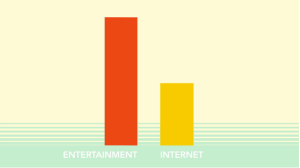
Political strength and economic strength are linked, and as the “Protect IP/SOPA Breaks the Internet” video notes, the “internet industry” now dwarfs the entertainment industry (most of Hollywood is for SOPA/PIPA, while most internet companies – including Google, Facebook, Wikipedia, and YouTube – oppose it). (See 2:48-2:57 – the yellow “internet” bar shoots skyward past the red “entertainment” bar.)

The American Library Association (ALA), which opposes SOPA/PIPA, put together this Quick Reference Guide (PDF), clearly delineating the basics and the structure of each bill. Read the District Dispatch in which ALA applauds the blackout.

Mashable offers a “read between the lines” deconstruction of the official White House response to two petitions (“Stop the E-PARASITE Act” and “Veto the SOPA bill”). The White House addresses legislative scope, non-legislative solutions, censorship and innovation, internet security and stability, and “demands of Congress a more intimate understanding of the Internet in general.”

Lastly, here’s a funny/poignant cover of Don McLean’s “American Pie” on TechCrunch.

Amazon, Overdrive, Privacy?

Sarah Houghton, a.k.a. the Librarian in Black, has posted a 10-minute video offering her point of view on “why the Kindle format lending from Overdrive is anti-user, anti-intellectual freedom, anti-library, and something that all librarians should be aware of and disturbed by.” One of her core issues is that, when Kindle users borrow e-books from the library, Amazon keeps track of those records. Customers may be used to Amazon tracking their purchases, but libraries are much more careful about patron data.

The American Library Association (ALA) website has a section devoted to intellectual freedom, and to privacy and confidentiality. This section states, “Lack of privacy and confidentiality chills users’ choices, thereby suppressing access to ideas. The possibility of surveillance, whether direct or through access to records of speech, research and exploration, undermines a democratic society.” Therefore, “confidentiality of library records is a core value of librarianship.” Amazon does not care about keeping your reading or borrowing history private and confidential, and this is what Houghton – and many other librarians – are upset about. Patrons may be willing to sacrifice privacy and confidentiality for convenience, but many libraries have privacy policies in place – supported by state law – specifically in order to protect patron privacy. That isn’t something that ought to be given up lightly.

Updates

  • The folks at SF Signal have devised a flowchart to add context to NPR’s list of top science fiction and fantasy books (though if you follow that link to NPR, you’ll see they did at least add a blurb about each book – the initial list was really just a list). I originally posted about it here.
  • Sadly, there were technical difficulties recording the GSLIS Perspective on ALA panel, and there will be no podcast. There is, however, a podcast of the ASIS&T event from the day before.
  • James Patterson’s article on CNN links out to a number of good readers’ advisory resources for children and teens, especially boys.
  • My YA Literature class has a blog where we’ll each be posting a review of one YA book.
That’s it for now – have a great weekend!


ALA Annual 2011: A GSLIS Student Perspective

Tonight I was one of the panelists at an ALASC event at Simmons, ALA Annual 2011: A GSLIS Student Perspective. Four GSLIS students who attended the ALA Annual Conference in June shared our experiences; we covered the logistics of attending the conference, how to save money, devising a schedule for yourself, networking, and other topics. The event was recorded and the podcast will soon be up on GSLISCast.

I have linked previously to a piece on Hack Lib School to which I contributed with other Student-to-Staffers, and GSLIS alum Stacie Williams wrote a piece as well. I hope current students find this useful if/when they go to ALA Annual or Midwinter!