Whose Common Sense?

This is another event that wasn’t on the initial schedule I drew up for myself, but a fellow student-to-staffer (and YALSA member) told me about it, and we went together. I’m so glad I did, especially as I’m taking a young adult literature class this fall; I got a jump on thinking about some of the issues that plague this particular group of readers.

Whose Common Sense?: How Labeling Systems Hurt Young Readers was sponsored by the ALA Intellectual Freedom Committee, and featured four amazing panelists:

Barbara Jones, Director of the ALA Office for Intellectual Freedom, began the session by making the distinction between book reviews and ratings: book reviews treat books as a whole; ratings target elements in books (e.g. sex, violence, etc.). This was perhaps the most objective statement of the whole session, because it was an impassioned session; while some panelists displayed understanding as to where “the other side” was coming from, others did not hold back, though for the most part they were preaching to the choir – librarians generally are for intellectual freedom and readers (of any age) making their own choices, and against censorship.

Michael Norris of Simba offered several statistics, reminding the audience that “not everyone loves books.” In fact, there are 5 print book buyers for every one e-book buyer, and 40% of iPad owners have never bought (or, presumably, read) an e-book. However, he added, censorship is one of the least effective ways to get boys to read books. (Girls are more likely than boys to read on their own.)

Jeffrey Nadel spoke as if he were the nation’s top five debate teams all rolled into one and someone had just hit the two-minute timer. Which is to say: well-spoken, well-rehearsed, articulate, impassioned, persuasive, and armed to the teeth with rhetoric. “What is protection?” he asked, then answered, “A group of people presuming to know better for another group.” In this case, protection is an “intellectual blockade” to exploration and curiosity; Nadel argued that restricting reading can actually harm young people, and that ratings take away freedom and creativity. Young people, he said, are the only protected/regulated “class” in the country, and yet “youth are unique.” He cited the problem with age-based ratings in other forms of media (e.g. movies), which is that “not all 13-year-olds are inherently the same.”

Parents, educators, and anyone with a shred of common sense knows this; one kid might be ready to dive into the Harry Potter series at age 7, while another might not be ready until 10. Christine Jenkins followed this nicely, describing the right and wrong approaches to helping a child find a book. If a kid comes up to the librarian and says, “I need a book,” “How old are you?” is the wrong response; instead, ask “What have you read that you’ve liked?” – just as you would for any other patron. Help with the discovery process, she advised, then let go.

As for ratings and age labels, Jenkins said, they only “give the illusion of control”; furthermore, attitudes shift in response to labels. Yet people are eager to label: the group Parents Against Bad Books in Schools, for example, pays lip service to the idea that “Bad is not for us to determine. Bad is what you determine is bad. Bad is what you think is bad for your child.” That, of course, is followed by a plethora of lists of books with “bad content.”

It’s this kind of mindset that sends David Levithan over the edge. These organizations, companies, and activists – the pro-ratings (and pro-censorship) groups – appear to be nonjudgmental, caring, and objective, but, Levithan said – and he has a point – “you cannot have an objective warning label.” Warning labels imply judgment; warning labels are “the enemy of the truth”; they are devoid of context. “The problem with warning labels,” Levithan said, “is that they’re fucking crazy. They are everything that the freedom to read is NOT about.”

Warning labels are reductive, he argued, and we cannot reduce literature to ratings. In terms of encouraging young people to read, he said, “You have to keep those gates open wide to everything…You can save time [using labels] and end up losing everything.”

All of this occurred before the Q&A session. During the Q&A, one audience member immediately brought up the Wall Street Journal article “Darkness Too Visible,” by Meghan Cox Gurdon, and this topic dominated most of the rest of the time. Gurdon’s article was a protest against the darkness, violence, and “depravity” of young adult literature. She lamented the fact that so many YA books contain “ugliness” and “damage, brutality, and loss.” The article provoked a tremendous reaction; author Sherman Alexie wrote an articulate and passionate defense, also in the WSJ, a few days later (“Why the Best Kids Books Are Written in Blood”).

Alexie was one of the many who spoke out. “When a body of [work/literature] is attacked, the people who it helped come to its defense,” said Levithan. “We are reflecting the problem, not creating it.” Sometimes, the consensus of the session seemed to be, it is better to the let child/young adult experience [fill in the blank] in a book rather than in real life – to have that experience vicariously through the safety of literature. Conversely, for those children and teenagers who have experienced the “dark” subject matter in books in their own lives, they are likely to be comforted, not damaged, by the books – they can empathize with the characters, and know they are not alone. And generally – like any other group of readers – if teens don’t like a book, they will stop reading and put it down.

Another question, after the WSJ article debate, was how to counter the idea that kids need to be protected from ideas. There is a proven link between leisure reading and educational achievement. It is important that kids have access to books that are interesting to them; our role as librarians is to make sure they have that access. Worse than books being challenged is books being censored preemptively – teachers not adding books to their syllabi or librarians not buying books for the library collection because they expect the book to be challenged.

Throughout this panel, I tried to think of a book – any one book, ever – that I had read that had damaged me in some way. I have read over a hundred books a year since grade school, and I know that I have read many of the most frequently banned/challenged books, including more than 30 from each of the most frequently challenged books of the decade lists (1990-1999 and 2000-2009; there’s a lot of overlap). Many of them have been assigned in school – see the list of challenged classics. (Ironically, people have wanted to ban Fahrenheit 451 and 1984 a lot. Bradbury and Orwell would be proud. Or horrified.)

The point is, I couldn’t think of one book I had ever read that I would have preferred to be “protected” from. I’m not a statistically significant sample size, just a case study, but my experience has led me to believe in the freedom to read, for people of all ages. Parents might have the right to determine what their own children are allowed to read, but they should not have the right to determine this for anyone else – not in school libraries, and not in public libraries. Ratings systems make it easier to target those books with “bad content,” and it’s a slippery slope from rating to banning.
“Everything we do is pervaded by technology”: the LITA Tech Trends panel

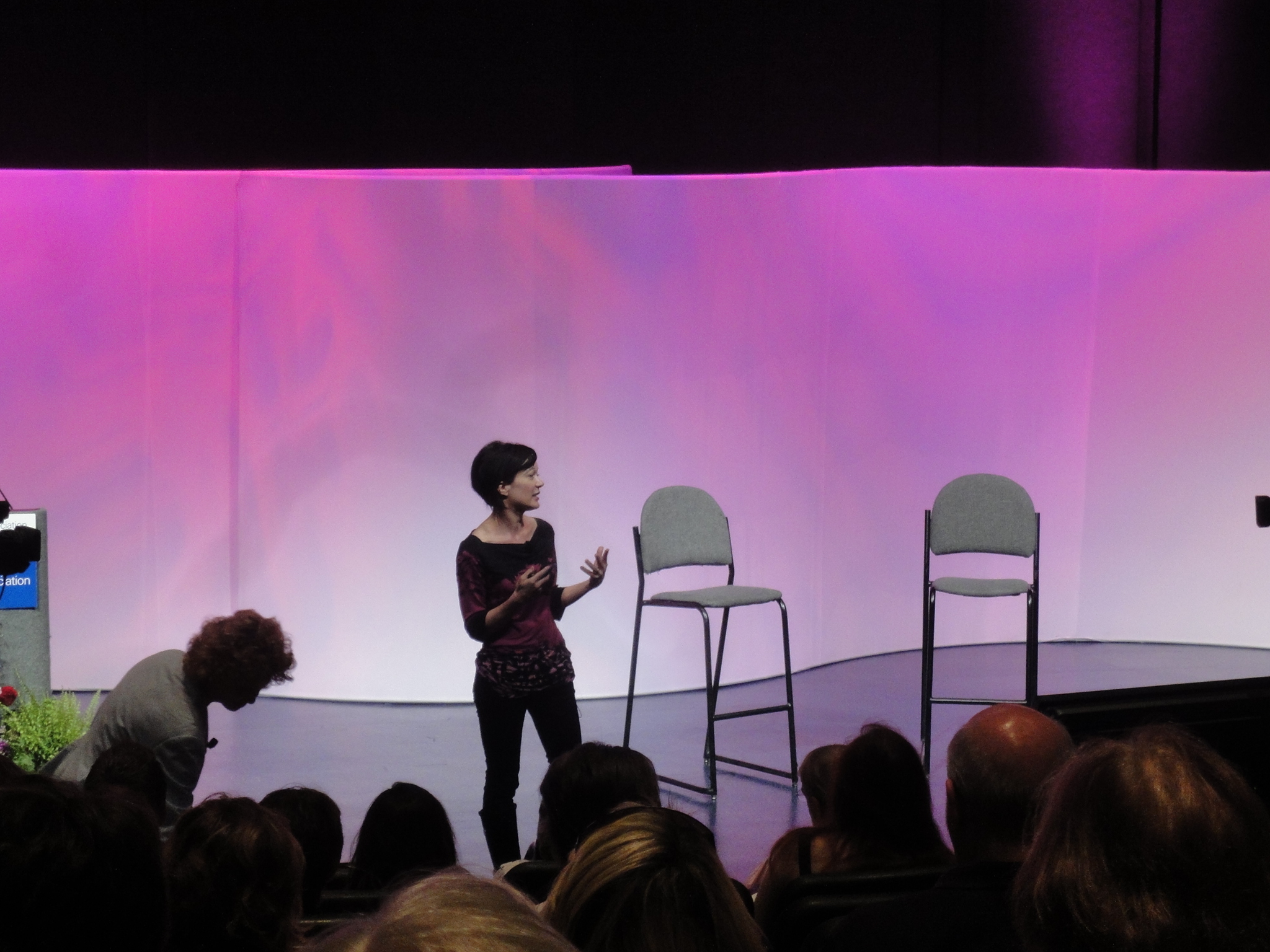
After an unforgivably long lapse (“it was summer” doesn’t count as an excuse, does it?), I’m here to write about the rest of my ALA experience. First, the LITA (Library and Information Technology Association) Tech Trends panel. The panelists*:

  • Nina McHale, Assistant Professor and Web Librarian, Auraria University (Colorado)
  • Clifford Lynch, Director of the Coalition for Networked Information
  • Monique Szendze, Director of Information Technology, Douglas County Public Library (Colorado)
  • Jennifer Wright, Assistant Chief for Materials Management, Free Library of Philadelphia
  • Lorcan Dempsey, Vice President of Research at OCLC

*I didn’t manage to write down everyone’s full name at the time; I checked against this post from the Metadata Blog. The quote in the title of this post is from Lorcan Dempsey, during the Q&A.

In the first round, Nina talked about the content management system Drupal, which is “free as in kittens” – i.e., you don’t pay for it, but there’s a steep learning curve. Clifford talked about mobile apps, and the difference between apps and customized browsers. Monique spoke about mobile/proximity-based marketing, noting that 87% of libraries in the U.S. have free wi-fi; interactive is better than static, as it is more likely to be targeted and relevant (as well as grant-friendly and cost-effective).

Jennifer highlighted social reading – sites like Goodreads and LibraryThing that are designed to foster social interaction around books and reading, but also features built into e-readers such as Kindle and Kobo. To end the first round, Lorcan spoke about managing down print collections – developing infrastructure to support regionally based hubs (consortia) as libraries begin to cut down on some print material in favor of e-books and online journal subscriptions.

In the second round, Nina spoke about web accessibility and vendor awareness (which has, she noted, improved over the past ten years). (To learn more about accessibility and section 508, you could go to the government site…but then you might want to try Wikipedia.) Clifford spoke about imaging, computational photography, and images as interpretative/interactive data sets as opposed to fixed images (maps and other geospatial data, for example, are good candidates for this).

Jennifer talked about “the death of the mouse,” and using cameras and OCR (optical character recognition) as input in the future; she also talked about the trackpad vs. the mouse.  Personally, I can see the move away from the mouse already, with so many people using laptops with trackpads or touchscreens, and of course the iPad touchscreen as well. Poor mouse: </mouse>

Lorcan spoke about LibGuides as a set of curated resources or microcollections, and Monique wrapped up the panel with a discussion about online books (“what is a book?”).

This was a popular event, held in one of the smaller (but still large) auditoriums. It was interesting to hear more about those trends I was already aware of, and get some new ones on the radar as well.

Top 100 Sci-Fi and Fantasy books (according to NPR poll)

A comment thread in the ALA group on LinkedIn alerted me to an article about an NPR poll’s Top 100 list of science fiction and fantasy books. Science fiction (or sci-fi, or SF) and fantasy are generally regarded as two quite distinct genres by people who read one or the other (or both); people who read neither tend not to distinguish as much. It was a little jarring to see them all mixed together – William Goldman’s The Princess Bride, at #11, is sandwiched between Neil Gaiman’s American Gods and Robert Jordan’s The Wheel of Time series – but it’s certainly a great list.

Wikipedia and Sue Gardner

One of my favorite programs at ALA Annual was Sue Gardner‘s talk on Wikipedia. Gardner is the Executive Director of the Wikimedia Foundation, the nonprofit behind Wikipedia, and she is an incredible speaker: dynamic, enthusiastic, and prepared. She answered questions in a direct manner (and she’s quotable).

We are getting to the point in academia where Wikipedia is becoming accepted as a reliable reference tool. It is a great jumping-off point. You wouldn’t cite it in a paper – but then, you wouldn’t cite any other encyclopedia in a paper, either, after about third grade. Its value is in its currency, relevance, and most of all in its citations.

Gardner said that Wikipedia is an “inherently radical” nonprofit, supporting the idea that “people have a right to access to information.” She described the “virtuous circle, by which participation leads to quality, which leads to a broader reach, which leads to greater participation. There is “no such thing as perfect accuracy” – even recognized authoritative sources such as Britannica have errors, and those can’t be corrected as quickly as Wikipedia can, and they aren’t as widely or frequently monitored, either.

Wikipedia is a “credentials-neutral environment – some people need to be anonymous.” However, unlike communism, which looks good in theory but breaks down in practice, some problems for Wikipedia are theoretical rather than practical: “Wikipedians are fierce defenders of editorial integrity,” so while self-serving articles are a concern in theory, they are not so much of a problem in practice.

One of the main goals of Wikipedia, said Gardner during the Q&A, is “to get information to people so they can make informed decisions about their lives.” Gardner – former director of the Canadian Broadcasting Company’s website and online news – also encouraged questioning the nature of “authority” – “Is Fox News a ‘reliable source’?”

Journalism, Gardner said, “is not really a profession, it’s a job for curious people.” Also, it seems, a job for students and librarians: part of a recent public policy initiative encourages teachers and professors to assign students to write for Wikipedia. There are over 100,000 Wikipedia editors worldwide; these editors work for free, because they enjoy it and believe in it. The average Wikipedia contributor/editor is 25 years old, a STEM (Science/Technology/Engineering/Math) grad student – and male. Wikipedia contributors skew male; librarians skew female. Gardner’s message was clear: “We want you as Wikipedians.”

It was a galvanizing talk – read the American Libraries write-up here – and I’m excited to be attending the first Wikipedia in Higher Education Summit tomorrow.

Stories for a Saturday Evening

Storyteller Elizabeth Ellis told a wonderful story wherein a friend introduced her to someone else, saying, “Elizabeth used to be a librarian.” Elizabeth to the audience: “Nobody used to be a librarian.” (Apparently “Once a ____, always a ____” is true of a lot of careers.)

This is the second time I’ve been under the spell of a professional storyteller as an adult, and I highly encourage you to take advantage of the experience if you ever get the chance. Check out the National Storytelling Network calendar of events for events in your area.

This event, sponsored by ALSC (Association for Library Services to Children), was a perfect end to a long day.

HarperCollins Book Buzz and Modernist Cuisine

Lumping two events together so as not to be a complete commercial for either. The HarperCollins Book Buzz consisted of a panel of HarperCollins marketing people talking about upcoming HC titles (including The Lantern by Deborah Lawrenson, galleys of which they distributed at the event). They also mentioned several readers’ advisory-type blogs (all quotes below are taken from the respective sites’ About pages):

NetGalley is a “connection point for book publishers, reviewers, media, librarians, booksellers, bloggers and educators…Professional readers–reviewers, media, journalists, bloggers, librarians, booksellers and educators–can join and use NetGalley at no cost.”

EarlyWord is “a Blog and Web site on a mission — to give libraries the earliest information possible on the books their customers will be looking for, so they can stay ahead of demand. By giving readers what they want, when they want it, we believe libraries can increase their circulation and their support.”

The Book Report Network (BookReporter) provides “thoughtful book reviews, compelling features, in-depth author profiles and interviews, excerpts of the hottest new releases, literary games and contests, and more every week.”

And now for something completely different…(except in that it is a book, or more accurately several volumes)…

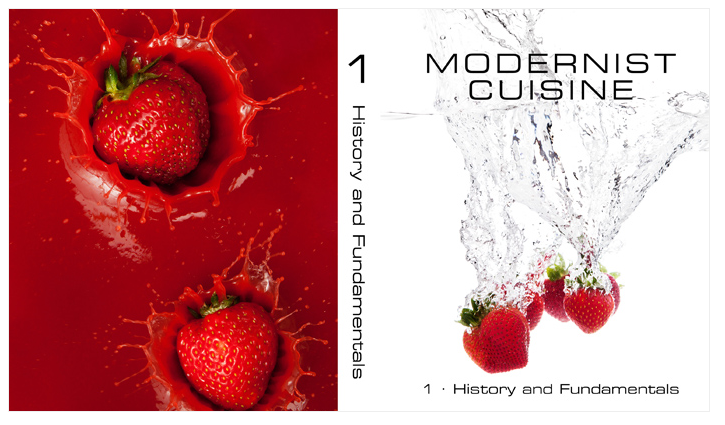
“In Modernist Cuisine: The Art and Science of Cooking, Nathan Myhrvold, Chris Young, and Maxime Bilet—scientists, inven­tors, and accom­plished cooks in their own right—have cre­ated a six-volume 2,400-page set that reveals science-inspired tech­niques for prepar­ing food that ranges from the oth­er­worldly to the sub­lime. ”

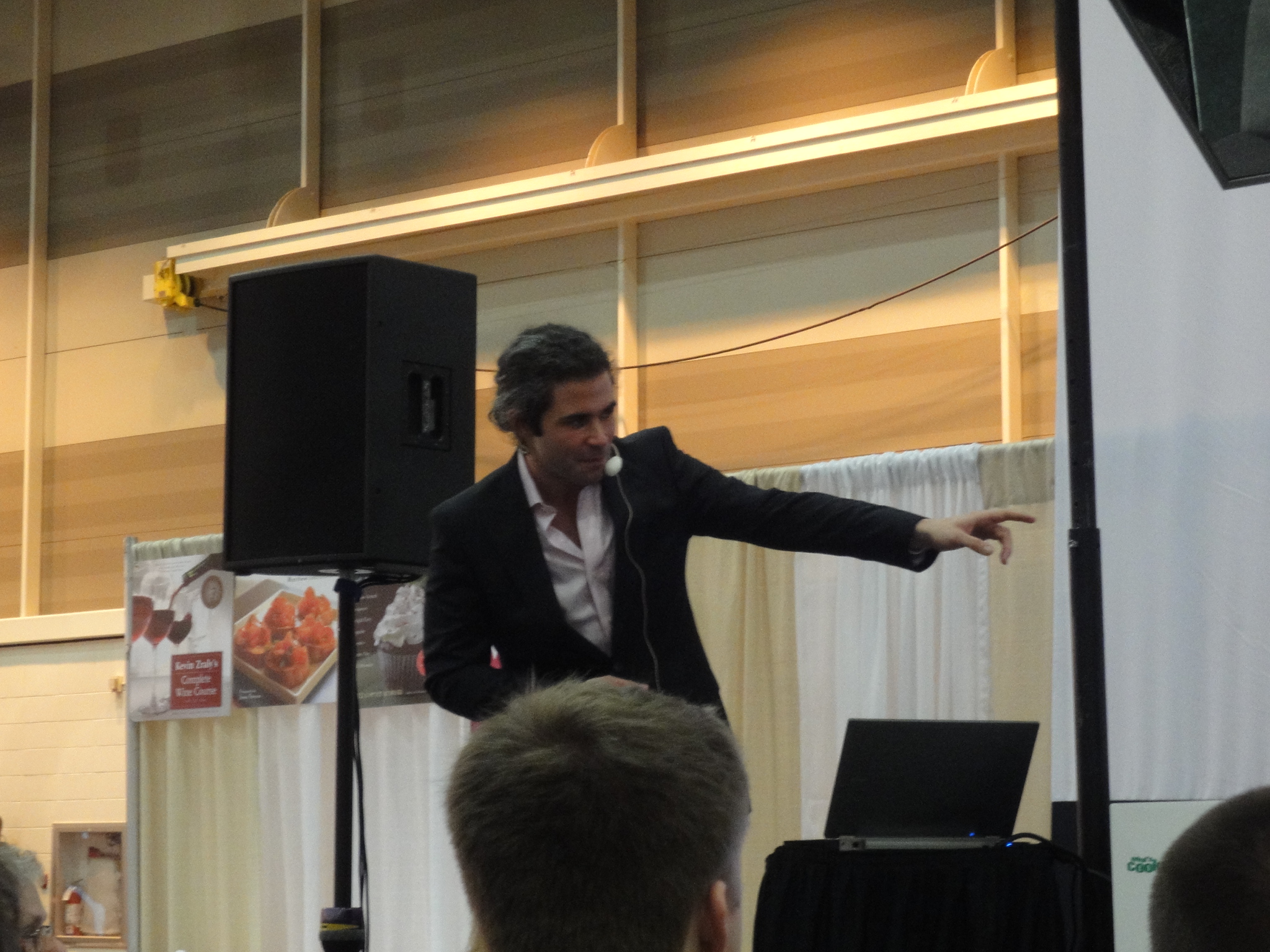
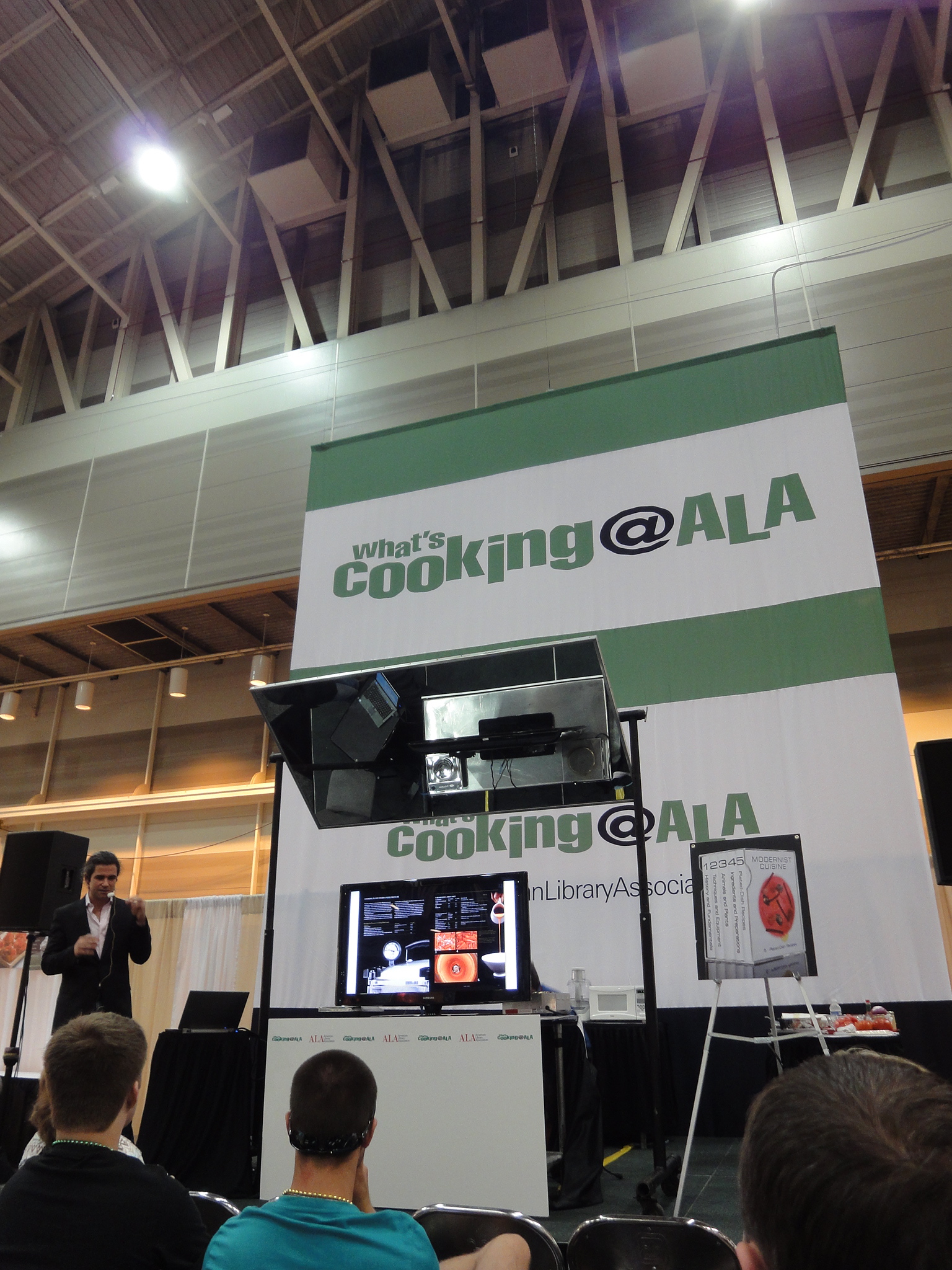
Maxime Bilet himself was at the What’s Cooking at ALA? stage, demystifying Modernist Cuisine. I have actually had the opportunity to browse through it, and was completely overwhelmed, but Bilet helpfully pointed out that recipes for superior macaroni & cheese and caramelized carrot soup can be found in Vol. 3, and that recipes for beurre blanc, pistachio gelato, and chocolate mousse can be found in Vol. 4.

And for those who are wary of “modernist,” scientific cooking, Bilet says, “Cooking relies on science…Healthful cooking is flavorful cooking.” Another helpful tip: you can oxidize wine in a blender.

Now you know.

Keep ‘Em Coming – Fiction Series Creators Talk Shop

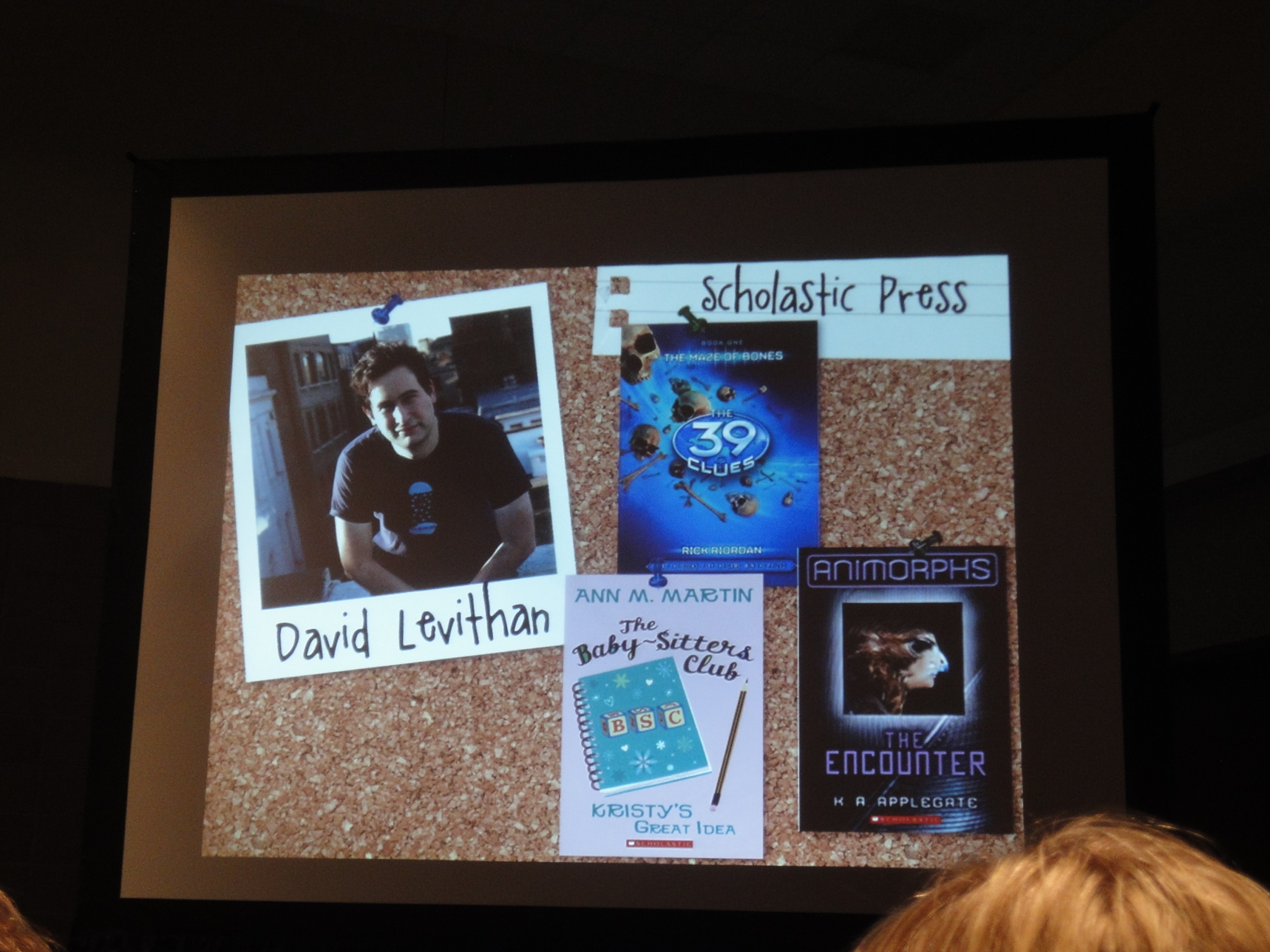
I may have left this one off the list originally because it wasn’t one I had planned to go to. However, it was a really interesting panel: authors Lauren Myracle, Jonathan Stroud, Dan Gutman, and author/editor David Levithan. Of these, I had only heard of David Levithan previously (he wrote The Lover’s Dictionary, which I thought was unique and poetic and just generally wonderful. Read it!) He has also, it turns out, written a whole bunch of young adult (YA) novels, and has edited over 300 YA series books, including many of the Babysitters’ Club books. (“I was the 19-year-old male reading The Babysitters’ Club on the subway…with a highlighter.”)

One explanation for the popularity of series books among teens, Levithan said, was “the love of story, the love of wanting to know what happens next, wanting the story to continue.” When kids – and adults, I would contest – find a book they like, they want more of it. However, speaking as an author rather than as an editor, Levithan said that sometimes, “There’s a reason I ended the book there – the story’s over.”

Other bits of wisdom from the panel:

Lauren Myracle: “Middle school is painful. Writing is painful. But writing about middle school…surprisingly cathartic!”

“Every book must be a game-changer.” I forget who said this – Stroud or Gutman, I think – but they were emphasizing the need for something to happen in each book in the series that caused the character to grow. The story may have its arc, but each book must have an arc of its own as well as be part of the larger story.

Jonathan Stroud talked about the importance of building a brand, which is easier with series books than with stand-alone novels.

Lauren Myracle: “Series are born in different ways.” Sometimes a story might be conceived as a series from the beginning; other times reader response might prompt a second book, and then a third.

Though there may not be the proliferation of series fiction for adults as there is for the YA group, adults are likely – speaking solely from experience here and not from any particular data – to develop loyalty to certain authors. The characters may not be the same from book to book, but one can have confidence in the quality of writing, character, and story.

“Books are magic”

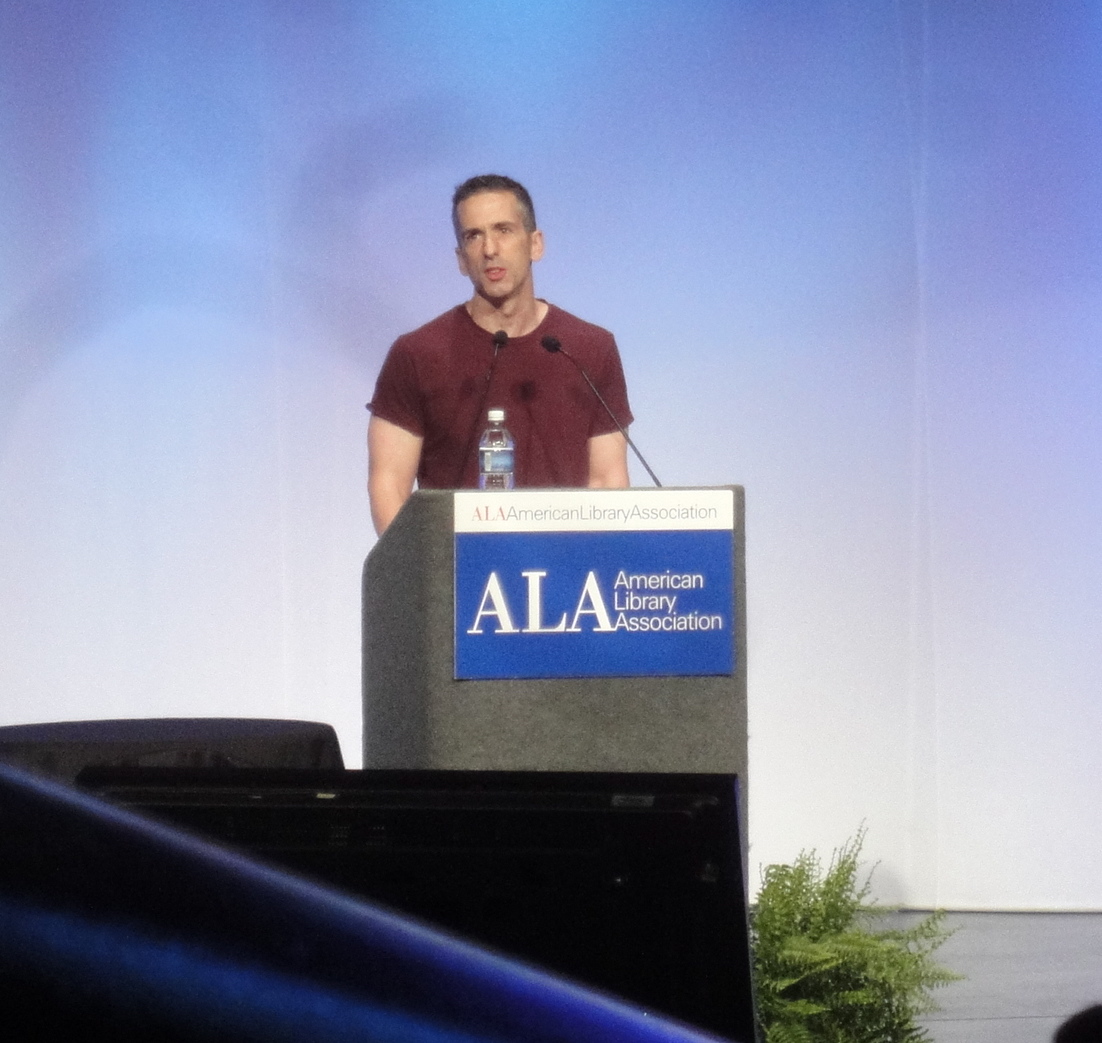
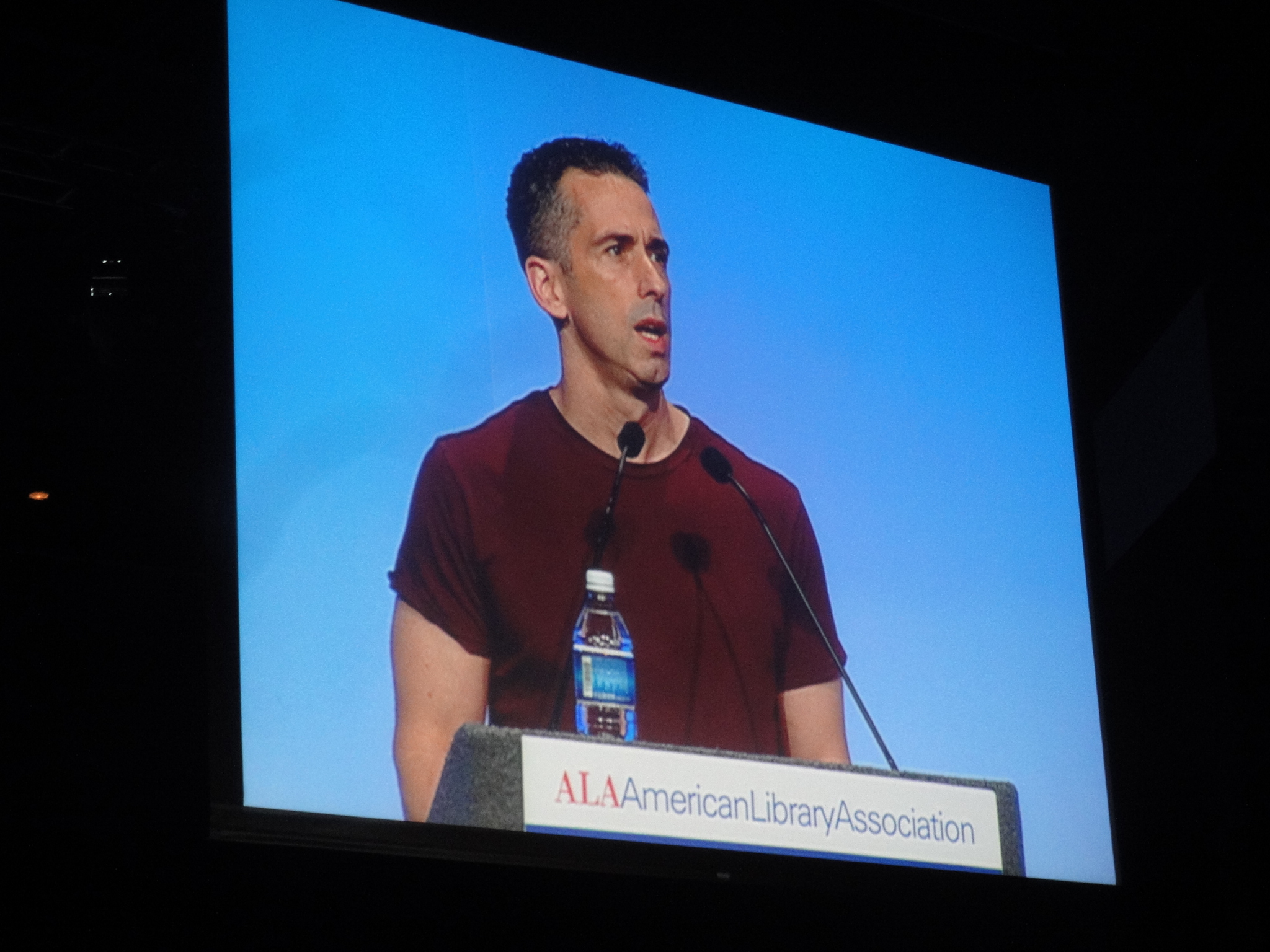
Dan Savage was the opening session speaker at ALA Annual. He writes the Savage Love column for the Seattle Stranger and is the founder of the It Gets Better Project. At ALA, he spoke primarily about the evolution of the It Gets Better Project (the goal of which, for those who haven’t heard of it, is to show gay teens that their future can be better than their present), and why, despite the massive popularity of the videos, he wanted to make a book as well: “I’m a print guy and I think books are magic.”

Well, that went over well in a crowd of librarians. But beyond a simple love of books, he said, “We also did the book to challenge school libraries and school librarians.” Some kids may not have internet access, but most have access to libraries, and over 1,500 copies of the It Gets Better book have been donated to libraries.

Overall, I enjoyed his talk very much; he’s an articulate and funny speaker, and a champion of libraries. Got the conference off to a great start!

ALA Annual Conference, New Orleans

This is just to say (yes, William Carlos Williams) that the ALA Annual Conference was an amazing experience. Here’s a rundown of the programs I attended; I’ll be typing up my notes from each and sharing a brief summary here over the next several days. Many thanks to Simmons College GSLIS and Don Wood at ALA for making it possible for me to go!

Friday, June 24
Opening session – Dan Savage, speaker
Exhibit floor opening

Saturday, June 25
HarperCollins Book Buzz
Modernist Cuisine presentation/demonstration

Sunday, June 26
LITA Tech Trends (panel)
Wikimedia, Sue Gardener
GSLIS Alumni reunion

Monday, June 27
Rating systems for young readers (panel)

As part of the Students to Staff program I also worked with some wonderful people at the Press Room and the @yourlibrary booth, checking in reporters and photographers and telling people about the Campaign for America’s Libraries, respectively.

More to come!