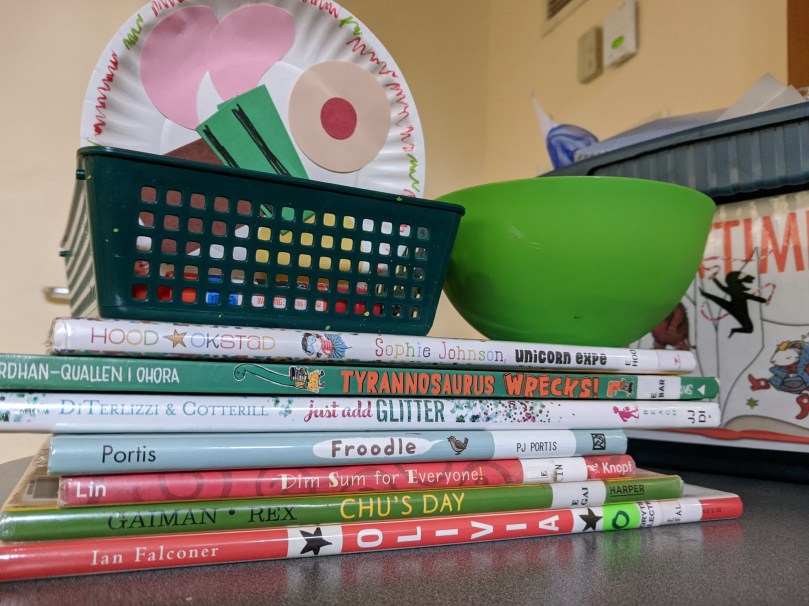
Banned Books Week/Freedom to Read Week

It is Banned Books Week again (a.k.a. Freedom to Read Week). I’m going to quote from Rob’s BBW/FtRW post from the Robbins Library blog:

During Banned Books Week, we celebrate the freedom to read. As you can imagine, this is most librarians’ favorite theme week; after all, as our code of ethics states, “We uphold the principles of intellectual freedom and resist all efforts to censor library resources.” But you don’t have to be a librarian to enjoy Banned Books Week – all you have to do is read!

(The word “Banned” is in quotation marks in the title of this post because the name “Banned Books Week” is a bit of a misnomer.  First, we celebrate Banned Books Week not because we like or support books being banned – we celebrate to support intellectual freedom and the freedom to read whatever you want.  Second, it’s now much more common for books to be challenged than actually banned, thanks to the efforts of teachers, librarians, and other supporters of the freedom to read.  You can read a bit more about Banned Books Week here (or in our blog archives here) and check out a few lists of books that have been banned or challenged here & here.)

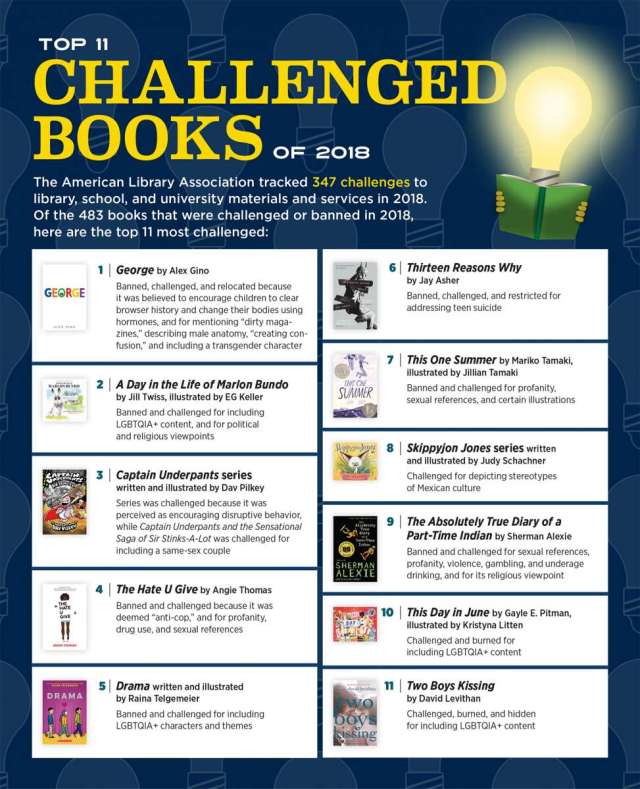
They link to a few of my Banned Books Week posts for the blog from past years, as well as the ALA site. Here are ALA’s infographics for this year:

ALA Censorship by the numbers infographic

2018-bbooks-graphic-2-rev_1-1

There is a difference between a challenge and a ban; there are many more challenges than bans. And just because a book is removed from one library, that doesn’t mean it’s removed from all of them, or unavailable at bookstores or online. But you’ll notice that almost all of these titles are children’s or teen books, and kids don’t always have options beyond their school library (if they’re lucky enough to have a school library and librarian) or their local public library. If a book is removed from those places, it’s effectively unavailable for that kid.

#4 Hate U Give_0

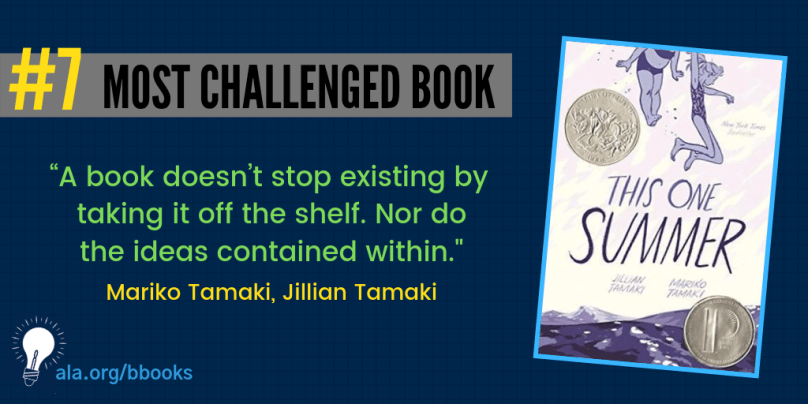
#7 This One Summer_0

It’s easy enough – for many of us pro-intellectual freedom types, at least – to see a story like the recent one from Nashville, Tennessee, where a Catholic school banned the Harry Potter series, and rail against it. Most librarians – and plenty of teachers and parents – believe that while parents do have the right to decide what their own children can and can’t read, they do NOT have the right to decide that a book should be unavailable for everyone.

However, there’s a subtler kind of censorship that I see a lot of, and I’m sure I’ll have moments where I wrestle with myself about this as well: the “is my kid ready for this yet?” question. Parents with eager, advanced readers, especially, see their kids racing through all the chapter books and middle grade novels and into the teen section. They’re concerned that their readers will encounter bad language, violence, sex, drugs (maybe even rock ‘n’ roll), etc.

So far, I’ve developed four responses to this: one, of course, is to talk with the parent (and the kid!) about the books they’ve liked, and suggest any others I can think of or find along those same lines, without going into more mature territory. Two is to suggest to the parent that they read the book too (either before the kid does, or at the same time, or after), so they’re prepared to talk about anything that concerns either of them. Three, if a kid is reading way above their age level (content-wise), they will likely either put the book down, or some things will just sail over their heads; they’ll take something away from the book, but they won’t understand it on every level, and that’s okay. Four, books are the safest places to encounter scary things. Plenty of fantasy and sci-fi scenarios won’t happen in real life (probably, hopefully), but realistic fiction that deals with death, divorce, poverty, bullying, mental health issues, violence, sexual assault, and any of the multitude of things that can and do go wrong in our world…those things happen. If they don’t happen to you, then knowing about them can build empathy for others; if they do happen to you, you know you’re not alone.

A final note: one other way that adults censor kids’ reading is by designating “girl books” and “boy books.” Here, I’m going to turn it over to author Shannon Hale:

Stories make us human. We form bonds by swapping personal stories with others, and reading fiction is a deeply immersive exercise in empathy.

So, what happens to a culture that encourages girls to read books about boys but shoos boys away from reading books about girls?

Read the rest of Hale’s article here: “What are we teaching boys when we discourage them from reading books about girls?” The Washington Post, October 10, 2018

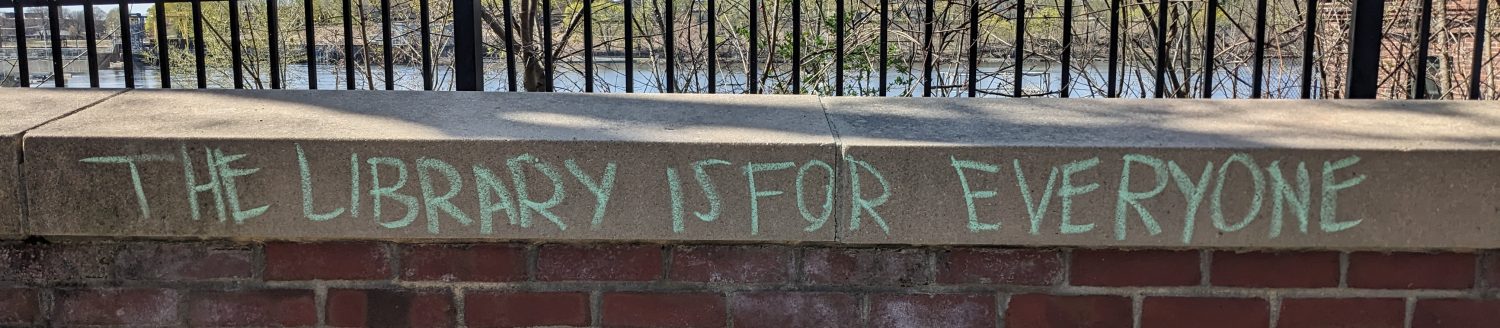
Happy Freedom to Read Week, everyone!

Step Into Storytime, September 23

It’s officially the first day of fall, and yet today is particularly summery, and the storytime room gets HOT when it is full of people. But, I’m always happy to have lots of kiddos to read to and sing with! Today we started out with about 15, grew to 20, and ended with about 12.

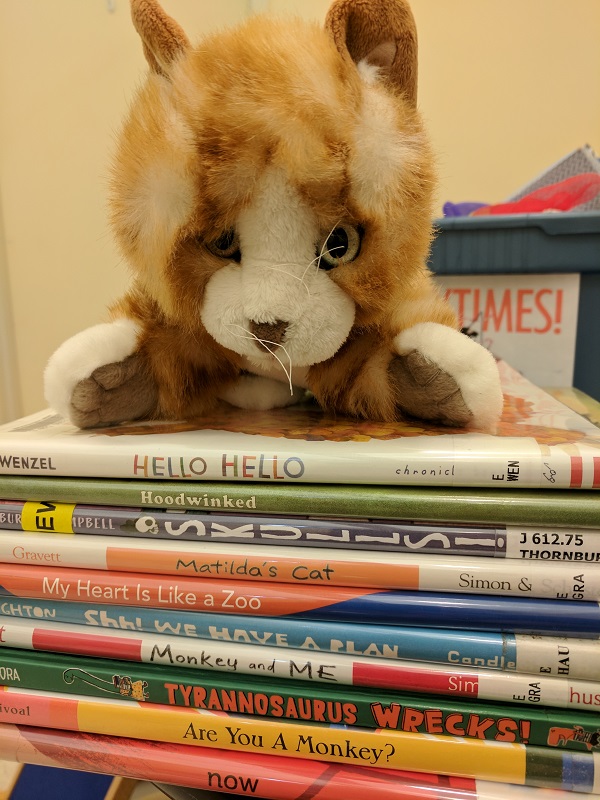
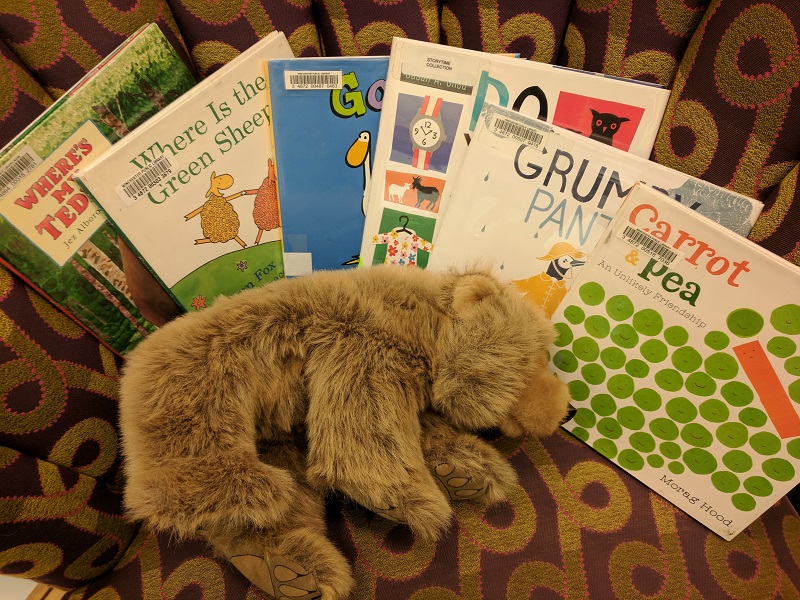
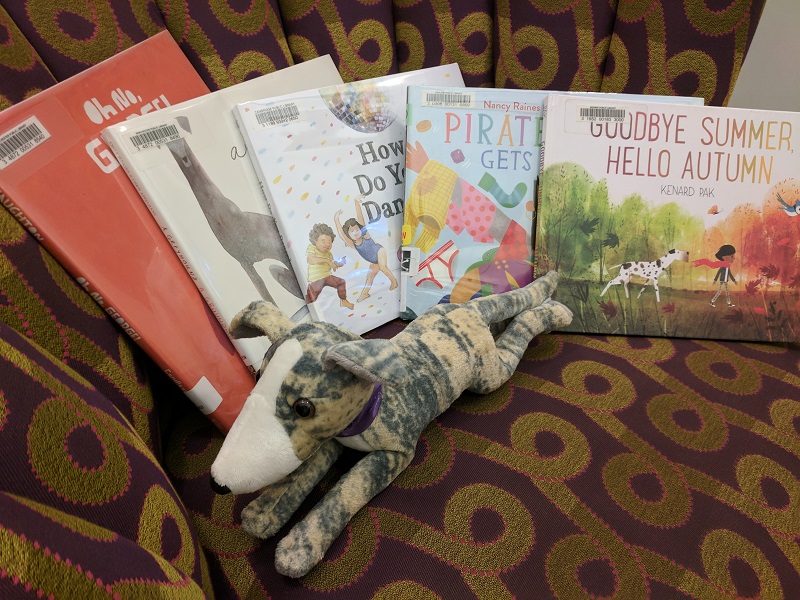
Picture books cover out on chair with greyhound stuffed animal

  • Welcome, announcements
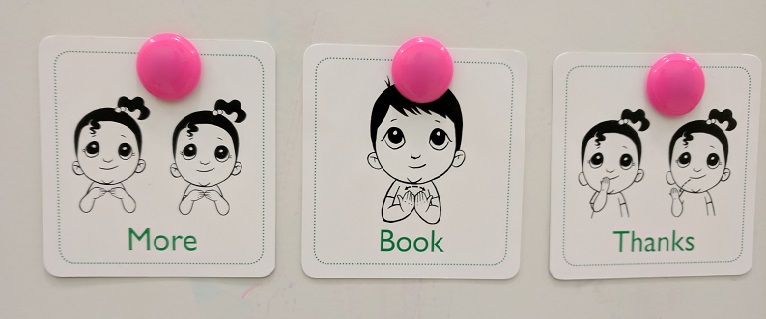
  • “Hello Friends” with ASL (Jbrary)
  • Still Stuck by Shinsuke Yoshitake: I love this book, though it doesn’t usually get much reaction at storytime (at least, not from the kids; the parents like it). I used it as a lead-off book to take advantage of the relatively fresh attention span, and I made it more interactive by encouraging kids to mime taking off a shirt, as well as the scrub-a-dub-dub part. It’s not pictured in today’s photos because a parent took it home – yay!Greyhound stuffed animal on stack of picture books
  • “Head, Shoulders, Knees, and Toes”
  • Oh No, George! by Chris Haughton
  • Song cube: “Wheels on the Bus”
  • A Greyhound, A Groundhog by Emily Jenkins, illustrated by Chris Appelhans: I brought my stuffed greyhound as a prop.
  • “Kookaburra” – at least one parent was singing along this time! The second verse is better than the first, because (a) they’ve all heard the tune once already, and (b) there are motions (picking gumdrops, “stop” hands)
  • Handed out scarves
  • How Do You Dance? by Thyra Heder: This is a new book so today was the first time I used it at storytime, and it’s phenomenal. Lots of opportunities to move bodies and wave scarves!
  • Pirate Jack Gets Dressed by Nancy Raines Day and Allison Black: We paid a lot of attention to color in the book and in the room – the color of our clothes, of our mats, of our scarves.
  • Give the scarves one more wave, then collect them.
  • Song cube: “I’m A Little Teapot,” “ABCs,” “Zoom Zoom Zoom, We’re Going to the Moon”
  • Goodbye Summer, Hello Autumn by Kenard Pak: This is a quieter book and I was on the fence about it, especially as the last book of the day with a squirrelly group, but one grown-up with twins said they’d read it just last night, so I went ahead. It is the first day of fall, after all.
  • “Goodbye Friends” with ASL (Jbrary)
  • Clean up mats
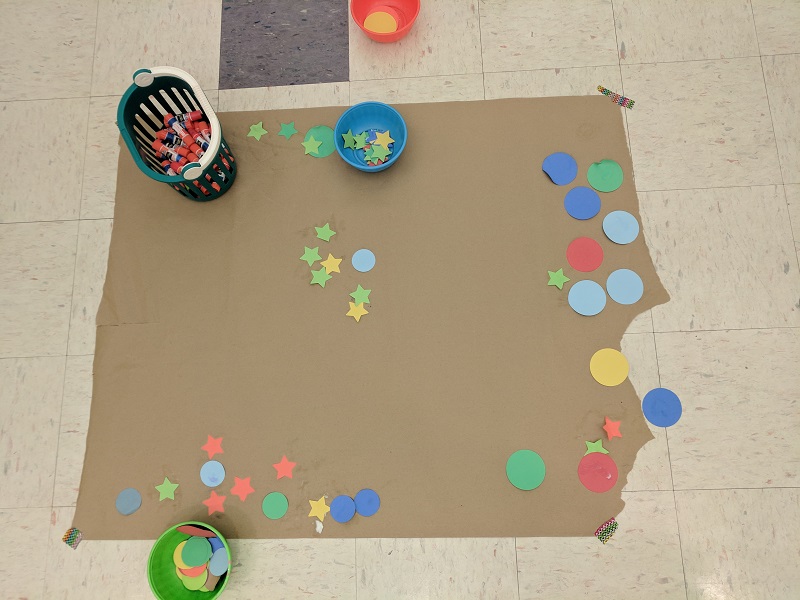
  • Craft: Gluing colored shapes

Craft: gluing colored paper shapes to butcher paper

Step Into Storytime, September 16

It was another large group for Step Into Storytime this morning! Again, the group skewed toward the younger end of the age range (2-3 years, with siblings welcome), and we had a mix of new families and regulars, including a couple older regulars who were very helpful during Not A Box.

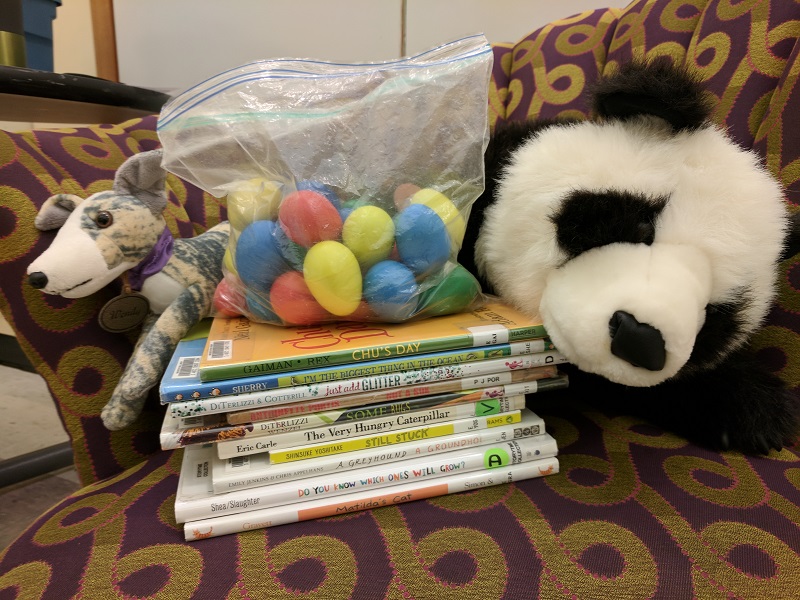
Books, shaker eggs, greyhound and panda stuffed animals

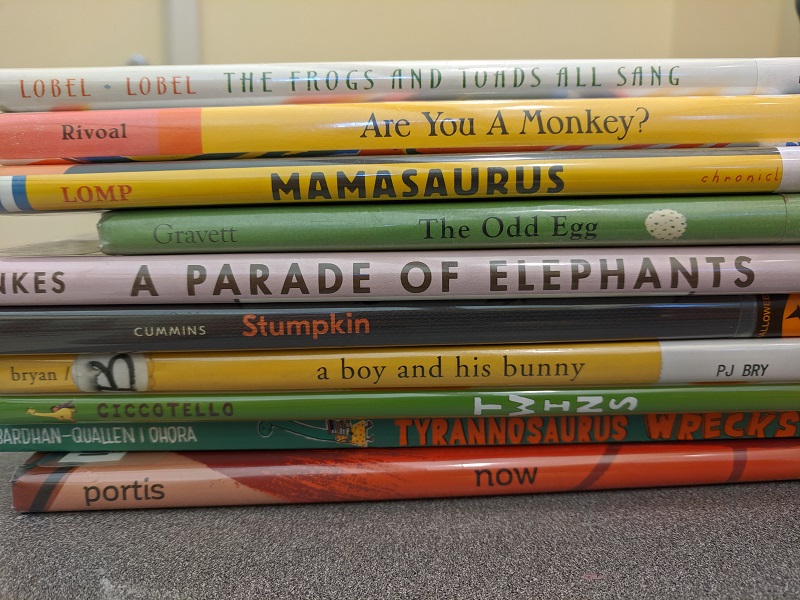
Books for storytime

  • Welcome and announcements: Keep the doorways clear, feel free to come and go (wiggliness, noise, bathroom, snack breaks), calendar of events available at desk and on website, etc.)
  • “Hello Friends” song with ASL (Jbrary)
  • Stretch: a seated stretch toward the ceiling, to toes, to ceiling, to toes
  • Chu’s Day by Neil Gaiman and Adam Rex, with enormous panda bear and fake sneezes.
  • Song cube: “I Had A Little Turtle” (seemed unfamiliar to most) and “If You’re Happy and You Know It” (familiar to everyone!)
  • I’m the Biggest Thing in the Ocean by Kevin Sherry: this giant squid knows how to make the best of things.
  • Passed out shaker eggs, tested them to make sure they worked (they did), instructed them to shake them every time they heard the word “glitter” in Just Add Glitter by Angela DiTerlizzi and Samantha Cotterill. (One of my favorite storytime tips is to recognize that little kids are going to make noise – so get them making the same noise at the same time.). Collected eggs.
  • Yoga cube: Downward dog is a little crowded when the storytime room is that full, but some kids made it work!
  • Some Bugs by Angela DiTerlizzi and Brendan Wenzel
  • “The Kookaburra Song”
  • Not A Box by Antoinette Portis (we read Not A Stick last week): This is where my older kids came in handy, especially because one of them was already familiar with the book. If it’s not a box, what is it?
  • Songs/rhymes: “Head, Shoulders, Knees, and Toes” and “Where is Thumbkin?” (twice, replacing “sir” with “friend”)
  • The Very Hungry Caterpillar by Eric Carle, with flannel board: I always have volunteers to help put the different fruits on the board.
  • “Goodbye Friends” song with ASL (Jbrary)
  • Clean up mats, invite questions (and someone did ask about chapter books with pictures for her 3-year-old!), tape down paper and put out crayons for coloring.

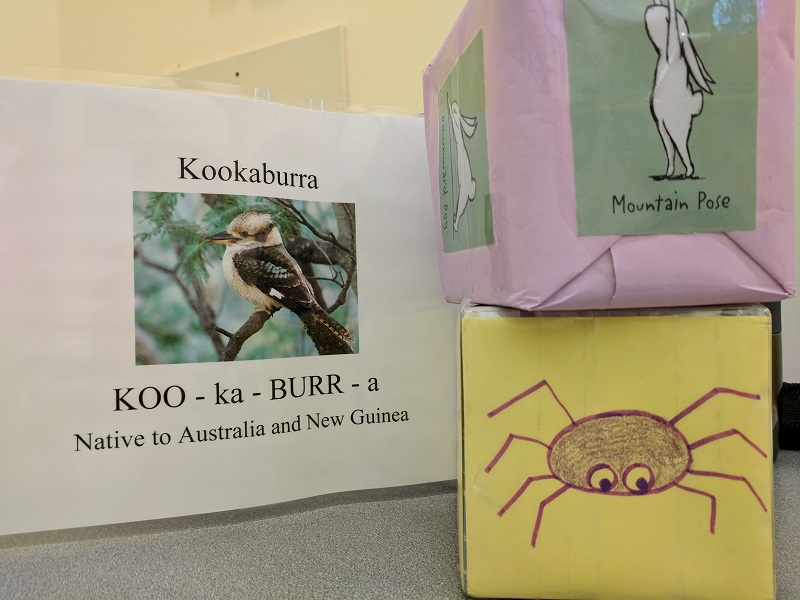
Kookaburra picture, yoga cube, song cube

Step Into Storytime, September 9

It’s a new season of Step Into Storytime, our library’s twice-weekly storytime for two- and three-year-olds (and siblings of various ages). I run our Monday storytime, and I’m excited to get back into a weekly rhythm!

Storytime room

Room setup:

  • Step Into Storytime laminated poster and early literacy tips (Talk, Sing, Read, Write, Play) on the board with magnets
  • Colored mats in a stack
  • Storytime box (contains magnets, posters, bubbles, scissors, tape, scarves, shaker eggs, stickers, ipod with music, etc.)
  • Additional props (flannel board and shapes, puppets or stuffed animals)
  • Song cube(s) and yoga cube(s)
  • Books! (Usually 4-6 I plan to read, plus several alternates in case the crowd skews younger, older, wiggly, etc.)

Books, donkey, song cubes, scarves, yoga cubes

Storytime:

  • Welcome everyone and announcements (keep the doorways clear, location of bathrooms and where to have snacks, upcoming program info)
  • “Hello Friends” song with ASL (Jbrary)
  • Name song (“____ is here today”) and early literacy tip: we do a lot of singing in storytime, in addition to reading, because the rhythm of songs helps with language development and lays the groundwork for reading and writing later on.
  • Hello Hello by Brendan Wenzel: This is one of my all-time favorite openers. There’s not a lot of text, but there are so many opportunities for interaction (who’s wearing dots/stripes? Can you move like an octopus? Show/touch your tongue, ears, hands, and nose, etc.). In today’s group, we had a few returning families but plenty of new kids and they were a little younger than last spring’s group. Storytime for younger groups is always going to be noisy and wiggly, so if you can get them making the same sounds/movements as each other, that’s a win.
  • Want to Play Trucks? by Ann Stott and Bob Graham: Even with a younger crowd, I like to have at least a couple books with some kind of narrative arc or story, and this one is perfectly simple, in a familiar scenario for most kids – a playground, toys, ice cream.
  • Song cube: “I’m A Little Teapot” and “ABCs”
  • Not A Stick by Antoinette Portis: An off-page voice asks the little piglet about its stick – but it’s not not not a stick! This is a brilliant representation of the way grown-ups misunderstand kids’ imaginative play, or simply don’t see the same things. (I’m planning to read Not A Box next week.)
  • Handed out scarves for Huff and Puff by Claudia Rueda. “Does anyone know the story of the three little pigs? Okay, this is different!” The scarves are fun in themselves, give the kids something to do with their hands, and help illustrate the wind created by the wolf’s huffing and puffing.
  • Yoga cube (“Yoga is a way of moving our bodies”): Warrior poses and chair pose (“Everyone pull up an invisible chair…and sit in it!”)
  • Fall Is Not Easy by Marty Kelley: Change is hard. Even young kids are familiar with the changing of seasons, and they can tell that there’s something funny about this tree’s fall leaves.A Parade of Elephants book and flannel board
  • The Wonky Donkey by Craig Smith and Katz Cowley, with donkey puppet. This one is funny, repetitive, and not as much of a tongue twister as it seems.
  • Flannel board: elephants
  • A Parade of Elephants by Kevin Henkes: Like Hello Hello, this one has so many opportunities for interaction and engagement: We identified the colors of the elephants, counted them, marched, stretched, yawned, and trumpeted.
  • “Goodbye Friends” song with ASL (Jbrary)
  • Clean up mats
  • Music (“Watch Petunia Dance” by Caspar Babypants) and bubbles (and no one got trampled or threw up!)

Bonus: Lots of high fives and hugs at the end, plus a huge hug from a kiddo who’s been coming for at least a year with her older brother! The storytime love was strong today.


Summer Storytime: Inclusion and Acceptance

Storytime books on chair

Again, I didn’t plan around a theme, but as I looked at the books I’d chosen, a theme emerged: inclusion and acceptance. Whether it’s solving world hunger through pizza, allowing every kind of pet into the pet club, or trying on new identities (penguin, mermaid), the kind thing to do is always to accept those who look or act differently.

  • “Hello Friends” with ASL (Jbrary)
  • World Pizza by Cece Meng
  • Stretching, “Head Shoulders Knees and Toes”
  • Strictly No Elephants by Lisa Mantchev
  • Julian Is A Mermaid by Jessica Love
  • “Shake Your Sillies Out” (Raffi music, scarves to shake)
  • I Am Actually A Penguin by Sean Taylor
  • Song cube: “If You’re Happy and You Know It,” “I Had A Tiny Turtle”
  • Pete’s A Pizza by William Steig
  • “Goodbye Friends” w/ ASL (Jbrary)
  • Decorate a pizza slice

Most of the kids seemed engaged throughout, and the pizza slice decoration was a hit. I told them they could take their slice home or add it to our pizza on the wall, and almost everyone chose to add theirs, so we made a whole pizza (with lots of interesting toppings).

I’ve gotten out of the habit of checking the blogs I follow via Feedly (and I can’t blame it all on the demise of Google Reader, either), but I dipped in recently to see what I’d missed and found these great posts:

  • From Tiny Tips for Library Fun, an examination of the Diversity in Children’s Books infographic, comparing 2015 to 2018. We have made a little progress but still have a ways to go – especially since the percentage of books featuring white characters dropped, but the percentage of books featuring non-human characters went up.
  • From Story Time Secrets, a new storytime complete with books, songs, and activities. The Giant Jumperee is one of my favorites to read aloud for toddlers, and I might use her “Story time is starting, clap your hands”/”Story time is over, clap your hands” sometime, although I really like “Hello Friends” and “Goodbye Friends.” I also think the “elevator” movement could work as a variation on “Head, Shoulders, Knees, and Toes” while standing up.
  • Betsy Bird’s Newbery/Cadecott 2020: Summer Prediction Edition. My reading list just got so much longer, but fortunately, lots of the titles are picture books. I’m looking forward to new Brendan Wenzel and a Bob Shea/Zachariah Ohora collaboration, and I’ve already enjoyed Antoinette Portis’ Hey, Water! I love middle grade too: New Kid and Other Words For Home were amazing, and I can’t wait for Corey Haydu’s newest, Eventown. Queen of the Sea looks interesting too.

Summer Storytime: Being brave

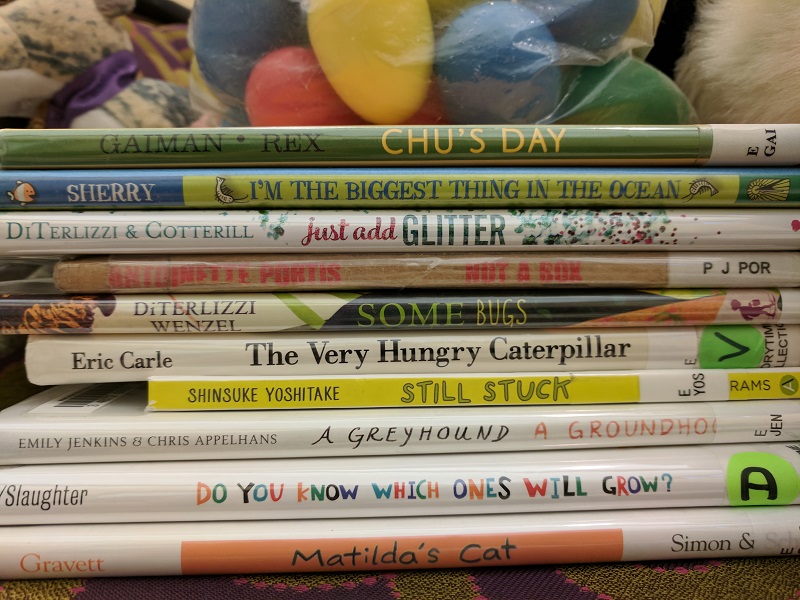
Pile of picture books, spines showing

I have missed my weekly storytimes and was so happy to return to the storytime room this morning for an all-ages summer storytime! I chose some of my favorite summery (or anytime) books, and there’s definitely a theme about facing new situations with courage, though I didn’t set out with that intention. Sometimes it just works out!

Stuffed toy lobster on computer keyboard

  • “Hello Friends” song with ASL, via Jbrary
  • The Angry Little Puffin by Timothy Young
  • Jabari Jumps by Gaia Cornwall
  • Song cube: “Zoom Zoom Zoom, We’re Going to the Moon” and “I’m A Little Teapot”
  • There Might Be Lobsters by Carolyn Crimi and Laurel Molk, with stuffed lobster (every time I held it up, the kids shouted “lobsters!” along with the word in the story)
  • Roller Coaster by Marla Frazee
  • Song cube: “ABCs,” “If You’re Happy and You Know It”
  • The Little Taco Truck by Tanya Valentine and Jorge Martin
  • “Goodbye Friends” song with ASL, via Jbrary
  • Clean up mats
  • Activity: Use crayons to color on a food truck on butcher paper

Favorite interactive moments:

  • Before Jabari Jumps, asking who’s been swimming, who’s jumped off the side into a pool, who’s jumped off a diving board (two had!)
  • Before Roller Coaster, asking if anyone has been on a roller coaster before (yes, and it was blue!)
  • A younger kid about halfway through said “I’m done” and started toddling out. It’s good to know when to call it!
  • Asking for suggestions during “If You’re Happy and You Know It,” one kid raised their hand but then didn’t have a suggestion, so we sang, “If you’re happy and you know it, raise your hand.”

Five basic practices for early literacy: talk, sing, read, write, play

There were about fifteen kids at today’s storytime. I have one more summer storytime in August, and then in the fall our weekly storytimes will start up again. What are your favorite read-alouds for summer?


Top Ten Books to Read in the Second Half of 2019

About halfway through 2019, I’ve already read most of the books on my Top Ten Books to Read in 2019 list. The exceptions are Karen Thompson Walkers The Dreamers, which I heard mixed reviews about from friends and may not read; The Starless Sea by Erin Morgenstern, which I’m still incredibly excited about but which won’t be published till November; and The 57 Bus by Dashka Slater. (City of Girls just came out and is at the top of my pile at the moment.)

  • Bowlaway I liked, but didn’t love as much as McCracken’s last collection of stories, Thunderstruck. I still went to her reading and Q&A at Porter Square Books, though (the write-up to that is still sitting in my drafts folder from February).
  • Feel Free by Nick Laird I picked up ahead of the US pub date, at No Alibis in Belfast, Northern Ireland, which felt like a sneaky victory (one that only book nerds would care about).
  • Kid Gloves by Lucy Knisley was excellent. She tells the story of her two miscarriages and traumatic delivery, and woven into her personal story are equally enlightening/horrifying facts about the history of childbirth and the current state of maternal health in the US.
  • On the Come Up by Angie Thomas neatly sidestepped the “sophomore slump” (after The Hate U Give) and was excellent. “Unarmed and dangerous, but America, you made us, only time we famous is when we die and you blame us.”
  • Darius the Great Is Not Okay by Adib Khorram was good, and it’s a rare YA novel (a rare English language novel, really) that takes place even partly in modern-day Iran and addresses depression and friendship between boys.
  • The Poet X by Elizabeth Acevedo: I listened to the audiobook (the author reads it) and it was incredible. Absolute, top-quality novel in verse. I read her With the Fire On High also (in print) and loved how it showed Emoni balancing everything in her life and making decisions about her future.
  • Walking Home by Simon Armitage: Enjoyed this, but glad I didn’t foist it on my book club. Would definitely recommend to fans of Bill Bryson’s A Walk in the Woods. “Distance, I’ve come to realise, is not the determining factor in terms of travelling time – it’s all about terrain.
  • Get in Trouble by Kelly Link: Can’t believe I didn’t read this as soon as it was published. I love her particular brand of speculative weird. “It’s a small world, after all. Bigger on the inside.”
  • Tenth of December by George Saunders: Many of these stories were speculative as well, and dealt with themes of extreme inequality, and were kind of depressing.

So what about the second half of the year? There’s still plenty to look forward to!

  1. Confessions of the Fox by Jordy Rosenberg: I’m going to try to get my book club to read this one so we can discuss.
  2. The Season of Styx Malone by Kekla Magoon: Nominated for the Coretta Scott King award and an ALA Notable Book for Children, I’m thinking of trying this as an audiobook.
  3. The 57 Bus by Dashka Slater: Still on the list.
  4. The Sixth Extinction by Elizabeth Kolbert: I know it’s not going to be cheerful, but a fellow reader recommended it, and I’m interested. Also an ALA Notable Book.
  5. Big Sky by Kate Atkinson: I loved Case Histories, but felt like each successive Jackson Brodie novel dropped off a bit in quality; however, I love her stand-alones and I’m willing to give Brodie another go. Reviews are pretty good. (June)
  6. Time After Time by Lisa Gruenwald (June): I am a sucker for time travel and I got a galley of this through LibraryThing.
  7. Ask Again, Yes by Mary Beth Keane (June): Adored her two previous novels, Fever and The Walking People.
  8. The Dutch House by Ann Patchett (September): Ann Patchett! (Her first picture book, Lambslide, is excellent also. Just in case anyone was under the drastically mistaken impression that she was a one-trick pony.)
  9. The Secret Commonwealth (Book of Dust, Volume 2) by Philip Pullman (October): Beyond excited for this; I’m taking a vacation day the day it’s published.
  10. Dear Sweet Pea by Julie Murphy: The author of Dumplin’ and Puddin’ goes into middle grade, and I follow. (October)
  11. Roll With It by Jamie Sumner: This isn’t even in my library’s catalog yet, but I read about it via Abby the Librarian and it looks like the kind of middle grade graphic novel I love. (October)
  12. The Starless Sea by Erin Morgenstern (November): Can’t wait, can’t wait. I know it will be different from The Night Circus but I read a tiny snippet from the publisher and I feel confident the magic is there.

What have you read this year? What are you looking forward to?

#MiddleGradeMay

Abby the Librarian’s #MiddleGradeMay wrap-up made me think of all the middle grade books I’ve read this spring (and of course it lengthened my to-read list; I’m especially excited to get my hands on Dear Sweet Pea, Pie in the Sky, and Roll With It).

My reading has certainly shifted along with my job in the last couple years; when I was the adult fiction buyer for my library, I read mostly adult literary fiction, young adult fiction, and some nonfiction (I was also the “speed read” buyer, for especially high-demand titles). Now that I’m working partly in children’s, I’m reading a lot more children’s books, especially middle grade books. In May, I got to go along and give book talks to classes of fifth graders in two different elementary schools in town – not about their required summer reading books for middle school, but a list of books we’d come up with that we thought they’d really like. (There’s actually a little bit of crossover with their middle school list, which is great.)

Some of the books I book-talked most enthusiastically at the schools were: New Kid by Jerry Craft (graphic novel), Blended by Sharon M. Draper (realistic fiction), The Next Great Paulie Fink by Ali Benjamin (realistic fiction), To Night Owl From Dogfish by Holly Goldberg Sloan and Meg Wolitzer (epistolary realistic fiction). I also really liked Wild Bird by Wendelin Van Draanen (realistic fiction), We’re Not From Here by Geoff Rodkey (science fiction), and It Wasn’t Me by Dana Alison Levy (realistic fiction) but my co-worker talked about those ones. Teamwork!

Here are some of the (mostly new) books I’ve read so far this year. Books on our list for students entering sixth grade next fall are in bold.

Cover image of Night OwlNew(ish) middle grade books:

  • Wild Bird by Wendelin Van Draanen (2017)
  • Fish in a Tree by Lynda Mullaly Hunt (2017)
  • The Dollar Kids by Jennifer Richard Jacobson (2018)
  • Breakout by Kate Messner (2018)
  • Save Me A Seat by Sarah Weeks (2018)
  • The Night Diary by Veera Hiranandani (2018)
  • It Wasn’t Me by Dana Alison Levy (2018)
  • Ana Maria Reyes Does Not Live In A Castle by Hilda Eunice Burgos (2018)
  • So Done by Paula Chase (2018)
  • The Girl in the Locked Room by Mary Downing Hahn (2018)
  • Blended by Sharon M. Draper (2018)
  • Ivy Aberdeen’s Letter to the World by Ashley Herring Blake (2018)
  • Harbor Me by Jacqueline Woodson (2018)Cover image of Paulie Fink
  • You Don’t Know Everything, Jilly P! by Alex Gino (2018)
  • Funny Girl: Funniest. Stories. Ever, edited by Betsy Bird (2018)
  • The Next Great Paulie Fink by Ali Benjamin (2019)
  • To Night Owl From Dogfish by Holly Goldberg Sloan and Meg Wolitzer (2019)
  • We’re Not From Here by Geoff Rodkey (2019)
  • A Place to Belong by Cynthia Kadohata (2019)

This kind of diversity did not exist in kid-lit when I was a kid. There is so much here and it’s wonderful. These books tackle issues head-on: contemporary racism, poverty and wealth, restorative justice, Deaf culture, historical fiction that isn’t set in WWII Europe or the American home front…lots of mirrors, lots of windows.

Classics:

  • The Phantom Tollbooth by Norton Juster (1961)
  • Beezus and Ramona, Ramona the Pest, and Ramona the Brave by Beverly Cleary (1955, 1968, 1975)
  • Mrs. Frisby and the Rats of NIMH by Robert C. O’Brien (1971)
  • Frindle by Andrew Clements (1996)

These all stand the test of time with flying colors. I read Frindle in print on a friend’s recommendation, and listened to the audio of the others; Stockard Channing reads the Ramona books (and Neil Patrick Harris reads the Henry Huggins ones!). I appreciated The Phantom Tollbooth more as an adult than I did as a kid (“it goes without saying”), and I’d never read Mrs. Frisby before but it’s pretty timeless.

Cover image of New KidGraphic Novels:

  • Princeless: Save Yourself by Jeremy Whitley and M. Goodwin (2014)
  • Awkward, Brave, and Crush by Svetlana Chmakova (2015, 2017, 2018)
  • The Babysitters Club (Kristy’s Great Idea, The Truth About Stacey, Mary Anne Saves the Day, Claudia and Mean Janine) by Ann M. Martin/Raina Telgemeier (1986/2015, etc.)
  • Little Robot, Mighty Jack, Mighty Jack and the Goblin King by Ben Hatke  (2015, 2016, 2017) (See also: Zita the Spacegirl)
  • Bingo Love Vol. 1 by Tee Franklin, Jenn St. Onge, Joy San (2018)
  • Illegal by Eoin Colfer, Andrew Donkin, Giovanni Rigano, Chris Dickey (2018)
  • New Kid by Jerry Craft (2019)
  • Meg, Jo, Beth, and Amy: A Modern Retelling of Little Women by Rey Terciero (2019)
  • The Giver by Lois Lowry/P. Craig Russell (2019)

The rebooting of classics like Little Women and The Babysitters Club and The Giver is an interesting trend. In some cases, the graphic novel adheres closely to the original (e.g. The Giver). In other cases, there’s a major update and overhaul: Meg, Jo, Beth, and Amy is set in present-day New York, the Marches are a blended family, and…I don’t want to give too much away, but some other major plot points change as well. (I really liked it. That said, I’m not a die-hard fan of Louisa May Alcott’s version.) The Babysitters Club books fall somewhere in between, but closer to the “faithful to the original” end of the spectrum. (There is also, for those who are interested, a funny podcast called The Babysitters Club Club. More for a teen or adult audience.)

Cover image of The Poet XYoung Adult:

  • The Poet X by Elizabeth Acevedo (2018)
  • Darius the Great is Not Okay by Adib Khorram (2018)
  • The Loneliest Girl in the Universe by Lauren James (2018)
  • Picture Us In the Light by Kelly Loy Gilbert (2018)
  • 500 Words Or Less by Juleah Del Rosario (2018)
  • With the Fire On High by Elizabeth Acevedo (2019)
  • On the Come Up by Angie Thomas (2019)
  • Sunny by Jason Reynolds (2019)

I’ve been reading less YA lately but I absolutely loved both of Elizabeth Acevedo’s novels. I read With the Fire On High in print, and listened to the audiobook of The Poet X, which the author reads – I’d highly recommend the audio version.

And what about adult literary fiction? I still love it, and there are a bunch of new novels coming out this summer and fall that I’m excited about, but that’s a post for another day.


Step Into Storytime, May 13

Stack of storytime titles

This morning was the last Monday Step Into Storytime for the spring; our summer schedule is different, and I’ll only have a couple of all-ages storytimes until the regular schedule starts again in the fall. I will miss seeing these kiddos for storytime every week!

For our last storytime, I requested enough copies of the book Tap the Magic Tree by Christie Matheson so that every adult/child pair could have one. It’s an interactive book (tap, pat, swish, tilt, shake, etc.) so I wanted all the kids to have a chance to be involved throughout. (I borrowed this idea from Miss Lauren, who did it with her 3- to 5-year-old storytime group.) There are plenty of other interactive titles, too, if this is something you’d like to try in your storytime, or if this is a type of book your kid likes; see list below.

Copies of Tap the Magic Tree

  • Welcome and announcements
  • “Hello Friends” song with ASL from Jbrary
  • Hello Hello by Brendan Wenzel: This is a storytime favorite because it allows for a lot of interaction, like checking clothing for spots and stripes, and saying hello to friends and neighbors sitting nearby.
  • Tap the Magic Tree by Christie Matheson: Copies for everyone. This got loud (which is fine!) as kids and their grown-ups explored each page.
  • 88 Instruments by Chris Barton: Because we were pretty loud already, I handed out instruments (shaker eggs and jingle bells on sticks) for this musical story. (Storytime tip: if the group is loud, getting everyone to make the same noise makes things more manageable.)
  • Song: “Shake Your Sillies Out” (then collect instruments)
  • Pete’s A Pizza by William Steig: We did this one just a couple weeks ago, but it works so well. Kids can do a movement to go along with each page of the story: kneading and stretching dough, tossing it, spreading oil, sprinkling cheese, etc.
  • Song cube: “ABCs”
  • A Parade of Elephants by Kevin Henkes: Five of the kids got to put an elephant on the felt board, and those who didn’t got to come up and give the elephants pats to make sure they were stuck up there firmly. Then we marched round and round, trumpeted, yawned, and stretched.
  • The Wonky Donkey by Craig Smith: Kids could come up and say hello to the donkey puppet before and after the story. (Note: some kids like being nibbled on, and SOME DON’T. Keep it to “hee haw” and ear wiggling!)
  • “Goodbye Friends” song with ASL from Jbrary
  • Clean up mats, put out butcher paper and crayons, hand out surveys* to adults, remind everyone about summer schedule.

*Surveys: I’ve been wanting to do a brief survey for this group for a while, to see if there was anything I could tweak to improve the program. I based my four-question survey largely on Jbrary’s Sample Evaluation Forms. LibraryAware also has a long post about feedback on programs.

Seven adults filled out and returned the survey; two of the seven said that the books/songs/movement/crafts were “not engaging enough”; the other five respondents felt that the books/songs/movement/crafts were “just right” for their children. I may try to do fewer, longer stories in the fall (three or four books instead of five or six), still with plenty of songs and movement. Then again, it could be a different group in the fall. We’ll see!

A few other interactive picture books:

  • Tap the Magic Tree by Christie Matheson
  • Press Here and Mix It Up by Herve Tullet
  • Don’t Push the Button by Bill Cotter
  • Bunny Slopes and Hungry Bunny by Claudia Rueda
  • Tickle Monster by Edouard Manceau

Step Into Storytime, May 6

This is our second-to-last Monday Step Into Storytime before our schedule changes for summer (which seems optimistic, as spring has barely arrived, but so it goes). A few a my favorite families were there, which made it extra special, and all of the books really lent themselves to movement and interaction (though we still did plenty of extra songs and movement in between them as well).

Stack of picture books with bag of shaker eggs on top

  • Welcome, announcements
  • “Hello Friends” song with ASL from Jbrary
  • Chu’s Day by Neil Gaiman and Adam Rex: Chu’s fakeout sneezes got some laughs. If you are looking for humor in books, sneezes are a sure way to go.
  • Yoga: stretch to ceiling, touch toes, repeat; step feet apart, touch toes; touch opposite toes (e.g. left hand to right foot – cross-body exercises stretch the body and the brain!)
  • This Beautiful Day by Richard Jackson and Suzy Lee: Perfect, as we’ve been having plenty of gray and rainy days and very little sunshine. “Beautiful” is in the eye of the beholder. And there’s some built-in stomping and toe-tapping.
  • Yoga/music: “Head, Shoulders, Knees, and Toes”
  • Oh No, George! by Chris Haughton: The BEST thing happened at the part where George sees the cat: When I read “What will George do?” one of the kids called out “He ate the cat!” which made everyone burst out laughing. (Don’t worry, cat lovers: no cats were eaten in the reading of this book.)
  • Song cube: “I’m A Little Teapot” and “Wheels on the Bus”
  • Yoga/music: Make stars with bodies (feet apart, arms out) and sway to “Twinkle Twinkle Little Star”
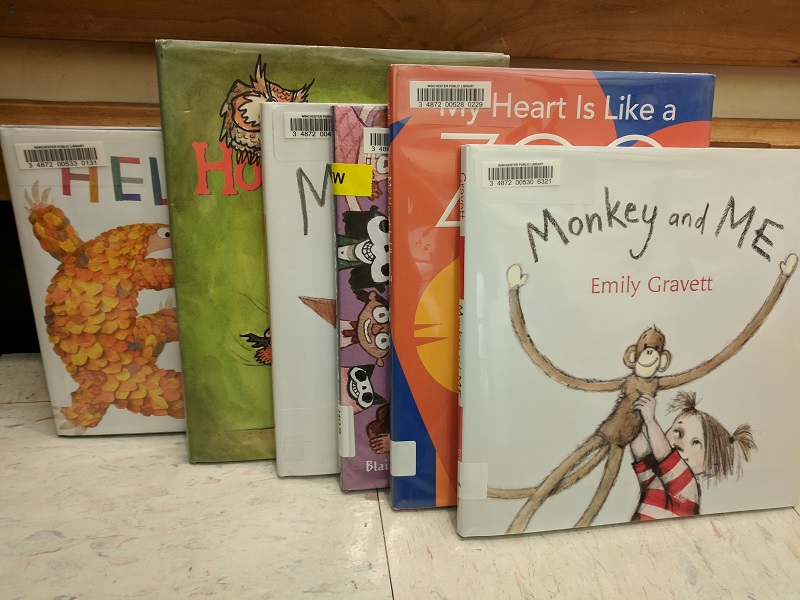
  • My Heart Is Like A Zoo by Michael Hall: I brought out the flannel animals one by one and the kids yelled out what they thought they were. Pretty high accuracy on this, actually, and even when someone called out “a heart!” they weren’t wrong – all of the animals are made out of heart shapes.
  • Now by Antoinette Portis: Another book with some built-in opportunities for participation/movement, plus an audible “Awww” from lots of the grown-ups at the end (“And this is my favorite Now / because it’s the one I am having / with you”).
  • Song cube: “Itsy Bitsy Spider”
  • Monkey and Me by Emily Gravett: With animal impressions, of course.
  • “Goodbye Friends” song with ASL from Jbrary
  • Clean up mats, hand out shaker eggs, put on music (“Shake Your Sillies Out” and “Wheels on the Bus”), dance! Collect eggs afterward.