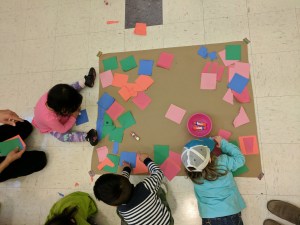
It’s a new season of Step Into Storytime, our library’s twice-weekly storytime for two- and three-year-olds (and siblings of various ages). I run our Monday storytime, and I’m excited to get back into a weekly rhythm!
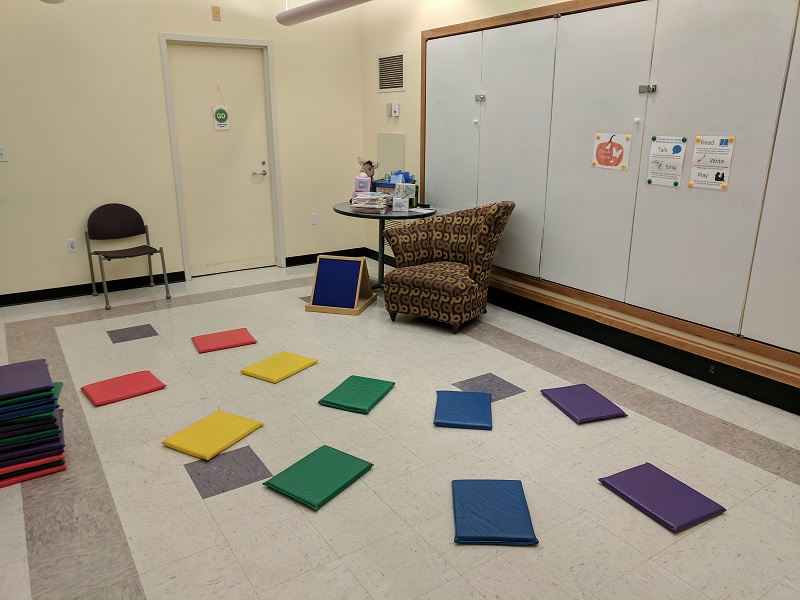
Room setup:
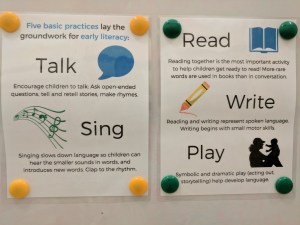
- Step Into Storytime laminated poster and early literacy tips (Talk, Sing, Read, Write, Play) on the board with magnets
- Colored mats in a stack
- Storytime box (contains magnets, posters, bubbles, scissors, tape, scarves, shaker eggs, stickers, ipod with music, etc.)
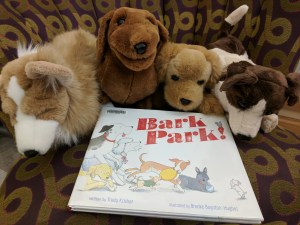
- Additional props (flannel board and shapes, puppets or stuffed animals)
- Song cube(s) and yoga cube(s)
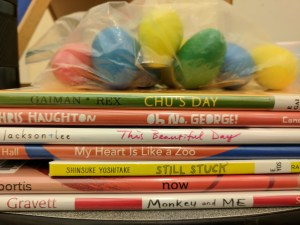
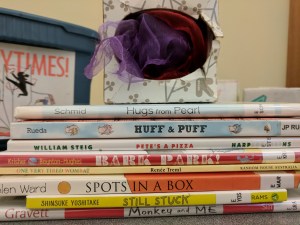
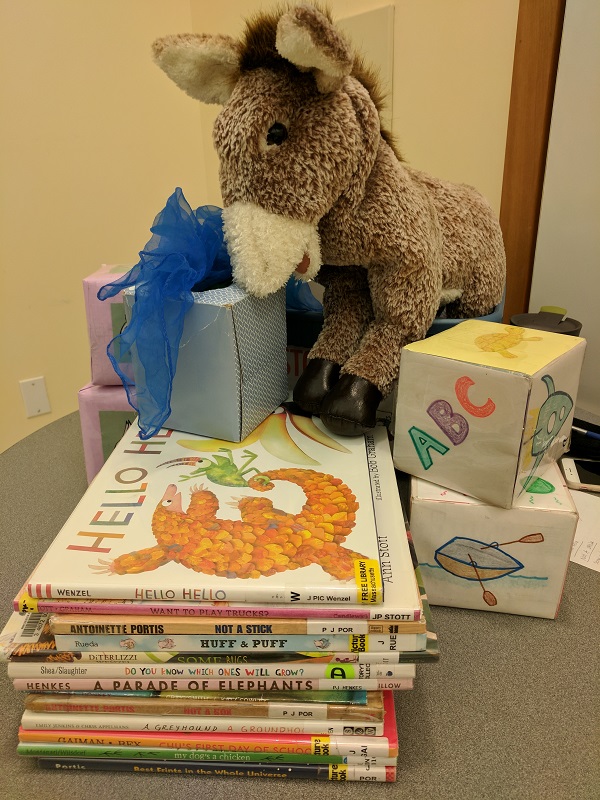
- Books! (Usually 4-6 I plan to read, plus several alternates in case the crowd skews younger, older, wiggly, etc.)
Storytime:
- Welcome everyone and announcements (keep the doorways clear, location of bathrooms and where to have snacks, upcoming program info)
- “Hello Friends” song with ASL (Jbrary)
- Name song (“____ is here today”) and early literacy tip: we do a lot of singing in storytime, in addition to reading, because the rhythm of songs helps with language development and lays the groundwork for reading and writing later on.
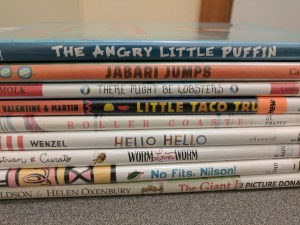
- Hello Hello by Brendan Wenzel: This is one of my all-time favorite openers. There’s not a lot of text, but there are so many opportunities for interaction (who’s wearing dots/stripes? Can you move like an octopus? Show/touch your tongue, ears, hands, and nose, etc.). In today’s group, we had a few returning families but plenty of new kids and they were a little younger than last spring’s group. Storytime for younger groups is always going to be noisy and wiggly, so if you can get them making the same sounds/movements as each other, that’s a win.
- Want to Play Trucks? by Ann Stott and Bob Graham: Even with a younger crowd, I like to have at least a couple books with some kind of narrative arc or story, and this one is perfectly simple, in a familiar scenario for most kids – a playground, toys, ice cream.
- Song cube: “I’m A Little Teapot” and “ABCs”
- Not A Stick by Antoinette Portis: An off-page voice asks the little piglet about its stick – but it’s not not not a stick! This is a brilliant representation of the way grown-ups misunderstand kids’ imaginative play, or simply don’t see the same things. (I’m planning to read Not A Box next week.)
- Handed out scarves for Huff and Puff by Claudia Rueda. “Does anyone know the story of the three little pigs? Okay, this is different!” The scarves are fun in themselves, give the kids something to do with their hands, and help illustrate the wind created by the wolf’s huffing and puffing.
- Yoga cube (“Yoga is a way of moving our bodies”): Warrior poses and chair pose (“Everyone pull up an invisible chair…and sit in it!”)
- Fall Is Not Easy by Marty Kelley: Change is hard. Even young kids are familiar with the changing of seasons, and they can tell that there’s something funny about this tree’s fall leaves.
- The Wonky Donkey by Craig Smith and Katz Cowley, with donkey puppet. This one is funny, repetitive, and not as much of a tongue twister as it seems.
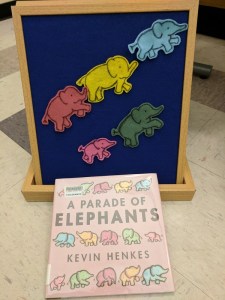
- Flannel board: elephants
- A Parade of Elephants by Kevin Henkes: Like Hello Hello, this one has so many opportunities for interaction and engagement: We identified the colors of the elephants, counted them, marched, stretched, yawned, and trumpeted.
- “Goodbye Friends” song with ASL (Jbrary)
- Clean up mats
- Music (“Watch Petunia Dance” by Caspar Babypants) and bubbles (and no one got trampled or threw up!)
Bonus: Lots of high fives and hugs at the end, plus a huge hug from a kiddo who’s been coming for at least a year with her older brother! The storytime love was strong today.






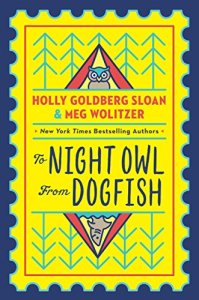 New(ish) middle grade books: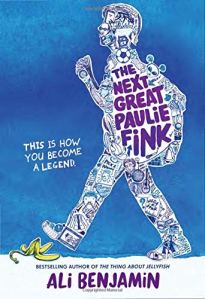
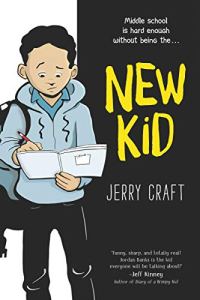 Graphic Novels:
 Young Adult: