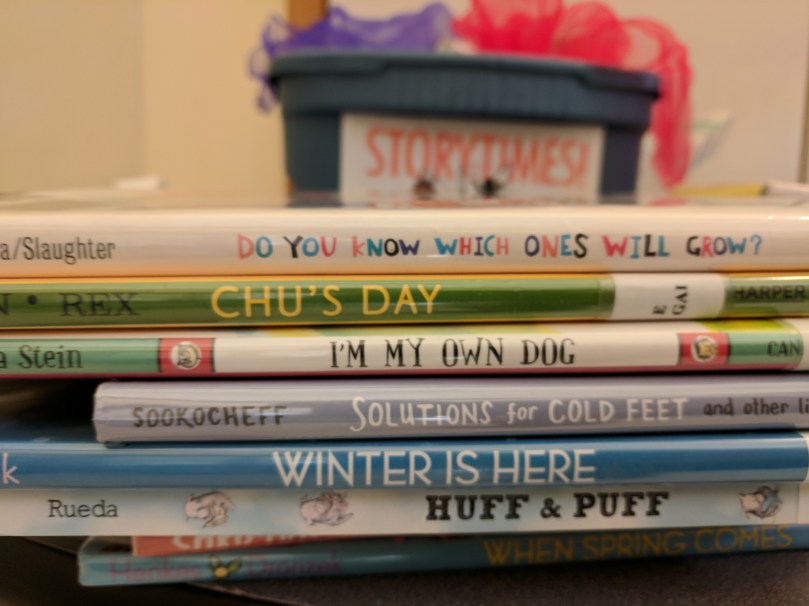
Over on Library Twitter, many people identified their favorite books published in 2018 with the hashtag #Libfaves18. I participated as well, but I read many books I loved in 2018 that were published in previous years. Here they are (for reviews, click through to my LibraryThing catalog):
Picture Books
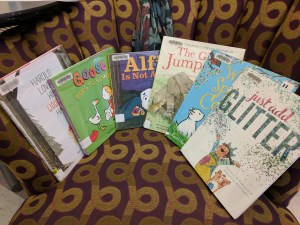
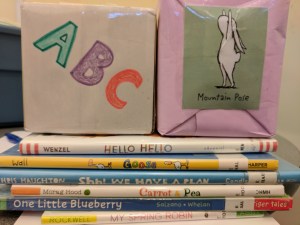
This is a long list, but I read a LOT of picture books this year and there were so many that were excellent. There’s something here for every mood and for every audience, whether it’s one-on-one or a storytime crowd. These books have humor, heart, whimsy, mischief, sweetness, bravery, creativity, and beauty.
Chirri and Chirra by Kaya Doi
The Class by Boni Ashburn
Dear Substitute by Audrey Vernick
A Different Pond by Bao Phi
Flora and the Flamingo by Molly Idle
Flyaway Katie by Polly Dunbar
The Giant Jumperee by Julia Donaldson and Helen Oxenbury
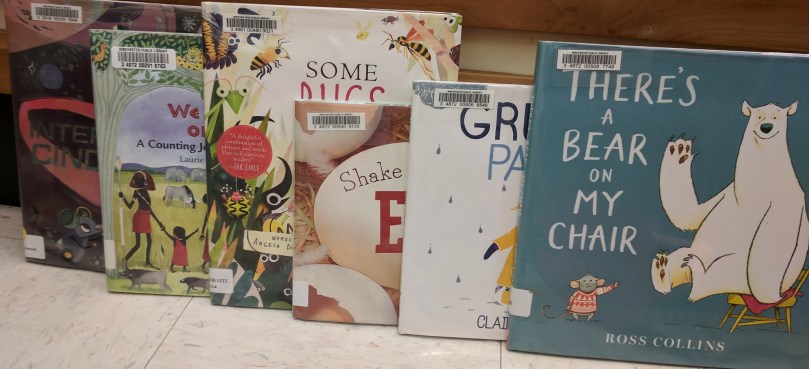
Grumpy Pants by Claire Messer
Hello Hello by Brendan Wenzel
Henry & Leo by Pamela Zagarenski
Hoodwinked by Arthur Howard
Jabari Jumps by Gaia Cornwall
Just Add Glitter by Angela DiTerlizzi
Miss Brooks Loves Books (And I Don’t!) by Barbara Bottner
Puffling by Margaret Wild
Shake A Leg, Egg! by Kurt Cyrus
Sleep Like A Tiger by Mary Logue and Pamela Zagarenski
Sloth at the Zoom by Becker
Sophie’s Squash by Pat Zietlow Miller
Solutions for Cold Feet and Other Little Problems by Carey Sookocheff
The Steves by Morag Hood
The Sun Is Kind Of A Big Deal by Nick Seluk (nonfiction)
There Might Be Lobsters by Carolyn Crimi and Laurel Molk
Tinyville Town Gets to Work by Brian Biggs
Toys Meet Snow by Emily Jenkins and Paul O. Zelinsky
The Wonky Donkey by Craig Smith
Middle Grade
I read less YA than usual this year but way more middle grade, and I love it. The characters are at such an interesting age, when a lot of (often painful) growth happens, relationships change, and they are tackling real problems, often on their own. For realistic fiction, I’m now a devotee of Sharon M. Draper and Lynda Mullaly Hunt; on the magical side of things, I was blown away by Lauren Oliver’s Liesel & Po.
Dear Sister by Alison McGhee
Drama by Raina Telgemeier (also: Smile, Sisters, and Ghosts)
Hunger by Donna Jo Napoli
Illegal by Eoin Colfer, Andrew Donkin, and Giovanni Rigano
It Wasn’t Me by Dana Alison Levy
Liesl and Po by Lauren Oliver
The Marvels by Brian Selznick
The Night Diary by Veera Hiranandani
One for the Murphys and Fish in a Tree by Lynda Mullaly Hunt
Out of My Mind by Sharon M. Draper
Refugee by Alan Gratz
The Thing About Jellyfish by Ali Benjamin
YA/Teen
Fewer titles than usual this year, but still some standouts, and a cluster of stellar realistic romance books.
Eliza and Her Monsters by Francesca Zappia
Far From the Tree by Robin Benway
Realistic romance: When Dimple Met Rishi by Sandhya Menon, You Bring the Distant Near by Mitali Perkins, I Have Lost My Way by Gayle Forman, Puddin’ by Julie Murphy (see also: Dumplin;, book and movie), The Earth, My Butt, and Other Big Round Things by Carolyn Mackler, Leah on the Offbeat by Becky Albertalli
Adult Nonfiction
Some important books here, particularly Evicted, which I read for a Community Reads committee (we didn’t choose it, but not because it isn’t 100% worthwhile; it is). Rebecca Solnit is always worth reading; she’s brilliant, measured, and incisive.
Educated by Tara Westover
Evicted by Matthew Desmond
Call Them By Their True Names by Rebecca Solnit (2018)
I Am, I Am, I Am by Maggie O’Farrell (2018)
When They Call You A Terrorist by Patrisse Khan-Cullors
Women & Power by Mary Beard
Adult Fiction
A lot of speculative fiction this year, but The Great Believers is the one I’ve been recommending to everyone. It is absolutely crushing.
The Bear and the Nightingale and The Girl in the Tower (first two books of the Winternight trilogy) by Katherine Arden
The Great Believers by Rebecca Makkai (2018)
The Fifth Season, The Obelisk Gate, and The Stone Sky (The Broken Earth trilogy) by N.K. Jemisin
Sourdough by Robin Sloan
Stories of Your Life and Others by Ted Chiang
Transcription by Kate Atkinson (2018)
An Unkindness of Ghosts by Rivers Solomon
Favorite Books Read in 2017 (First Half)| Favorite Books Read in 2017 (Second Half) | 2018 Reading Wrap-Up


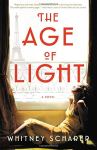 Whitney Scharer was up first, showing slides and then reading from her debut novel about Lee Miller, known as a model for Vogue and surrealist Man Ray’s muse, though she was a photographer in her own right, and co-inventor of the technique of solarization. (Aside: Every student should have a project like the one mentioned in Meg Wolitzer and Holly Goldberg Sloan’s new middle grade novel, To Night Owl From Dogfish, “Give the right person the credit.”) Scharer discovered Miller at an exhibit featuring Man Ray at the Peabody Essex Museum in 2011, and was interested in the two of them “being in love and making art together.” (Miller went on to be a war reporter; she reminded me of Robert Capa’s partner, Gerda Taro, who was killed while documenting the Spanish Civil War.) Scharer read a scene from her novel in which Miller describes what she calls “wild mind”: her ability to set any expression on her face while modeling, yet thinking of anything she wants, setting her mind free. The scene (possibly the whole novel?) was in present tense.
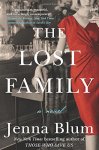 Next, Jenna Blum (The Stormchasers, Those Who Save Us) talked about and read from her new novel, The Lost Family, set in New York and centered around a Holocaust survivor, Peter, who lost his wife and daughters. He now owns and runs a restaurant called Masha’s, after his late wife, and has sworn not to get involved with anyone again – but, of course, he does. The novel is about Peter and his second wife and their daughter, “a whole family trying to put its arms around a loved one’s PTSD.” Blum didn’t have slides, but she did share a cocktail of her own invention, and cream puffs called “Masha’s Little Clouds”; she said that she invented and kitchen-tested all the menu items in the book.
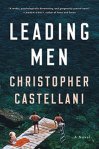 Finally, Christopher Castellani (A Kiss From Maddalena, The Saint of Lost Things, All This Talk of Love) talked about his newest novel, Leading Men, which imagines a party thrown by Truman Capote in Portofino in 1975, the guests, and the aftermath. Castellani said that people always want to know “how much is true and how much is not true,” so he explained that the party did happen, and that Tennessee Williams and his lover Frank Merlot really were invited, but that Williams’ journal does not mention the party in the days or weeks following it. Using both “real and invented people,” Castellani imagined and invented “between the cracks of what was known about these people.” Merlot is his main character; Williams isn’t a “point of view character” largely because he is too well-known, has written and been written about too much; Merlot, though not obscure, is less of a known quantity. Castellani admitted that it was daunting to write dialogue for characters like Capote and Williams; he would often use an “anchor quote” from their writings in order to get the tone of the dialogue and scene, and would sometimes remove the “scaffolding” once the scene was finished.


 The past few months have also brought us graphic novel adaptations of Laurie Halse Anderson’s Speak and Lois Lowry’s The Giver. The former is YA rather than middle grade, and the art is quite different from the books above; Emily Carroll did an absolutely haunting job translating Speak into a new format. Melissa’s silence, the claustrophobic atmosphere of menace, and the slow healing and emerging that takes place are rendered in a way that honors and enhances the original.
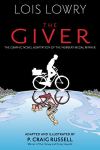 The Giver is often read in late grade school, though it’s one of those books that is thought-provoking no matter when in life you encounter it. Unlike the rest of the books here, it is set in a different reality than our own, a futuristic place of Sameness. P. Craig Russell produced the graphic novel version; cool blues and grays prevail, until Jonas’ moments of “seeing beyond” introduce flashes of color, and The Giver’s memories do the same. The Giver himself looks less Kindly and more ominous than I had pictured him, and the whole community has a 1950s vibe (on purpose). It’s very hard to improve on the original, and as one of the first utopia/dystopia novels that young readers encounter, it’s not in danger of falling by the wayside, but if this version of The Giver finds a new audience, all the better.