Quotes from books, part VI

This batch of quotes is from books I read between April and August 2016. The tenth quote was hard to choose because nearly every sentence in The Gap of Time was so knockout beautiful.

  1.  “Mostly I’m just trying to get it right, whatever that means.”The Truth About Forever, Sarah Dessen
  2.  But, of course, the hardest shells hid the most fragile selves. The Expatriates, Janice Y.K. Lee
  3.  He made a whole city full of windows. -Harold and the Purple Crayon, Crockett Johnson
  4.  “You can’t compare one person’s coping capacity to another, hon.”The Raven King, Maggie Stiefvater
  5.  He considered how memories hold our lives in place but weigh nothing and cannot be seen or touched.Father’s Day, Simon Van Booy
  6.  “And fiction gives us empathy: it puts us inside the minds of other people, gives us the gift of seeing the world through their eyes. Fiction is a lie that tells us true things, over and over.”The View From the Cheap Seats: Selected Nonfiction, Neil Gaiman
  7.  There are pockets of time, she thinks, where every sense rings like a bell, where the world brims with fleeting grace.The Last Painting of Sara De Vos, Dominic Smith
  8.  Unlike the world of technology, where rapid innovation produces improvements, innovation in fashion just produces arbitrary stylistic changes. Overdressed: The Shockingly High Cost of Cheap Fashion, Elizabeth Cline
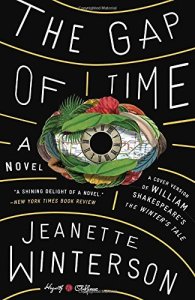
  9.  It’s impossible, what I’m trying to do. To say good-bye without telling them I’m leaving.Imagine Me Gone, Adam HaslettCover image of The Gap of Time
  10.  Forgiveness is a word like tiger – there’s footage of it and verifiably it exists but few of us have seen it close and wild or known it for what it is. The Gap of Time, Jeanette Winterson

Quotes from books, Part V

Continuing my series of quotes from books I’ve read semi-recently (this batch is November 2015-April 2016), originally inspired by The Broke and the Bookish and Three Good Rats. Here are quotes from three YA novels, three nonfiction books, one etiquette book, one book of essays, and two adult novels.

  1.  “When it comes to controlling human beings there is no better instrument than lies.” 
    1. b. “Oh, the world is full of things you don’t see.”The Neverending Story, Michael Ende
  2.  “Peace is joy at rest, and joy is peace on its feet.” –Small Victories, Anne Lamott
  3.  “It is surely a premise of democracy that the rules apply equally to everyone.” –Common Courtesy, Judith Martin
  4.  “The big problem doesn’t lie in differences between what men and women want out of life and love. The big problem is how hard it is to achieve equal relationships in a society whose work policies, school schedules, and social programs were constructed on the assumption that male breadwinner families would always be the norm.” –Marriage, a History, Stephanie Coontz
  5. “When you don’t know what made someone leave once, you also don’t know what might make him do it again.” –Conviction, Kelly Loy Gilbert
  6.   “The biggest difference between boys and girls is how people treat them.”None of the Above, I.W. Gregorio
  7.  “What redemption there is in being loved: we are always our best selves when loved by another. Nothing can replace this.” –This Must Be the Place, Maggie O’Farrell
  8.  “God is a human invention.”Gretel and the Dark, Eliza Granville
  9.  “We can stretch our personalities, but only up to a point….We might call this the “rubber band theory” of personality….We are elastic and can stretch ourselves, but only so much.” –Quiet, Susan Cain
  10.  “The first rule of a successful getaway is not to look as if you’re trying to get away.” –A Burglar’s Guide to the City, Geoff Manaugh

Previously:

Part I (August-November 2015)

Part II (June-September 2015)

Part III (January-June 2015)

Part IV (some all-time favorites, no particular order)

Quotes from books, IV

After more than a year, I’m picking this up again (see Part III here, with links to Parts I & II). The quotes below are some of my longtime favorites.

Clipart quotation marks

It occurs to her that there is one thing about people you can never understand well enough: how entirely inside themselves they are.Pigs in Heaven, Barbara Kingsolver

She’ll be okay without me, I think as I watch her, but I know that she will not. –The Time Traveler’s Wife, Audrey Niffenegger

“I love my children. No one will tell you otherwise, but just between the two of us I have to say I admire you for not having any. The ways they break your heart, Jesus, and it never stops. I mean it, it simply does not stop.” –The Magician’s Assistant, Ann Patchett

People had their natural habitats, after all, demarcated not in ecologies but in ages. He’d been perfectly adapted to being nineteen, and she was better at being thirty-two. –Gold, Chris Cleave

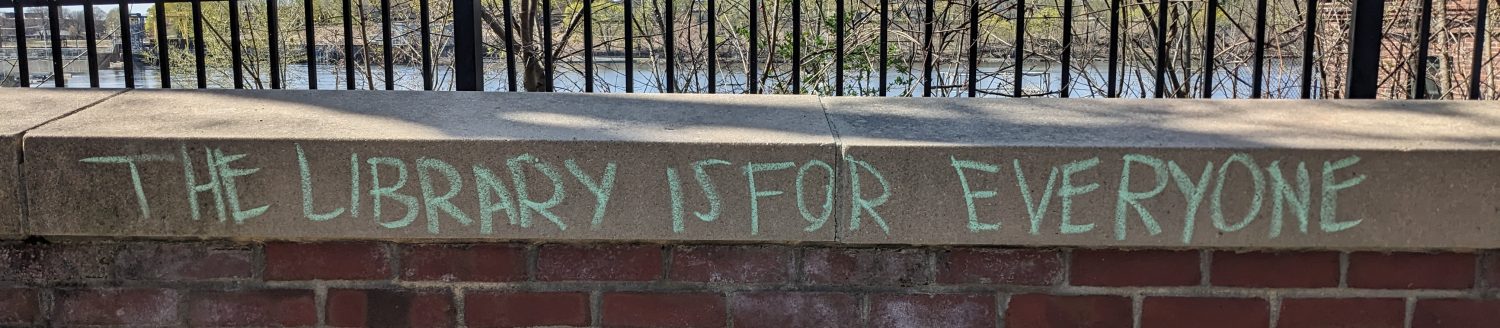
The shelves were supposed to be loaded with books – but they were, of course, really doors….A library in the middle of a community is a cross between an emergency exit, a life raft and a festival. They are cathedrals of the mind; hospitals of the soul; theme parks of the imagination….They are the only sheltered public spaces where you are not a consumer, but a citizen instead. -“Alma Mater,” Caitlin Moran (anthologized in The Library Book)

Clipart quotation marks

Arlington Reads Together: Becoming Nicole

Last fall, I was on the selection committee that chose Becoming Nicole: The Transformation of an American Family by Amy Ellis Nutt as the 2017 Arlington Reads Together book. Last Saturday, I got to be in the audience to hear Nicole herself, and her father Wayne, speak to the Arlington community for the A.R.T. kickoff event in our beautiful old Town Hall building.

In the weeks leading up to this event, as we have had library displays announcing the book and the related programs this month, I have been pleasantly surprised how many people have shown so much enthusiasm for the book and for the topic. (Transgender issues, unfortunately, have been in the news again lately as the federal government has just revoked protections for transgender students in public schools to use the bathroom that corresponds to their gender identity.)

I encourage everyone to read Becoming Nicole, if you haven’t already. My brief review and quotes from the book from when I read it last year are on LibraryThing; I’ll use this space to recap the event.

Nicole’s talk emphasized the need to educate people on transgender issues. When kids know what “transgender” means, they are less likely to bully other trans students; when adults know, they are more likely to support trans people’s rights. She called the recent rollback of federal protections for trans students an “unnecessary backward step” because “people don’t put a face to the trans movement. Who actually is this affecting?” In the Q&A after the talk, Nicole said, “It’s harder to marginalize a human being than a foreign idea.”

Nicole also emphasized the importance of education because “kids know their gender identity early….Parents need to get on board early so kids can get medical treatment.” She spoke about “the importance of having adults support you”; her mother Kelly supported her from the beginning, and her father Wayne eventually got on board as well. Her elementary school supported her at first, but later things deteriorated to the point where the Maines family had to move. Nicole also mentioned Camp Aranu’tiq as a wonderful, inclusive summer camp experience for trans kids.

Though Nicole and Wayne appreciated the supportive Arlington audience, Nicole said, “We can’t keep preaching to the choir”; we have to have conversations with people who don’t understand. “The people in power don’t get it, and they need to.”

During the Q&A, one preschool teacher and one middle school teacher asked for advice. For the preschool teacher, Nicole suggested specific books (including I Am Jazz; there is also Being Jazz: My Life as a (Transgender) Teen), and suggested not enforcing a gender binary (e.g. allowing children to play with any toys in the classroom, not identifying some as “girls’ toys” and some as “boys’ toys”). She mentioned the need to educate parents as well, though she acknowledged the balancing act that might take. For the high school teacher, she said that being available for students to come talk to is important.

This was a wonderful event, and we were so lucky to hear directly from Wayne and Nicole, who were both well-prepared, entertaining, sympathetic, and humorous speakers. You can see photos of the event (taken by librarian/photographer Rob Lorino) on the library blog.

HIGHLY anticipating

Cover of Northern LightsAt the end of my 2016 wrap-up I started to look ahead into 2017 for books to look forward to, but didn’t have any specific titles at the time. This morning (I went to bed even earlier than usual last night) I woke up to the good news that Philip Pullman is publishing another trilogy, The Book of Dust, and that the first one comes out this fall – specifically, on my daughter’s birthday. (She will be thrilled about being dragged to a bookstore first thing in the morning and then being ignored all day while her mama reads. Best birthday ever!)(Kidding, of course. She will be in daycare that day and I will probably take a vacation day. Or just read during her naps and after she goes to sleep, like a normal person.)

So anyway, I’m definitely looking forward to that one. Sometimes when an author of a beloved book or series announces a new book or series, I am a little nervous that it won’t measure up, but I have faith that this one will.

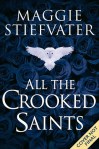
Cover image (not yet final) of All the Crooked SaintsAnd because October is always a big month for publishing, Maggie Stiefvater’s novel All the Crooked Saints comes out then too, another one I’m looking forward to, but not with quite the insane devotion, because I haven’t been reading and re-reading her since I was twelve.

Still waiting on Audrey Niffenegger for Alba, Continued.

2016 Year-End Reading Wrap-Up

Number of books read in 2016: 201

Picture books: 90

Partially read books: 8

Books read in 2015 minus picture books and partially read books: 103

YA/children’s books read: 40

Average number of books read per month (including YA, excluding picture books and partially read books): 8.58

Audiobooks: 11

Nonfiction (adult/YA): 22

Total page count: 27,536 (This seems suspiciously low, given that the last two years my page count was just over 50,000, but exporting the data I want from LibraryThing is frustrating, and honestly I don’t have the patience to dig into this. It’s still a pretty good chunk.)

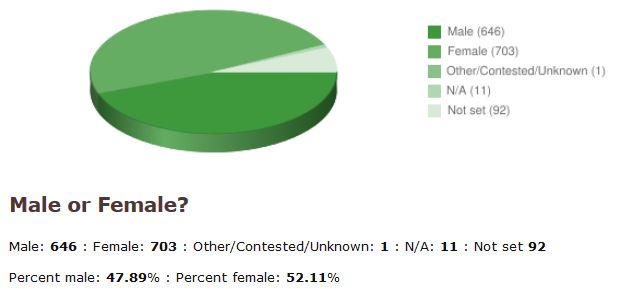
Male or

Female/male authors: Tipping female for the second year in a row but still pretty close to 50-50.

Five-star ratings: 23, including re-reads; lots of childhood favorite re-reads this year, including The View From Saturday and Ella Enchanted. And Greenglass House, again.

Previously: 2015 Year-End Reading Wrap-Up

Again, no specific reading resolutions for the year. I have continued to winnow down my book collection at home, and have just a few books on the shelf that I’ve been meaning to read; one of these is The Checklist Manifesto by Atul Gawande, which I suppose would be appropriate to check off the list.

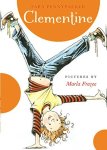
I have enjoyed reading without the lurking feeling of each book being part of a “to do” list. I’ve discovered (and revisited) many, many picture books, from my own childhood copies (One Woolly Wombat!) to the brand new and delightful (too many to name). I’ve ventured more into children’s chapter books and met Sara Pennypacker’s Clementine.

Like many others, I’m also trying to read a broader variety of perspectives: books by women and people of color and other minorities, books whose subjects or main characters are something other than straight, white, middle-class Americans. There have been some spectacular collections of scathingly funny and serious feminist essays (Lindy West, Caitlin Moran, Mindy Kaling), and Rebecca Solnit has a new book coming out in March). And YA authors have been at the forefront of the #WeNeedDiverseBooks charge from the beginning, which means we’re growing a generation more open-minded than any before it.

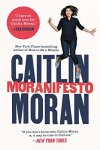
“And so to read is, in truth, to be in the constant act of creation.” -Caitlin Moran, Moranifesto

Best books I read in 2016

There were many books published this year that I was looking forward to eagerly, and which I devoured as soon as I could get them. Other books sneaked up on me (Harry Potter and the Cursed Child!), some were recommended by friends or librarian-friends, others discovered serendipitously (my toddler pulling them off the library shelf), some a combination of the above. Links go to my LibraryThing reviews.

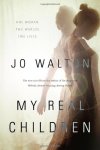
Cover image of My Real ChildrenAdult Fiction

Imagine Me Gone by Adam Haslett

Harry Potter and the Cursed Child by Jack Thorne, John Tiffany, and J.K. Rowling

My Real Children by Jo Walton

The Gap of Time by Jeanette Winterson

“And we can’t know the lives of others. And we can’t know our own lives beyond the details we can manage. And the things that change us forever happen without us knowing they would happen. And the moment that looks like the rest is the one where hearts are broken or healed. And time that runs so steady and sure runs wild outside of the clocks. It takes so little time to change a lifetime and it takes a lifetime to understand the change.” -Jeanette Winterson, The Gap of Time

Adult Nonfiction

Why Not Me? by Mindy Kaling

Shrill: Notes from a Loud Woman by Lindy West

How to Talk So Kids Will Listen & Listen So Kids Will Talk by Adele Faber & Elaine Mazlish

“Shame is a tool of oppression, not change….You know what’s shameful? A complete lack of empathy.” -Lindy West, Shrill

Teen/YA

The Leaving by Tara Altebrando

My True Love Gave to Me (short stories, edited by Stephanie Perkins)

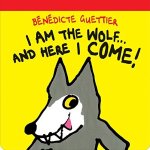
Cover of I Am the Wolf...And Here I ComeChildren’s board books and picture books

Wow! Said the Owl by Tim Hopgood

There Is A Bird On Your Head by Mo Willems

I Am the Wolf…And Here I Come! by Benedicte Guettier

I Kissed the Baby by Mary Murphy

One Was Johnny by Maurice Sendak – I can’t believe I missed this one as a kid. It is the perfect counting book for introverts.

How to Cheer Up Dad by Fred Koehler

School’s First Day of School by Adam Rex, illustrated by Christian Robinson

Children’s chapter books/series

Cover image of ClementineThe Clementine series by Sara Pennypacker – I listened to all seven of these audiobooks (narrated by Jessica Almasy) and loved every single one. Clementine reminds me of Ramona Quimby (especially when adults tell her to “pay attention” and she says that she was paying attention…to something else. Perfect kid logic). The parents are great characters too.

Coming soon…2017

I haven’t looked too far ahead into 2017, publishing-wise. The book I am most anticipating, of course, is the sequel to The Time Traveler’s Wife, but there is no new news about it, as far as I can tell, and the last I heard, it was looking like ballpark 2018. I’d be excited to read anything new by David Mitchell or Nick Hornby, but they each had books out in 2015 (Slade House and Funny Girl, respectively). I’d love to read whatever Erin Morgenstern (The Night Circus) is cooking up next, too. I’m sure plenty of wonderful new books will come along while I’m waiting for these…what are you excited to read this coming year?

What Makes a Good Book Club Book?

I refreshed my “What makes a good book club book?” blog post from 2012 for the library blog. See the “What makes a good book club book?” 2016 edition.

My own book club is still forging on with a small but devoted group of us that meets monthly, give or take. Some of our recent books include:

  • The Golem and the Jinni by Helene Wecker (a bit longer than our usual choices, but excellent historical fiction/mythology/magic)
  • The House of the Spirits by Isabelle Allende (no one read this who hadn’t already)
  • Eligible by Curtis Sittenfeld (a delightful take on Jane Austen’s Pride & Prejudice)
  • My Real Children by Jo Walton (a Sliding Doors-style split narrative, easily one of my favorite books I’ve read this year)
  • Charlotte Sometimes by Penelope Farmer (a children’s book, a song by The Cure, and a good choice for those who like historical fiction and time travel)
  • Becoming Nicole: the transformation of an American family by Amy Ellis Nutt (this was on the my library’s community read shortlist – and indeed, is the 2017 Arlington Reads Together book! – so I was reading it anyway for that committee)
  • Prep by Curtis Sittenfeld (a re-read for a few of us, and most of us empathized more with protagonist Lee Fiora the first time around)
  • Radioactive: Marie & Pierre Curie, a tale of love & fallout by Lauren Redniss (our December book, and our group’s first graphic novel)

Has a book club helped you discover any books that you might not have read otherwise? Which books have lent themselves best to discussion? What’s your best advice for book clubs?

Caitlin Moran discusses her Moranifesto

Cover image of MoranifestoOn November 30, journalist and author Caitlin Moran (pronounced CAT-lin mo-RAN) spoke in conversation with Boston Globe columnist Meredith Goldstein at the Brattle Theater in Cambridge, hosted by the Harvard Bookstore. It was dark and rainy, but good to be in a room full of feminist librarian types. I haven’t yet read Moran’s newest book, Moranifesto, but I loved her book How to Be A Woman and her previous essay collection, Moranthology. I initially discovered her via her essay “Alma Mater” in The Library Book, and I still think of a passage from it often:

“The shelves were supposed to be loaded with books – but they were, of course, really doors….A library in the middle of a community is a cross between an emergency exit, a life raft and a festival. They are cathedrals of the mind; hospitals of the soul; theme parks of the imagination….They are the only sheltered public spaces where you are not a consumer, but a citizen instead.”

-“Alma Mater,” Caitlin Moran

Like most of the audience, I was prepared for Moran to be her unselfconscious, energetic, hilariously uncensored self, and she launched in right away about having just gotten her period and being on codeine (which I’m pretty sure you cannot get over the counter in this country) and coffee. The coffee was winning, I think, because she was talking faster than Lauren Graham.

In shifting from writing about pop culture and feminism, Moran said that at first she had felt “ill-qualified” to write about politics, but gained confidence when she realized that many political figures were former journalists. She stated, “Politics does not work anymore,” and said that we need to form new political parties in the U.K. and U.S. Moran believes in action: “If you started complaining three minutes ago, you should’ve started doing something two minutes ago.”

Of certain of our current political figures, Moran said, “These are not politicians, they are agents provocateurs.” She said that the tone of politics has been set by the Internet, which is  largely young, male, and lawless – “like California during the Gold Rush.”

“EVERYTHING is going to change in the next twenty years.”

Moran believes the left’s biggest enemy is itself. Whereas the goal of conservatism is to keep things as they are (the status quo), the left has two goals: to redistribute power and to invent a future. It is far harder to create something new than to preserve something, which leads to greater dissent, even among those who agree on a progressive agenda.

Moran read from one of the essays in Moranifesto, “Advice to Teenage Girls.” Some of her advice:

  • “‘Yet’ is a very useful word.”
  • “When in doubt, listen to David Bowie.”
  • “Go out there and change the world so it works for you.”

“I think everyone should write a manifesto,” Moran said. What will her next book be? How to Be Famous. “Celebrities are the Greek gods of our time.”

Q&A

The questions from the audience were mostly serious, but the answers ranged. In one case Moran’s answer skittered so far from the topic of the question so quickly that the only possible explanation is a tesseract. Suffice to say that Moran has clearly given the issue of Muppet sex some thought. Her answer offended an audience member; Moran listened to the complaint and responded that she was glad the person had spoken up: “I try to make everyone feel like they can say anything.”

Another audience member asked how we can encourage a cultural shift so that sexual violence and rape is taken seriously? Moran’s idea is to drop the word “sexual” in front of the word “assault”; “physical assault” sounds more serious.

Moran also talked about the online environment and social media. She said, “If you had a town planner, they’d never build the Internet the way it is. There are no safe public spaces….We need to find a new way [of designing and using social media]. This is a “problem of culture, not politics.” There is more money in argument and dissent than in agreement, thus “the world becomes angrier and more afraid.” The U.S., Moran pointed out, will never be invaded – our biggest danger is ourselves (internal dissent).

Ending on a serious note, Moran said that the Brexit vote and the Trump election are part of the same phenomenon, dating back to the 2008 crash. Neither approach of the current political systems – austerity or stimulus – brought anyone to justice for the events of 2008. Instead, the strategy of those in power to stop a revolution was to create a sub-class so people’s anger was directed down instead of up (to the elite).

And back out into the rainy night we went.

Books enjoyed and anticipated in 2016

In terms of politics and world events, 2016 has perhaps not been the best year. But in terms of books, it has been stellar. I’m going to combine two Top Ten Tuesday topics: favorite releases so far this year, and most anticipated releases for the rest of the year. As usual, Linda has beat me to it and we’re anticipating many of the same titles.

Once again, this has sat half-finished in the draft folder for so long that several of the titles I was anticipating I have now read. When I started this, the two categories were more evenly balanced. Well, now you know what I was doing while I wasn’t writing blog posts.

Looking at this list, it’s almost as if all my favorite authors got together and said, “We know she has a baby (now a toddler) and reading time is precious, so let’s each publish a book this year and see if she can still read them all.” Challenge accepted! (Just one question: Why wasn’t Audrey Niffenegger invited to the party? I am going to have the teaser section of “Alba, Continued” memorized by the time she publishes the rest of the novel. Come on, Audrey…)

The Pharos Gate by Nick Bantock: I thought my precious boxed set of Griffin & Sabine books was complete, but – surprise! – there is a new one. I received a copy through the LibraryThing Early Reviewers program and am happy to say that it fits in perfectly with the other six books; the magic remains intact.

Everyone Brave is Forgiven by Chris Cleave: Chris Cleave is one of my favorite authors, and I love historical fiction. This is a good book, but there is so much WWII fiction that the bar is quite high, and I think Cleave’s contemporary fiction is stronger. This one didn’t stay with me the way that Gold did.
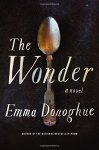
The WonderThe Wonder by Emma Donoghue: Donoghue switches fluidly between contemporary and historical novels, and she excels at both. The Wonder is the story of Nightingale-trained English nurse Lib Wright, who takes a two-week job watching Irish eleven-year-old Anna O’Donnell, who claims not to have eaten in four months. Is it a miracle or a hoax? Lib is sure it’s a hoax and that Anna is a liar, but she quickly comes to care for the girl, and concern at her deteriorating condition compels her to ask not how Anna is maintaining her fast, but why she feels the need to fast at all. The answer is a tangle of religious beliefs and a dark family secret.

Leave Me by Gayle Forman: A mother of four-year-old twins can’t get a break even when she is recovering from a heart attack, so she simply leaves town to find the rest and recovery she needs. Difficult to read at times, but Forman (If I Stay, Where She Went, Just One Day, Just One Year) has such compassionate for and empathy with her characters; she makes the transition from YA to adult seamlessly.
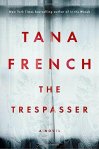
The TrespasserThe Trespasser by Tana French: I’ve been devoted to Tana French’s psychological suspense novels since In the Woods, and I’m always eager to read her new books, though I think The Likeness will always be my favorite. The Trespasser takes place largely in the police office and interview rooms rather than out on the scene; it was a touch long but never felt sluggish, as Conway and Moran dug into what was apparently a domestic murder but turned out to be more complicated than that.
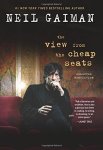
The View from the Cheap SeatsThe View From the Cheap Seats: Selected Nonfiction by Neil Gaiman: This one sneaked up on me; it was not preceded by a lot of fanfare. I’d read a few of the pieces already but enjoyed them again, particularly “Why Our Future Depends on Libraries, Reading, and Daydreaming: The Reading Agency Lecture, 2013.” Nearly every piece in the collection is quite short, and I browsed rather than read straight through in order, so there are some pieces I missed.

Something New by Lucy Knisley: Relish is still my favorite book of hers, but this story of engagement and wedding planning is perfect for those who are in the same stage of life, particularly those with an artsy-craftsy hipster DIY style.
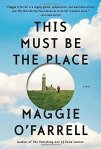
This Must Be the PlaceThis Must Be the Place by Maggie O’Farrell: O’Farrell is another of my favorite authors and I read an e-galley of this novel in a few huge gulps, the result being that I don’t remember it as well as if I’d read it more slowly. It’s the story of Daniel Sullivan and his various family members, in various parts of the world (Donegal, Paris, California, New York, Chile), at various times (from the 1980s to 2016). O’Farrell has a genius for character; I would read this again and probably enjoy it just as much.
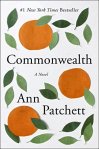
CommonwealthCommonwealth by Ann Patchett: On my admittedly long list of favorite authors, Patchett is firmly in the top five. Commonwealth is the story of two families who break apart and combine, leaving the children to cope with divorce, cross-country moves, and a singular tragedy. Various family members (but not all of them) narrate over a long time frame, during which their personal tragedy is made public in a famous author’s thinly fictionalized account.

On Bowie by Rob Sheffield: I was a Bowie fan without realizing it; when he died, I checked a greatest hits CD out from the library and discovered I knew plenty of Bowie songs, I just hadn’t known they were Bowie songs. Sheffield’s book is somewhere between a Bowie biography and a personal memoir – an fan’s extended paean to a cultural idol.
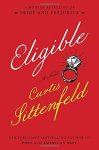
EligibleEligible by Curtis Sittenfeld: I had high expectations for this book (Curtis Sittenfeld! Pride & Prejudice!), and though some reviews were negative or mixed, I thoroughly enjoyed it, as did the other members of my book club. Sittenfeld brings the P&P story and characters into present-day Cincinnati, and she does it very well: with cleverness and wit and invention. She makes one or two significant changes from the original plot and characters, but remains true to the heart of the story.
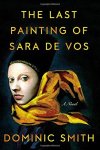
Last Painting of Sara de VosThe Last Painting of Sara de Vos by Dominic Smith: I do love a good art history story, and this one didn’t disappoint. It takes place in three time periods: Holland in the 1630s, when the painting is created; Manhattan in the 1950s, when the painting is stolen and copied; and Sydney, Australia in 2000 when both the original and the forgery arrive at a museum show. Suspenseful and satisfying, a good choice for those who liked The Art Forger (B.A. Shapiro) or The Miniaturist (Jessie Burton).

The Raven King by Maggie Stiefavater: I have inhaled each of these four books, reading them so quickly it’s hard to remember the details. This was a satisfying conclusion to this uniquely magical quartet.

Our Hearts Will Burn Us Down by Anne Valente: The title snagged my attention, and the description and comp titles were enticing, so I requested and received the e-galley. For a story about a school shooting and a series of subsequent fatal house fires, I found it to be pretty slow-paced, and ended up skimming the last third just to find out who/what was causing the fires. On a political note, stories like this make our lack of national legislation on gun control even more frustrating.

Father’s Day by Simon Van Booy: Yet another of my favorite authors, Van Booy never disappoints: his poetic language, beautiful settings, and gift for bringing characters together in unexpected ways is delicate and touching.

Anticipating

The Muse by Jessie Burton: The second novel by the author of The Miniaturist takes place in Spain in 1936 and England in 1967. I like historical fiction in general, and Jessie Burton’s writing, and Spain in the 1930s is particularly interesting. I’m hoping to pick this up in the next month or two.

Today Will Be Different by Maria Semple: Plenty of buzz about the new novel by the author of Where’d You Go, Bernadette? A library copy just came in so I’ll be giving it a try soon.
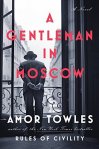
A Gentleman in MoscowA Gentleman in Moscow by Amor Towles: I loved Rules of Civility so much that I was doubtful his next novel could be nearly as good, but my library colleague raved about it and it’s gotten very good reviews. I’ve just started reading and am enjoying it so far.

See also:

Top Ten Books I’ve Read So Far in 2015 (7/1/15)

Best Books I’ve Read in the Second Half of 2016 (12/25/15)