Fake News, a.k.a. Information Disorder: an ongoing reading list

Since before the first Libraries in a Post-Truth World conference at the beginning of this year, I’ve been keeping a list of relevant articles. This list has expanded to include books, studies and reports, and other materials, and I am sharing it here. If you have relevant materials to add, please leave a comment here. If you would like to use this list for library programming, teaching, or related work, please feel free – I’d love to know about it if you do.

Though “fake news” is a term most people recognize these days (unfortunately), it is not the best term to use, for reasons Claire Wardle and Hossein Derakhshan state in their Council of Europe report:

We refrain from using the term ‘fake news’, for two reasons. First, it is woefully inadequate to describe the complex phenomena of information pollution. The term has also begun to be appropriated by politicians around the world to describe news organisations whose coverage they find disagreeable. In this way, it’s becoming a mechanism by which the powerful can clamp down upon, restrict, undermine and circumvent the free press.
We therefore introduce a new conceptual framework for examining information disorder, identifying the three different types: mis-, dis- and mal-information.

Misinformation is when false information is shared with no harmful intent; disinformation is when false information is shared to cause harm; and mal-information is when genuine information is shared to cause harm (e.g. by moving it from the private to the public sphere). Unfortunately, again, we are dealing with all three today (plus satirical sources like The Onion, which are the only good kind of fake news).

Fake News a.k.a. Information Disorder: A Resource List

Again, feedback is welcomed; please let me know if you use this list, or have anything to add. I am particularly interested in using the rise of interest in the topic of fake news to advocate for librarians in schools, as they are the ones who do the important work of teaching research skills, critical thinking, information literacy, and media literacy.


Top Ten Unique Book Titles

As usual, I am using Linda’s list for inspiration, and it’s not a Tuesday at all. Also, there are eleven twelve, and I could keep going. This is a fun one.

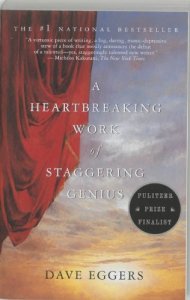
    1.  Cover image Heartbreaking Work of Staggering GeniusA Heartbreaking Work of Staggering Genius by Dave Eggers: This book mystified me when I read it – was it fiction? Memoir? What? – but I always liked the brash confidence of the title. And the bit about French fries.
    2.  We Are All Completely Beside Ourselves by Karen Joy Fowler: I think I came to this as an Ann Patchett recommendation, but the title would have made me want to pick it up anyway.
    3.  Call Me By Your Name by Andre Aciman: It may have been the title that made me pick this book up, I can’t remember now. Either way, I’m glad I did.
    4.  I Was Told There’d Be Cake by Sloane Crosley: This one is on Linda’s list, but I liked the book better than she did. It probably helped that I read it in New York in my early twenties (the essays are about the author in New York in her twenties), and the title always makes me smile.Cover image of Men Explain Things to Me
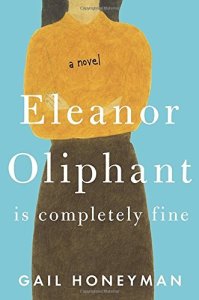
    5.  Eleanor Oliphant Is Completely Fine by Gail Honeyman: Well, obviously she’s not.
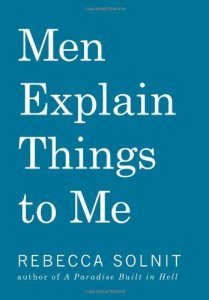
    6.  Men Explain Things to Me by Rebecca Solnit: The title is so good, and so appropriate, that it’s the only thing on the cover of this book: white text on a deep blue background. (I hate to think what Solnit would have done to a cover designer who put a pair of heels on the front of her book.)
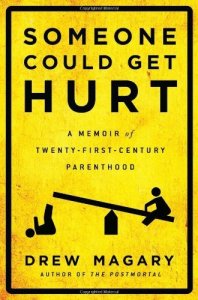
    7.  Someone Could Get Hurt by Drew Magary: A perfect title for a laugh-out-loud parenting memoir.
    8.  I Crawl Through It by A.S. King: My least favorite of her books – I really didn’t get it at all – but I love the title. Her others are good too (e.g. Please Ignore Vera Dietz).Cover image of Someone Could Get Hurt
    9.  Charlotte Sometimes by Penelope Farmer: I heard the song by The Cure before I read the book; both are atmospheric. I love discovering literature via music and vice-versa; when done well, it adds to both. (I discovered The Smiths’ song “Asleep” via The Perks of Being a Wallflower by Stephen Chbosky.)
    10.  A Burglar’s Guide to the City by Geoff Manaugh: The title was more promising than the book itself turned out to be, but then, how could that not be the case?
    11.  Shh! We Have A Plan by Chris Haughton: Initially, I didn’t think this picture book quite lived up to its funny title, but after enough re-reads I came to love it.
    12.  A Supposedly Fun Thing I’ll Never Do Again by David Foster Wallace: I’ve never read this collection of “essays and arguments,” but I’ve thought about this phrase a lot over the last two years. It’s rarely apt, but when it is, it’s so perfect.

Least favorite title:

Baking With Less Sugar by Joanne Chang: This doesn’t sound appealing at all.

What are your favorite titles? Least favorite? Book you read because of (or in spite of) its title?

Edited to add (12/5/2017): Everything Ravaged, Everything Burned by Wells Tower is a great title, as is Tim Kreider’s essay collection We Learn Nothing.

The Power by Naomi Alderman

US cover of The Power by Naomi AldermanAn absolutely remarkable thought experiment that is also an engaging, suspenseful novel. The premise is simple: “An environmental build-up of nerve agent…released during the Second World War…changed the human genome.” As a result, all girls have “the power,” the ability to send out an electrical jolt through their fingertips. Adolescents can “wake up” the power in older women. Some have more power (and better control) and some have less, but it’s not going away – which means that the historical gendered imbalance of power has flipped. Suddenly, women are more powerful than men, and in places where women have been most oppressed, “justice is at last being meted out.”

The framing device for this story is a letter from the author, Neil Adam Armon (an anagram of Naomi Alderman), to Naomi, asking for feedback on his “historical novel.” His novel is set in a time close to our present, but Neil and Naomi’s exchange takes place about five thousand years after the “Cataclysm,” in a future where women have been dominant for five thousand years.

A few characters, some of whose stories intersect, take us through the momentous emergence of the power: Roxy, daughter of a London crime boss; Allie, an orphan suffering sexual abuse at the hands of her foster parents; Tunde, a young male journalist who follows the most explosive events; and Mayor Margaret Cleary and her daughter, Jocelyn. Also throughout are Kristen and Tom, TV news anchors whose gender power balance shifts subtly but definitively throughout the novel.

The Power succeeds marvelously in its aim, and is therefore disheartening: it shows that when the disempowered attain power, they do not necessarily wield it any better than those who were previously in power. (As the voice in Allie’s head tells her, The only way to be safe is to own the place.) The solution, it is implied, is not simply to flip the gendered power imbalance, but to make it so that everyone is equal. And as the voice in Allie’s head also says: You can’t get there from here.

The Book of Dust

Cover image of The Book of Dust, volume one: La Belle SauvageIt’s been seventeen years since we left Lyra and Will under the hornbeam trees in their two separate Oxfords; twenty-two years since we met Lyra and Pan, scurrying through Jordan College. When the kind bookseller at Porter Square Books slid my copy of The Book of Dust across the counter, I teared up. “A lot of people are excited about this book,” she said, smiling. I mentioned that my daughter’s name was Lyra, and that today was her birthday. “Oh,” she replied, “You’re really excited.”

True. I took that day off and the next to read La Belle Sauvage, and when I finished, before noon on the second day, I immediately wanted the next volume. Alas, it will be another wait – so I simply began reading this one again.

Pullman brings us back to Oxford ten or eleven years before The Golden Compass begins, when Lyra is a six-month-old baby, and Malcolm Polstead – our new protagonist – is the eleven-year-old son of the owners of the Trout Inn, across the river from the Priory of St. Rosamond. Malcolm does work around the inn and and for the nuns, goes to school, and paddles around in his canoe, which he has named La Belle Sauvage. But things are changing, in Malcolm’s small world and in the larger one: the Magisterium (the Church) and the Consistorial Court of Discipline (CCD) are growing more powerful and frightening, and the League of St. Alexander comes to the schools, encouraging children to sign up and turn in anyone disloyal to the Church; this encouragement to inform on friends and family felt reminiscent of 1930s Germany.

This swing to the political/religious right is countered by liberal forces working in secret; one of these, Oakley Street, has a few familiar members, including scholar Hannah Relf and gyptian Coram van Texel (later to become Farder Coram). Malcolm becomes involved, meeting with Hannah weekly, but his true loyalty is to baby Lyra, who is in the care of the nuns at the priory. When a flood comes – as Coram warned – Malcolm and Alice Parslow (Parslow being another familiar name from The Golden Compass) take Lyra and flee in the canoe, but they are pursued by the CCD and by Gerard Bonneville, a scholar with knowledge of the Rusakov field whose daemon is a terrifying three-legged hyena.

The second half of the book takes place on the water, as Malcolm and Alice try to keep Lyra and themselves safe. First they plan to head to Jordan College in Oxford, where Malcolm thinks they could ask for sanctuary for Lyra, but the river is flowing too fast, and they head for London instead, hoping to find Lord Asriel and deliver Lyra to him. On the way they have several run-ins with scary figures, lose Lyra and get her back, and meet a fairy (a different sort of magic than any Lyra or Will encountered in His Dark Materials, but consistent with British fairy lore; Pullman has said he was inspired by William Blake). In the very last pages, Malcolm and Alice do find Asriel, and he manages to get them all to Jordan, where he entrusts the Master of the college with Lyra’s care; there the book ends.

Although La Belle Sauvage takes place about a decade before The Golden Compass, it has much the same feel. The CCD is immediately sinister, and unsurprisingly, Mrs. Coulter is behind the League of St. Alexander. Lord Asriel is much the same as he is in His Dark Materials. Hannah is to Malcolm much as Mary Malone is to Lyra; a scholar who mentors him, though she is somewhat in the dark herself. Baby Lyra’s brief time in a sort of orphanage, and Malcolm’s rescue of her there, is reminiscent of Bolvangar. But the most similar part, oddly enough, is Malcolm himself: he is like a blend of (older) Lyra and Will, with her facility for thinking on her feet (making up false names, for example) and his ability to be unnoticed. In their steadfastness to each other, despite initial antagonism, Malcolm and Alice are a bit like Lyra and Will as well; they rely on each other because they’re all they have, and that bonds them.

Now, we wait for the second volume of The Book of Dust, and we wait even longer for the third. I am confident that both will be worth the wait.

Turtles All the Way Down

Cover image of Turtles All the Way DownAza Holmes – Holmesy to her best friend, Daisy – has a mental illness, a version of OCD. More than most people, she lives in her own head, but she doesn’t feel like she has control over her thoughts; she gets into obsessive thought-spirals, during which she withdraws from her surroundings, down into her worries, fears, and compulsions – only none of those are strong enough words to communicate her experience to others. Metaphor is the best she can offer, but even metaphor falls short: “The words used to describe it – despair, fear, anxiety, obsession – do so little to communicate it. Maybe we invented metaphor as a response to pain.”

The plot, such as it is, is rather simple: Daisy convinces Aza to reconnect with an old friend from “Sad Camp,” Davis, so they can collect a reward for information on his recently disappeared billionaire father. But there’s more sadness than mystery here: Davis knows his father was a criminal and a jerk, but his younger brother Noah still hopes his father will find a way to get in touch with them. Aza and Davis do rekindle their friendship, while Daisy finds romance with fellow high school student and artist Mychal.

Climactic scenes are not related to plot, but to character: Aza going deep into a spiral; Aza and Daisy fighting; a car accident, an underground art show. The people and the relationships are the heart of the book, and it’s Aza and Daisy’s friendship that is its core. The romances fizzle, but the friendship remains – even through to adulthood, as we find out in the last few pages, which have the flavor of an epilogue even if they aren’t marked as such.

Pettibon spiral with text: No one had remembered ever seeing him so animated as when the picture went on the blink during one of his favorite cartoons.
Pettibon spiral

John Green’s hallmarks are all here: the fast-talking, articulate teens (who are more likely than the average bear to launch into enthusiastic speeches about science or art or  history), the realistic relationships with parents and other adults (Aza’s therapist, for example), frequent literary quotations, and the way that technology suffuses all the teens’ relationships, from texting and FaceTime to blogs and fanfic and Wikipedia.

But Turtles All the Way Down is a deeper dive than, for example, An Abundance of Katherines. The characters face difficult issues, and not just mental health problems, though that is the primary one for Aza; there are also tensions around money and what it means to have too much (Davis) or not enough (Daisy), and the impact of losing one or both parents.

For all Aza’s difficulty in communicating her struggle to those closest to her, Green succeeds as well as one can in bringing readers into her experience (which is also, in many ways, his own). Turtles All the Way Down met, or even exceeded, my high expectations, and I plan to read it again. The not-an-epilogue toward the end was especially touching; I teared up a little on the last page.

Additional reading: Green answers many questions from readers on this reddit thread, including an image of the Pettibon spiral (image above) that Aza appreciates at Davis’ house; he also reveals that the fast-forwarding into Aza’s adult life at the end of the novel was his wife Sarah’s idea.


Top Ten Books I read ten years ago

Once again, I’m borrowing a co-worker’s Top Ten Tuesday list to inspire my own. Hers was “Top Ten Books I read the first year I had my blog“; because my blog is not specifically a book blog, I looked to my Goodreads and LibraryThing accounts instead. I started my Goodreads account in 2007, though I didn’t start reviewing each book consistently until later.

What was I reading, then? Out of college (no more assigned reading) and into the publishing world (okay, sometimes assigned reading), bombarded with more novels than I could ever read, my reading choices fell into a few categories:

  • Contemporary fiction about which there was “buzz,” e.g. Michael Chabon’s The Yiddish Policemen’s Union, which I loved, and Ian McEwan (I tried and hated Saturday and Atonement; I liked On Chesil Beach better but decided that everyone else could just go ahead and continue loving him, but I was done).
  • Classics I didn’t read in school: No matter how good your education was, there’s no way you could read ALL the classics, but I had missed some key ones. I actually think this was for the better; I loved Pride and Prejudice much more in my early twenties than I think I would have as a teenager.
  • Nonfiction: Left to my own devices, I read barely any nonfiction for almost a year; then I realized I need to read some, so I made it a goal to read one a month. I started with a lot of memoir and biography (Audrey Hepburn, Jeannette Walls, Augusten Burroughs, Alice Sebold, Ann Patchett) and pop psychology (Malcolm Gladwell, Daniel Gilbert), but I sought out some feminist books as well, though I didn’t use that term at the time – I discovered Katha Pollitt (Learning to Drive) and read This Common Secret and The Girls Who Went Away. I caught up on classic nonfiction too, from Capote’s In Cold Blood to Joan Didion’s essays.
  • Poetry: I discovered Nick Laird’s poem “On Beauty” in Zadie Smith’s novel by the same title, and Laird’s To A Fault is still one of my favorite poetry collections.

But of course it was mostly fiction. I was just starting to separate out the authors I thought I should read from the ones I actually liked; there was some overlap, of course, but there was also Ian McEwan and Special Topics in Calamity Physics. So here’s the list part – what did I read then (mid-2007-early 2009) that I still love now?

  1. Call Me By Your Name by Andre Aciman
  2. To A Fault by Nick Laird (poetry)
  3. In the Woods and The Likeness by Tana French
  4. Ursula, Under by Ingrid Hill (I feel this one was overlooked, and I often put it on my Staff Picks shelf at the library, hoping others will discover it)
  5. The Guernsey Literary & Potato Peel Pie Society by Annie Barrows and Mary Ann Shaffer
  6. Eat, Pray, Love by Elizabeth Gilbert (the right book at the right time)
  7. The Magician’s Assistant by Ann Patchett
  8. An Exact Replica of a Figment of My Imagination by Elizabeth McCracken
  9. Magic for Beginners and Stranger Things Happen by Kelly Link
  10. Jane Eyre by Charlotte Bronte
  11. Pride and Prejudice by Jane Austen
  12. The World Without Us by Alan Weisman (nonfiction)
  13. Overture by Yael Goldstein (found this on a remainder table at the Strand; overlooked in the same way as Ursula, Under)
  14. Stardust by Neil Gaiman
  15. Touchy Subjects by Emma Donoghue

It’s more than ten. Of course it is. And this is not to be confused with my all-time Top Ten list (either the one from 2007 or the one from 2017).

What books have stayed with you over the years? Which authors do you follow faithfully, which ones have you parted ways with?


Ten Years of Reading

In the summer of 2007, I attended the Columbia Publishing Course. One of the tasks we had to complete before we started was to make a list of our ten favorite books. “My desert island, all-time, top-five” as Rob from High Fidelity would say, which means no separate lists for fiction and nonfiction, or children’s and YA and adult, just ten favorite, full stop. Naturally we all agonized over these and spent the first week discussing each other’s lists; it was a great icebreaker.

What does “favorite” mean? We each had different definitions. For me, it means I’ve read it (or listened to it) more than once. It means if I see it in a bookstore, I will reach out and touch its spine, even if I already have a copy (or more than one) at home. It means I’ve recommended it to others, probably many times.

It’s been a decade since that first list, and I wondered how different my list would look if I made it today. Which books on the original list would still be there if I made a new list? I’ve read a lot of books over these past ten years – 1,200 books is probably a low estimate – have any of them become favorites? And could I find the original list, to compare?

Turns out the answer to that last question was yes, because I may be a pack rat with a Depression-era mindset who saves kitchen string, but I am a highly organized pack rat; I found the list in less than fifteen minutes. Actually, what I found was a much longer list, divided into sections (children’s/YA and adult) with stars next to ten titles.

Favorite Books
May 26, 2007

Bridge to Terabithia by Katherine Paterson
The Face on the Milk Carton/Whatever Happened to Janie?/The Voice on the Radio by Caroline B. Cooney
The Boggart by Susan Cooper
The Bean Trees/Pigs in Heaven by Barbara Kingsolver
The Time Traveler’s Wife by Audrey Niffenegger
The Great Gatsby by F. Scott Fitzgerald
East of Eden by John Steinbeck
The Golden Compass/The Subtle Knife/The Amber Spyglass by Philip Pullman
The Brothers K by David James Duncan
Griffin & Sabine by Nick Bantock

The careful reader will notice that there are more than ten books on the list, because I used series to sneak extra ones in. I’m a little surprised at some of the books that aren’t there – A Wrinkle in Time, The Perks of Being a Wallflower – but a list of ten means tough choices.

[Note: This has been in my drafts folder for nearly a month, because I kept trying and failing to winnow my new list down to ten. But no one has set this assignment for me, and I have as much space as I like, so…fifteen it is!]

Favorite Books
Summer 2017

A Wrinkle in Time by Madeleine L’Engle
The Perks of Being A Wallflower by Stephen Chbosky
*The Golden Compass/The Subtle Knife/The Amber Spyglass by Philip Pullman
*The Bean Trees/Pigs in Heaven by Barbara Kingsolver
*Griffin & Sabine by Nick Bantock
*The Time Traveler’s Wife by Audrey Niffenegger
*The Great Gatsby by F. Scott Fitzgerald
The Magician’s Assistant by Ann Patchett
The Guernsey Literary and Potato Peel Pie Society by Annie Barrows and Mary Ann Shaffer
To A Fault by Nick Laird (poetry)
The Night Circus by Erin Morgenstern
The Likeness by Tana French
Greenglass House by Kate Milford
Station Eleven by Emily St. John Mandel
The Bone Clocks by David Mitchell

Honorable mention to Maggie O’Farrell, possibly my favorite fiction author I’ve discovered in the past few years without a book on this list.

What are your all-time favorite books? Are you made of sterner stuff than I, and able to keep your list to ten?

We Need Diverse Books

The most recent issue of Kirkus is a “diversity issue,” with about 40 pages of articles and essays that give different perspectives on diversity in literature. I’m still making my way through it, but I loved this quote from author Padma Venkatraman:

“Books are more than mere mirrors or windows; they are keys to compassion. And novels don’t just expose readers to differences, they allow readers to experience diversity. They allow us to live within another’s skin, think another’s thoughts, feel the depths of another’s soul. Novels transport, transform, and, most importantly, allow us to transcend prejudice. When we immerse ourselves in characters whose religions are different than our own, our empathy is enhanced. We move closer to embracing people of all religions.”

It reminded me a bit of the way Neil Gaiman talks about fiction (“Fiction can show you a different world. It can take you somewhere you’ve never been”), and what Caitlin Moran wrote in her essay “Alma Mater” about growing up in the library:

“The shelves were supposed to be loaded with books – but they were, of course, really doors….A library in the middle of a community is a cross between an emergency exit, a life raft and a festival. They are cathedrals of the mind; hospitals of the soul; theme parks of the imagination….They are the only sheltered public spaces where you are not a consumer, but a citizen instead.”

When Venkatraman writes about mirrors and windows, she is referencing Rudine Sims Bishop’s 1990 article “Mirrors, Windows, and Sliding Glass Doors.” Books that are mirrors reflect the reader’s self and own world back at them; books that are windows show the reader another person or people and world; books that are sliding glass doors allow the reader to “enter” another world.

The San Antonio Public Library page “Diversity in the Classroom: Building Your (Early Childhood) Library with Mirrors and Windows” has a video clip of Bishop from January 2015. In it, Bishop says, “Children need to see themselves reflected, but books can also be windows, so you can look through and see other worlds, and see how they match up or don’t match up to [your] own. But the sliding glass door allows you to enter that world as well, so that’s the reason diversity needs to go both ways.” She says that just as children of color need to see themselves in books, white children – who see plenty of themselves in books – need to see characters of other cultures, races, and religions as well, to provide a more accurate picture of the world as it is (“colorful”).

The #WeNeedDiverseBooks movement FAQ page cites an infographic produced by multicultural publisher Lee & Low Books (“About everyone. For everyone”), which used statistics from the Cooperative Children’s Book Center and census data. Although 37% of the U.S. population are people of color, only 10% of published children’s books contain multicultural content. Note that that includes books where the main character might not be a person of color, and it also doesn’t mean that the author was a person of color.

We Need Diverse Books virtual buttonWhere do we go from here? We need more diversity at all levels of publishing, in libraries, in schools, in the bookselling business. We need to write, publish, read, and promote diverse books; “multicultural books don’t sell” is no longer a valid argument, if it ever was. We need more stories about more different people and places. We’re getting there, but too slowly.

8/17/17 Edited to add:

As I made my way through the rest of the issue, I found two more quotes I wanted to share. The first is from Megan Dowd Lambert, an author, senior lecturer in children’s literature at Simmons, and Kirkus reviewer; she in turn is quoting Mary Robinette Kowel:

“It’s not about adding diversity for the sake of diversity, it’s about subtracting homogeneity for the sake of realism.”

Though our society is far more segregated than it ought to be, and some kids may rarely see people outside of their own race, culture, or class, the world is “colorful” and literature ought to reflect that. In fact, books are where many people encounter new ideas and perspectives and learn about the world. “Armchair traveling” isn’t just for seeing the lives of ancient royalty, dangerous mountain-climbing expeditions, or sea voyages; it may be a way to see into the next neighborhood.

“…Disability comes from scarcity and environment and other people’s prejudices as much as the body. Silencing the word can silence real injustices, emotions, and experiences. Diverse books are tools for empathy, but we can’t address what we won’t say.”

This is from Amy Robinson, children’s librarian and Kirkus reviewer. She makes an important point about environment contributing to disability. Are our built environments inclusive, or do they present barriers? (Do elevators work? Are aisles wide enough? Are there ramps or only stairs? Is signage large and clear? Are there curb cuts on sidewalks? Are sidewalks even or broken, covered in snow or cleared?) In many cases, a disability may only present extra difficulty because of obstacles in the world – in the built environment or as part of prevailing cultural and societal ideas. Let’s figure out what those obstacles are (it’s often very hard to imagine, so ask people who confront them) and start removing them.

Top Ten Tuesday: Favorite books I’ve read so far in 2017

I have yet to post one of these on a Tuesday, except by chance. Once again Linda inspired me with her list. Here are mine, listed from January (#1) to June (#10-11). Not only are there eleven instead of ten, I actually snuck (or sneaked, if you prefer) a couple extra onto the list using the “same author” justification.

  1. Waking Up White, and Finding Myself in the Story of Race by Debby Irving: This was one of the Arlington Reads Together candidates for last year, and I’m glad I finally read it – less because of the quality of writing (it was fine but not exceptional) or the format (workbook-type questions at the end of each chapter) than because of the messages about privilege, oppression, and how to work effectively for social justice. “Discrimination and privilege are flip sides of the same coin.
  2. The Wyrd Sisters and Dodger by Terry Pratchett: After years of other people indicating to me that I might really like Terry Pratchett, I read some…and I really like Terry Pratchett! The Wyrd Sisters was like Macbeth meets Oscar Wilde, and Dodger was pure fun (if you enjoy the details of the sewer system in Victorian London); I listened to the audiobook, and it was a splendid production.
  3. Talking As Fast As I Can by Lauren Graham: Having just watched the four Gilmore Girls reunion episodes, I was excited to read this, and it did not disappoint. I listened to the audiobook, which Graham reads herself of course, and it was just delightful; I was sad when it ended and wanted something just like it. (I ended up with Scrappy Little Nobody by Anna Kendrick, which was also good.)
  4. Pachinko by Min Jin Lee: A big, multi-generational novel that starts in 1910 and stretches into the late 1980s. I learned so much about Korean history, and particularly the difficult status of Koreans living in Japan (“For people like us, home doesn’t exist”).The Left-Handed Fate cover
  5. The Left-Handed Fate and Bluecrowne by Kate Milford: I love Greenglass House so much and was thrilled to read a story even faintly connected. The Left-Handed Fate was a perfect historical adventure story with a touch of fantasy, and Bluecrowne provided a solid link between Fate and Greenglass. So satisfying.
  6. Pro: Reclaiming Abortion Rights by Katha Pollitt: If you’re anti-abortion, you’re unlikely to pick up this book, but if you do, it might change your mind or at least soften your position somewhat. If you’re already pro-choice, it will give you new angles to consider and strong ways to articulate your reasoning for your beliefs.
  7. The Lotterys Plus One by Emma Donoghue: I’ve read nearly all of Donoghue’s novels for adult readers, so I happily followed her into middle grade territory. The story of nine-year-old Sumac and her nontraditional (but normal to her) family celebrates diversity not by making a big deal out of it, but by making it seem like not a big deal. It’s realistic and funny and poignant.
  8. Gracious by Kelly Williams Brown: I should probably re-read this every six months or so. “There is one kind of thought that’s always useful and always gracious. That kind of thought is, “What can I do for someone else?” …This kind of thought makes the world, and you, a better place.”The Paper Menagerie cover
  9. The Paper Menagerie and Other Stories by Ken Liu: Someone in my book club suggested this, and I’m so glad she did. It’s long, and I had only intended to read the title story and a few others, but I read the whole thing. It’s an absolutely unique collection: stories are set in the past and future, alternative histories, on Earth and in outer space, and more. Liu has a tremendous imagination and a great gift for storytelling and character.
  10. Saints for All Occasions by J. Courtney Sullivan: This was as good as Maine, my favorite of Sullivan’s novels: a story of two sisters who come to Boston from Ireland in the 1950s, their diverging paths and stories, and how they come together again after a tragic event. Family secrets galore, and multiple perspectives, including those in the next generation.
  11. The Pearl Thief by Elizabeth Wein: I devoured this novel about pre-Code Name Verity Julie in two days. It stands alone, but having already read Code Name Verity, it was especially wonderful to see Julie brought back to life, as it were, and at home in her native Scotland. She narrates in first person, which is a different perspective than the journal entries from Verity.

Have I interested you in any of the books above? What are your favorite books that you’ve read so far this year? What books are you looking forward to?

Board books for babies and toddlers

A friend with a four-month-old recently asked me for recommendations for board books for babies – not because she couldn’t find any, but because the selection in bookstores and libraries was overwhelming. Of course, I suggested she ask booksellers and librarians, who usually know exactly what book(s) to give to kids of every age, but here is my own list:

  • I Kissed the Baby by Mary MurphyI Kissed the Baby! by Mary Murphy: This is my favorite for little babies! It has the high contrast of Tana Hoban’s Black & White books, but also has repetitive, sing-song words and a touch of color.
  • Peek-a-Who? by Nina Laden: Another favorite for little babies, or kids of any age who still enjoy peek-a-boo.
  • The “That’s Not My….” series: These touch & feel books are thin on plot, but nice and tactile for when infants start reaching for the pages. They’ll start to remember where the different textures are on each page.
  • The BabyLit series: These board book versions of classics are a little silly, but a good introduction to the world of literature. We like Jabberwocky (though it’s not the complete poem), and Don Quixote, which is bilingual.
  • A Kiss Like This by Mary Murphy: Murphy’s books are sweet without being cloying. Again, this one has the repetition that kids love, and you can do the different kinds of kisses (gentle and tall, quick and small, etc.).Wow said the owl
  • Wow! Said the Owl by Tim Hopgood: A little owl stays up all day and is wowed by all the colors she sees.
  • What a Wonderful World, illustrated by Tim Hopgood: Can you sing as well as Louis Armstrong? Give it a try! Or just read it.
  • Happy Hippo, Angry Duck: A Book of Moods by Sandra Boynton: Boynton is one of the queens of board books. I don’t love all of her books universally, but Happy Hippo, Angry Duck is just the right amount of goofy (and also teaches that moods change). Others of hers that I like are Hippos Go Berserk, But Not the Hippopotamus, Tickle Time, and The Belly Button Book.
  • Orange Pear Apple Bear by Emily Gravett: Gravett’s watercolors are simple and charming. For babies who like single images on white backgrounds, this is a good choice; toddlers will enjoy the fruit and the bear.Orange Pear Apple Bear
  • I Dreamt I Was a Dinosaur by Stella Blackstone: These unique illustrations are made from felt, sequins, beads, and other craft supplies, and the text rhymes.
  • How Do Dinosaurs Say Goodnight? by Jane Yolen: A perfect rhyming goodnight book, this outlines all the bad behavior and ends with the good (“they tuck in their tails, they whisper ‘good night’…”).
  • All three of Chris Haughton’s board books: Oh No, George!, Shh…We Have A Plan, and Little Owl Lost. The first is my favorite but they all bear up well under endless repetition. The illustrations look like they were done in MS Paint, but don’t be put off.The Monster at the End of this Book
  • The Monster at the End of This Book (Sesame Street): Grover is frightened of the monster and implores the reader to STOP TURNING PAGES, taking more and more extreme measures…but it turns out the monster is not so scary after all. Great opportunity for dramatic reading here.
  • Hug by Jez Alborough: A baby monkey observes other animals hugging, then goes in search of its mommy for a hug.
  • Good Night, Gorilla by Peggy Rathmann: Should you get sick of Goodnight Moon, here’s an alternative featuring a mischievous gorilla and a clueless zookeeper.
  • Finger Worms by Herve Tullet: This book has holes in the covers and through the pages so readers can stick their fingers through to become part of the illustrations – very interactive! (Older kids will enjoy Press Here and Mix It Up by the same author.)
  • Mr. Brown Can Moo! Can You? by Dr. Seuss: Rhymes and sound effects, what could be better?
  • Dr. Seuss’s ABCs: The board book version is slightly abridged from the picture book version; both are good and include plenty of Dr. Seuss’s invented words.Chu's Day
  • Chu’s Day by Neil Gaiman: This is a huge hit with my toddler (she also loves Chu’s Day at the Beach and Chu’s First Day of School). Fake sneezes are very entertaining! (See also: The Mitten by Jan Brett)
  • I Want My Hat Back and This Is Not My Hat by Jon Klassen: stories of hats stolen and retrieved, the implications are dark but babies won’t notice. Anything Jon Klassen and Mac Barnett write together is worth checking out; I love Extra Yarn.

Poems

  • My First Winnie the PoohClassic Mother Goose poems in board book form, such as The Real Mother Goose Board Book and Tomie’s Little Mother Goose (that’s Tomie dePaola, author/illustrator of Strega Nona).
  • My First Winnie the Pooh by A.A. Milne: short versions of the gentle poems we all know and love, including “The Engineer,” “Halfway Down,” and “Us Two.”
  • The Random House Book of Poetry for Children, compiled by Jack Prelutsky, is a collection that truly has something for everyone: poems short and long, funny and saccharine and sad, rhyming and not.

Read-aloud tip: “For infants, what book you read is less important than your enjoyment of it. If you have fun, baby will too!” (From my library’s pamphlet on Books for Babies, which also includes a book list by section: Board books, nursery rhymes, picture books, lullabies and songs, and poetry.)

Read-aloud tip: More often than not, the character(s) in children’s books is/are male. If this isn’t an important part of the story (e.g. the character is nameless), try using female pronouns some of the time. There’s no reason the default needs to be male.