Cross-posted, with a few modifications, on the Robbins Library blog as “Nonfiction: Where to Begin?“
Since finding out that the public library in Northampton, Massachusetts offers “YOUR NEXT GREAT READ LIVE!” – that is, live readers’ advisory on the Forbes Library Facebook page on Fridays – I’ve been interested in doing the same, and last month I just went ahead and started. If you follow the Robbins Library Facebook page, you might have seen these sessions from the past few Friday mornings. Some comments are quite specific, mentioning particular authors, titles, or genres; but once someone simply asked for “nonfiction.”
Nonfiction is…well, everything, really, that isn’t made up. It’s a category of reading that people tend to approach more by subject than by author. That said, there are several authors who turn out a book every few years in different interesting areas, whether narrative nonfiction or memoir/personal essays. I started brainstorming (with help from my brilliant, well-read co-workers, of course), and here’s what we came up with:
Narrative nonfiction
Local author Steve Almond has written about music (Rock and Roll Will Save Your Life), chocolate (Candyfreak), and football (Against Football: One Fan’s Reluctant Manifesto). In other words, something for everyone!
British professor and influential thinker Mary Beard’s most recent book is SPQR: A History of Ancient Rome. At over 600 pages, it may take you a while, but when you do finish, don’t worry – she’s written more.
 Bill Bryson is well-known and well-liked; you’ve probably heard of (or already read) A Walk in the Woods – it’s the one with the bear on the cover – but he has many others, including A Short History of Nearly Everything. Bryson’s writing style is welcoming and witty.
Stephanie Coontz is a social historian and author of several books, including: Marriage, A History: From Obedience to Intimacy or How Love Conquered Marriage, A Strange Stirring: The Feminine Mystique and American Women at the Dawn of the 1960s, The Way We Never Were: American Families and the Nostalgia Trap and The Way We Really Are: Coming to Terms With America’s Changing Families.
Think you know (or remember) how it was in the ’50s? Think again.
Perhaps you are interested in letter-writing (To the Letter), fonts (Just My Type), maps (On the Map), time (Timekeepers), or a specific shade of purple (Mauve)? Simon Garfield is your man.
 Boston surgeon Atul Gawande is also a wonderful author, who writes with medical expertise and deep empathy, and is driven by a constant desire to improve. His most recent book is Being Mortal, but don’t miss his earlier ones: Better, Complications, and The Checklist Manifesto. (See also: Siddhartha Mukherjee.)
A staff writer for The New Yorker, Malcolm Gladwell made a splash with The Tipping Point in 2000 and has written four books since: Blink, Outliers, David & Goliath, and What the Dog Saw and Other Adventure Stories. If you’re interested in psychology and human behavior, give Gladwell a try.
Laura Hillenbrand‘s two books have been huge successes, and with good reason: they are fascinating stories, tremendously well-researched and compellingly told. Both Seabiscuit and Unbroken are very nearly un-put-down-able. Both have been made into feature films.
 I discovered Steven Johnson through his book The Ghost Map, about a cholera outbreak in London and how people figured out how the disease was spreading – and how to stop it. It’s like a mystery novel, except it’s real! Johnson has written several other books as well: The Invention of Air, How We Got to Now, Everything Bad is Good for You, Where Good Ideas Come From, and Wonderland. If you’re interested in innovation and discovery, past and present, try one (or more) of Johnson’s books.
Highly informative, not particularly cheerful: Elizabeth Kolbert wrote The Sixth Extinction: An Unnatural History, which won a whole slew of prizes, including the Pulitzer, in 2015; she is also the author of Field Notes from a Catastrophe: Man, Nature, and Climate Change (2007).
Mark Kurlansky writes about food and about history, often together (Salt, Cod). His most recent book is Paper: Paging Through History. Learn about the world through a new (fisheye?) lens.
One of the most prominent popular nonfiction authors, Jon Krakauer has written riveting stories of extremes: Into the Wild, Into Thin Air, Where Men Win Glory, Under the Banner of Heaven, and Missoula.
 Erik Larson is another perennially popular nonfiction author, and with good reason: his well-researched books often use multiple narratives to tell the same story, enhancing the aspect of suspense through different perspectives. The pacing, particularly in his latest, Dead Wake: The Last Crossing of the Lusitania, is superb. His other books include The Devil in the White City, Isaac’s Storm, Thunderstruck, and In the Garden of Beasts.
Do you like extensively researched doorstoppers about historical figures? Allow me to introduce you to David McCullough, author of The Wright Brothers, 1776, John Adams, and several others.
In a starred review of The Emperor of All Maladies, Booklist wrote, “Apparently researching, treating, and teaching about cancer isn’t enough of a challenge for Columbia University cancer specialist [Siddhartha] Mukherjee…” and indeed, his “biography of cancer” won the Pulitzer Prize in 2011. Those interested in science and history should pick this one up, and try Mukherjee’s more recent book, The Gene: An Intimate History as well. (See also: Atul Gawande.)
Michael Pollan is a well-known writer on the topics of food, nutrition, sustainability, and related issues. Try The Omnivore’s Dilemma, In Defense of Food, The Botany of Desire, or Cooked. Or, for a condensed version of Pollan’s guidance, Food Rules.
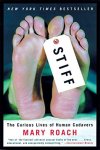 Mary Roach‘s clever one-word titles (with the exception of Packing for Mars, which is three words, but still intriguing) encapsulate her sense of humor and scientific curiosity, and invite you to read on to learn more about human cadavers (Stiff), the afterlife (Spook), humans at war (Grunt), sex (Bonk), and digestion (Gulp). Who knows what she’ll write about next? But it’s sure to be interesting…
Neurologist Oliver Sacks wrote about the brain and how it (sometimes doesn’t) work. Check out The Man Who Mistook His Wife for a Hat and Other Clinical Tales (1998), Musicophilia: Tales of Music and the Brain (2007), or Hallucinations (2012). Sacks published his autobiography, On the Move, just four months before he died in 2015.
Rebecca Skloot has only written one book, but what a book: The Immortal Life of Henrietta Lacks will have a lasting impact. Tumor cells taken from an African-American woman without her knowledge in the 1950s became known as “HeLa” cells, the key to many scientific discoveries. Booklist says Skloot writes with “a novelist’s artistry, a biologist’s expertise, and the zeal of an investigative reporter.”
Dava Sobel is a former New York Times Science writer. Her most recent book is The Glass Universe – try it if you liked Hidden Figures by Margot Lee Shetterly – but she has been publishing steadily every few years since Longitude: The True Story of a Lone Genius Who Solved the Greatest Scientific Problem of His Time in 1995.
 If you only ever read one 900+ page book in your life, there is a very good case for Far From the Tree by Andrew Solomon. (If 900 pages is simply too many for you, it’s worth reading the introduction, which is only about 50 pages.) Solomon writes about identity, particularly when a child has an identity that isn’t shared with the parent, such as deafness, schizophrenia, or musical genius. This book will expand your understanding of other people and increase your empathy. Solomon has also written The Noonday Demon, a book about his struggle with depression.
Interested in a bit of true crime, Victorian-style? The Suspicions of Mr. Whicher by Kate Summerscale is just that; detective Jonathan Whicher of Scotland Yard provided a model for many fictional detectives. Summerscale is also the author of Mrs. Robinson’s Disgrace: The Private Diary of a Victorian Lady and The Wicked Boy: The Mystery of a Victorian Child Murderer.
 Even wonder what would happen to Earth if all the humans just…disappeared? Alan Weisman takes that thought experiment and expands it into a book in The World Without Us, explaining what would last, what would crumble, and what would explode in a rather dramatic fashion. In 2013, six years after The World Without Us, Weisman published Countdown: Our Last, Best Hope for a Future on Earth?
From the seemingly tame subject of the Oxford English Dictionary (The Professor and the Madman; The Meaning of Everything) to the large and explosive (Krakatoa; A Crack in the Edge of the World), Simon Winchester writes “just the kind of creative nonfiction that elevates a seemingly arcane topic into popular fare” (Booklist).
Jeffrey Zaslow was a journalist for The Wall Street Journal and also an advice columnist. He wrote thoughtful, serious, tender books about women’s lives, including The Girls From Ames and The Magic Room, and co-wrote a number of other books, including The Last Lecture by Randy Pausch and Gabby: A Story of Courage and Hope with Gabrielle Giffords and Mark Kelly.
Personal experience/memoir/essays
 Joan Didion: There are too many books to list here, but try her memoirs, The Year of Magical Thinking or Blue Nights, or the collection We Tell Ourselves Stories in Order to Live.
Jonathan Franzen is better known as a novelist (The Corrections, Freedom, Purity), but his essays are both thoughtful and thought-provoking; he has the ability to make any topic (birdwatching; the postal service in Chicago) interesting. Try How to Be Alone, The Discomfort Zone, or Farther Away.
Elizabeth Gilbert: Probably still best known for Eat, Pray, Love, Gilbert has also written Committed: A Skeptic Makes Peace with Marriage and, more recently, Big Magic: Creative Living Without Fear. She is also the author of the novel The Signature of All Things.
Nick Hornby: In addition to writing novels and screenplays (e.g. High Fidelity), Hornby has written a decade’s worth of “Stuff I’ve Been Reading” columns for The Believer. They’re collected in Ten Years in the Tub.
 Stephen King: King is best known for his novels, of course, but his book On Writing: A Memoir of the Craft is “a blend of memoir and craft” that makes for fascinating reading whether or not you ever plan to become a writer yourself.
Caitlin Moran: Colorful British feminist writer Moran wrote the hilarious bestseller How to Be A Woman, as well as essay collections Moranthology and Moranifesto. She is also the author of the novel How to Build A Girl.
Ann Patchett: Beloved novelist Ann Patchett brings the same wise, considered approach and deep understanding of people to her nonfiction writing. This Is The Story of A Happy Marriage is a collection not to be missed.
 Gretchen Rubin: The Happiness Project was a year-long personal project supported with research; it’s a memoir only a very “Type A” person could write, and may lead to other interesting academic reading. Rubin followed up the success of that book with Happier At Home and Better Than Before.
Cheryl Strayed: You know her as the author of Wild, but she also spent time as the advice columnist “Dear Sugar”; many of her columns were collected and published as Tiny Beautiful Things.
What are your favorite nonfiction books or authors? Which ones on this list are new and interesting to you?
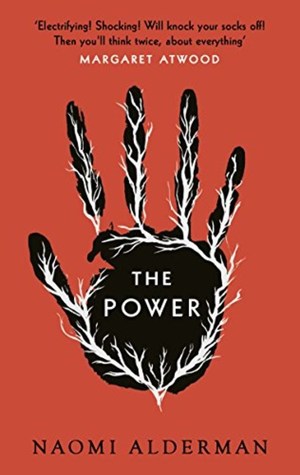 An absolutely remarkable thought experiment that is also an engaging, suspenseful novel. The premise is simple: “An environmental build-up of nerve agent…released during the Second World War…changed the human genome.” As a result, all girls have “the power,” the ability to send out an electrical jolt through their fingertips. Adolescents can “wake up” the power in older women. Some have more power (and better control) and some have less, but it’s not going away – which means that the historical gendered imbalance of power has flipped. Suddenly, women are more powerful than men, and in places where women have been most oppressed, “justice is at last being meted out.”
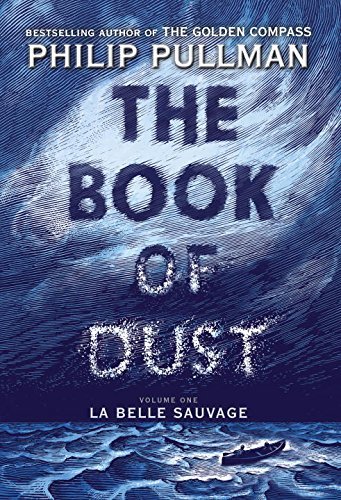 It’s been seventeen years since we left Lyra and Will under the hornbeam trees in their two separate Oxfords; twenty-two years since we met Lyra and Pan, scurrying through Jordan College. When the kind bookseller at Porter Square Books slid my copy of The Book of Dust across the counter, I teared up. “A lot of people are excited about this book,” she said, smiling. I mentioned that my daughter’s name was Lyra, and that today was her birthday. “Oh,” she replied, “You’re really excited.”
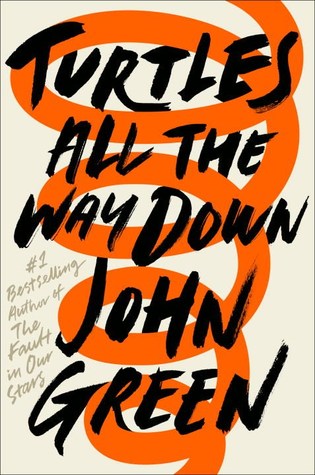 Aza Holmes – Holmesy to her best friend, Daisy – has a mental illness, a version of OCD. More than most people, she lives in her own head, but she doesn’t feel like she has control over her thoughts; she gets into obsessive thought-spirals, during which she withdraws from her surroundings, down into her worries, fears, and compulsions – only none of those are strong enough words to communicate her experience to others. Metaphor is the best she can offer, but even metaphor falls short: “The words used to describe it – despair, fear, anxiety, obsession – do so little to communicate it. Maybe we invented metaphor as a response to pain.”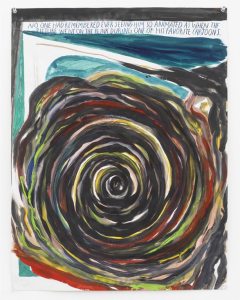
 Where do we go from here? We need more diversity at all levels of publishing, in libraries, in schools, in the bookselling business. We need to write, publish, read, and promote diverse books; “multicultural books don’t sell” is no longer a valid argument, if it ever was. We need more stories about more different people and places. We’re getting there, but too slowly.
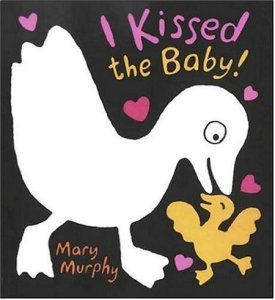 I Kissed the Baby! by Mary Murphy: This is my favorite for little babies! It has the high contrast of Tana Hoban’s Black & White books, but also has repetitive, sing-song words and a touch of color.
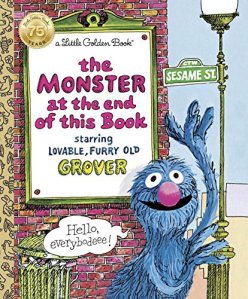
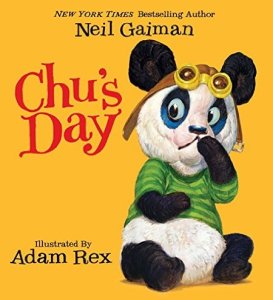
 Classic Mother Goose poems in board book form, such as The Real Mother Goose Board Book and Tomie’s Little Mother Goose (that’s Tomie dePaola, author/illustrator of Strega Nona).
 Recently finished or in-progress: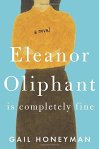
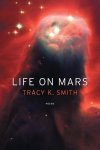
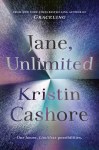 Jane, Unlimited by Kristin Cashore(!!!): Just heard about this from
