Librarians are also detectives

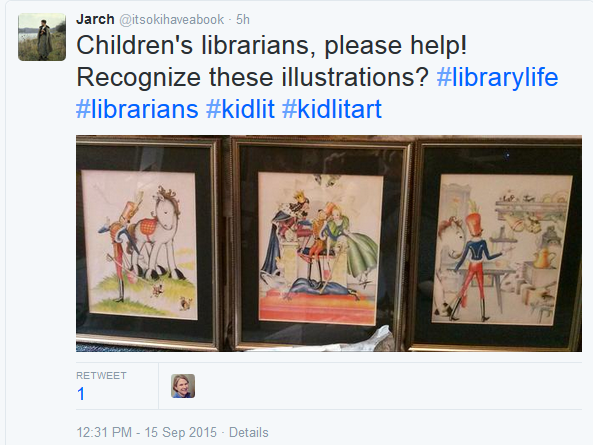
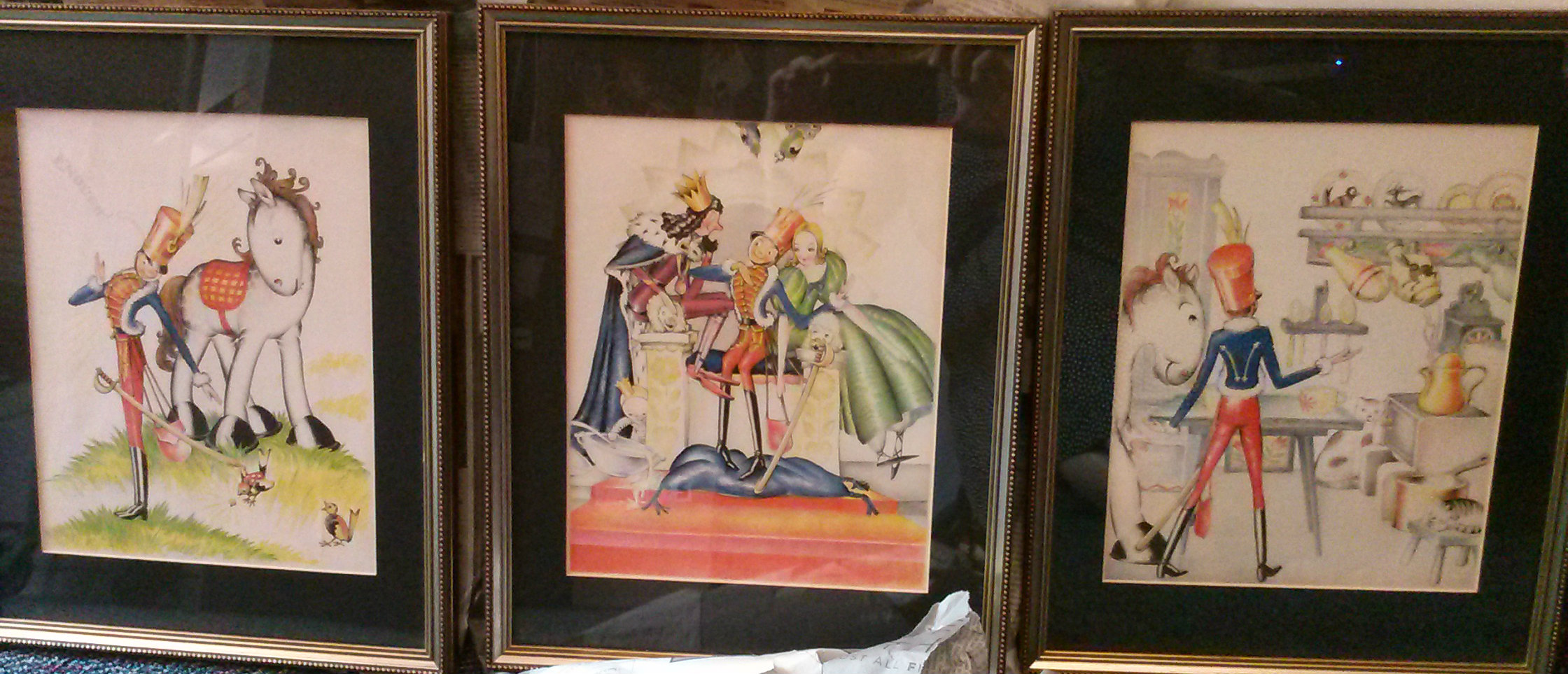
We received three beautiful framed prints recently, and although they tickled something in the back of everyone’s brain, no one in the group of assembled family and friends was able to recognize them with certainty.

Three framed prints of color illustrations

Naturally I brought them to the library, certain that the librarians in the Children’s department would know. No one recognized them right away, and an image search on the Internet was also fruitless. I turned to Twitter, choosing a few tags (#librarylife, #librarians, #kidlit, #kidlitart) and also sending a tweet directly to Mel of Mel’s Desk, who kindly re-tweeted to her many followers, a good percentage of which must be children’s librarians.

Screenshot of a tweet: Children's librarians, please help. Recognize these illustrations?

In a matter of minutes, I had my answer: not The Steadfast Tin Soldier by Hans Christian Anderson, but Get-A-Way and Hary Janos by Maud and Miska Petersham. According to WorldCat, this is “The story of a worn out toy horse and his friend, a wooden soldier doll, who travel to a land where old toys become new.” I requested it from WorldCat, since there isn’t a copy in my library system.

I’m glad that (a) I have an answer to my mystery, (b) the Internet can’t answer everything, and (c) librarians are awesome detectives.


LibraryReads October 2015 list

LibraryReadsLibraryReads is an initiative that was launched in September 2013 and has been going strong ever since. Simply put, LibraryReads is “The top ten books published this month that librarians across the country love”; it’s a list of ten books compiled every month by library staff across the country. All library staff are eligible to vote and write reviews. I’ve seen presentations from the LibraryReads organizers at least twice (once at the Massachusetts Library Association conference in May 2015, once at BEA in May 2014), and have written occasional reviews for the books I’ve managed to read ahead of time, but this is the first time one of my reviews has been featured, and I couldn’t be happier that it’s for David Mitchell’s Slade House.

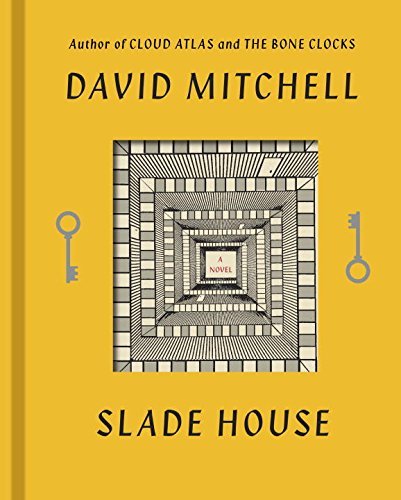
Cover image of Slade House“Every nine years, Slade House appears in a little alley in London, and every nine years, someone – or multiple someones – disappears into it, never to be seen again. Slade House is a lacuna, frozen in time, and its inhabitants need a new soul every nine years for their continued survival. Fans of The Bone Clocks will inhale this compact, six-part work that draws on Mitchell’s previously established mythology and, of course, reintroduces a familiar character or two. New readers, however, won’t be lost, as important pieces are explained to each new character who is drawn into Slade House. Literary fiction, fantasy, and a dose of horror combine here to make a deeply satisfying book.”

See all ten of October’s LibraryReads picks here. I’m also looking forward to After You by Jojo Moyes, The Secret Chord by Geraldine Brooks, and Welcome to Night Vale. October is always a good month for publishing!


Top Ten Tuesday: fantasy YA fantasy 101 syllabus

Yes, “fantasy” is in the title twice on purpose. Some people have fantasy sports teams, other people have fantasy syllabi for YA lit courses. Apparently. It’s another Top Ten Tuesday from The Broke and the Bookish: Top Ten Books That Would Be On Your Syllabus If You Taught YA Fantasy 101. I start my list with some “older” texts, defined as books I read (or could have read) when I was growing up, then continue with “newer” texts, published more recently. Nearly all of these are trilogies or series or have companion books, so I’ve added some standalone titles at the end.

Older:
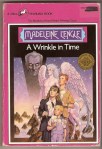
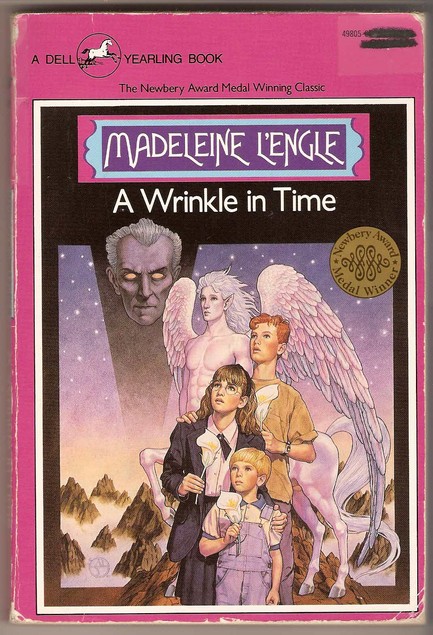
Cover image of the Dell/Yearling edition of A Wrinkle in TimeA Wrinkle in Time by Madeleine L’Engle: misfit Meg Murry and her odd genius little brother, Charles Wallace; kindly, quirky Mrs. Whatsit, Mrs. Who, and Mrs. Which; the concept of tessering; CENTRAL Central Intelligence; a rescue mission…A Wrinkle in Time is one of the foundational texts of childhood.

The Lion, the Witch, and the Wardrobe by C.S. Lewis: If you somehow missed this, you’ve probably gleaned what you need to know from cultural references already: the four Pevensie children travel through the back of a wardrobe and enter the magical kingdom of Narnia, where the White Witch reigns over a Christmas-less winter; the children help Aslan the lion save the kingdom, and are made kings and queens. Little details from this book (the lamp post; Turkish delight) have stuck with me, and I especially loved finding out the origin of the wardrobe in The Magician’s Nephew, though I felt some of the middle books in the set were dull. And of course there’s the religious aspect. But what would it be like to read The Magicians by Lev Grossman (see below) without having read Narnia first?
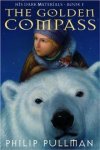
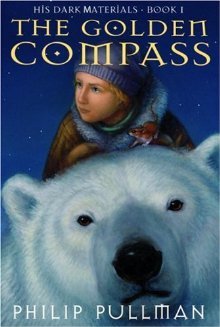
Cover image of The Golden CompassThe Golden Compass by Philip Pullman: Lyra is one of the greatest female characters ever written: she’s fierce and courageous, loyal and a liar, a risk-taker who doesn’t give up, someone with a strong sense of right and wrong. But Pullman doesn’t stop with Lyra: there’s also Will, who shares many of Lyra’s qualities; the concept of daemons (a part of your soul that lives outside you in animal form) and multiple worlds; witches and gypsies and armored bears. The ending of the third book in the trilogy, The Amber Spyglass, was the first – and still one of the only – ending I ever read that I would describe as heartbreaking.

Alanna by Tamora Pierce: A perfect quartet of books for growing young feminists. Alanna disguises herself as a boy to become a knight, but this doesn’t preclude romance later in the series – and birth control is addressed! I didn’t read these when I should have (13? 15?), but I devoured them as an adult.
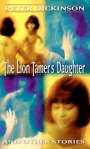
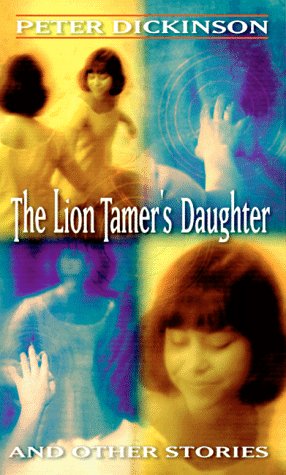
Cover image of The Lion Tamer's DaughterThe Lion Tamer’s Daughter by Peter Dickinson: Twins, doubles, doppelgangers, magicians, and mirrors come up again and again in fantasy and fairy tale, but this tale of Melanie and Melly Perrault has stuck with me for years.

The Princess Bride by William Goldman: Not technically YA, but there’s no reason not to include it on this “syllabus.” Everyone is familiar with the movie (right?? If you’re not, go and watch it, and come back when you are), and the book is just as good except there’s more: every character’s back story, and lots of humor, especially in the parentheticals and footnotes. Timeless and perfect.

Newer:

Harry Potter by J.K. Rowling: How was this not included on the Broke & Bookish list? Maybe it’s just assumed that everyone has read it already. Rowling’s world-building is superb, making readers long to enter Hogwarts School of Witchcraft and Wizardry, and she has created some incredibly kickass female characters, especially Prof. Minerva McGonagall, Hermione Granger, and Molly Weasley; Harry wouldn’t have lasted thirty seconds without these ladies on his side. There’s a good-vs.-evil faceoff in every book, but Rowling’s creativity never wanes.
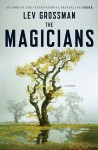
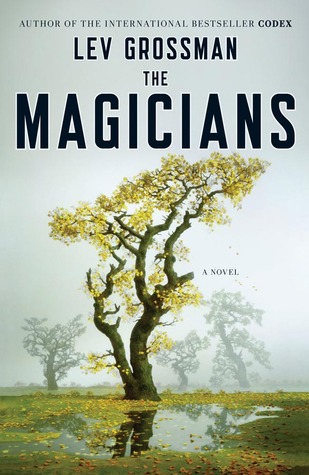
Cover image of The MagiciansThe Magicians by Lev Grossman: The Lion, the Witch, and the Wardrobe and Harry Potter should be prerequisites for this book, since Grossman draws so much from them, but he also creates something entirely original (and often quite dark; these are really adult books, ideal for more mature teens but not the twelve-year-old who just finished the Harry Potter books; also, main character Quentin is thirty in the third and final book, The Magician’s Land). Like the Pevensies, Quentin passes from the real world into the magical, but Brakebills is no Hogwarts, and Fillory is no Narnia.

Graceling by Kristin Cashore: My favorite recent discovery, Graceling blends some of the best aspects from The Golden Compass and Alanna: world-building, a dangerous journey, and a fierce heroine – Katsa – who remains just as strong when she joins forces with another Graceling, Po.
Cover image of CoralineNeil Gaiman: It’s hard to decide on a starting point, but reading something by Neil Gaiman would definitely be a requirement for this syllabus – his short story-turned-picture book Instructions, his adult novel The Ocean at the End of the Lane, his middle grade/YA books Coraline and The Graveyard Book, his older adult novels American Gods and Neverwhere, or one of his short story collections – the recent Trigger Warning was superb. He has a masterful grasp of myth and magic, and draws on this knowledge and understanding to create powerful, dark, creative works that seem timeless.

The Raven Boys by Maggie Stiefvater: The Raven Cycle is 3/4 complete as of this blog post, but I’m confident in Stiefvater’s imagination and skill. (For those who prefer a standalone, however, The Scorpio Races is fantastic: a tough young woman trying to keep her family together attempts to win prize money by capturing and riding one of the savage water horses in the annual – and frequently deadly – race on the beach on her small island of Thisby.) Like Gaiman, Stiefvater clearly knows her mythology and magic, and yet is able to write stories that have an echo of the familiar without being derivative in the slightest. She also has a thing for fast cars, if you happen to be into that.
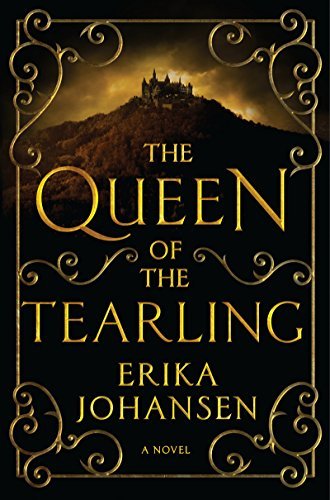
Cover image of Queen of the TearlingThe Queen of the Tearling by Erika Johansen: Ask me again in a year and this title/series may or may not sneak onto the list, but right now the first two books (the second is The Invasion of the Tearling) are fresh in my mind. Kelsea Ralaigh Glynn is the Tear Heir, but her kingdom is in shambles, and she doesn’t know the half of it. As soon as she begins to acquire information, though, she takes action; she reminds me of a less pensive Bitterblue (one of Cashore’s characters). Again, this is not technically YA: there is a lot of violence and rape, to the point where it’s been compared to Game of Thrones.

Extra credit for middle grade/YA standalone novels:

The Boggart by Susan Cooper: Cooper is better known for The Dark is Rising, but I read The Boggart and fell wholly in love with the mischievous magic worked by a homesick spirit.

Breadcrumbs by Anne Ursu: Ursu tips her hat to the whole fantasy canon in this modern-day fairy tale in which the princess rescues the prince.

Elsewhere by Gabrielle Zevin: The afterlife is not an uncommon subject, but Zevin’s take on it is unique, sad, and sweet.
Do not pass Go, hand over your two hundred dollars: Top Ten Auto-Buy Authors

Here’s a good Top Ten Tuesday from The Broke and the Bookish: “Top Ten of Your Auto-Buy Authors.” Like Linda, I don’t necessarily buy all these books, but I am very, very eager to get my hands on them somehow; we’ll call them my “auto-read” authors if not “auto-buy” (though in the case of most of these authors, I have at least one of their books on my home bookshelf. If not all their books. Or in at least one case, multiple copies of the same book).

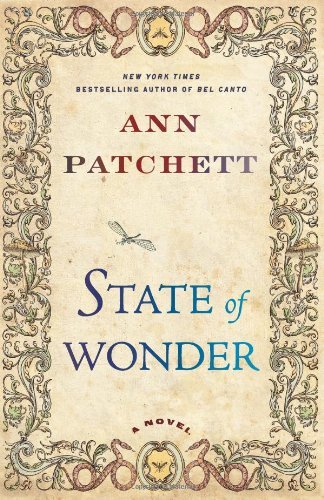
Cover image of State of Wonder by Ann PatchettAnn Patchett: Hands down, Ann Patchett is the first author who comes to mind in this category. I’m still absurdly grateful to the friend at her publisher who got me an advance copy of State of Wonder in February (for my birthday!) when the book didn’t come out till June. I adore everything Ann Patchett writes – fiction, nonfiction, essays, blog posts.

Audrey Niffenegger: I’ve already told my husband that when the sequel to The Time Traveler’s Wife comes out (there was a sample – Alba, Continued – included in the e-book version of TTW), I will need a minimum of five days entirely alone with no distractions of any kind. “It’s not going to take you a week to read,” he observed (correctly), but I don’t plan to read it just once. Memorization takes time.

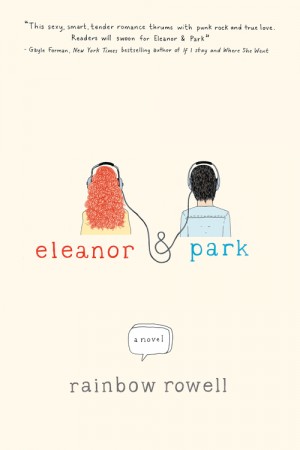
Cover image of Eleanor & Park by Rainbow RowellRainbow Rowell: I have adored all four of her books and am sad that Carry On is embargoed, as it comes out in October of this year and I may be somewhat busy then. (But not too busy to read, right?) Plus, Rebecca Lowman narrates the audiobook versions of Rowell’s books, and that is a match made in heaven.

David Mitchell: Mitchell’s October book, Slade House, was not embargoed, happily, and I was able to get an e-galley, which I inhaled on vacation last month. I love spending time in his universe. (And yet, still haven’t read Ghostwritten or Number9Dream.)

Maggie O’Farrell: Instructions for a Heatwave sent me scrambling for her backlist, which I quickly read my way through (save one). Cannot wait to read whatever she writes next. Such empathy for all her characters, such heartbreaking plot twists.

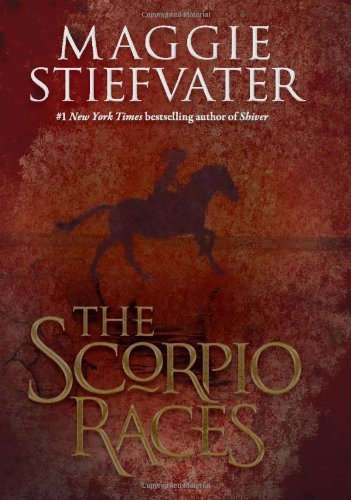
Cover image of The Scorpio Races by Maggie StiefvaterMaggie Stiefvater: What an astounding imagination she has. The Scorpio Races is still my favorite, but the Raven Cycle is amazing (still waiting for the fourth and final book!), and she even succeeded with werewolves in the Wolves of Mercy Falls trilogy. I wasn’t as keen on Shiver but am excited to see where she’ll venture next.

Neil Gaiman: Again, I haven’t read everything he’s written, but I have loved all his most recent work (Trigger Warning, The Ocean at the End of the Lane, etc.). (Yes, in this case I’m the person who “discovered” your favorite band long after you knew it was cool.) What Gaiman does with magic and myth is deeply satisfying, original, dark, and timeless.

Cover image of The Likeness by Tana FrenchTana French: The Likeness is still my favorite, but the Dublin Murder Squad hasn’t dropped off in quality after five books; these mysteries are all deliciously creepy and psychologically dark, with exceptional character development. Plus the covers are gorgeous.

Chris Cleave: Just when I was beginning to wonder if/when he would publish a new novel, I see that Everyone Brave is Forgiven is due out in May 2016. I was going to say that I didn’t care what it was about, I was going to read it anyway, but the publisher’s description includes the words “WWII” and “London” and “1939,” so I’m even more hooked. And naturally there is a love triangle.

Cover image of To A Fault by Nick LairdNick Laird: I couldn’t possibly buy every book I read, or even every book I love, but I do find that it’s worth it to buy poetry, because (1) someone has to support the poets, and (2) I remember lines and sometimes stanzas but rarely entire poems, and poems are like songs: when parts of them get stuck in your head, the only thing to do is to read/listen to the whole thing. To A Fault, On Purpose, and Go Giants have a permanent place on my bedside bookshelf.

Four Americans and the rest English or Irish. Hmm.

I’m sure the moment I publish this I’ll think of at least five more “auto-read” authors, but I feel good about these ten. Also, impatient for their next books.

Useful, Usable, Desirable: Applying User Experience Design to Your Library

Cover image of Useful, Usable, Desirable
Useful, Usable, Desirable by Aaron Schmidt and Amanda Etches (2014)

Useful, Usable, Desirable: Applying User Experience Design to Your Library by Aaron Schmidt and Amanda Etches came to my attention at the end of last year, in a blog post by Sarah Houghton (a.k.a. the Librarian in Black). I’ve been interested in usability and UX for years, and I’d read articles by Aaron Schmidt before, so I added it to my to-read list and asked my department head (who orders the professional development books for our library) to get a copy. As Sarah writes, “I could probably work for the next year on bringing our library into alignment with the principles outlined in this book, and I can honestly say it would be a year well-spent.” It’s hard not to want to dive in right away!

In order to implement any changes, however, it’s important to get buy-in from all levels, from senior administration to front-line staff, and the authors acknowledge this. They give each “checkpoint” a “difficulty rating” to indicate the scale of each and how much time and skill are required to complete it; not all changes require months-long processes and committees (thank goodness).

But let’s start at the beginning: What is user experience (UX)? According to the authors, UX is “how someone feels when using a product or service,” and the title words of the book – Useful, Usable, Desirable – are “the trinity of good UX”; they are “the three essential elements required for a great user experience at your library.”

Schmidt and Etches cover every element of the user experience in the library, including the physical space (floors, walls, furniture, bathrooms), service points (e.g. the circulation and reference desks), library policies, customer service, signage, technology, programs and services, the collection, and of course the website and social media.

Throughout, the authors focus on user-centered design. For example, they note that libraries tend to be divided between circulation and reference “because those distinctions reflect different specializations in our profession. It’s really not a user-centered way to think about service points and service desks, and it certainly doesn’t reflect the way users approach service points in our buildings.” How do library members know which desk to approach? Usually, they don’t; even labeling the desks “circulation” and “reference” isn’t much help. Some libraries – the Carnegie Free Library in Pittsburgh, for instance – do a better job in this area: they still have multiple desks, but the signage is user-friendly and free of library jargon.

National Library Symbol: white person reading a book against a blue background
The National Library Symbol

Signage and customer service are closely related. Schmidt and Etches write, “Think of the signs in your library as a form of customer service and an expression of your library’s attitude toward its members. Are they as friendly and helpful as the people in your building?” (Assuming your library staff are friendly and helpful. Remember, “An interaction with a person can equally ruin a good experience or redeem a bad one.”) Good signs help library users answer the questions, “Where am I? What can I do here? Where can I go from here? How do I find where I want to go?” These are not just questions that new library members have; sometimes regular users need to accomplish a new task at the library. Do your signs help them find what they need?

Many of the UX principles in this book were already familiar to me, but one new tool I learned about was the content audit, meaning simply a list of all the content in an area. The authors suggest conducting a content audit on a few areas, including the website, the signage in the building, and all print promotion materials. Once you have a list of all the content, you are better able to assess what’s necessary, what’s unnecessary, and what needs to be updated. Once you’ve done one content audit, keeping that spreadsheet up to date will help you keep track of website content, signage, handouts, etc., thus creating a better user experience for library members.

I could go on (see additional notes here), but suffice to say this is a fantastic, clear, compact little book that would be a great addition to any library’s professional development collection. But don’t just stick it on the shelf: it can serve as a great guide for any library that wants to improve its members’ experience of the library. And that should be all of us.


Data collection on banned and challenged books

You know when you are talking with someone and suddenly you wonder, “Wait, how did we get on this subject?” I like to be able to trace back to the original subject, as a kind of memory exercise. When the “conversation” isn’t with a person but is just you clicking from link to link on the Internet, the trail is a little easier to follow, thanks to tabs and the browser’s back button. Here was my path this morning:

All of the above links are worth reading, so I’ll only offer a very brief summary, and a few thoughts. The author of the 538 article, David Goldenberg, expressed frustration that (a) the ALA Office of Intellectual Freedom (OIF) would not hand over the raw data they collect on book challenges, and that (b) the quality of the data presented on the ALA’s site was not particularly granular or detailed and may not be statistically valid. For instance, a “challenge” might be a request to move a book from the children’s collection to the teen or adult collection, or it may be a demand that all copies of a book be removed from an entire library system. There’s a big difference between those two challenges.

In his reply to the 538 piece, Andy Woodworth delves into some of the issues behind challenge reporting and data collection. He writes that students in library school don’t learn they have an obligation to report challenges, that there may be external pressures not to report challenges, and that librarians simply may not know to report challenges. If they do report a challenge, though, there are more problems with the ALA-OIF itself: the amount of information required in the online challenge form is minimal, and the OIF does not have the budget or staff to chase down details or outcomes from the challenges that are reported. (The challenge form is also available as a PDF that can be printed, filled out, and faxed to the OIF. It’s certainly possible to find an e-mail address for someone at the OIF, but shouldn’t this be included as an option on the form?)

While I was in library school, I learned about the ALA’s Sample Request for Reconsideration of Library Resources, a form that can be adapted by any library and kept on hand in case of challenges. At both of the public libraries where I’ve worked, we have had this form ready to hand (though in my experience, challenges are exceedingly rare, at least at the adult reference desk; this is borne out by the ALA data – and many media reports – that show more challenges happen in school libraries than in public ones).

Should someone come to the reference desk with a challenge, I would be prepared with the reconsideration form. But what the form lacks, I noticed after reading Andy’s piece, is anything about reporting the challenge to the OIF. (On Twitter, Andy said he wrote it into the reconsideration policy at his library that “we reserve discretion to report challenges to the OIF.”) I don’t think it would hurt for library patrons to be aware of that, and it would remind library staff to take the extra step to report challenges when they do occur.

The granularity of the reporting, as Andy, David, and Jessamyn all pointed out, still leaves something to be desired. Every September, I put together a Banned Books Week display in the library and write about banned/challenged books and the freedom to read on the library blog. Every year, I’m frustrated by the ALA website, which, despite a redesign within the past five years, does not adhere to many of the web conventions and usability guidelines outlined in Useful, Usable, Desirable by Aaron Schmidt and Amanda Etches (about which more soon). The information architecture is convoluted and fragmented – there’s information on the ALA main site and a separate Banned Books Week website – the presentation isn’t as clear and attractive as it could be, and despite the existence of both sites, neither usually has the quality of data I want to present to our library patrons.

Both of these problems – the information itself and the organization of information – are especially vexing because information and organization is what we do. Furthermore, intellectual freedom is a core value of the library profession; Article II of the ALA Code of Ethics is “We uphold the principles of intellectual freedom and resist all efforts to censor library resources.” We need to do better, and it shouldn’t be that hard. We need to:

  • Raise awareness among library staff that reporting challenges is important and that there are ways to do it confidentially.
  • Collect more detailed data when possible and present it in as granular a fashion as possible, noting if necessary that not all reported challenges include the same level of detail.

It’s not rocket science. What are we waiting for?

A new section of our home library

If you’ve been paying close attention to my LibraryThing account over the past year – I am assuming I am the only one who has – you might have noticed a new category of books making an appearance. And that category is: pregnancy and parenting! If you’re in the same boat, here are four books on the topic that I found to be accessible, informative, useful, and occasionally even funny.

Cover image of Birth by Tina Cassidy Birth: The Surprising History of How We Are Born by Tina Cassidy (2007): Recommended to me by a co-worker who emphatically does not plan on having children herself, Birth has the dubious honor of being the only book I have ever had to set aside while eating. There are some truly gruesome bits, but mostly it’s fascinating: birth went from being entirely in the female sphere, with relatives, friends, and midwives to assist in labor, to a medical event that most commonly occurs in a hospital with a doctor (a male doctor, until relatively recently). What is “normal” has changed dramatically over time, including the past several decades in this country. Bonus: I learned the word “nidget,” which means “to assemble helpers for a birth.”

Cover image of Bringing Up BebeBringing Up Bebe: One American Mother Discovers the Wisdom of French Parenting by Pamela Druckerman (2014): I avoided this for a while because of the buzz, but I enjoyed the blend of memoir and research immensely. (I’m also more optimistic than I had been about possibly sleeping through the night inside of half a year.) The main difference between French and American parenting styles, it seems, is that the French don’t cater to their children’s every desire: French children learn how to wait and how to deal with the word no. On the other hand, French parents are less micro-manage-y: they believe in a framework of firm boundaries, but within that framework the kids have a lot of freedom. French society, it should be noted, supports working parents by having national daycare and preschool systems. For all the U.S.’s feminist rhetoric, there are few structures in place to help working parents.

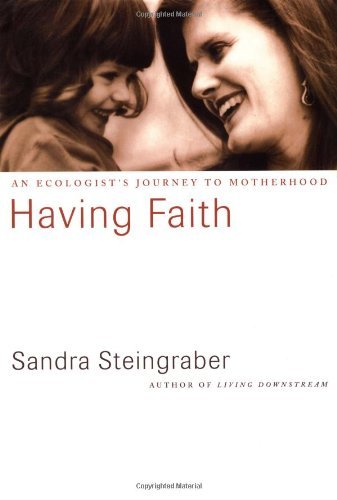
Cover image of Having Faith Having Faith: An Ecologist’s Journey to Motherhood by Sandra Steingraber (2001): Perhaps you would like to be too terrified to breathe air or drink water? This is the book for you! Governments’ failure to operate according to the Precautionary Principle – chemicals are assumed to be unsafe unless proven otherwise, instead of vice versa – has led to serious contamination of air, water, and food. The higher one is in the food chain, the more toxins accumulate in one’s body. And what’s at the very top of the food chain? The human infant, whose nutrition comes from its mother (in the form of breast milk or formula). “Obviously,” she writes, “a public health policy that asks expectant mothers to give up certain foods while allowing industries to continue contaminating them is absurd.” I appreciated this blend of memoir and scientific research, even if it was nervous-making at times. For those not interested in the science, Steingraber’s description of labor and delivery, as well as the following weeks, is one of the most thorough, honest, and understandable I have read or heard.

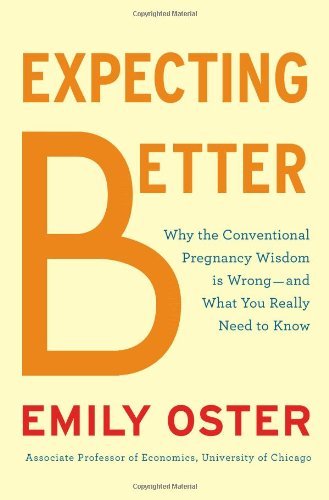
Cover image of Expecting Better Expecting Better: Why the Conventional Pregnancy Wisdom is Wrong – And What You Really Need to Know by Emily Oster (2013): A friend with a four-month-old lent me this book written by economist and mother Oster, and I would recommend it in turn to anyone who is pregnant. She explains how in many cases, weak studies have led to (flawed) conventional wisdom; she examines the best and most current research and presents her conclusions on everything from caffeine, alcohol, and fish consumption to sleep positions to epidurals. Oster’s research-based approach (“more information is better than less”) is both satisfying and reassuring.

Are you a parent, parent-to-be, or a librarian who advises parents? What are your recommended books?

Epistolary books on The Reader’s Shelf

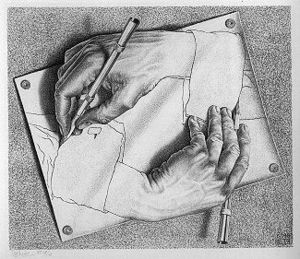
M.C. Escher's Drawing Hands
M.C. Escher’s Drawing Hands, via Wikipedia

I’ve written about letters and epistolary novels here before, but I revisited the topic with my friend, librarian and fellow blogger Brita, in the Reader’s Shelf column for Library Journal. It was tough to narrow down our initial list of epistolary books to just six titles, but we did it!

Library Journal logo


Check it out, dear reader, and let us know what you think. Then come back and let us know, what are your favorite epistolary books?

Unread books by favorite authors

In her post “Unread books by favorite authors,” Linda at Three Good Rats writes, “Weirdly, there are some authors who I consider favorites and whose books I usually read as soon as they come out, but who still have one book I haven’t gone back and read.” She asks, “When you find an author that you like, do you make a point to read all of their books? Do you ever stop at one even if you really like that one?”

Right away, I thought of a few novelists I adore, but whose complete works I haven’t read. (I’ve read most of their books, but not all of them.)

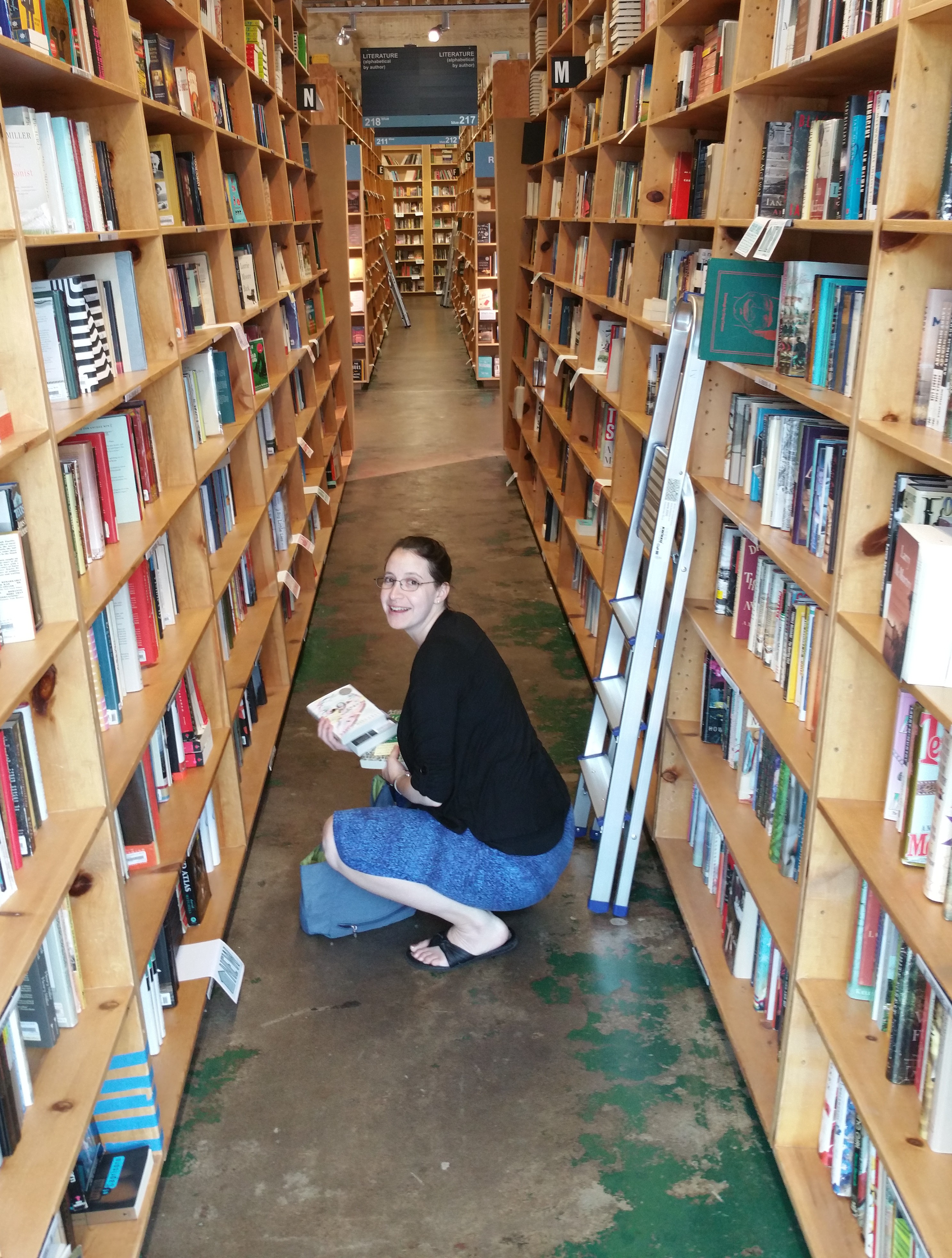
  • I had Jenny in Powell's Books in Portland, OR, with Number9Dream in handDavid Mitchell‘s Number9Dream and Ghostwritten in my hands at Powell’s just last week, and I couldn’t decide between them, so I put them both back. (I’ve done the exact same thing at Porter Square Books. Can anyone make an argument for one or the other, or both?) Those are the only two Mitchell novels I haven’t yet read, and I’ve loved his others, even when I needed a nudge from book club to pick them up (Cloud Atlas, The Thousand Autumns of Jacob de Zoet). I’m a little worried that his earlier books won’t live up to the later ones, but they got very good reviews when they came out. So why haven’t I read them yet?
  • After reading Maggie O’Farrell‘s Instructions for a Heatwave, I tore through every other book of hers, except for My Lover’s Lover. After that kind of reading binge, why stop with just one left? Partly I didn’t want to be left O’Farrell-less, partly I wasn’t sure it would be as good as the others.
  • Between 2009 and 2012, I read five of Margot Livesey‘s novels; why not read Banishing Verona and Homework and collect ’em all? I always enjoy her books, but I’m not as passionately head-over-heels as I am for, say, Ann Patchett.

After coming up with those three, I realized there are more nonfiction writers than novelists in the “unread books by favorite authors” category for me.

  • Eula Biss: On Immunity was fantastic, so why didn’t I immediately run out and get her earlier, National Book Critics Circle Award-winning essay collection, Notes from No Man’s Land?
  • Stephanie Coontz: Every single book she writes sounds fascinating to me, but the only one I’ve read so far is A Strange Stirring: The Feminine Mystique and American Women at the Dawn of the 1960s.
  • Leah Hager Cohen: Cohen writes both fiction and nonfiction, and she writes both exceptionally well. There’s no good reason I haven’t read all of her books, as I know they are good and I will like them. I’ve even checked out Train Go Sorry before and returned it to the library unread. I will read it though!
  • Steven Johnson: I read The Ghost Map: the story of London’s most terrifying epidemic – and how it changed science, cities, and the modern world when it came out in 2007 and have been recommending it to other readers ever since. Why haven’t I gotten around to The Invention of Air or How We Got to Now? I have no good reason.
  • Rebecca Solnit: Men Explain Things to Me is one of those books I would make everyone read if I could. (Cohen’s I Don’t Know is also one of those, as is Andrew Kaufman’s All My Friends Are Superheroes, just for fun.) I’ve heard great things about The Faraway Nearby but haven’t picked it up…yet.
  • Alan Weisman: The World Without Us is, like The Ghost Map, a nonfiction book I read in 2008 and have been recommending to others since then. But I haven’t read his others, and I’m not sure I’m going to. I do want to re-read The World Without Us though.

Maybe next year’s project will be to read favorite authors’ backlist titles. What about you – any unread books by favorite authors?

Vacation reading and July TBR check-in

In my book, vacations of any sort include reading. (Though this is not the case for everyone; recently, I was stunned to learn that a fellow librarian was traveling to Europe without a single book. I was actually struck speechless. What do you do with all that time on in airports and on the plane? Waiting in line for things? Before bed? Is this common, for people to travel without books?) At any rate, our summer vacation this year consisted almost entirely of sleeping, eating, walking, and reading.

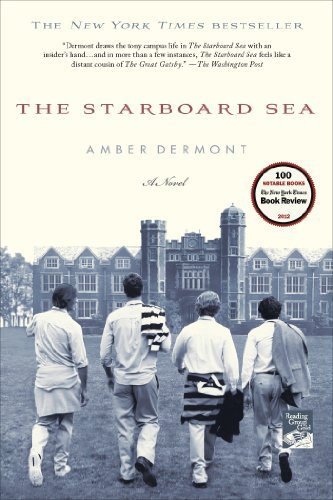
Cover image of The Starboard SeaI knocked my TBR list down by one by finally reading The Starboard Sea by Amber Dermont, which I’ve had on my shelf in paperback for well over a year. It’s a boarding school book, and I’m a sucker for those (see: A Separate Peace, Looking for Alaska, Prep, The Disreputable History of Frankie Landau-Banks, The Tragedy Paper, The Secret Place). It reminded me a bit of Looking for Alaska and a bit of Ordinary People in the way the main character, Jason, experiences the loss of someone close to him (two someones, actually) and struggles with his grief alone. Like today’s “helicopter parents,” the 1980s parents of most of the students have high expectations for them, but they don’t hover – far from it. The kids are afraid of failure, but the parents use money and influence to bail them out when they make mistakes, protecting them from real consequences whenever possible but doing so from a distance. Jason’s problems can’t all be remedied with the second chances that money can buy, and he recognizes this.

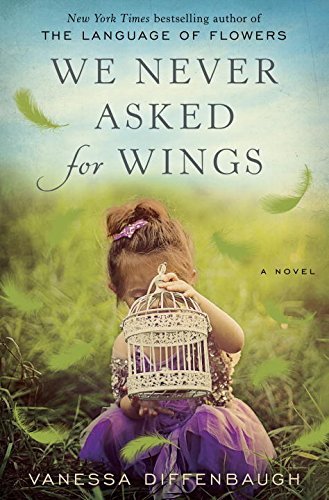
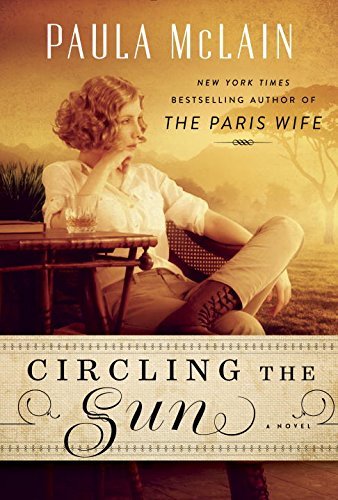
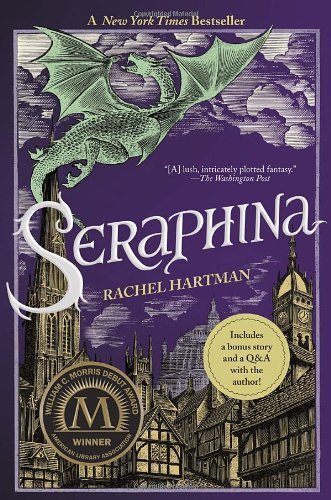
I enjoyed The Starboard Sea, but it wasn’t my favorite of the books I read during vacation. Actually, I’m not sure I can pick a favorite. I read three excellent galleys that I was thrilled to have gotten my hands on: David Mitchell’s Slade House; Vanessa Diffenbaugh’s We Never Asked for Wings; and Paula McLain’s Circling the Sun. I also finished Seraphina by Rachel Hartman, and read a stack of picture books in a tiny local library. Reviews of all of these are or will be on LibraryThing soon, but here’s the short version:

Cover image of Slade HouseSlade House: Those who loved The Bone Clocks will devour this, as it takes place in the same Mitchell universe. It’s a much more compact book, length-wise, and, like Life After Life by Kate Atkinson, it has a somewhat looping pattern. The Bone Clocks is literary fiction with fantasy elements (the Anchorites and the Horologists, etc.), and Slade House is that too, but it also has a few hallmarks of the horror genre (e.g. The Haunting of Hill House), especially the ending. There are the usual allusions and references to characters from other Mitchell books: one of the characters works for Luisa Rey’s Spyglass magazine, though Luisa isn’t mentioned by name; Marinus from Bone Clocks and Thousand Autumns makes an appearance in the final section; and of course there’s the ubiquitous moon-grey cat. Slade House can certainly stand alone, but might be more enjoyable if you’ve already read some Mitchell.

Cover image of We Never Asked for WingsWe Never Asked for Wings: The Language of Flowers was not a once-off – Vanessa Diffenbaugh is a really good writer, and she takes characters uncommon to literary fiction and puts them at the center of her stories. Wings is about a struggling Mexican-American family in California. Letty’s parents, who effectively raised her two children (15-year-old Alex and six-year-old Luna), suddenly return to Mexico, leaving Letty to learn how to be a mother for the first time. Alex misses his grandparents, especially his grandfather, Enrique, a feather artist who taught him about birds and migration patterns. He goes searching for his father, bringing him back into Letty’s life for the first time in 16 years, and if that wasn’t enough, Alex also tries to get his girlfriend, Yesenia, out of a bad situation – but ends up getting her into a far worse one. Diffenbaugh writes with compassion and understanding, but her books aren’t “issue books” – they’re about her characters, who all seem utterly lifelike.

Cover image of Circling the SunCircling the Sun: This book spans Beryl’s childhood in Kenya through her early adult life, from about 1904 into the 1920s, with a prologue/epilogue set in 1936. Beryl is an adventurous woman, but even in Africa there are societal rules to follow (or break, and bear the consequences). She trains racehorses, marries and divorces and marries again, has affairs, and learns to fly a plane. I enjoyed Circling the Sun, and the quality of the storytelling is on par with that of The Paris Wife, but I felt there was a loss of momentum in the later parts of the book. Perhaps I simply read it too quickly, and I would have appreciated it more in smaller chunks. Still, it’s very good, and I haven’t read much fiction set in Kenya; the descriptions conveyed an excellent sense of the place and time.

Cover image of SeraphinaSeraphina: I was interested in this from the moment I heard about it, yet it didn’t make it to the top of my list until recently. I am so glad I read it; it’s a unique YA fantasy novel (with a new sequel, Shadow Scale) set in a world where dragons can take human form. Thanks to a peace treaty brokered 40 years ago, dragons and humans have been co-existing (somewhat uneasily), but tensions are on the rise. Seraphina, the new assistant music mistress at the palace, is caught in the middle of the conflict by the nature of her identity. The audiobook is excellent, though as usual I had to check the print for spellings of the invented vocabulary.

That’s some of my summer reading – what’s yours?