Funny Books

I read (and recommend) a lot of literary fiction. Also a fair number of (auto)biographies and a decent amount of narrative nonfiction about science and history, a lot of young adult literature (not that YA can’t be literary – it often is), and a smattering of other genres. But a couple weeks ago I saw a Kirkus list of “10 Great Books That Will Make You Laugh Out Loud,” and I thought I’d compile my own list. I originally wrote this post for the library blog, but I’ve tweaked some things, and changed all the links below so they go to Goodreads instead of the library catalog.

Heather Armstrong: Better known to the Internet as Dooce, Heather Armstrong is a blogger and a mother, but to call her a “mommy blogger” would be misleading. Ex-Mormon Armstrong writes with passion, humor, obscenity, and honesty about her life, her family, and her mental health. Her 2009 book, It Sucked and Then I Cried: How I Had a Baby, a Breakdown, and a Much Needed Margarita, is probably the funniest book about post-partum depression in existence.

iwastoldtheredbecakeSloane Crosley: The titles of her two essay collections, I Was Told There’d Be Cake (2008) and How Did You Get This Number? (2010) should give an indication of Crosley’s wit, attitude, and willingness to write about situations so embarrassing that most of us would never speak of them aloud, let alone commit them to paper and make them publicly available. Yet, after reading either of these books, you will probably want her to be your new best friend.

Tina Fey: The star of 30 Rock and one of the reigning queens of comedy, Tina Fey’s Bossypants (2011) chronicles her childhood, adolescence, and her entry into the world of comedy. She’s matter-of-fact, down to earth, and extremely funny. (“If you retain nothing else, always remember the most important Rule of Beauty: ‘Who cares?'”) I have heard that the audiobook version of Bossypants is also excellent.
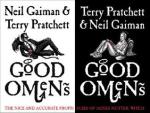
goodomensNeil Gaiman and Terry Pratchett: These two sci-fi/fantasy geniuses collaborated on the 1990 novel Good Omens: the Nice and Accurate Prophecies of Agnes Nutter, Witchwhich begins: “Current theories on the creation of the Universe state that, if it was created at all and didn’t just start, as it were, unofficially, it came into being between ten and twenty thousand million years ago. By the same token the earth itself is generally supposed to be about four and a half thousand million years old. These dates are incorrect.” And away we go. [This is the only one on the list I haven’t read, but it comes to me highly recommended, and I have enjoyed other Neil Gaiman books.]

Justin Halpern: You might be inclined to write off Sh*t My Dad Says as no more than flash-in-the-pan Twitter material, but give this book a chance: Halpern’s dad’s quotes are grouped by theme, and the sections are divided by short, heartfelt, insightful essays that make it really worthwhile. Plus, the essays give your laughing muscles a break.

On Accidents: “I don’t give a shit how it happened, the window is broken…Wait, why is there syrup everywhere? Okay, you know what? Now I give a shit about how it happened. Let’s hear it.” –Sh*t My Dad Says

mindykalingMindy Kaling: Is Everyone Hanging Out Without Me? (and Other Concerns) (2011) reads like the younger generation’s Bossypants. Kaling’s writing style is casual and conversational, amusing (“The staircase in our third-floor walk-up was the steepest, hardest, metal-est staircase I have ever encountered in my life. It was a staircase for killing someone and making it seem like an accident”) and sometimes even wise (“One friend with whom you have a lot in common is better than three with whom you struggle to find things to talk about”).

lawson_letspretendJenny Lawson: Otherwise known as The Bloggess, Lawson’s first book, published last year, is called Let’s Pretend This Never Happened: (A Mostly True Memoir). I have yet to meet someone who has read this hilarious and bizarre book without laughing. For a little taste what you’re in for, check out this blog post: “Would you like to buy a monkey?”

Karl Pilkington: Ricky Gervais (The Office, U.K. version) needs someone to be unkind to, and it’s very often Karl Pilkington. Pilkington has a wholly original worldview, and the three of his books that I’ve read – Ricky Gervais Presents: The World of Karl Pilkington (with Ricky Gervais and Stephen Merchant, 2006), Happyslapped by a Jellyfish (2007), and Karlology: What I’ve Learnt So Far (2008) – are bound to delight fans of absurd British humor. (I also recommend the Ricky Gervais Show podcasts.)

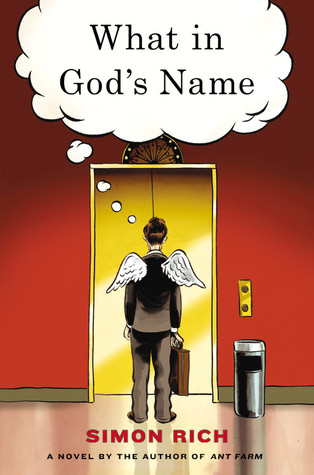
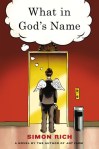
Simon Rich: Former Harvard Lampoon president and a writer for SNL, the prolific Rich is also the author of several short story collections and short novels, including Ant Farm: and Other Desperate Situations (2007)Free Range Chickens (2008), and What in God’s Name (2012)From what the dalmatians on the fire truck are really thinking to what angels do in heaven, Rich has a wildly humorous explanation for things it hasn’t even occurred to you to wonder about yet.whatingodsname
David Sedaris: Where to begin? Sedaris has written many books, including essay collections, memoirs, and short stories; his work has often appeared in The New Yorker. Start with a relatively recent essay collection, When You Are Engulfed in Flames (2008), or go earlier and check out Me Talk Pretty One Day (2000). If you’re feeling festive, try Holidays on Ice (1997); if you’re in the mood for very dark versions of Aesop’s fables, try Squirrel Meets Chipmunk: A Modest Bestiary (2010). Most of his work is also available in audio.

eatsshootsleavesLynne Truss: Does it infuriate you when you see “your” when it should be “you’re,” or when someone answers a cell phone in the middle of dinner? English author Lynne Truss is the champion of proper punctuation and modern manners. Eats, Shoots & Leaves: the Zero Tolerance Approach to Punctuation (2004) is “a book for people who love punctuation and get upset when it is mishandled”; Talk to the Hand: the Utter Bloody Rudeness of the World Today, or Six Good Reasons to Stay Home and Bolt the Door (2005) is Truss’s “rallying cry for courtesy.”

wordyshipmatesSarah Vowell: Laugh and learn as Sarah Vowell explains history with a modern (liberal) perspective and incisive sense of humor. From the Massachusetts Bay Colony (The Wordy Shipmates, 2008) to Hawaii (Unfamiliar Fishes, 2011) to dead presidents (Assassination Vacation, 2005), Vowell provides some of the most entertaining scholarship out there. Like David Sedaris and Tina Fey, she narrates her own audiobooks.

Did I neglect to mention your favorite funny book? Let me know in the comments.
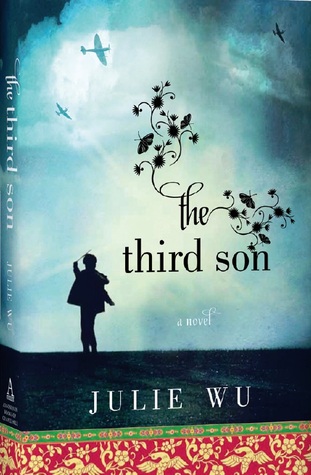
The Third Son by Julie Wu

thirdsonThe Third Son by Julie Wu (Algonquin Books, expected publication date April 30, 2013)

In one of those “small world” occurrences, I heard about this book from a friend I met through ultimate frisbee; he had been in contact with the author via Twitter. I read a description of the book and was interested; historical fiction set in the post-WWII era is right up my alley. I went to NetGalley and requested an advance reader’s copy (ARC), which the publisher, Algonquin, graciously granted, and I read the book over the course of a few days.

“A wound that never healed. A promise never to be fulfilled. That was family.”

Saburo, the titular third son of a Taiwanese family in Japan-occupied Taiwan, has been maltreated by his family ever since the death of his younger brother, Aki. Both his father and mother punish him physically, and he gets the smallest share of every meal, causing him to be diagnosed with malnutrition. He is bright but dreamy, and neither his teachers nor his parents appreciate his intelligence. One of his few tender experiences as a young boy is when he meets young girl, Yoshiko, during an air raid; he also experiences kindness from his cousin Toru, a doctor.

Once the Japanese have been defeated, the Chinese come, and once again Taiwan is under another country’s rule. Amidst chaos, oppression, and death, Saburo finds Yoshiko again. Saburo’s older brother Kazuo makes advances on Yoshiko, but she and Saburo marry. Saburo vows to take the legendarily difficult exam to go to America and study at a university, despite the fact that, unlike Kazuo, he did not attend the best university in Taiwan. He studies on his own, with Yoshiko’s support, and passes; he then must leave Yoshiko and their new baby, Kai-ming, to go to America.

Throughout the novel, Saburo faces many obstacles; some are political (his father is a politician; quotas from Taiwan to the U.S. make visas difficult to get; there is corruption on both/all sides), but many stem from his family’s unjust treatment of him. The difficulties Saburo faces because of his family are worse than any he encounters because of the political events in Taiwan; this has the twin effects of lessening the impact of important political events (e.g. the anti-government uprising in February 1947 and the “White Terror” that followed) and making the story more universal and Saburo more relatable.

Once in the U.S., Saburo faces a new choice: to do as his family instructed, spending only one semester studying engineering (his talent and passion) and one studying pharmacy, to help with the family business upon his return, or spend all his time on engineering. His loyalty to his family in spite of their treatment of him is incomprehensible to many Americans he meets, who encourage him to put himself first for once and follow his dream of earning a Master’s in engineering and bringing Yoshiko to live with him in the States. Saburo is torn between the two value systems, but with Yoshiko’s encouragement, he finally makes his choice.

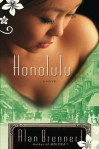
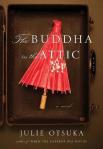
The Third Son is a well-written historical novel, an immigration saga that illuminates core differences between two cultures. Those who enjoyed Alan Brennert’s Honolulu or Julie Otsuka’s The Buddha in the Attic will almost certainly enjoy The Third Son.

honolulubuddha_attic

Cory Doctorow at the Harvard Bookstore (or, Cory Doctorow gave me a high five!)

20130304_twitter_repliesThe first thing I noticed, looking around at the other audience members before the event began, was that there were more men in the audience than women. If you have ever book to an author event before, you’ll realize this is unusual. But of course, Cory Doctorow isn’t just an author; he’s also an activist, the co-editor of Boing Boingand an all-around nerd hero (see xkcd comics featuring him here and here). Plus, the Harvard Bookstore is a stone’s throw from Harvard and just two stops from MIT on the red line.

Doctorow started off by complimenting the Harvard Bookstore as “one of the most awesome-sauce dispensaries in the northeast,” and saying that he wasn’t actually going to read from his new book, Homeland; there was an audio clip of him reading online (Internet Archive), and there were other things to talk about.

homeland_doctorowFirst, he outlined the case of Robbins vs. Lower Merion School District (PA), wherein the school equipped its students’ laptops with spyware and took pictures of the students in their rooms at home, unbeknownst to students or their parents. The school denied wrongdoing.

Next, Doctorow talked about the German Chaos Computer Club’s (CCC) discovery and cracking of government spyware, which was not only illegal but also, apparently, dangerously easy to hack.

Then there was the case of spyware on rent-to-own laptops. Allegedly, the spyware was installed in order to prevent theft – one of the same reasons there was spyware on the students’ laptops in Lower Merion – but of course it was used more nefariously than that.

Next, Doctorow moved on to those long, impenetrable Terms of Service we all sign, which he called “weird” and “totally objectionable.” Signing a contract with an employer is one thing, he said, but since when have consumers signed contracts with manufacturers?

Now, of course, it’s almost impossible not to. Do you use facebook? iTunes? Online banking? Twitter or Tumblr? Then you might have a vague memory of scrolling through a vast amount of fine print to get to that “I Agree” button so that you can use the service in question. (Ed Bayley at the Electronic Frontier Foundation proposes that the buttons should read “I Agree” and “I Have No Idea What This Says.” Read the white paper, “The Clicks That Bind.”)

We might all skim and disregard the Terms of Service or Terms & Conditions, but under the 1998 Digital Millennium Copyright Act (DCMA), breaking ToS/T&C “isn’t a little illegal, it’s a lot illegal” (Doctorow’s words, not the legislation).

The scary part is that even though most people don’t read before agreeing, it’s still a legally binding document (though there is some question about the enforceability), and breaking the agreement is a felony under the Computer Fraud and Abuse Act (CFAA). After Aaron Swartz’s suicide, two years after being charged under the CFAA, Rep. Zoe Lofgren (D-CA) introduced “Aaron’s Law,” which would amend it.

Doctorow then segued into speaking about the late Aaron Swartz, computer programmer and activist; Aaron was involved with the development of RSS, the Creative Commons, and reddit (he also wrote an afterword for Homeland). By now, most will be familiar with the JSTOR debacle, but before that, Aaron was involved with an attempt to liberate U.S. legal documents from the PACER (Public Access to Court Electronic Records) database. For a relatively short overview of that case, see the New York Times article from February 2009; for more in-depth (and fascinating) explanations, check out Steve Schultze’s article (February 2011) and Tim Lee’s piece on Ars Technica (February 2013).

Lee points out, “The documents in PACER—motions, legal briefs, scheduling orders, and the like—are public records. Most of these documents are free of copyright restrictions, yet the courts charge hefty fees for access” (reminiscent of the way that government (i.e. taxpayer)-funded science research ends up behind paywalls). What Aaron did was help Schultze with the code to download a high volume of documents from PACER during a free trial; with those documents, RECAP (“turning PACER around”) was born. RECAP is still going strong.

Aaron was also involved in leading a grassroots campaign to fight the Stop Online Piracy Act (SOPA). The bill was defeated when, as Doctorow put it, “Congress realized that as hard as it is to get reelected without campaign finance, it is really hard to get reelected without votes.”

Finally, there was the JSTOR case. JSTOR is a database that contains a tremendous volume of research, much of which was funded directly or indirectly by the federal government. However, this research resides behind a paywall. Aaron had access through MIT, and downloaded a vast quantity of articles. The government cracked down, with federal agents charging Aaron under the CFAA. Two years later, facing jail (“You’re gonna put me in jail for 35 years for checking too many books out of the library?”), and seeing no other way out, Aaron committed suicide.

Doctorow emphasized the importance Aaron’s cause: that people have the right to access information, whether or not they happen to be affiliated with an institution of higher education. “We never know where the next great thing is going to come from,” he said. “This isn’t GOING to be a matter of life and death, it IS a matter of life and death….This is the beginning of the future.”

Doctorow referred to computers and the internet as “the nervous system of our world. The world is made of computers…We put our bodies in computers [e.g. cars]…we put computers in our bodies [e.g. headphones, medical equipment]….We’ve gotta get this right….And it matters. It matters a lot.” He is concerned, to say the least, about regulating this technology and making sure it is secure. (A recent article about NASA highlights the danger of collecting personal data and failing to protect is closely.) Doctorow said, “I’m not interested in how something succeeds, I’m interested in how it fails.” His sincere and urgent concern doesn’t prevent him from using colorful, humorous language to make his case: “We regulate them like…a fax machine attached to a waffle iron.”

It can all seem like an overwhelming problem, too large to tackle, too impossible to change. But the campaigns against SOPA (and PIPA) were powerful; they proved that people do care about their rights, and about the worst case scenario consequences un-thought-out legislation can have on the internet and other technology. There has been an outpouring of support for Aaron’s cause since his suicide (he also had strong supporters before his death). The open access (OA) movement is gaining power in higher education, especially as journal prices continue to skyrocket and become unaffordable for even the Harvard Libraries. And awareness is growing as consumers begin to wonder who really owns the content they produce (on facebook, twitter, etc.) and the digital products they buy (or are they really only licensing?). One thing you can do, Doctorow said, is “refuse to use technology that takes away your freedom.”

littlebrotherOther gems from the evening:

“Information doesn’t want to be free. If anything it wants us to stop anthropomorphizing it.

Referring to smartphones: “A police tracking device that happens to make phone calls.”

“Don’t talk to cops without a lawyer present.”

After the energetic and inspiring talk, Doctorow stayed around to sign books. I hadn’t read Homeland yet, but I read its prequel, Little Brother, and I told him that I’d recommended it to many people in my capacity as a librarian…at which point he gave me a high five.

Fever by Mary Beth Keane

feverFever by Mary Beth Keane (Scribner, publication March 12, 2013)

Fever is a richly imagined, sympathetic portrait of Mary Mallon, the Irish immigrant better known as Typhoid Mary.

Mary, who makes her living as a chef to fancy households in New York, is one of the first known carriers of typhus; she is immune, but can pass on the disease through her cooking. Eventually, a government “sanitation engineer” tracks her down, and she is essentially kidnapped and imprisoned. Three years later, she finally wins her freedom, but only by agreeing to give up her life’s work and passion: cooking.

Giving up cooking means not just giving up her livelihood, but admitting that the health officials were right: that she is a carrier, that she did – inadvertently – bring sickness and death to many families. It is a difficult truth to face. Mary acknowledges, “It was possible to live in such a way as to keep one’s back to the things that were not convenient….She’d taken a risk, but living was itself a risk, and more people agreed it was a risk worth taking.”  And toward the end of the novel, Mary reflects: “[She] wondered whether it was possible for a person to know something and not know something at the same time. She wondered whether it was possible to know a truth, and then quickly un-know it, bricking up that portal of knowledge until every point of light was covered over.”

Most of the book is written in close third person from Mary’s perspective, which encourages the reader to sympathize with Mary. There are also a few sections with just Alfred, Mary’s longtime partner (but not husband), which explain his side of the story, but which probably aren’t entirely necessary.

Overall, Fever was a rich, engrossing, compelling novel. In fact, I so enjoyed it that I read two follow-up books: the short, nonfiction Typhoid Mary by Anthony Bourdain, and Keane’s earlier novel, The Walking People – both of which I recommend.

Thanks to Greg Mortimer at Scribner for a pre-pub copy of the book.

Fellow Mortals by Dennis Mahoney

fellowmortalsFellow Mortals by Dennis Mahoney (Farrar, Straus & Giroux, published February 5, 2013)

By throwing a match and a cigar into some dry bushes while on his route, mailman Henry Cooper causes a fire that kills a woman, burns down two houses, and damages two more. Henry is desperate to do everything he can to help the people whose lives he affected: Sam, now a widow; the Finn sisters, whose house was destroyed; the Carmichaels, a family of four; and couple Billy and Sherri Kane. Some of them want nothing to do with Henry; others accept his help immediately.

Of all of the people whose lives the fire affected, Sam Bailey is the one Henry must try hardest to reach. Sam’s wife Laura died in the fire, and Sam has retreated into the woods behind their old house, where he builds a cabin and carves trees into sculptures. Henry insists on helping him, and the two develop a relationship that is at first uneasy, but eventually becomes something resembling a friendship. Eventually, Henry draws his wife Ava out to the woods to spend time with Sam as well, though Henry asks Sam not to tell her how much he’s helping build the cabin; due to a heart condition, Henry isn’t supposed to do hard physical labor (yes, that’s foreshadowing).

This is a quiet, observant, transformative novel in which the characters wrestle with innocence and guilt, loss and forgiveness. Henry’s culpability for the fire, his guilt and desire to help both deepen and complicate his relationships with the people on Arcadia Street, and with Ava. In the wake of the tragic fire, some people are cleaved apart, while others cleave together. Henry’s essential goodness and innocence allow him to persevere, if clumsily, in forming bonds between people.

Mahoney’s characters are believable, and the sense of place is keenly developed. Comparisons to Stewart O’Nan (Songs for the Missing, Last Night at the Lobster) and Leah Hager Cohen (The Grief of Others) are apt.

Thanks to Emily Bell at FSG for a pre-publication copy of the book.


Just One Day by Gayle Forman

justonedayJust One Day by Gayle Forman (published January 2013)

Those who read a lot of YA fiction have doubtless encountered many trilogies recently. Often, the second book is the least satisfying, merely providing a bridge from the first book (in which most of the world-building takes place and the characters are introduced and established) to the final book (which, one hopes, provides the exciting and dramatic conclusion).

Gayle Forman wisely avoids this trap, opting to write books in pairs rather than in sets of three. I adored If I Stay and Where She Went, which together tell the story of Mia and Adam; she narrates the first book, he narrates the second. I was looking forward to Just One Day (the next book in this pair, Just One Year, comes out in the fall), and it did not disappoint.

Just One Day is Allyson’s story. Like Mia and Adam, Allyson is leaving high school and entering the world beyond: in her case, college, preceded by a summer tour through Europe. Allyson, always a good girl who lets her mother run her life to a degree unfathomable by me, impulsively takes a day trip to Paris with a young actor she meets in London, Willem. Their day and night is eventful and wonderfully romantic, until she wakes up the next morning and discovers him gone; heartbroken, she returns to London and then home, vowing to forget him, but when that strategy proves a failure, she decides she has to find him, and find out what happened.

There are so many great things about this book: it covers that transitional period between high school and college; the writing is lovely; Allyson’s friendships are realistic (she grows apart from a high school friend, miscommunicates with her roommates, finally makes a friend in her Shakespeare class), as are her relationships with her parents. For those who are partial to Shakespeare and European travel, those are bonus elements. Most of all, this is a story of personal growth, but it’s not a formulaic coming-of-age story; the author lets Allyson flounder for a while before getting back on her feet.

This story ended in a perfect place, and I can’t wait to read Just One Year.

Anna Karenina

Cross-posted on the Robbins Library blog.

To be perfectly honest, I wasn’t thrilled when my book club chose Tolstoy’s famous (and famously long) Anna Karenina. However, part of what I like about being in a book club is that it often provides that little nudge necessary to tackle a book that I might not otherwise have the motivation to begin on my own.

AnnaK-DukeSo, I downloaded the e-book version from the library’s digital media catalog and put it on my e-reader…then waited until about three days before our book club meeting to begin it. Needless to say, I didn’t finish in time for the discussion, but I did finish eventually – two and a half weeks later. And I’m so glad that I took the time to read Anna at a leisurely pace, in little sections, absorbing and savoring, because it is marvelous.

There are at least five main characters: Anna herself, of course; her husband, Alexander Alexandrovitch (Karenin); her lover, Alexey Vronsky; her niece Kitty; and Kitty’s husband Konstantin Levin. Anna’s brother, Stepan Oblonsky, and his wife, Darya Alexandrovna (Dolly), also play significant roles. Tolstoy’s mastery is such that the reader enjoys insight into each character, and is able to understand and sympathize with each.

annakareninaOver and over again, the characters’ emotions struck me as familiar, and I was surprised at how little human nature has changed. We “modern humans” tend to think of ourselves as more advanced, more enlightened, more complicated, and more progressive: but here is the character Natalia saying, “Parents now are not expected to live at all, but to exist altogether for their children,” and there is Kitty reveling because Levin’s jealousy proves his love for her. Here is Karenin exclaiming, “I cannot be unhappy, but neither she nor he ought to be happy,” and there is Anna lamenting, “And no one understands it except me, and no one ever will; and I can’t explain it.” Here is Anna making the Vronsky of her imagination fit with the Vronsky in reality, and there is Vronsky made cold and vindictive by Anna’s need for him.

AnnaK-PenguinEven one character’s light suggestion that “they ought to find out how to vaccinate for love, like smallpox” could have been the seed of the idea for Lauren Oliver’s recent popular young adult series, beginning with Delirium.

All of these emotions and reactions are so recognizably human that the book truly is timeless, retaining its power throughout the years. One line that had a particular impact was one of Anna’s last to Vronsky: “Respect was invented to cover the empty place where love should be. And if you don’t love me any more, it would be better and more honest to say so.”

AnnaK-modernlibraryI don’t think I’ll ruin it for anyone if I admit it has a tragic ending, but Anna Karenina is not relentlessly sad or hopeless. There are social engagements, horse races, hunting and farming scenes, meditations on business and bureaucracy, government and religion. There are also little touches of humor, intentionally or unintentionally. For example, very early on, when Anna goes to visit Dolly, she tells her hostess, “I assure you that I sleep everywhere, and always like a marmot.” (Are marmots particularly sleepy creatures, like sloths? I don’t know.) Later, Anna’s friend Betsy says to her, “Possibly you are inclined to look at things too tragically,” which is a rather dark piece of irony, considering Anna’s fate.

AnnaK-BnNAs someone who put off reading this long, classic work that I feared would be dense, impenetrable, and boring, I can now assure you that it is none of these things; it is in fact the opposite. Anna Karenina is an engrossing read, a comprehensive portrait of unchanging human nature.

With a new movie version recently released, one may be tempted to skip the book in favor of the movie. However, if you have the time and patience to read it, you’ll be rewarded with a lasting and memorable experience.

Handmade journal

Over a year after attending a bookmaking workshop, I finally finished making a journal.

journal

I had to cut and fold the pages to size (this was the most time-consuming part), and sew them together with a chain-stitch. The board covers I bought pre-cut, and covered them with blue paper. I didn’t have a board spine, so I used a piece of cardstock between the covers and the pages.

journal-open

Voila! I haven’t begun using it yet, but I’m nearly done with my current journal, so I will soon.


Bookish Resolutions

My first successful New Year’s resolution that I made, kept, and remembered, was: read at least one nonfiction book a month. Then, as now, I was reading about 10-15 books a month, and they were nearly all fiction. I decided I needed to push myself to branch out and read in some other areas, like (auto)biography, history, and science. Thus did I discover such excellent books as The Ghost Map, The World Without Us, The Man Who Loved Books Too Much, and The Wordy Shipmates, not to mention Tina Fey’s Bossypants and Keith Richards’ Life.

In the years between that resolution and this new year, I have accumulated a number of books that I haven’t yet gotten around to reading. Most are fiction, but some are nonfiction. Most I’ve bought used, some have been sent to me by thoughtful and generous friends. It used to be that if a book was in the house, I had read it or was in the process of reading it; now that’s not the case. (Partly because I work in a library; I’m surrounded all the time by free books that I can just borrow and give back, and which always seem to take precedence over the books that I own, which don’t have due dates.)

bookishresolutionI want to get through my shelves of unread books, either by reading them or by deciding that I don’t want to read them. After I’ve read them, I may keep them, may donate them, or may pass them on to friends, but there are too many unread books in the house.

So help me out: have you read any of the below? Loved them? Thought they were a waste of time? A few came with personal recommendations and are at the top of the list: Far From the Tree, God’s Hotel, Shantaram. If you’ve got opinions on those or any of the others, please share!


unread1unread2unread3


To finish or not to finish?

Among the countless “best of 2012” lists out there, Laura Miller’s recent piece for Salon, “Five Books I Bailed On in 2012” caught my attention. Every serious reader I know, myself included, has given up on a book before. Some of us feel unreasonable guilt about this; some will only give up right away, or not at all; some force themselves to read at least halfway before jumping ship. But, we try to convince ourselves, we are reading for pleasure. No one is forcing us to finish every book we start, and in fact, isn’t our time better spent finding and reading books we truly enjoy?

These unfinished books linger in limbo, on our “partially-read” or “on the back burner” shelves on Goodreads. Maybe we’ll return to them someday; some of them we’ll never open again. I consulted my own shelf of unfinished books to make a “books I bailed on” list like Laura Miller’s. I should note that (a) these were books I started in 2012, not necessarily books that were published in 2012, and (b) the experience of reading is, of course, entirely subjective; feel free to disagree with my opinions.

landinglightherebulletLanding Light by Don Paterson and Here, Bullet by Brian Turner.

These volumes have nothing in common except that they are both books of poetry that I ordered from the library.  However, I find it necessary to read poems in small doses; I’ve never read a book of poems straight through, because I need time to absorb and reflect. But then I put the book down and pick up something else…and then it’s time to return it to the library. (This is why I prefer owning books of poetry rather than borrowing them.) A more disciplined approach – one poem a night before bed, or one every morning before getting up – is a great idea in theory, but not one I’ve been able to pull off. However, the fact that I didn’t finish these books doesn’t mean I didn’t like them; I’d recommend both.

Paterson is a Scottish poet; Turner is an American soldier who fought in Iraq and who holds an MFA from the University of Oregon. I first read about Landing Light in the New York Times and the poem included in the article, “Luing,” is one of my favorites, especially the last three lines. I discovered Here, Bullet via the Times as well; I collected fragments from various poems in the collection in my Goodreads review.

whitedressesGirls in White Dresses by Jennifer Close

I was tricked into picking this up by the flap copy (which made it sound like literary fiction instead of chick lit) and inexplicably good reviews (“genuinely empathetic…richly satisfying” –Booklist, “modern and funny…original” –Library Journal, “artfully spare prose” –Publishers Weekly). I found it to be frustratingly superficial, and put it down after 47 pages.

woulditkillyouWould It Kill You to Stop Doing That: A Modern Guide to Manners by Henry Alford

I enjoyed this, but was eager to move on to other books. Alford is intelligent and pleasant to read, but if you have to choose between this rant on manners and Lynn Truss’ excellent Talk to the Hand, I’d recommend the latter.

whiteforestThe White Forest by Adam McOmber

This book’s flap copy, cover, and reviews all drew me in; it looked like exactly the kind of book I would like, if not love. Yet after 15 pages, I wasn’t drawn into the story or compelled by the characters. I may pick it up again in the future – maybe it was just one of those “right book at the wrong time” cases – but probably not.

dovekeepersThe Dovekeepers by Alice Hoffman

This is one I may come back to at some point. I’ve liked Alice Hoffman’s books in the past (Practical MagicThe Story Sisters), and I didn’t dislike this one; it just didn’t grab me, and I had a few other books I was more excited about reading at the time.

telegraphaveTelegraph Avenue by Michael Chabon

This is the big one. With the exception of Wonder Boys, I have loved every Michael Chabon book I’ve read, and so I had high hopes for Telegraph Avenue, and yet, on page 199, I threw in the towel. The bones of a good story are there, and the foundations of good characters; I especially liked Aviva and Gwen, the wives of the two main adult male characters, and main characters in their own right. I’m also sympathetic to the plight of independent stores to big corporate stores (as are many of Chabon’s readers, I suspect). So why did I put it down? It seemed as though the writing, instead of revealing the story, was obscuring it. I’m all for writing that is both intellectual, colorful, and poetic, but this was just too over the top for me. It was with regret but also relief that I put it down unfinished.

Agree? Disagree? What books linger on your back burner?

Cross-posted on the Robbins Library blog.

Edited to add: Tim Parks wrote an article (“Why Finish Books?”) for the New York Review of Books blog on March 13, 2012 that touches on a different aspect of the “to finish or not to finish” question. Parks clearly agrees that if you are not enjoying a book, it is perfectly okay to stop reading and pick up a book you will enjoy instead; however, he also posits that some readers might stop reading books that they are enjoying, and that does not necessarily mean that the book was bad or that the reader didn’t like it, just that the reader had had enough. It is an interesting article, whether or not you agree. -4/18/13