There’s a big difference between reading a picture book to yourself, reading it with one other person, and reading it to/with a group. (If you frequently read aloud to children and you haven’t already read Megan Dowd Lambert’s Reading Picture Books With Children, I highly recommend it for making your storytimes more interactive and engaging.) Without further ado, here are some of the picture books that worked incredibly well at my school this year, for students in kindergarten through third grade:
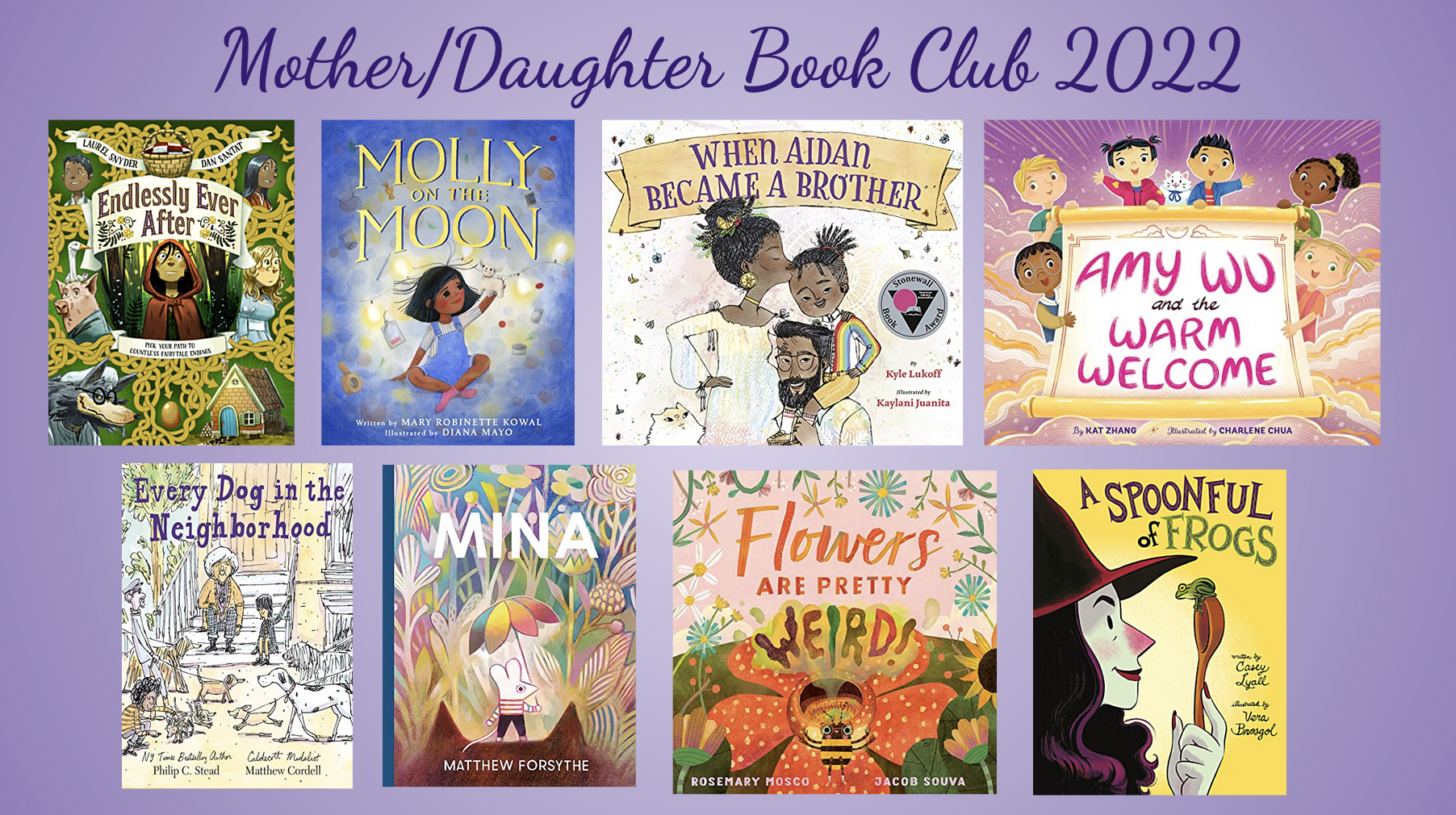
- Endlessly Ever After by Laurel Snyder and Dan Santat:
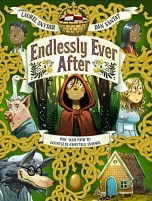 Because this is a choose-your-own-adventure book, you can read it several times with the same group (and they will ask for it again and again!). Every time a choice comes up, I read both choices and ask them to vote. This works with upper elementary as well as with the younger grades.
- Don’t Hug Doug by Carrie Finison and Daniel Wiseman: Cute, friendly, glasses-wearing Doug likes YOU, he just doesn’t like hugs, except under very specific circumstances (are you Doug’s mother? Is it bedtime?). Approachable Doug is the perfect character to deliver this important message about consent.
- Dozens of Doughnuts by Carrie Finison and Brianne Farley: This is a rhyming delight, with the most delicious endpapers ever. Perfect for fall, just as bears like LouAnn are going into hibernation.
- The Leaf Thief by Alice Hemming and Nicola Slater: An autumnal, excellent execution of the buddy comedy featuring high-strung Squirrel and tolerant Bird is a funny story and a great way to explain what happens to leaves in fall. There’s a spring version, too (Don’t Touch That Flower!)
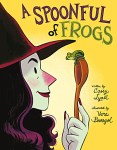
- A Spoonful of Frogs by Casey Lyall and Vera Brosgol:
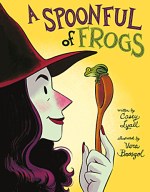 The witch main character and the frogs she tries to add to her soup are perfect for around Halloween time, and “PUT the FROGS on the SPOON” may become a mantra.
- Triangle/Square/Circle by Mac Barnett and Jon Klassen: These three books, as a group, worked beautifully when kindergarteners were learning about shapes, and they are just fantastic to read aloud; they don’t get old, and the characters’ feelings and dilemmas are easy for the kids to understand and empathize with.
- That’s Not My Name by Anoosha Syed:
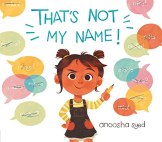 This is great for the beginning of the year when everyone is learning each other’s name. Most kids can relate to the experience of having someone mispronounce your name or call you the wrong name, and they know the feeling; this book encourages them to insist on being called the right name the right way, and take the time to do the same for others.
- I Want My Hat Back/This Is Not My Hat by Jon Klassen: Yes, more Klassen, but these two books are brilliant for all ages. Ask the kids what happened at the end; their inferences may surprise you.
- How to Apologize by David LaRochelle and Mike Wohnoutka: Straightforward, kid-friendly language and funny illustrations present an important lesson in a humorous and impactful way. A good one for the beginning of the year, or any time.
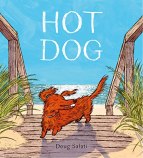
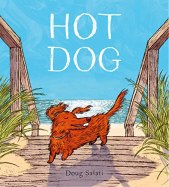
- Hot Dog by Doug Salati: This year’s Caldecott winner was popular not just during our Mock Caldecott unit in January, but kids have been asking me to borrow it since then – it clearly stayed with them.
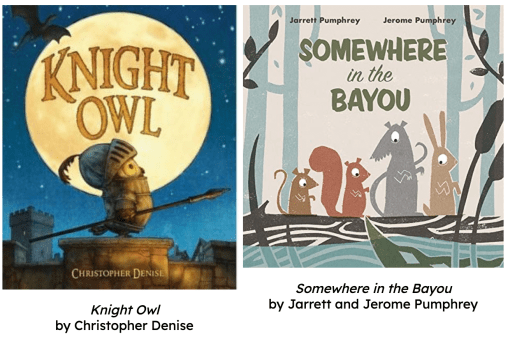
- Knight Owl by Christopher Denise: A Caldecott honor book that was also included in our Mock Caldecott unit (it got the most votes in our school), Knight Owl features absolutely beautiful art, an adorable hero, and a solution involving pizza.
- Somewhere in the Bayou by Jarrett and Jerome Pumphrey: “Smack! Splash!” This book is built on pattern, repetition, onomatopoeia, surprise, and empathy. It was fantastically popular in our Mock Caldecott, and so fun to read aloud – it truly doesn’t get old.
- How We Say I Love You by Nicole Chen and Lenny Wen:
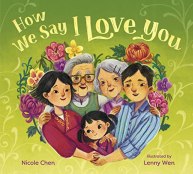 This has strong appeal on three levels: first, there’s the seek-and-find element (a heart on each page); next, the cultural representation; and finally, the way it opens a discussion of how we show love in our own families. Every single class I read this book with (first through third grade) came up with a whole list, with nearly every kid contributing, and some adding more than one idea.
- Sam and Dave Dig A Hole by Mac Barnett and Jon Klassen: Yes, Barnett/Klassen again. The kids absolutely freak out as Sam and Dave remain oblivious to the “spectacular” pink gems they bypass as they dig. Kids notice that the dog knows where they should be digging, though, and they love comparing the front and end spreads to spot the differences.
- Bathe the Cat by Andrea Beaty and David Roberts:
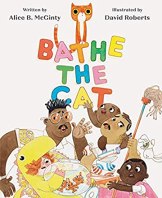 Pure good fun; the kids catch on quickly as the family’s to-do list gets more and more ridiculous. Great representation, too, of a mixed-race family with two dads.
- How Do Dinosaurs… by Jane Yolen and Mark Teague: These rhyming stories are classics for a reason. I like …Learn to Read and …Go to School for the relevant educational setting. Many kids will already be familiar with this series, if not these specific titles, and they’re usually happy to see and hear them again.
- Interrupting Chicken by David Ezra Stein: The idea and the execution are equally good, the humor is spot-on, and the two sequels maintain the quality of the original (when you store your cookies in a clock, it’s always cookie time!).
- Amy Wu and the Perfect Bao by Kat Zhang and Charlene Chua:
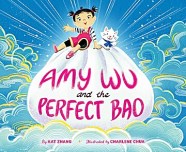 Kids identify with Amy’s problem, and even if the word “bao” is unfamiliar, nearly every culinary tradition has a version of dumplings (knish, empanada, pierogies, etc.). Amy finally figures out the solution to her problem, and her loving, supportive family (including pink-haired grandma and adorable white kitten) is right there with her.
- A Seed Grows by Antoinette Portis: I think this is what’s called “deceptively simple,” but it’s brilliant in its simplicity. It ties in with K/1st curriculum when they study plants, and there’s an opportunity to build in movement: start in a crouch as a seed, grow up toward the sky/ceiling, branch arms for leaves and blossoms, and gently fall back down.
- The Adventures of Beekle by Dan Santat:
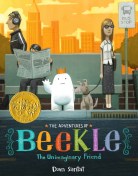 This Caldecott winner uses color effectively to show an (un)imaginary friend’s journey into the real world. (See also: Real to Me by Minh Lê and Raissa Figueroa)
- Don’t Touch My Hair by Sharee Miller: A little Black girl loves her hair, but doesn’t love when other people touch it without asking. She tries running away from the problem, but eventually uses her voice to set boundaries.
- Oh, No! by Candace Fleming: Effective use of repetition encourages students to participate in the chorus (“oh, no!”) as one animal after another falls into a pit, then cheer for their eventual escape as the meaning of the final “oh, no” shifts.
Do you have any knock-em-out-of-the-park read-alouds? Please share in the comments!
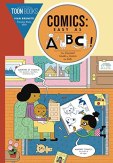 The brilliant Liza, who insists she is not an expert on comics (but who is totally an expert on comics, and is also an excellent teacher) started us off with a variety of hands-on activities to choose from, as part of her presentation on how to teach comics/graphic novels in school, and how to get teachers, administrators, and parents on board (because GRAPHIC NOVELS ARE REAL BOOKS; this is supported by research).
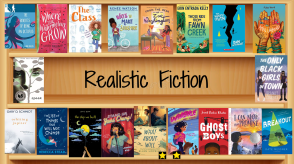





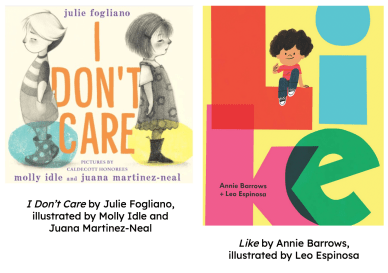
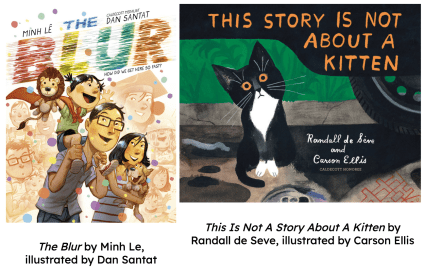
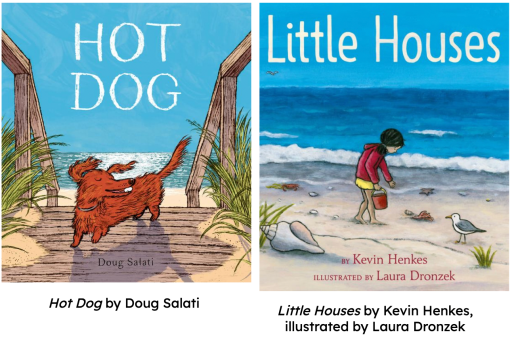
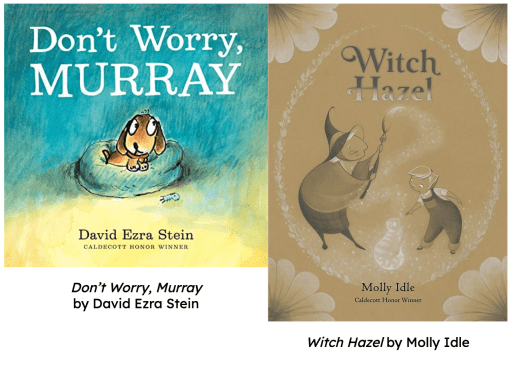
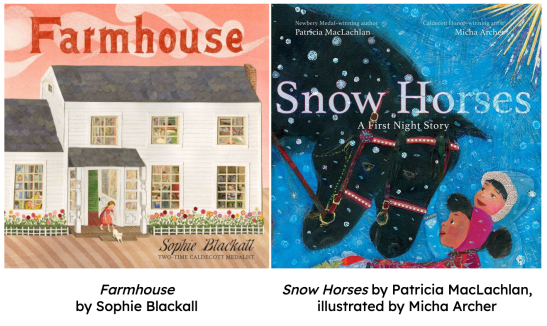
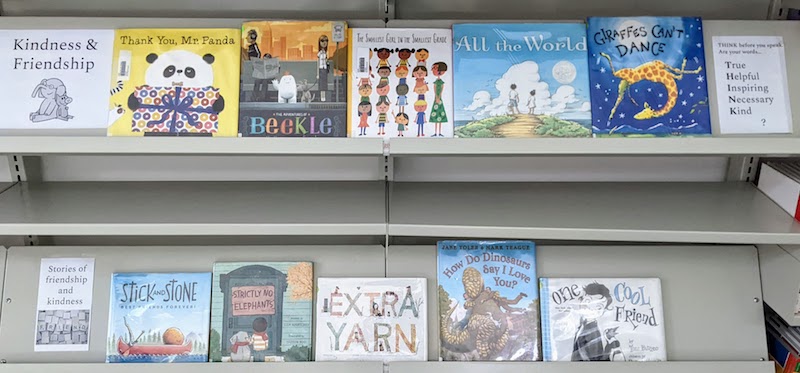
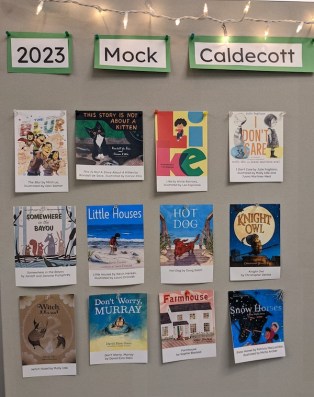 Visual supports: The award is for illustration, after all, so I wanted to create a visual environment to support our Mock Caldecott. Here are a few ways I did that:





 To be quite upfront, the first picture book that jumped into my head in the “funny” category was Adam Rex’s On Account of the Gum, which I maintain is one of the all-time funniest books to read aloud, and which absolutely does not get old, no matter how many times you read it. Though adults tend to think of picture books as being for little kids, this one appeals just as much or more to older kids, and even teens and adults; they can use the rhyme scheme to anticipate what’s coming next, and they have more context (e.g. they know what Picture Day is). But littles enjoy the over-the-top illustrations and the pattern and flow of the story…it’s just, hands-down, a brilliant read-aloud. Rex also wrote Pluto Gets the Call, illustrated by Laurie Keller (just think about the title for a minute) and School’s First Day of School, illustrated by Christian Robinson. (This book, narrated by a brand-new school building, contains the phrase “nose milk.”) Rex is a funny guy, but let’s move along…
 I Don’t Want to Be A Frog by Dev Petty, illustrated by Mike Boldt, is told entirely in dialogue between a young frog (who, you guessed it, would rather be a rabbit or an owl or a pig or anything but a frog), their dad, and…I won’t give it away, but this book really lends itself to the read-aloud experience, and it has delightful companions (I Don’t Want to Go to Sleep, I Don’t Want to Be Big, and There’s Nothing to Do). Dev Petty also wrote Claymates, which has some of the most unique illustrations (by Lauren Eldridge) I’ve ever seen, and plenty of humor.
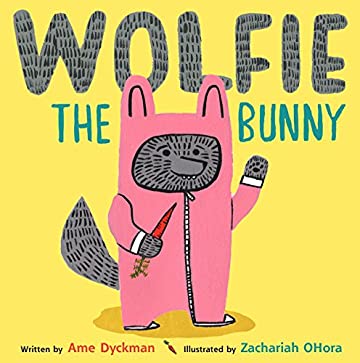 If you can hear the title Wolfie the Bunny and NOT want to read that book immediately, then we probably don’t have much in common. Ame Dyckman’s words paired with Zachariah Ohora’s illustrations absolutely live up to the promise of the title. In a neighborhood based on Park Slope, Brooklyn, a family of rabbits finds a wolf pup on their doorstep, but only little Dot is freaked out by the new addition to the family (“He’s going to eat us all up!”).
 Zachariah Ohora also illustrated Tyrannosaurus Wrecks! by Sudipta Bardhan-Quallen. (Every list of picture books has to have a dinosaur book, right? Pretty sure that’s a rule.) This is a sure-bet hit for the toddler and preschool set, and there’s a sweet social-emotional learning (SEL) component in addition to the slapstick humor. (While we’re talking about Zachariah Ohora, he also illustrated Who Wet My Pants? by Bob Shea, another very funny book, despite its serious-sounding title.)
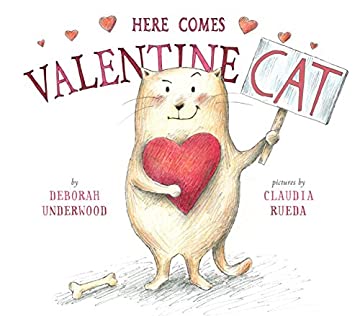 Deborah Underwood and Claudia Rueda’s “Here Comes…Cat” books (Tooth Fairy Cat, Valentine Cat, etc.) star a cat that only communicates through signs (sometimes with words, often with images), facial expressions, and body language. The narrator is in dialogue with the curmudgeonly cat, and these books definitely tickle my funny bone; Valentine Cat makes an appearance at our house every February.
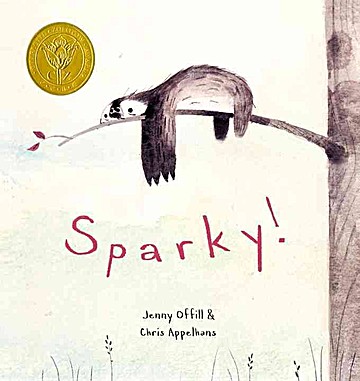 Jenny Offill has produced such delightful gems as Sparky! (a book about a girl and her pet sloth; just look at the juxtaposition between the name – with an exclamation point! – and the sloth on the cover), While You Were Napping, 11 Science Experiments That Failed, and 17 Things I’m Not Allowed to Do Anymore. The titles are descriptive enough, I think, and any grown-up who has read Offill’s books for adults is in for something completely different with these.
 A Hungry Lion, Or, A Dwindling Assortment of Animals by Lucy Ruth Cummins: The sheer genius of this title, oh my goodness. And the vocabulary. And the smile on the little turtle’s face. And the moment the lights go out. And the double twist ending. And, and, and….If you liked the slightly macabre humor of Jon Klassen’s I Want My Hat Back but you haven’t read this, go ahead and remedy that now.
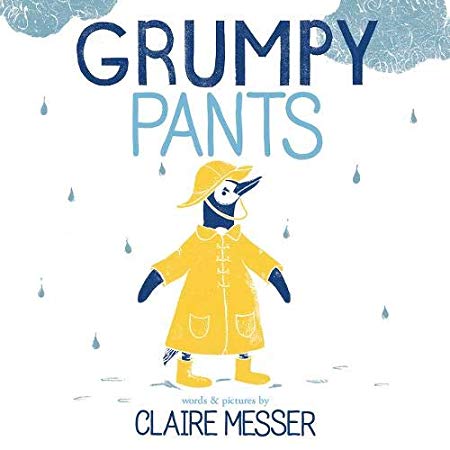 Grumpy Pants by Claire Messer: “I’m grumpy,” declares a little penguin, and it tries a number of solutions to improve its condition, finally stripping off its clothes piece by piece and diving into a nice cold bath. Children (and adults, too!) might find that a bath, clean clothes, and a cup of cocoa are just the thing to soothe a grumpy mood.
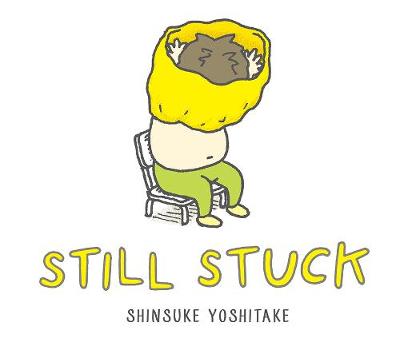 Still Stuck by Shinsuke Yoshitake: You’re getting undressed and your shirt gets stuck over your head – it’s happened to everyone, right? It happens to this kid, who definitely does not want assistance from Mom, and decides to accept their new state. In their imagination, they spin out what life will be like with a shirt over their head. Despite the kid’s adaptability (or resignation), Mom does swoop in to move the bedtime process along, but there’s another snag when it’s time to put on pajamas.
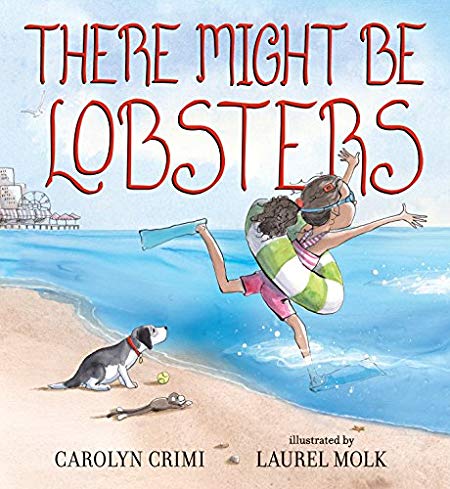 There Might Be Lobsters by Carolyn Crimi, illustrated by Laurel Molk: Poor little Sukie is afraid of everything at the beach, but when beloved toy Chunka Munka is swept out to see, Sukie must find her courage. This is an excellent read-aloud for summer storytimes for all ages – get kids to repeat the titular refrain together – and if you happen to have props with you for this read-aloud (a stuffed lobster, say, or a beach ball) all the better.
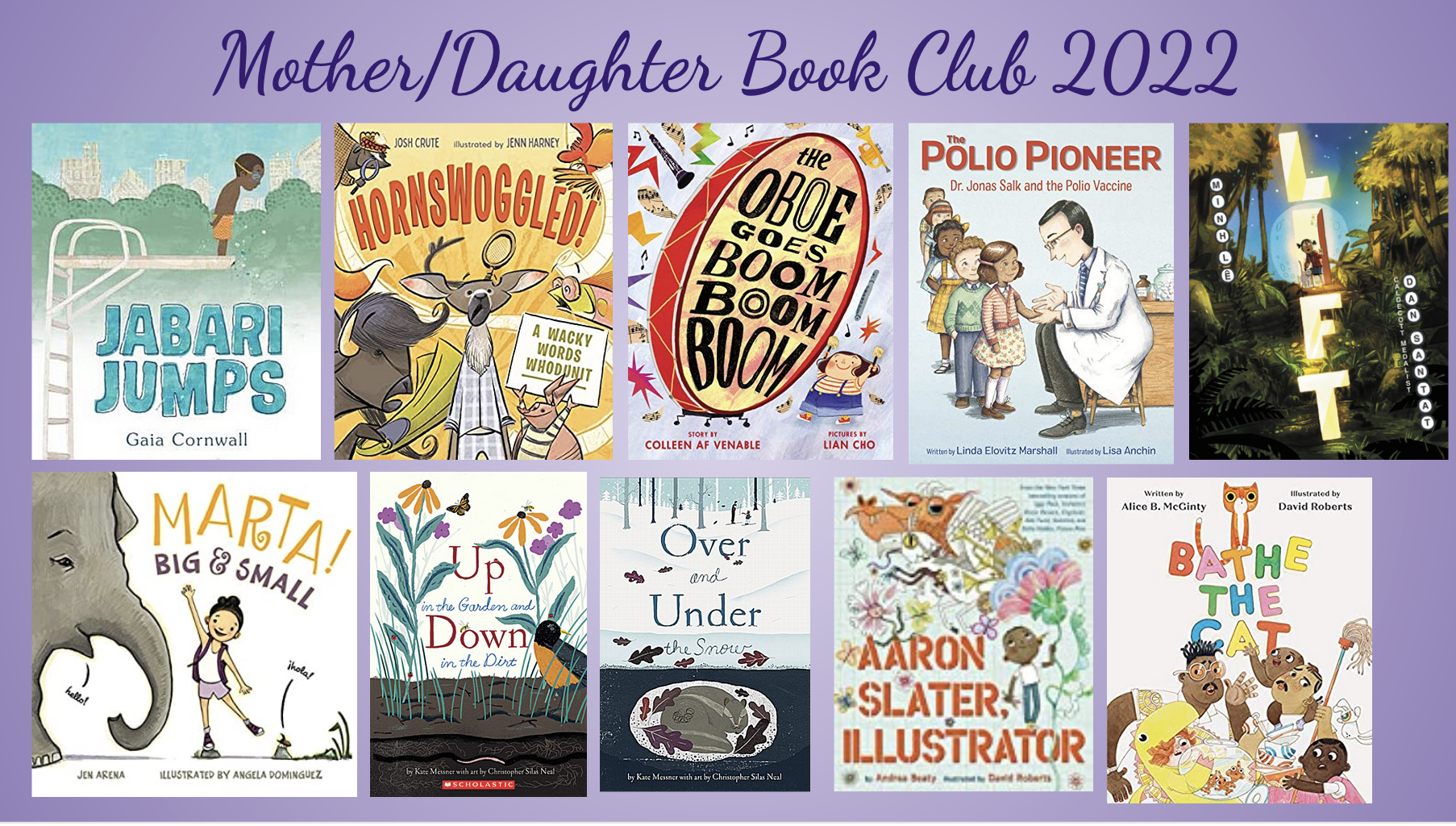
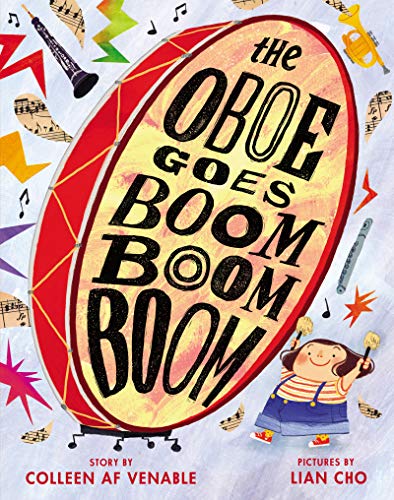 The Oboe Goes BOOM BOOM BOOM by Colleen AF Venable, illustrated by Lian Cho: A band director introduces instruments one by one, but little Felicity just can’t wait to bang on the drums and keeps interrupting – until she’s blown away by the sound of the tuba. There’s actually quite a lot of information in here about different instruments, and the way that Cho translates sound into a visual medium is outstanding.
 I Am Not A Penguin: A Pangolin’s Lament by Liz Wong: A poor pangolin wants to give a presentation, keeping its cool while confused audience members interrupt, until a penguin arrives to steal the show. One little girl remains for the pangolin’s informative presentation. (See also: The Angry Little Puffin by Timothy Young, which taught me permanently that penguins live “at the bottom of the world” (i.e. Antarctica) while puffins live “at the top of the world.”)
 King Baby by Kate Beaton might be funnier for adults than for kids, but kids enjoy it too; it’s one of my go-to recommendations for families who are about to add a sibling. And let’s not forget Beaton’s other picture book, the crowd-pleasing The Princess and the Pony (pony farts feature prominently).
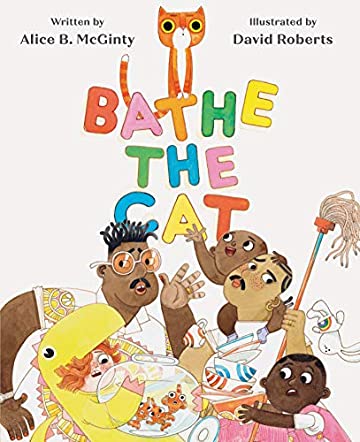 Bathe the Cat by Alice B. McGinty and David Roberts: A cat who definitely does not want a bath scrambles up a family’s to-do list as they rush to tidy before grandma arrives. Clever use of fridge magnet alphabet letters, plenty of pride, and increasingly ridiculous tasks all add to the joyful hilarity.
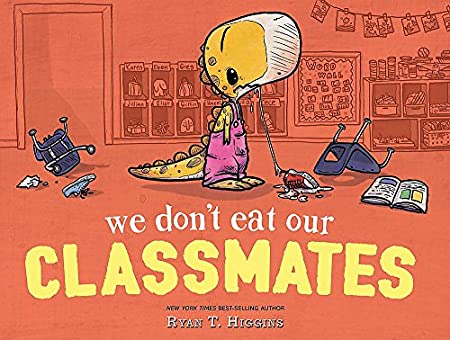 We Don’t Eat Our Classmates by Ryan T. Higgins: Pink, overalls-wearing Penelope is nervous about the first day of school, and indeed, it doesn’t go as well as she’d hoped…she discovers that it’s hard to make friends when everyone is afraid you’ll eat them. Penelope learns to exercise self-control with the help of Mrs. Noodleman and a fearless goldfish named Walter.

