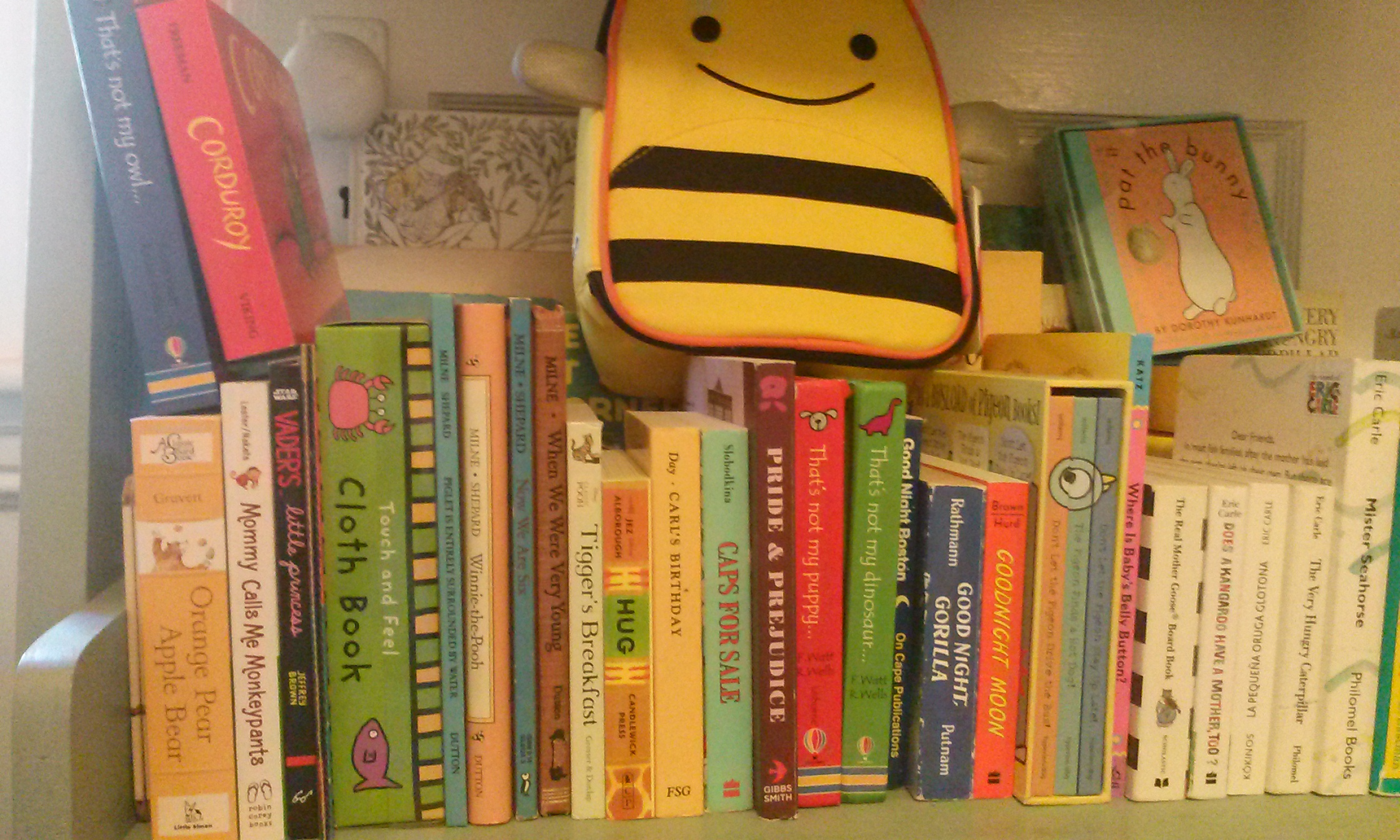
A friend with a four-month-old recently asked me for recommendations for board books for babies – not because she couldn’t find any, but because the selection in bookstores and libraries was overwhelming. Of course, I suggested she ask booksellers and librarians, who usually know exactly what book(s) to give to kids of every age, but here is my own list:
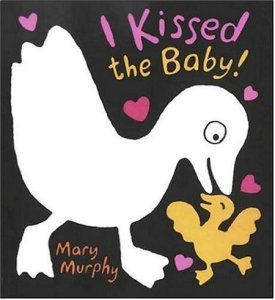 I Kissed the Baby! by Mary Murphy: This is my favorite for little babies! It has the high contrast of Tana Hoban’s Black & White books, but also has repetitive, sing-song words and a touch of color.
- Peek-a-Who? by Nina Laden: Another favorite for little babies, or kids of any age who still enjoy peek-a-boo.
- The “That’s Not My….” series: These touch & feel books are thin on plot, but nice and tactile for when infants start reaching for the pages. They’ll start to remember where the different textures are on each page.
- The BabyLit series: These board book versions of classics are a little silly, but a good introduction to the world of literature. We like Jabberwocky (though it’s not the complete poem), and Don Quixote, which is bilingual.
- A Kiss Like This by Mary Murphy: Murphy’s books are sweet without being cloying. Again, this one has the repetition that kids love, and you can do the different kinds of kisses (gentle and tall, quick and small, etc.).
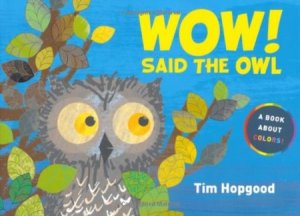
- Wow! Said the Owl by Tim Hopgood: A little owl stays up all day and is wowed by all the colors she sees.
- What a Wonderful World, illustrated by Tim Hopgood: Can you sing as well as Louis Armstrong? Give it a try! Or just read it.
- Happy Hippo, Angry Duck: A Book of Moods by Sandra Boynton: Boynton is one of the queens of board books. I don’t love all of her books universally, but Happy Hippo, Angry Duck is just the right amount of goofy (and also teaches that moods change). Others of hers that I like are Hippos Go Berserk, But Not the Hippopotamus, Tickle Time, and The Belly Button Book.
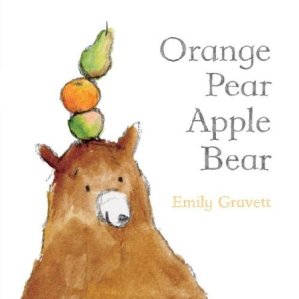
- Orange Pear Apple Bear by Emily Gravett: Gravett’s watercolors are simple and charming. For babies who like single images on white backgrounds, this is a good choice; toddlers will enjoy the fruit and the bear.
- I Dreamt I Was a Dinosaur by Stella Blackstone: These unique illustrations are made from felt, sequins, beads, and other craft supplies, and the text rhymes.
- How Do Dinosaurs Say Goodnight? by Jane Yolen: A perfect rhyming goodnight book, this outlines all the bad behavior and ends with the good (“they tuck in their tails, they whisper ‘good night’…”).
- All three of Chris Haughton’s board books: Oh No, George!, Shh…We Have A Plan, and Little Owl Lost. The first is my favorite but they all bear up well under endless repetition. The illustrations look like they were done in MS Paint, but don’t be put off.
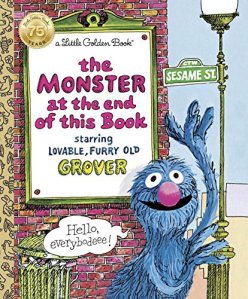
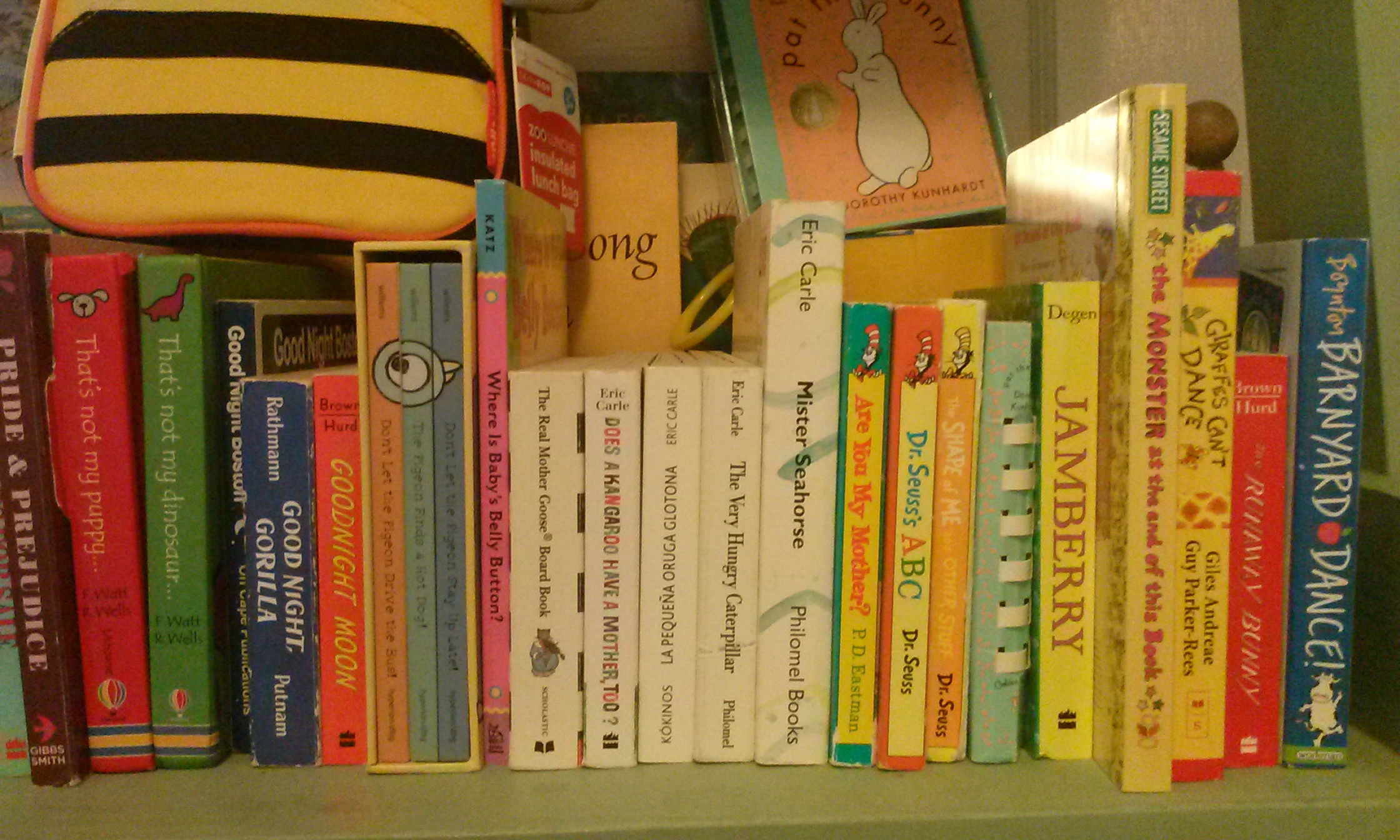
- The Monster at the End of This Book (Sesame Street): Grover is frightened of the monster and implores the reader to STOP TURNING PAGES, taking more and more extreme measures…but it turns out the monster is not so scary after all. Great opportunity for dramatic reading here.
- Hug by Jez Alborough: A baby monkey observes other animals hugging, then goes in search of its mommy for a hug.
- Good Night, Gorilla by Peggy Rathmann: Should you get sick of Goodnight Moon, here’s an alternative featuring a mischievous gorilla and a clueless zookeeper.
- Finger Worms by Herve Tullet: This book has holes in the covers and through the pages so readers can stick their fingers through to become part of the illustrations – very interactive! (Older kids will enjoy Press Here and Mix It Up by the same author.)
- Mr. Brown Can Moo! Can You? by Dr. Seuss: Rhymes and sound effects, what could be better?
- Dr. Seuss’s ABCs: The board book version is slightly abridged from the picture book version; both are good and include plenty of Dr. Seuss’s invented words.
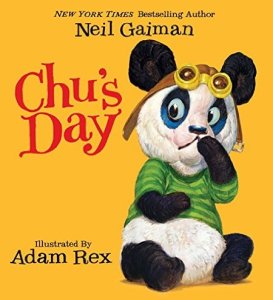
- Chu’s Day by Neil Gaiman: This is a huge hit with my toddler (she also loves Chu’s Day at the Beach and Chu’s First Day of School). Fake sneezes are very entertaining! (See also: The Mitten by Jan Brett)
- I Want My Hat Back and This Is Not My Hat by Jon Klassen: stories of hats stolen and retrieved, the implications are dark but babies won’t notice. Anything Jon Klassen and Mac Barnett write together is worth checking out; I love Extra Yarn.
Poems
 Classic Mother Goose poems in board book form, such as The Real Mother Goose Board Book and Tomie’s Little Mother Goose (that’s Tomie dePaola, author/illustrator of Strega Nona).
- My First Winnie the Pooh by A.A. Milne: short versions of the gentle poems we all know and love, including “The Engineer,” “Halfway Down,” and “Us Two.”
- The Random House Book of Poetry for Children, compiled by Jack Prelutsky, is a collection that truly has something for everyone: poems short and long, funny and saccharine and sad, rhyming and not.
Read-aloud tip: “For infants, what book you read is less important than your enjoyment of it. If you have fun, baby will too!” (From my library’s pamphlet on Books for Babies, which also includes a book list by section: Board books, nursery rhymes, picture books, lullabies and songs, and poetry.)
Read-aloud tip: More often than not, the character(s) in children’s books is/are male. If this isn’t an important part of the story (e.g. the character is nameless), try using female pronouns some of the time. There’s no reason the default needs to be male.
 Adult Fiction
 Children’s board books and picture books
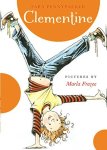 The Clementine series by Sara Pennypacker – I listened to all seven of these audiobooks (narrated by Jessica Almasy) and loved every single one. Clementine reminds me of Ramona Quimby (especially when adults tell her to “pay attention” and she says that she was paying attention…to something else. Perfect kid logic). The parents are great characters too.
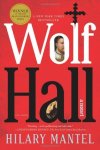 Some novels take famous figures from history and are centered around important historical events. In the case of Philippa Gregory’s The Other Boleyn Girl and Hilary Mantel’s Wolf Hall and Bring Up the Bodies, it is the court of King Henry VIII in England. In the former, Anne Boleyn’s sister Mary is the main character during Anne’s rise, marriage to Henry VIII, the formation of the Church of England, and Henry’s disenchantment with (and beheading of) Anne. For her books – the first two of a planned trilogy – Mantel takes Thomas Cromwell as her main character.
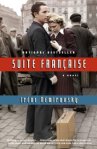 Other novels are about ordinary people in extraordinary times, and the draw of these stories is how their authors are able to make the time and place come to life in a way that seems real. Like Henry VIII’s era, World War II is a popular time period for historical fiction; most recently, the exceptional All the Light We Cannot See by Anthony Doerr was a bestseller (and with good reason). A few of my favorite WWII novels are Suite Francaise by Irene Nemirovsky, The Guernsey Literary and Potato Peel Pie Society by Annie Barrows and Mary Ann Shaffer, Corelli’s Mandolin by Louis de Bernieres, Life After Life by Kate Atkinson, and Code Name Verity by Elizabeth Wein.
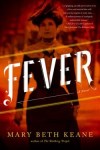 Still a third type of historical novel features extraordinary people in ordinary (for them) times. These characters are as vivid as their settings: Mary Malone (better known as Typhoid Mary) in Fever by Mary Beth Keane, set in turn of the century New York. Katy Kontent in Amor Towles’ Rules of Civility, also in New York, in the 1930s. Regret, a Korean “picture bride” in Alan Brennert’s Honolulu. Tom and Isabel in post-WWI Australia in The Light Between Oceans by M.L. Stedman. Mattie Gokey in the Adirondacks in 1906 in Jennifer Donnelly’s A Northern Light, and Desdemona Hart in 1930s Massachusetts in Maryanne O’Hara’s Cascade.
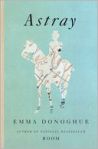 For those who have been counting, this has been more than ten, but I want to mention just three more. Astray is a collection by Emma Donoghue, in which each story was inspired by a real piece of history; Donoghue is so inventive that she can spin two sentences from an old newspaper into a complete, absorbing story.

 Jenny Arch